

What is Bird Ringing?
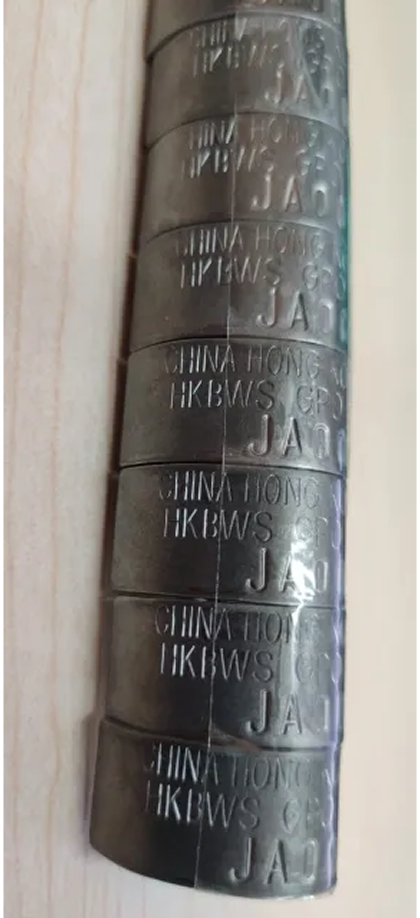
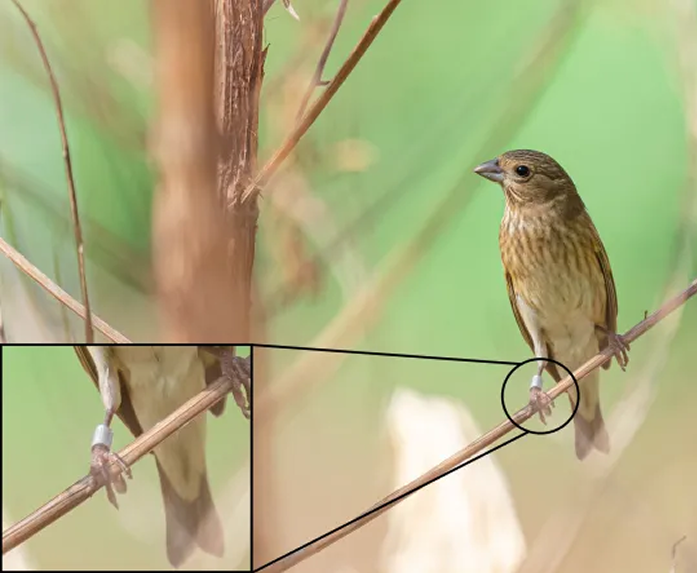
These rings are of all different sizes (depending on the bird species), usually made of aluminium (except for birds were rusting is likely, i.e. waterbirds) and are calculated to be at a weight where they will have no effect on the bird (usually around 0.2% of the bird’s bodyweight, read more here).
Each ring has a globally unique code on it, as well as the country it comes from, which allows each bird to be tracked through resightings/recaptures across the world.
Birds are then aged and sexed (when possible: See The Art of Ageing and Sexing Birds for more details), before biometrics such as wing length, tail length, amount of fat stored (according to the European Science Foundation System) and weight are recorded.
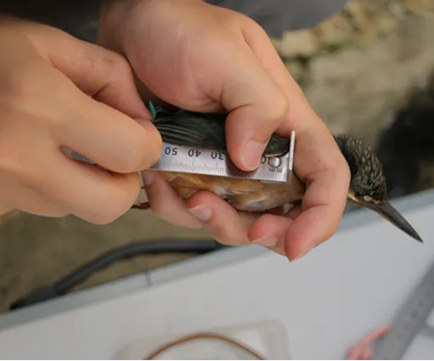
Above: A Common Kingfisher getting its wing measured.
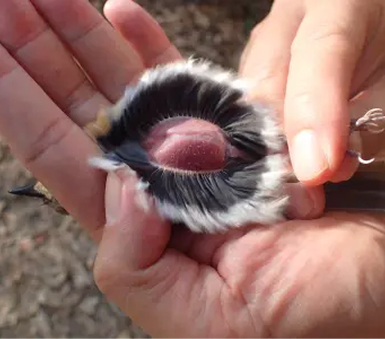
Below: To see the fat stored by birds, we blow on the throat and belly. This causes the feathers to part, and the skin to be exposed. The skin of a bird is translucent, allowing us to see the yellowish fat beneath it. We can tell this bird is breeding, as it has dropped the feathers on its breast, so it can press the skin against the eggs, increasing the flow of heat to the eggs.
What can we learn from bird ringing?
The biometrics collected can provide a host of information that we cannot gain from in-the-field studies. For example, during Spring we can look at how many birds of a particular species are adults, and how many are juveniles. Since our ringing is in a standardised location, with standardised ringing efforts, we can compare these numbers to birds caught in the Autumn, and previous years to work out the population’s demographics and survival rates. More on these particular studies can be found here.
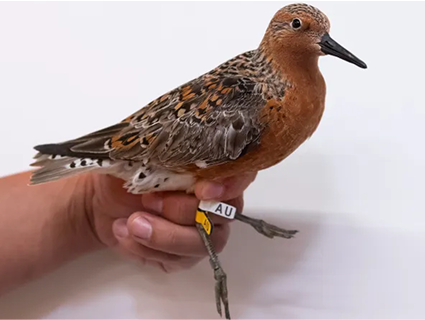
As birds migrate, it is notoriously difficult to protect them. We must be able to protect their breeding grounds- in one country-, migration paths- over several countries-, and overwintering grounds- in yet another country. Therefore, it is critical that we locate all these areas and collaborate with their respective organisations to protect our birds.
To do this, we use not only rings, but also colour flags and trackers that can be safely placed and collected from birds. This allows us to track birds’ movements without the need to recapture them (trackers will harmlessly fall off the birds after a variable amount of time).
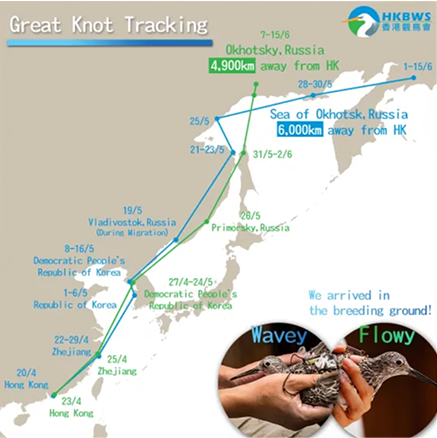
One example of tracking birds:
Two Great Knots fitted with satellite tags in Mai Po, Hong Kong in April 2021. This map shows their journey in the months that followed, as they continued to their breeding grounds in Russia. Read more about this project here.
Do we still need to ring birds?
There are still many important reasons to continue ringing birds. To begin with, we should remember that nature is not static– new behaviours develop constantly in the birds, first and foremost as birds must adapt to an ever-changing world. Their overwintering areas and migration paths can change for various reasons.
Furthermore, the mapping of invasive species, short-distance movements, the quantification of mortality, winter survival and breeding success rates can all be researched using bird ringing. Other such examples include moult (replacement of feathers) and fat storage studies. As bird ringing is a global initiative, it allows the transfer and update of knowledge regarding age and sex determination.
We have already mentioned population changes above, and to this we can add the mapping of the birds’ responses to changes in the climate. Large-scale bird ringing is the only method that exists to obtain the necessary, representative information to answer these questions. Information that, in many cases, is the foundation from which we can find out how to protect the birds in our world.
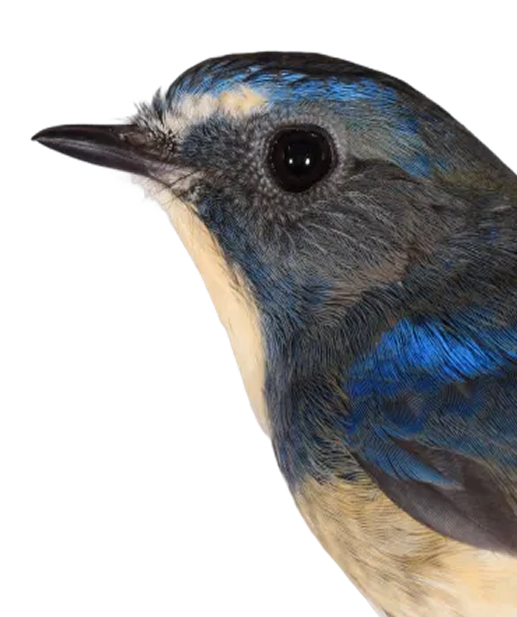
Ringing around the world
References
Ornithology, B., 2022. Biometric Data. [online] BTO – British Trust for Ornithology. Available at: <https://www.bto.org/understanding-birds/birdfacts/about-birdfacts/biometrics> [Accessed 9 June 2022].
Redfern, C. and Clark, J., 2001. Ringers’ Manual. 4th ed. British Trust for Ornithology, pp.227-228.
Peach, W., Furness, R. and Brenchley, A., 1999. The use of ringing to monitor changes in the numbers and demography of birds. Ringing & Migration, 19(sup1), pp.57-66.
Lam, K., 2022. The first satellite tracking project – Great Knot Tracking. [online] Hong Kong Bird Watching Society. Available at: <https://www.hkbws.org.hk/cms/en/hkbws/work/overseas/satellite-tracking-en/great-knot-tracking-en> [Accessed 9 June 2022].