The History of Bird Ringing

Tagging birds can be traced back to Roman times, when messages were attached to the legs of crows, through to Falconers in the Middle Ages, who would put plates on their birds with the owner’s seal upon them.

Introduction

Tagging birds can be traced back to Roman times, when messages were attached to the legs of crows, through to Falconers in the Middle Ages, who would put plates on their birds with the owner’s seal upon them.
 

However, these were not used for research, and the conundrum of where birds disappear for the winter mystified researchers for many years.


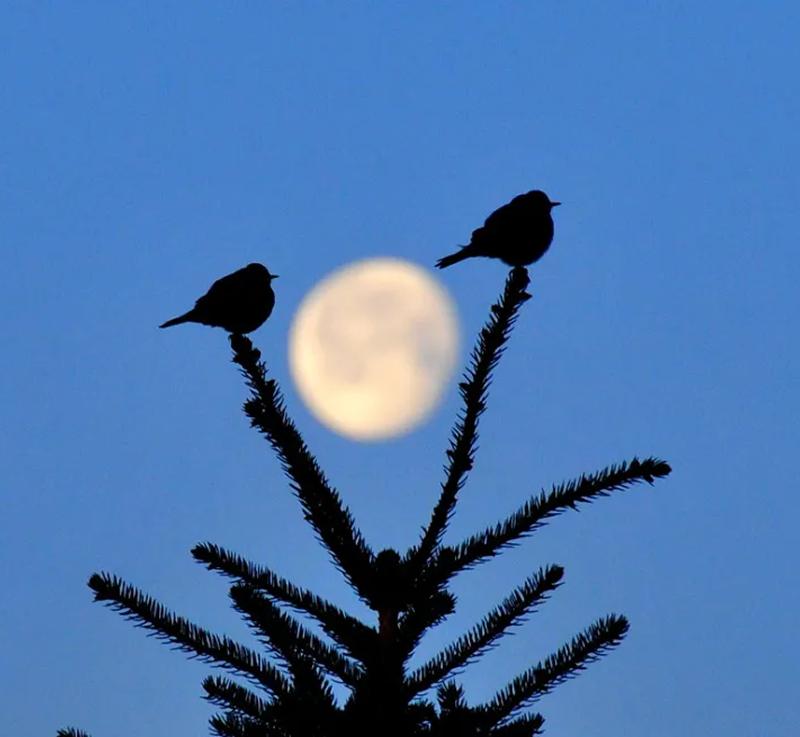
Before ringing became a proper research tool, there were many theories for this, including Thomas P. Harrison’s theory that birds fly to the moon!

Birds flying to the moon?- Flickr
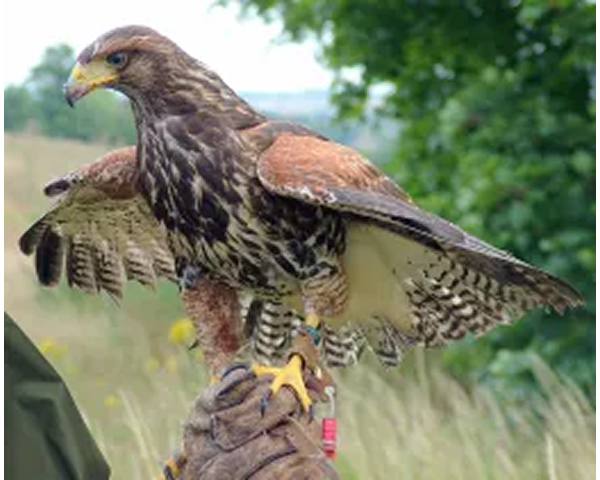
Harris’s Hawk used commonly in falconry- Wiki

1800s

Other such theories include that during the winter, one species morphs into another, or that others (such as Barnacle Geese) grow from goose barnacles (hence the names) or from the water.

This not only explains their magical and sudden appearance during the winter, but also allowed them to be eaten on religious ‘meat-free’ days- because they did not come from flesh. Convenient.

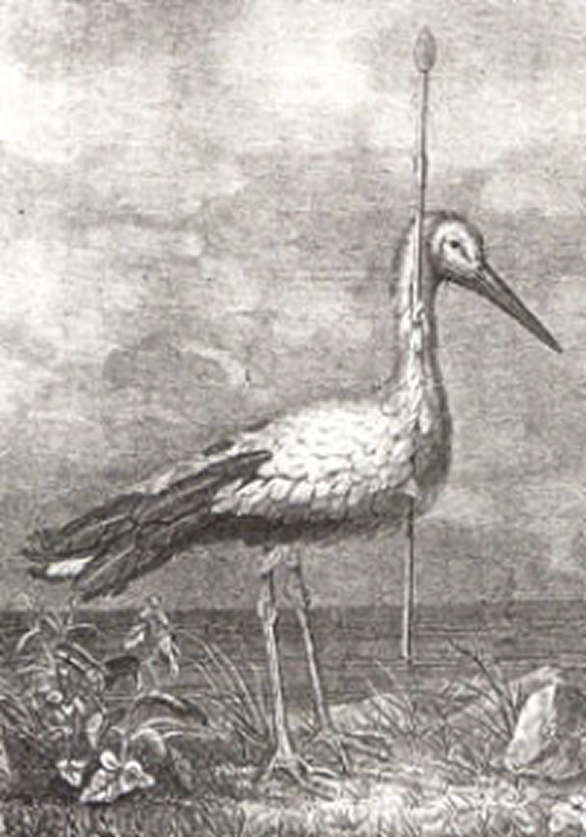
Migration to other countries began to be thought of during the 1800s, when several white storks were found in Germany with spears piercing their body, known in German as “pfeilstorch”.

Barnacle Geese being “hatched” from Goose Barnacles- Wiki

Pfeilstorch in Germany, 1822- BirdFreak

Late 1800s

Though this must have been a harrowing experience for the stork, they still managed to make the long migration from Africa, where they spend their winters, to their breeding grounds in Germany.

With the help of a shotgun, the storks were brought down and the spears identified as just that; spears from African tribes.

It would take until the late 1800s for the first “ringing” of birds as we know it, for scientific purposes, to begin. In Denmark, researchers wanted to find out where birds fly to, how old they can become and whether they come back to the same places every year. To do this, they began putting aluminium rings onto starlings, after realising that zinc rings were too heavy.

After 1900s

Bird ringing (also known as bird banding in the US) then began to spread over the world, reaching the UK in 1909.

From there, bird ringing began in Hong Kong in 1965 with the help of the BTO (British Trust for Ornithology) and the WWF in the WWF’s Mai Po Nature Reserve.

References

Ornithology, B., 2022. Biometric Data. [online] BTO – British Trust for Ornithology. Available at: <https://www.bto.org/understanding-birds/birdfacts/about-birdfacts/biometrics&gt; [Accessed 9 June 2022].

Redfern, C. and Clark, J., 2001. Ringers’ Manual. 4th ed. British Trust for Ornithology, pp.227-228.

Peach, W., Furness, R. and Brenchley, A., 1999. The use of ringing to monitor changes in the numbers and demography of birds. Ringing &amp; Migration, 19(sup1), pp.57-66.

Lam, K., 2022. The first satellite tracking project – Great Knot Tracking. [online] Hong Kong Bird Watching Society. Available at: <https://www.hkbws.org.hk/cms/en/hkbws/work/overseas/satellite-tracking-en/great-knot-tracking-en&gt; [Accessed 9 June 2022].

*Please note that all wild birds are protected under Hong Kong Law. All ringing activities are conducted with the necessary permits issued by the AFCD. Handling and processing of birds is only carried out by experienced individuals.*

SEARCH