


Back in the Paddyfields, with some light breeze providing some relief from the strong sun peaking over the mountain tops.
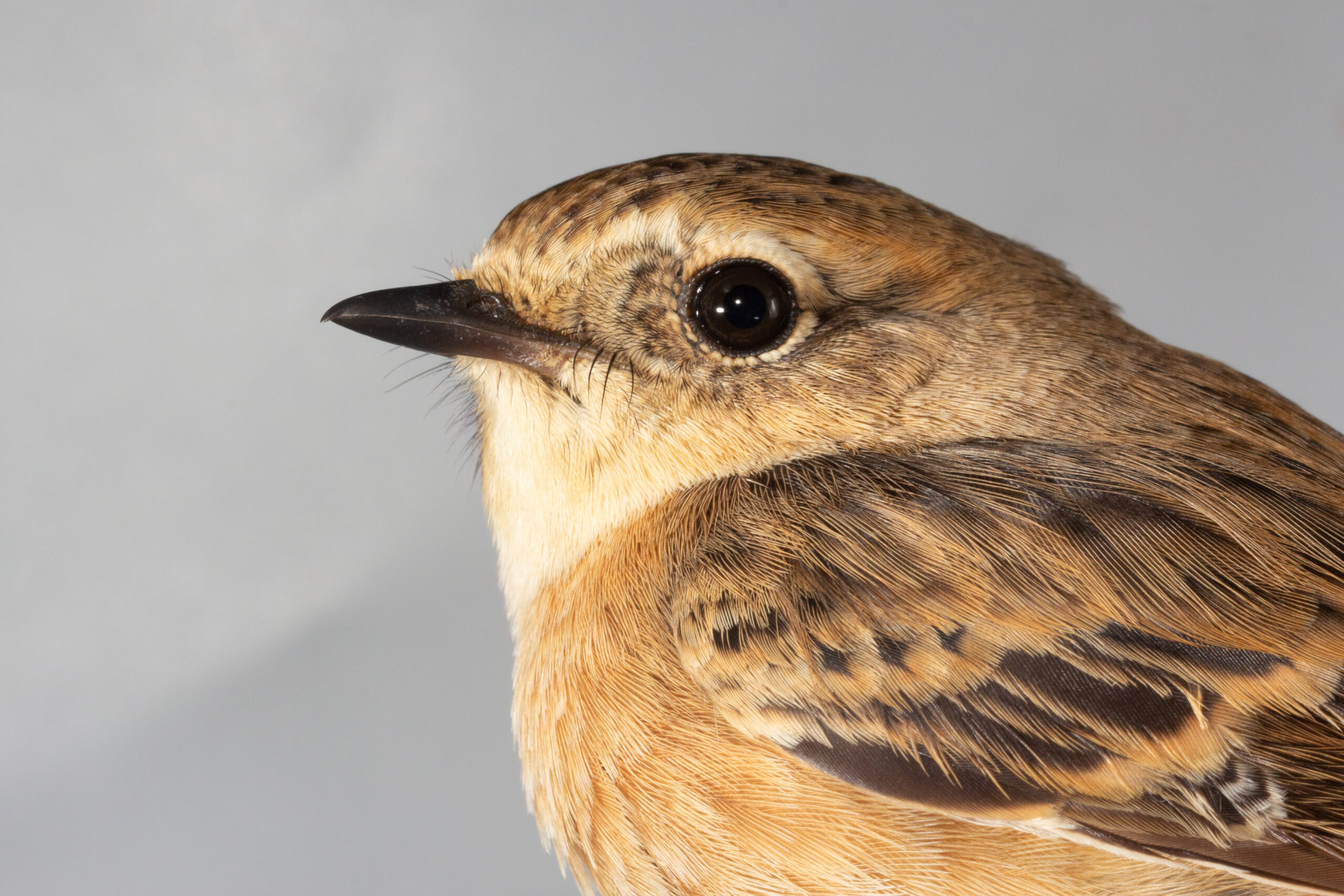
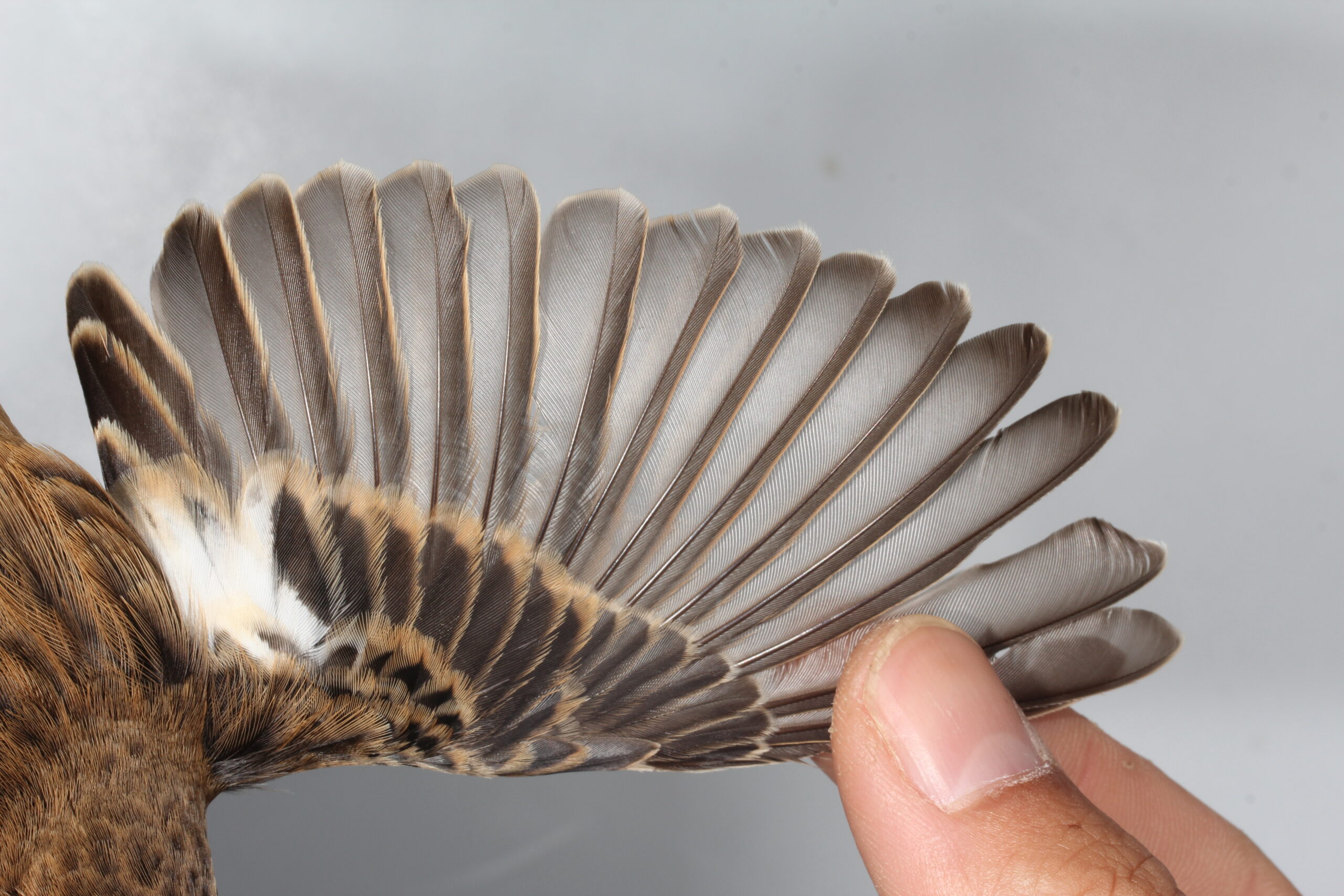
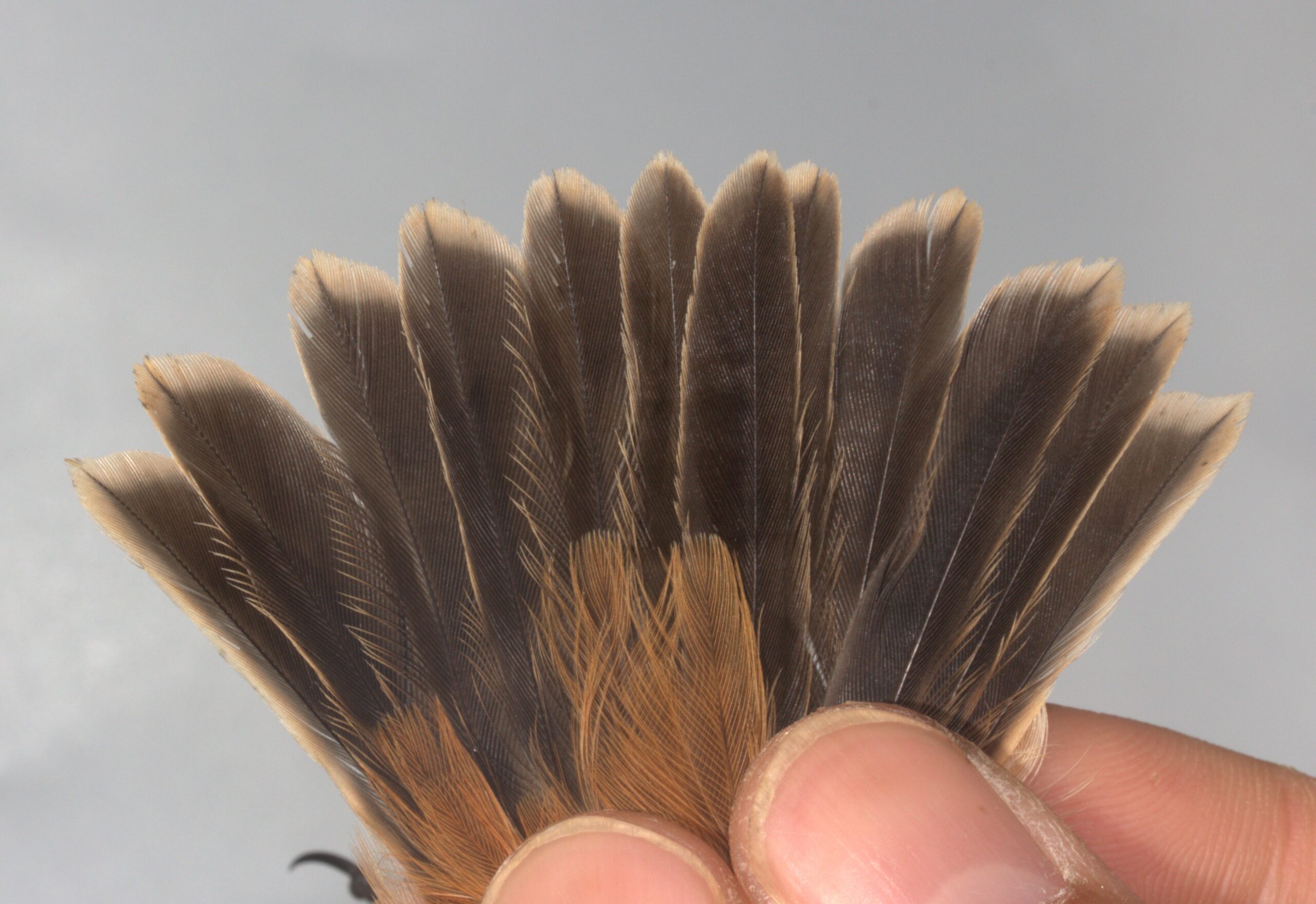
We started the morning with a gorgeous Amur Stonechat! As previously mentioned, we are simply looking for moult limits in this species. And this individual showed just that in her GCs, with the outermost 5 being juvenile, being more brown, abraded and loose than the inner 5 postjuvenile GCs. Hence, this must be a 1st calendar year bird. We can then look at the extent of the black in the crown, throat and underwing of this bird to sex it. As seen, this bird has almost no black present, meaning this is a 1st calendar year female!
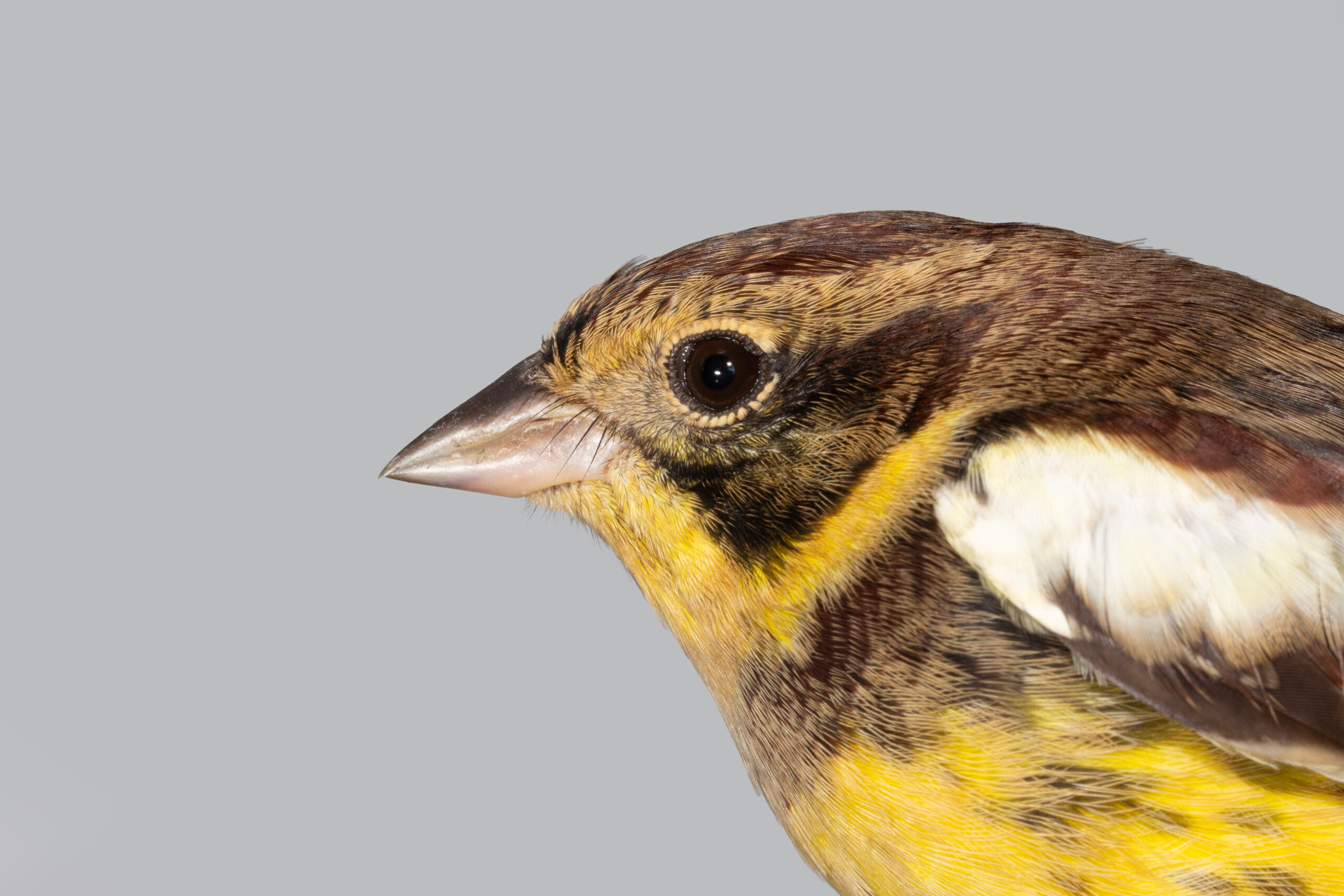
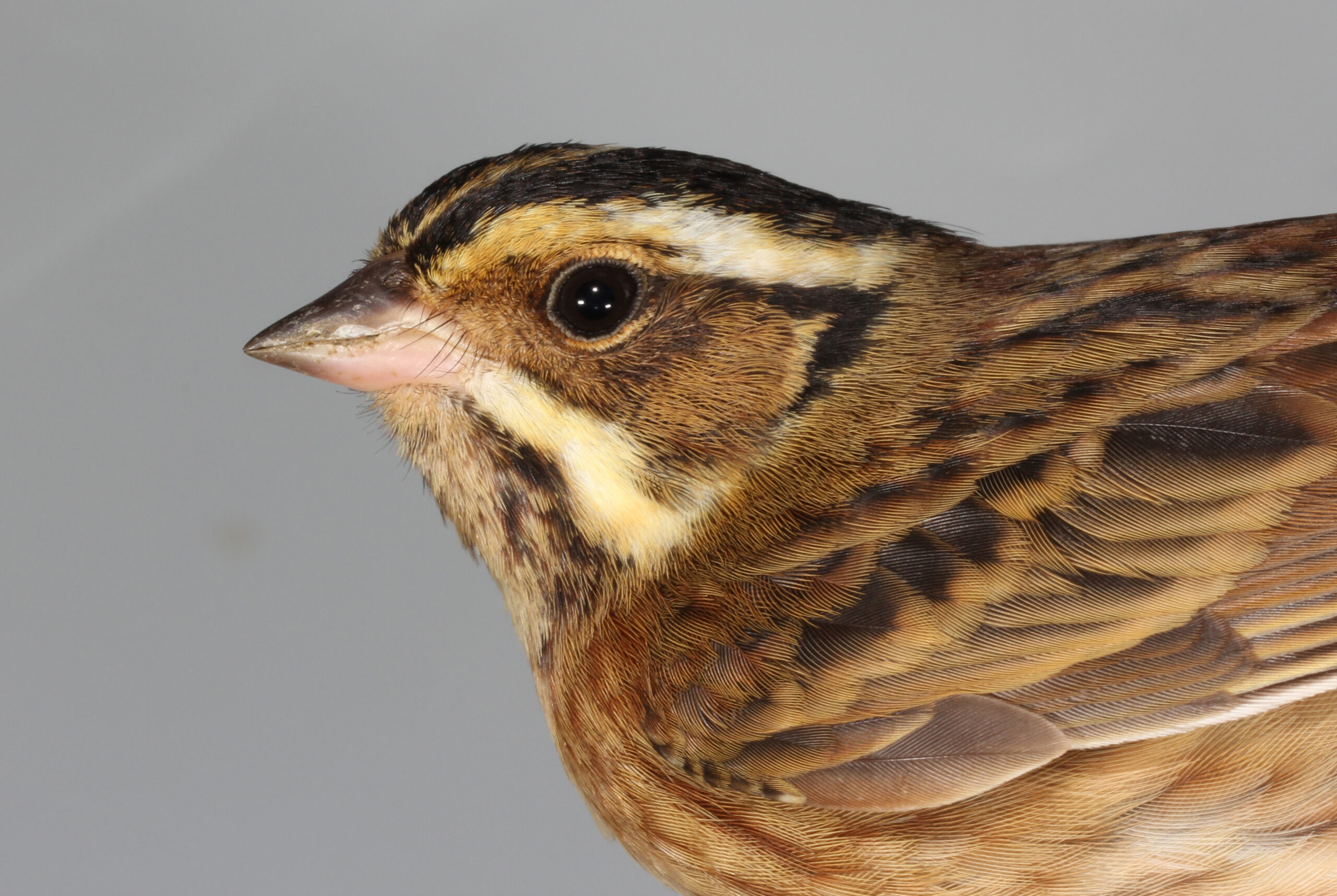
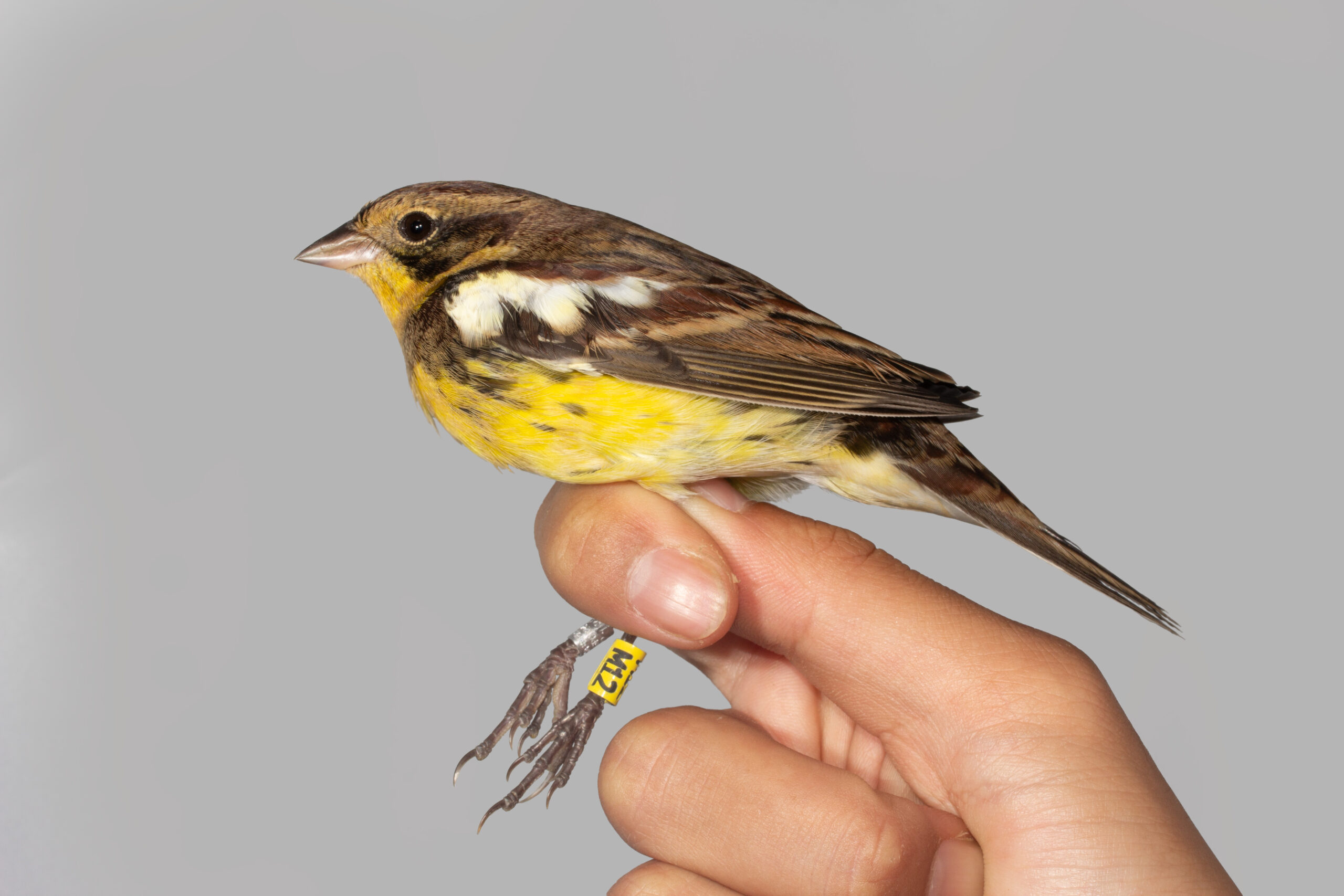
Next up was one of our most special species here- the aptly named Yellow-breasted Bunting! This species is listed as Critically Endangered, making Hong Kong a very special site for them. They stopover here during the autumn and spring migrations to feed and rest up before continuing to their wintering/breeding grounds respectively. This gives us the opportunity to catch them, ring them and put an additional colour ring around their leg. This colour ring is colour coded according to an international collaboration along the East-Asian Australasian Flyway. This means that if this bird is seen anywhere along the flyway, the observer can immediately tell this bird was ringed in Hong Kong, just by the colour of the ring!
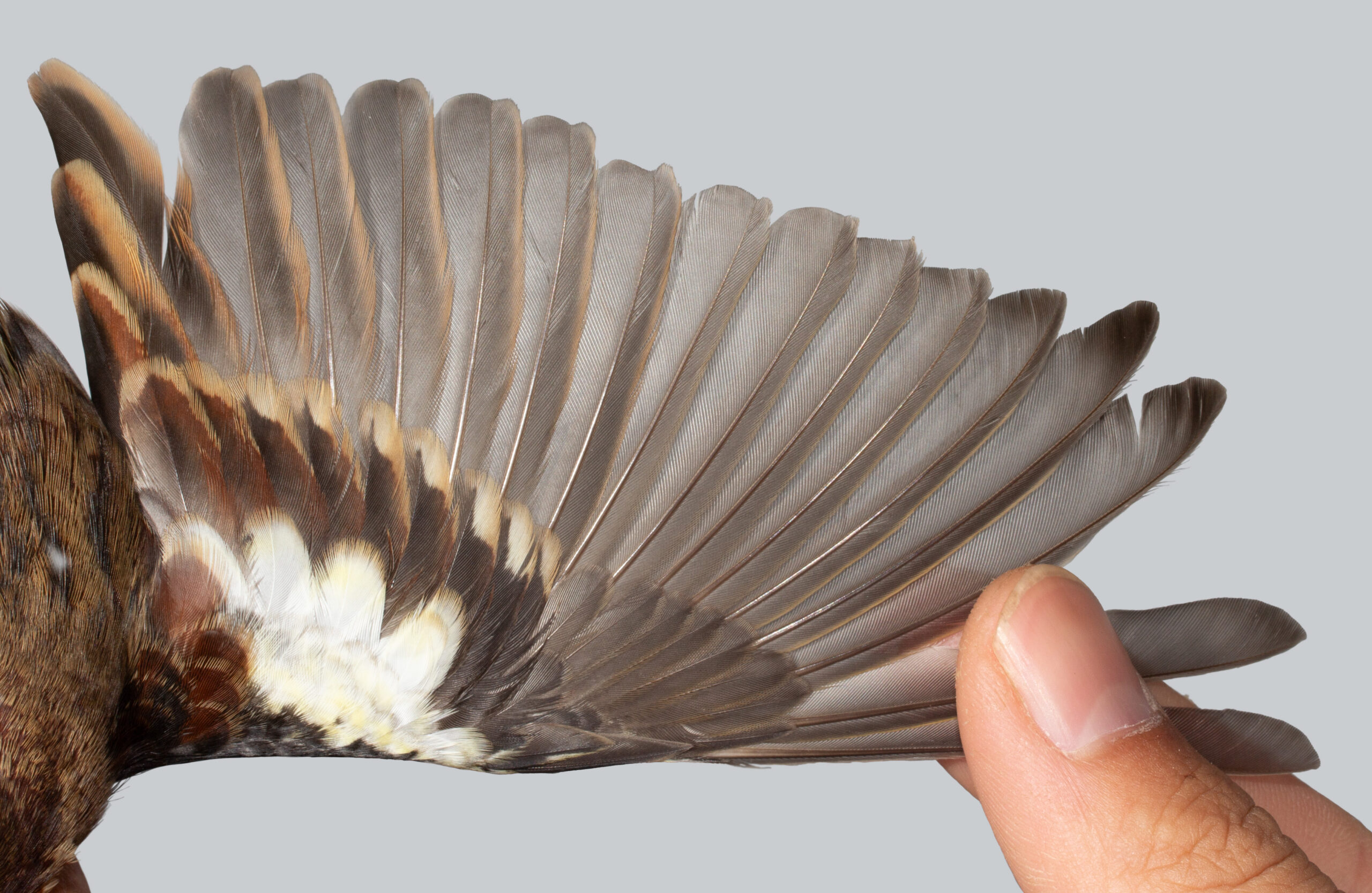
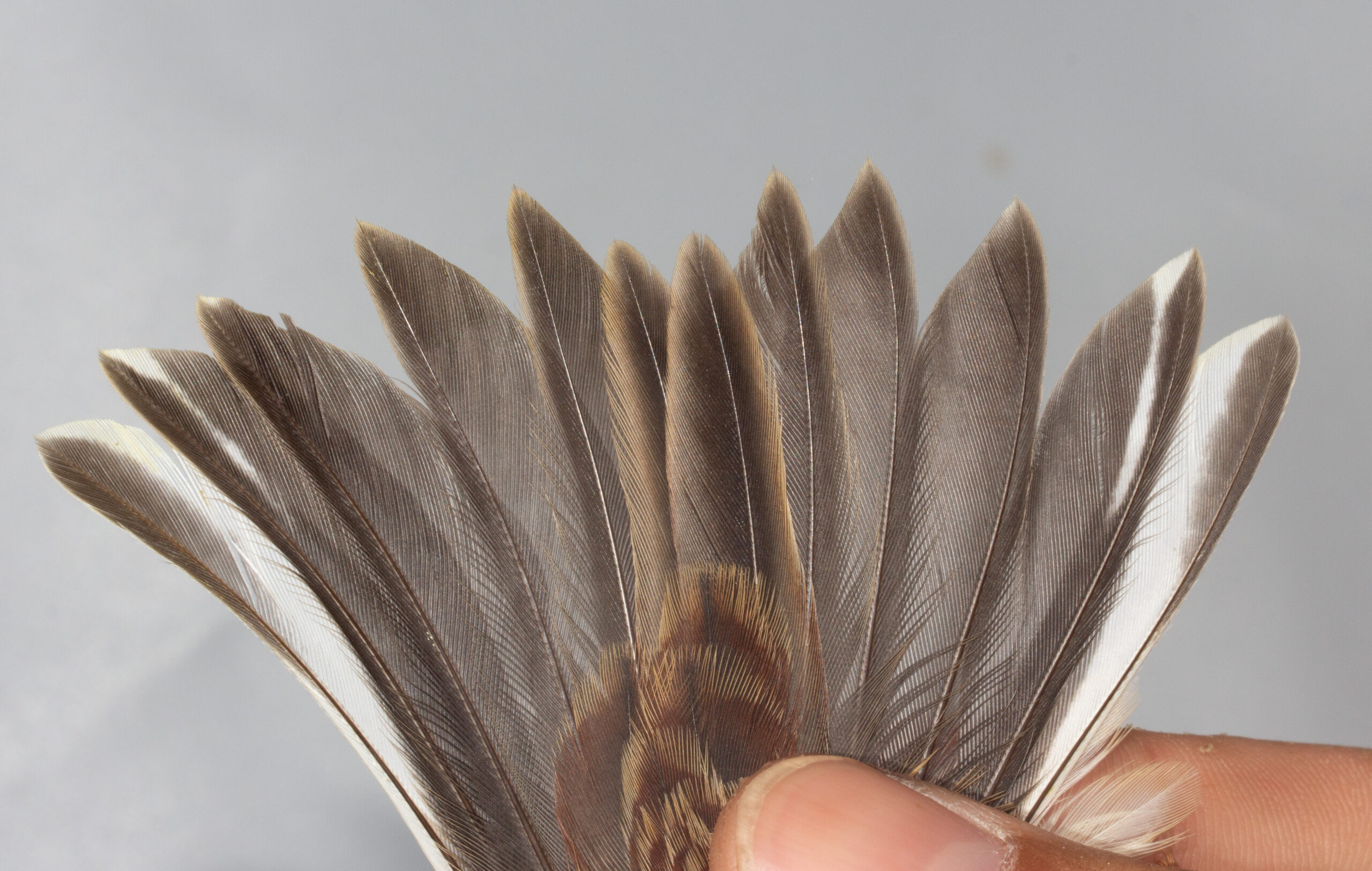
Anyway, back to our bird. Truthfully, we barely need to study this bird to discern the age and sex, however, we must do our due diligence regardless! Though Yellow-breasted Buntings follow the same Summer Complete (adults), summer partial (juveniles) moult strategy, they are known for their especially extensive postjuvenile moult. As aforementioned, juveniles usually moult their whole tail, making it look like an adult tail. Though this is not super helpful for ageing, they also have a habit of moulting their outer primaries. This is helpful for us, because it means that instead of comparing the moulted GCs to unmoulted PCs (as we have to do with most Bunting species), we can just compare feathers within the same group- the primaries.
And, if we look above, we see this individual has a beautifully uniform wing, with all feathers showing the same density, shape and wear. Note that there still is some variation in the ground and fringe colours of different feather groups, but this is just natural variation (hence why it can be hard to compare between feather groups as opposed to within one feather group). So, we can conclude this is an adult bird. To sex, we look at the extent of the deep chestnut, yellow in the breast and the large white wing patch. Therefore, this is an adult male!
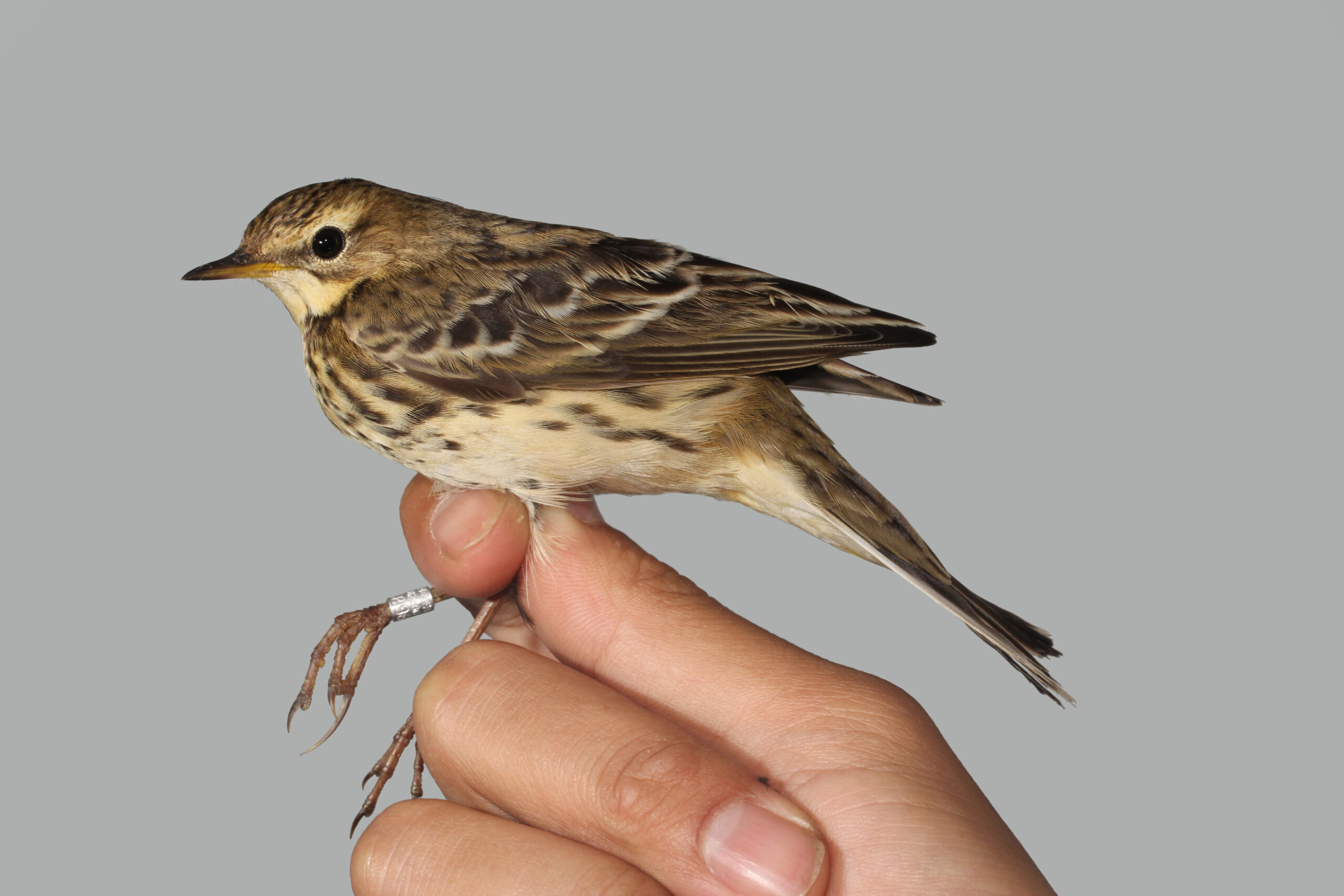
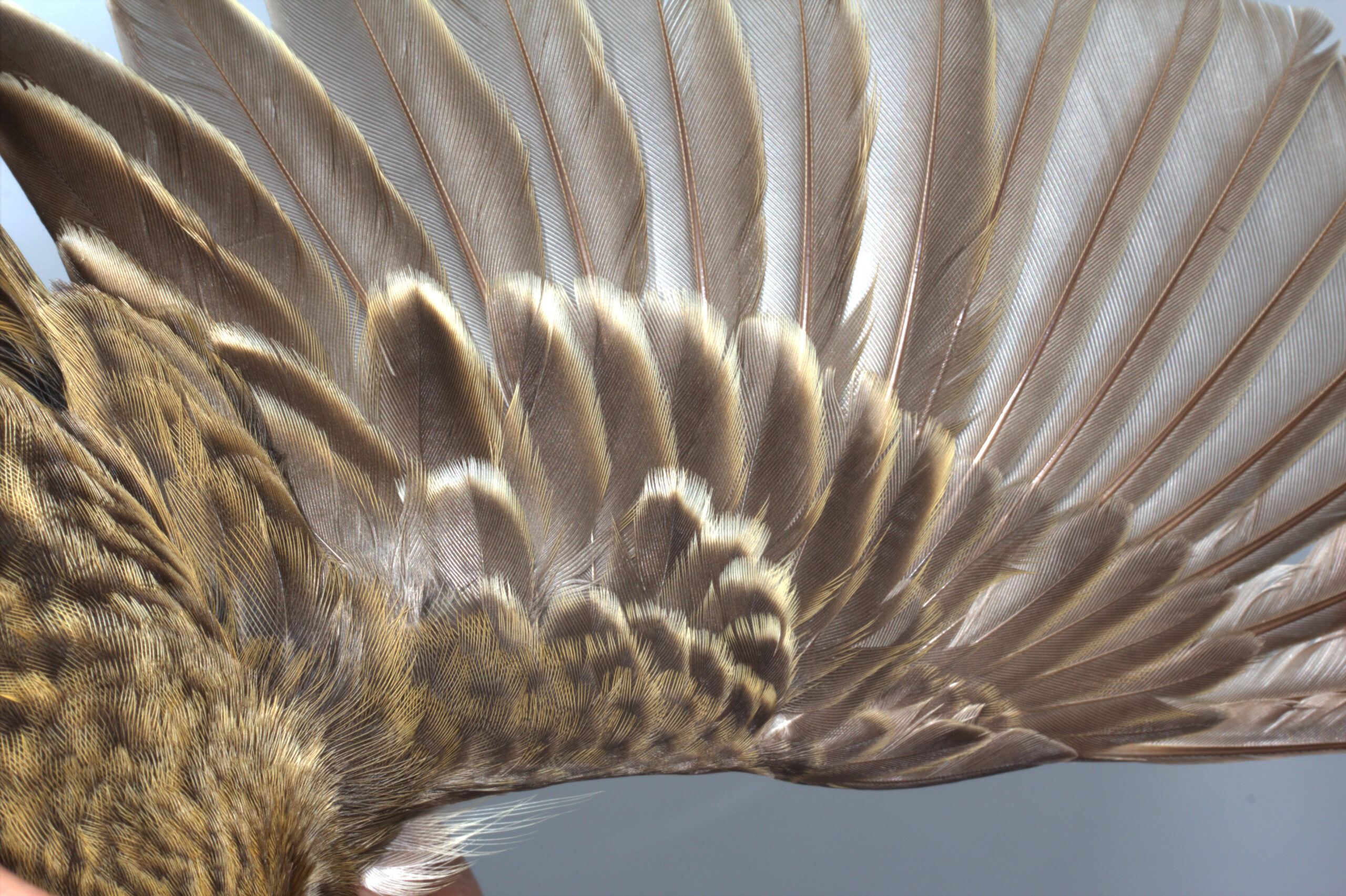
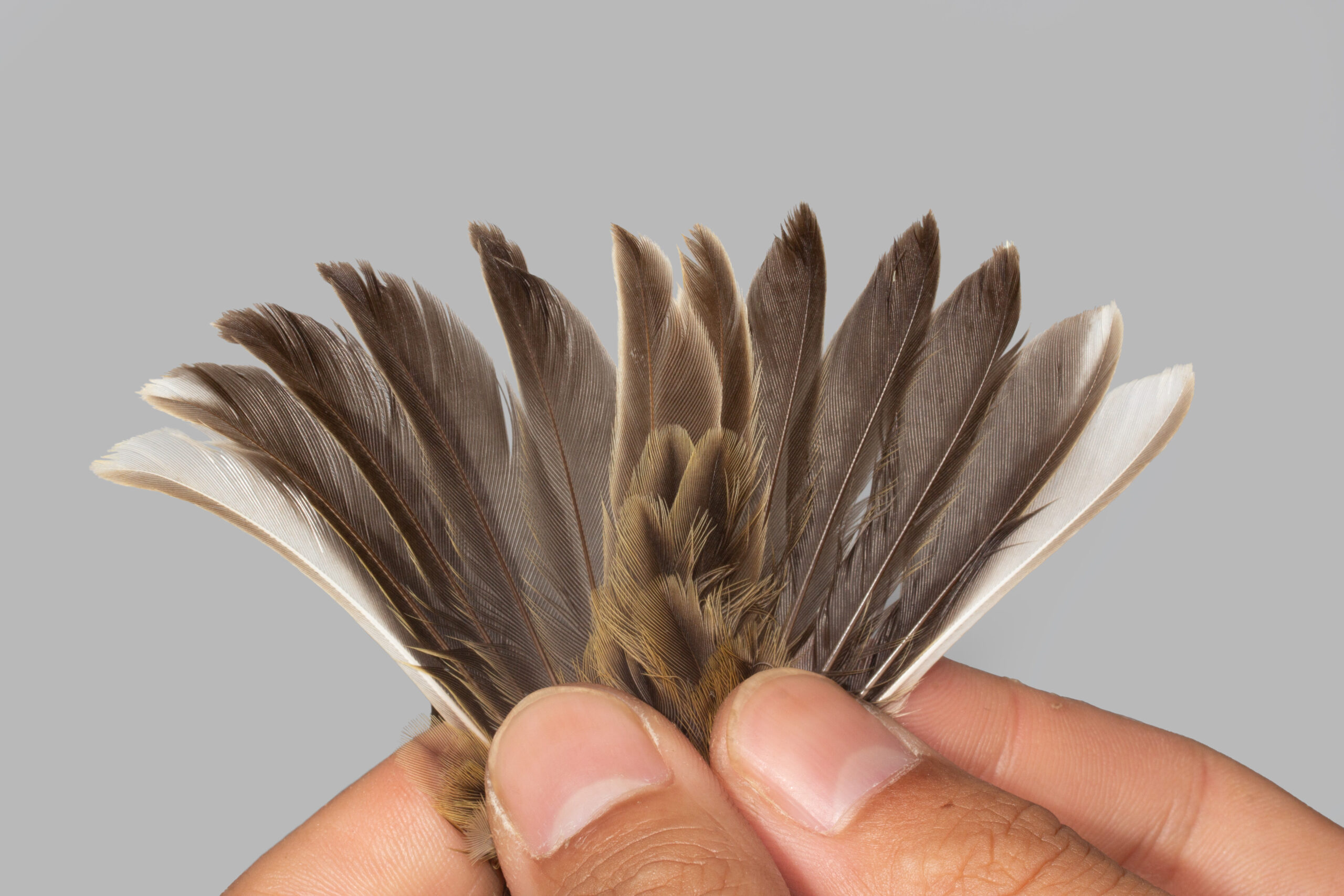
We are back with our Pipits next, with another example of a juvenile Red-throated Pipit! Though difficult to spot, there are moult limits present in the Lesser Coverts, which would not be present in an adult. This, paired with the pointy and loose Primaries Coverts, and very typical juvenile tail tells us this is a 1st calendar year bird!
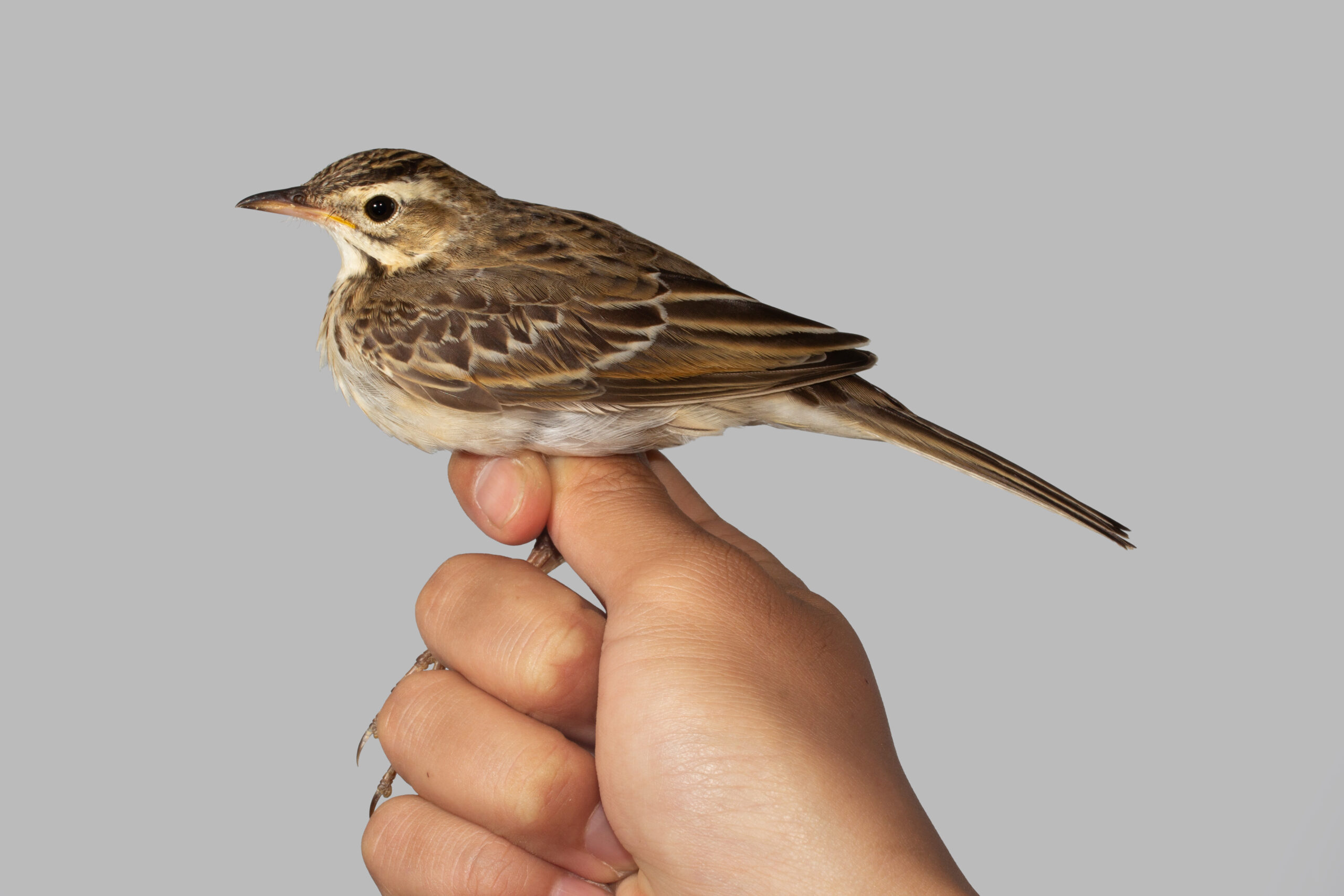
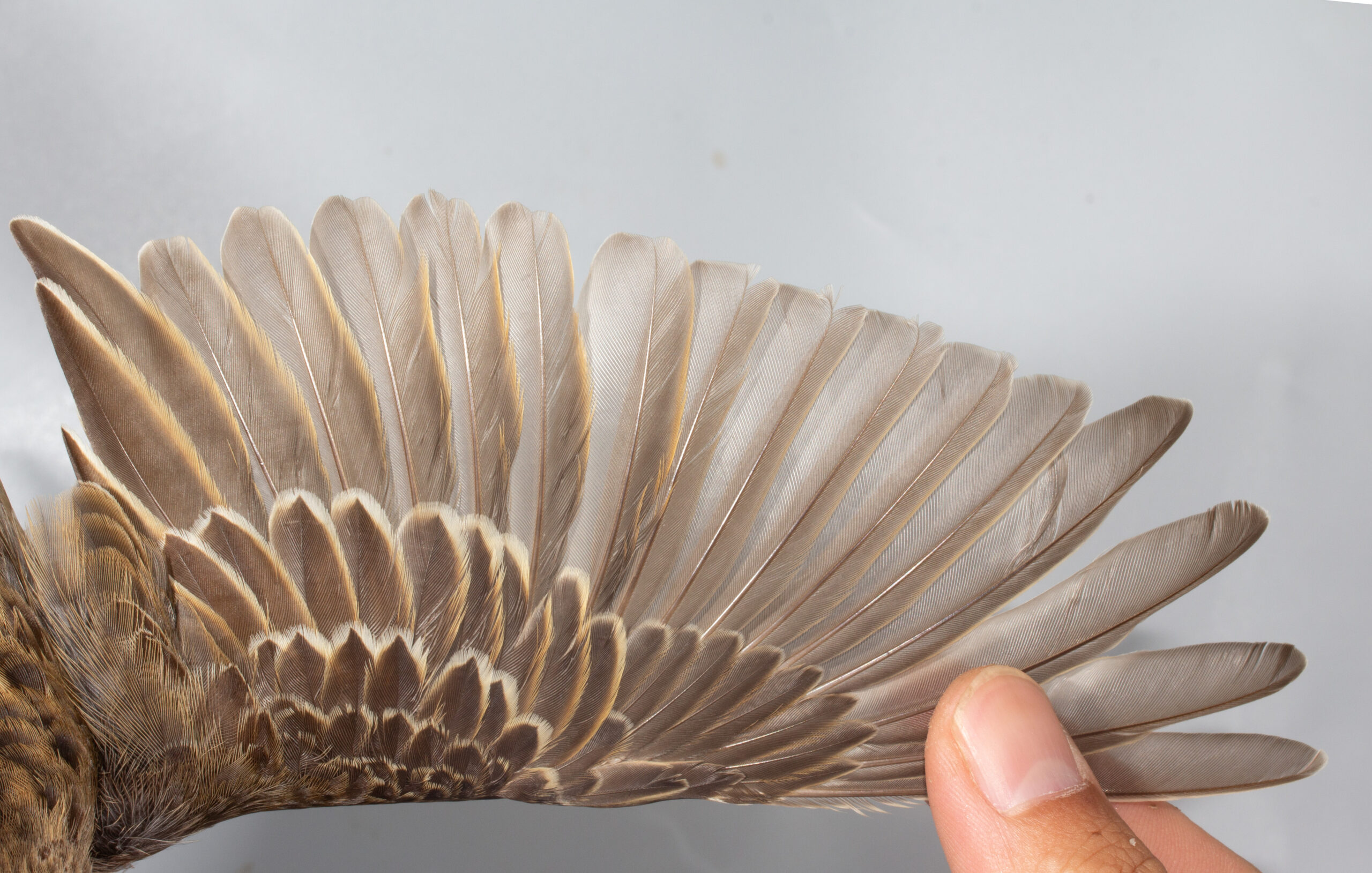
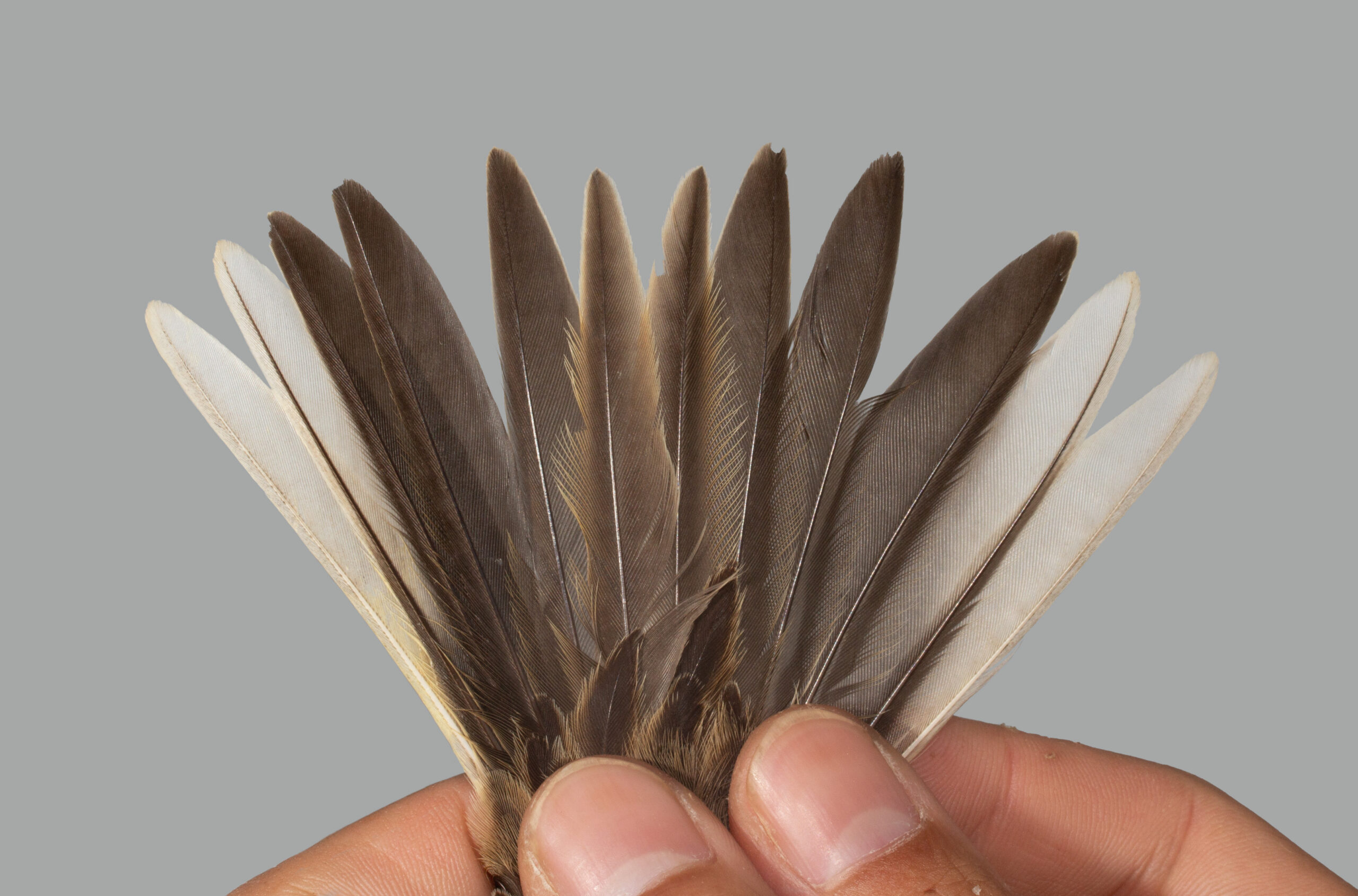
Our 2nd Pipit species for the day was this beautiful Richard’s Pipit! This species is noticeably larger than our Red-throated Pipit, and with a somewhat different moult strategy. Like the Grasshopper Warblers, the adults of this species carry out a Summer ‘Complete’ moult- however this moult is suspended, meaning they do not usually moult all of their flight feathers, leading to very noticeable moult limits in the wings of adults. Juveniles summer partial moult is incredibly variable, with some individuals moulting all their GCs. However, our bird has decided the exact opposite and shows an entirely juvenile wing instead. Note the ‘scaly’ appearance, thanks to the angular patterning on the coverts tipped with the very worn, pale fringes. A nice 1st calendar year bird!
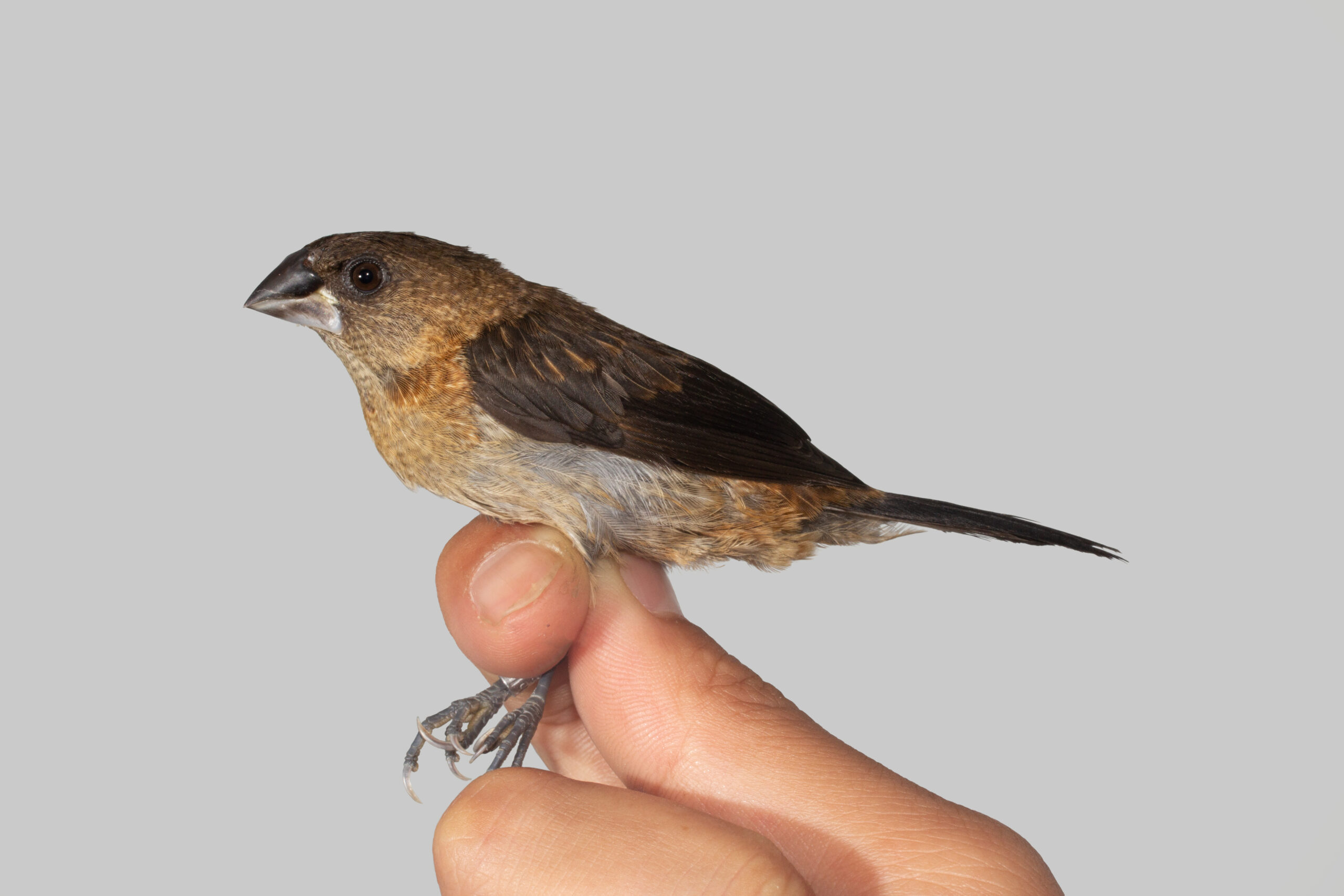
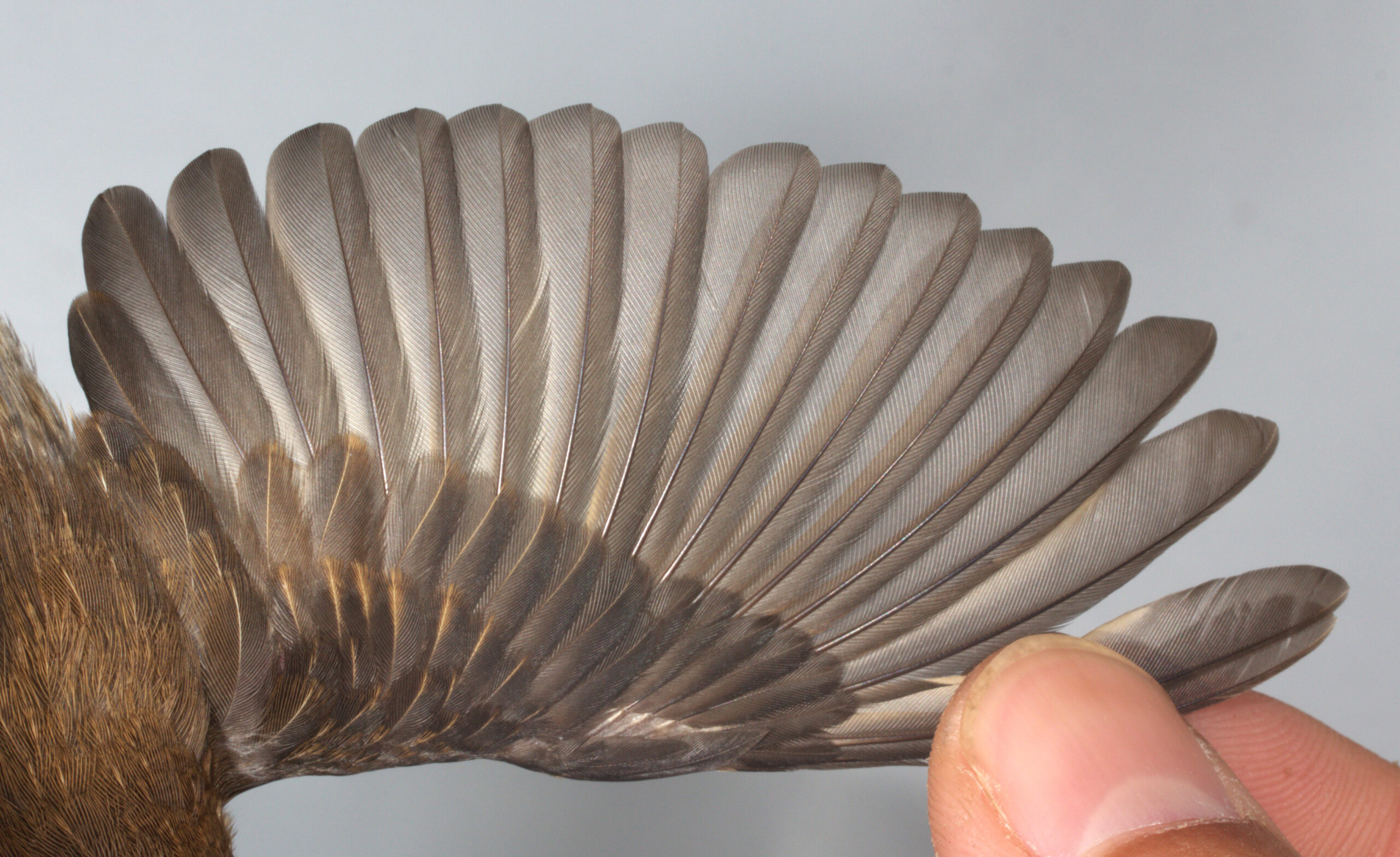
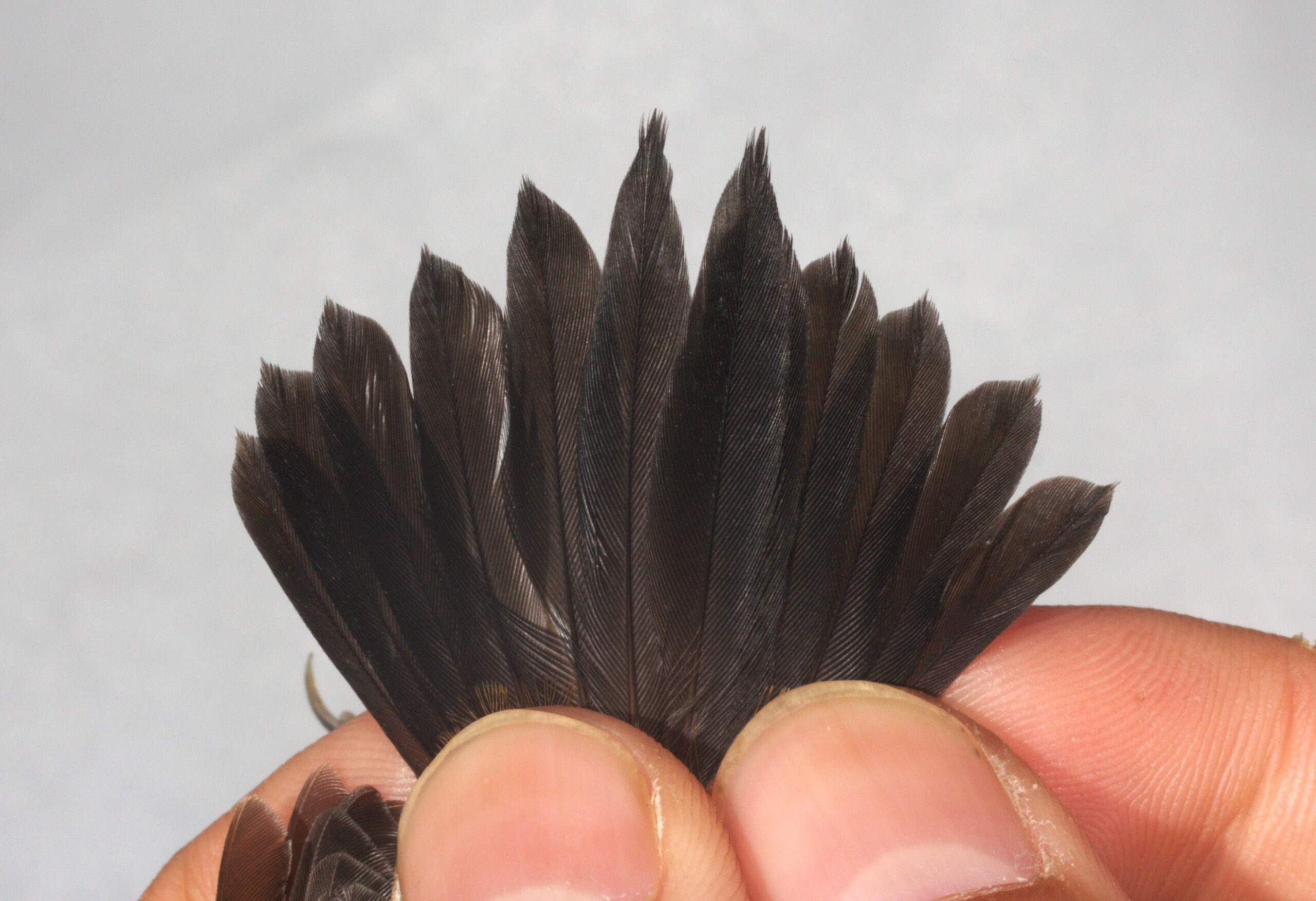
One of our more common captures, but one that we don’t talk too much about is the White-rumped Munia! These little residents like hanging out with their closely related Scaly-breasted Munia, flitting in flocks around vegetation in more open habitats.
Though they are common, their moult is not well studied, though it is thought that they carry out Complete Summer moults in adults and juveniles. This means we usually cannot age them. However, this individual showed an incomplete skull development, meaning it must be a 1st calendar year bird! This is interesting as, though we do not know exactly how old this bird is (since this species has a very long breeding period), plumage-wise, it looks identical to an adult!
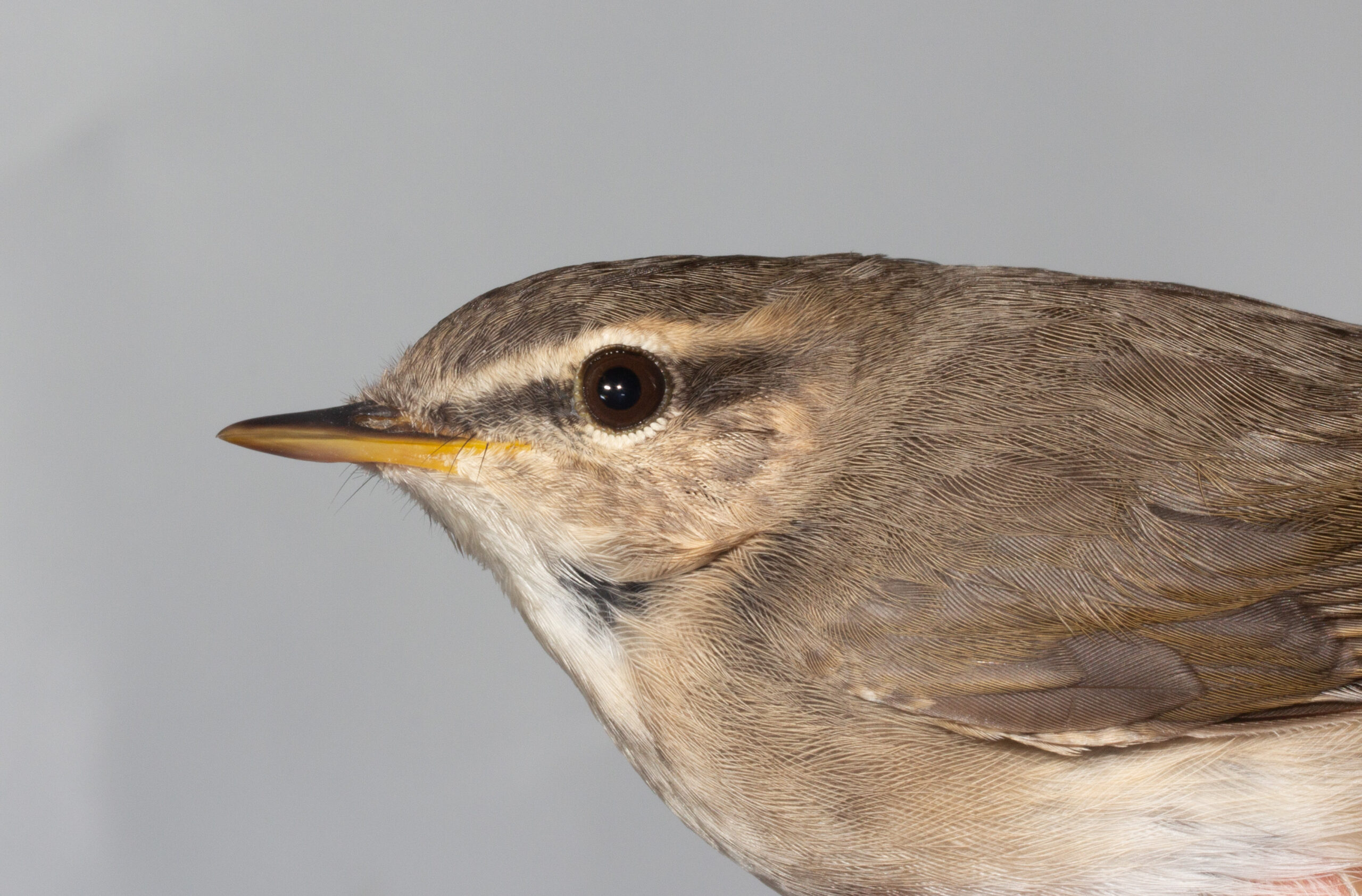
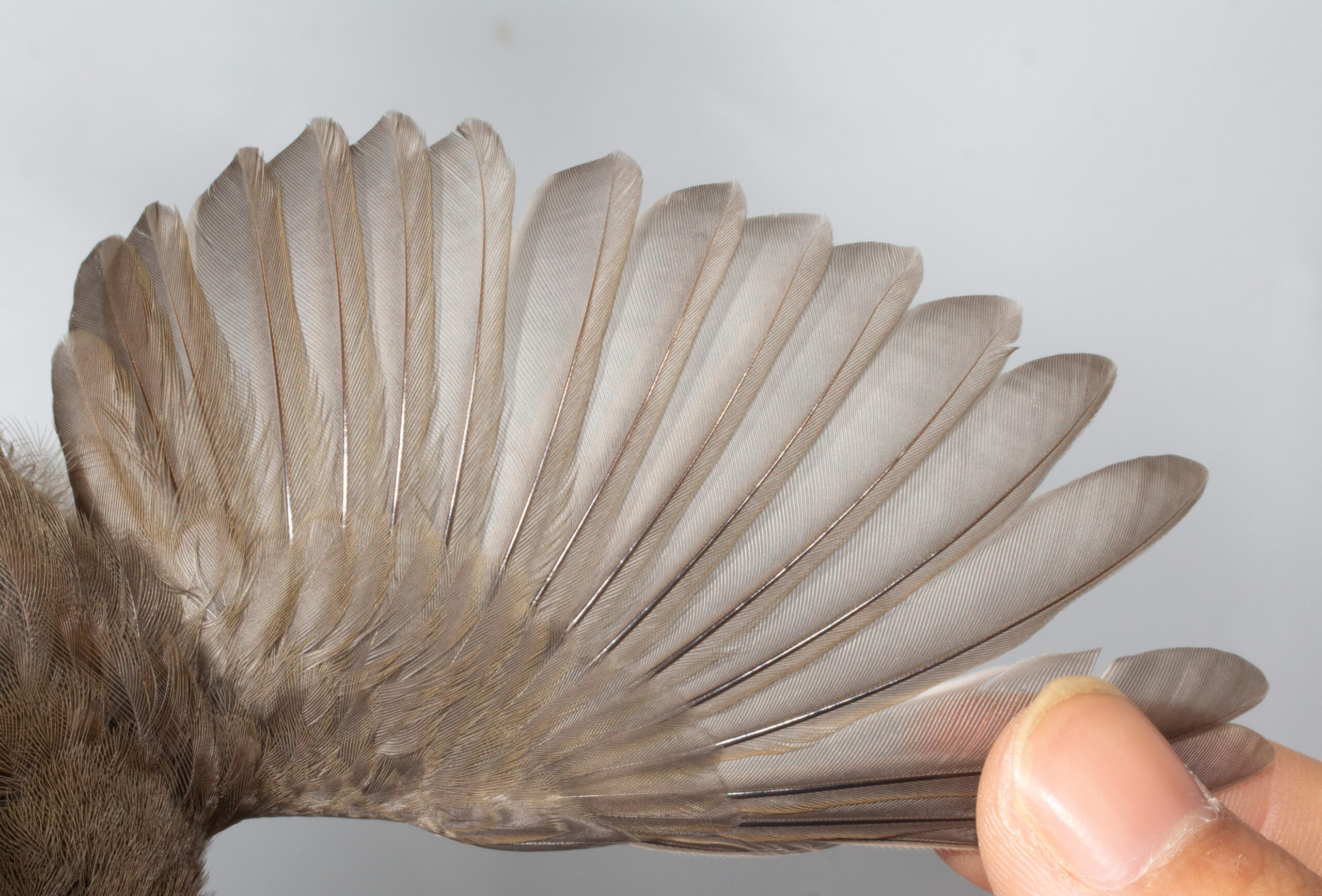
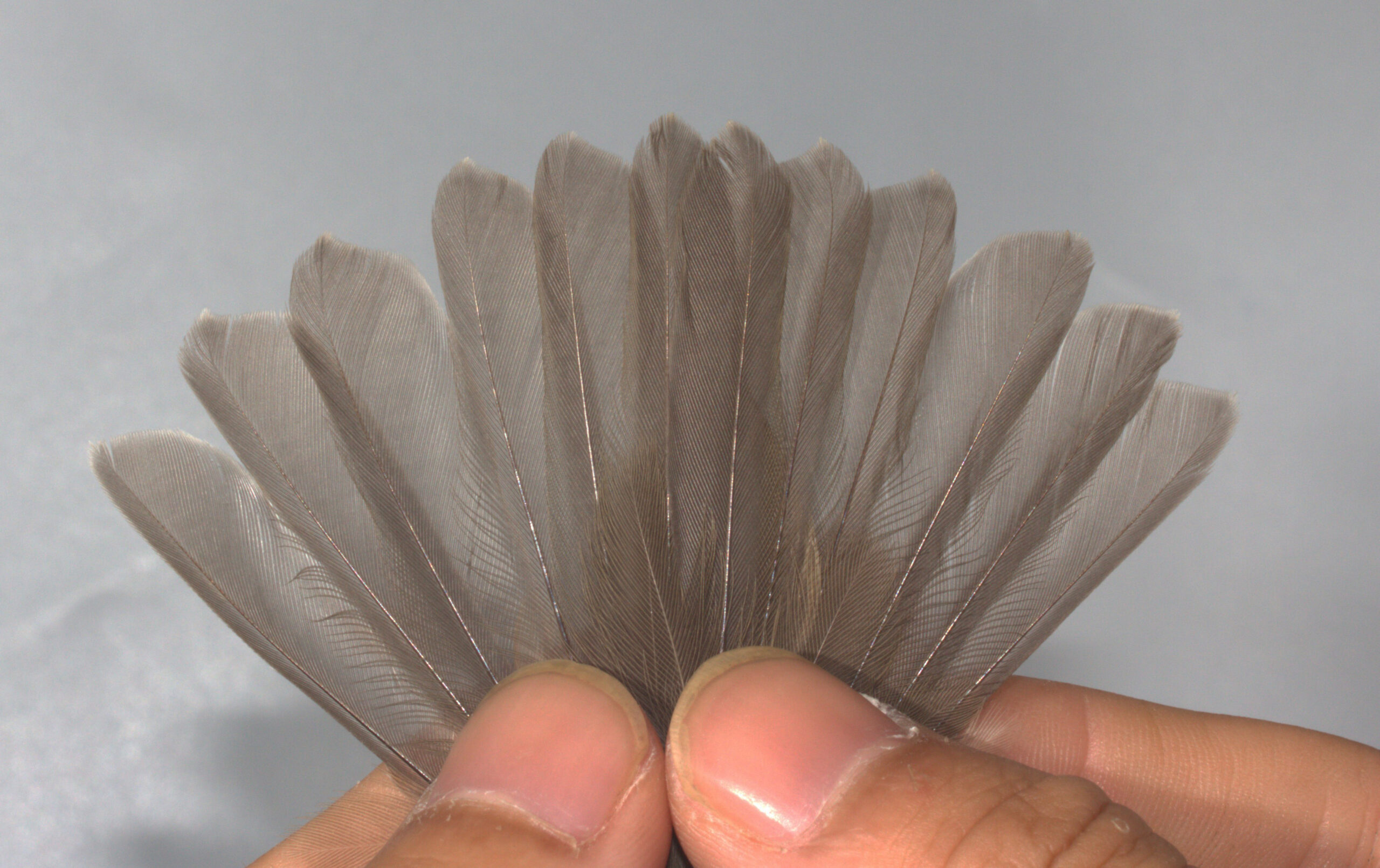
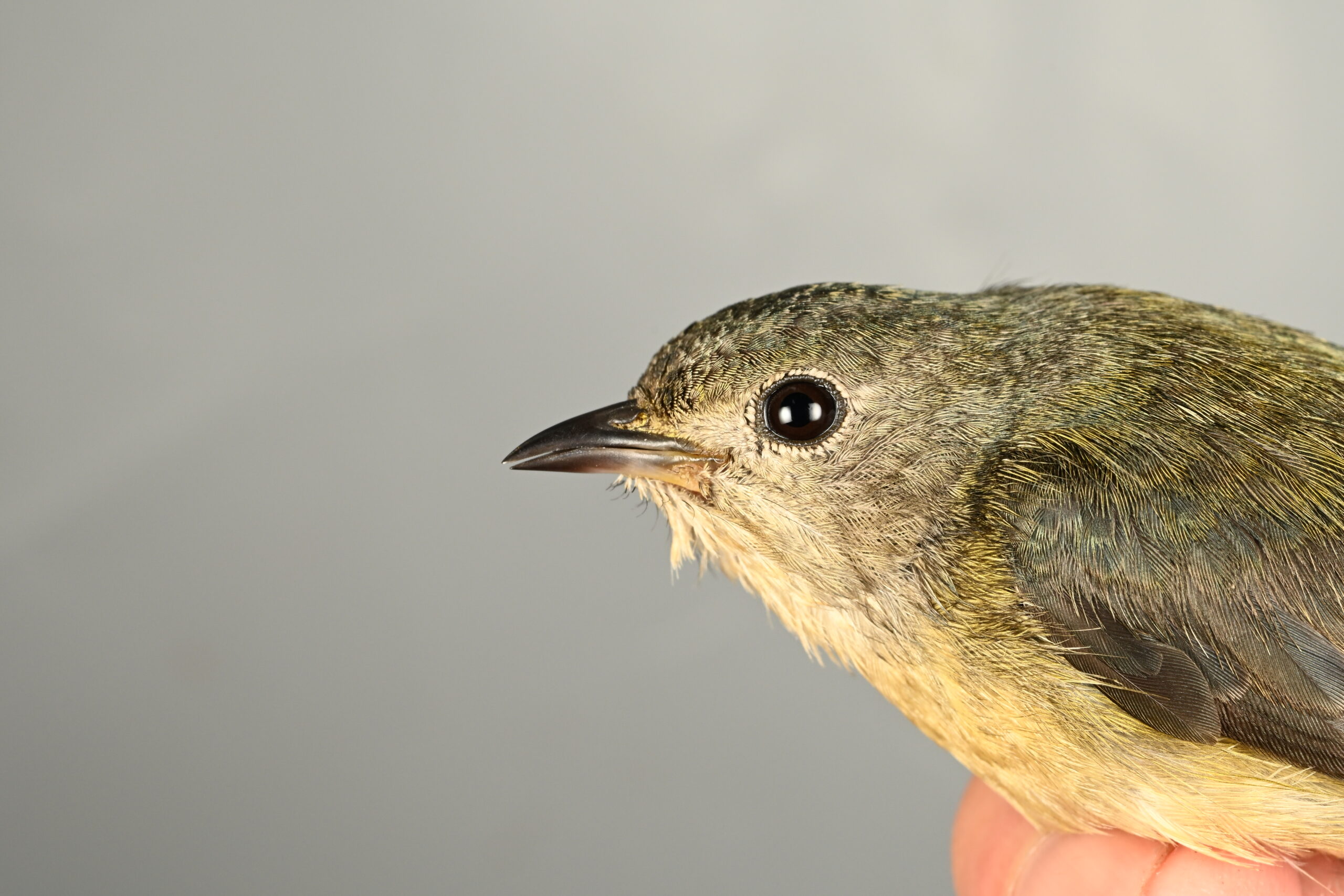
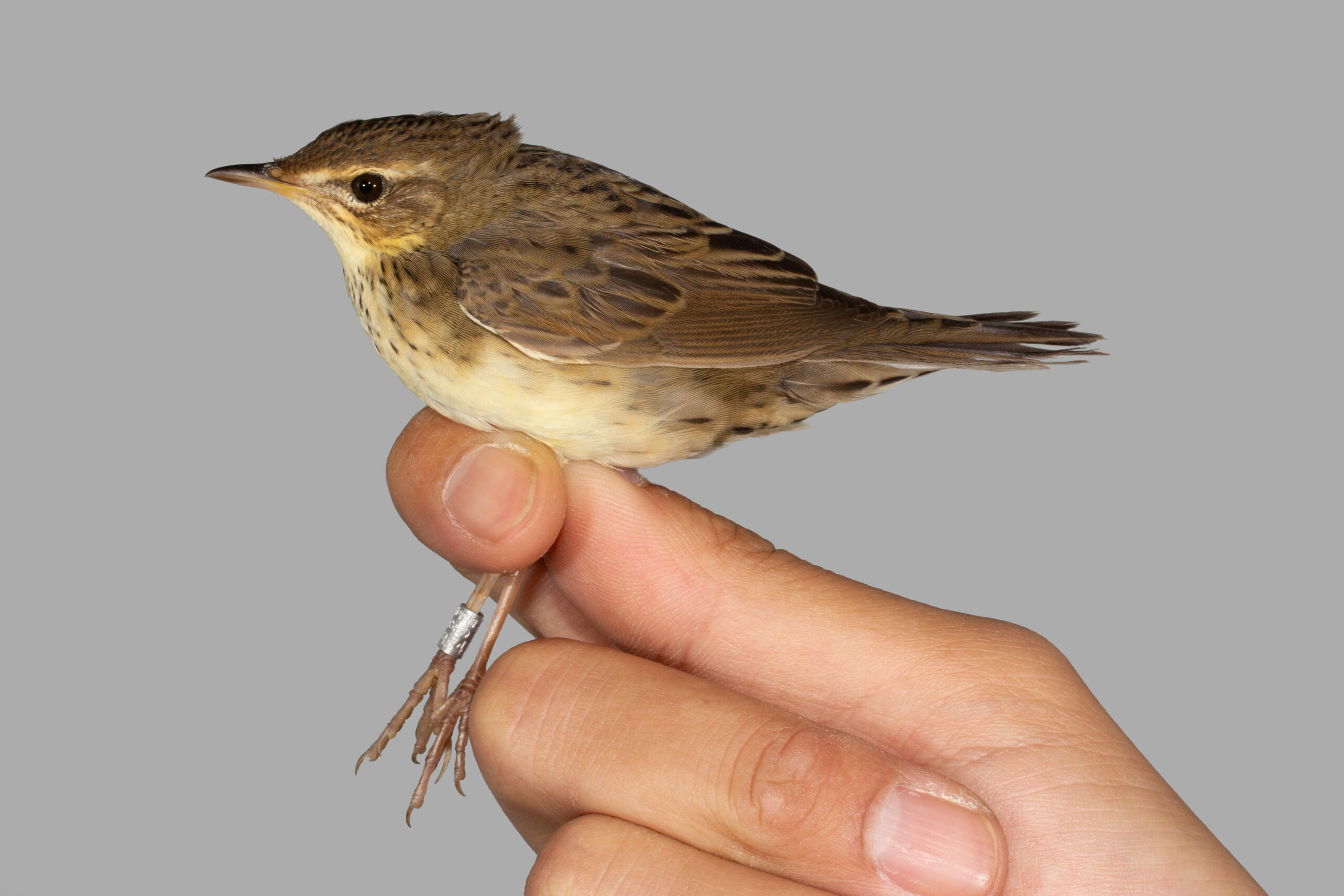
Another interesting bird today was this gorgeous Dusky Warbler! Though this is another common catch for us, it is rare for us to catch such a beautiful adult bird! Dusky Warblers also follow the Summer Complete (adults), summer partial (juveniles), however the juveniles moult is usually just some body and head feathers, and potentially some wing coverts, though we do not see so many moult limits in the wing. This means we have to assess the wing coverts to determine if they are of adult or juvenile type. Note that we can also use the tail (but again, only as a supporting factor as it is not impossible for a young bird to lose their tail and regrow it- making it look adult), and the undertail coverts, a lot of which are not moulted in the post juvenile moult.
In our individual, the wing is of very good quality, with broad, glossy, dense feathers across the entirety of it. This, plus the incredibly broad and rounded tail tells us this is a 2nd calendar year or older bird!
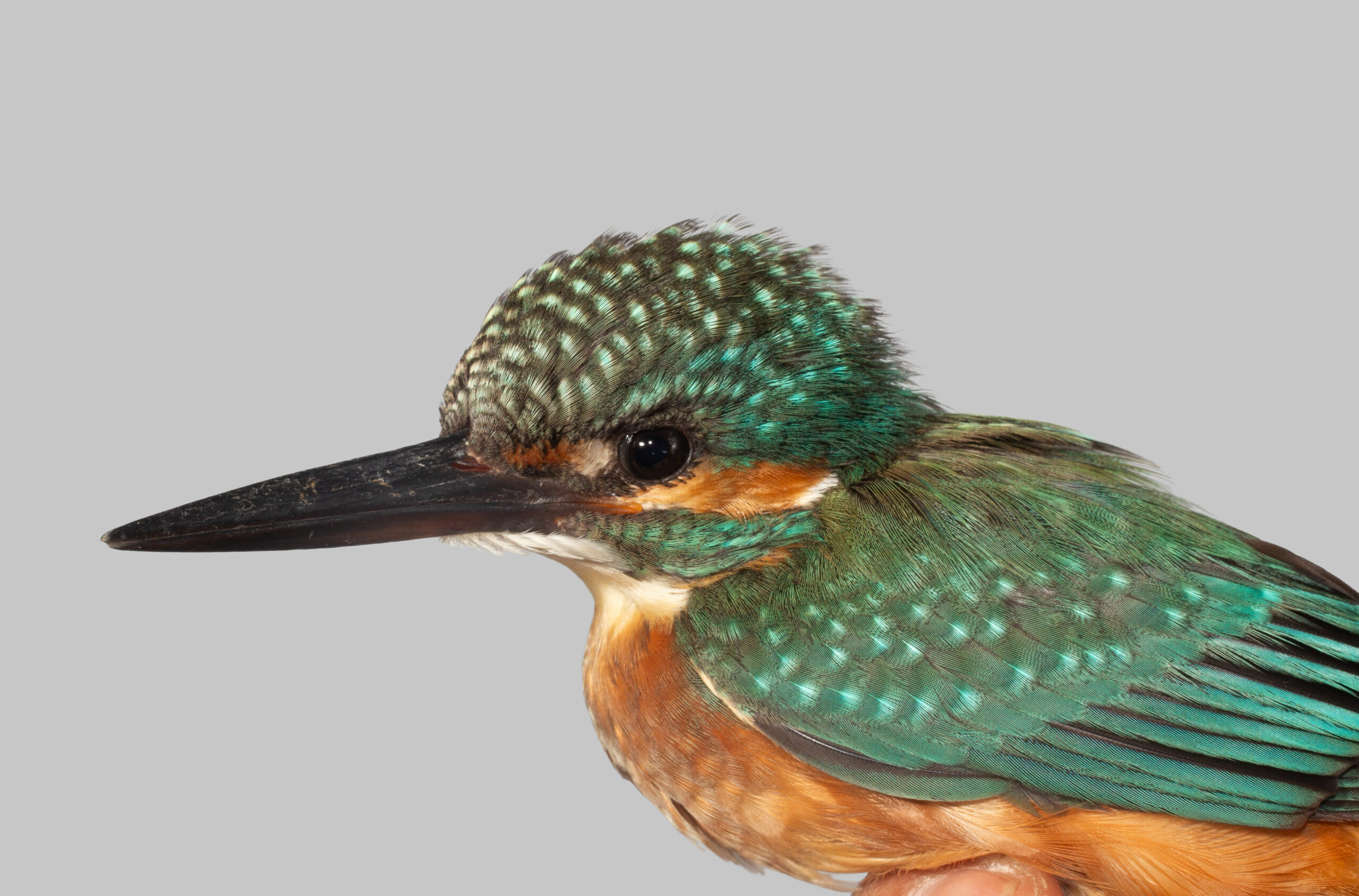
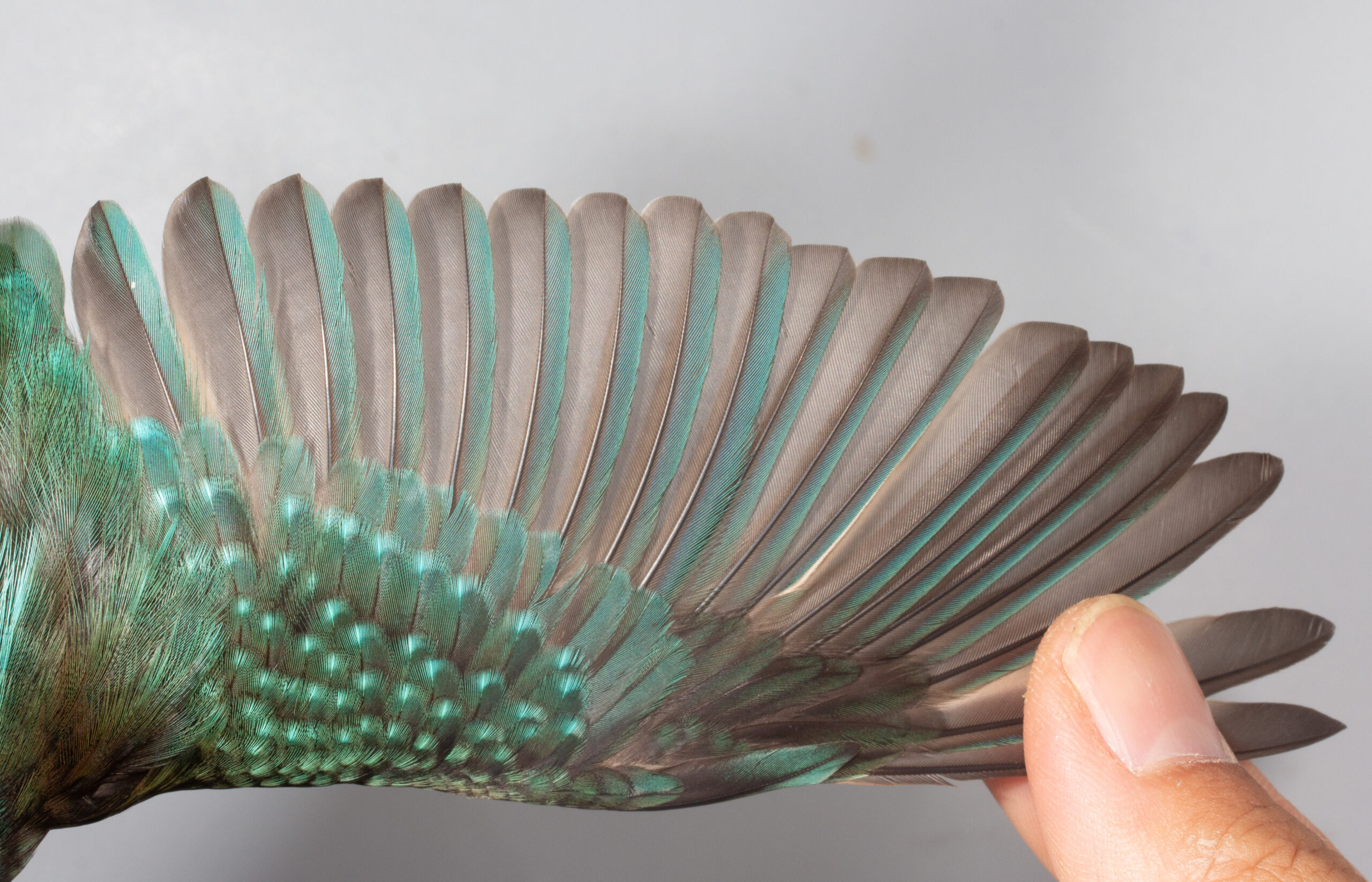
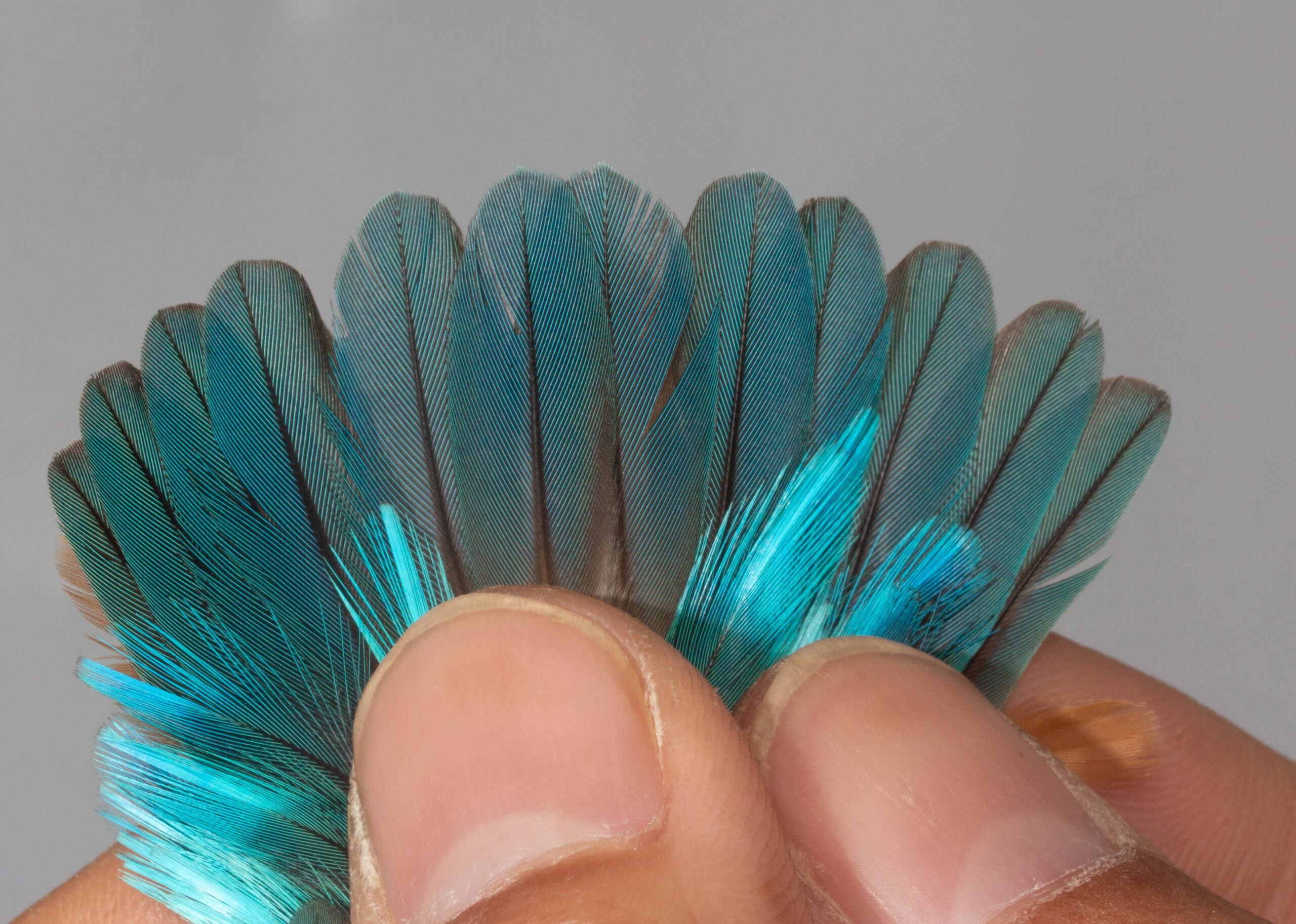
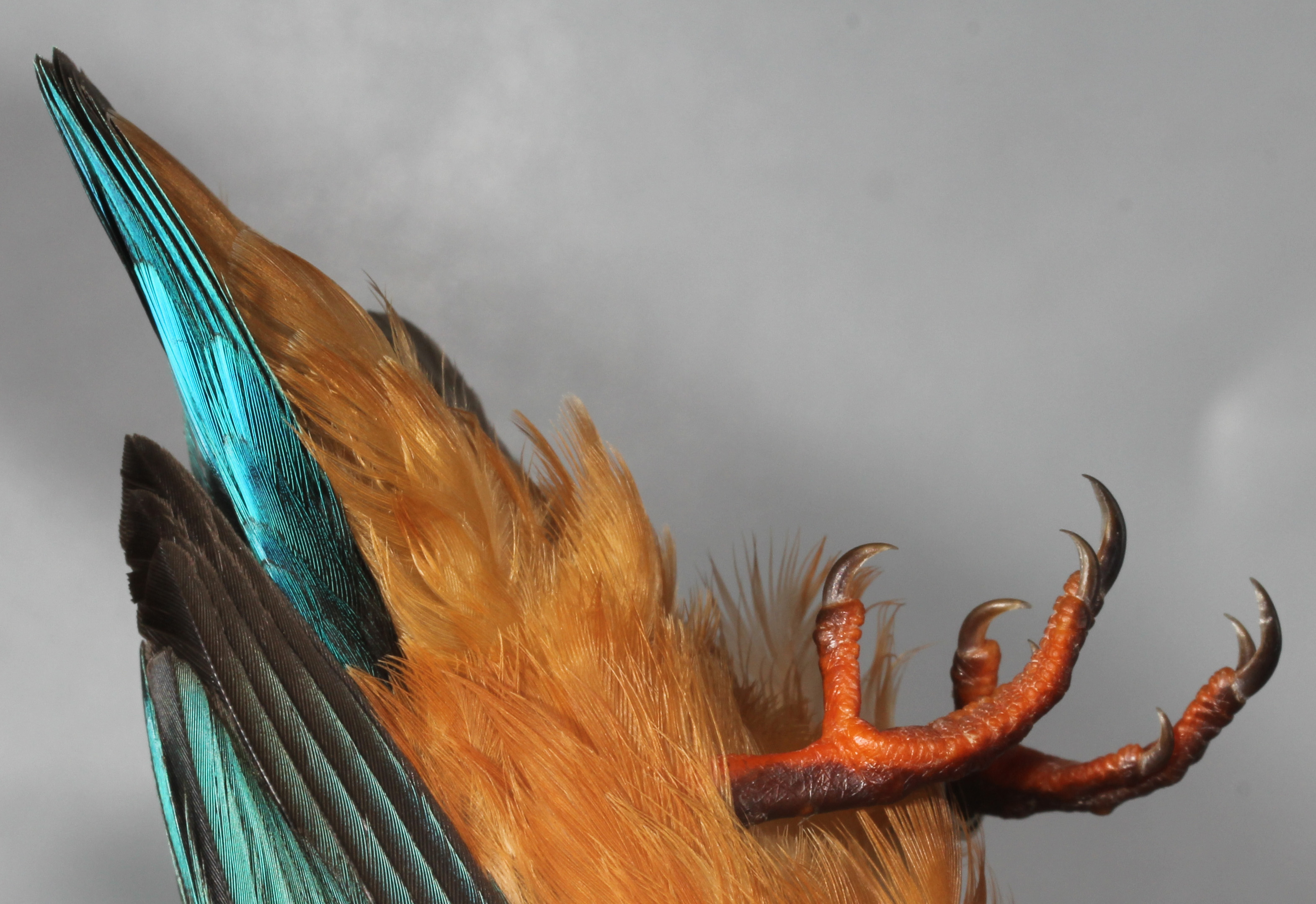
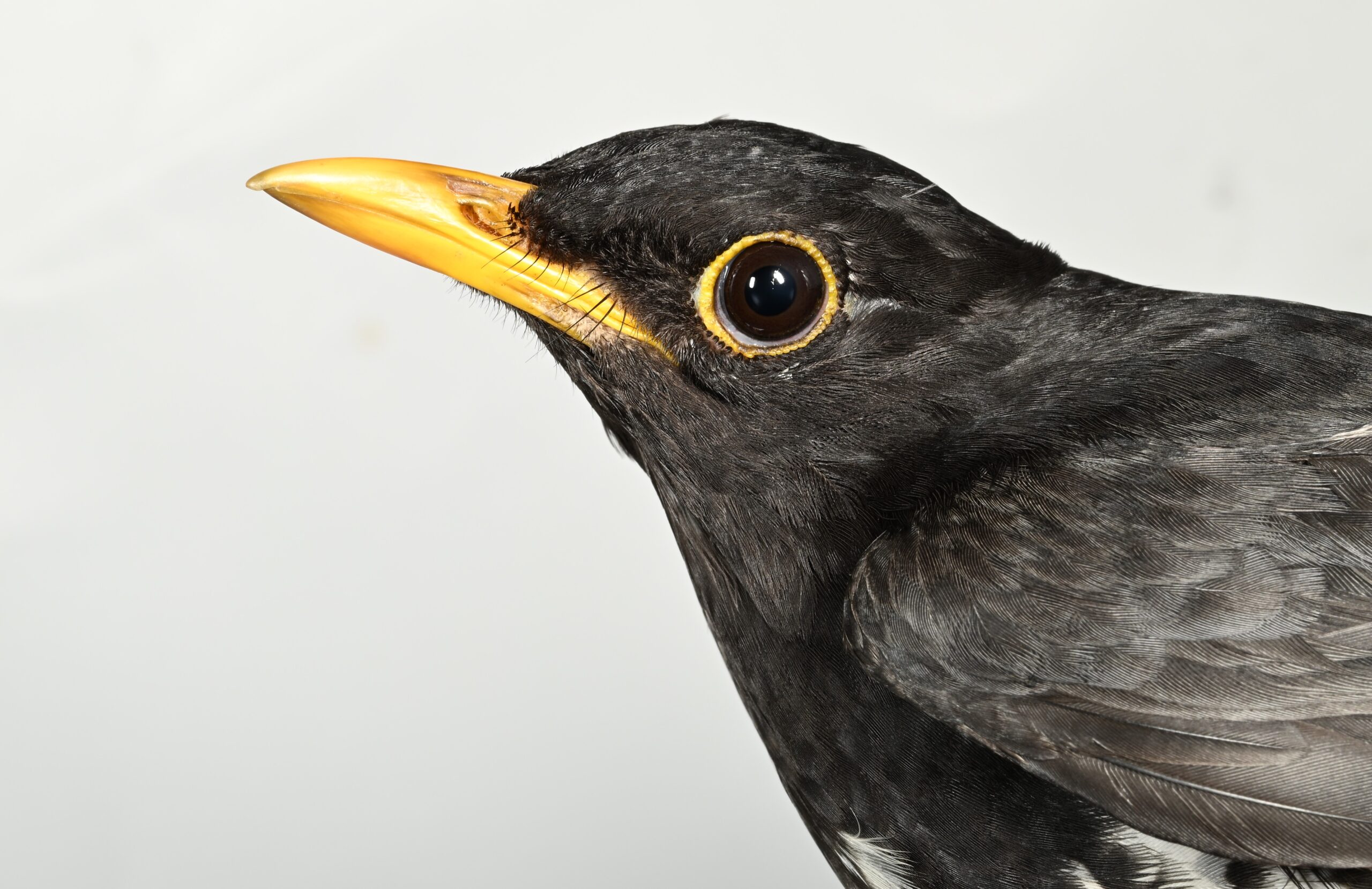
Ending the morning with a flash of a colour in the form of this gorgeous young Common Kingfisher! As with most non-passerines, Kingfisher moult is a complex business, however this individual showed a uniformly juvenile plumage, being more…’green’ than blue. This, coupled with the dark hue to the feet (which should be bright orange-red in adults), tell us this is a 1st calendar year bird! A lovely morning!
Daily Totals
| Species | Original | Recapture |
| Black-browed Reed Warbler | 4 | 0 |
| Common Snipe | 2 | 0 |
| Dusky Warbler | 21 | 1 |
| Eurasian Tree Sparrow | 8 | 0 |
| Oriental Reed Warbler | 2 | 1 |
| Plain Prinia | 2 | 1 |
| Red-throated Pipit | 4 | 0 |
| Scaly-breasted Munia | 2 | 0 |
| Spotted Dove | 3 | 0 |
| White Wagtail | 1 | 0 |
| White-breasted Waterhen | 1 | 0 |
| Yellow-breasted Bunting | 1 | 0 |
| Grand Total | 51 | 3 |
*Please note that all wild birds, their nests, and eggs are highly protected (under Wild Animals Protection Ordinate, Cap. 170) in Hong Kong. It is an offence to wilfully disturb, take, remove, or injure wild birds or their nests/eggs. The actions described here were undertaken by trained professionals holding the necessary licenses and permits issued by the AFCD.*