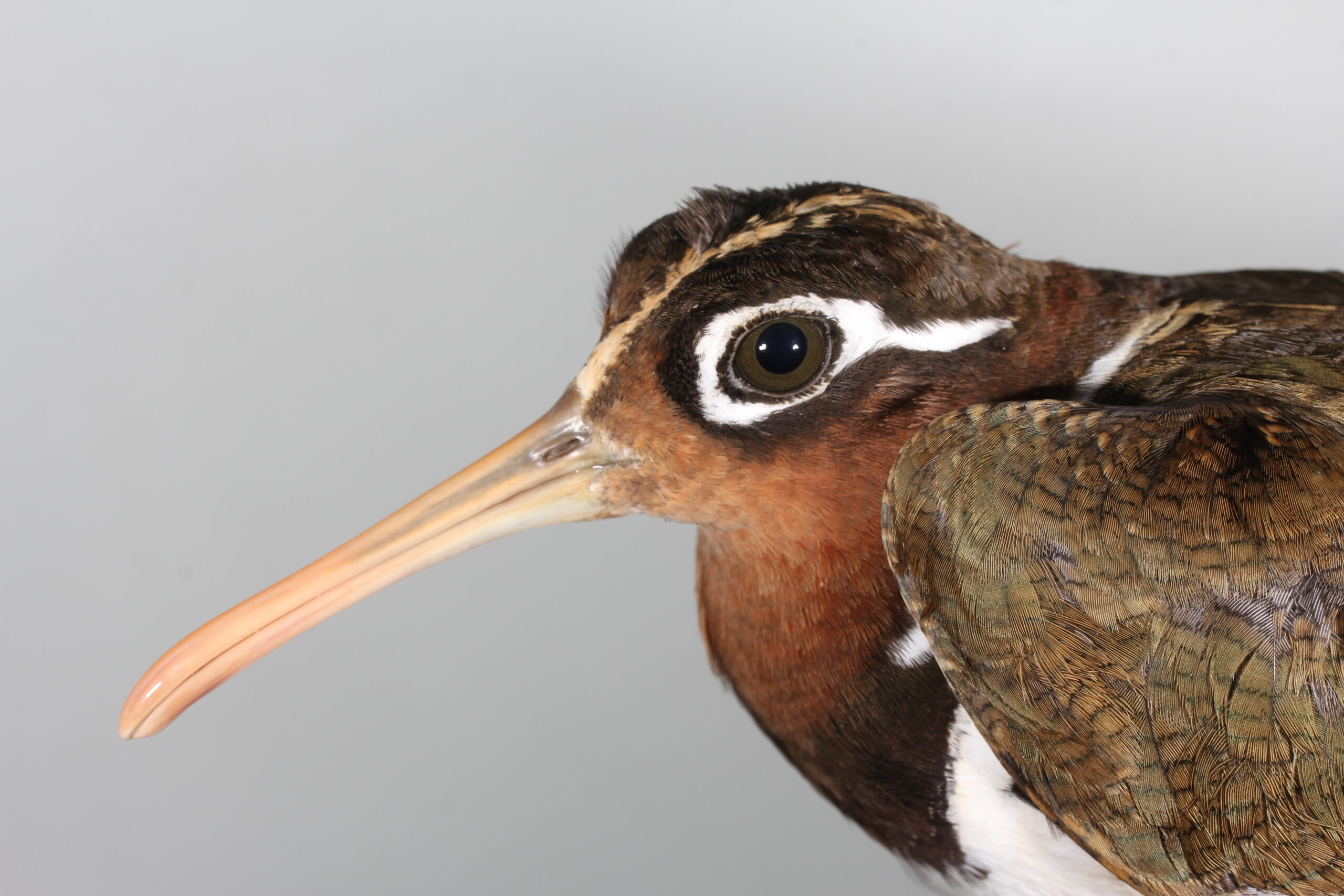



Our forest ringing is typically a high effort, low reward. That is to say, the area is so large, and the canopy so tall, it is difficult to trap the birds here. However, when we do catch birds, they are generally of species we know less about, and thus all the more important to collect data on them.
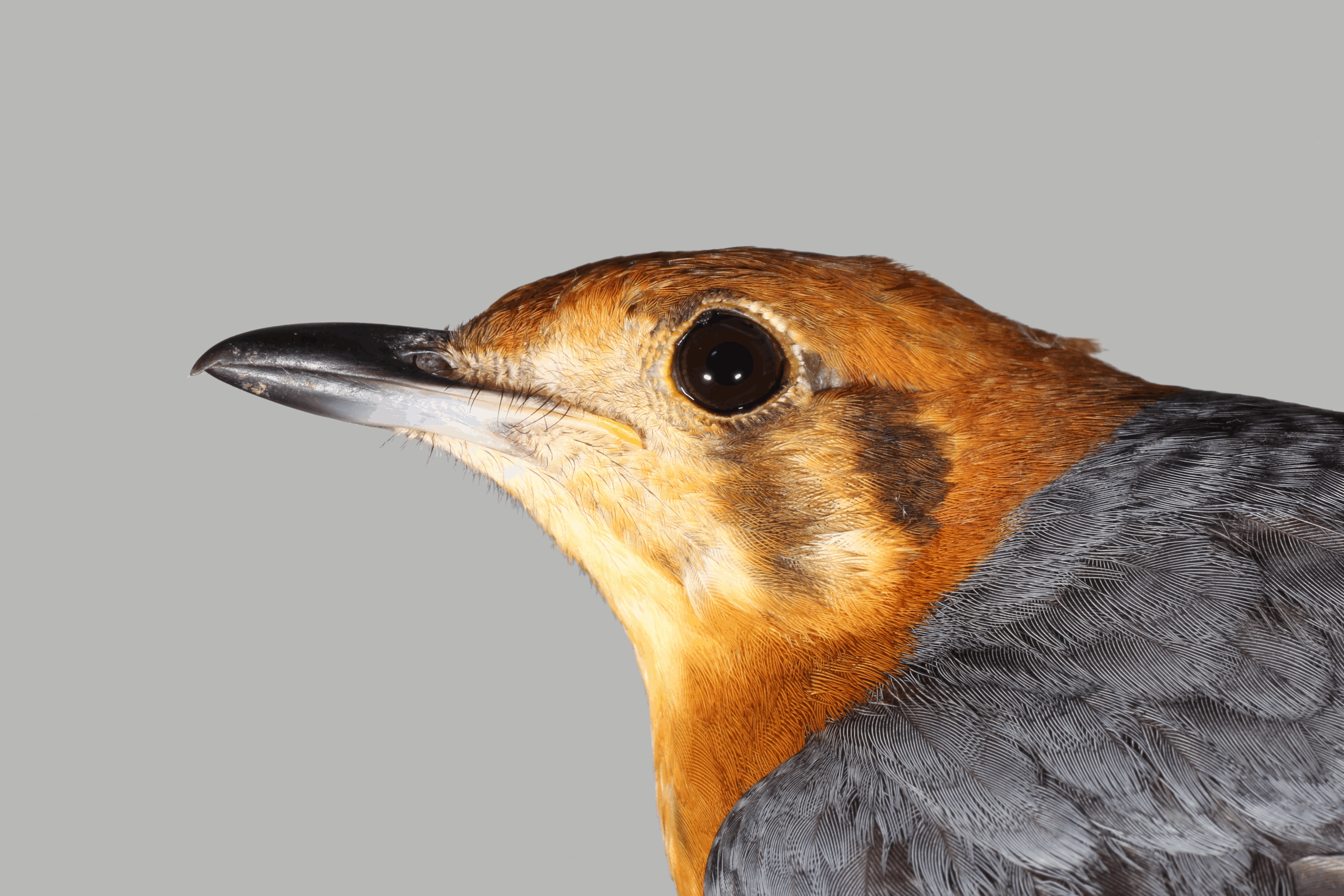
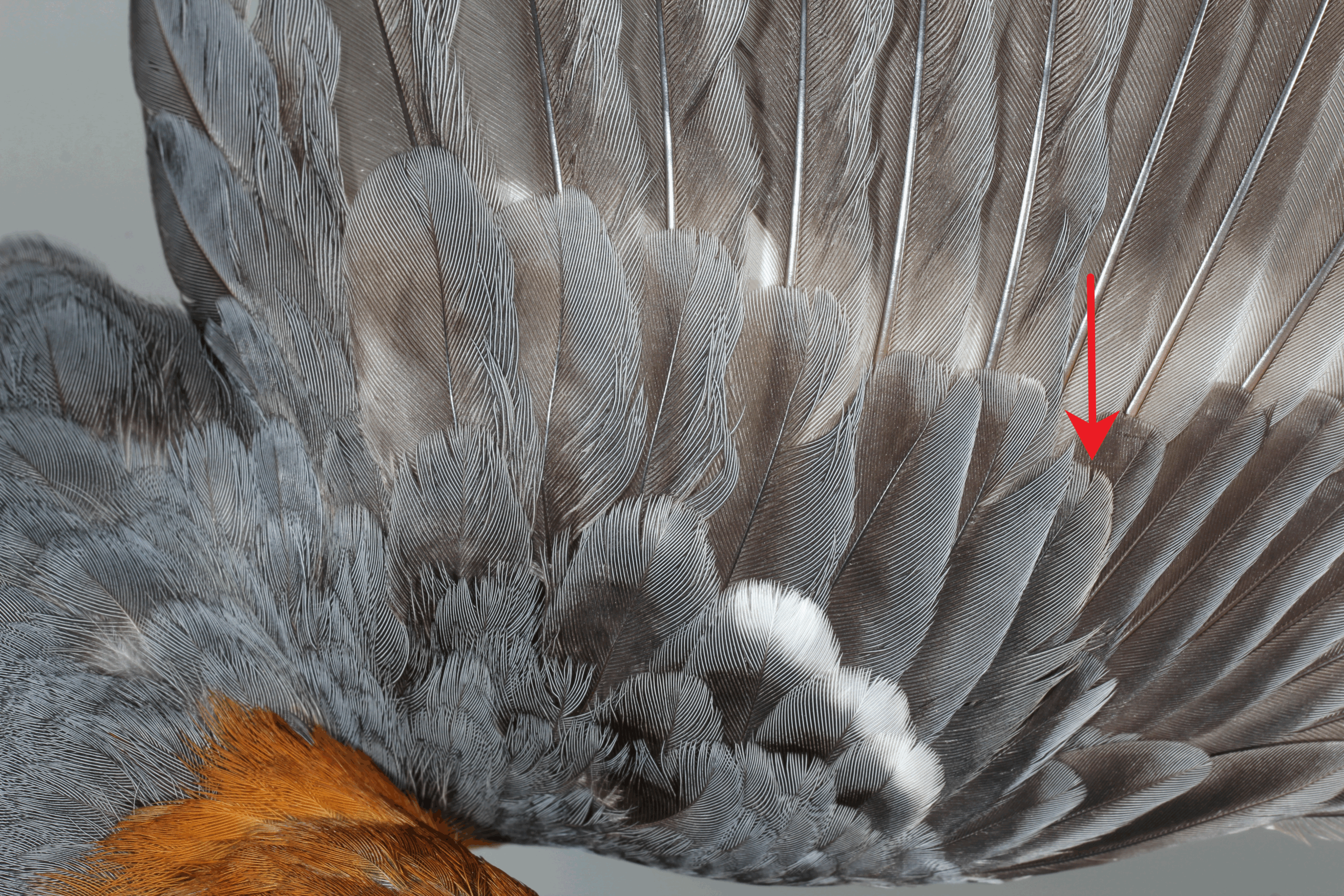
First off we had our first Orange-headed Thrush of the season! This was a beautiful adult male, with an interesting GC 1 (Greater Covert). This feather looks to be older than the rest, suggesting that it remained unmoulted (retained). However, this does not allow the possibility of a juvenile, as the retained feather is still of adult type. This, plus the adult quality of all other feathers (primary coverts, primaries, secondaries, tertials) allows this individual to be identified as an adult bird.
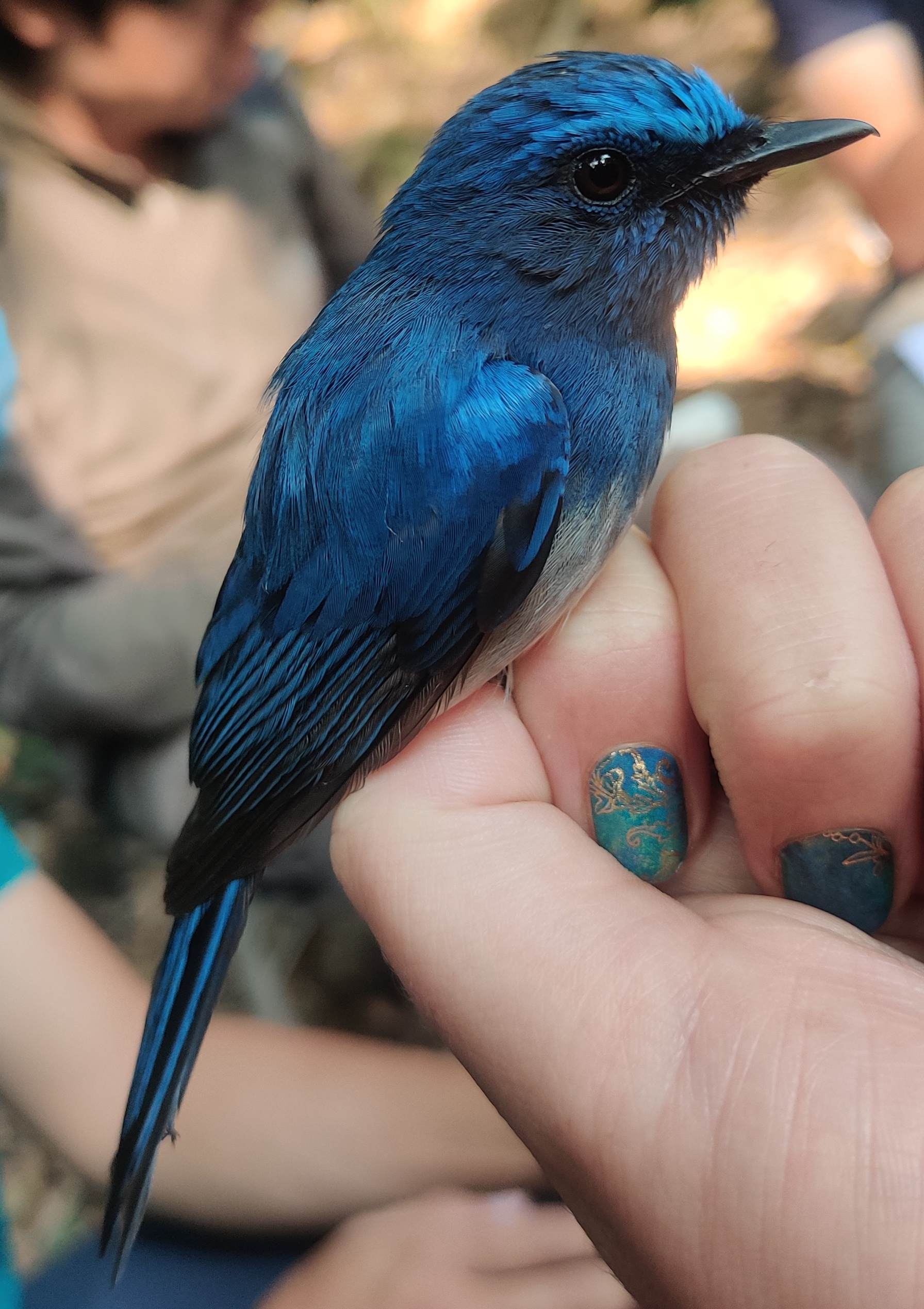 The next exciting bird was an adult male Hainan Blue Flycatcher; arguably one of our most beautiful summer visitors.
This species is one of only two flycatcher species to breed in Hong Kong (the other being the Brown-browned Flycatcher).

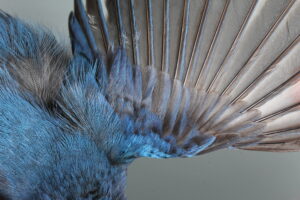
This bird shows no contrasts in any feathers- all are the same shade of blue, with a dark, dense quality.
Another little surprise of the day was a White-bellied Erpornis! This is only the fourth individual caught by HKBWS. Not much is known about the ageing of the White-bellied Erpornis, so the data and photos collected here will help to aid us in knowing more about the Hong Kong populations of this species.
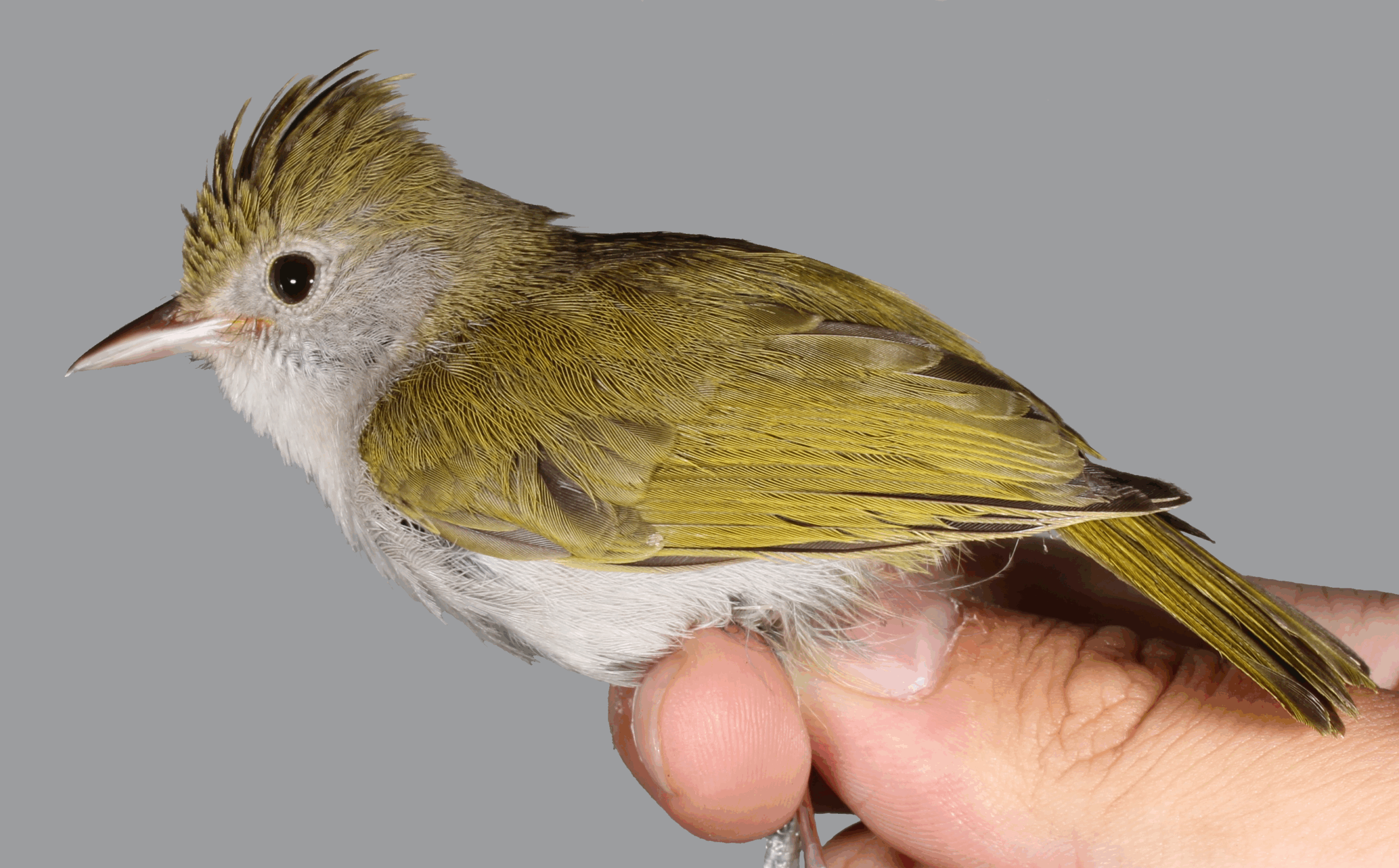
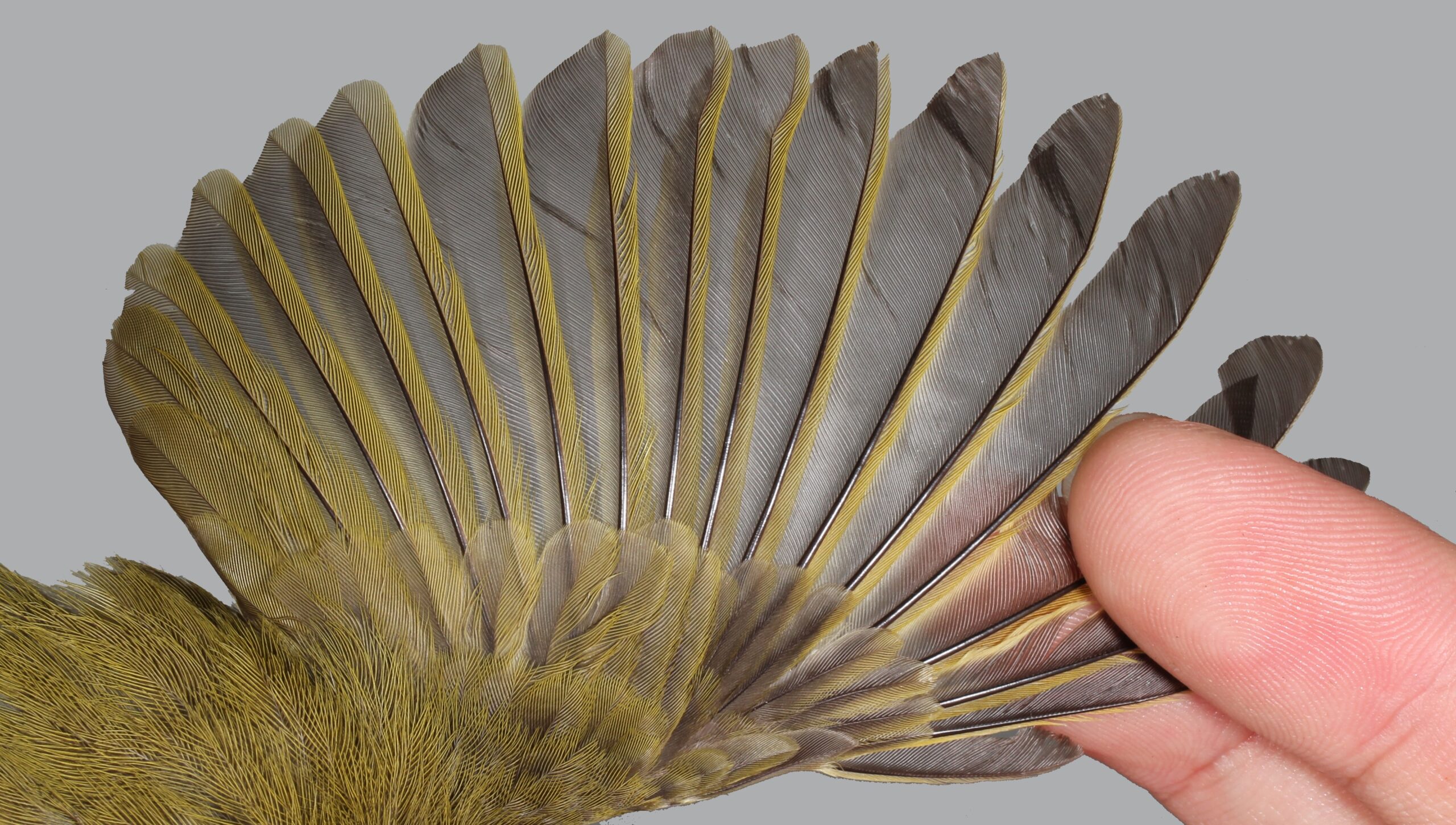
 What we see in this wing is a pretty uniform set of feathers, with only potential moult limits within the alula.
Daily Totals
| Species | Original | Recapture |
| Swinhoe’s White-eye | 2 | 1 |
| Orange-headed Thrush | 1 | 0 |
| Mountain Bulbul | 1 | 0 |
| White-bellied Erpornis | 1 | 0 |
| Hainan Blue Flycatcher | 1 | 0 |
| Huet’s Fulvetta | 0 | 4 |
| Red-whiskered Bulbul | 1 | 0 |
| Rufous-capped Babbler | 1 | 0 |
| Chestnut Bulbul | 1 | 0 |
*Please note that all wild birds are protected under Hong Kong Law. All ringing activities are conducted with the necessary permits issued by the AFCD. Handling and processing of birds is only carried out by experienced individuals.*