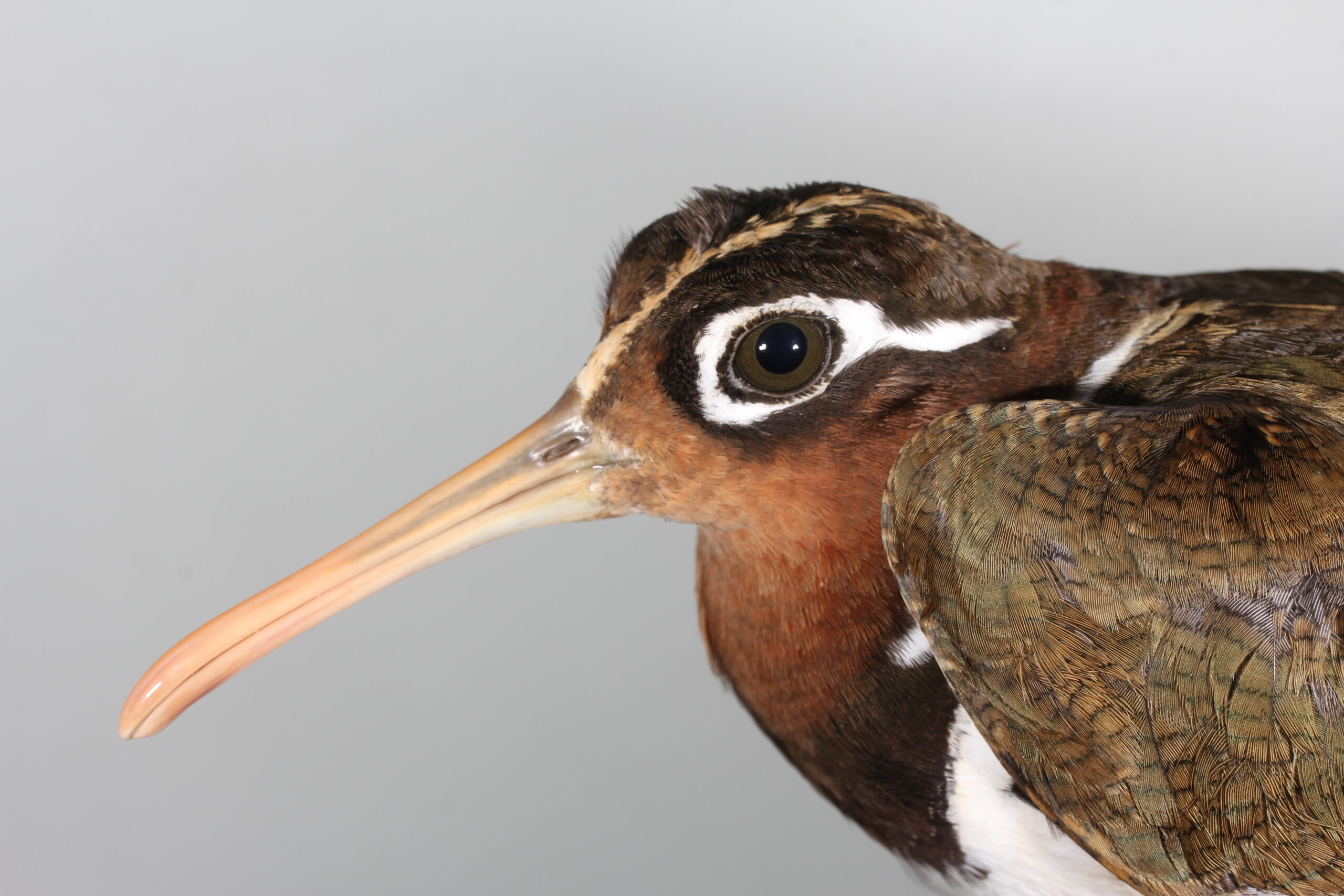



Greater Painted-snipes Rostratula benghalensis are one of Hong Kong’s most iconic resident waterbirds, with their striking facial patterning and silver and orange speckled wings. They are a species that breaks the typical view of having bright coloured males and drab females. In this species it is the female with the more colourful appearance, with a rich maroon head and chest diffusing into a darker breast band and crown, and a bright white eye patch.
Contrastingly, male show a lighter speckled face, gradually fading into a dull-brown breast, crown and nape, and a yellower eye patch. This could be due to the fact that this species is polyandrous, meaning that one female may have nests with many males, and it is typically the males that incubate the chicks (again, the opposite of what is considered the ‘norm’ in nature).
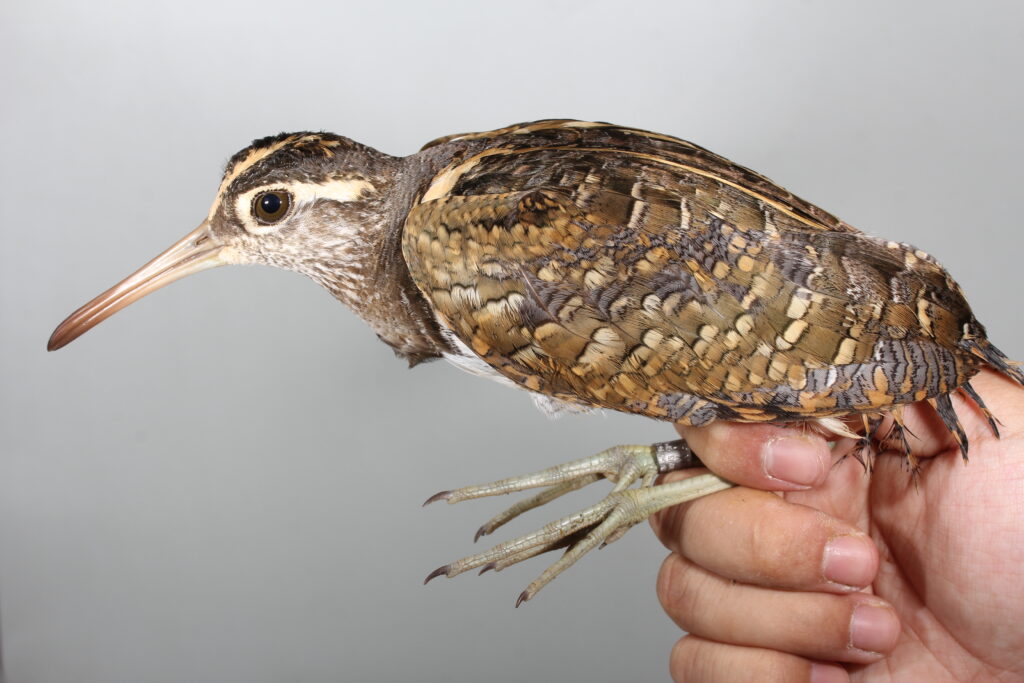
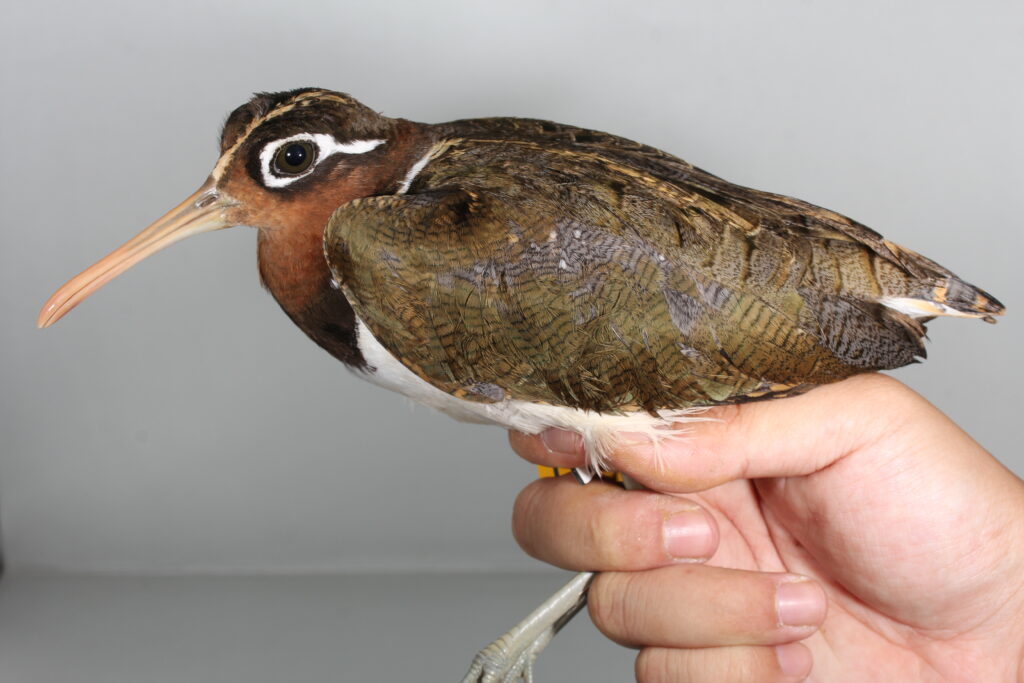
Unfortunately, our charismatic neighbours’ populations don’t seem to be doing so well, with studies as early as the 2000s suggesting that there may be some cause for concern. Despite their conspicuous appearance, the Greater Painted-snipes of Hong Kong are rather poorly studied, which could facilitate a lack of conservation action where it may be necessary.
To combat this, last autumn the team set out to the paddyfields in an effort to catch, ring and tag Greater Painted-snipes to find out more about their movements in Hong Kong, and which habitats they seem to prefer throughout the autumn and winter months.

So, as usual, operations began at the crack of dawn in the habitats that we know the Snipes like best. This species is a marsh specialist, loving both freshwater marshes and wet agricultural lands. With the permission from the Agricultural, Fisheries and Conservation Department (AFCD), we spent our mornings catching the Snipes, ringing, ageing, sexing and tagging them.
Ageing Greater Painted-snipes is another aspect that need more research into, though it is thought that before the completion of their Summer moult, we can still identify juvenile feathers in the wing. This is due to their worn and loose appearance, tipped with a buffish tone, in comparison to the white tips to adult-type feathers.

As with all waterbirds in Hong Kong, we also place colour flags onto the birds with the Hong Kong colour combination (white over yellow, black inscription). This is helpful as, although previously mentioned here that these birds are resident, there is some proportion of the population that is migratory. These flags mean that if this bird is resighted in another place, it can easily be identified as having been tagged in Hong Kong.
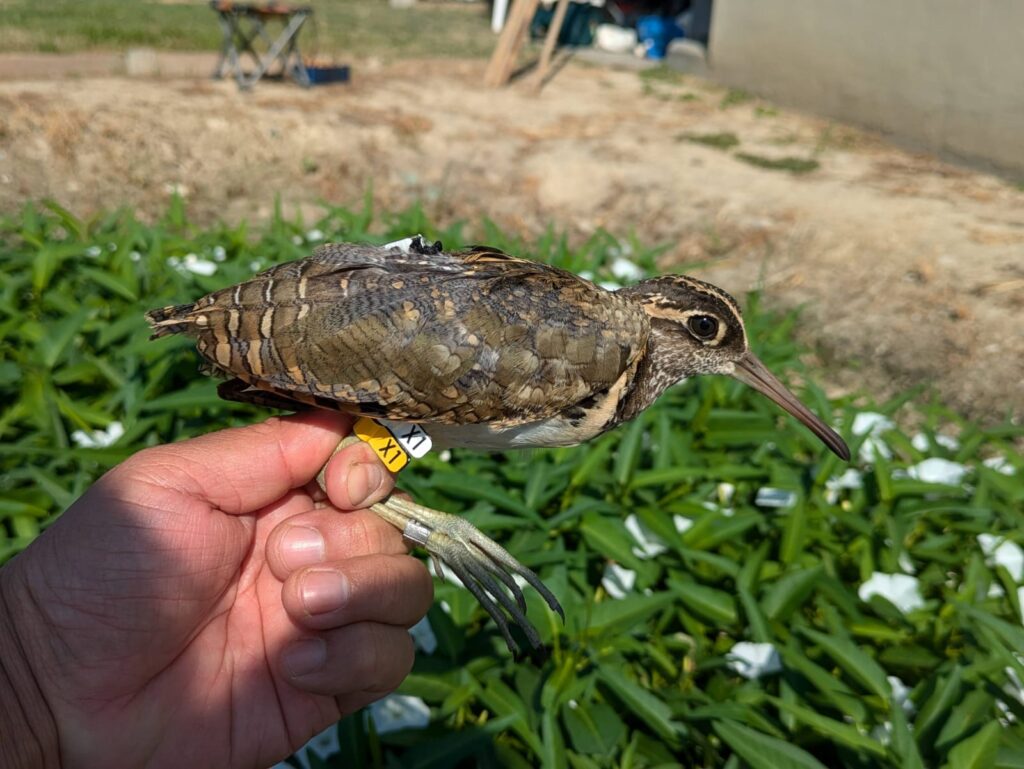
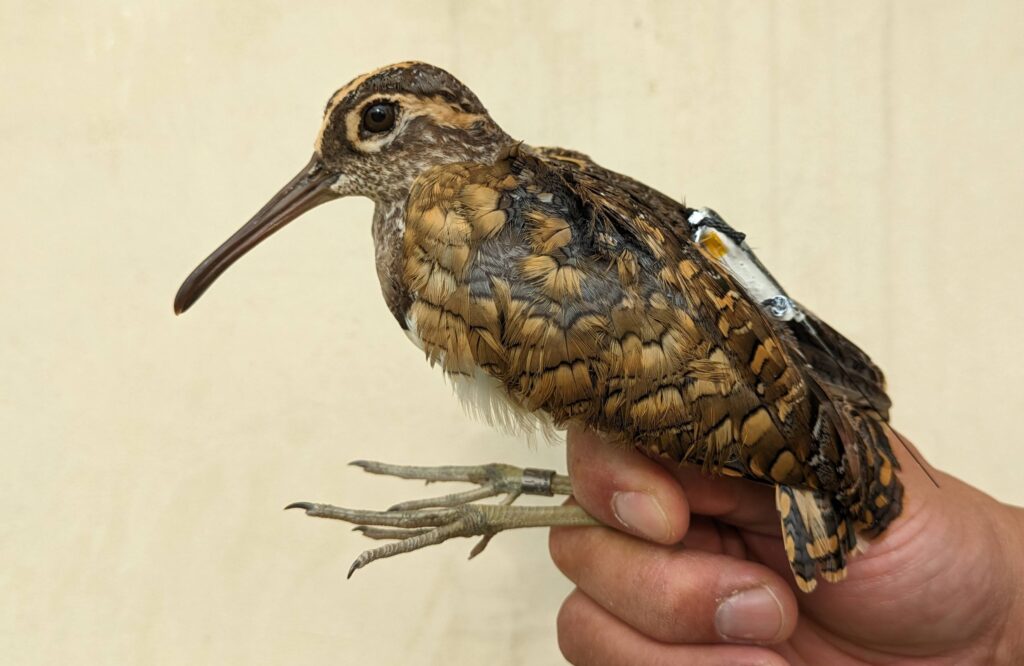
Next, very small tags were deployed onto the Snipes. These tags are transmitters, sending out a signal to a receiver that can determine the location of the bird. The tag is fitted like a little backpack onto the birds, with everything weighing less than 3% of the tagged individual’s bodyweight.
The final job was simply to wait and see where the Snipes would go. Of the four Greater-Painted Snipes tagged, we were able to get a good number of location points from three individuals, which gave us an insight into their home ranges. Interestingly, their home ranges and habitat preferences appeared to differ in the night versus during the day.
To understand this, we need to think about to the ecology of the Greater Painted-snipe. They are typically a crepuscular (active at dawn and dusk) and nocturnal species, that are rather inactive during the day. The habitats preferred during the day were found to be fields of Chinese Arrowhead and marsh, both offering dense vegetation suitable for roosting. Conversely, water spinach fields were top priority for nighttime foraging activities, which are rather open water areas in comparison.

These results highlight the importance of maintaining a diverse range of habitats to protect our waterbirds, that utilise different wetland habitats for different purposes.
Further studies are necessary to gain more knowledge into whether this habitat usage can differ during the breeding period, as well as how individual variation and habitat selection may affect our results. We hope that we can continue with our tracking work, to build upon the knowledge we gained, and provide a basis for protection strategies to come.
We must say a big thank you to Patagonia for funding this project with their “1% for the planet” program. Thanks also to AFCD of the Hong Kong Government for permitting us to trap and deploy trackers to the Snipes.
*Please note that all wild birds, their nests, and eggs are highly protected (under Wild Animals Protection Ordinate, Cap. 170) in Hong Kong. It is an offence to wilfully disturb, take, remove, or injure wild birds or their nests/eggs. The actions described here were undertaken by trained professionals holding the necessary licenses and permits issued by the AFCD.*