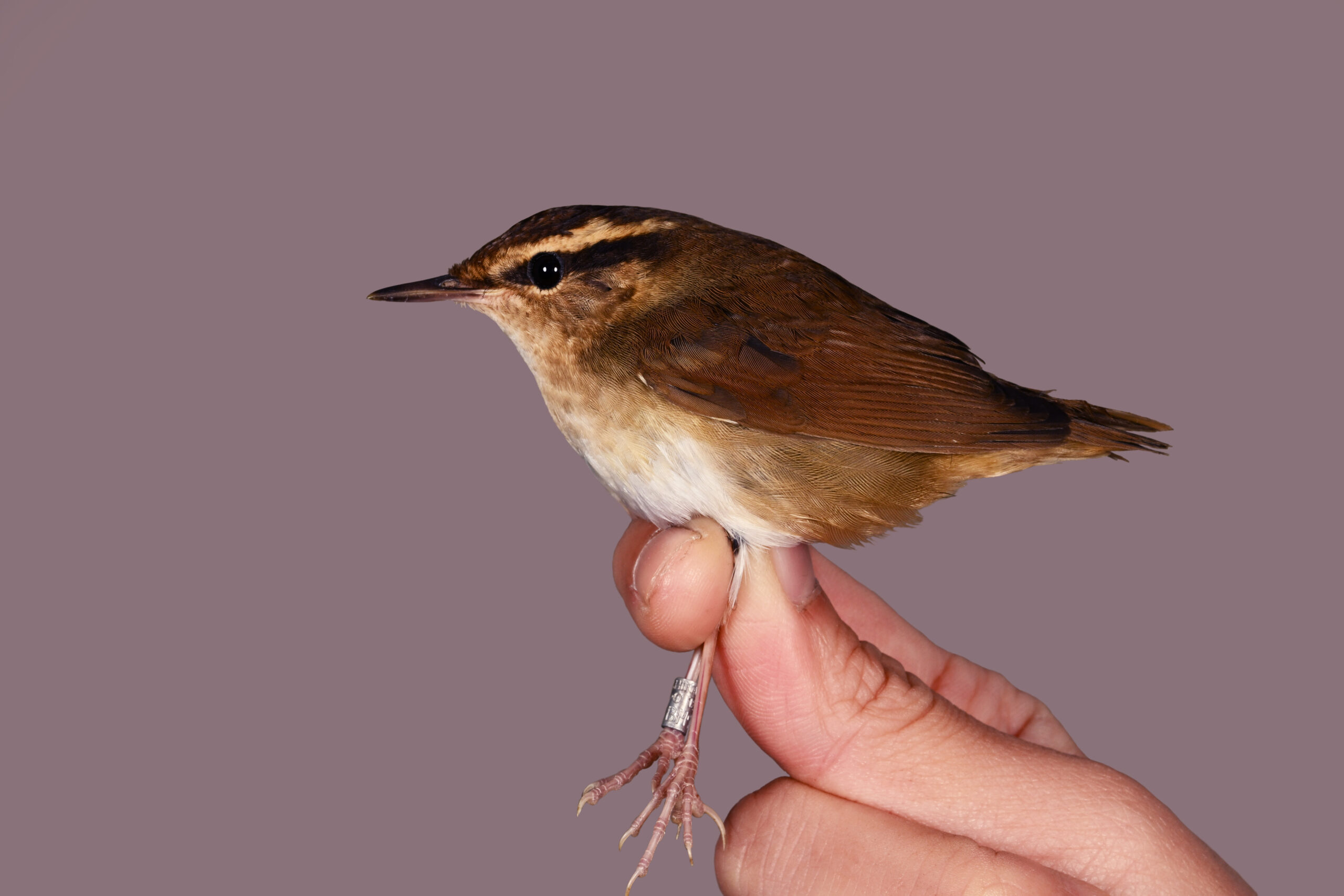



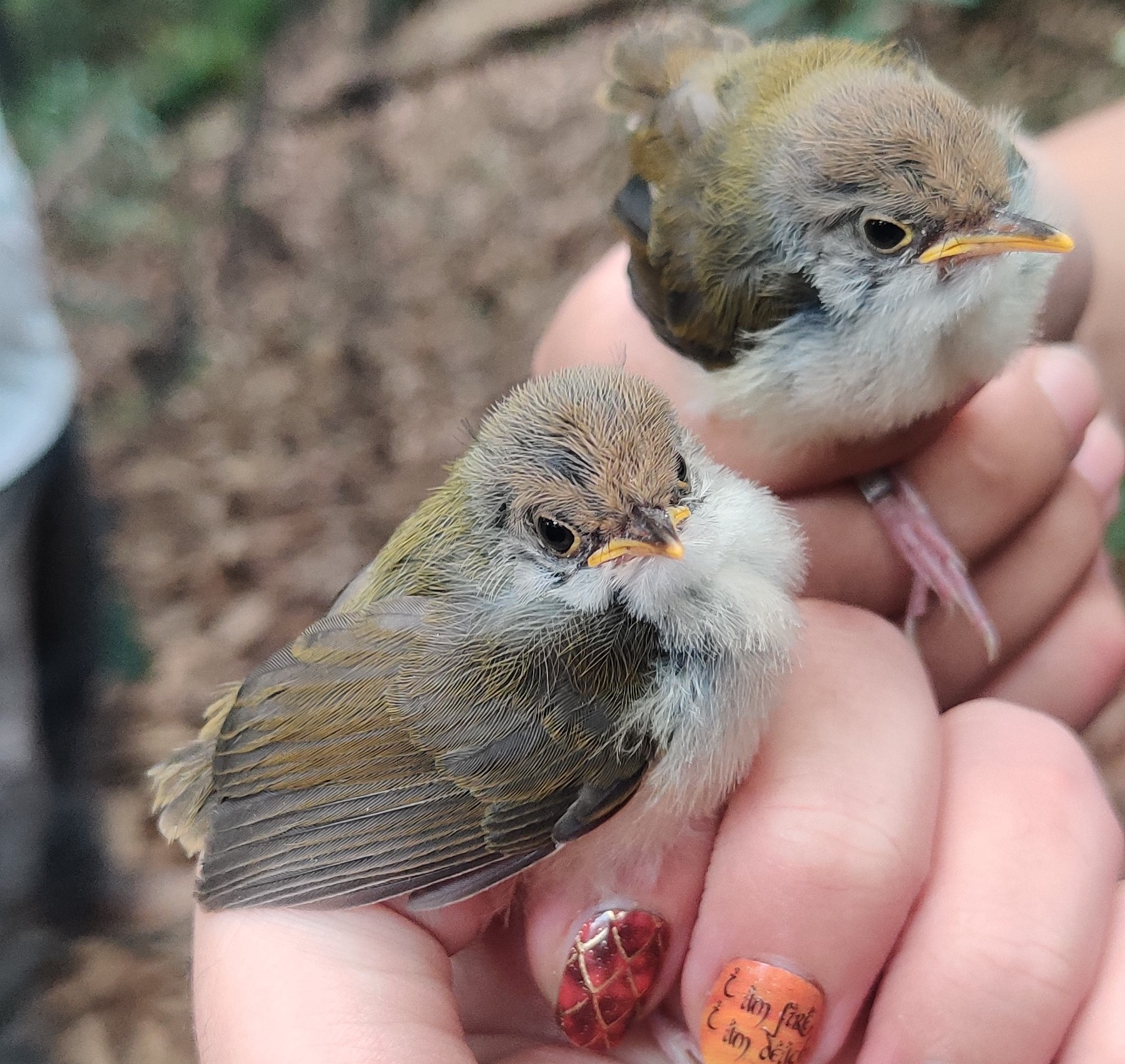
It is officially the start of chick season! Starting off the morning, we had two very young (1st calendar year) Common Tailorbirds in the net! Due to their young age, we chose to ring them at the site of capture instead of taking them back to camp so as to ensure they were released as fast as possible and could find their way back to the same area, where their parents may be continuing to feed them.
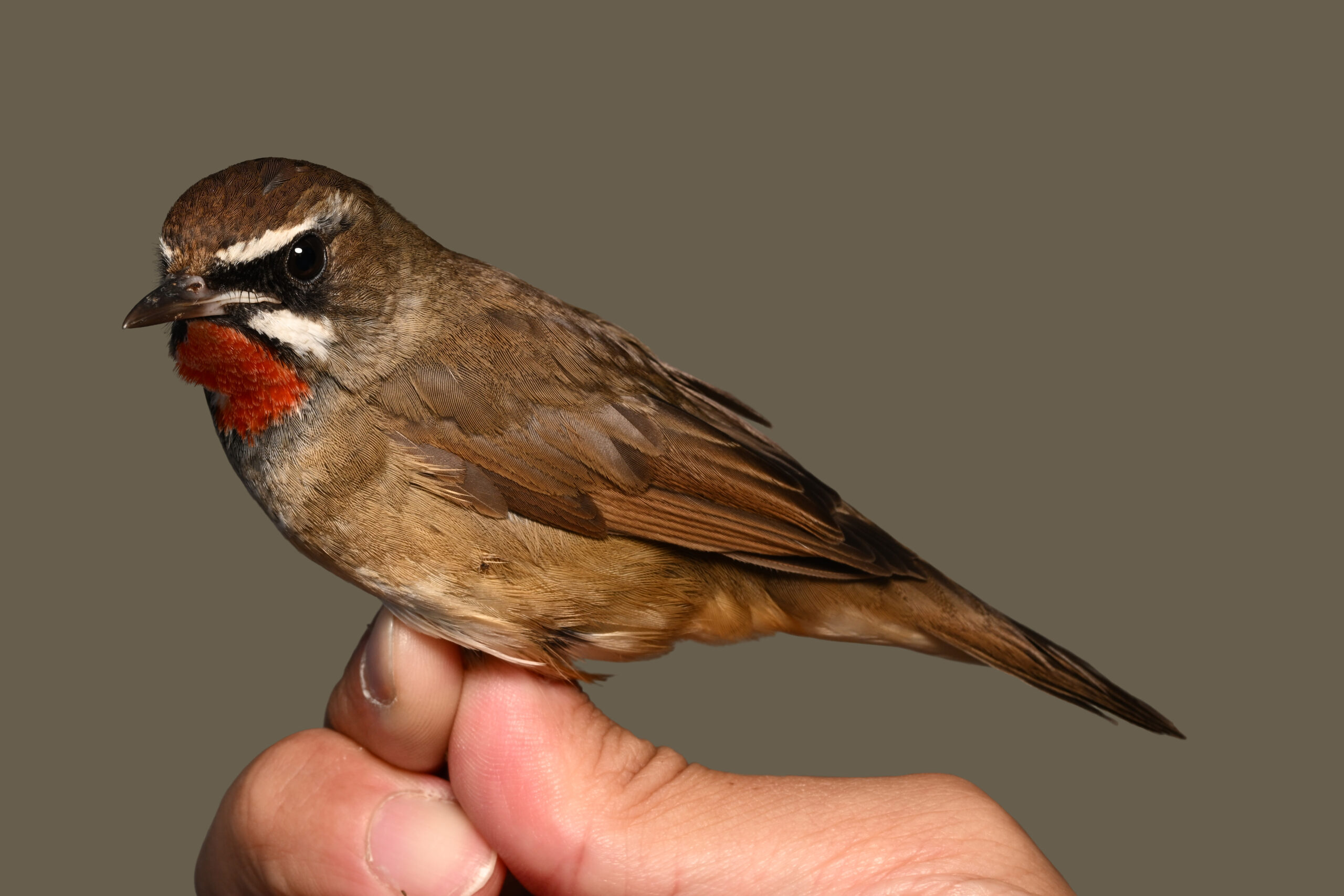
Next up we had quite a surprise of a Brown-breasted Flycatcher! It isn’t so often we catch this species, with this being the 4th individual the HKBWS has ever caught!
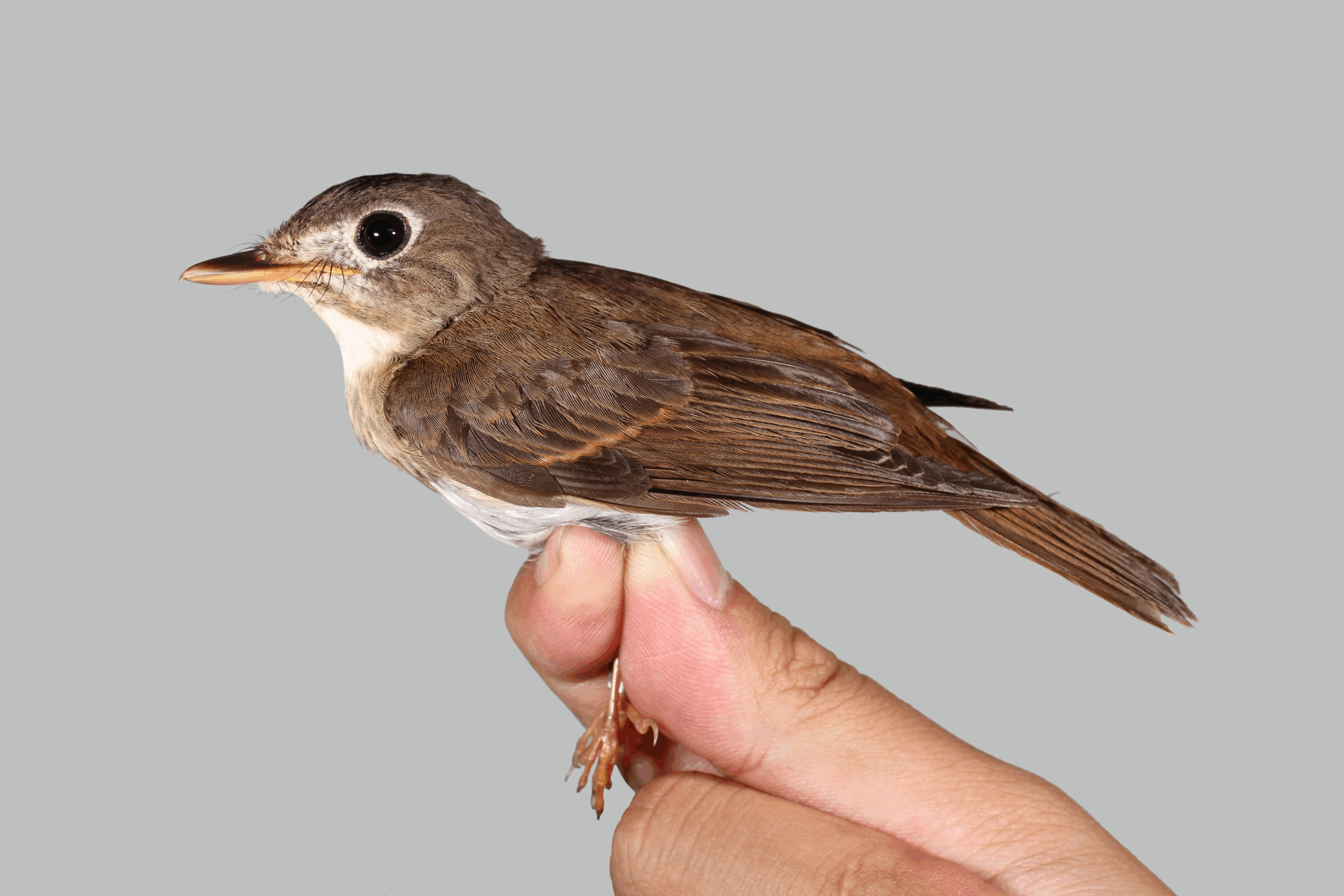
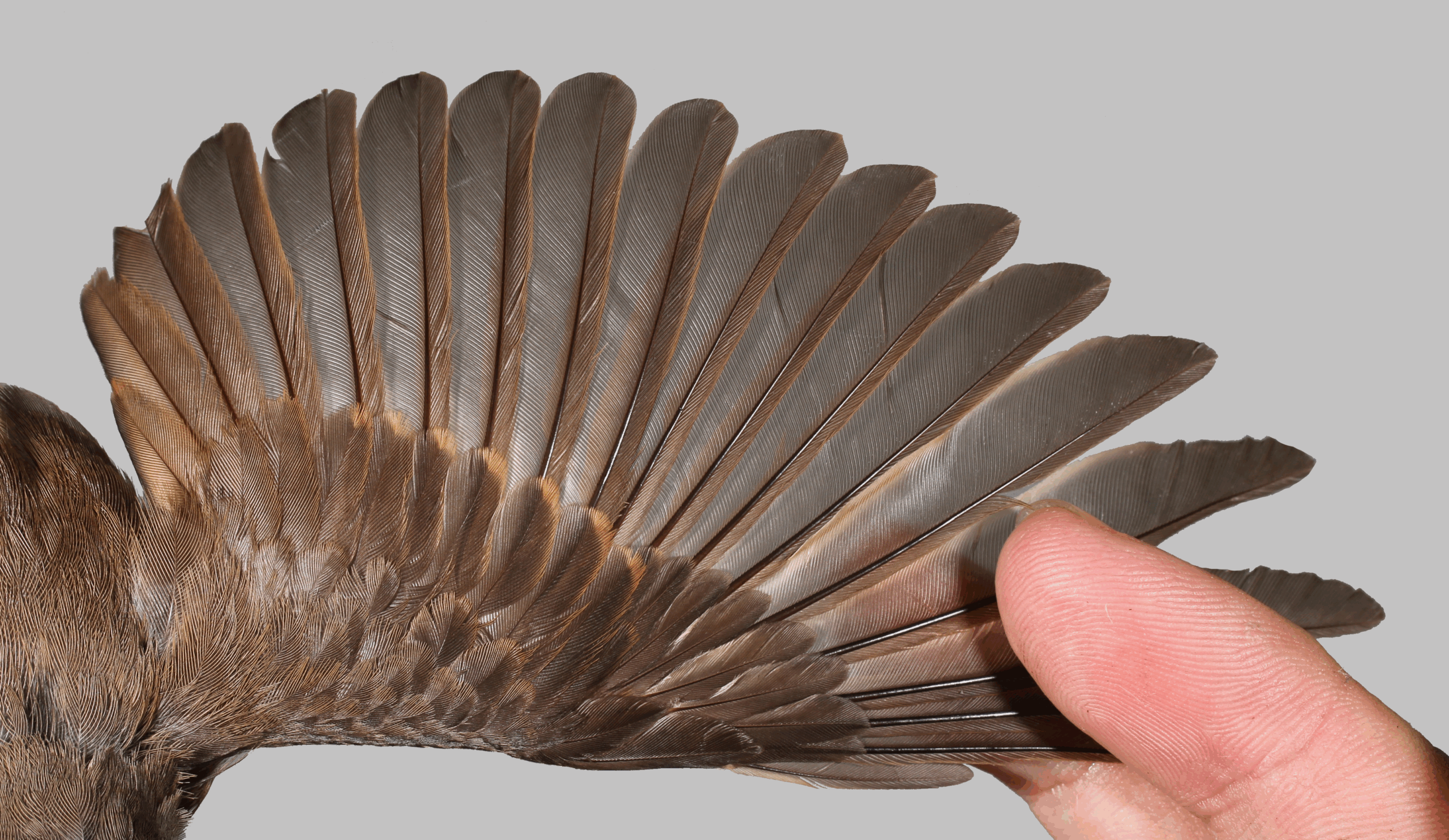
We believe these guys moult like most other flycatchers, where the adults have a complete summer moult, and the juvenile have a partial summer moult. Both age classes undertake a partial pre-breeding moult in winter.
This means that by spring both will show moult contrasts. However, by ageing the retained feathers, we can determine the the age of the bird. In the individual above, the worn and pointed PCs, coupled with the juvenile type GCs tells us this is a 2nd calendar year bird.
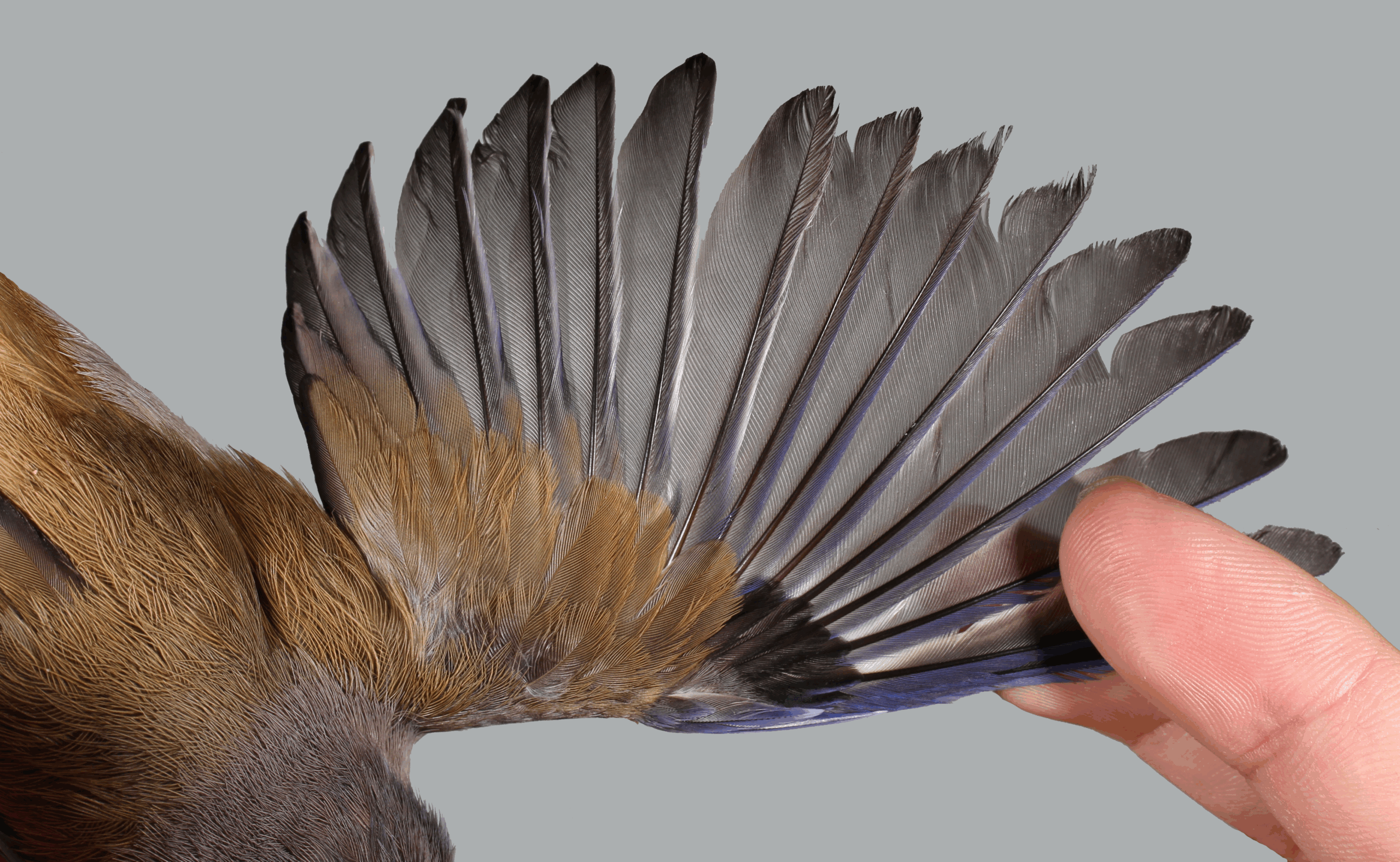
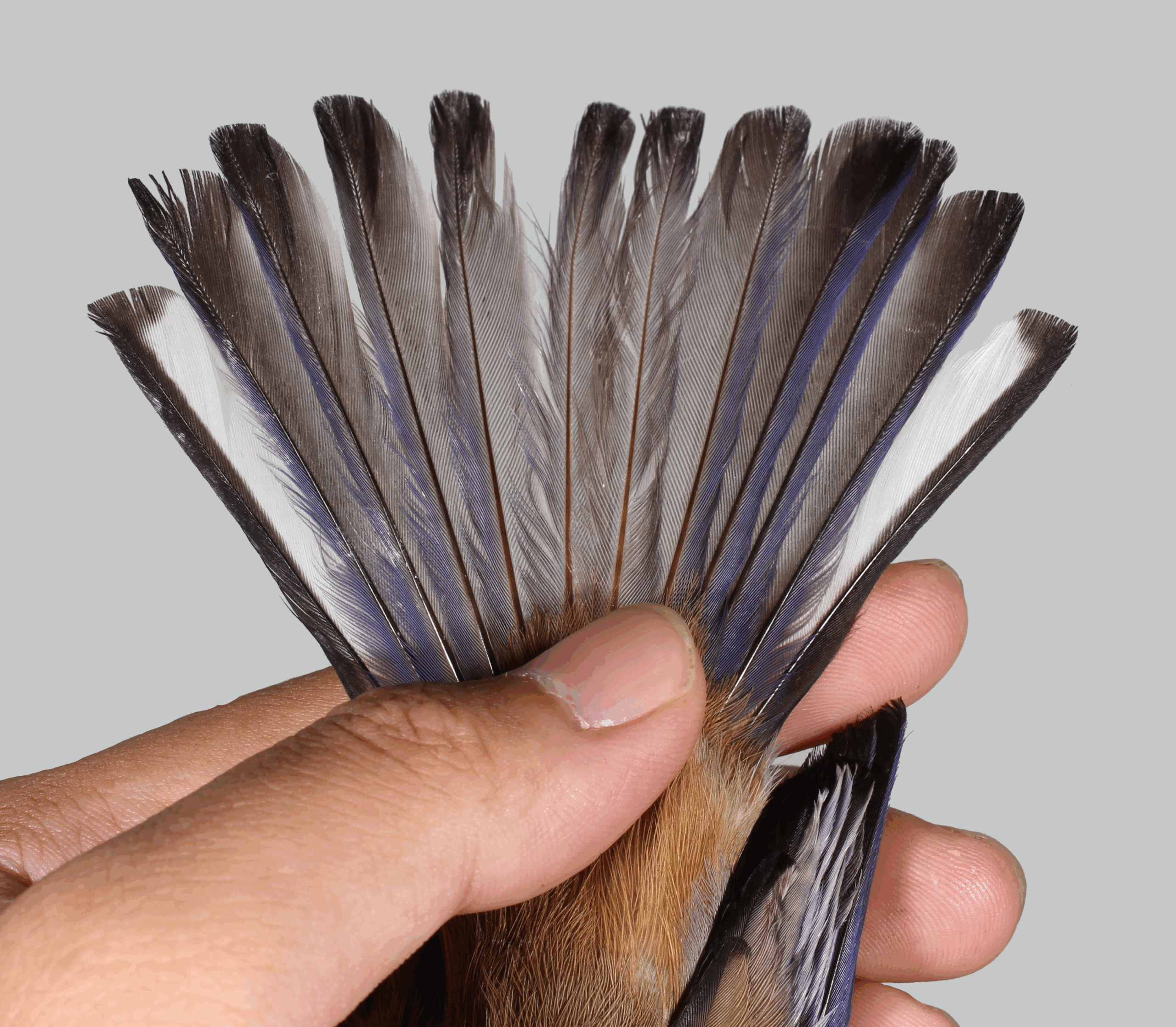
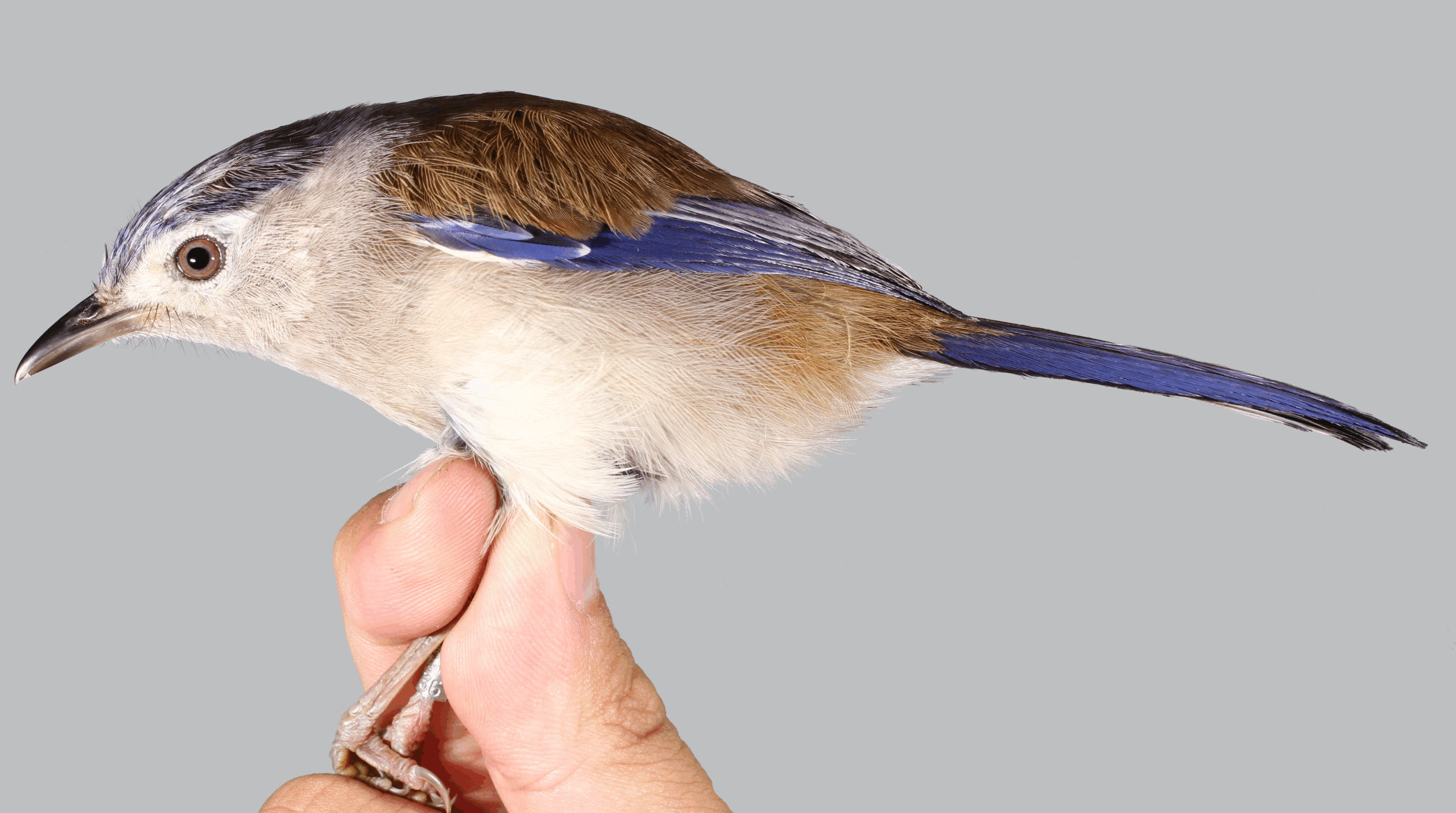
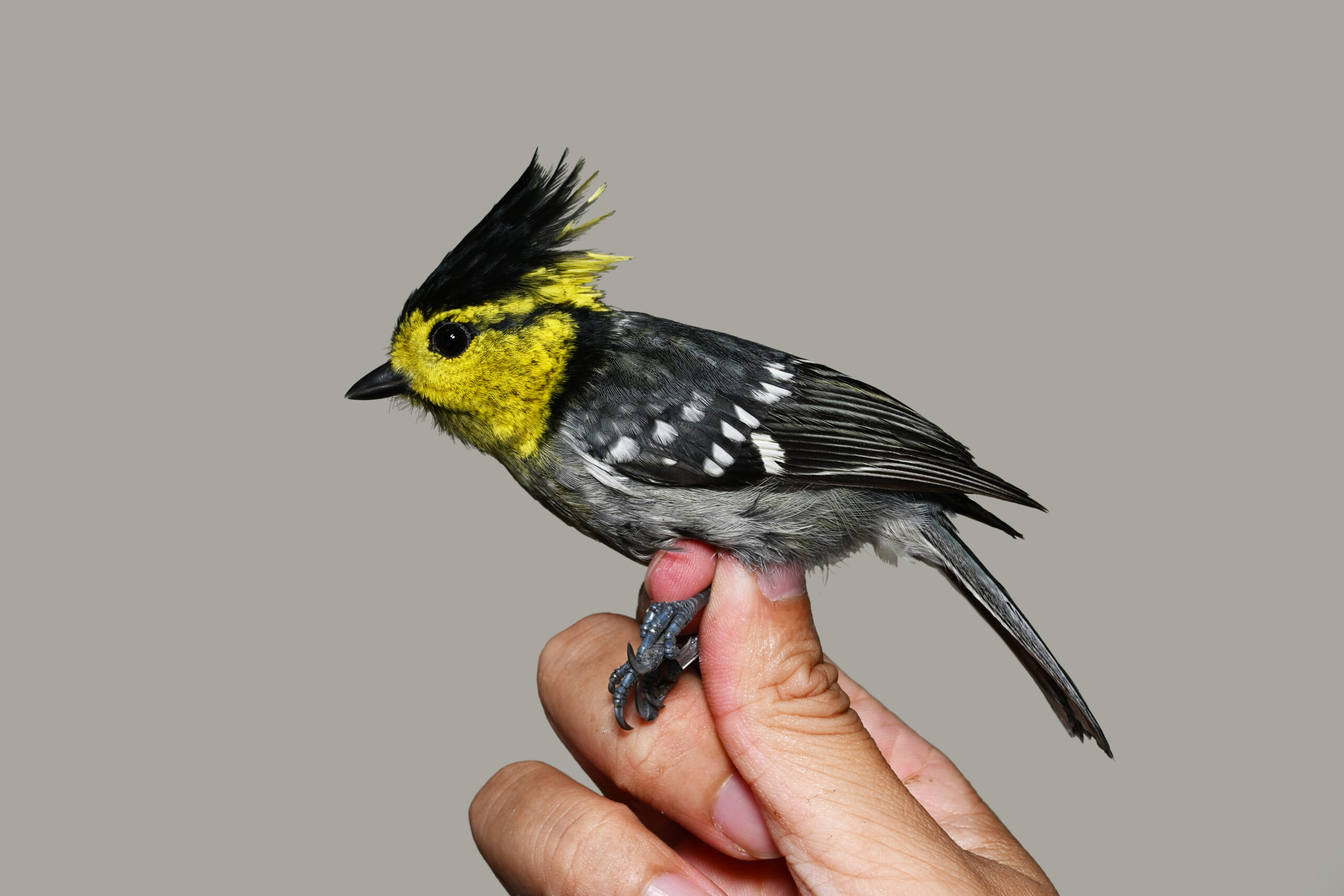
Next up with have a Blue-winged Minla. There is not so much information on these residents, but it is thought that both adults and juveniles carry out a Summer Complete moult. If this is the case, both juveniles and adults will be inseparable now. Therefore, we aged this individual as a 2nd calendar year or older.
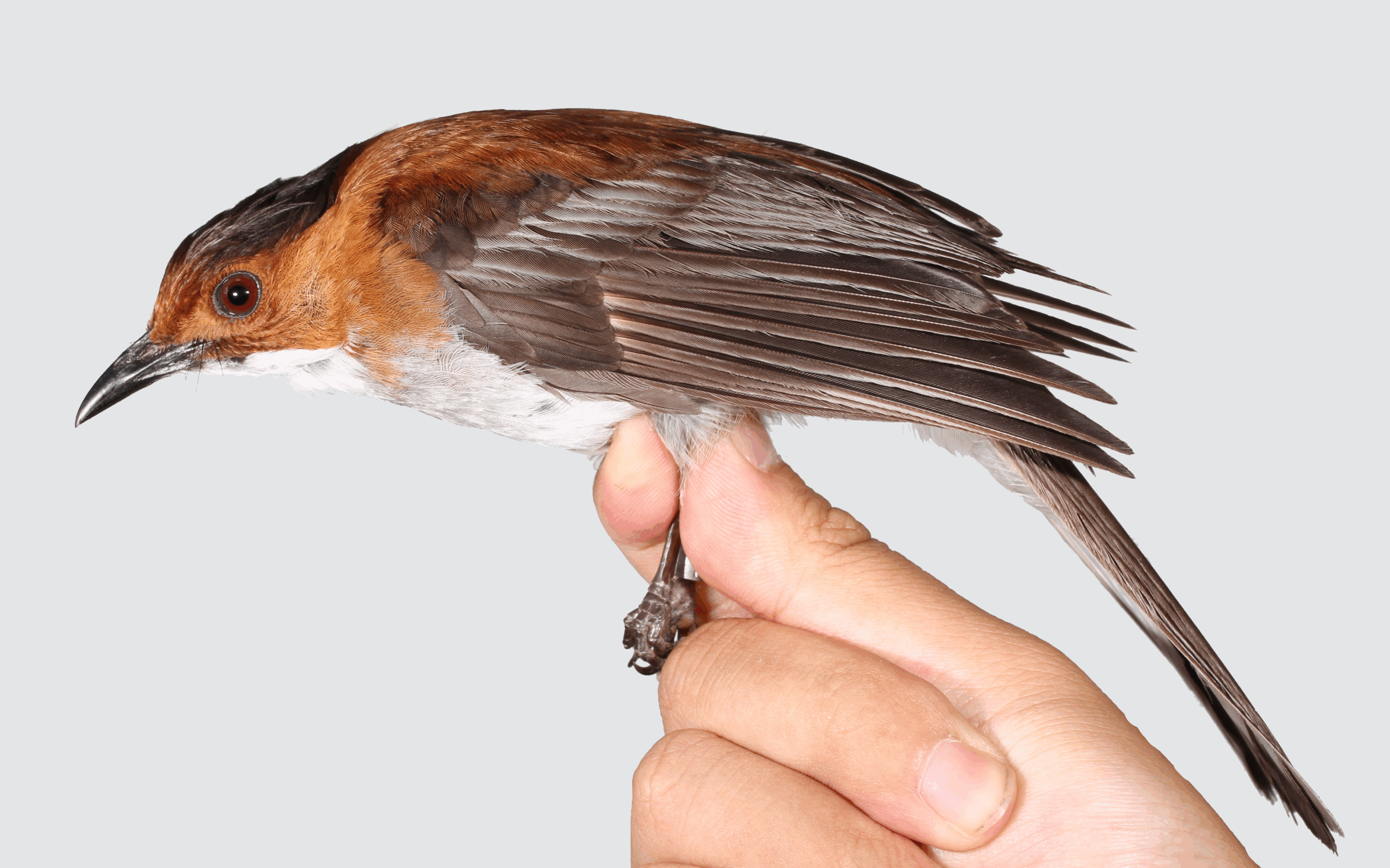
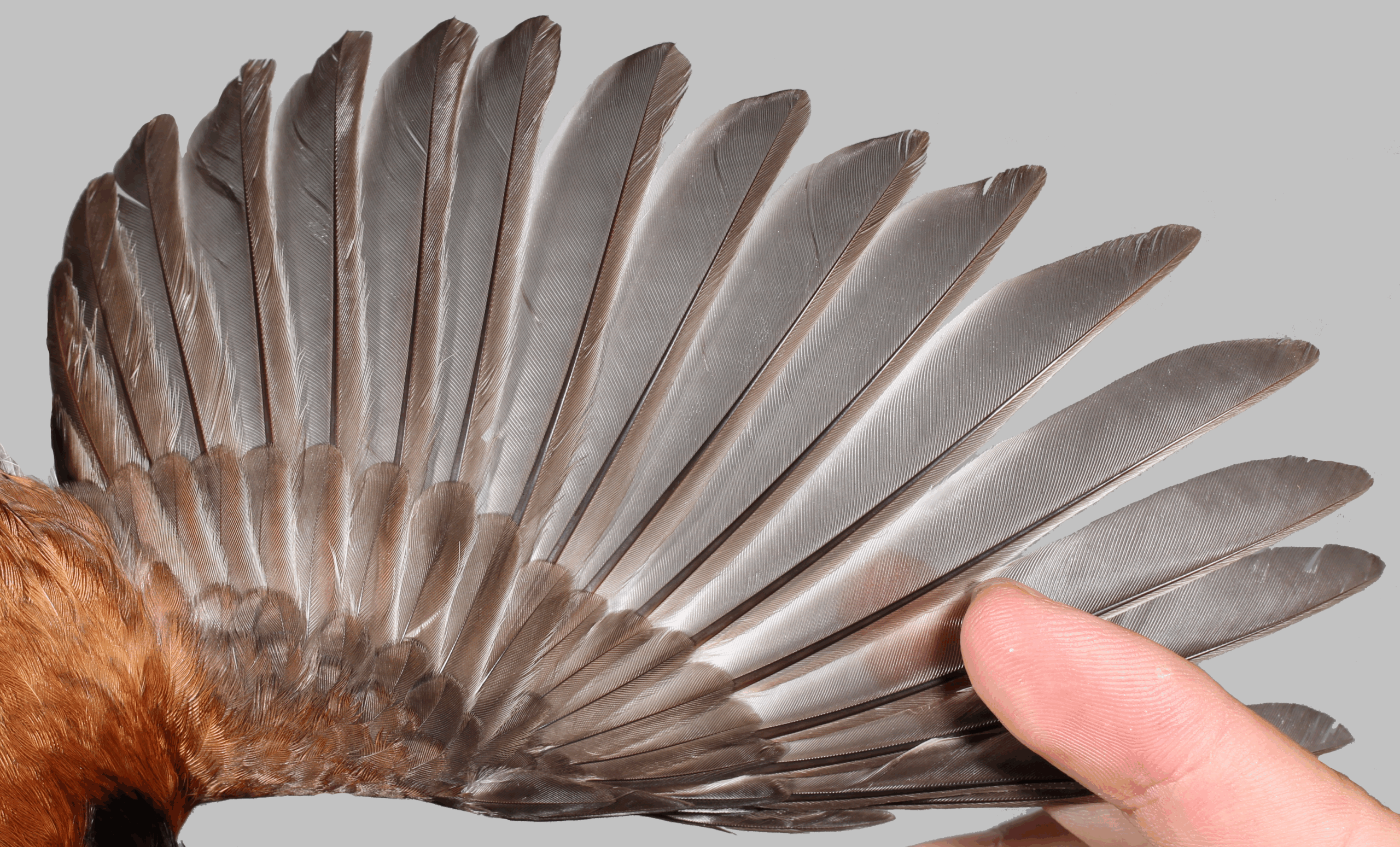
Today we caught 4 Chestnut Bulbuls! Potentially 2 breeding couples, due to the “broodpatch” found on the birds. This occurs during incubation of eggs- the adults lose the feathers on their abdomen, so they can press their skin against the eggs (see a picture of this in “What is Bird Ringing?“).
The wing of this bird shows no obvious moult contrasts, suggesting it has undergone a complete moult. However, as we predict that most Bulbuls adults and juveniles undertake a Summer Complete moult, the best we can age this bird as is a 2nd calendar year or older.
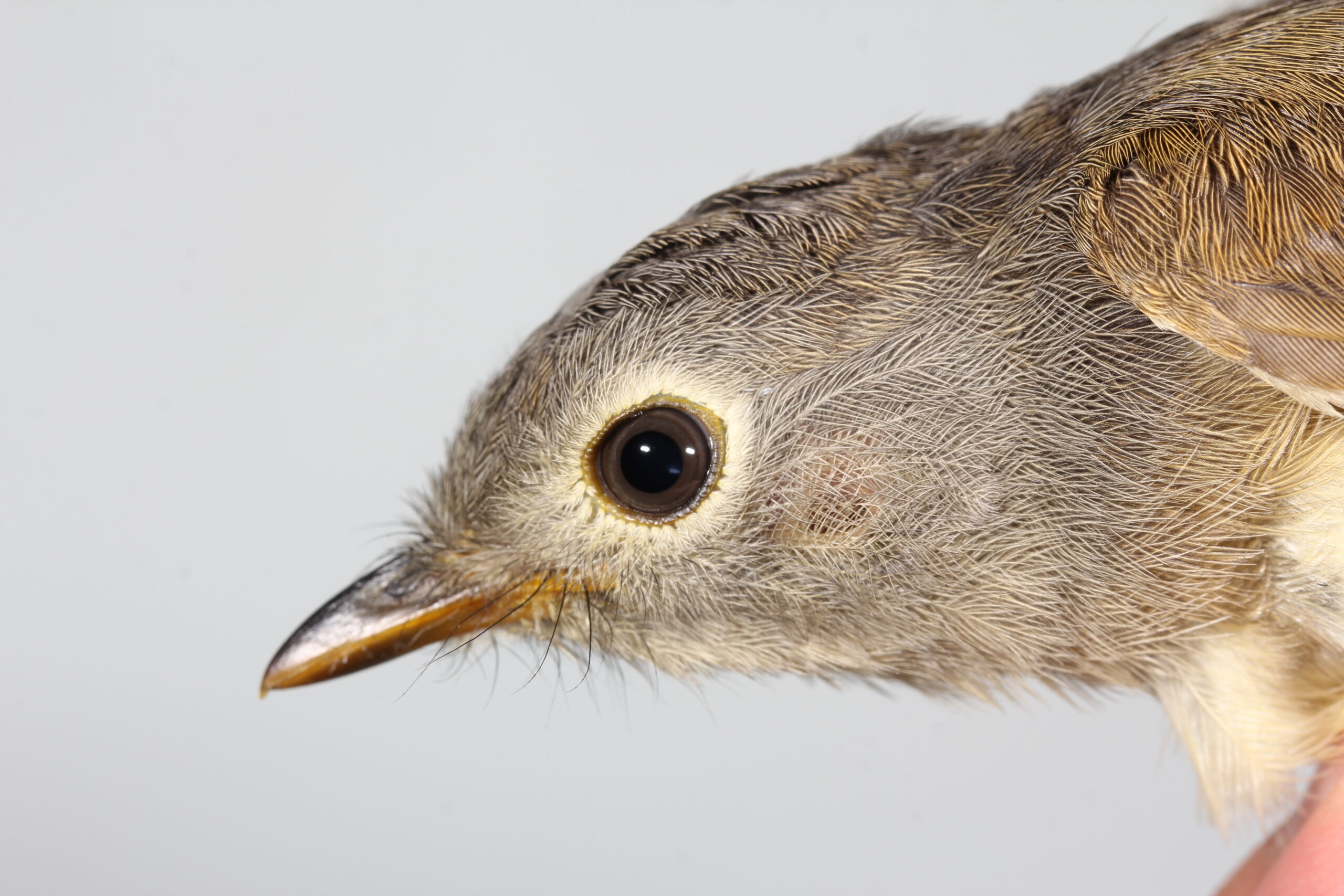
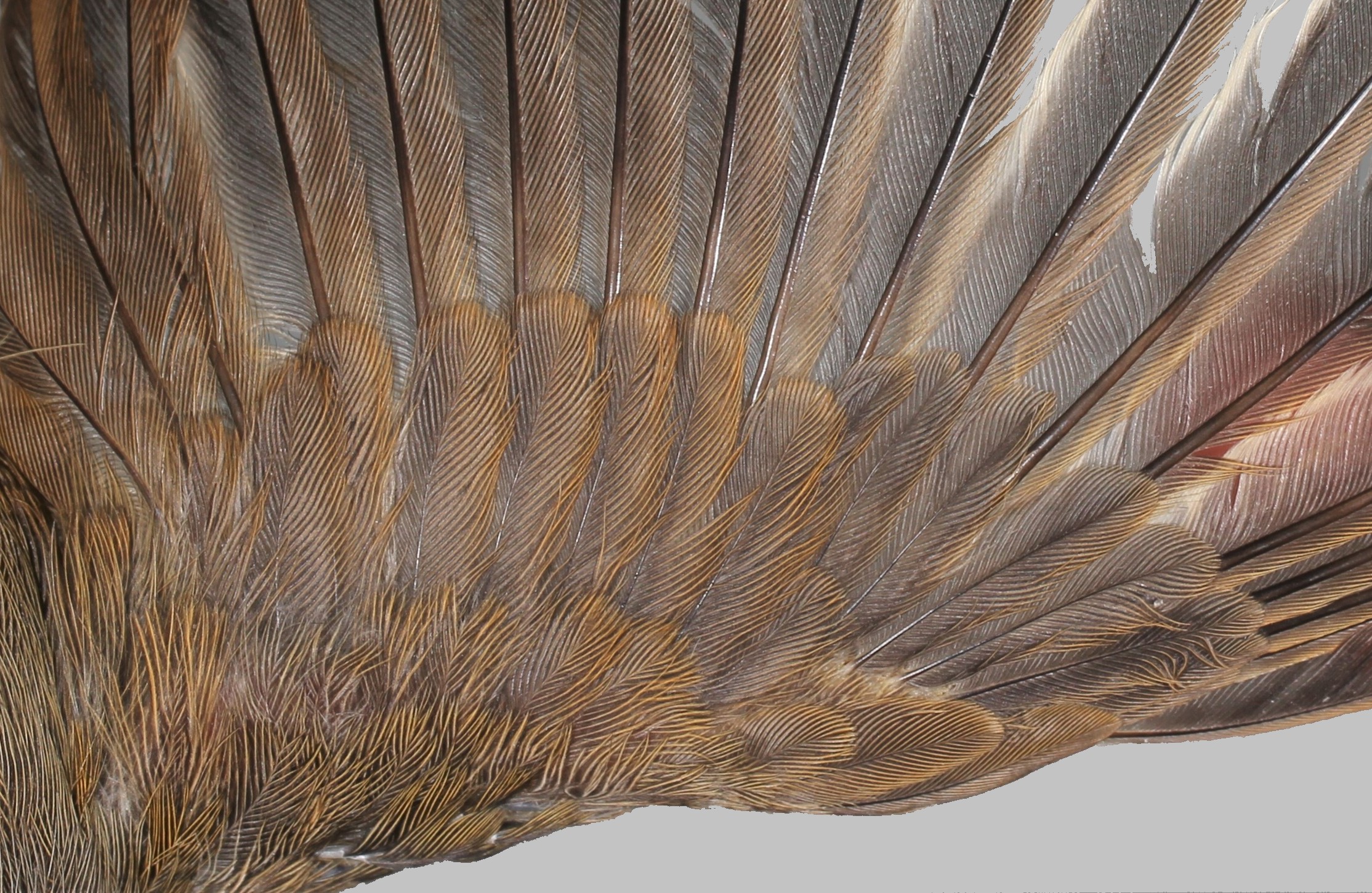
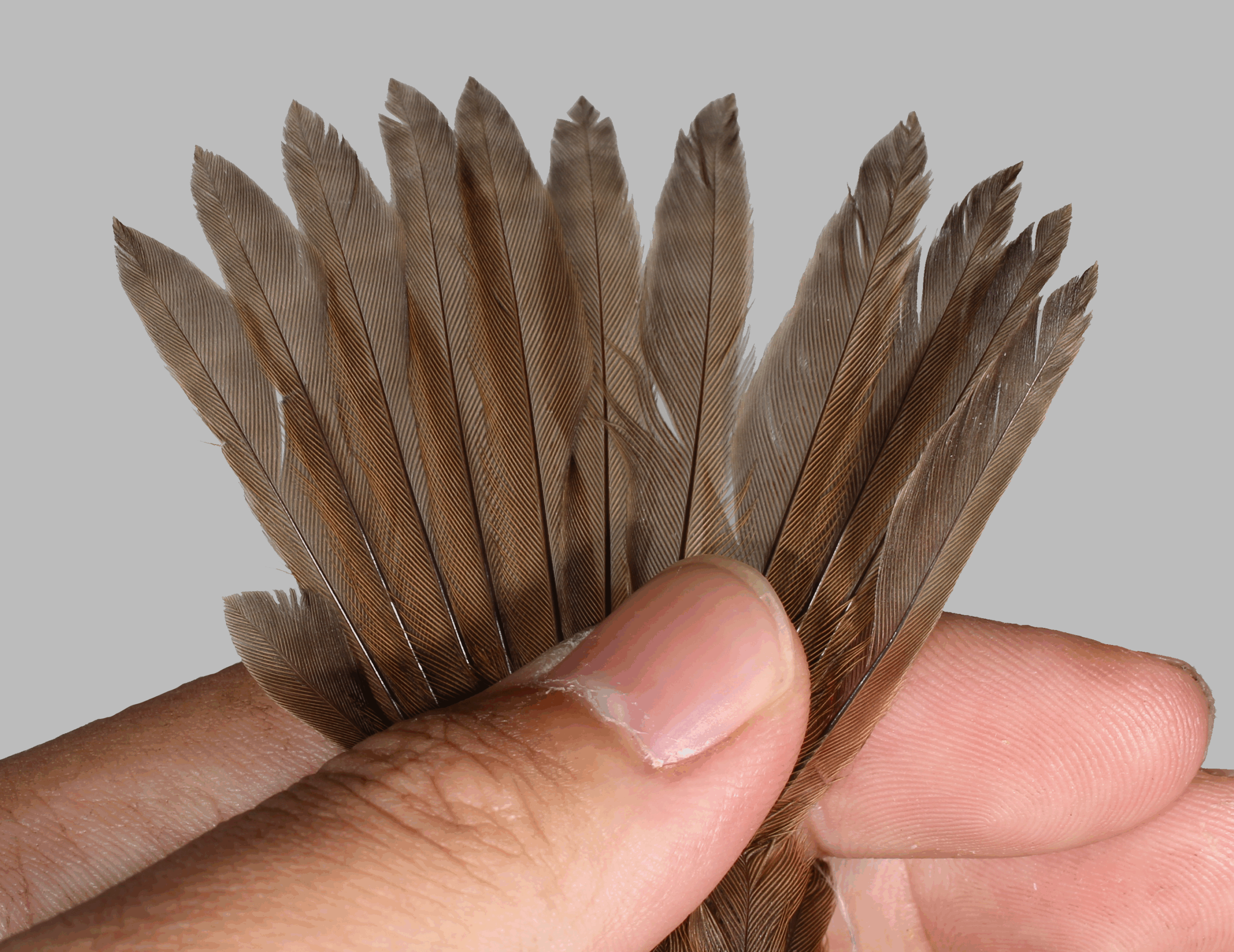
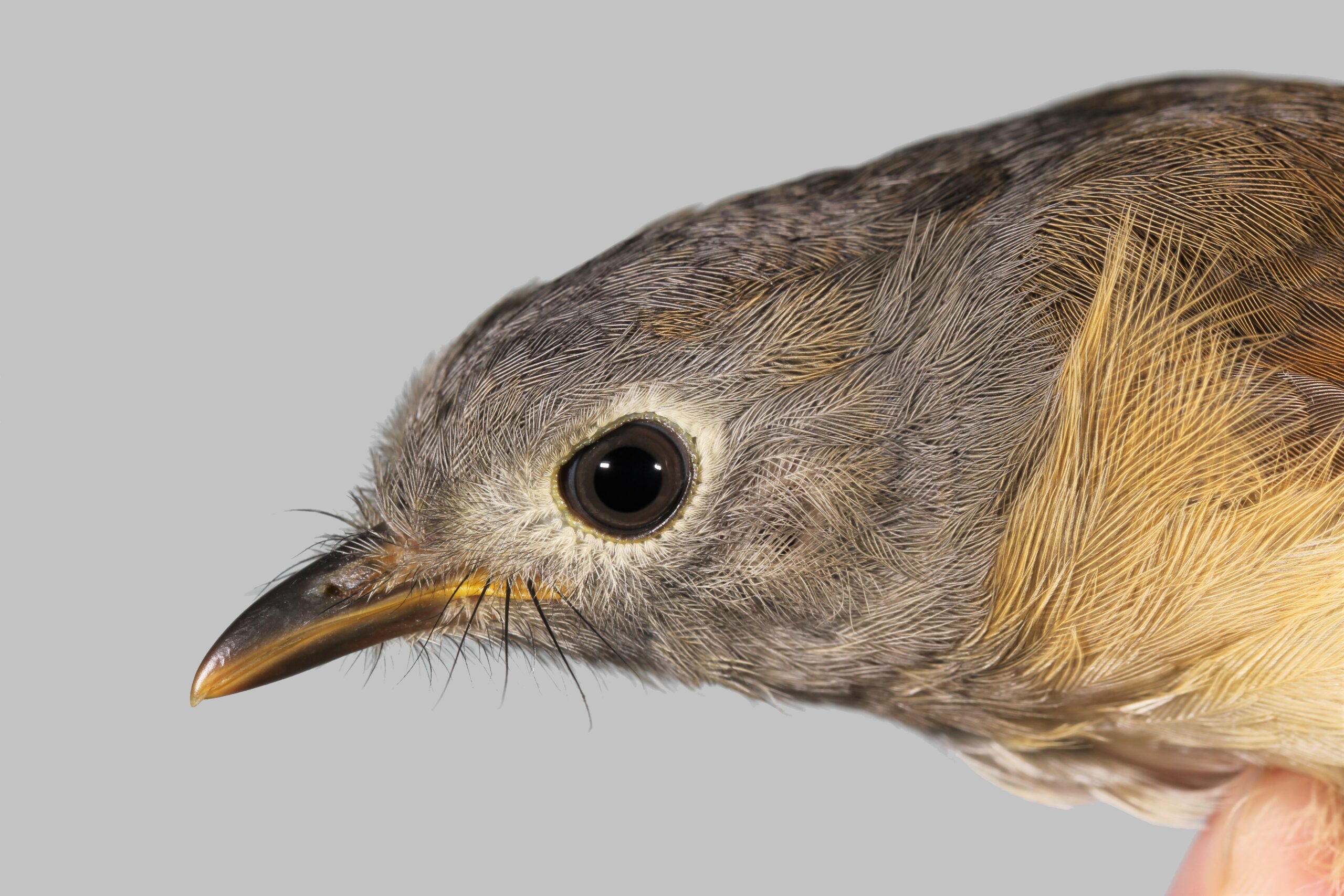
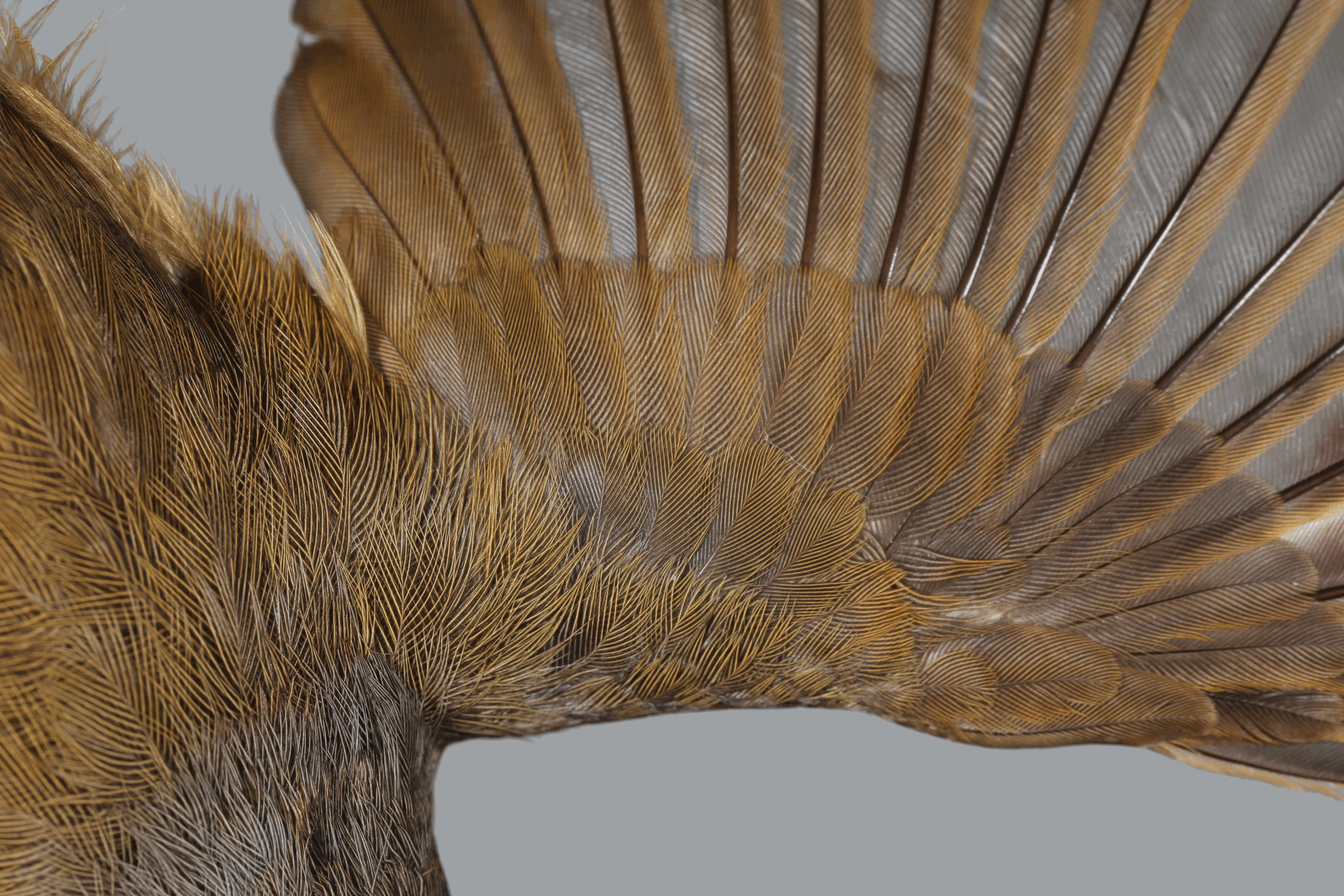
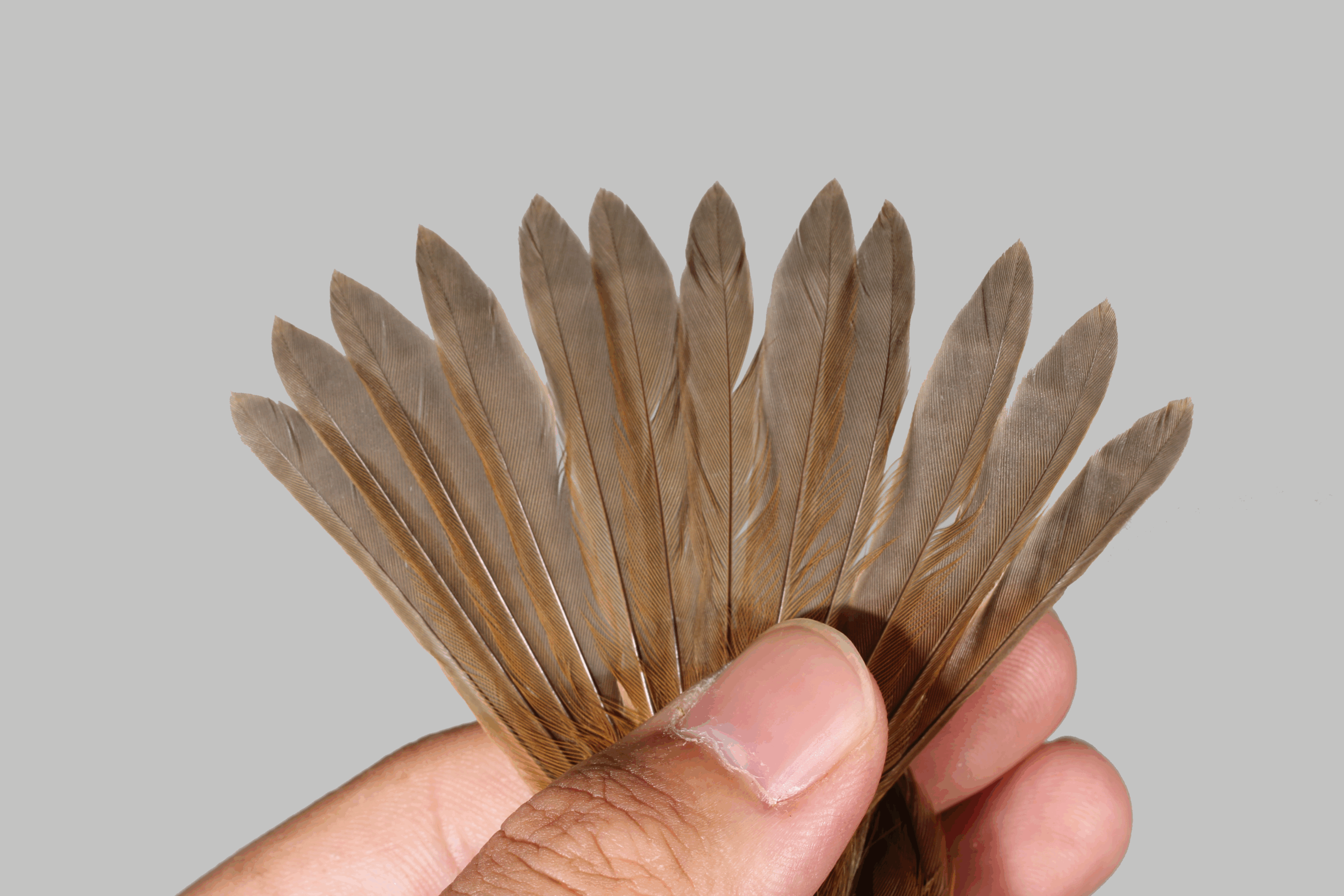
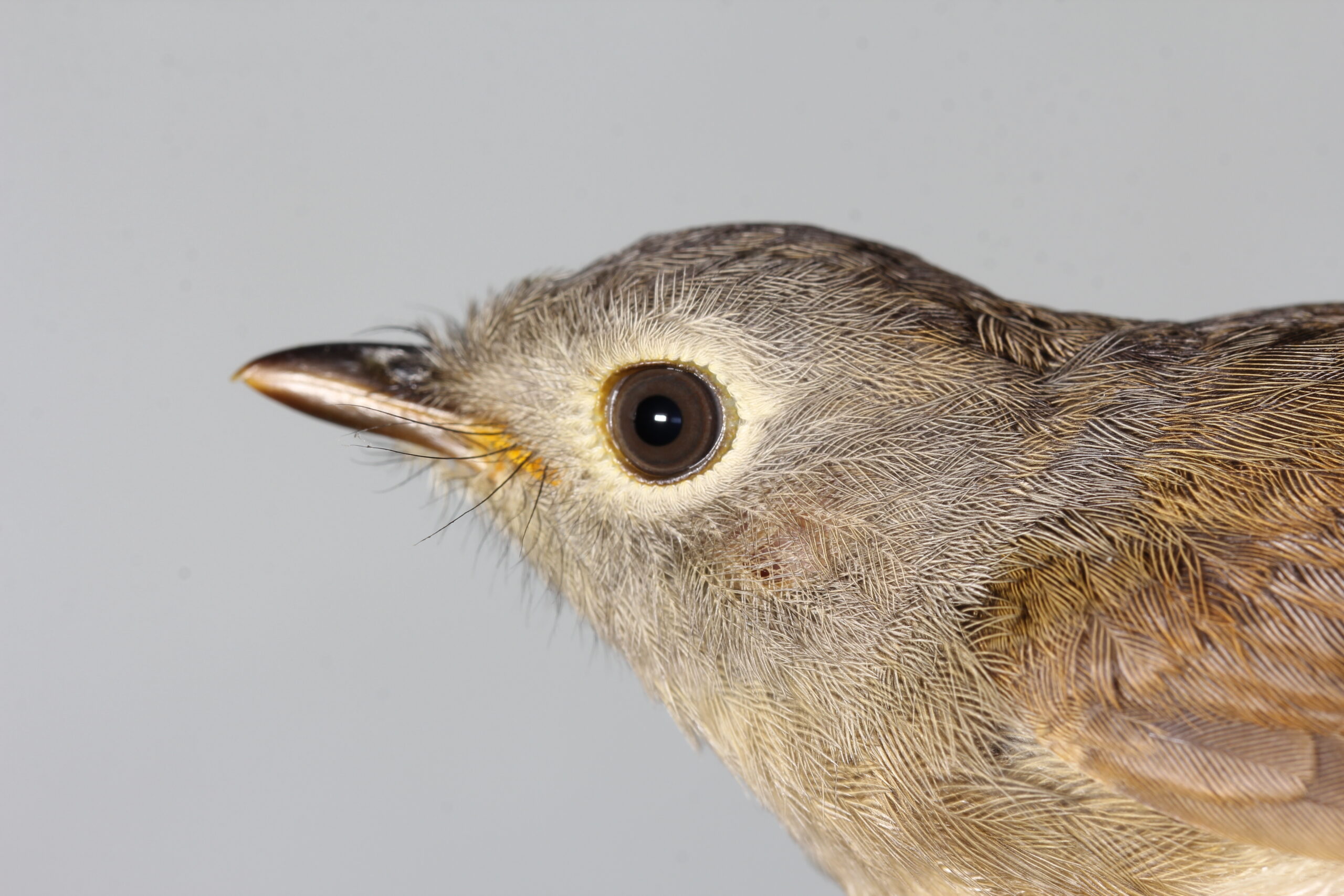
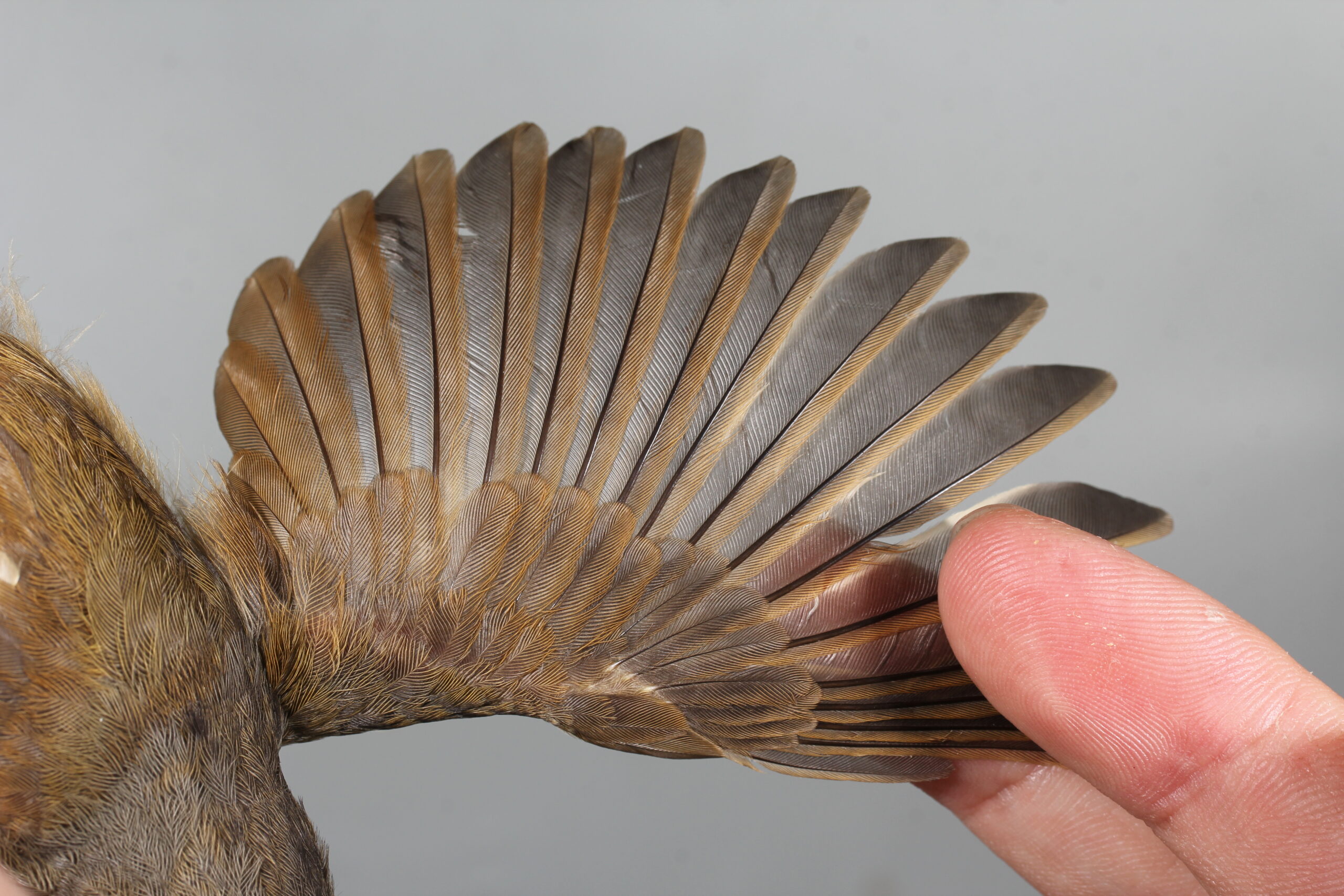
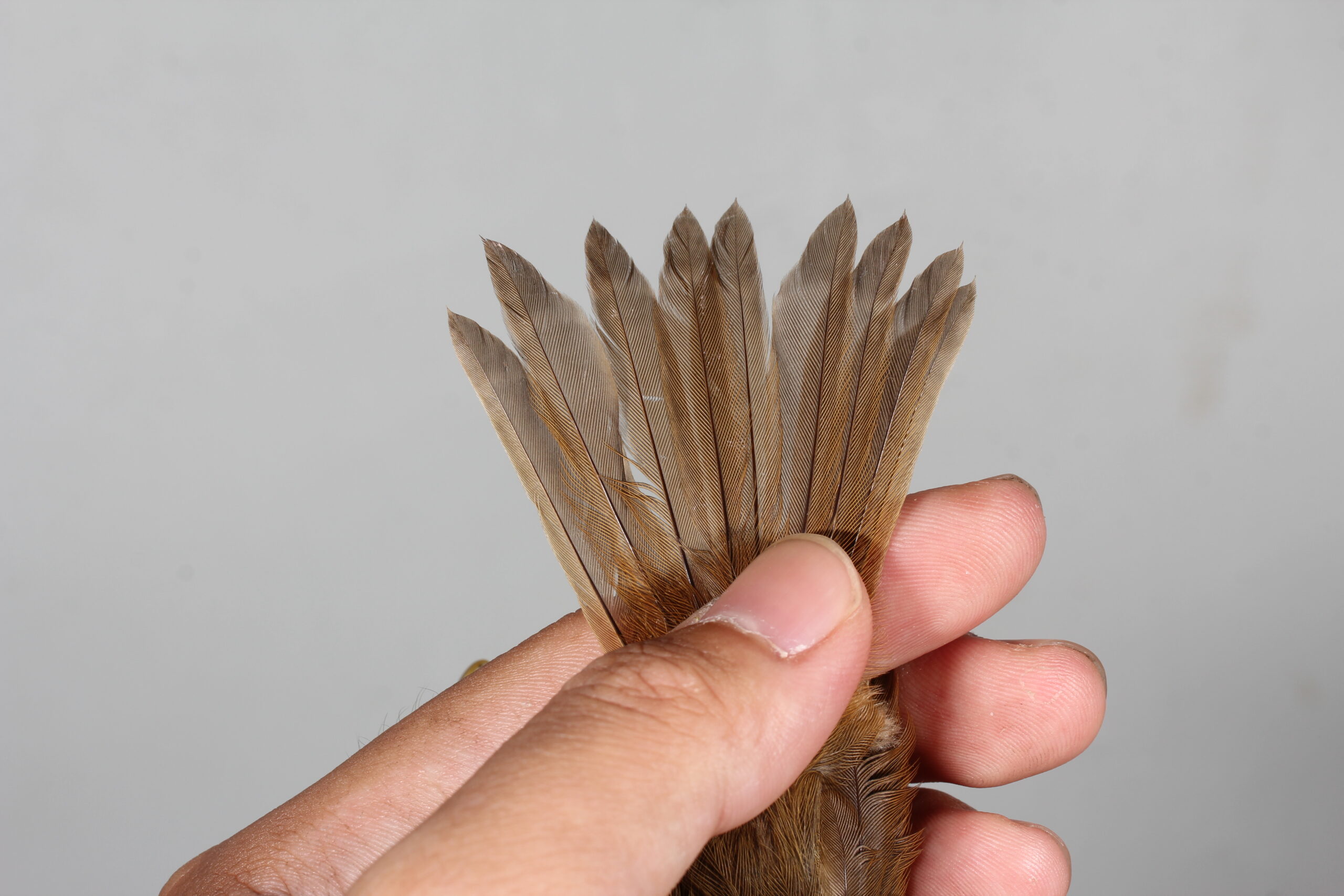
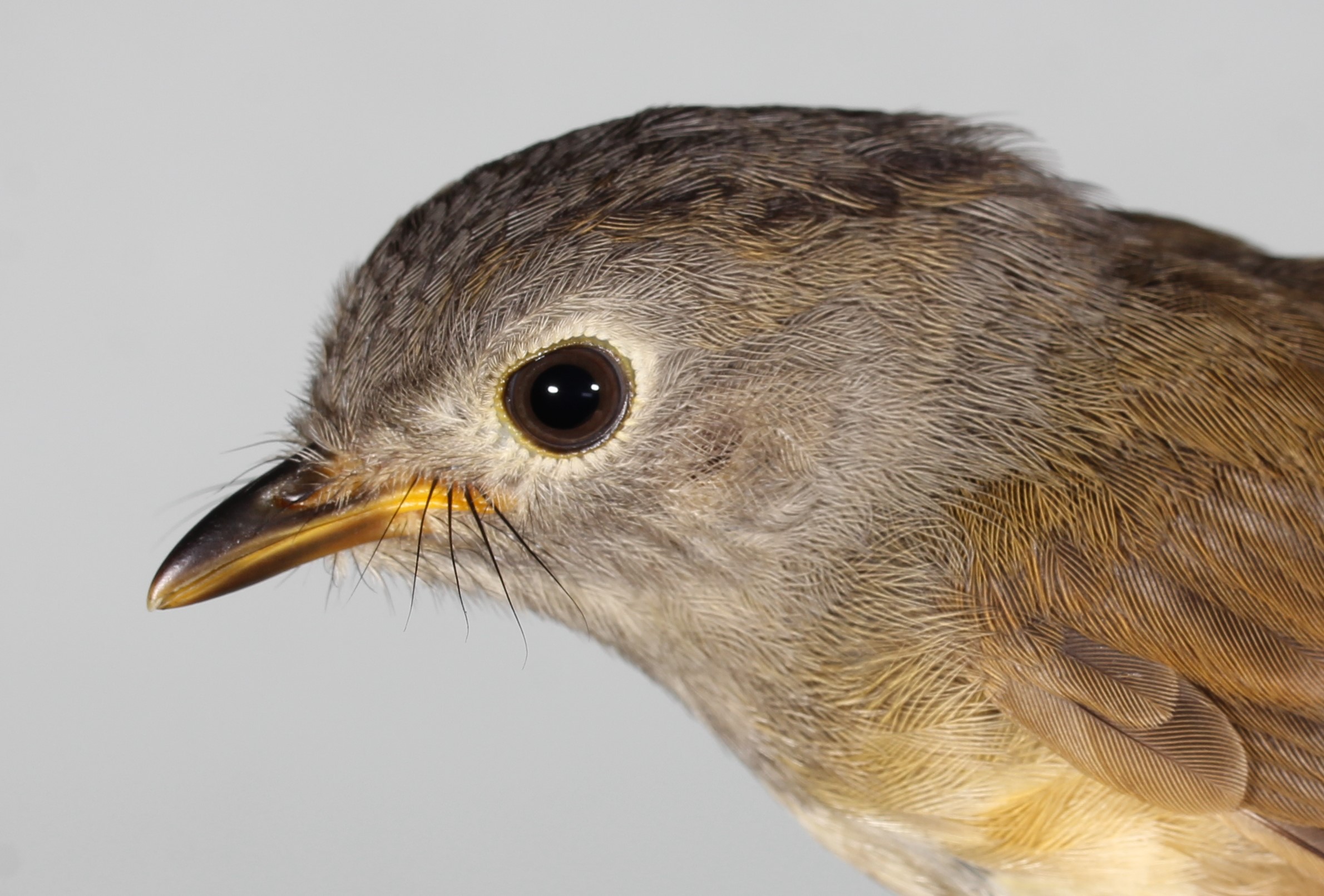
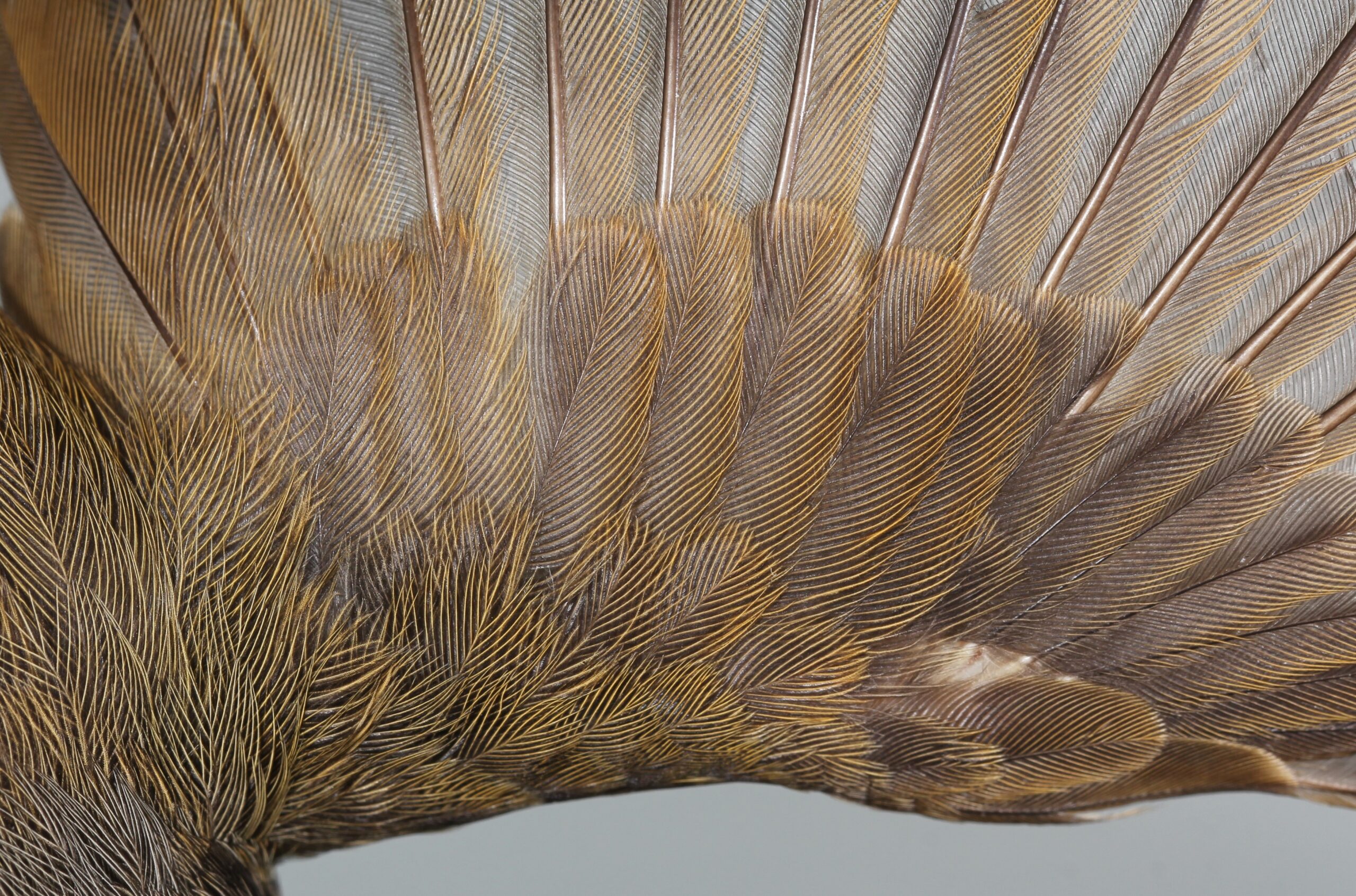
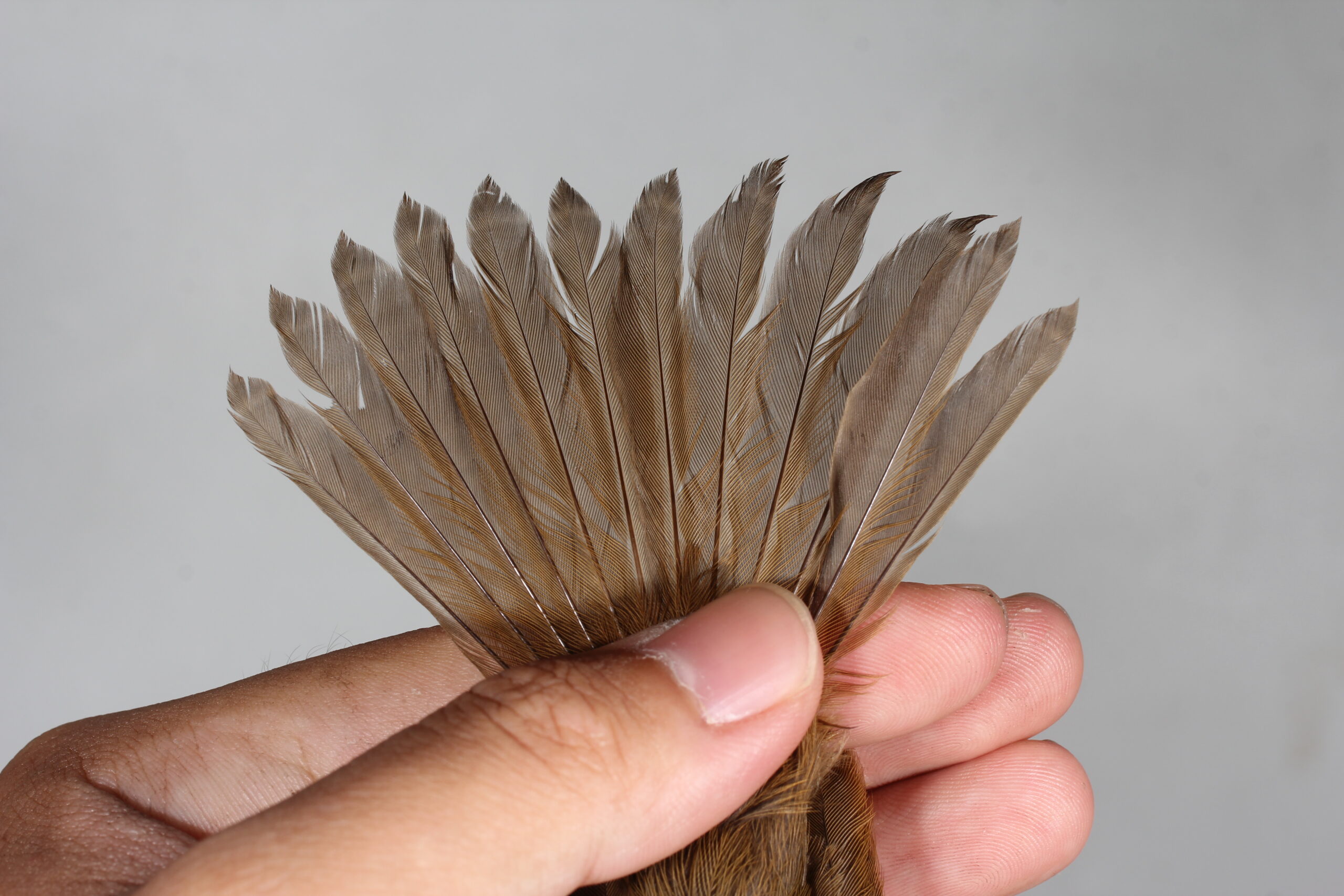
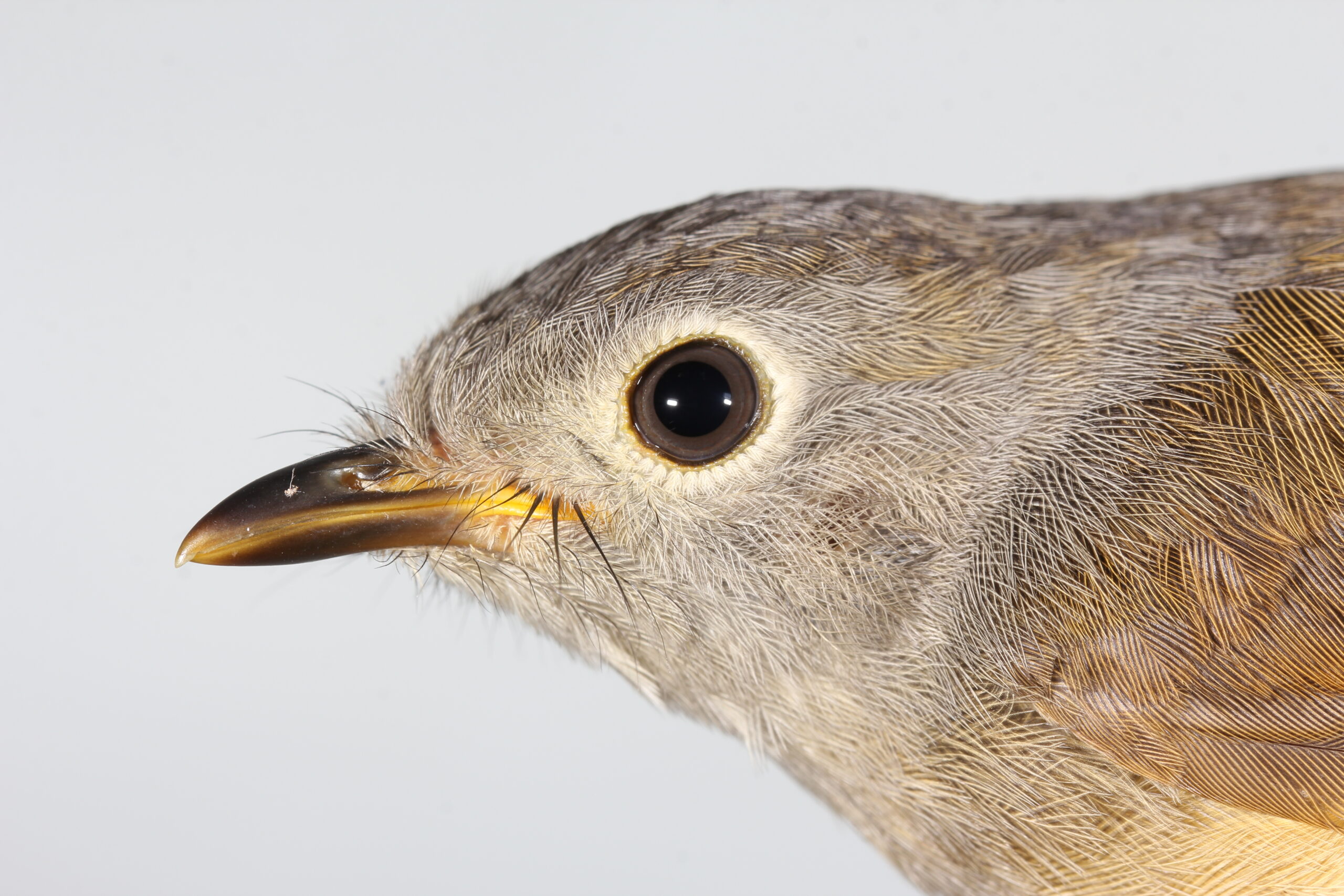
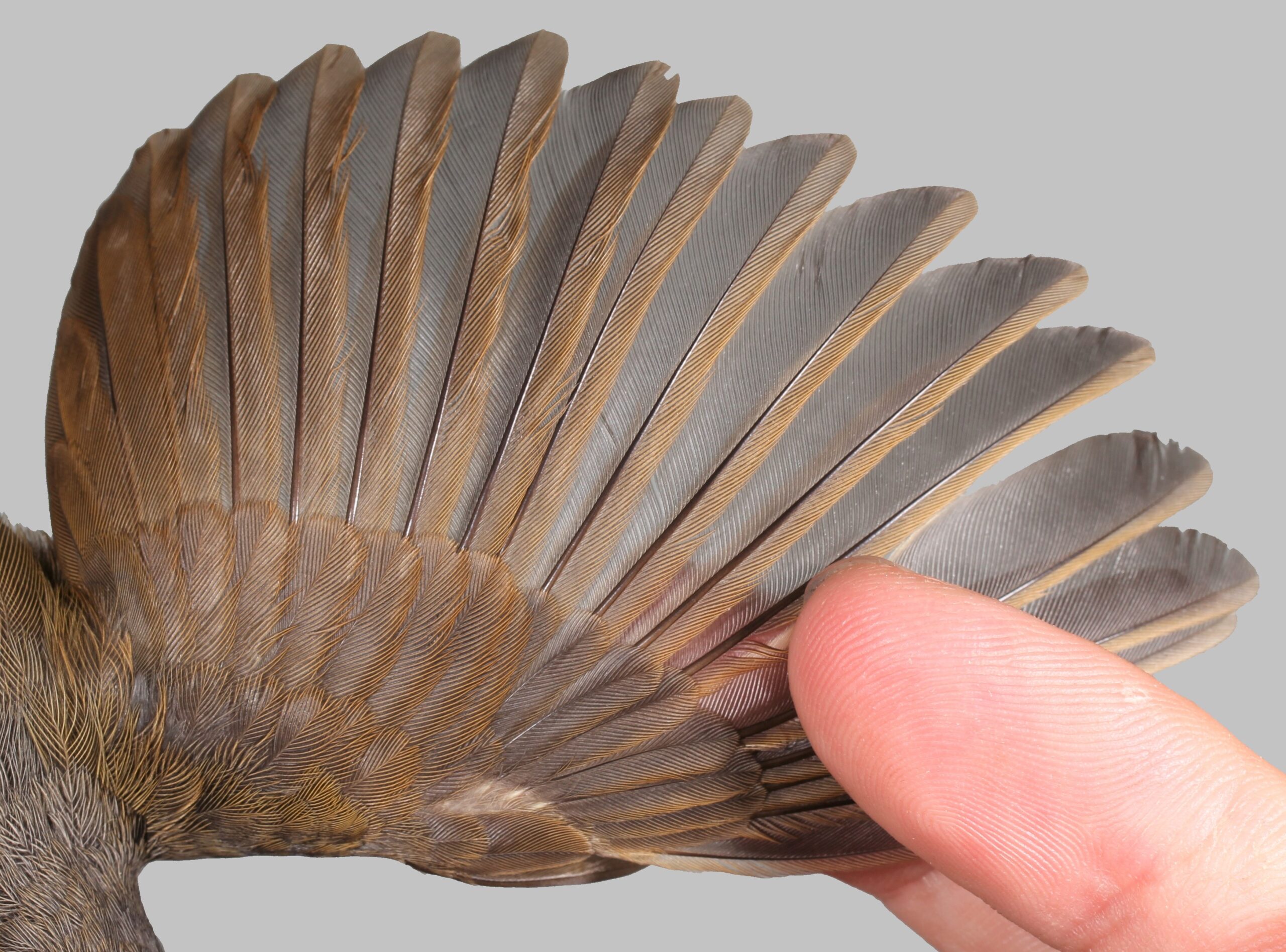
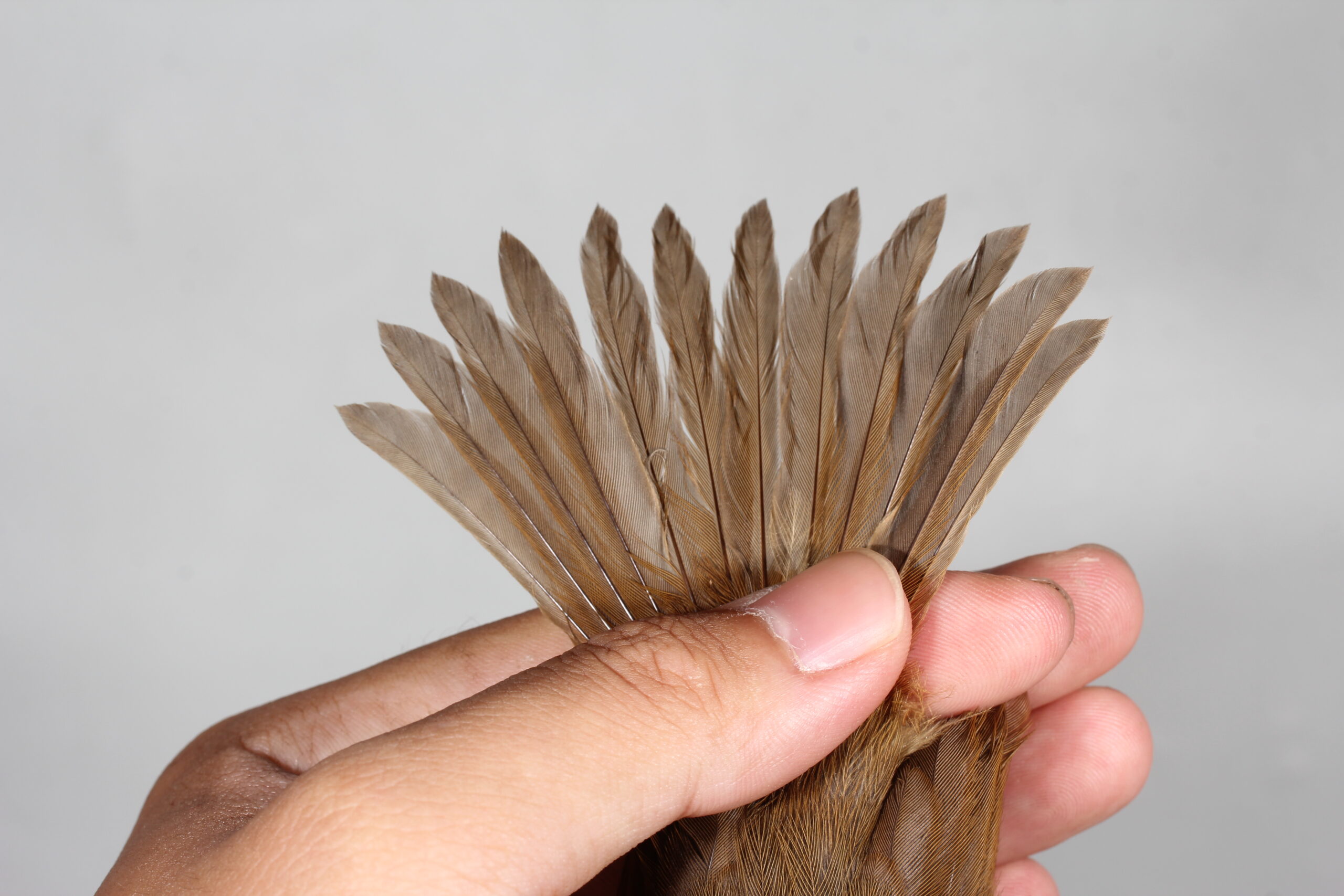
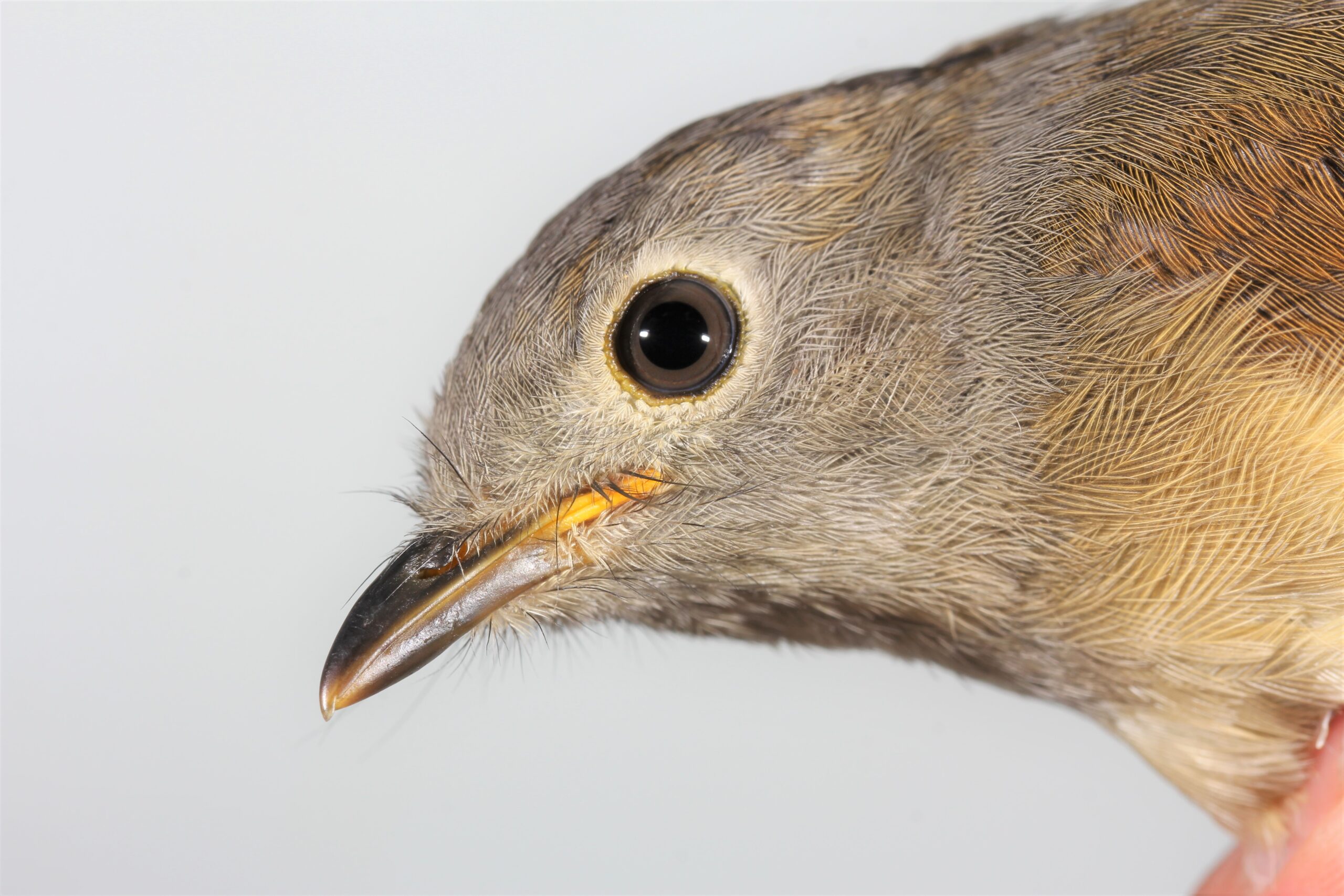
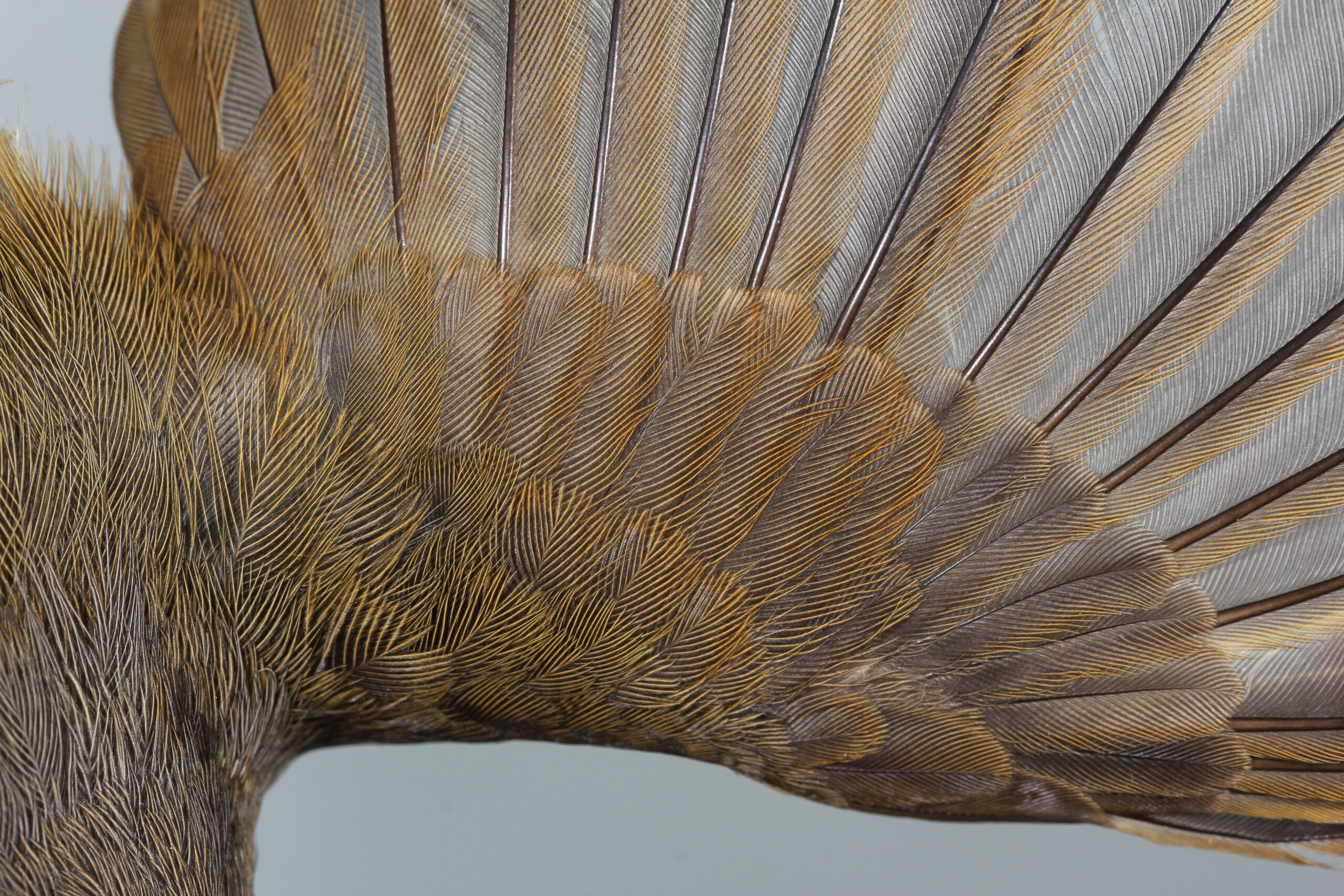
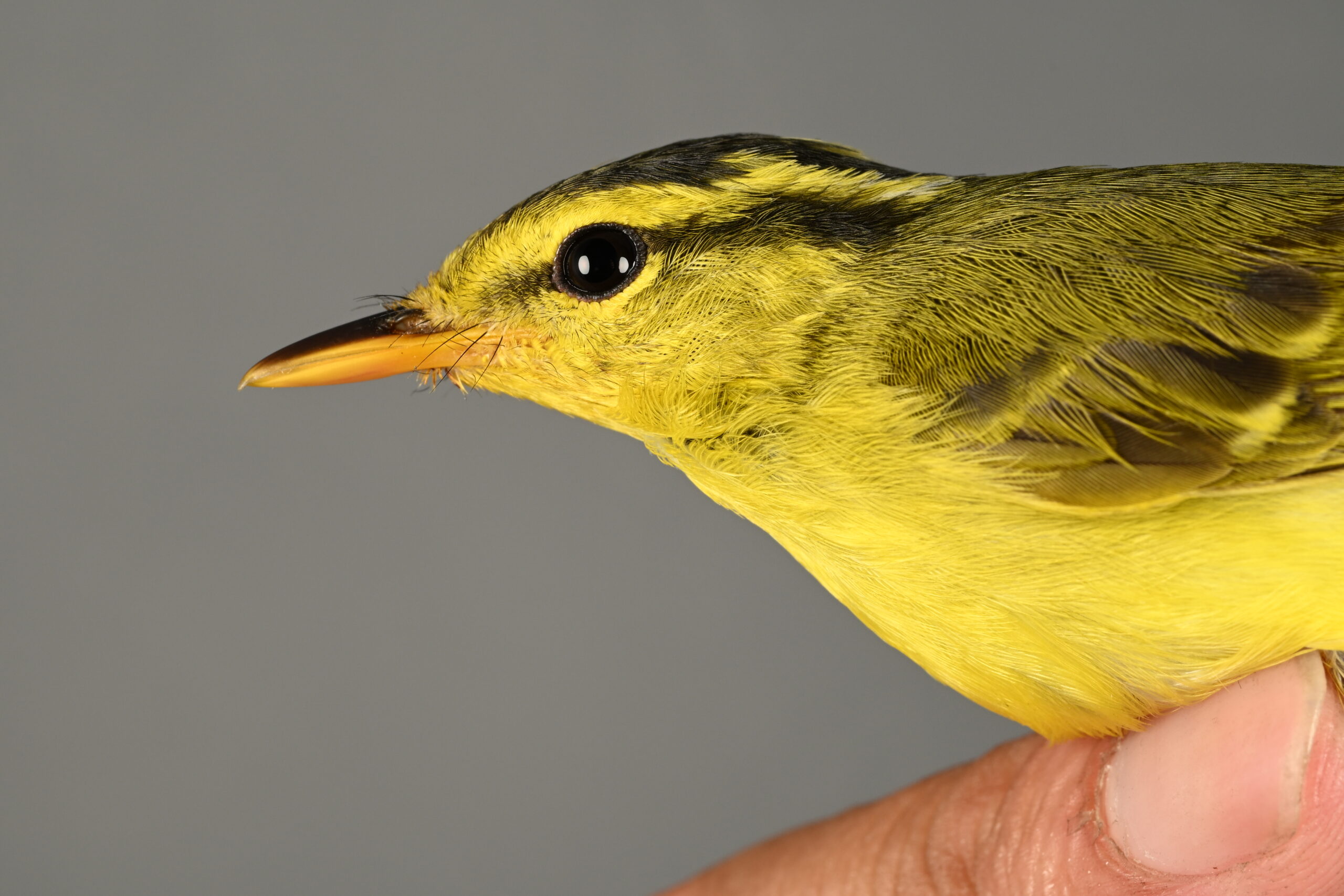
As the afternoon drew on, the birds continued, with 6 1st calendar year Huet’s Fulvettas! This was especially interesting, as these birds, again, we do not have so much ageing information on. They are usually aged on iris colour. However, as you can see in the photos above, some individuals show moult contrasts- suggesting juveniles carry out a partial post-juvenile moult to varying extents. An extremely interesting day!
Daily Totals
| Species | Original | Recapture |
| Blue-winged Minla | 1 | 0 |
| Brown-breasted Flycatcher | 1 | 0 |
| Chestnut Bulbul | 2 | 2 |
| Common Tailorbird | 2 | 0 |
| Huet’s Fulvetta | 9 | 1 |
| Silver-eared Mesia | 1 | 0 |
| Swinhoe’s White-eye | 1 | 1 |
*Please note that all wild birds are protected under Hong Kong Law. All ringing activities are conducted with the necessary permits issued by the AFCD. Handling and processing of birds is only carried out by experienced individuals.*