Age Groups
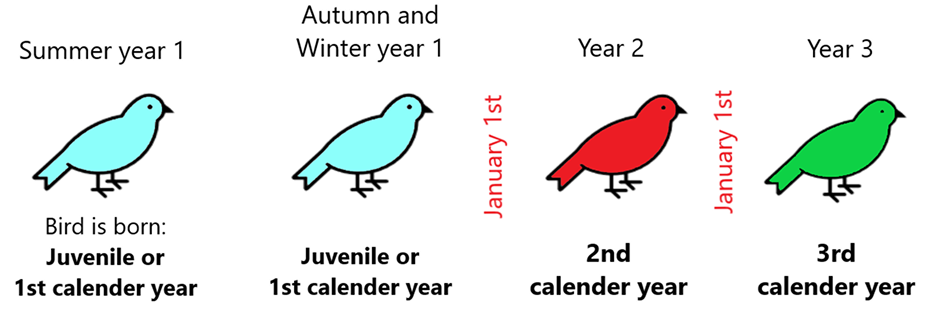
To begin with, we need to understand the ages of birds. The classification of “age” differs between different countries’ systems, so to maintain clarity, here we will talk about the “calendar year” a bird is in.
It is important to know that we can often only say that a bird is in its 3rd calendar year OR older. This is because we are unable to distinguish between older birds, for reasons that we will come to.
Moult
One of the most common and effective ways to age birds is based on their feathers (plumage).
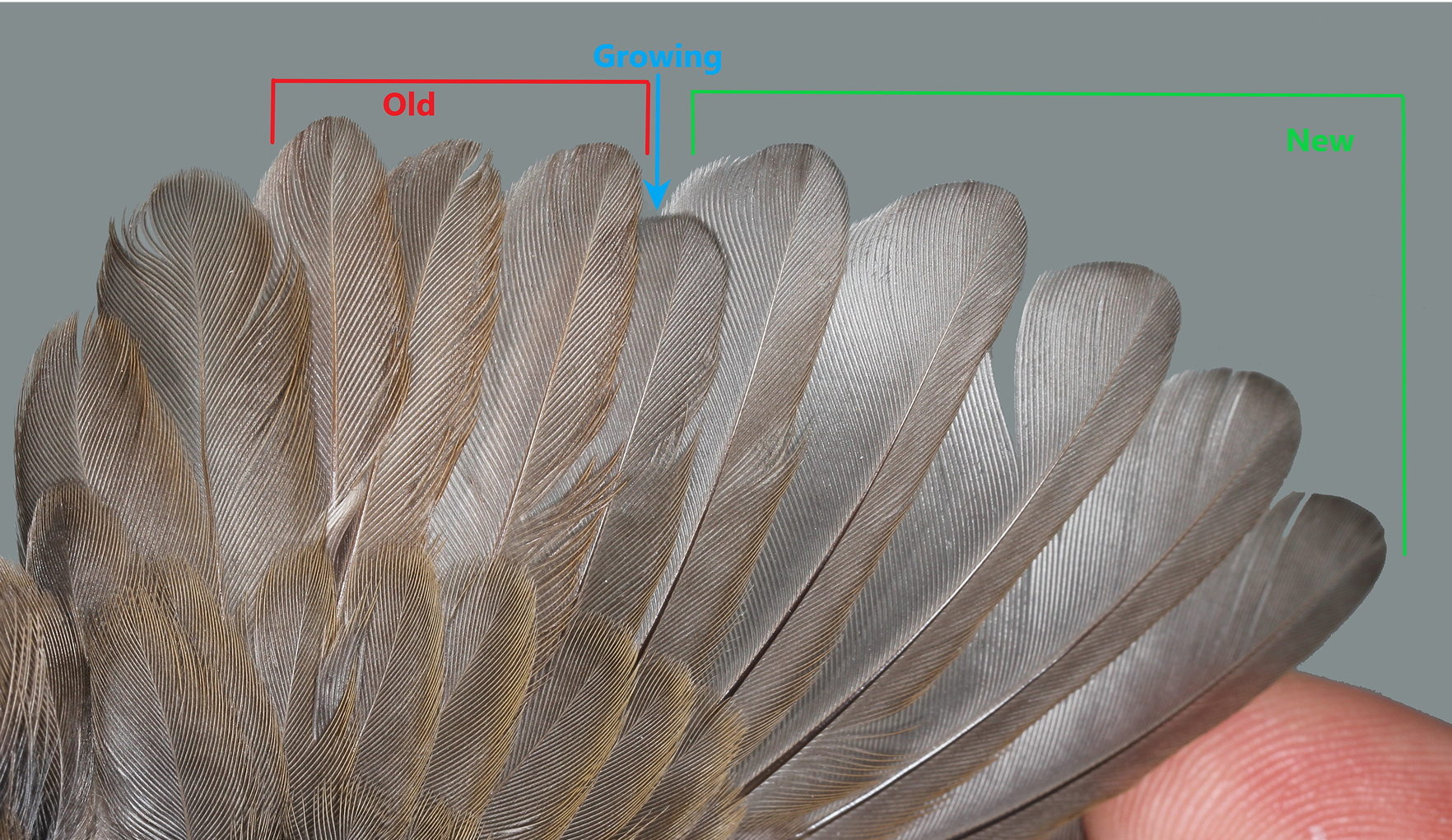
All birds regularly replace (moult) their feathers to keep them fresh and intact. However, they do not always replace ALL of their feathers. This, coupled with the fact that the different generations of feathers can be determined by the wear, condition, and shape of the feathers, leads us to the age of the bird.
When do birds moult?
The types of moult we will be talking about here apply to most passerine (songbird) species, but especially to those that migrate. Moulting usually occurs or is almost completely finished before migration begins (this time also varies between species and ages within a species). For those that do not migrate (residents), this period can be more variable.
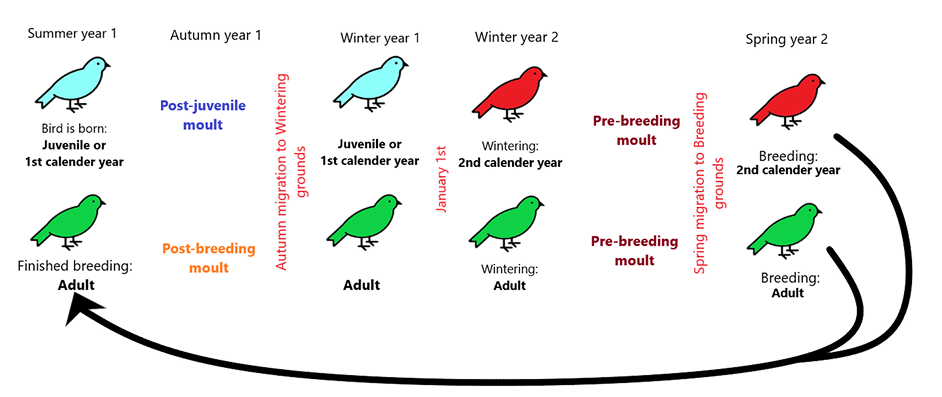
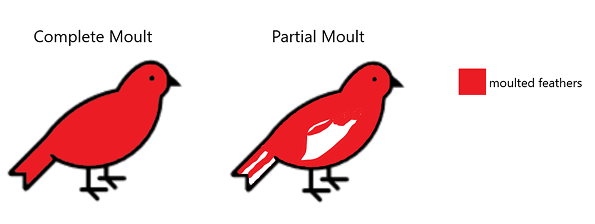
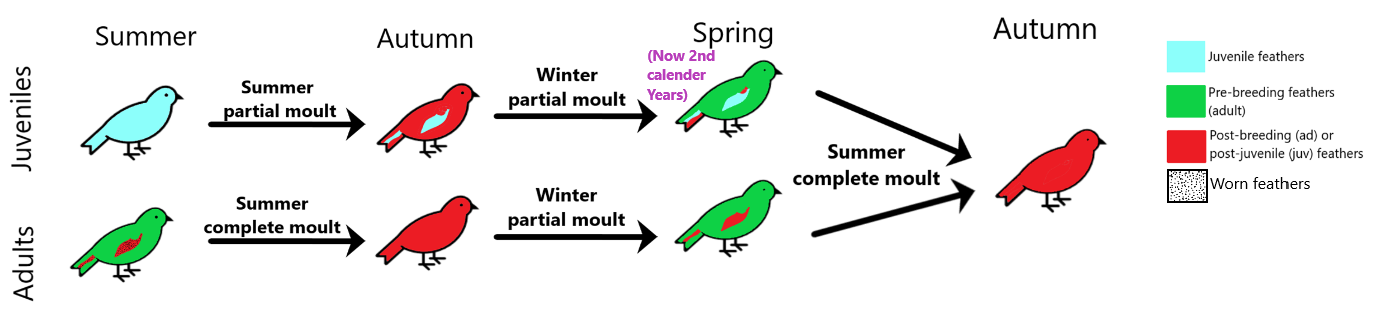
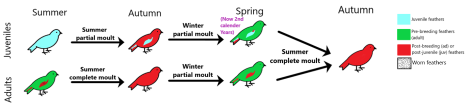
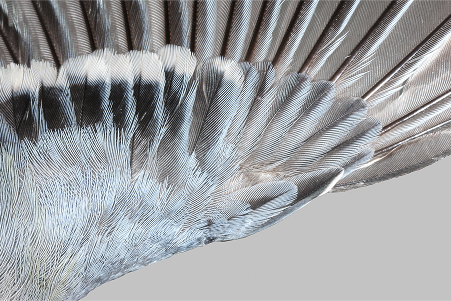
As seen in the photo above, there are three different types of moult.
Post-juvenile moult- summer moult
Occurs once in a bird’s life, after fledging (leaving the nest, usually late summer). Only in juveniles (1st calendar year bird).
Post-breeding moult- summer moult
Occurs after breeding (usually late Summer) in 2nd calendar year birds or older.
Pre-breeding moult- winter moult
Occurs before breeding (during the winter or early Spring), in juveniles (1st calendar years) and older. Note that NOT all species have a pre-breeding moult.
Any of these moults can either be complete moults (all feathers are moulted) or partial moults (a variable number of feathers are moulted).
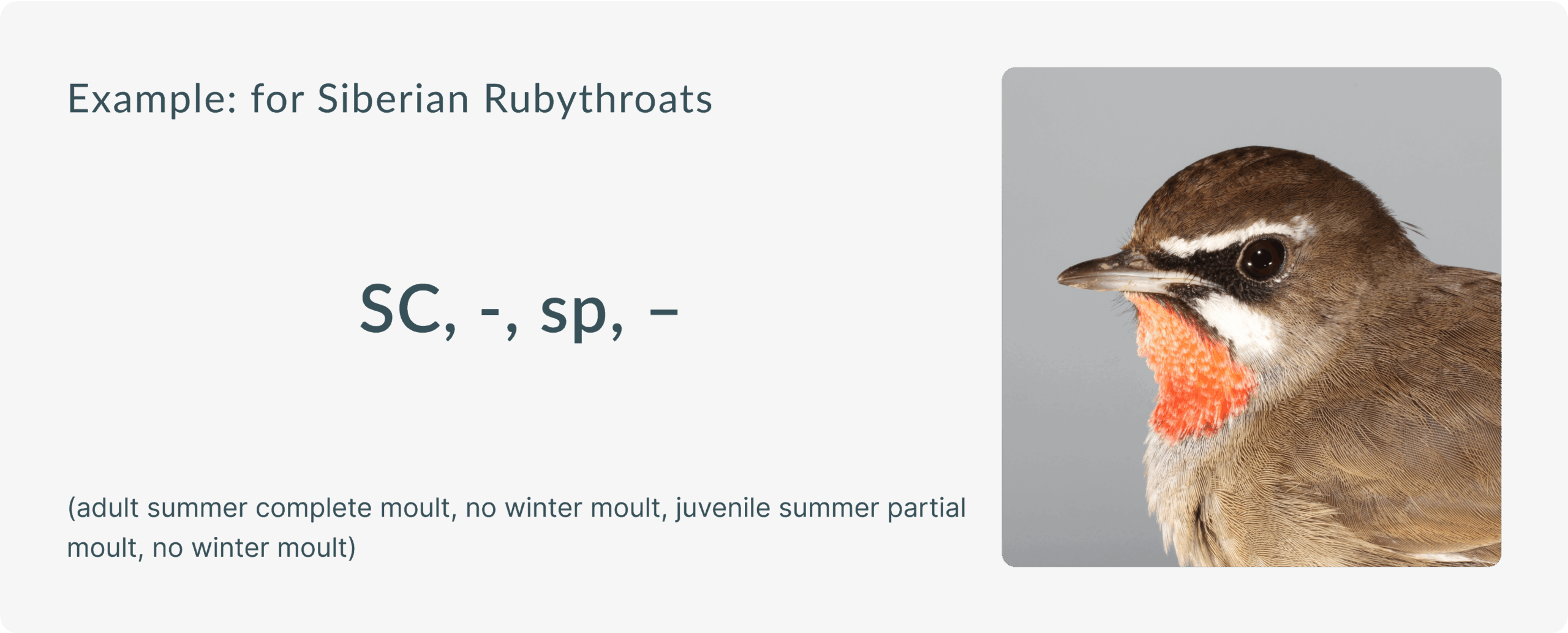
When we talk about particular species, the moults of the adults and juveniles are usually denoted as follows:
Adult’s moult strategy is always stated first, followed by the juveniles, and separated with a comma.
What feathers are we looking at?
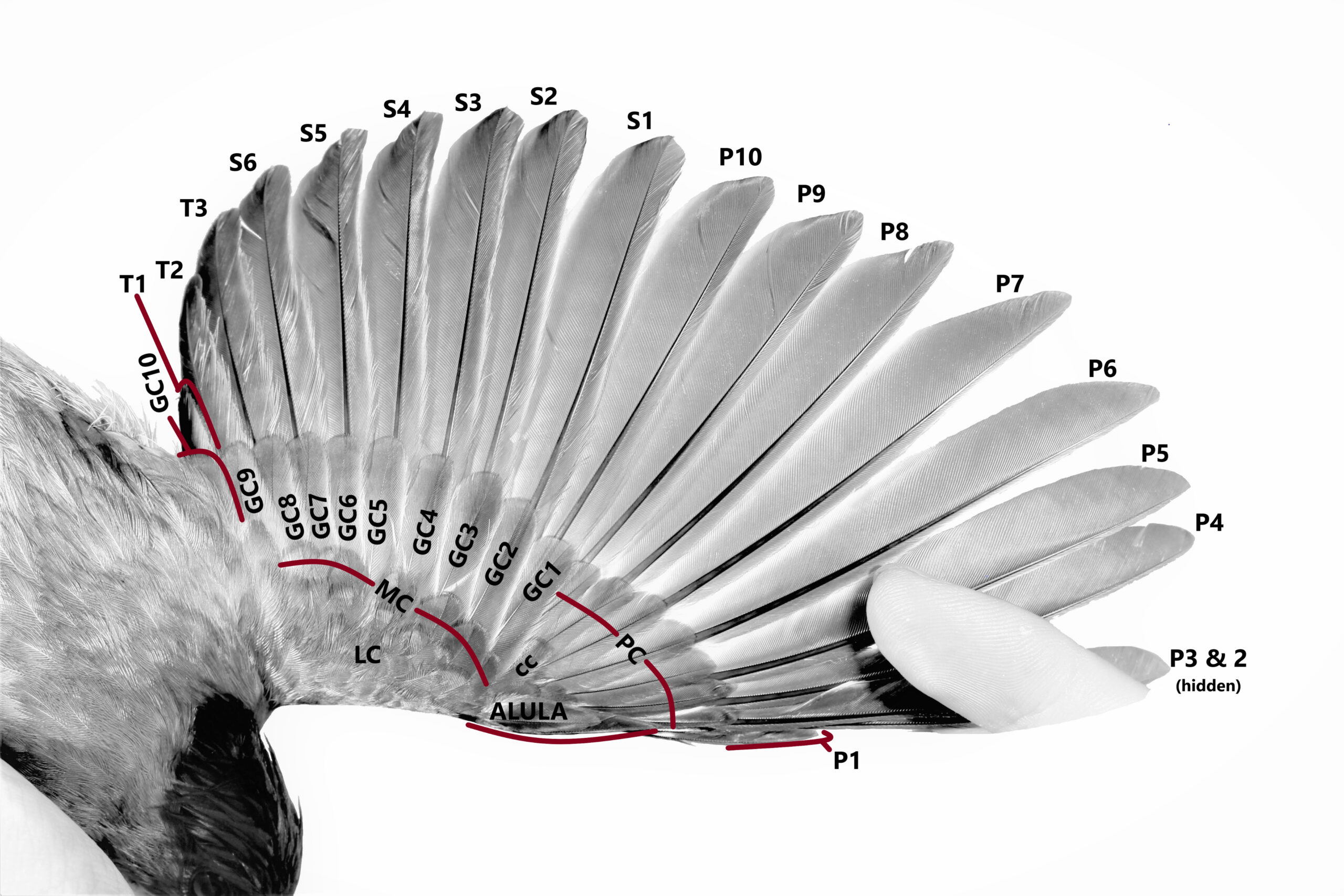
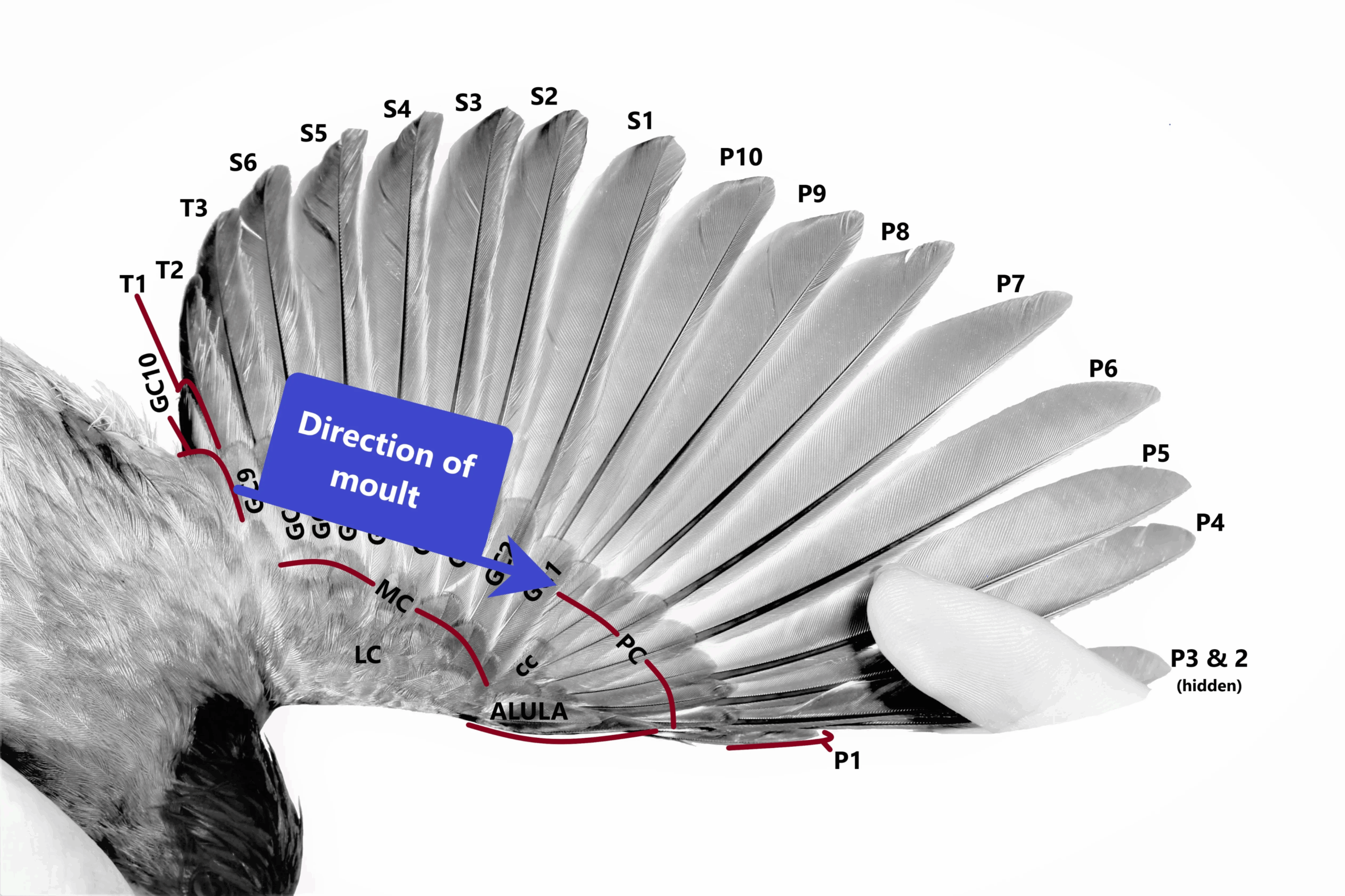
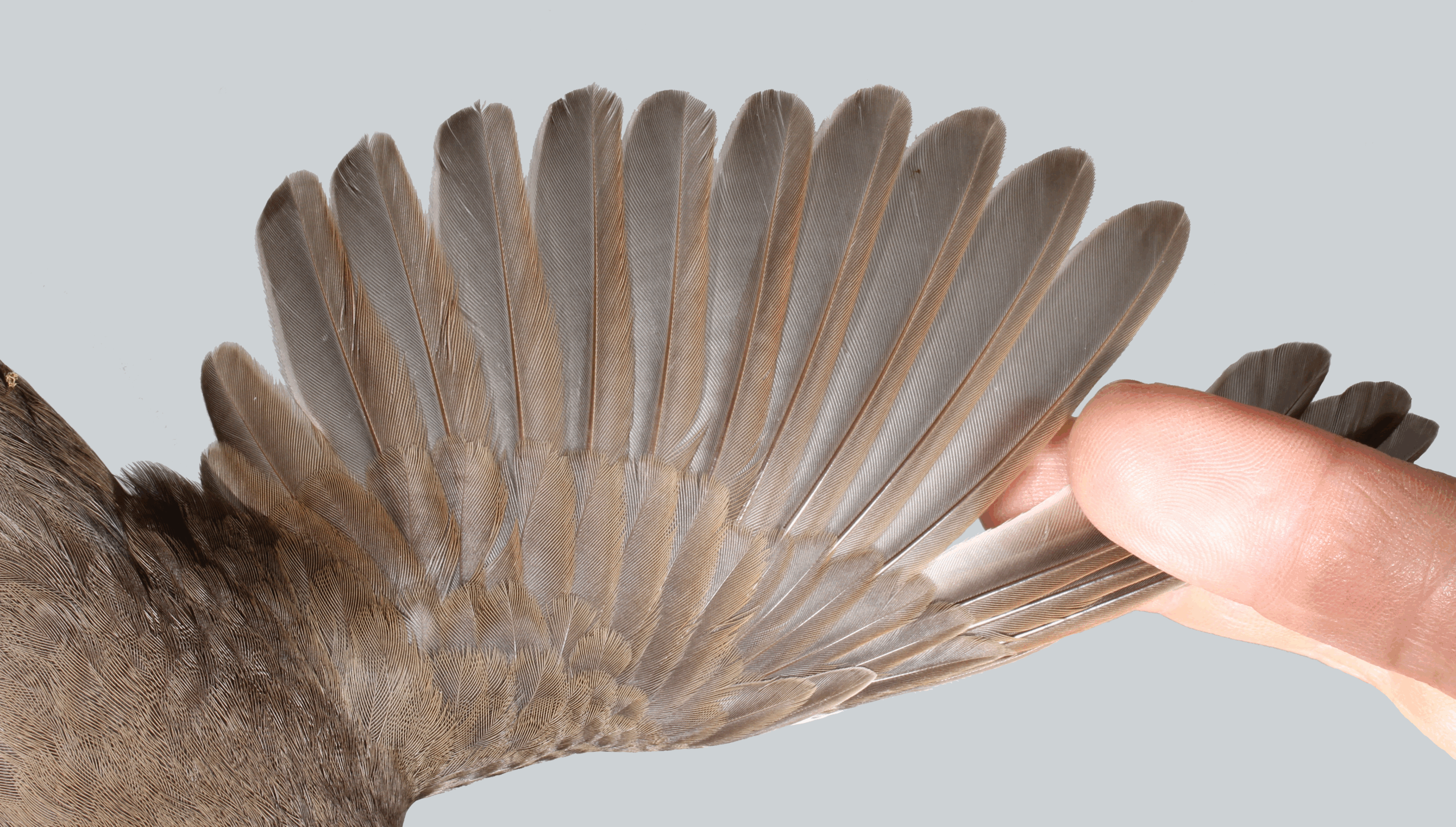
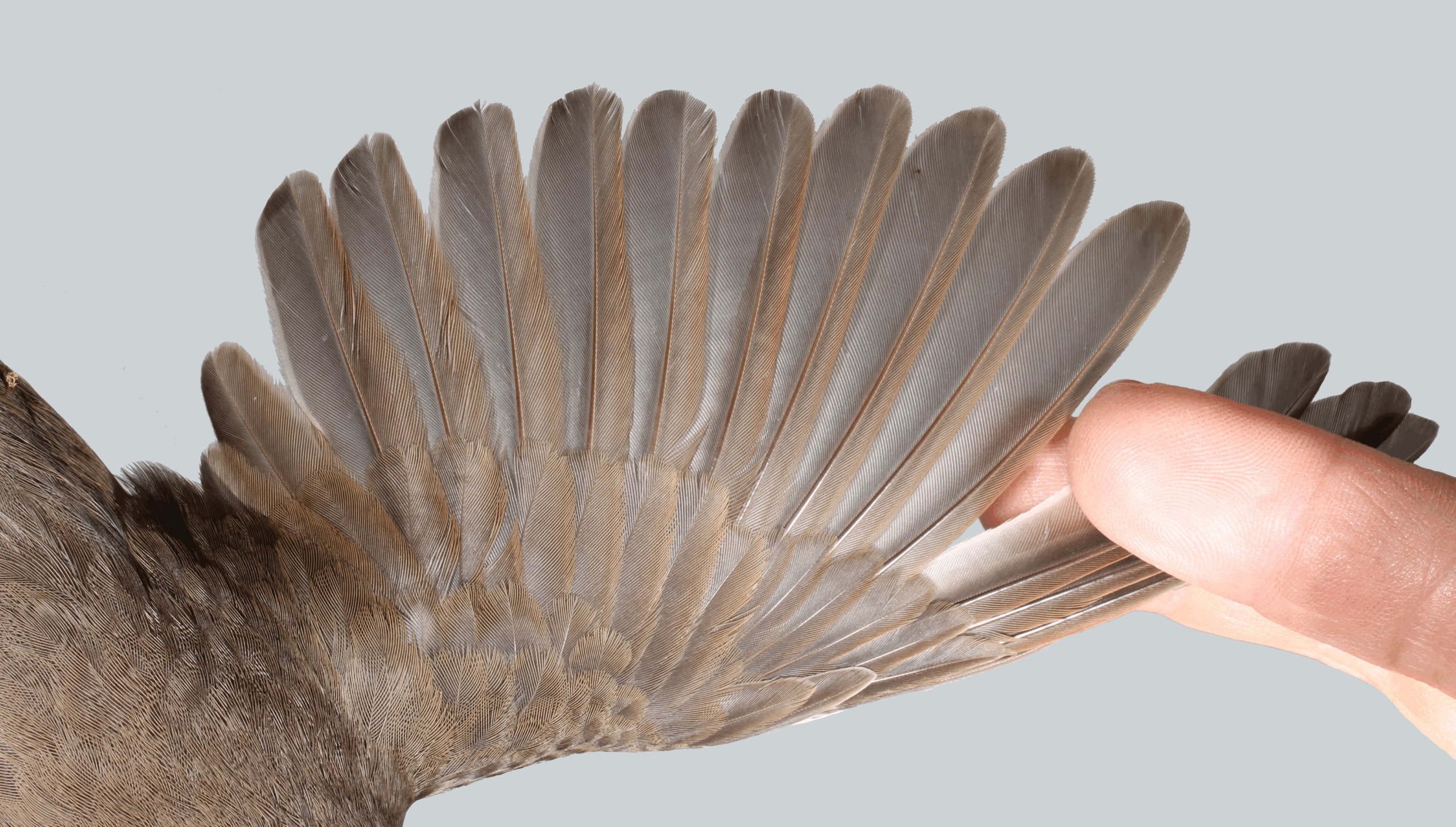
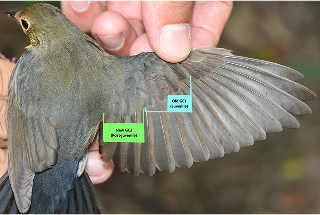
To begin with, we must look at the different feather groups, most importantly in the wing, where we can see the “moult limits” (the difference between feather generations). The different feather groups are shown below. Note that the Greater Coverts, Primaries and Secondaries are counted from the outside of the wing inwards towards to bird, while the Tertials are counted from the inside of the wing outwards, away from the bird’s body.
GC= Greater Coverts, MC= Median Coverts, LC= Lesser Coverts, CC= Carpal Covert, T= Tertials, S= Secondaries, P= Primaries, PC= Primary Coverts
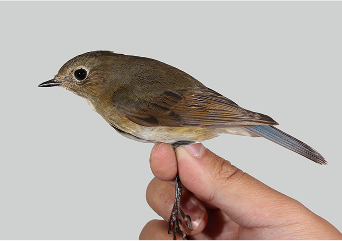
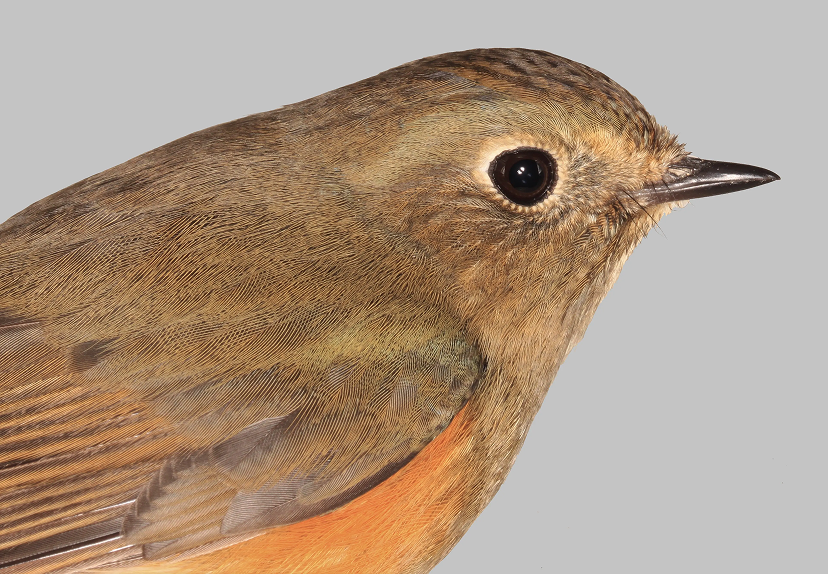
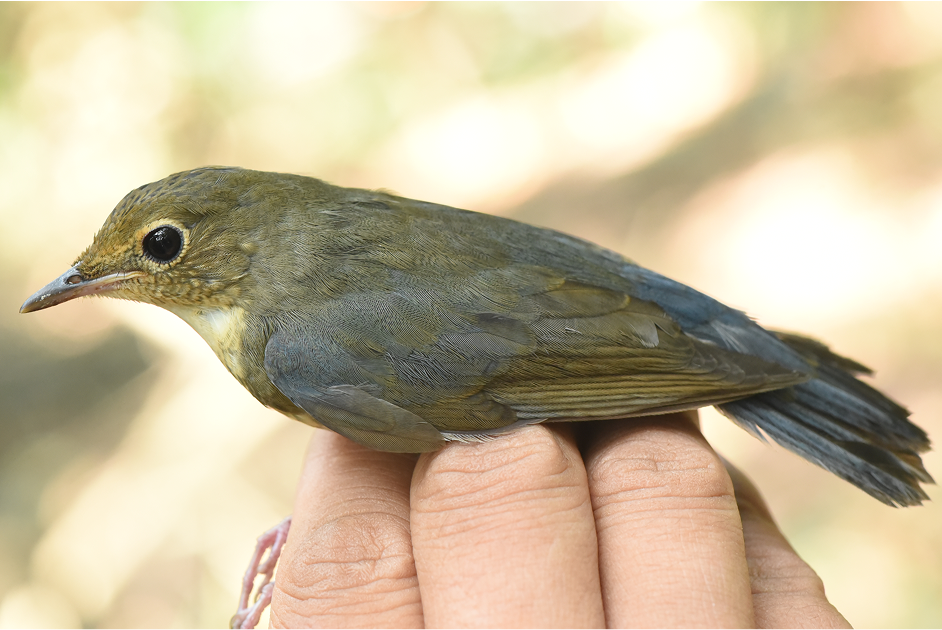
To put this into practice, take a look at the Red-flanked Bluetail below.
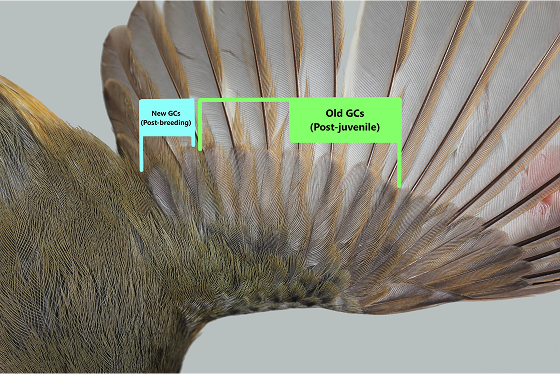
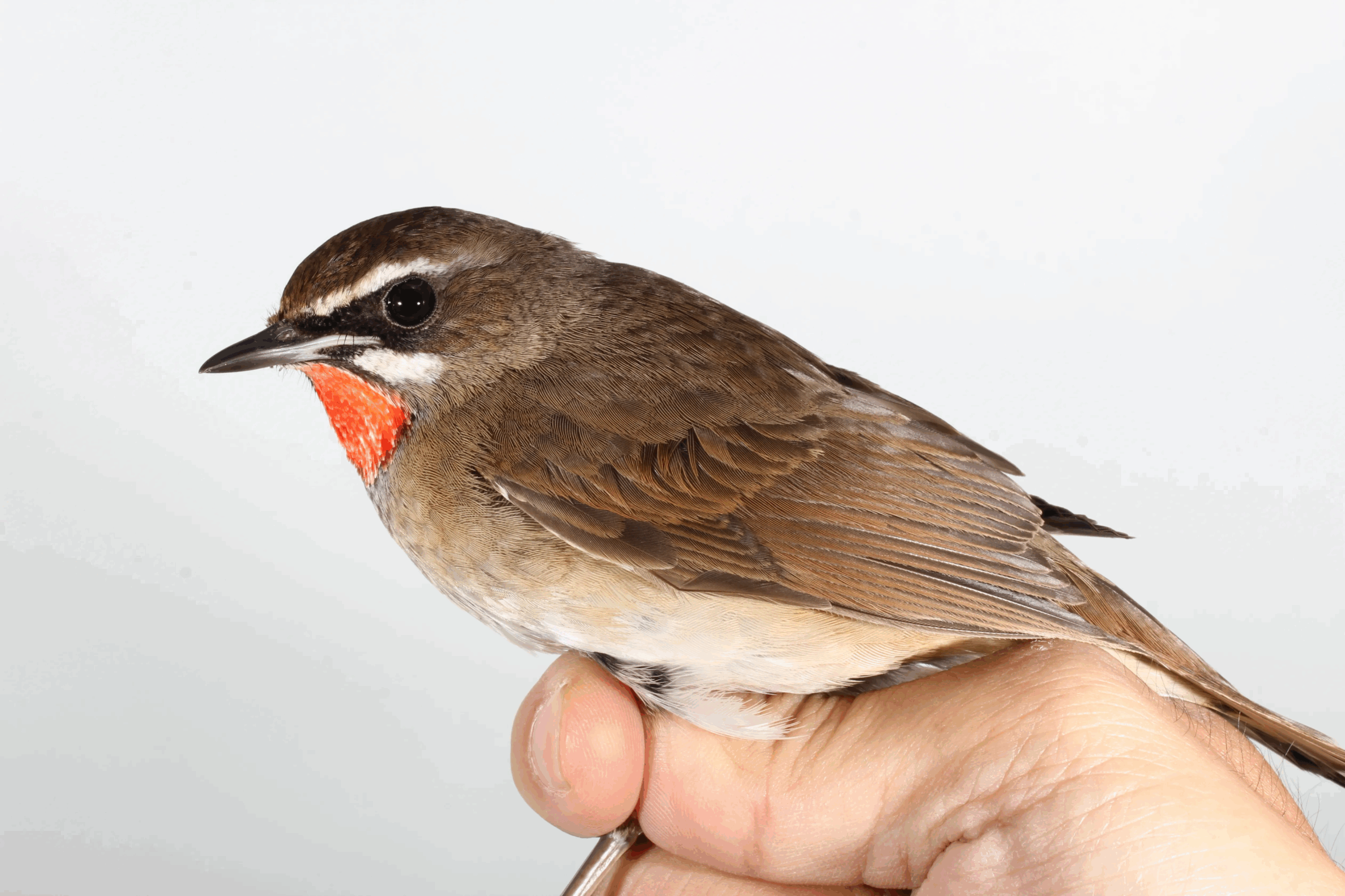
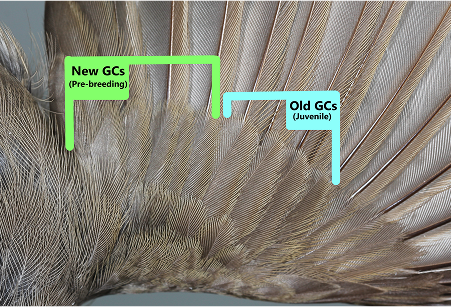
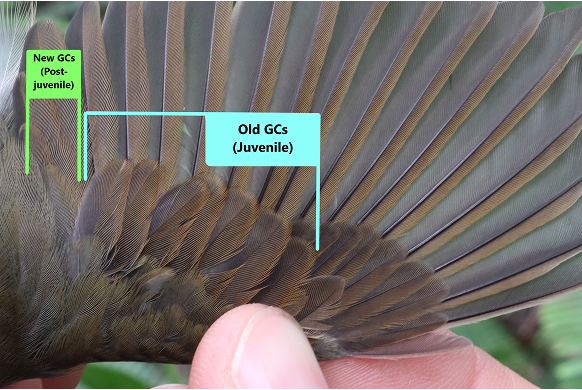
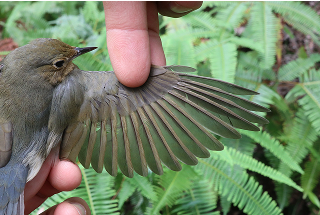
In this photo, we can see a change in the GCs, from the outer 7 (counted from the outside of the wind inwards), and the inner 3 (one is hidden next to the body).
The outer GCs are duller, more worn, more bleached (from being in the sun for longer), and less dense than the inner 3. These, in contrast, are darker, glossier and are of a better quality. This is for 2 reasons: first, they have been moulted recently, and are therefore newer and have had less time to wear down; second, they are of the “post-juvenile” generation, which are in general better quality than juvenile feathers. This tells us that this bird was born the year before capture (as it was caught in January), i.e. a juvenile, or 2nd calendar year bird.
Most juvenile Red-flanked Bluetails cannot be sexed, due to the similarities between young male and females.
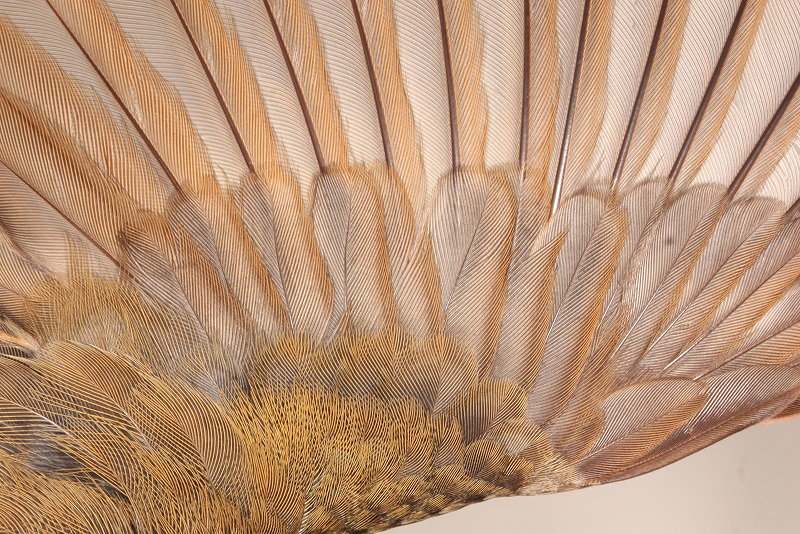
We can contrast the juvenile feathers seen above to the Red-flanked Bluetail below, which is an adult female.
Adult female Red-flanked Bluetail caught November 2021
But to come to this conclusion, we need to know exactly HOW a bird moults. This differs between species, and between adults and juveniles of a certain species. This is known as their moult strategy.
Moult strategies
One of the most important feather groups for us to look at is the GCs, where moult limits are most obvious. To use this, we must understand is the direction of moult. Most birds moult their GCs from the inside of the wing outwards (as shown below). For example, GC 10, 9 and 8 usually have to be moulted for the other GCs to also be moulted.
Summer Complete, winter partial, summer partial, winter partial (SC, wp, sp, wp)
In this strategy, juvenile undergo a partial post-juvenile (summer) moult, and adults undergo a complete post-breeding (summer) moult.
This means that in the autumn, juvenile birds will show a contrast in the wing, while adults will have a completely uniform (one generation) plumage.
These species do not have a pre-breeding (winter) moult, and thus individuals caught in spring can be aged using the same criteria as in the autumn. Moult limits are likely to be even more obvious in spring as the lower quality juvenile feathers left will wear down faster than adult type feathers.
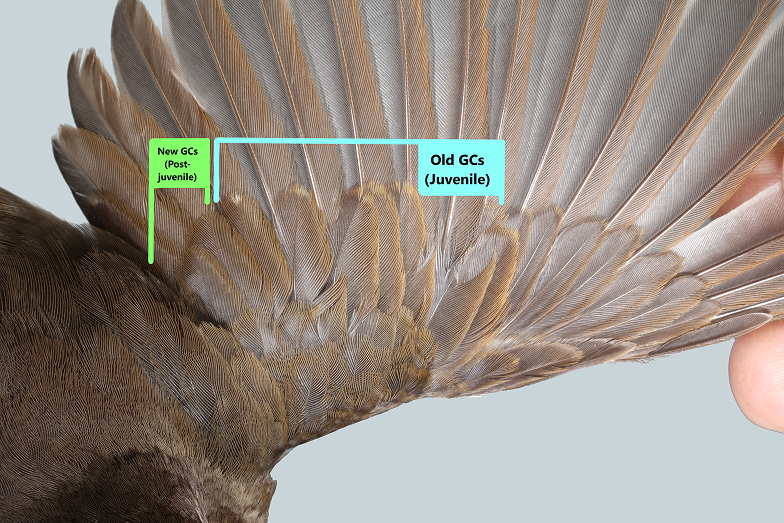
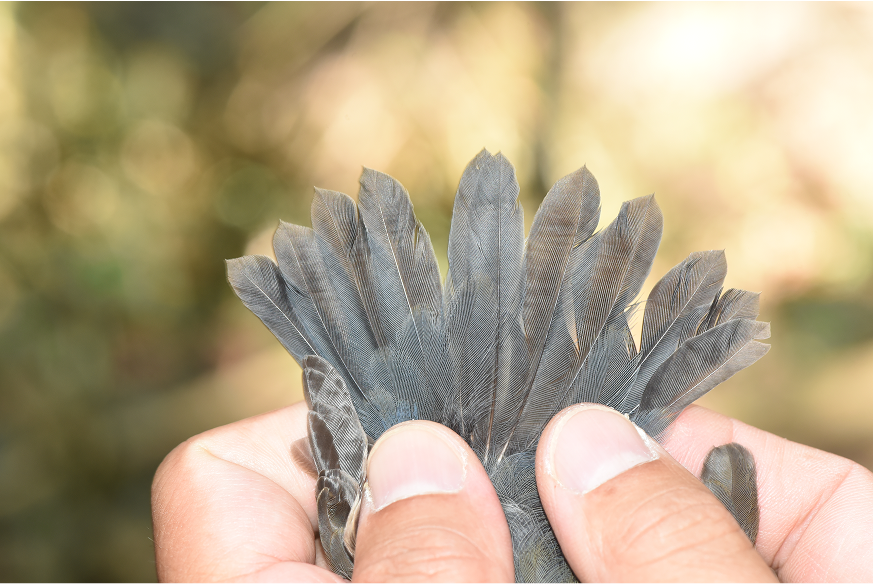
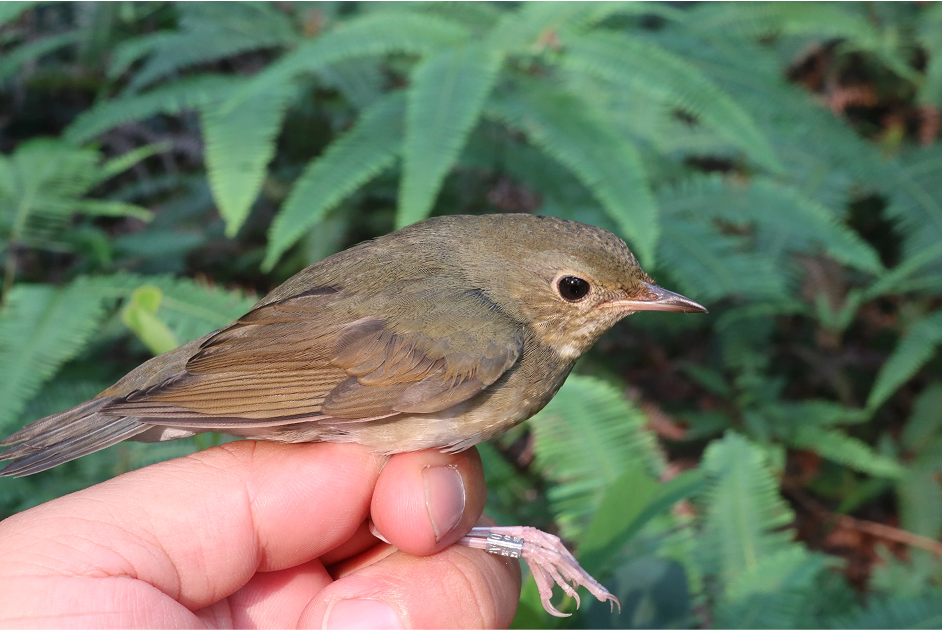
An example of this is shown below. Siberian Rubythroats moult with this Adult Summer Complete (SC), juveniles summer partial (sp). The individual below shows a moult limit in the GCs, with 7 (counted from the outside of the wind inwards) juvenile GCs, and the inner 3 (one is hidden next to the body) post-juvenile GCs.
2nd calendar year Siberian Rubythroat caught in January 2022
Since this is a 1st calendar year bird, we can determine that this is a young male, as a young female would not show as much red in the throat.
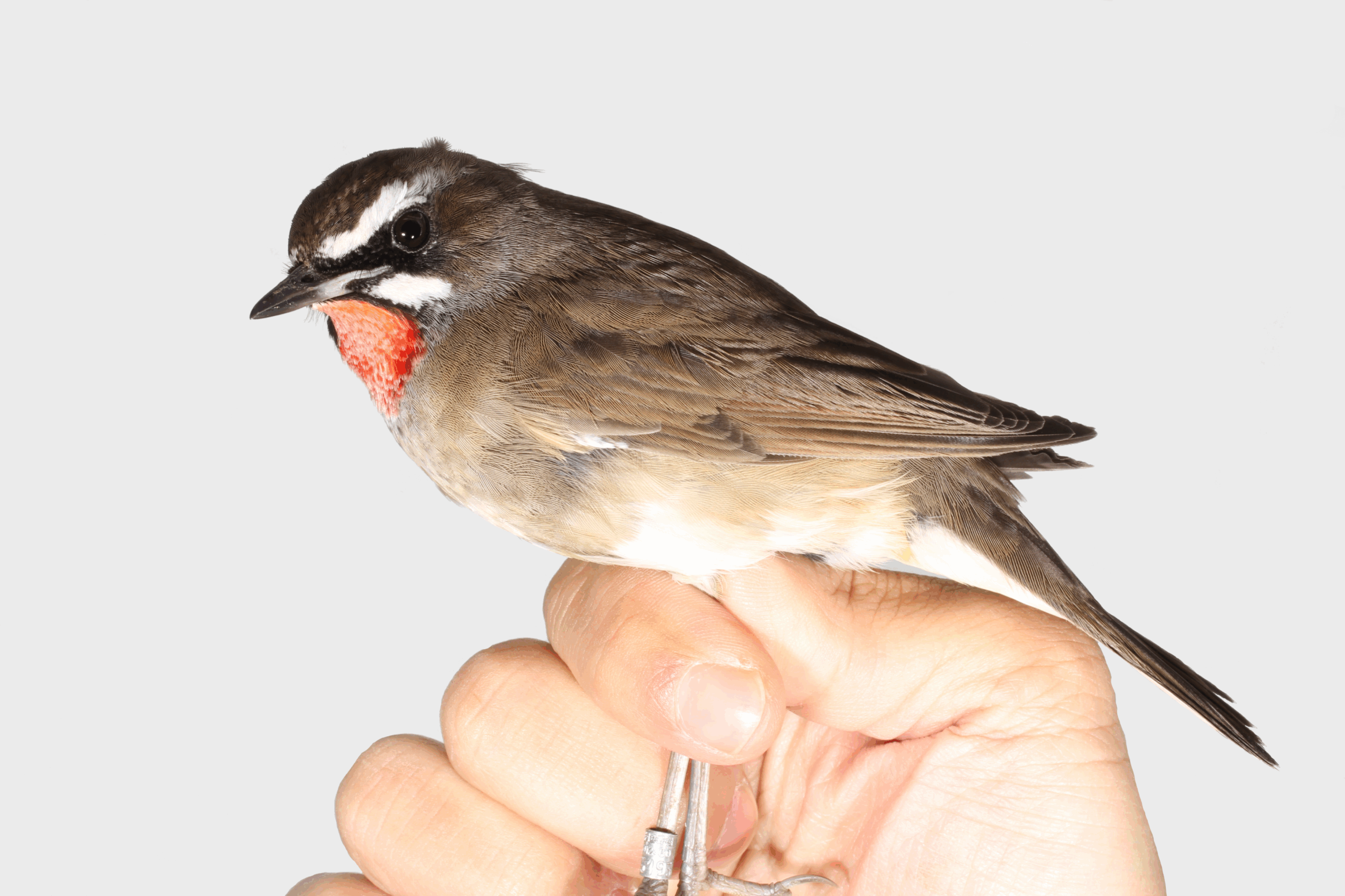
In contrast, the photos below are of an adult bird.
Adult male Siberian Rubythroat caught January 2022
This bird shows a completely uniform wing, all adult type feathers- these are nice, broad, dark and glossy. Considering we know that Siberian Rubythroat adults moult a Summer Complete (SC) moult, and juveniles summer partial (sp), we know that in January only adults would show this uniformity. Since this bird can, therefore, not have been born last year, we can conclude that this bird is in its 3rd calendar year or older– an adult.
Once again, the large amount of red in the throat tells us that this must also be a male.
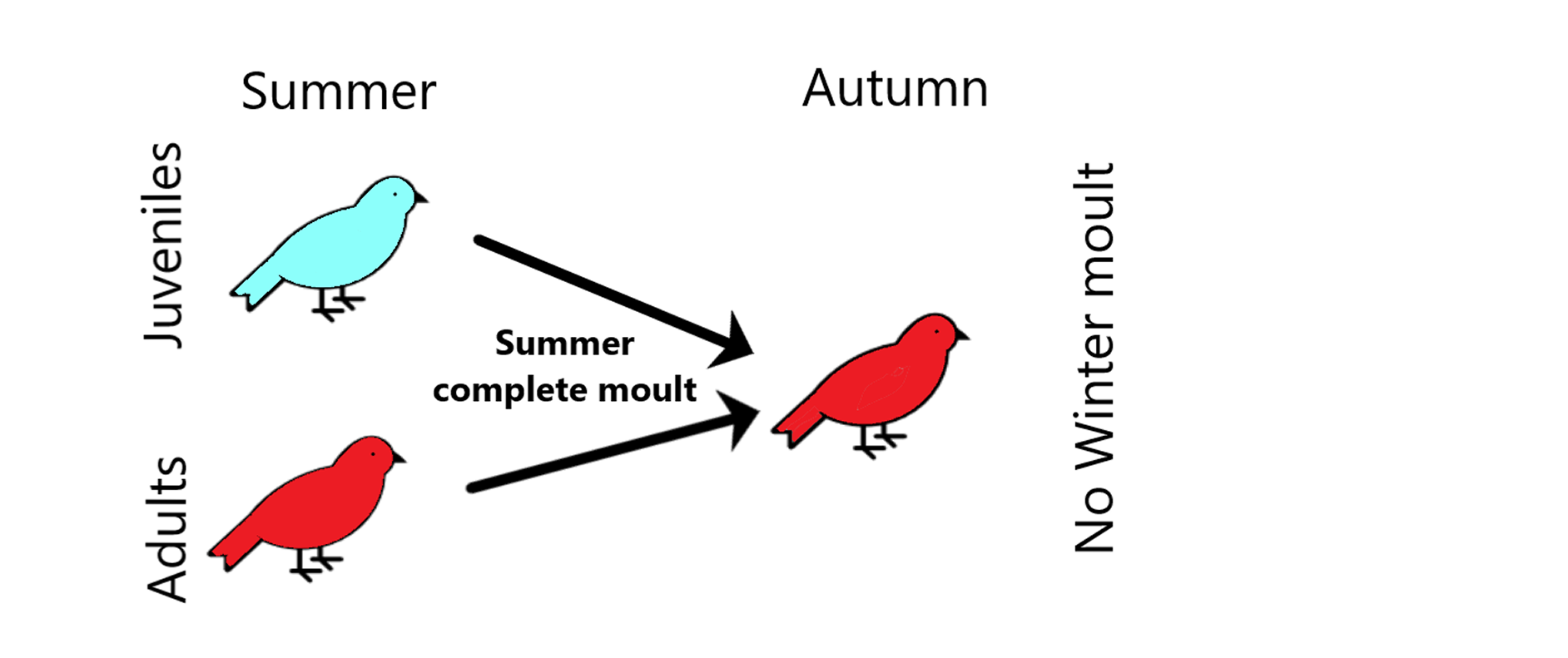
Summer Complete, no winter moult (SC, -, SC, -)
Both adults and juveniles undertake a Complete Summer moult. This makes them indistinguishable by the 1st year autumn (once the complete moult is finished)- and thus all are aged as 1st calendar year or older.
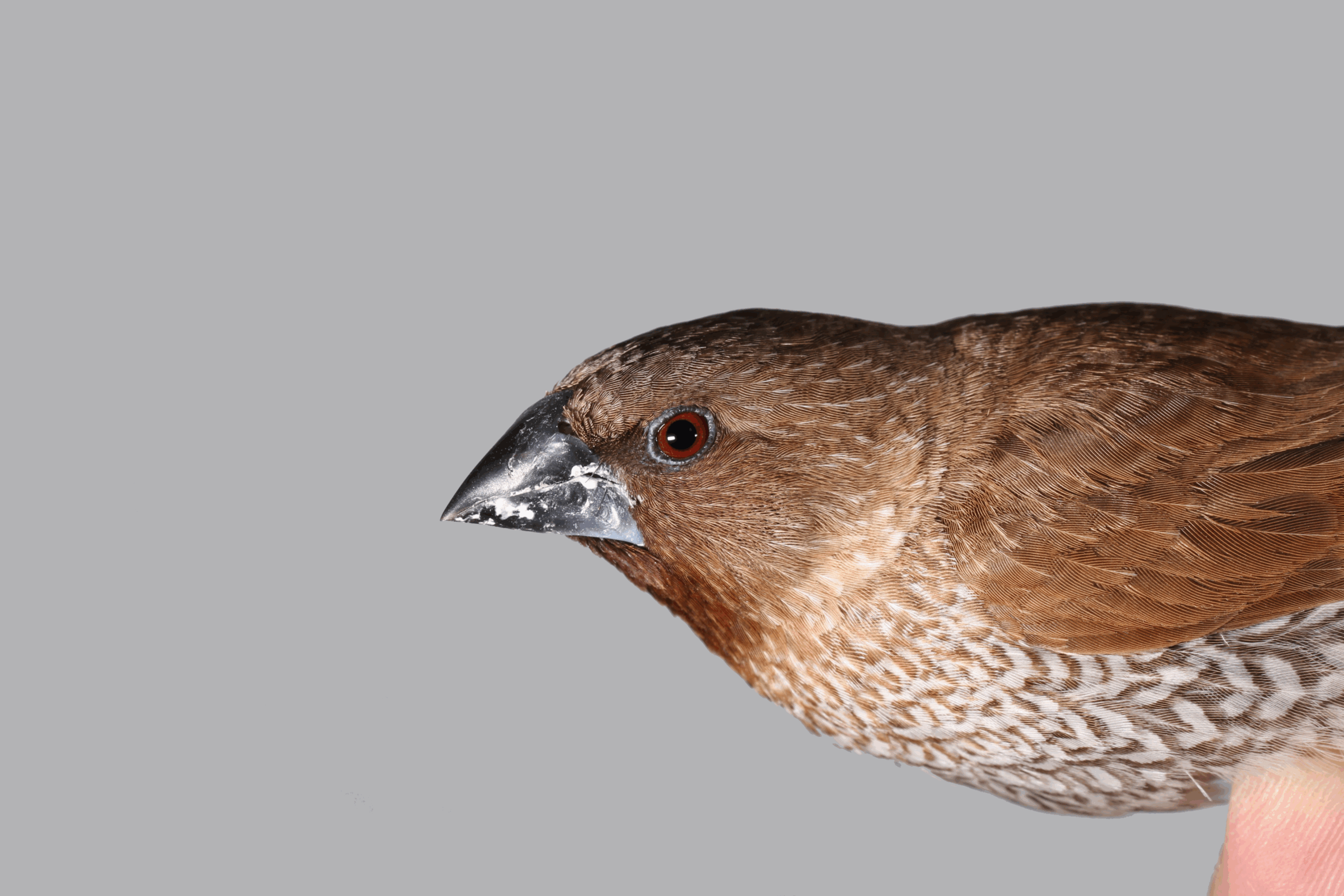
An example of this is the Scaley-breasted Munia. Both adults and juveniles undertake a complete summer moult, after which they look identical (based on plumage).
Summer Complete, no winter moult (SC, -, SC, -)
In this strategy, juvenile undergo a partial post-juvenile (summer) moult, and adults undergo a complete post-breeding (summer) moult.
This means that in the autumn, juvenile birds will show a contrast in the wing, while adults will have a completely uniform (one generation) plumage.
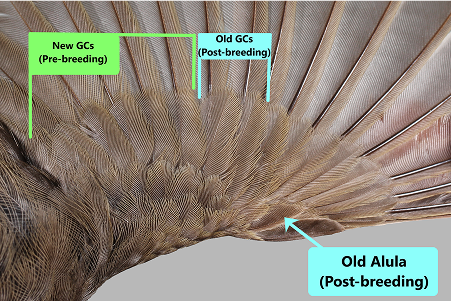
Both adults and juveniles also have a partial prebreeding (winter) moult, meaning that by spring the next year, both adults and juveniles will show at least one (potentially two for juveniles) moult limits in the wing. To differentiate the adults from the juveniles, we must be able to age the old feathers as either juvenile or post-breeding (for adults).
*Note that the difference in feather generations is not as clear in the adult as both generations are of “adult type”. Furthermore, the juvenile feathers wear faster (as can also be seen in the PCs), making the moult limit clearer.
Other Ageing Methods
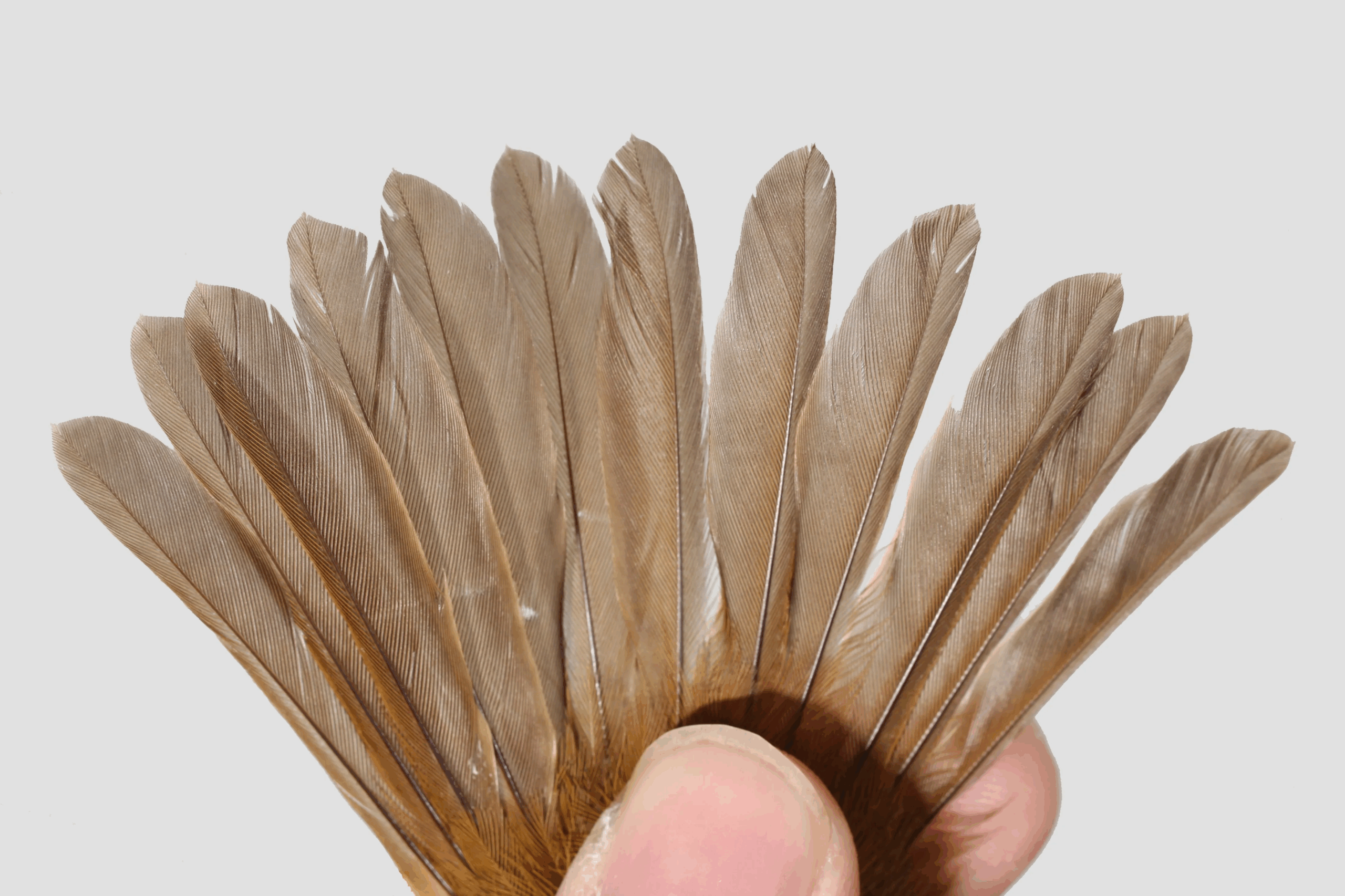
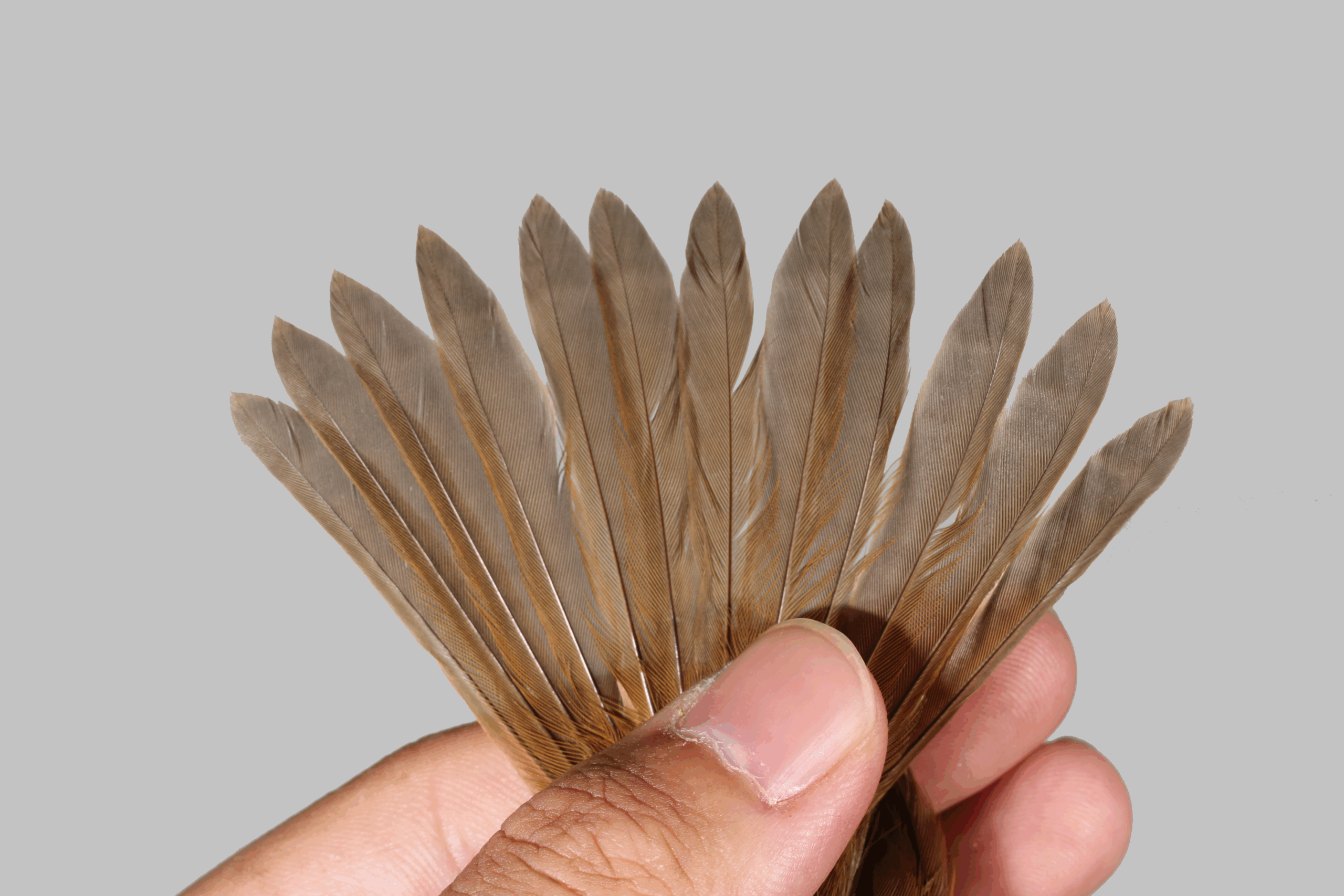
Although the GCs are very important in ageing, we can also use other flight feathers and tail feathers to support our theories. Here, we should see the same differences as mentioned above (juvenile feathers showing a different shape, more worn, bleached, less glossy and dense etc.)
However, with some species, especially tropical birds, we are not always able to use the plumage to see the differences between juveniles and adults. In such cases, we look to other factors.
Iris Colour
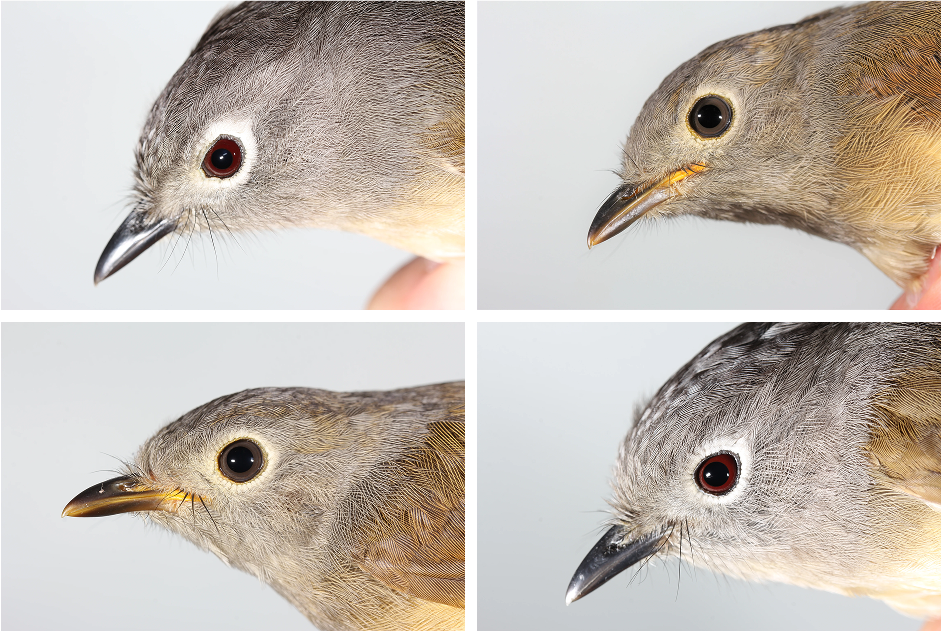
For most species, there is an average difference in the colour of the iris between young and adult birds. This method must be used with caution, as for many species we do not know when the first juveniles begin to display an adult-coloured iris.
Skull Pneumatization
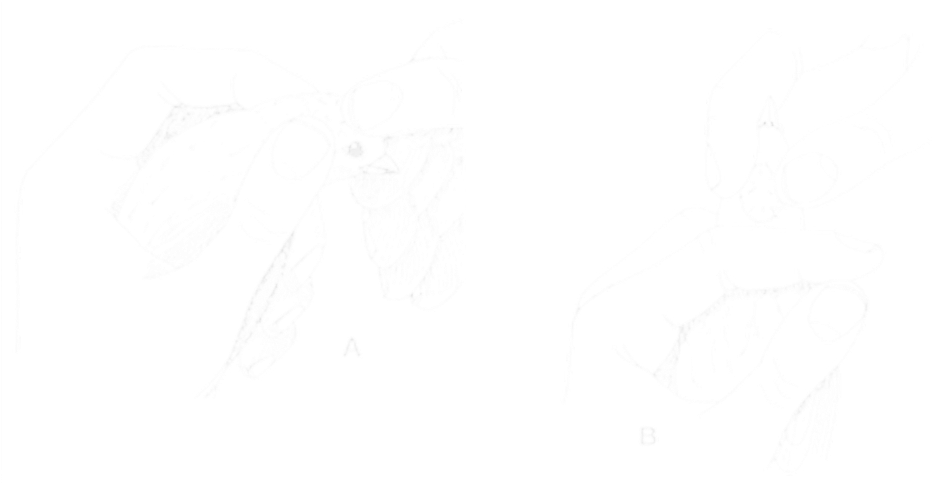
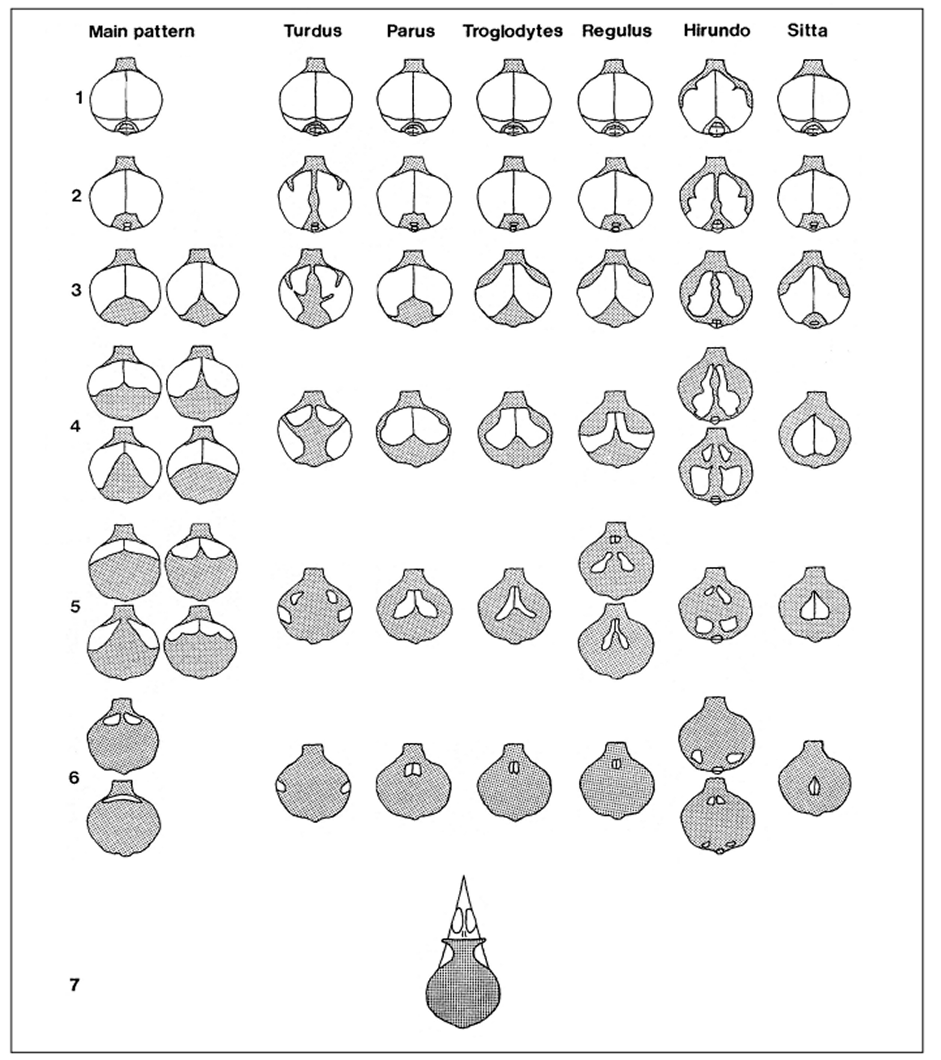
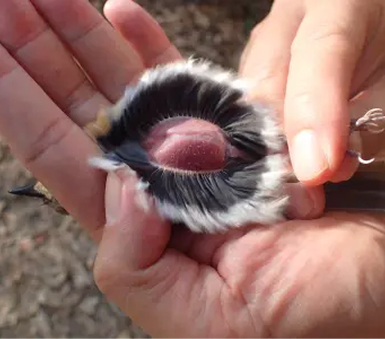
Skull pneumatization is essentially a part of the skull’s development. When a baby bird is born, the skull is not pneumatized, and from the outside of the skin, it is pink in colour. As the bird develops, most species go through this period of development, until the skull of an adult bird is usually fully pneumatized (although not for all species), which appears whiter from the outside. If we blow carefully on the feathers on a bird’s head, we can part them to see the skin on the skull.
By examining this, we can look at the stage of skull pneumatization, which can help us to age birds.
Again, we need to be careful with this technique, as for some species, we do not know when the first juveniles start to show a fully pneumatized skull.
Sexing
Sexing is a little more complicated than that ageing, as the methods used to do so vary from species to species, depending on both age and the season caught in.
The important thing to remember is that we MUST age the bird FIRST. The reason for this is that young males can very often be confused with older females- who can display male characteristics.
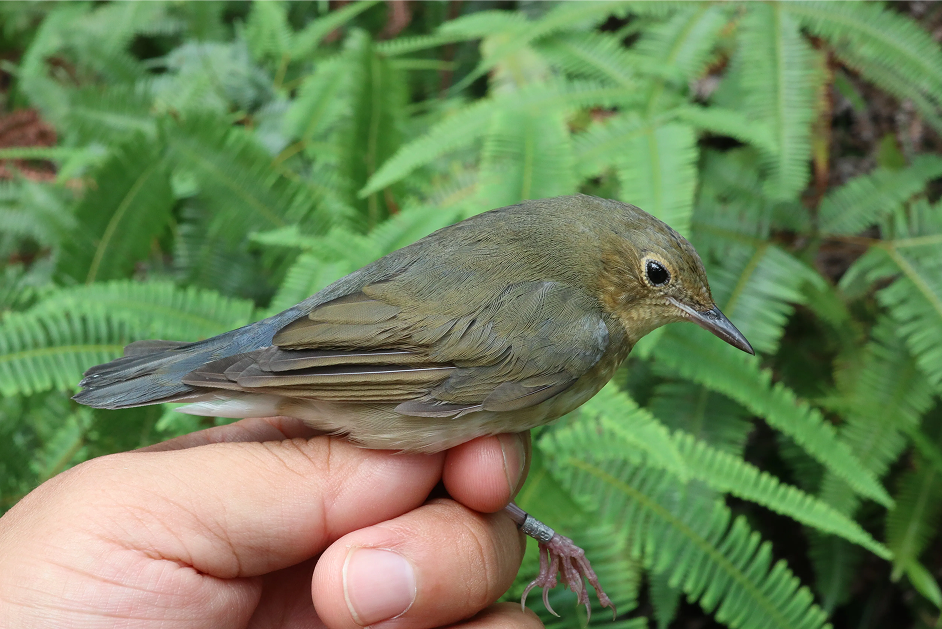
A great example of this is of the Siberian Blue Robin. We can compare the individuals below:
Siberian Blue Robin caught in October 2017. 1st calendar year male.
This individual was caught in October 2017. We know that Siberian Blue Robins moult SC, -, sp, –, meaning that if this is a juvenile bird, we should see a moult limit in the wing. We can see this in the GCs, with 4 older GCs that are more worn, less glossy and with orange fringes to the feathers. Now we have determined this is a young bird, the amount of blue in the tail, rump and coverts tell us that this must be a young male.
For comparison, we can see what a young female would look like.
Siberian Blue Robin caught in September 2021. 1st calendar year female.
This bird was caught in September 2021, and also shows a moult limit in the GCs, with 7 juvenile GCs. These are kept nicer than our first bird, but still have a different tone and density to the one greyer, glossier post-juvenile GC that is visible.
Comparing the rump, we can see there is very little blue hue, while the coverts are completely brown. Therefore, we can concluded that this is a young female.
Siberian Blue Robin caught in September 2021. 2nd calendar year or older female.
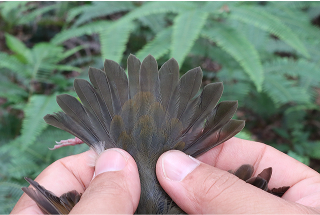
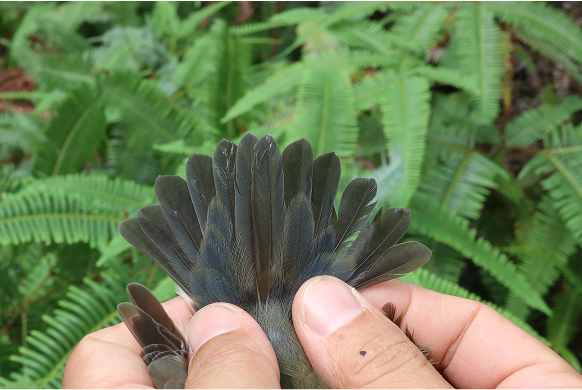
Finally, we have an adult female Siberian Blue Robin caught in September 2021. If this was a young bird, we would confuse this to be a male, due to the amount of blue in the plumage. However, the entire wing is fresh, uniform, glossy, dark, and dense- all pointing to an adult. The tail confirms this, again with dark and dense feathers that lack the pointed tips shown in juveniles.
Since adult male Siberian Blue Robins would have blue all over their upperparts and white underparts, we can definitively say that this is an adult female.
Final Notes
While the information above is sufficient to age and sex a lot of birds, it is important to note that there are degrees of variation in shape, size, wear, colour (pretty much everything) even between individuals of the same species. This means there may be intermediate individuals, where we cannot safely age and/or sex them.
Furthermore, there are a lot of species where we just don’t have the necessary information to age or sex them. A lot of these species exist in the tropics/sub-tropics. You will see in this blog a lot of photos taken for the purpose of finding out how we can solve these problems, learn more about this species and, ergo, what we can do to protect them.