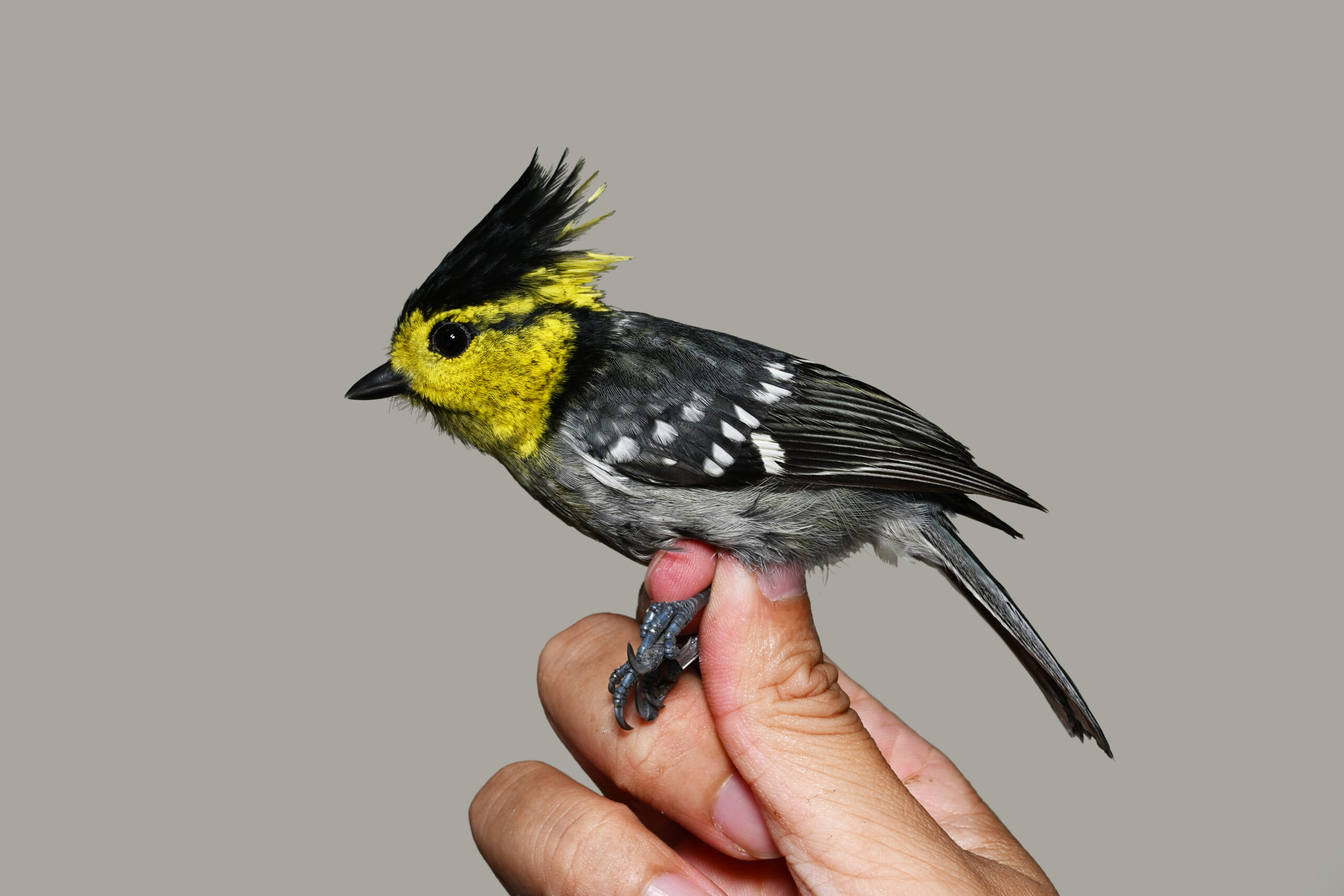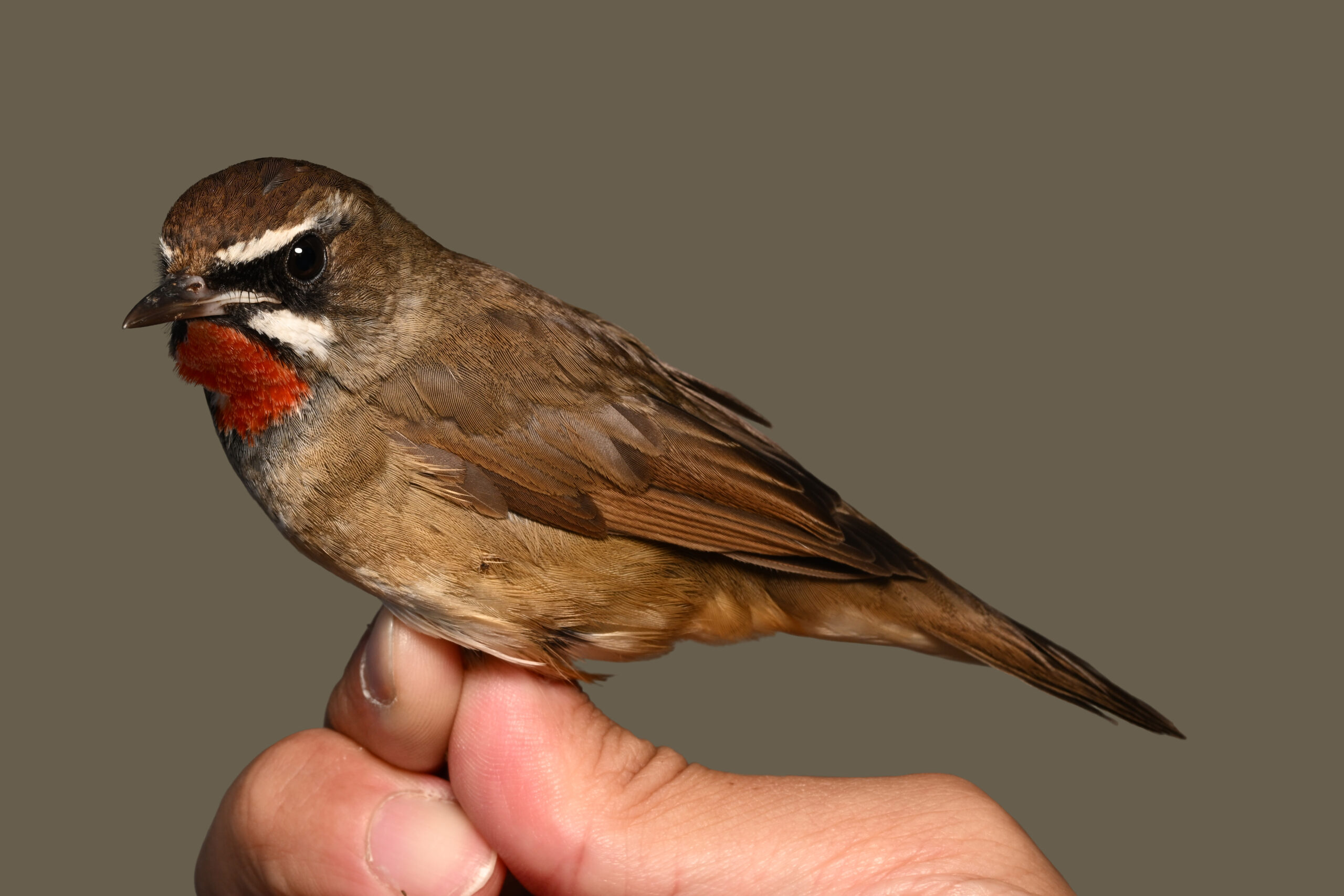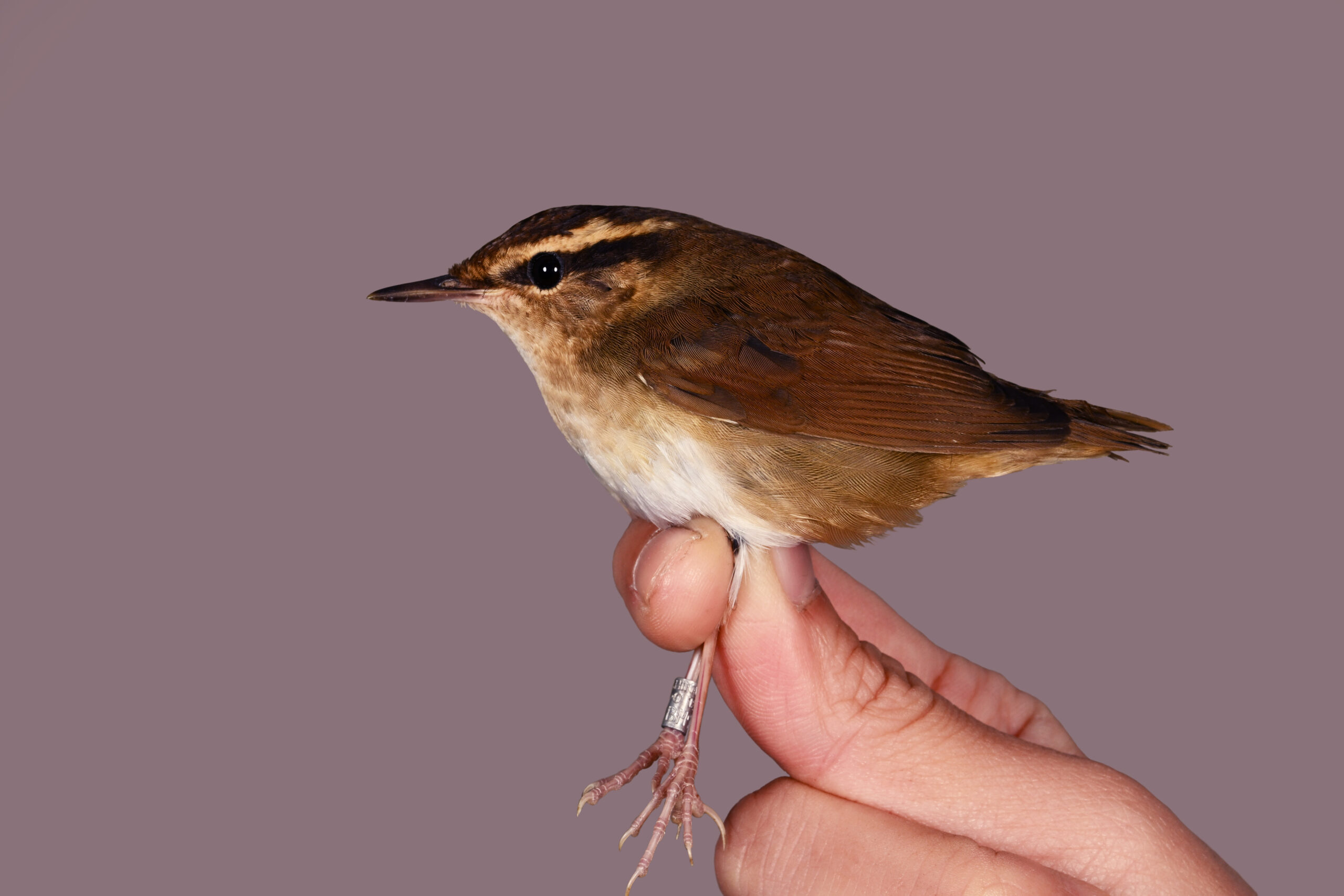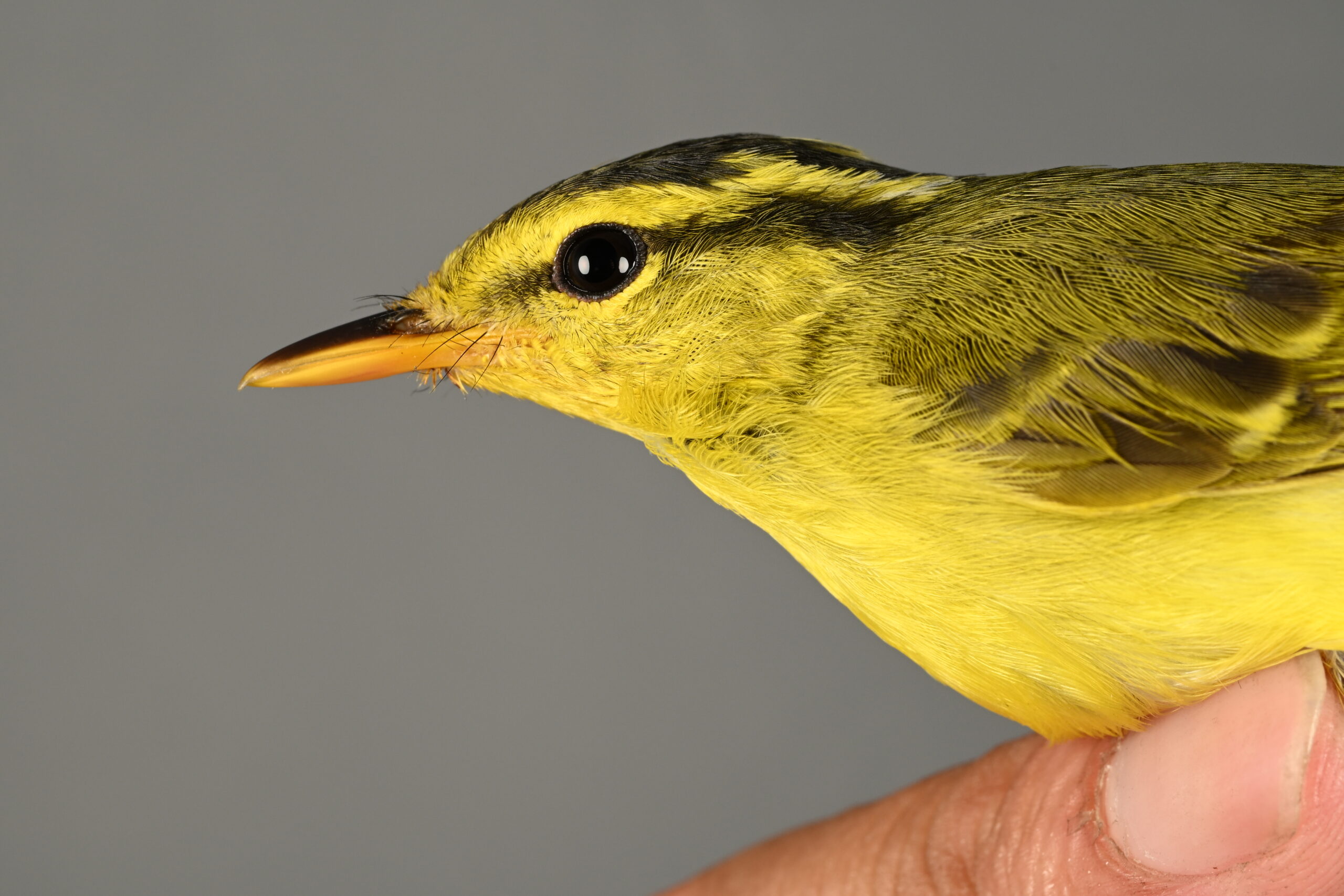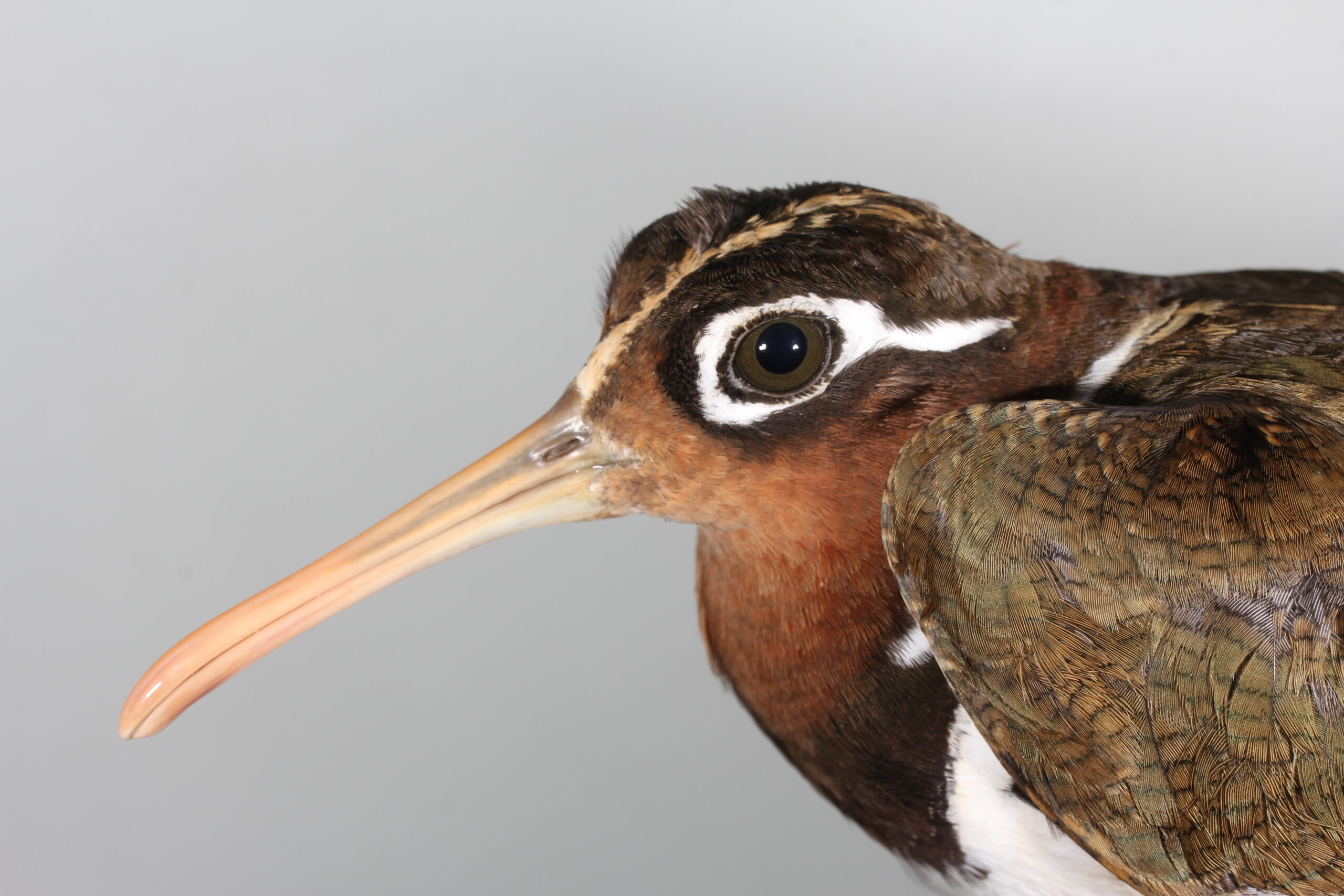



Today brought a quiet morning to the forest, with just 5 birds processed, of which 3 were recaptures.
Nevertheless, recaptures are still great to catch, as they tell us that our ringed birds are doing well and can give us a host of information about the longevity and habitat usage of species!
Our first catch of the day was a recaptured Mountain Bulbul, first ringed in August of 2020. Although we know from our records that this must be at least in its 2nd calendar year, at the moment we do not know how to age them further. But a beautiful bird nonetheless!
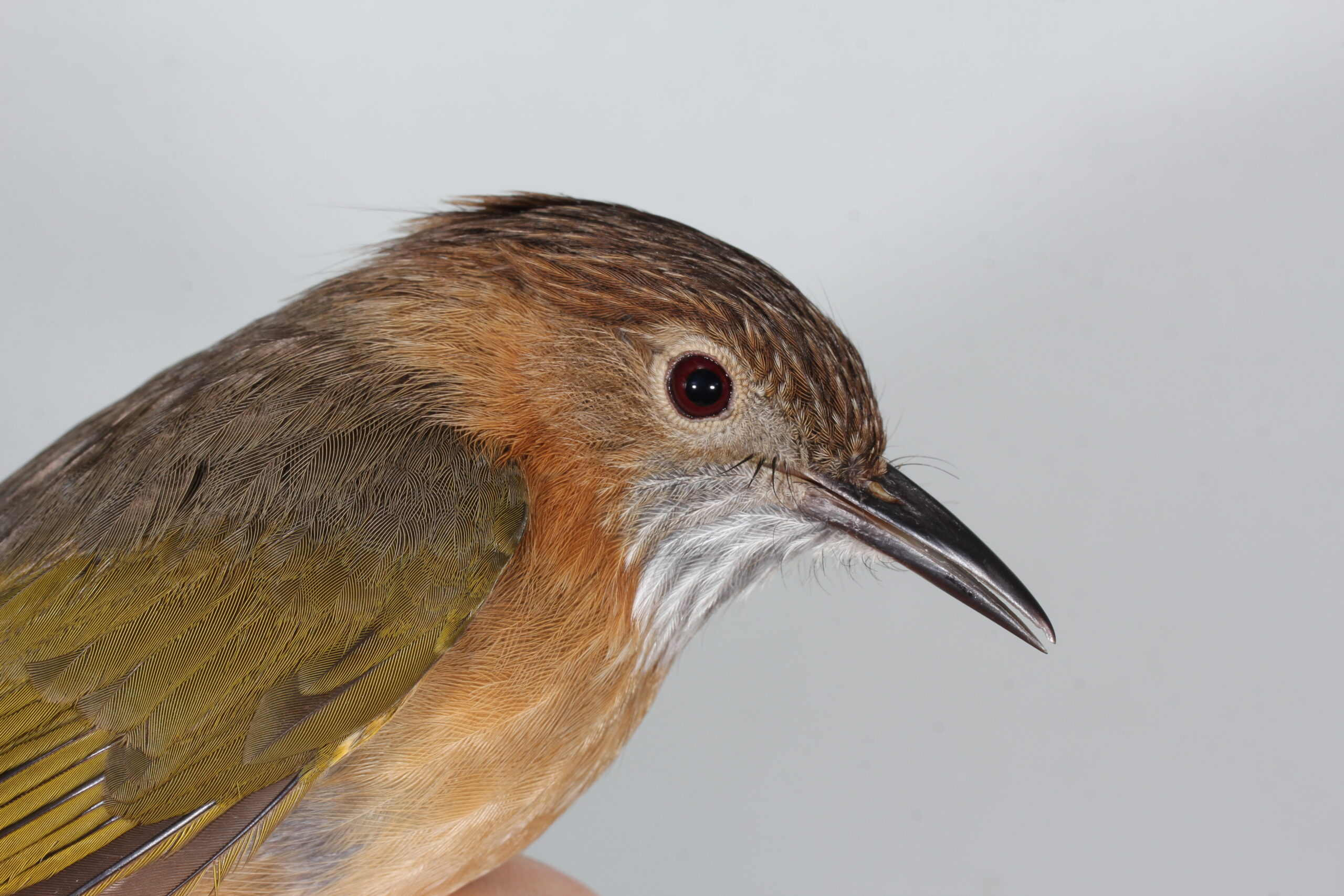
After the usual catch of a Common Tailorbird and a Huet’s Fulvetta, we got another nice surprise in the form of a recaptured White-bellied Epornis!
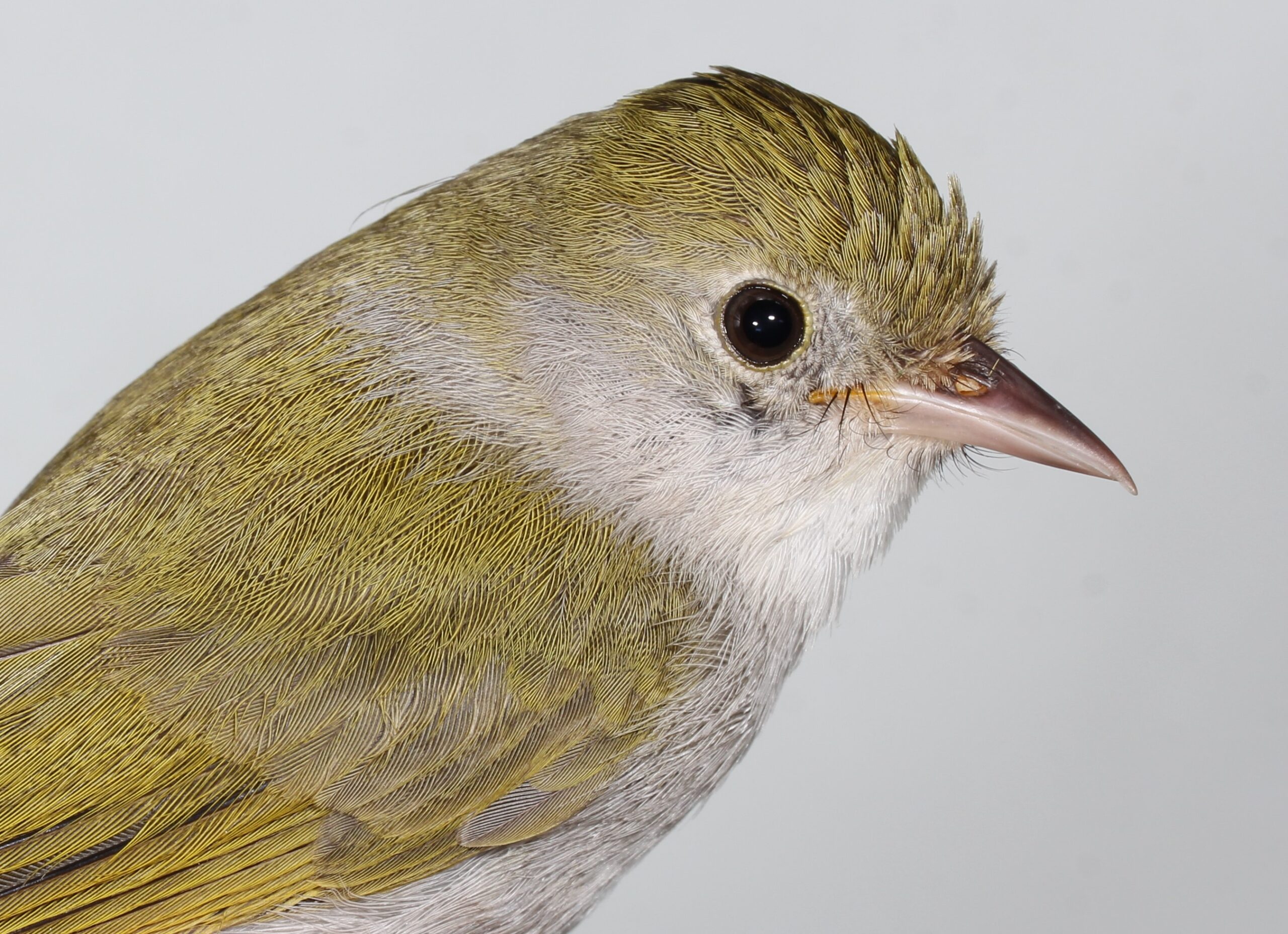
If you read our last post, you might know that we caught a new individual yesterday, so it is great to be able to compare to this one, which was originally ringed in February of 2021! That tells us that this bird must be at least in it’s 3rd calendar year now (born 2020 or earlier).
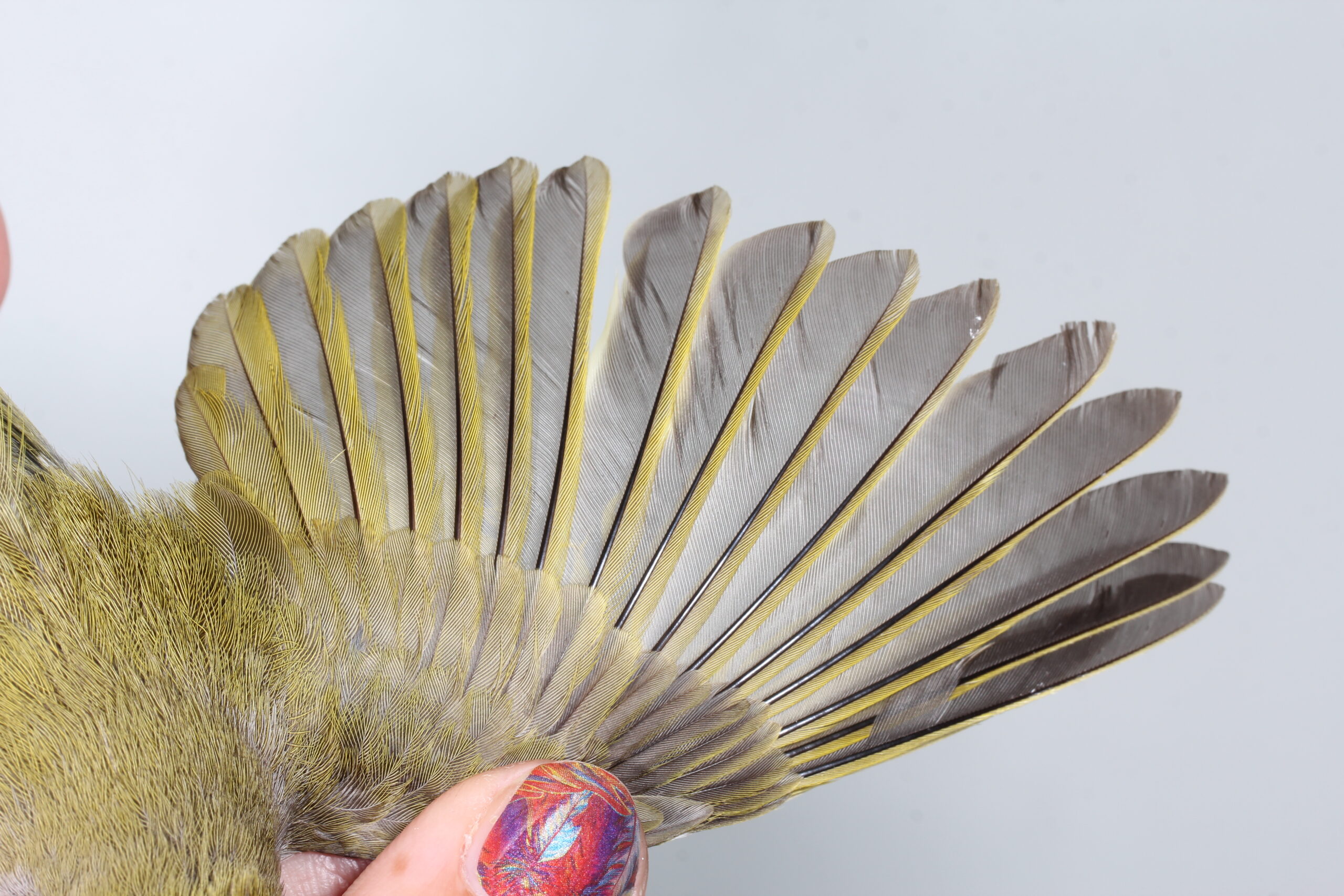 Adult White-bellied Epornis: A nice and uniform adult type wiing with no obvious moult limi>
The wing itself is nice, dark, fresh and uniform, and hopefully will aid us in being able to age individuals in the future!
As the day wore on, with still not many birds, we were delighted to check the nets to find a Tristram’s Bunting!
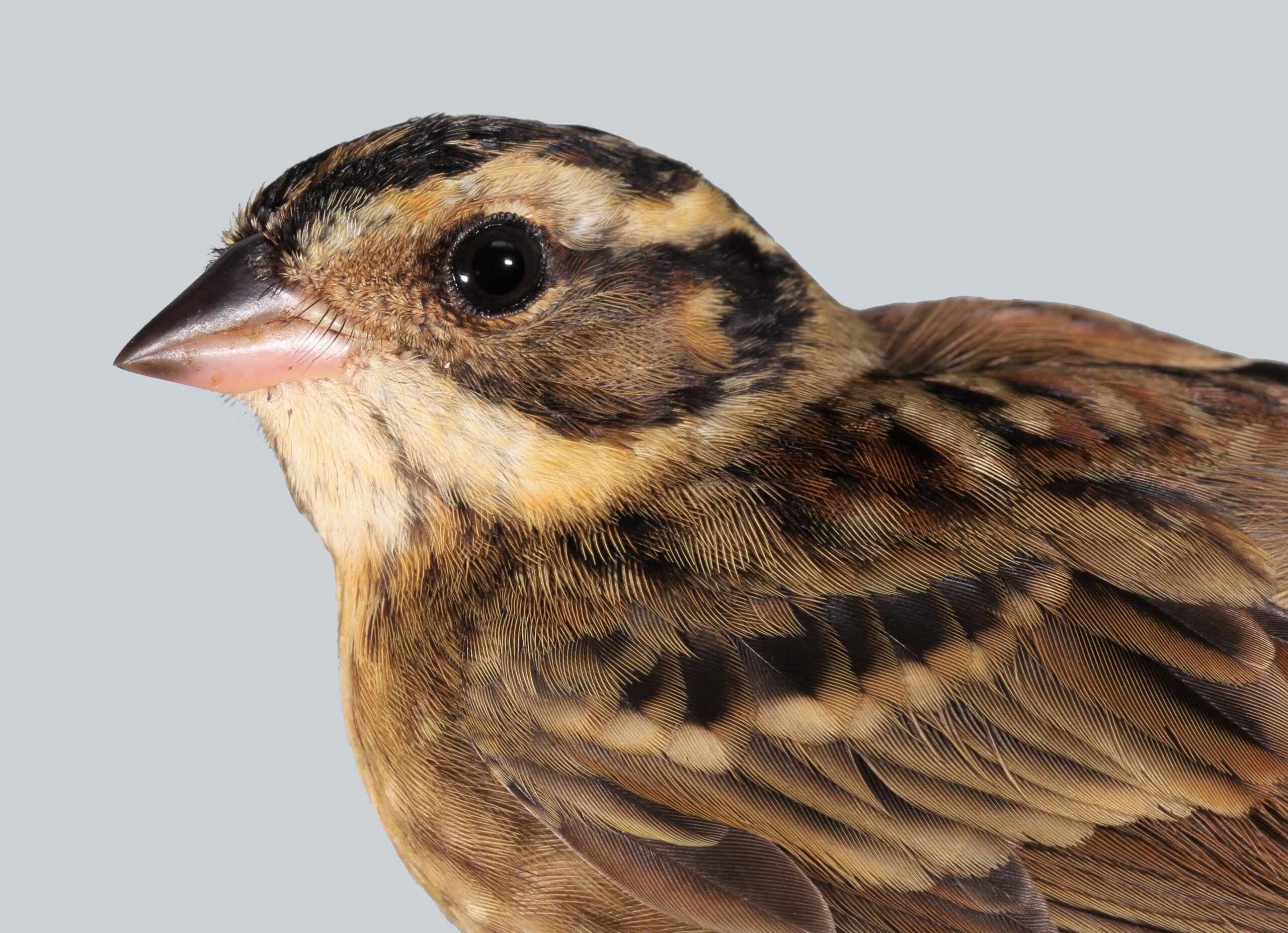
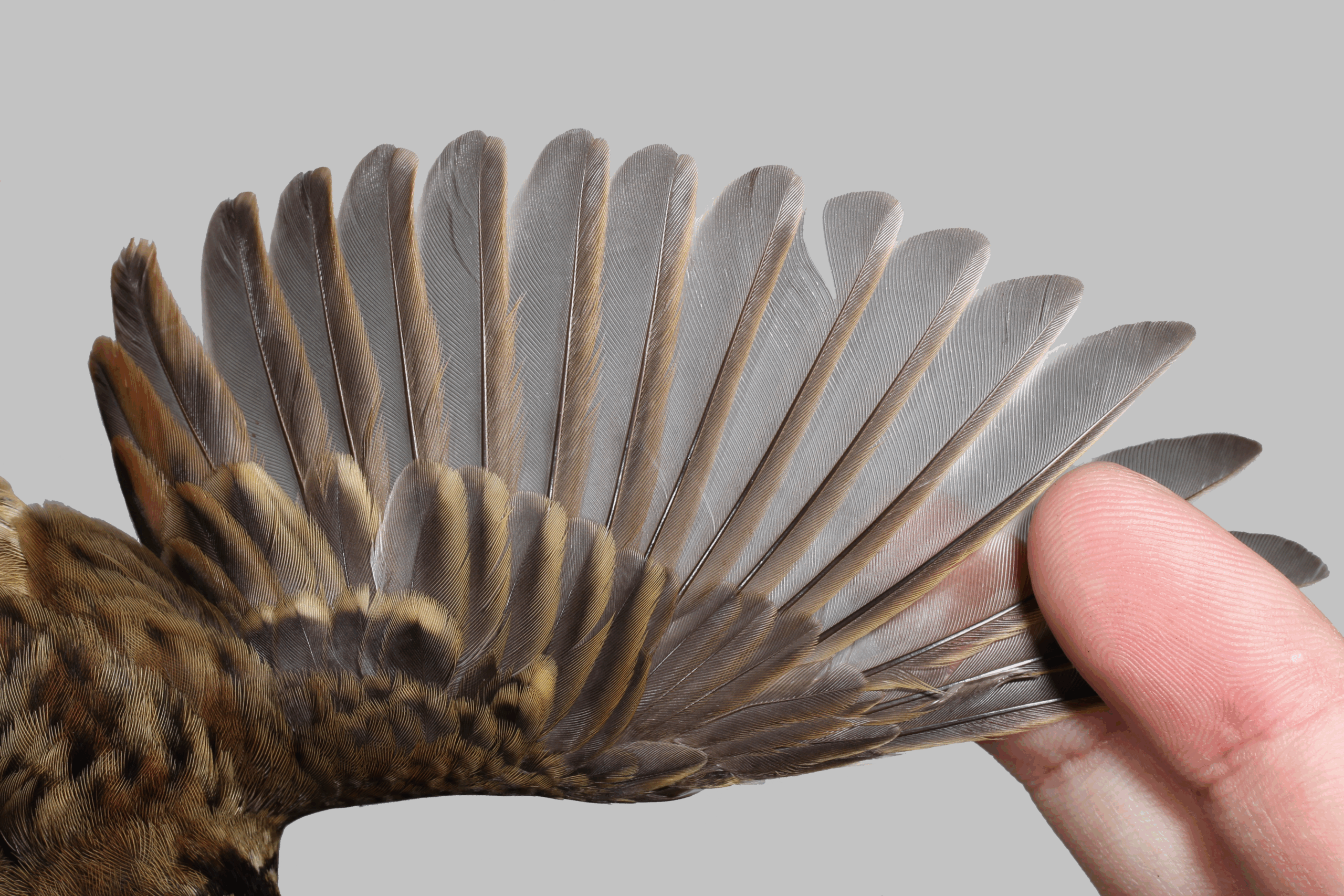
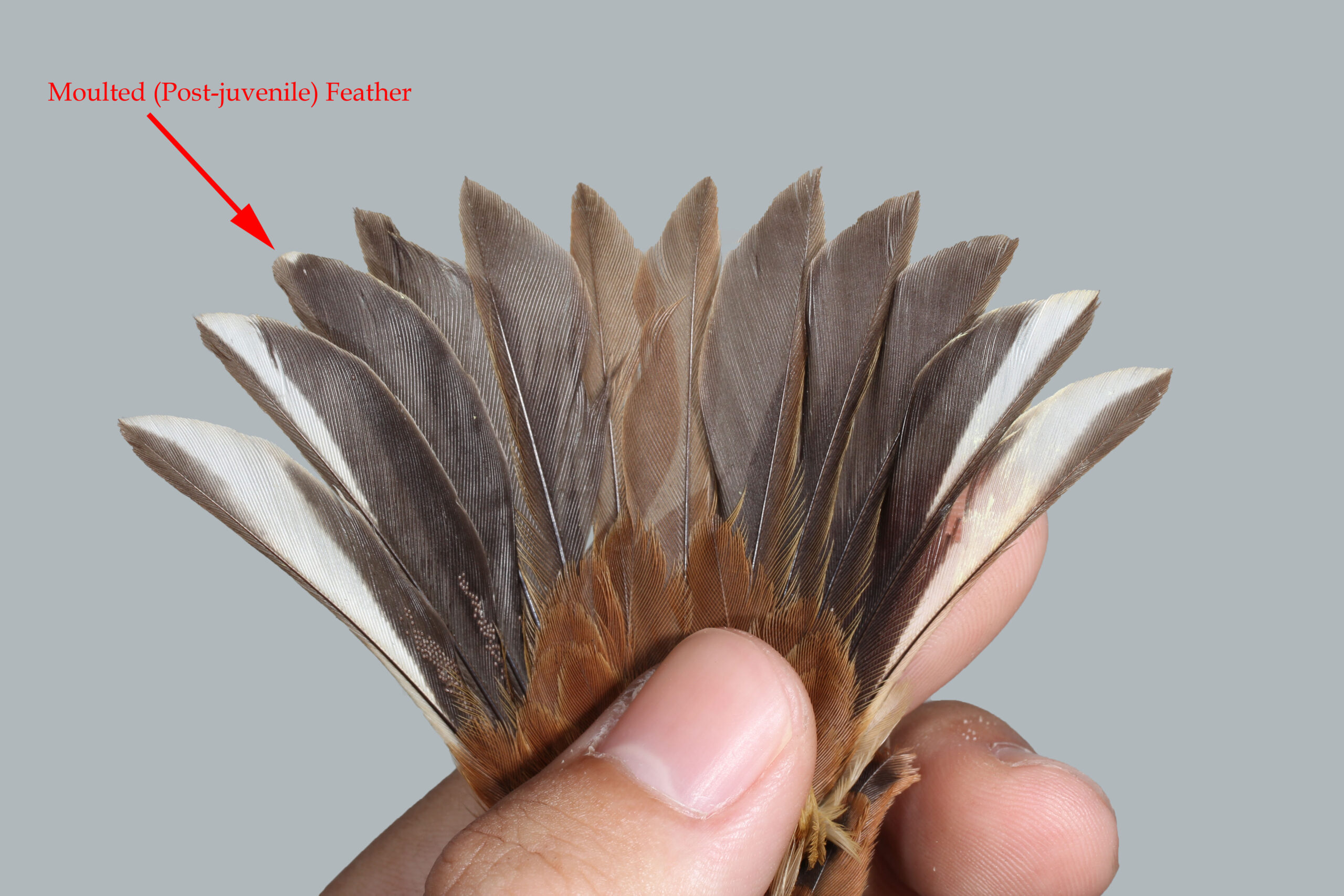
Juvenile female Tristram’s Bunting, showing no white in the face. Juvenile Tristram’s Bunting wing, showing post-juvenile LCs, MCs and GCs, constrasted to the juvenile PCs. Juvenile Tristram’s Bunting, with one moulted post-juvenile feather, which is glossier, darker and more rounded at the t
These are not so common for us to see, and this is only the 5th individual to be ringed by the HKBWS! The juveniles of this species, like other Buntings, moult all of their LCs, MCs and GCs. This means that, as in the individual shown above, there is a contrast between the post-juvenile GCs, and the juvenile PCs. Again, the difference is slight so it requires a lot of experience to determine the age of this species. ip
Thankfully for us, the tail of this individual was clearly juvenile, being brown and pointed, and with one moulted feather (third outermost right tail feather). This moulted feather is darker, denser and rounded at the tip, allowing us to age it as a post-juvenile feather.
In conclusion, this is a juvenile (2nd calendar year) bird, and the lack of white in the face tells us this is a female.
Daily Totals
| Species | Original | Recapture |
| Common Tailorbird | 1 | 0 |
| Mountain Bulbul | 0 | 1 |
| Tristram’s Bunting | 1 | 0 |
| Huet’s Fulvetta | 0 | 1 |
| White-bellied Epornis | 0 | 1 |
*Please note that all wild birds are protected under Hong Kong Law. All ringing activities are conducted with the necessary permits issued by the AFCD. Handling and processing of birds is only carried out by experienced individuals.*