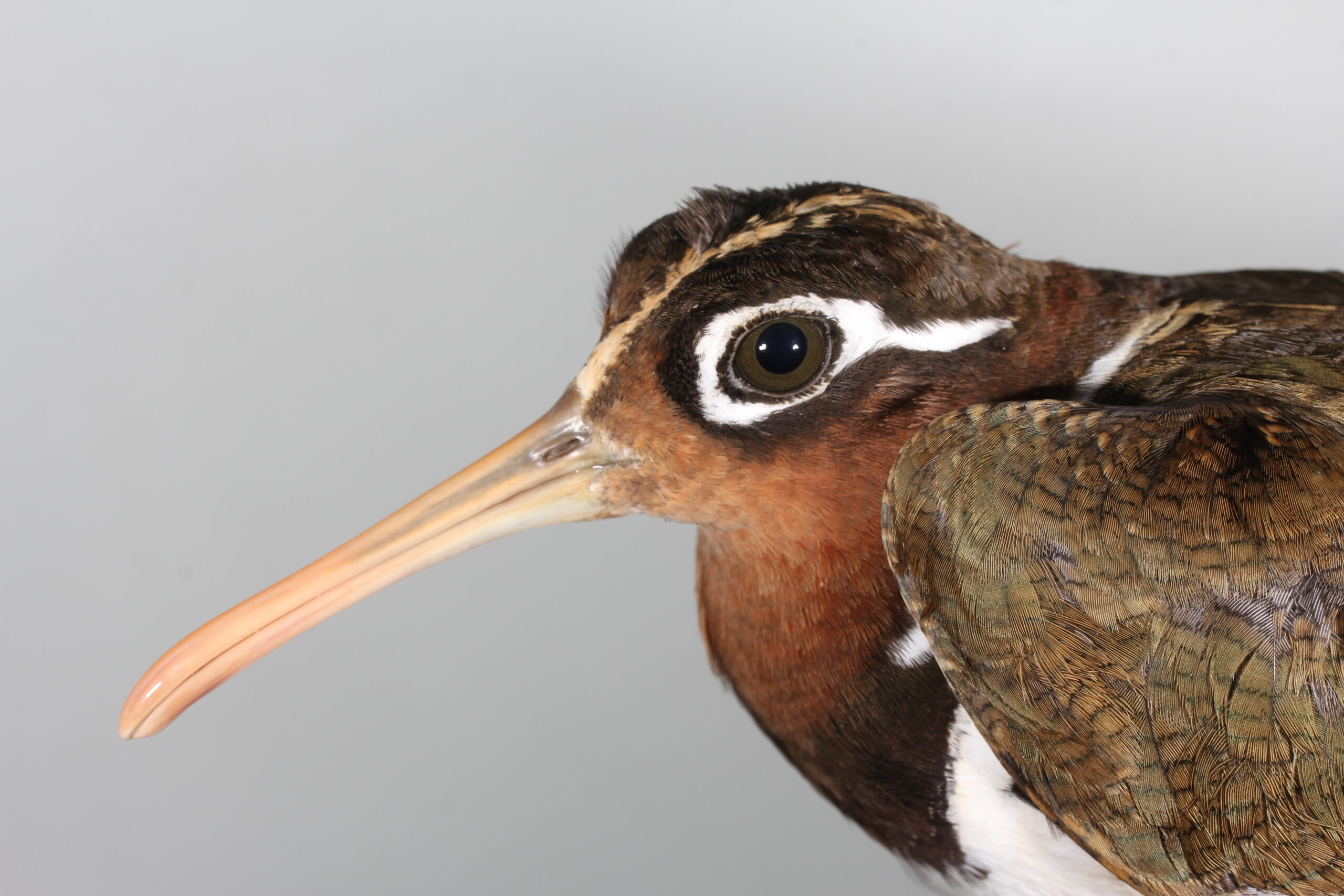



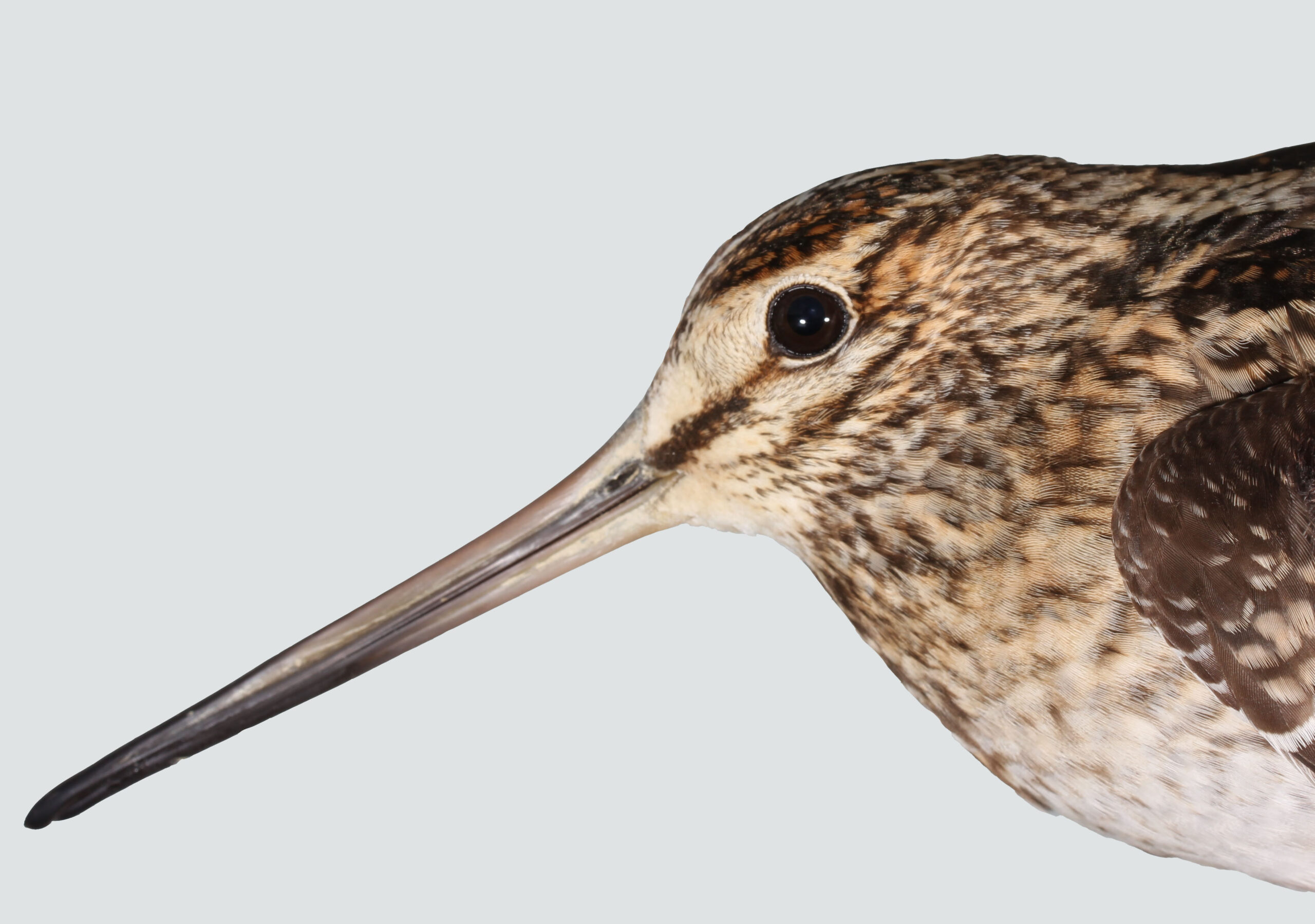
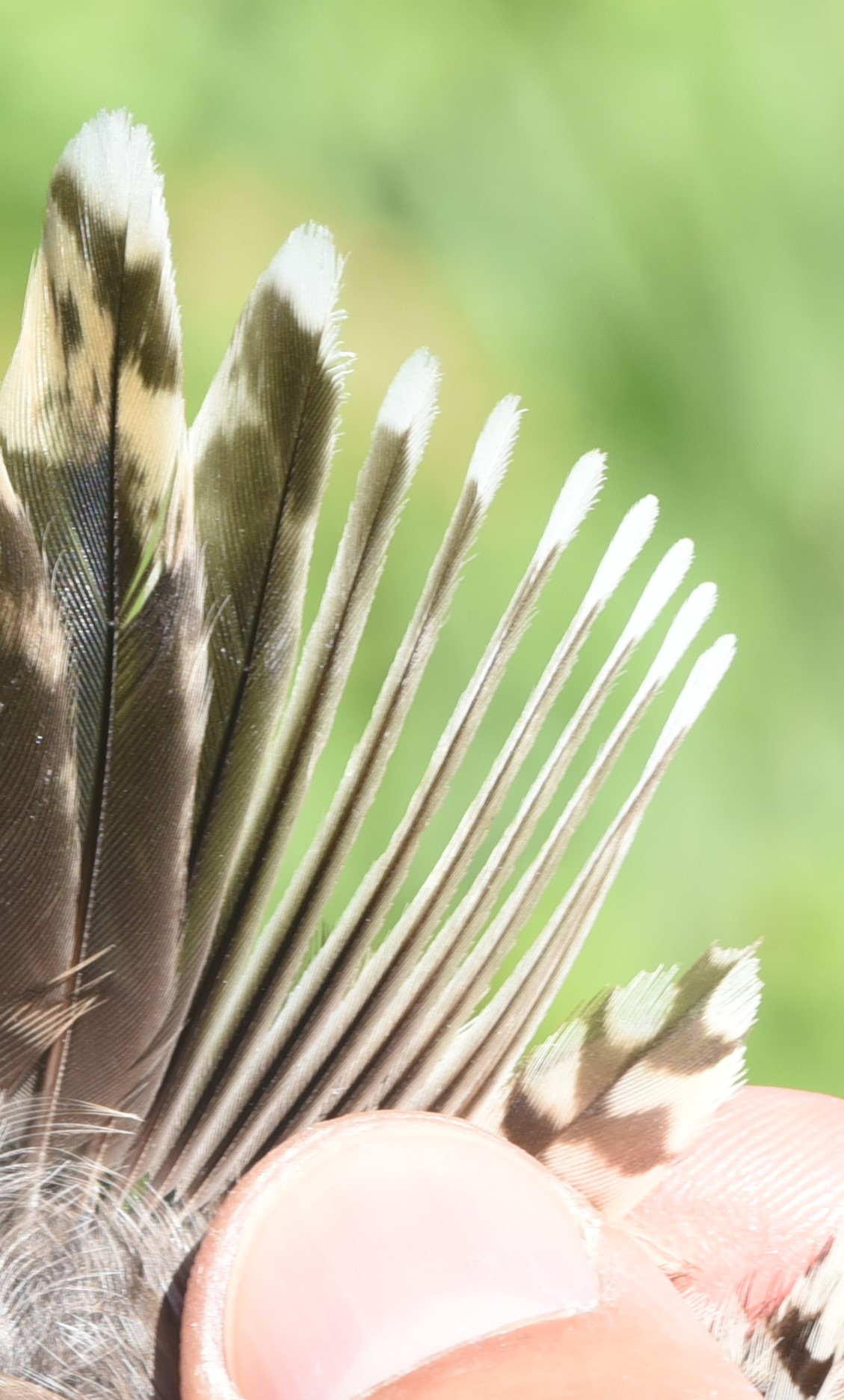
This day we caught not one, or two, but three Snipe species! First up was a beautiful Pintail Snipe! As mentioned in Paddyfield Ringing: The Splendid Swinhoe’s Snipe, Pintail Snipes in the field look almost identical to Swinhoe’s and Common Snipes but can be differed in hand by the outer tail feathers (see below for comparison between Pintail and Common).
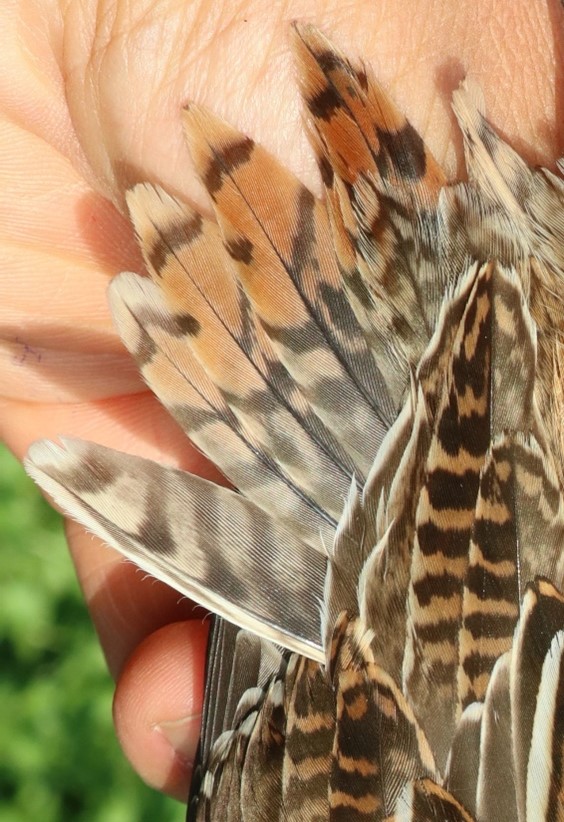
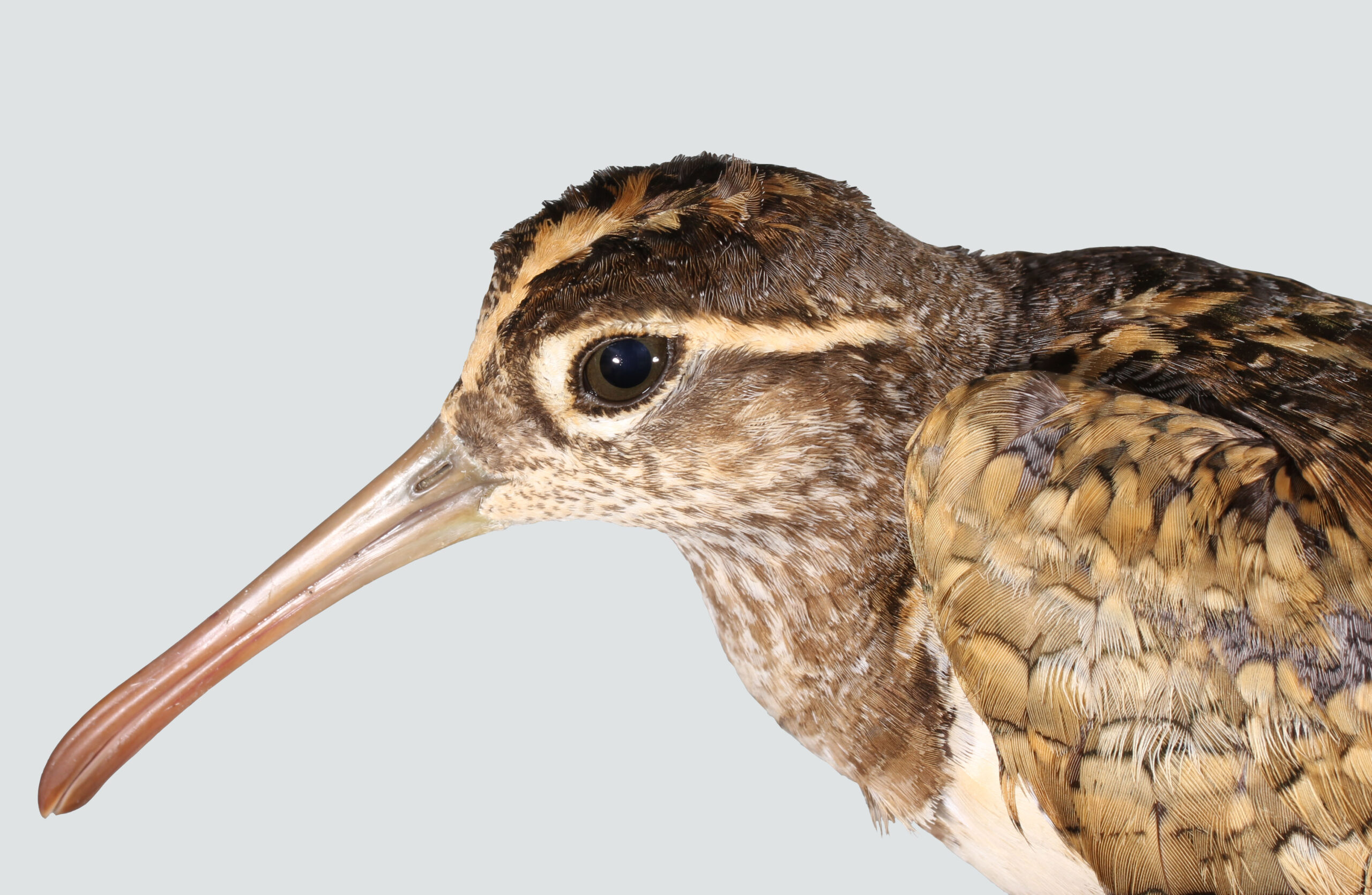
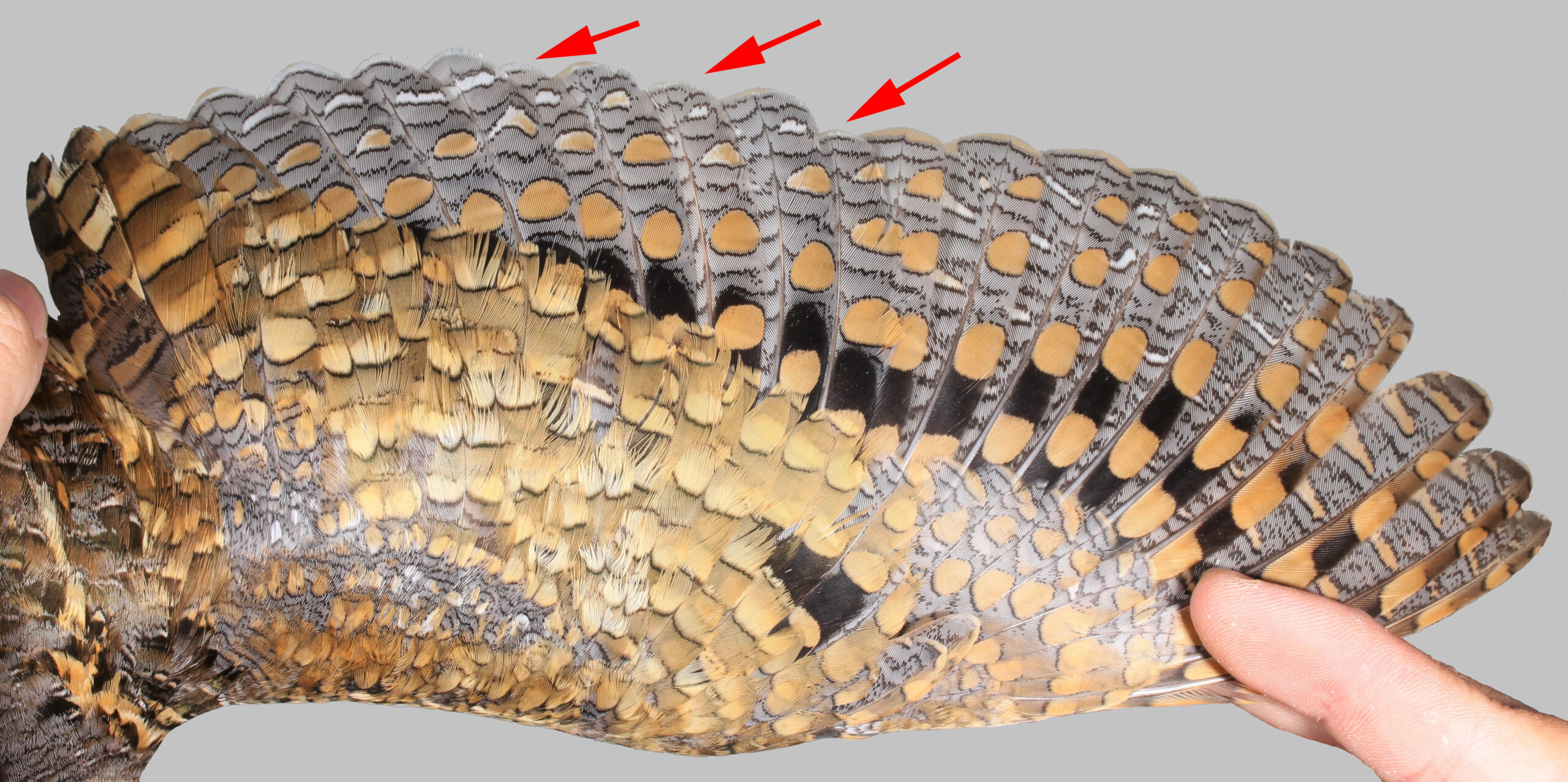
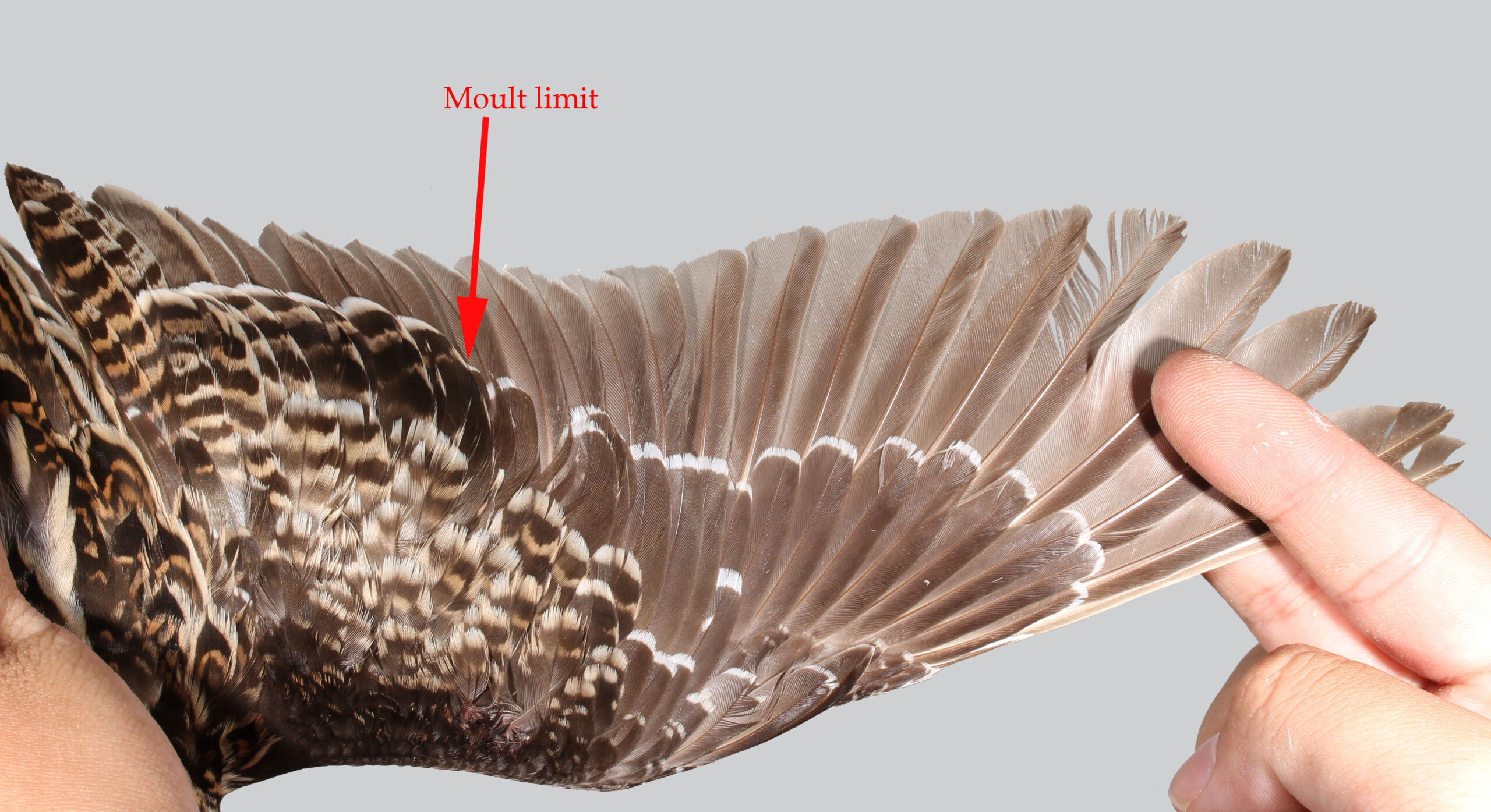
Our final bird is the beautiful, and also cryptic to age, Greater Painted Snipe. We spoke more about them in Paddyfield Ringing: Wood Sandpipers and Waterhens. Here we put forward the idea that the contrasts in the secondaries can help us to age birds. The retained secondaries (denoted by the red arrows above) have typically smaller and buffier tips, indicating a 2nd calendar year (juvenile) bird. This bird was actually first ringed on the 27th October 2021, aged as a 1st calendar year bird, before being recaptured today. Good job buddy!
Daily totals
| Species | Original | Recapture |
| Common Snipe | 1 | 0 |
| Dusky Warbler | 1 | 0 |
| Greater-painted Snipe | 0 | 1 |
| Masked Laughingthrush | 2 | 0 |
| Pintail Snipe | 1 | 0 |
| Plain Prinia | 1 | 0 |
| Red-whiskered Bulbul | 1 | 0 |
*Please note that all wild birds are protected under Hong Kong Law. All ringing activities are conducted with the necessary permits issued by the AFCD. Handling and processing of birds is only carried out by experienced individuals.*
This day we caught not one, or two, but three Snipe species! First up was a beautiful Pintail Snipe! As mentioned in Paddyfield Ringing: The Splendid Swinhoe’s Snipe, Pintail Snipes in the field look almost identical to Swinhoe’s and Common Snipes but can be differed in hand by the outer tail feathers (see below for comparison between Pintail and Common).
Our final bird is the beautiful, and also cryptic to age, Greater Painted Snipe. We spoke more about them in Paddyfield Ringing: Wood Sandpipers and Waterhens. Here we put forward the idea that the contrasts in the secondaries can help us to age birds. The retained secondaries (denoted by the red arrows above) have typically smaller and buffier tips, indicating a 2nd calendar year (juvenile) bird. This bird was actually first ringed on the 27th October 2021, aged as a 1st calendar year bird, before being recaptured today. Good job buddy!
Daily totals
| Species | Original | Recapture |
| Common Snipe | 1 | 0 |
| Dusky Warbler | 1 | 0 |
| Greater-painted Snipe | 0 | 1 |
| Masked Laughingthrush | 2 | 0 |
| Pintail Snipe | 1 | 0 |
| Plain Prinia | 1 | 0 |
| Red-whiskered Bulbul | 1 | 0 |
*Please note that all wild birds are protected under Hong Kong Law. All ringing activities are conducted with the necessary permits issued by the AFCD. Handling and processing of birds is only carried out by experienced individuals.*
On one of our last paddyfield ringing of the spring, we started off on another sweaty morning.
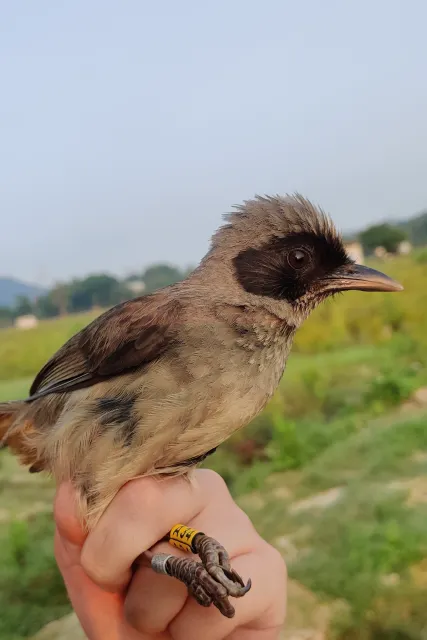
The heat attracted the dragonflies around the nets, which, in turn, sent a Masked Laughingthrush barrelling into the net in an attempt to catch them!
So we quickly took him out, placed a ring and a colour ring- which can be easily identified without the need for recapture, and can tell us more about this species short-distance movements- and let him go back to catching dragonflies!
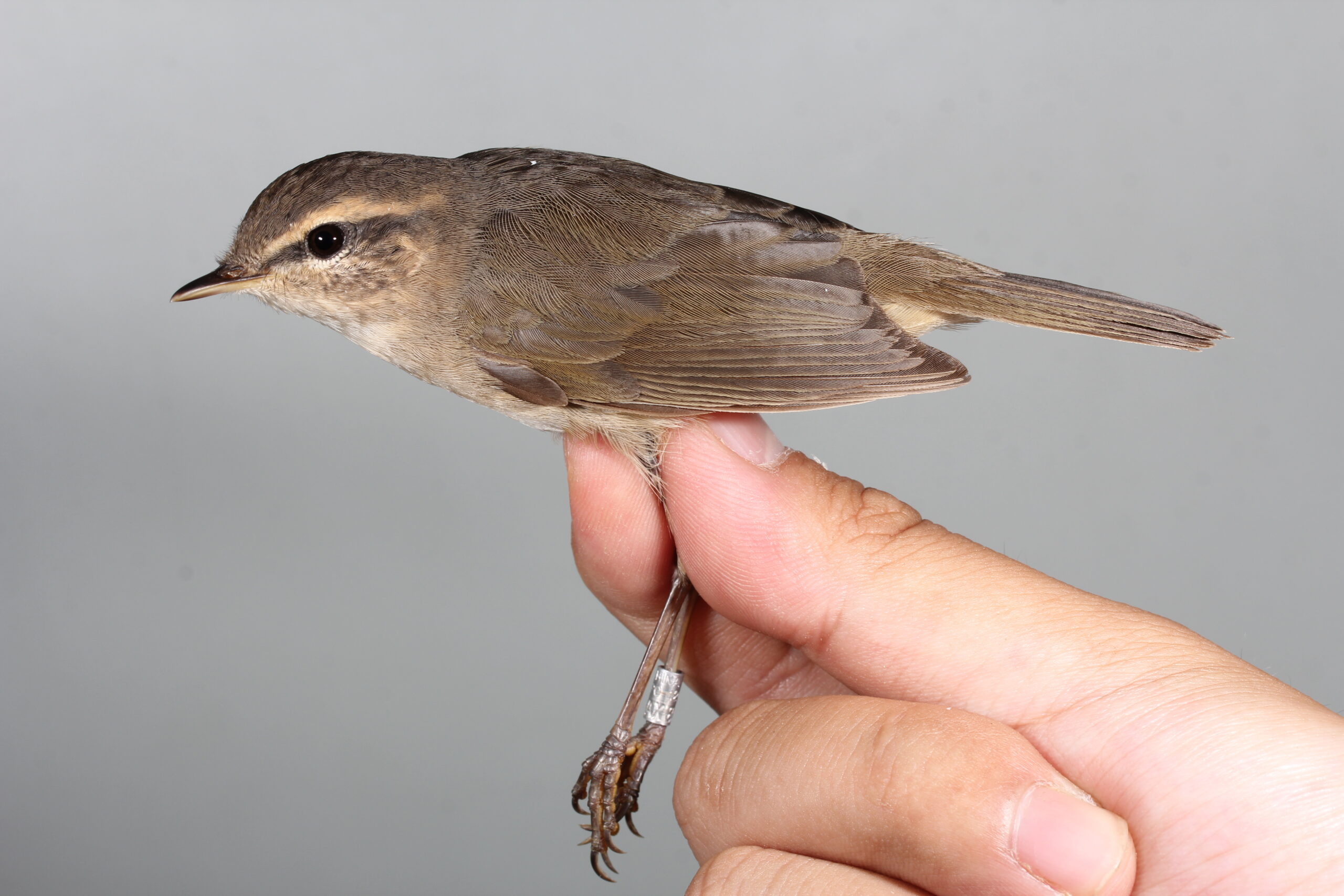
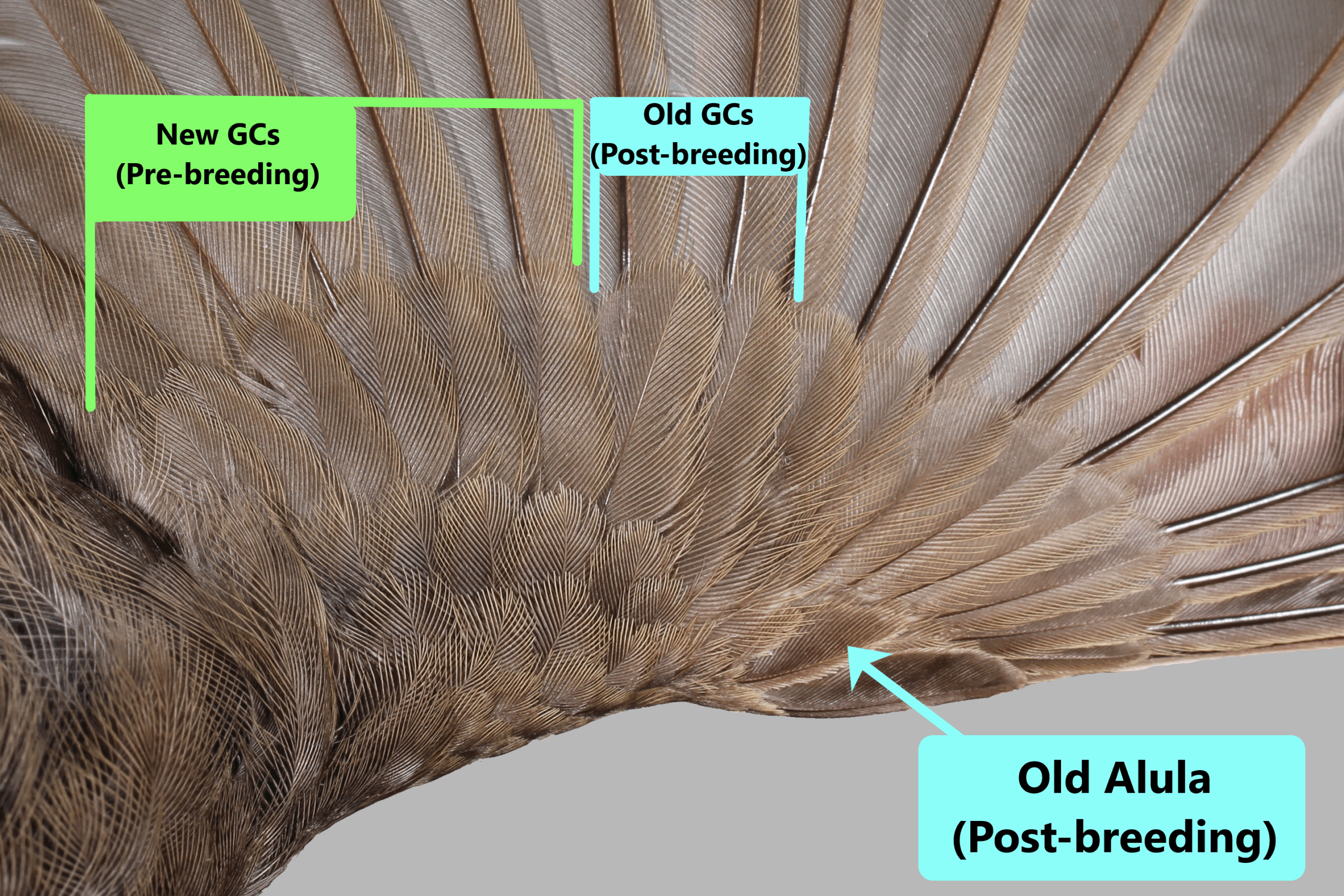
Following on from last week’s juvenile Dusky Warblers, this week we caught just one individual. The interesting thing here was that, although this bird showed a moult limit in the GCs, the retained GCs were of much better quality (darker, denser, fresher) than the two individuals caught last week. The same was true for the PCs and primaries, which were broader and not so worn. This tells us that this bird is an adult (3rd calendar year or older).
This day we caught not one, or two, but three Snipe species! First up was a beautiful Pintail Snipe! As mentioned in Paddyfield Ringing: The Splendid Swinhoe’s Snipe, Pintail Snipes in the field look almost identical to Swinhoe’s and Common Snipes but can be differed in hand by the outer tail feathers (see below for comparison between Pintail and Common).
Our final bird is the beautiful, and also cryptic to age, Greater Painted Snipe. We spoke more about them in Paddyfield Ringing: Wood Sandpipers and Waterhens. Here we put forward the idea that the contrasts in the secondaries can help us to age birds. The retained secondaries (denoted by the red arrows above) have typically smaller and buffier tips, indicating a 2nd calendar year (juvenile) bird. This bird was actually first ringed on the 27th October 2021, aged as a 1st calendar year bird, before being recaptured today. Good job buddy!
Daily totals
| Species | Original | Recapture |
| Common Snipe | 1 | 0 |
| Dusky Warbler | 1 | 0 |
| Greater-painted Snipe | 0 | 1 |
| Masked Laughingthrush | 2 | 0 |
| Pintail Snipe | 1 | 0 |
| Plain Prinia | 1 | 0 |
| Red-whiskered Bulbul | 1 | 0 |
*Please note that all wild birds are protected under Hong Kong Law. All ringing activities are conducted with the necessary permits issued by the AFCD. Handling and processing of birds is only carried out by experienced individuals.*