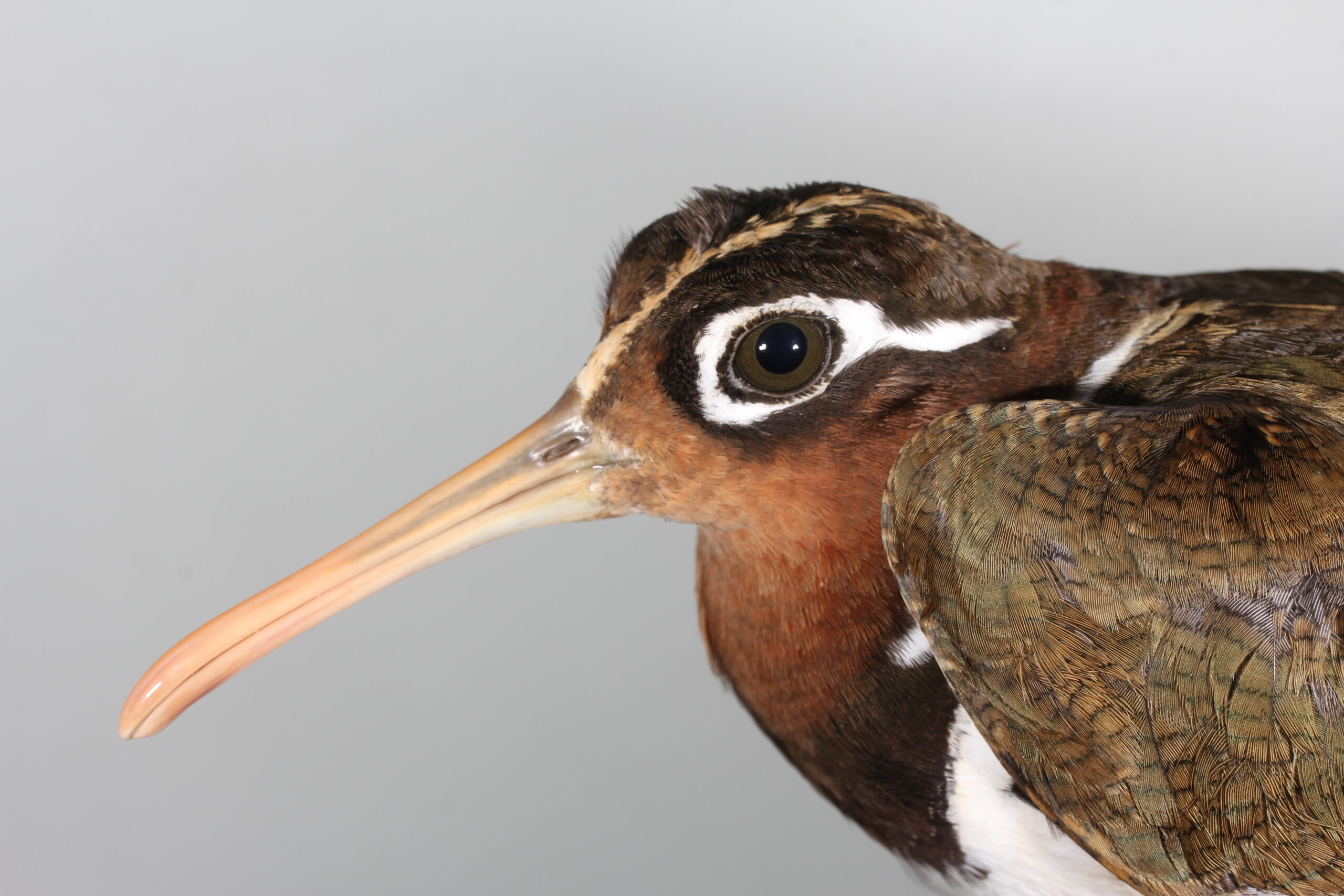



It is officially summer, and even before finishing putting the nets up we were drenched in sweat. What saving grace we had from the shade of the trees was taken away by the number of mosquitos the humid weather has brought.
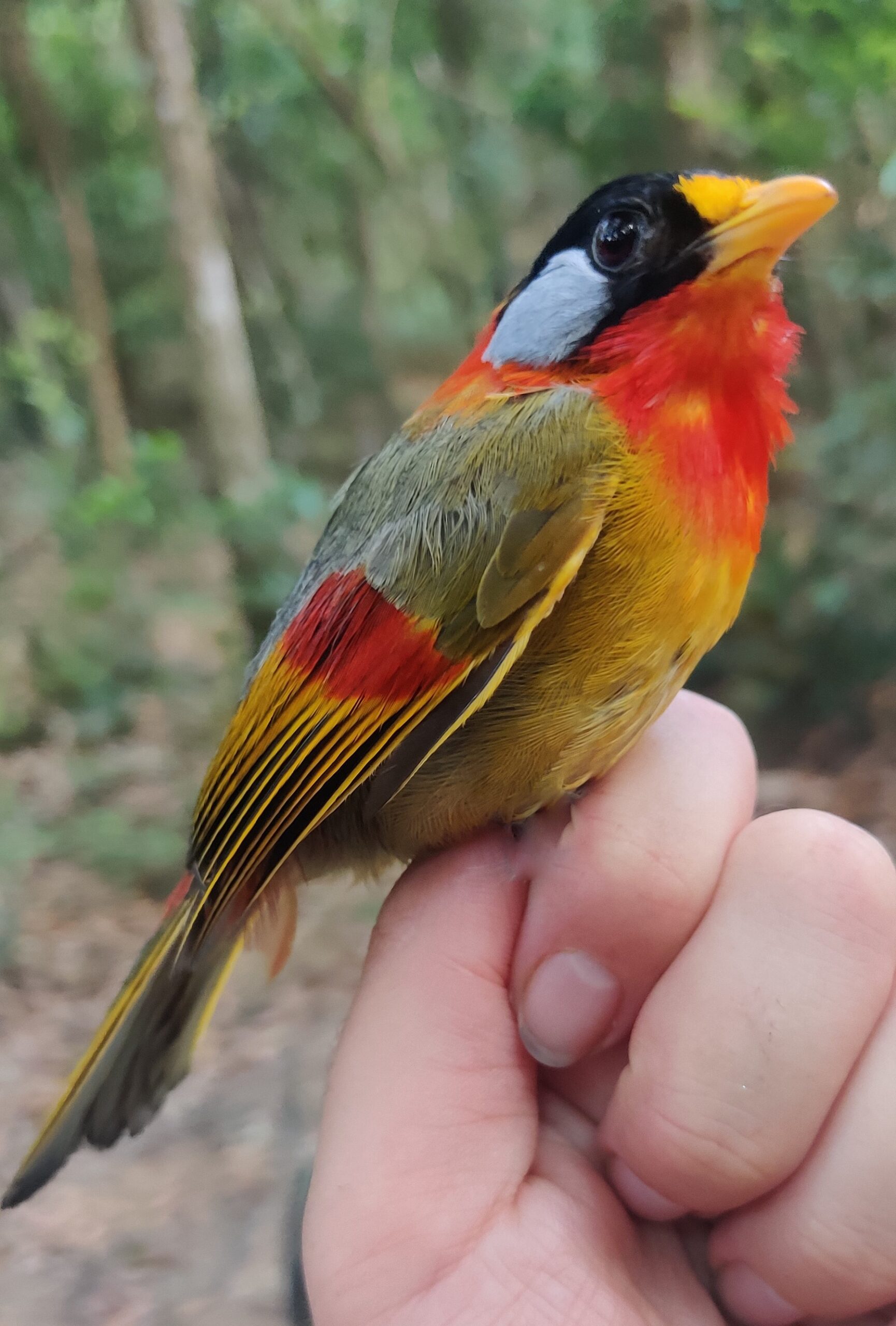
Thankfully, the birds made up for the heat and mosquitos, and we started off our day with a 1st calendar year Silver-eared Mesia!
These guys are not native to Hong Kong, but were introduced around 1970, when they were released or escaped from cages. Since then they became established in the 1980s and have a breeding population here.
Interestingly, individuals in Hong Kong can be split into two categories; one with a red throat and rump, and another with a yellow-orange throat and rump. Whether this is due to different subspecies, or sexual differences, we are not sure (yet).
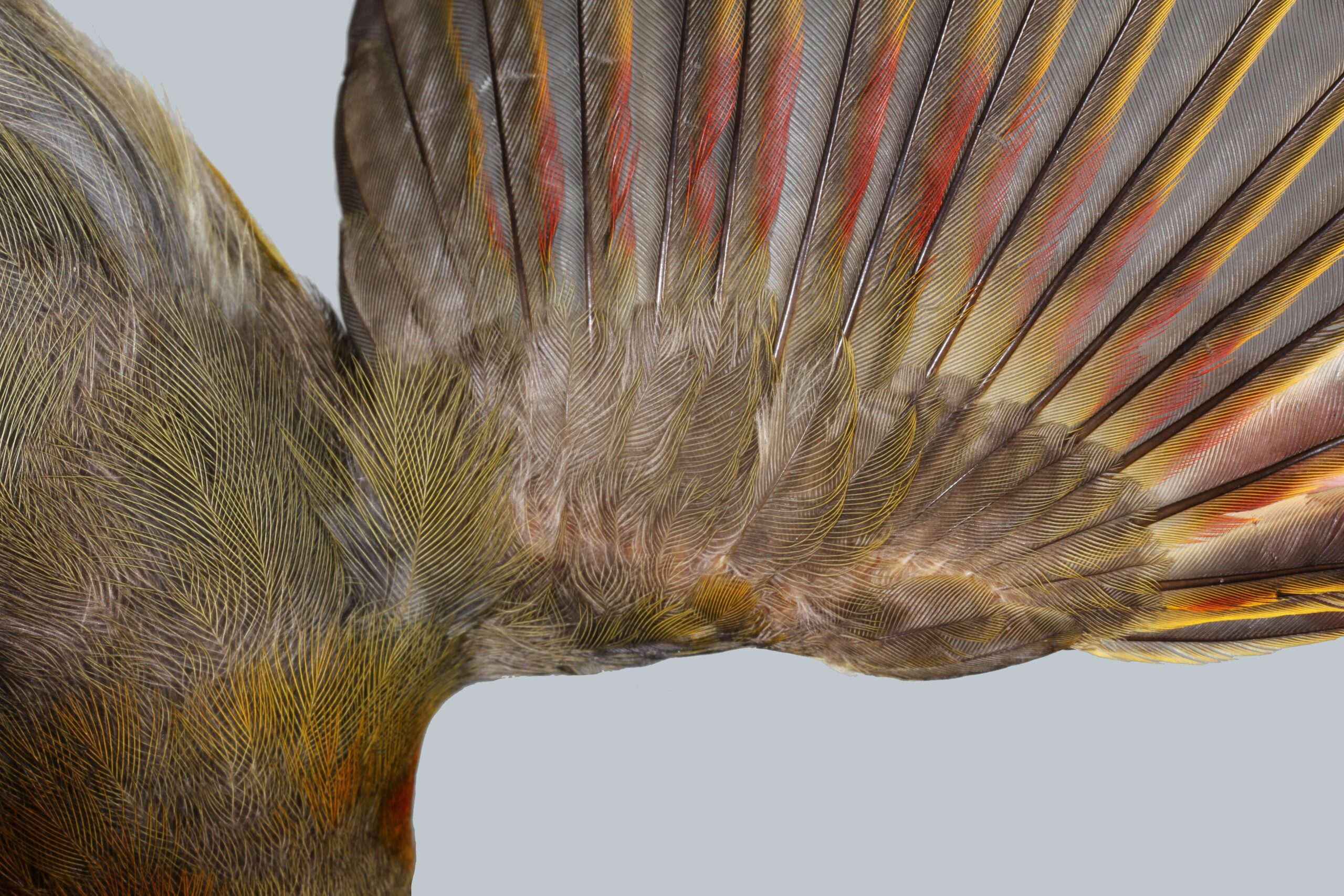
What this means for the ageing, as with many of our others residents, is that there is not a lot of information available. However, due to the young age of this bird, it seems that all the feathers are juvenile, suggesting this bird has not started its post-juvenile moult yet.
We can compare this to the individual below, which is an adult.
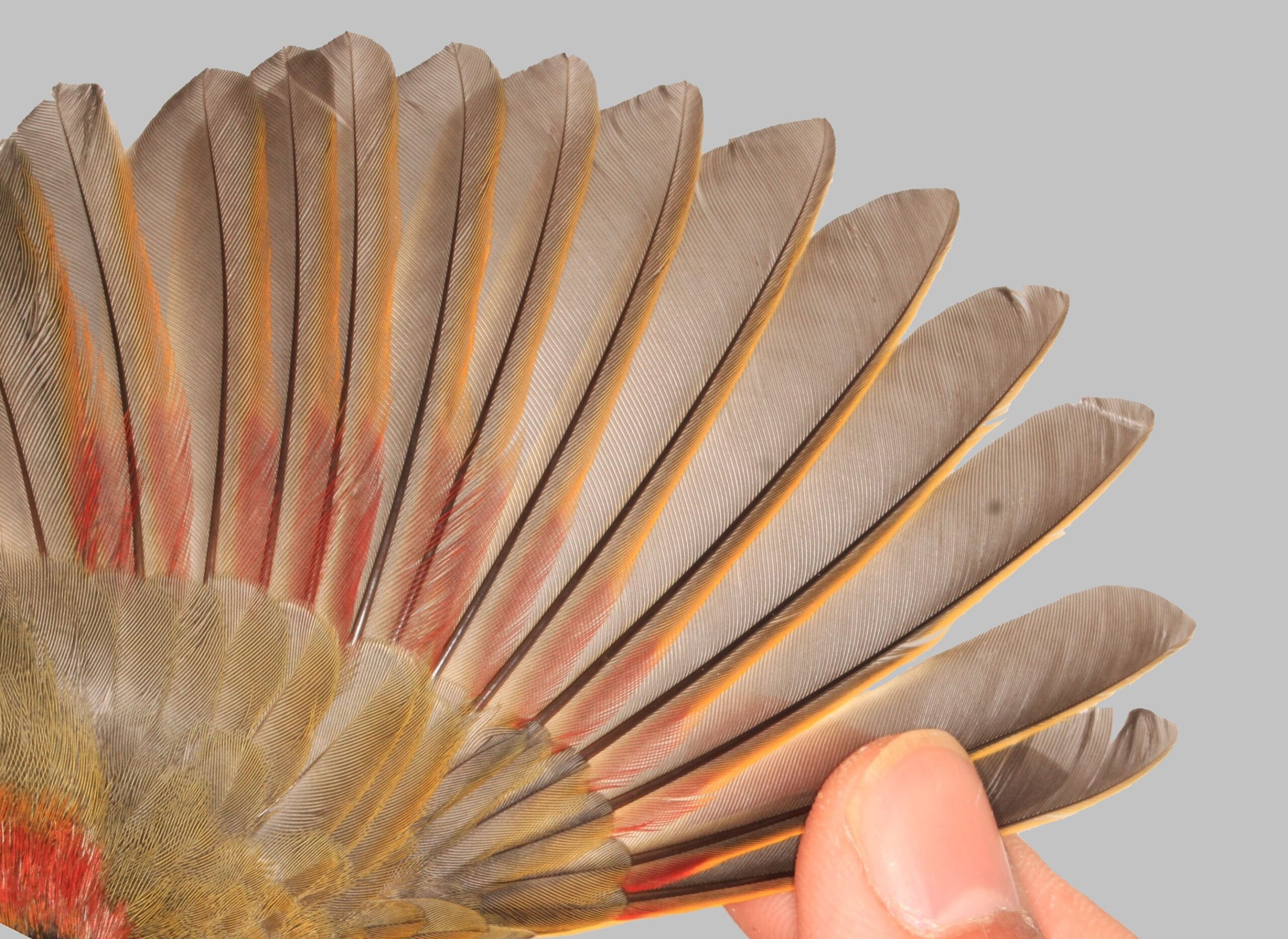
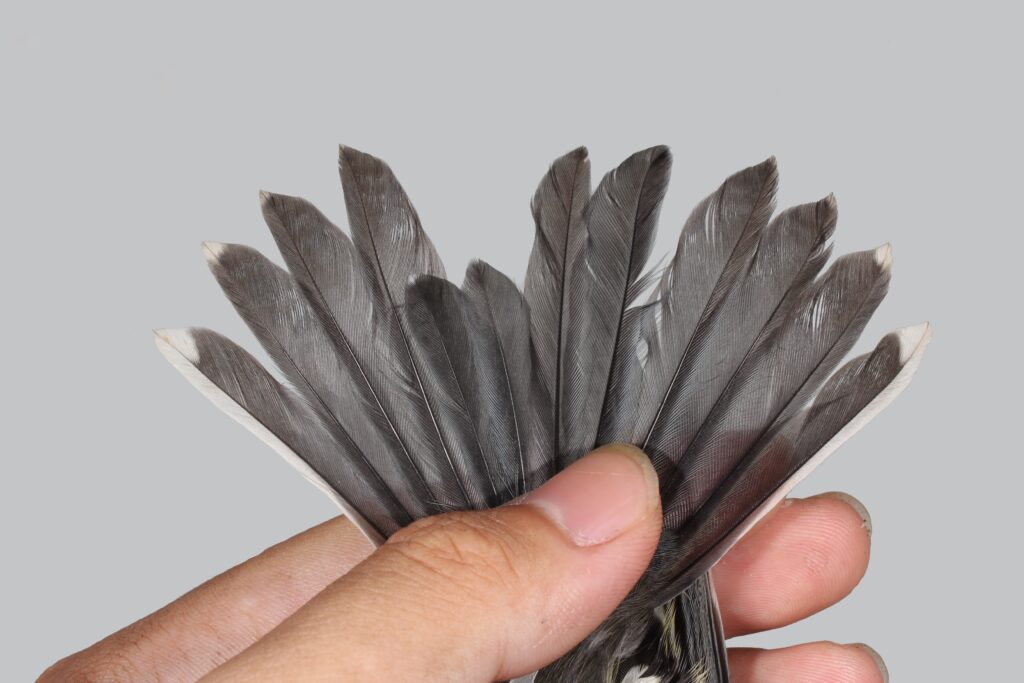
In this individual all coverts are nice, broad and glossy, compared to the juvenile coverts. We can also compare the tails between the two:
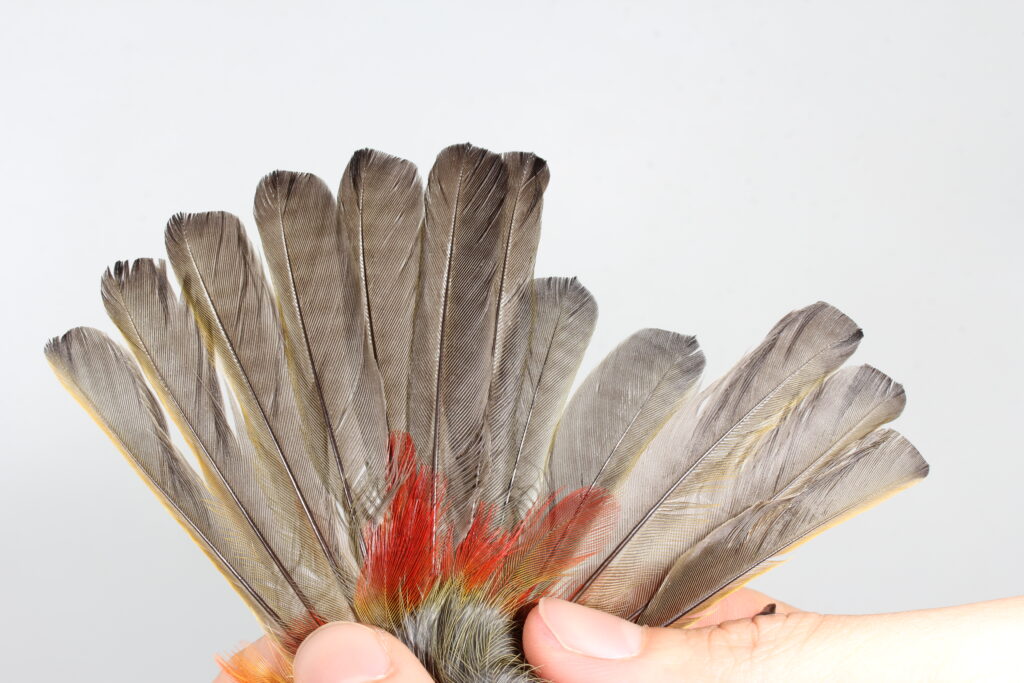
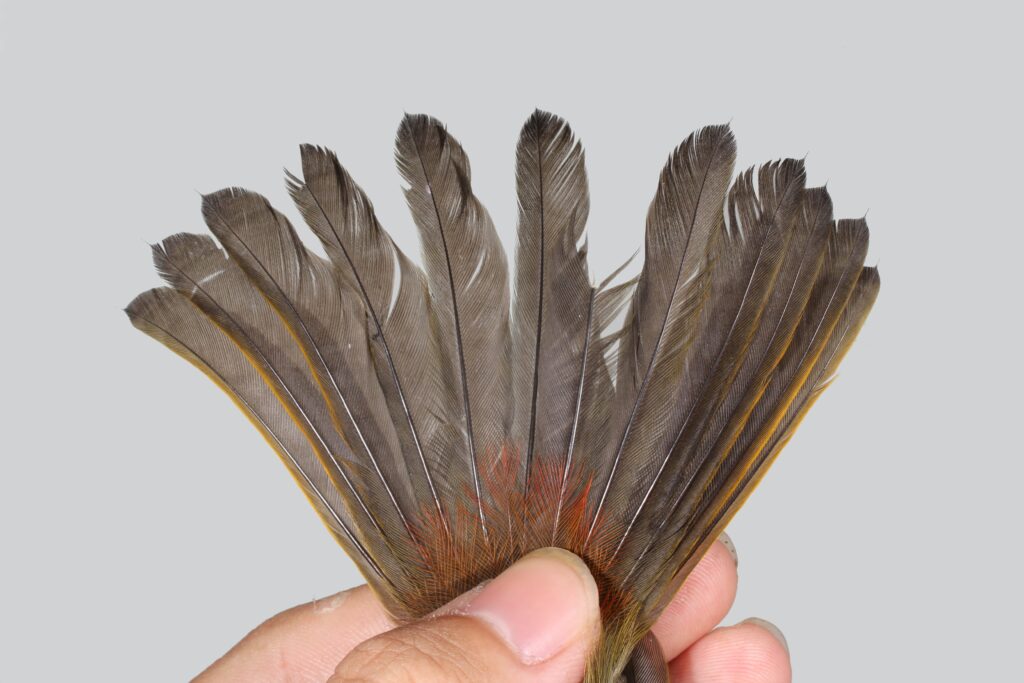
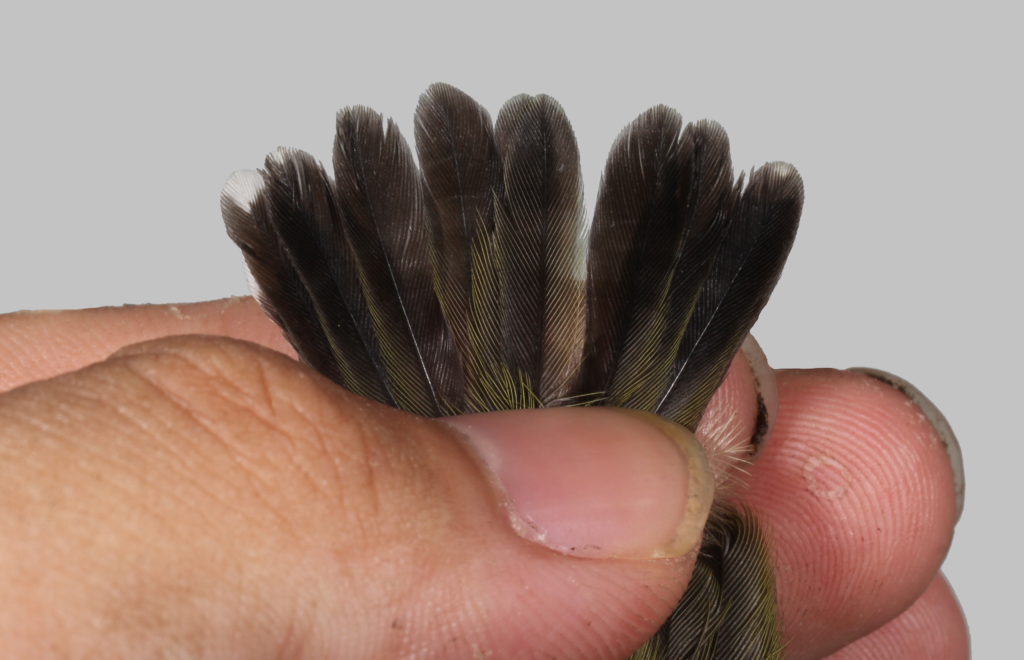
If we compare the shape of the adult tail feathers (left) to the juvenile (right), we can see that the adult feathers are broad and square at the ends (including the two growing feathers), compared to the juvenile feathers, which are narrower and browner, with points at the tips.
Also on our first round we also caught yet another less commonly caught species- a Fork-tailed Sunbird!
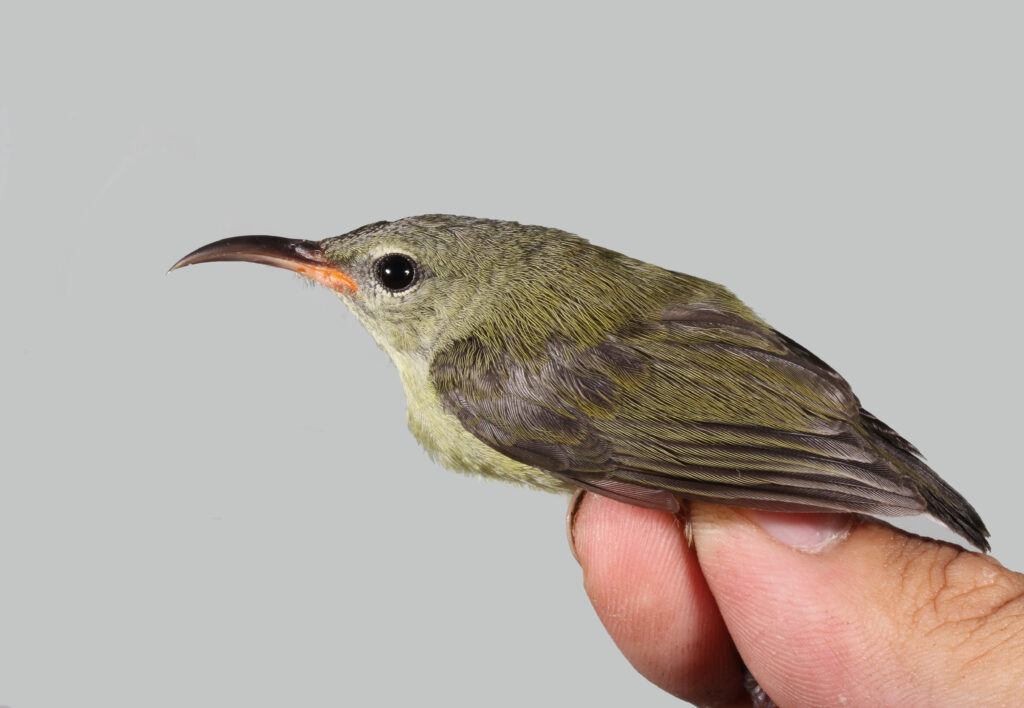
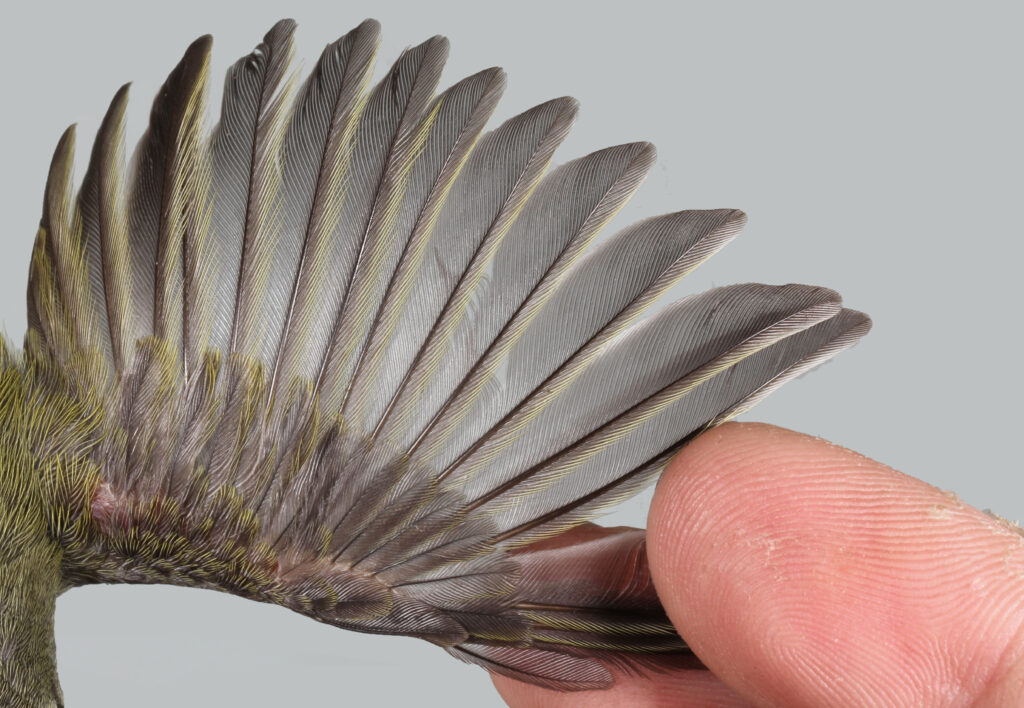
This individual seems to be a 1st calendar year also. Again, moult and ageing information is scarce for this species, however it seems that the orange-pink base to the bill only occurs in juveniles. Furthermore, the wear and density of the wing feathers seem to be of juvenile type. Though there is no sign of a male colouration, we cannot rule out that this individual is in full juvenile plumage. It is therefore best left unsexed.
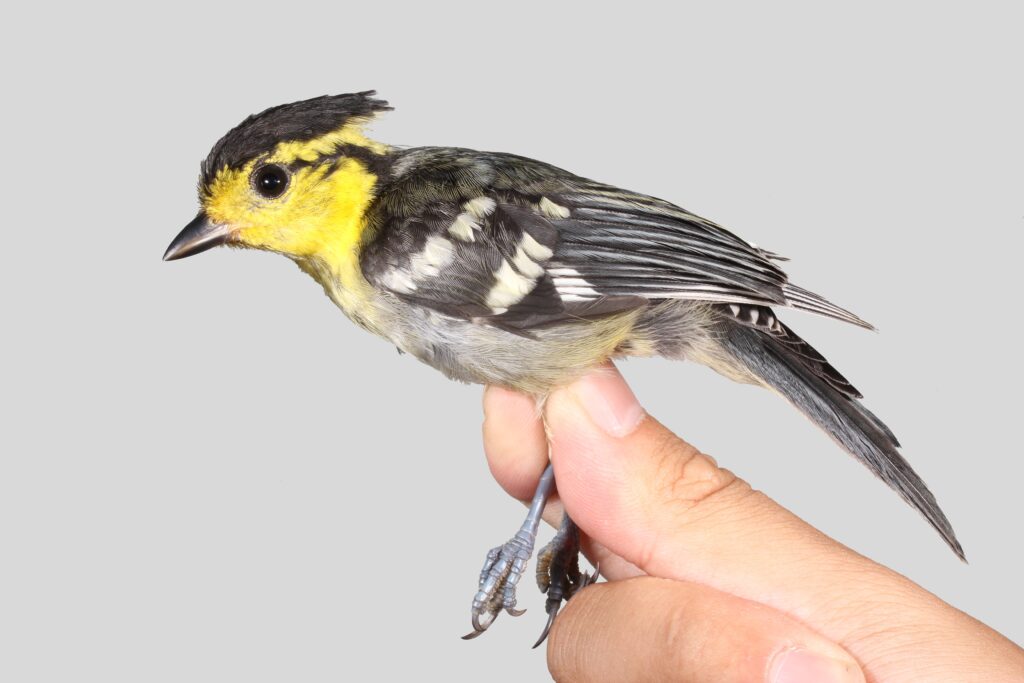
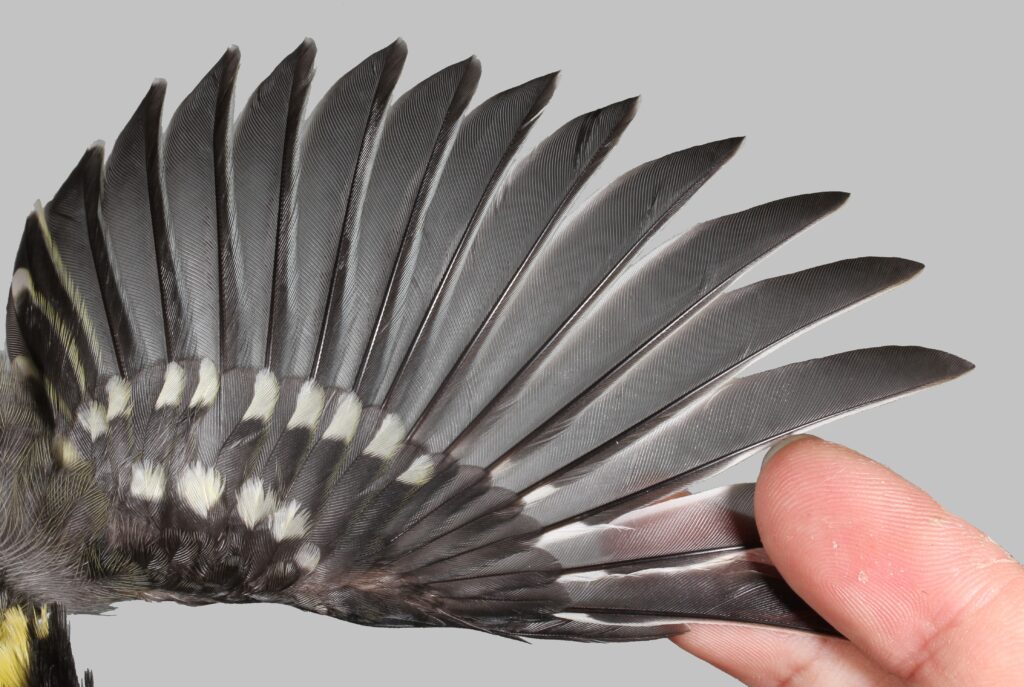
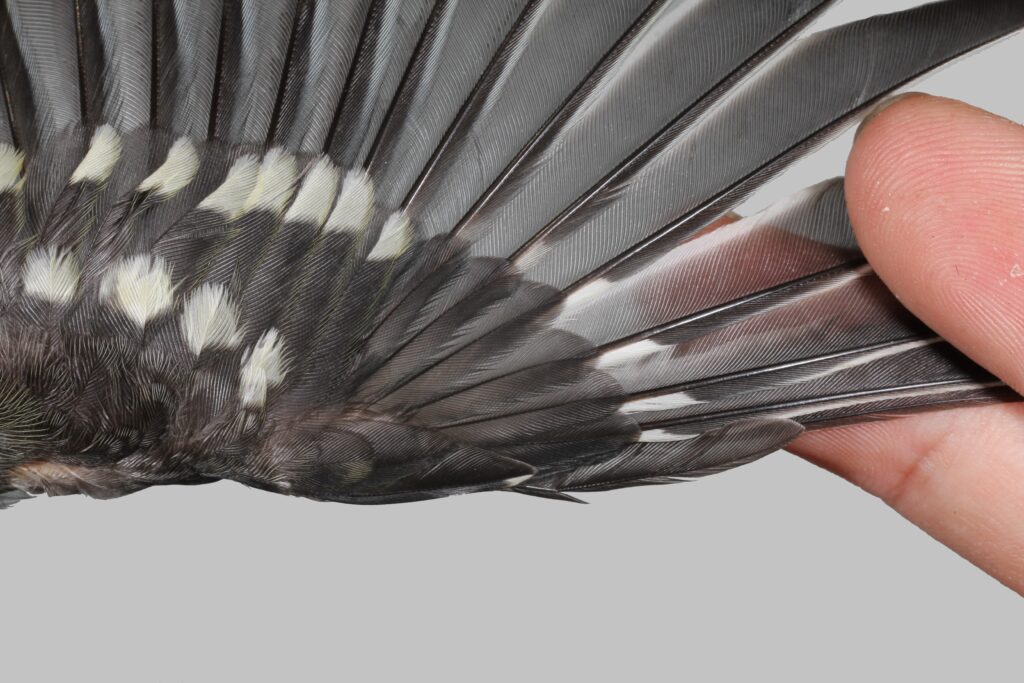
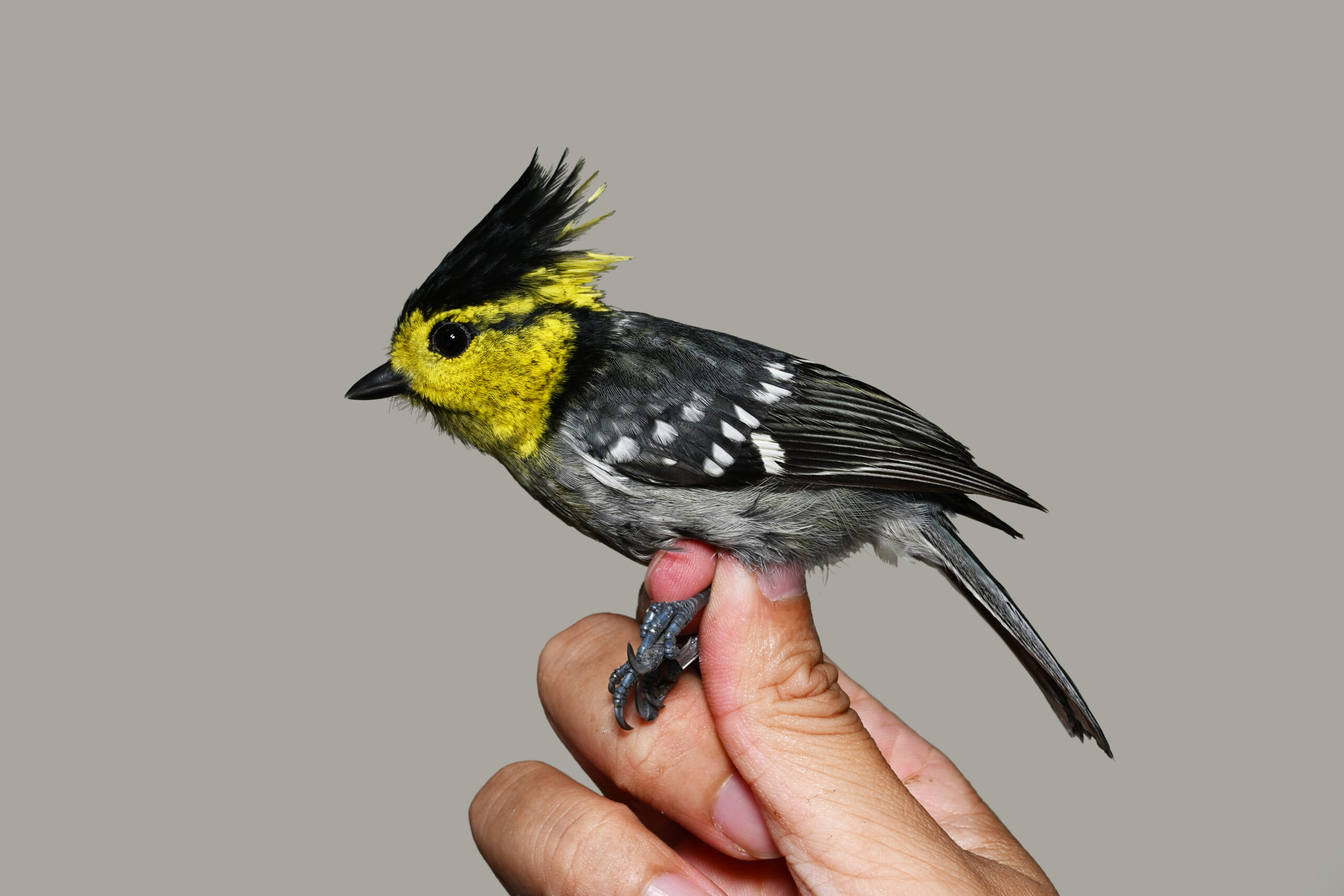
Our next species also does not have so much information on it, but its family does. The Yellow-cheeked Tit above is a 1st calendar year, showing the same moult pattern as the other tits; adults undertake a complete post-breeding moult, while juveniles carry out a partial post-juvenile moult, in which they moult usually all or most of their GCs.
Therefore, to age them we must look for a moult contrast usually between the post-juvenile GCs and the juvenile PCs. This can be seen in the individual above. Though this is a little harder to see, we can see the difference between the glossiness, density and wear of the PCs and GCs. Furthermore, the new growing tail feathers, and already fully grown new tail feather (2nd on the left) show blue fringes, and are in general broader and less pointed- showing the difference between the old juvenile and new post-juvenile feathers. Therefore, we can conclude that our bird is a 1st calendar year.
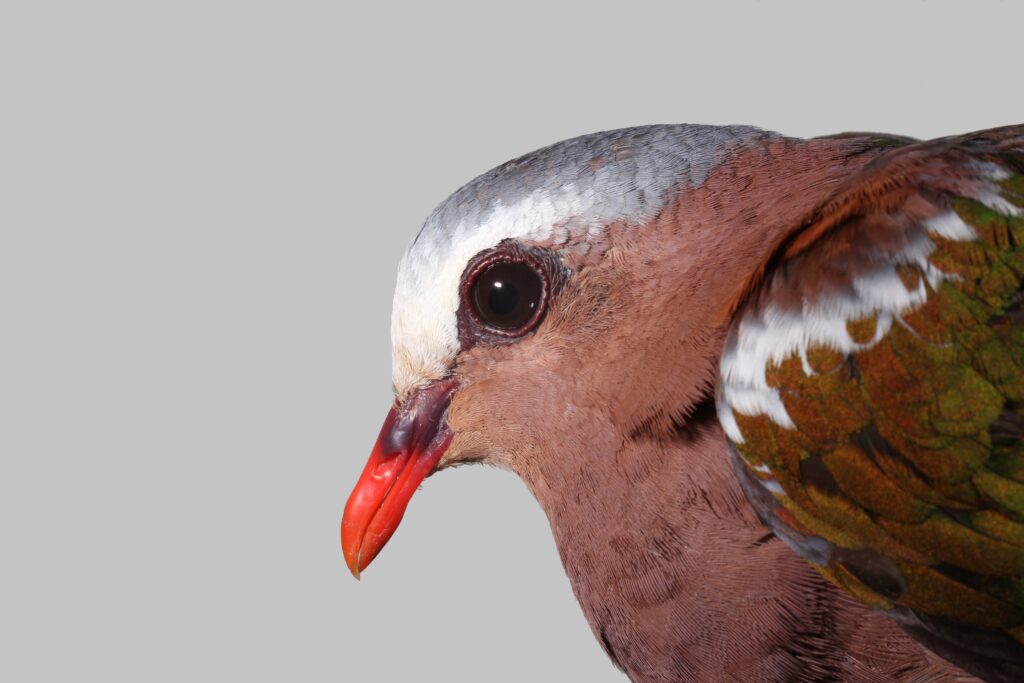
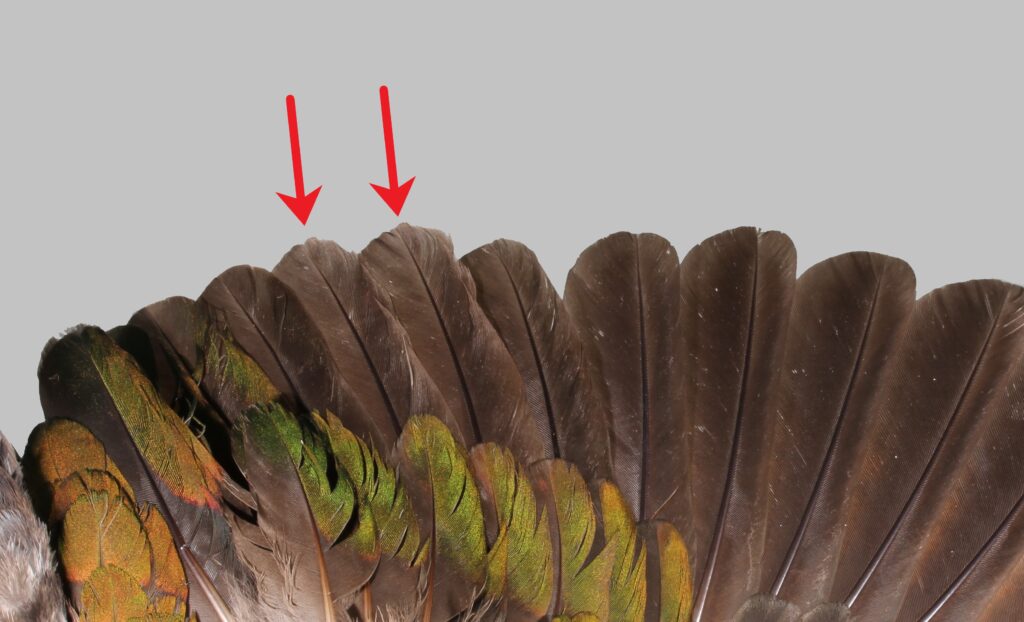
Next up, another special species, a Common Emerald Dove! This is the 7th individual the HKBWS has ringed, and, sounding like a broken record, we do not have enough information to age this bird further than a 2nd calendar year or older. Interestingly this individual has a moult contrast in the secondaries, with two (denoted by red arrows) being old and worn.
In addition, we can tell this is a male, due to the extensive grey crown that is not present in females.
An overall nice day with many interesting species!
Daily Totals
| Species | Original | Recapture |
| Chesnut Bulbul | 2 | 2 |
| Common Emerald Dove | 1 | 0 |
| Fork-tailed Sunbird | 1 | 0 |
| Huet’s Fulvetta | 4 | 0 |
| Mountain Bulbul | 1 | 0 |
| Red-billed Leiothrix | 1 | 0 |
| Rufous-capped Babbler | 0 | 1 |
| Silver-eared Mesia | 2 | 1 |
| Swinhoe’s White-eye | 2 | 0 |
| Yellow-cheeked Tit | 1 | 0 |
*Please note that all wild birds are protected under Hong Kong Law. All ringing activities are conducted with the necessary permits issued by the AFCD. Handling and processing of birds is only carried out by experienced individuals.*