


This morning dawned bright and early as we headed out to the sea for a very special day! As the Summer is slowly drawing to a close, a beautiful family of birds is raising their chicks.

These birds include the species that holds the record for the longest migratory distance; the Arctic Tern. This species makes the extraordinary trip from the Arctic circle to the Antarctic circle and back every year; that’s a journey of around 30,000km!
However, the species found here in Hong Kong are not as far-flying. During the hot Hong Kong summers, we host breeding colonies of Bridled Terns, Black-naped Terns and Roseate Terns.
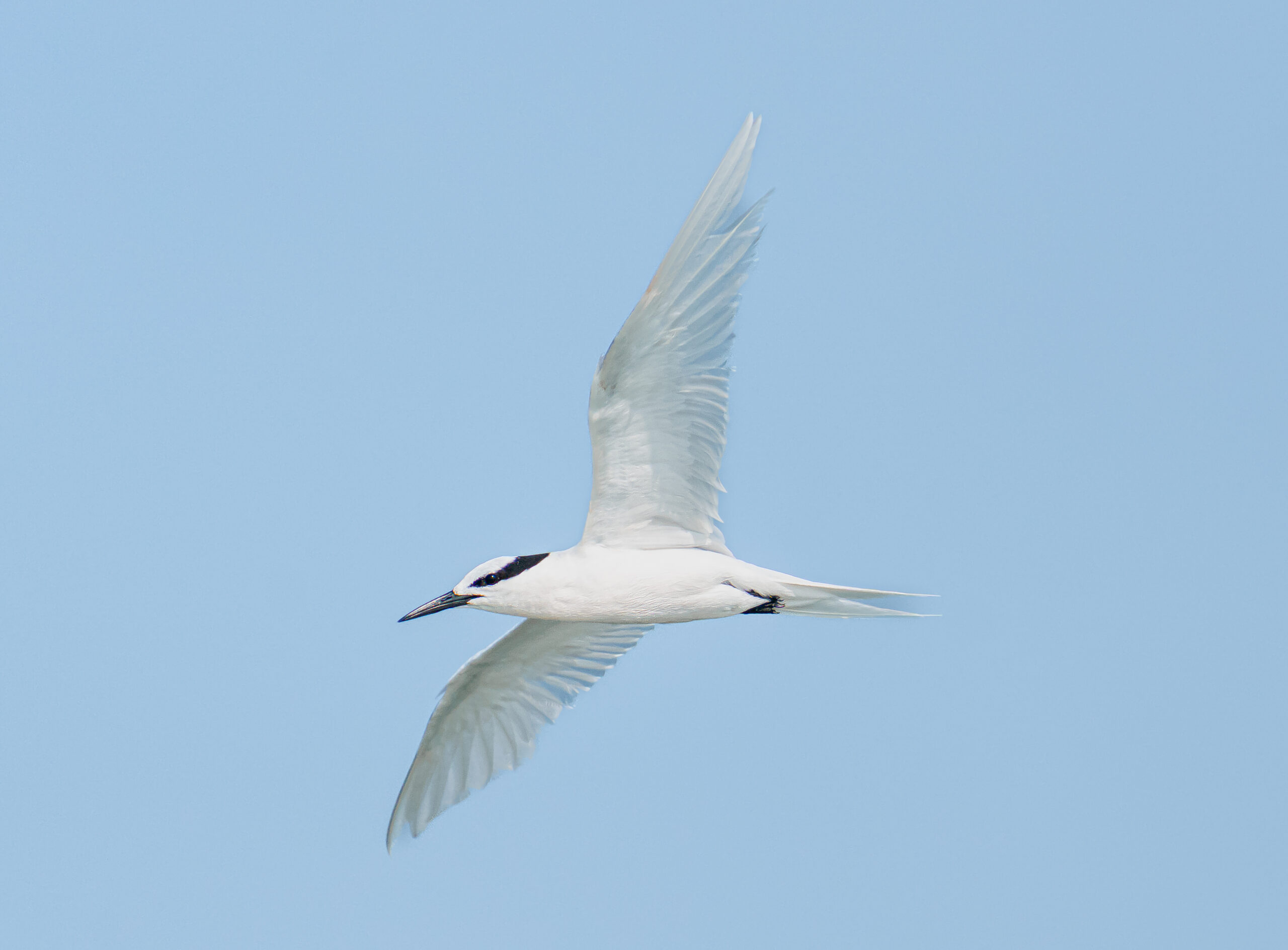
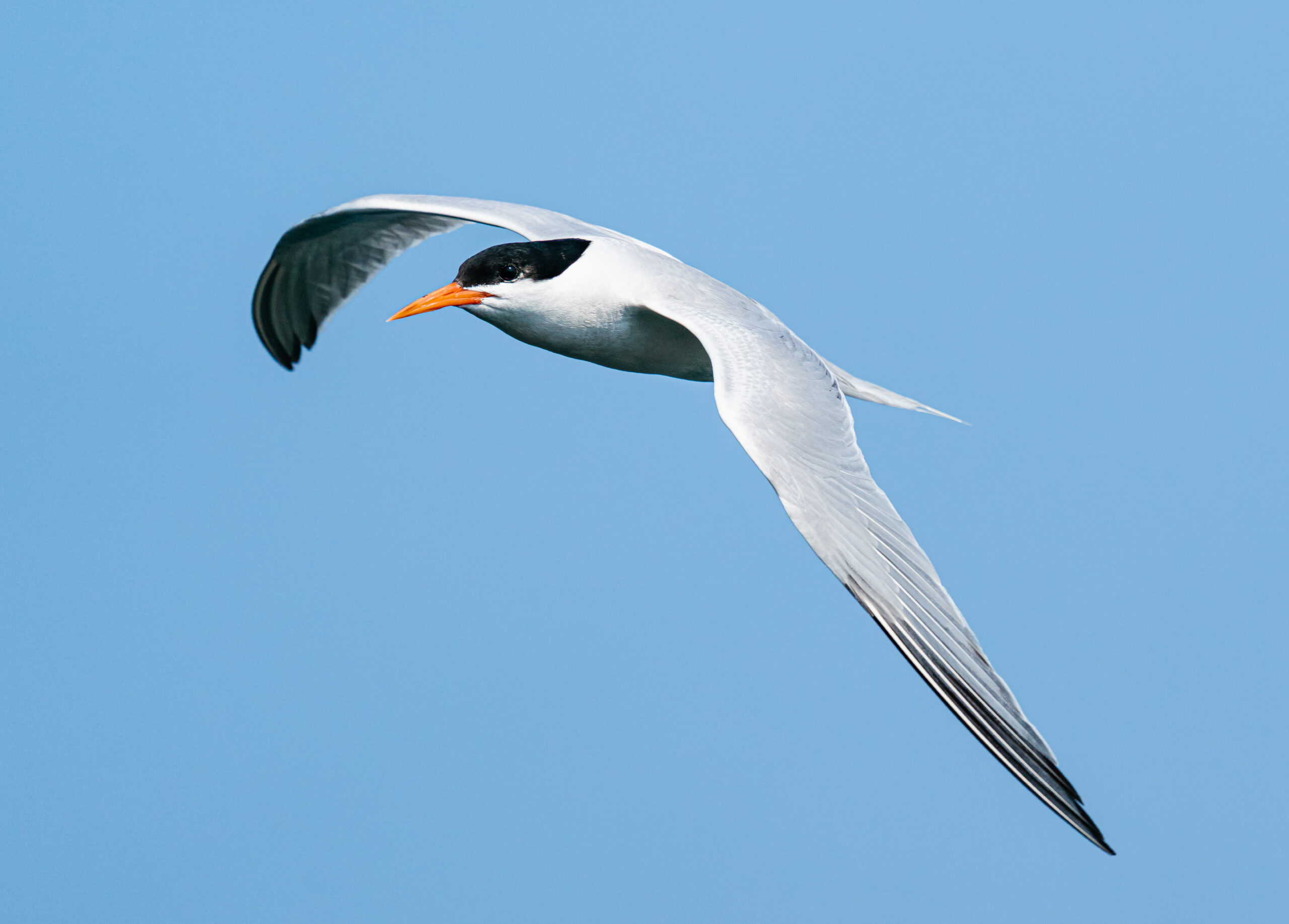
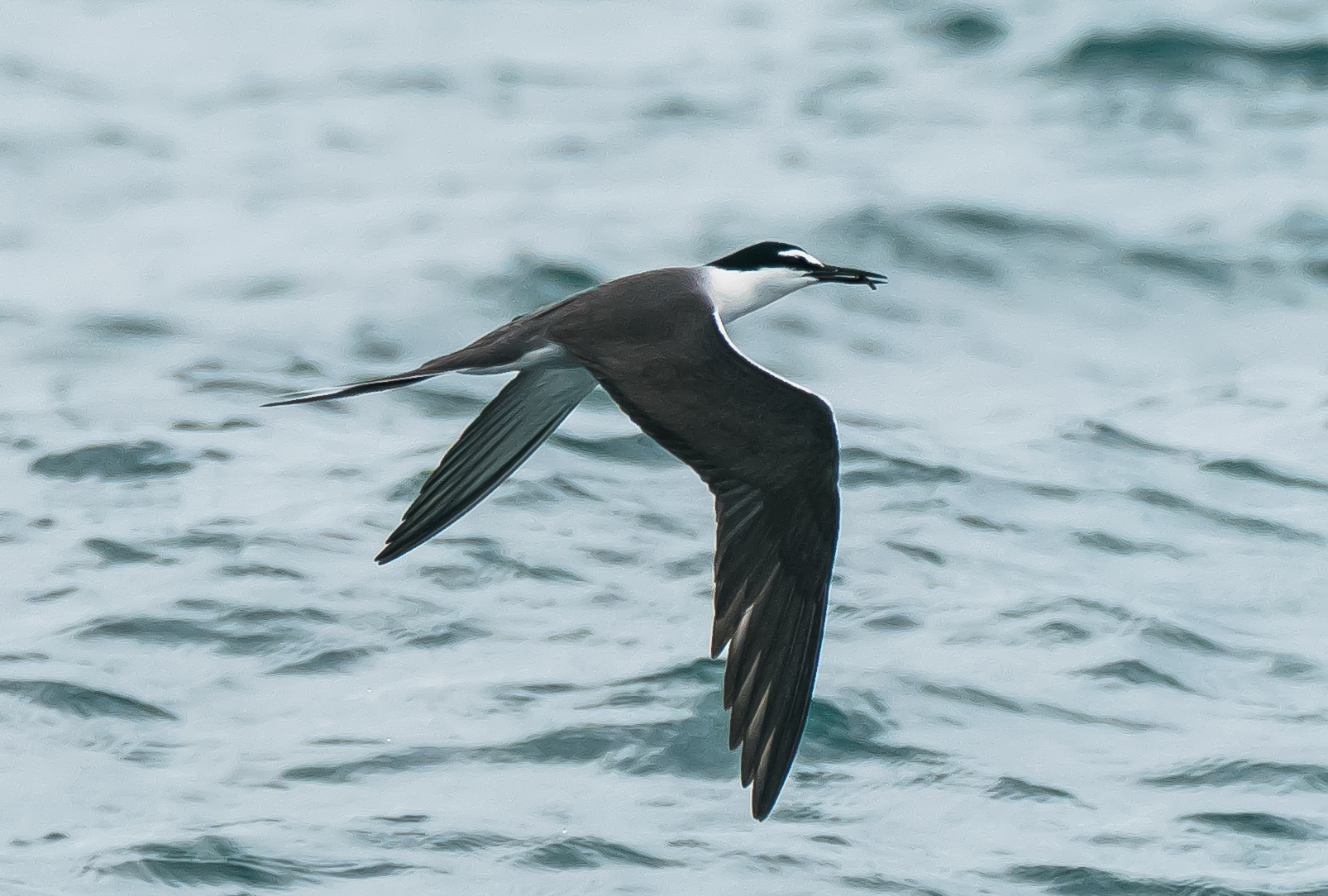
But where they go in the winter is a little bit more of a mystery. Though Roseate are better studied in Europe (and found to winter in West Africa), the overwintering sites for our tern populations is still unknown. Some coloured flagged Roseate’s have been seen in Hong Kong, and by the colour combination of the flags (more below), we can tell that these overwintered in Australia.
But with regards to their migration routes, and the migration routes and overwintering areas of the other species, we can only speculate. Though it is likely that these guys choose to spend the cold days out in the sea, most likely on some remote rocks, exactly where is still quite unknown.
Based on observations, it seems these three species populations fluctuate up and down, with good and bad years. But with little knowledge on how they spend their winters, we can only speculate on some of the reasons for these fluctuations.
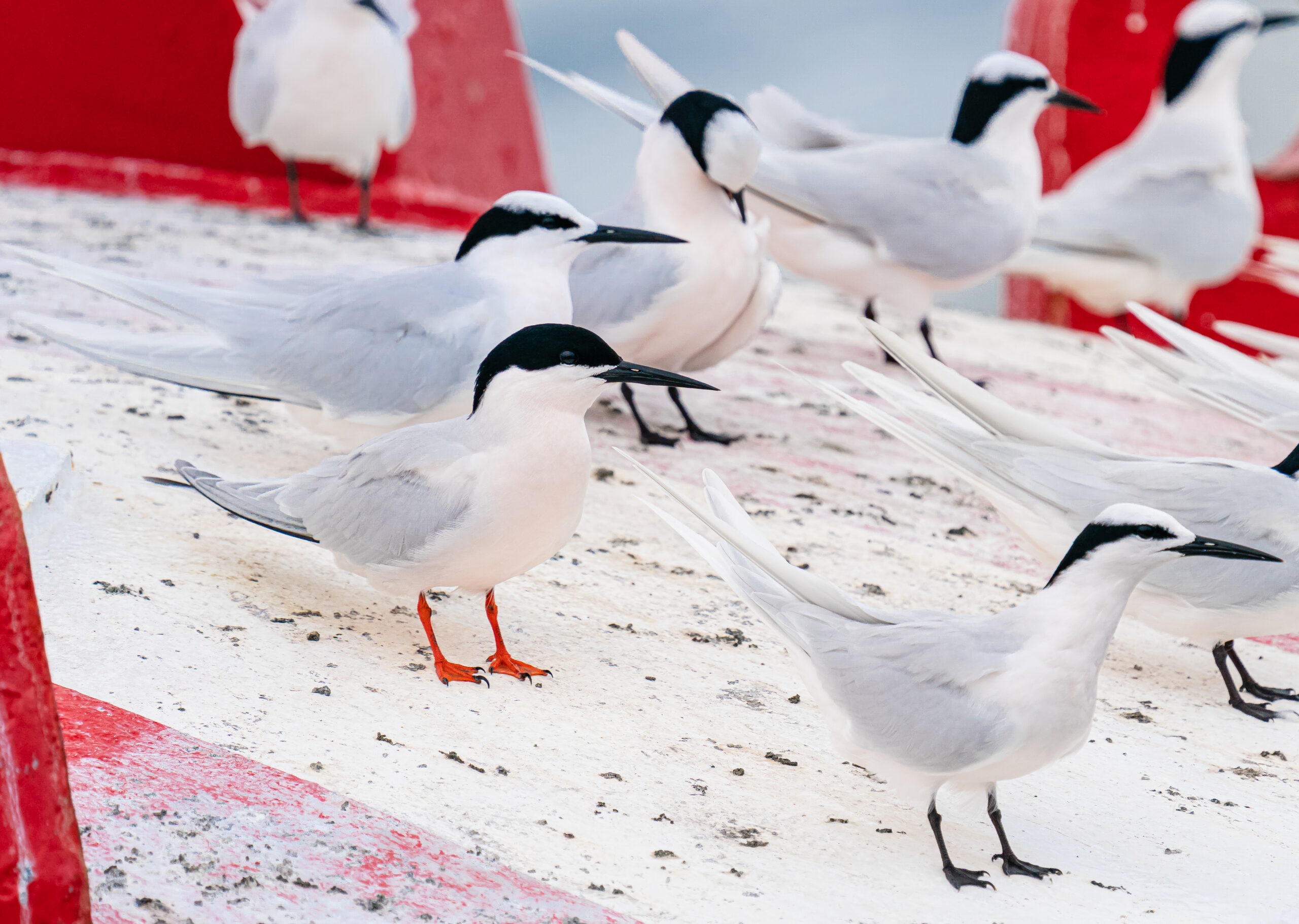
Furthermore, without this knowledge, we are unable to protect their overwintering habitats. So, to find a solution to this, we go out every year to ring and colour flag Bridled Tern chicks, as well as placing satellite tags on the adult Bridled Terns (more on this in the next post).
This gives us a whole host of information, from their migration movements from tags and resightings of colour flags, as well as ecology and population dynamics of these species.
Hong Kong holds some very important breeding areas for the terns. Before we continue our adventure, it is vital to note that all wild birds, their nests and eggs are highly protected (under Wild Animals Protection Ordinate, Cap. 170) in Hong Kong. It is an offence to wilfully disturb, take, remove or injure wild birds or their nests/eggs. The actions described here were undertaken by trained professionals holding the necessary licenses and permits issued by the AFCD.
So, all that being said, we started off bright and early to make our way to the terns! Today our focus was to ring the chicks and put colour flags on them. Below is an example of these flags on an adult Roseate Tern ringed 2018.
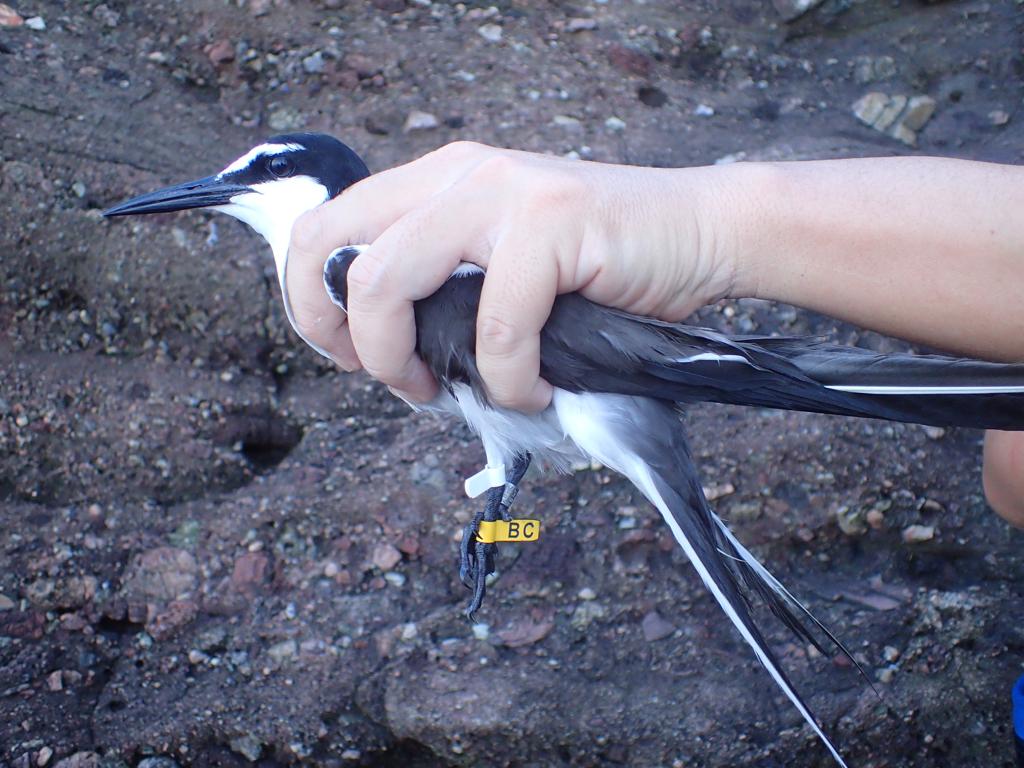
These colour flags have a colour combination that is unique to Hong Kong. This means that if they are spotted in other parts of the world, even if the code (which is unique for every individual) cannot be read, it can still be identified as a bird ringed in Hong Kong.
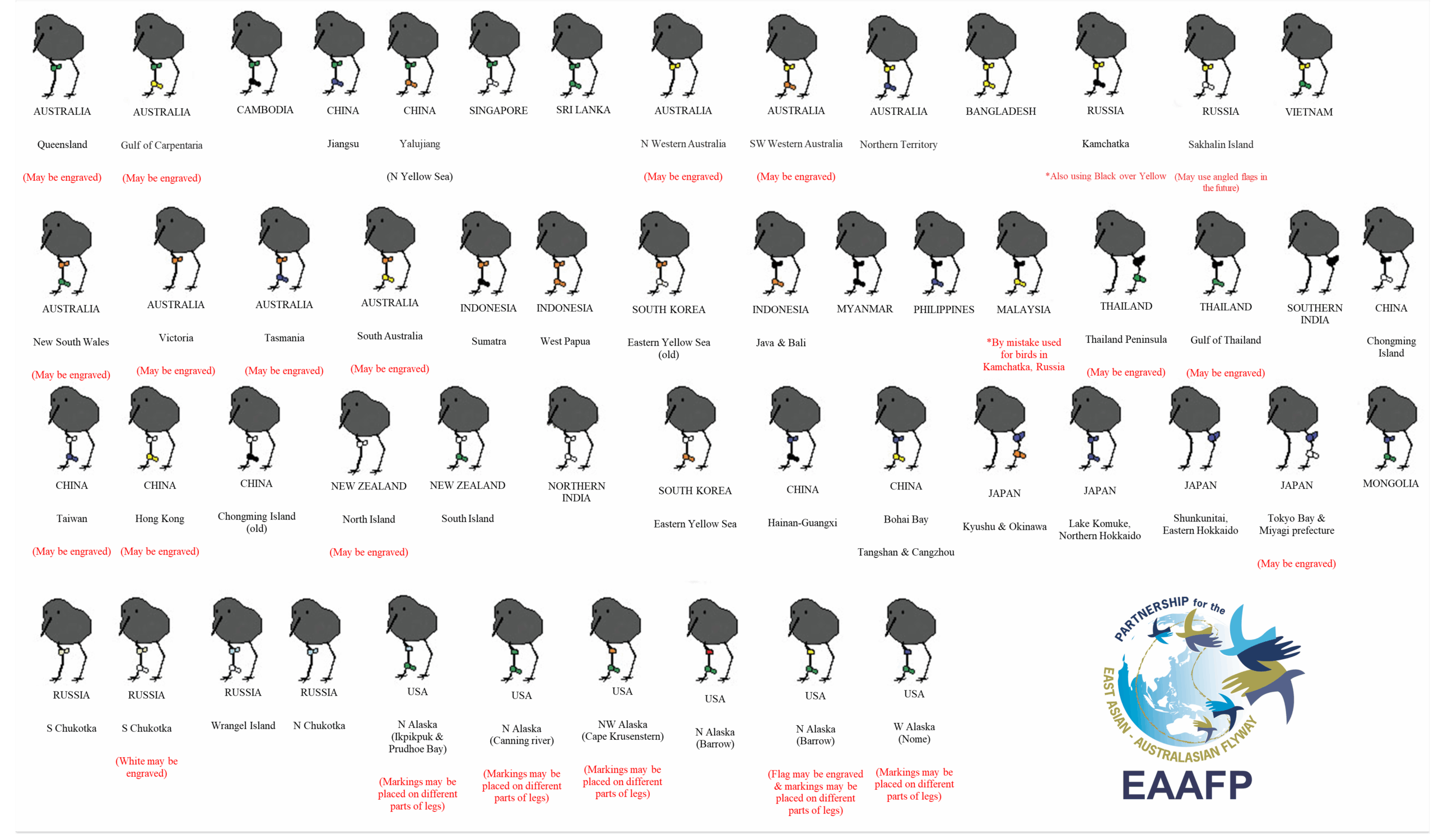
All countries within the EAAFP (Partnership for the East Asian-Australasian Flyway) have a unique colour flag/ring combination that is specific to them (see below), providing comprehensive and collaborative research on migratory species movements.

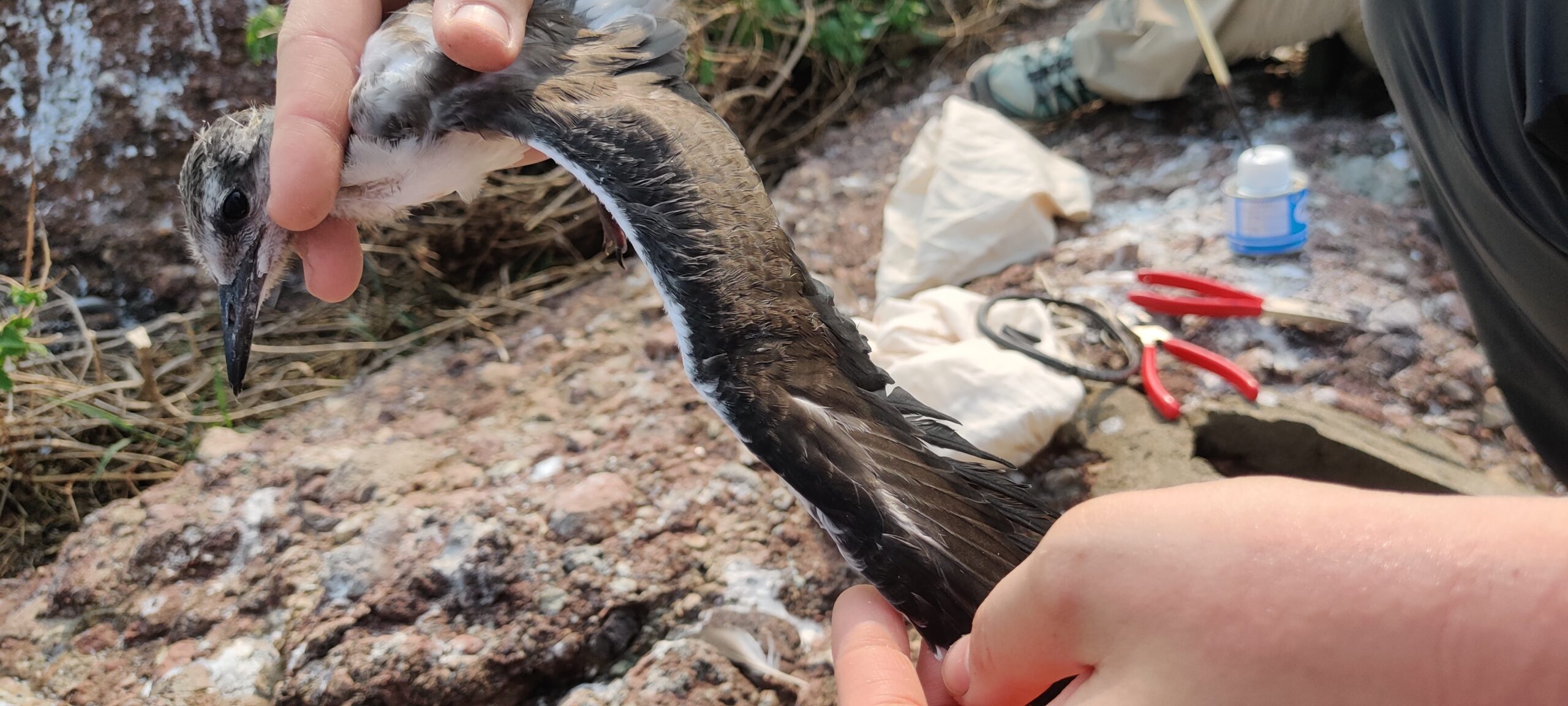
As the morning drew on, the sun had no mercy, so for our and the chicks’ sake, we carefully but quickly identified all the ringable chicks (only those that are old enough), and set about ringing them, before releasing them back into their parents.

We are extremely lucky to be able to see these beautiful birds up close, as they go through their first moult and lose their downy chick plumage.
This chick (right) appears to be maybe just a few weeks old. He has just a couple of months to grow into a beautiful bird that can fend for himself, before disappearing over the horizon to who-knows-where (hopefully we will, soon)!
A very hot, sweaty, and rewarding day!
Daily Totals
| Species | Original | Recapture |
| Bridled Tern | 32 | 0 |
*Please note that all wild birds are protected under Hong Kong Law. All ringing activities are conducted with the necessary permits issued by the AFCD. Handling and processing of birds is only carried out by experienced individuals.*