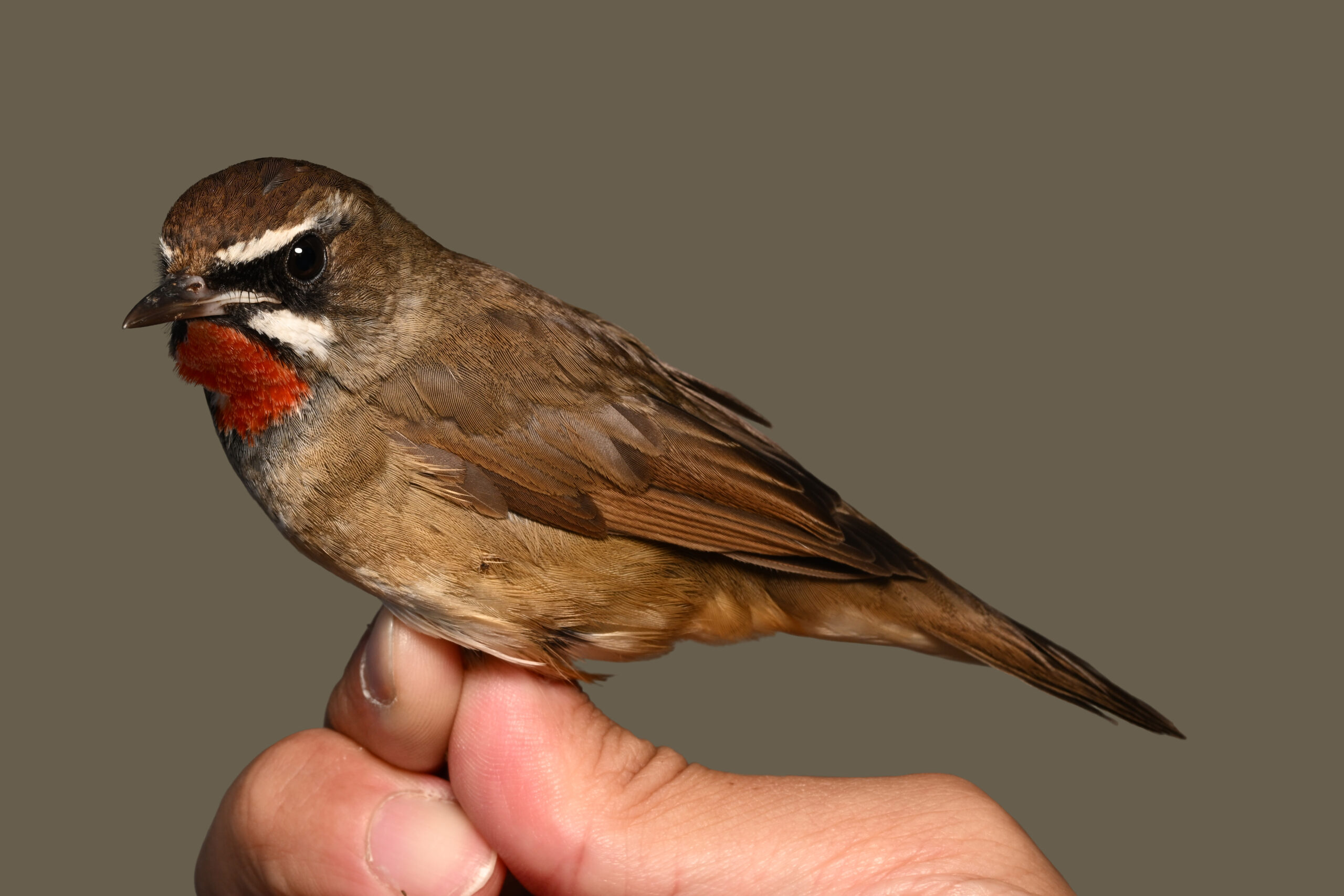



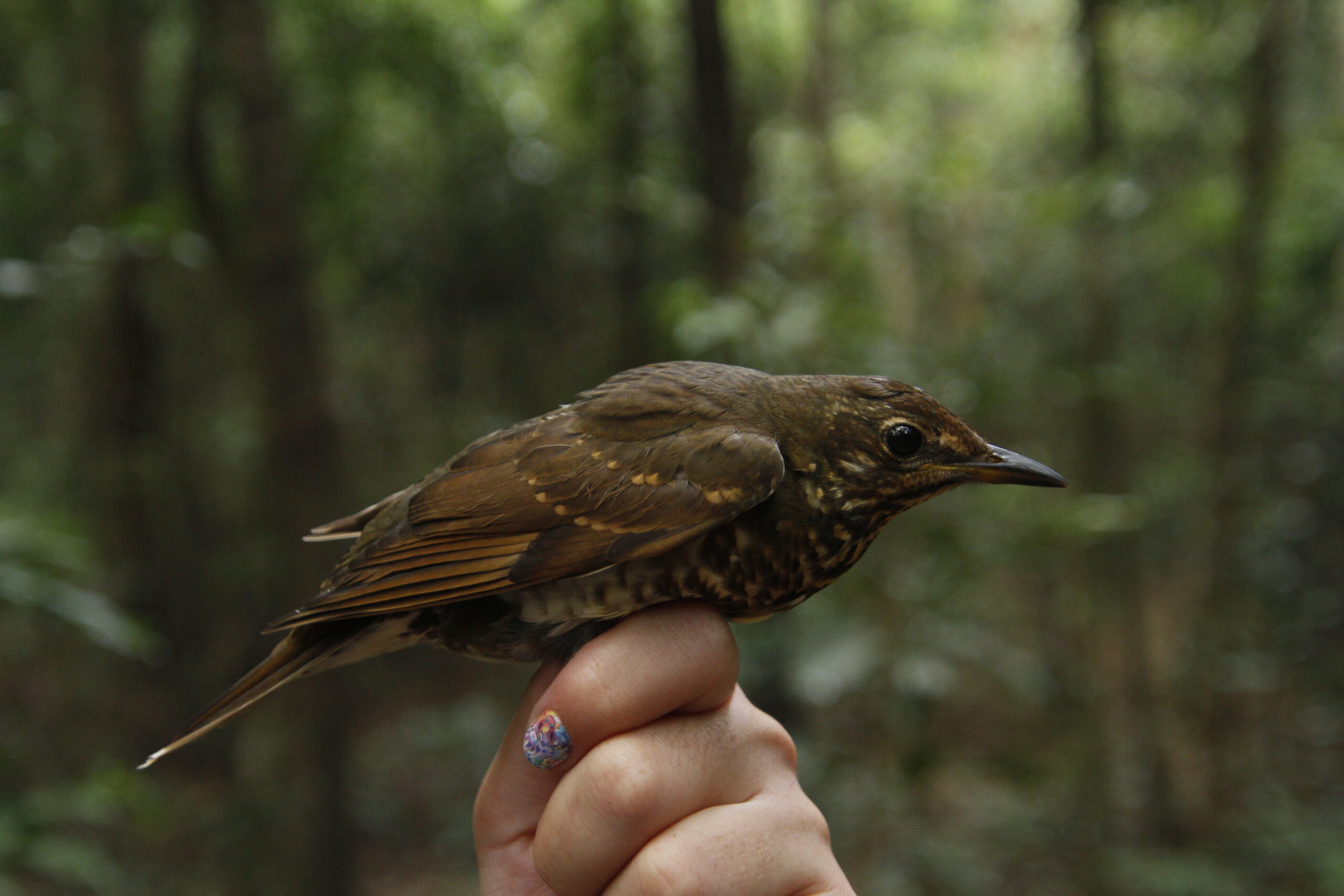
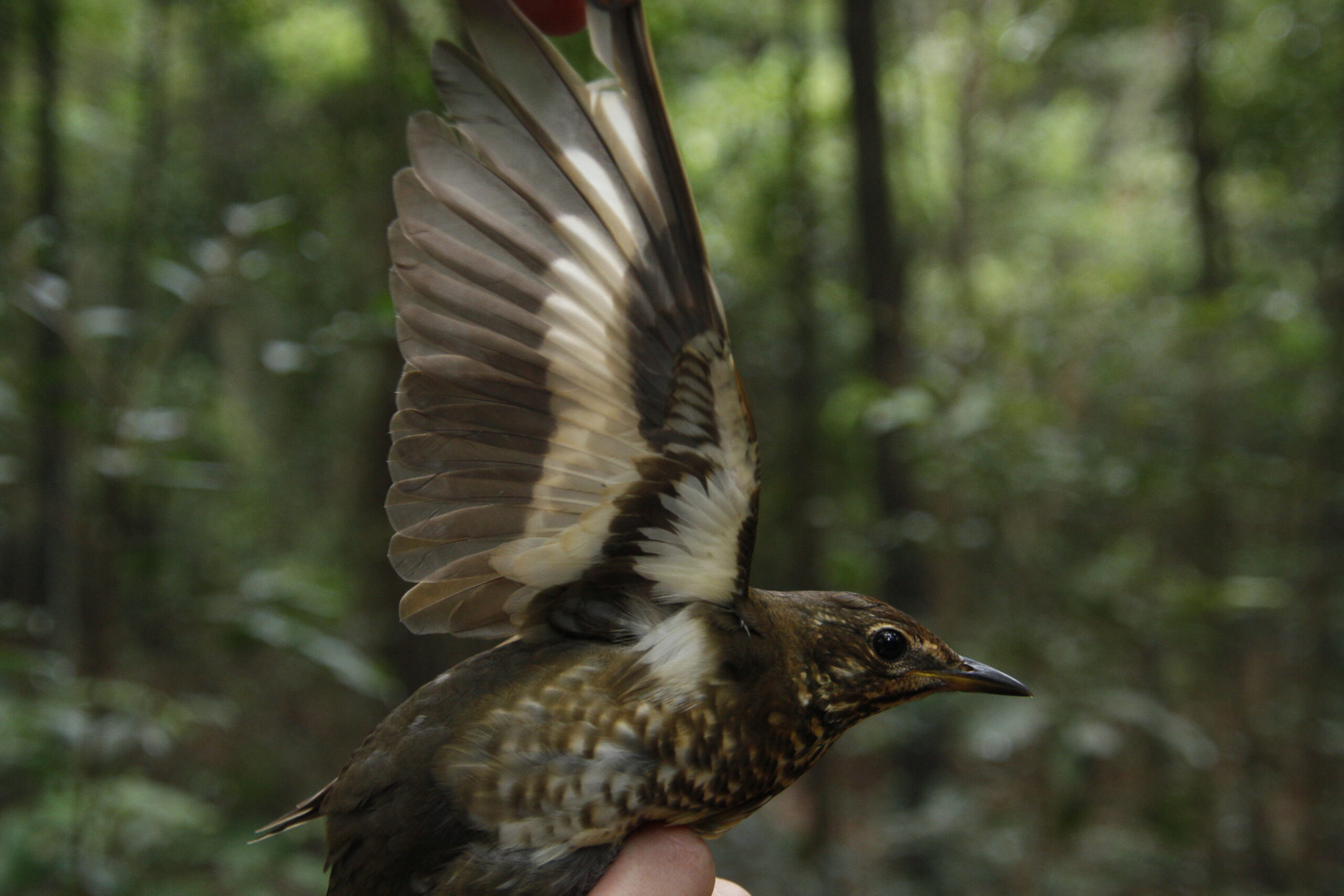
Today ended up being yet another productive and exciting day, with our first bird being yet one that is only the 3rd individual ever caught by HKBWS! This took the form of a beautiful 1st calendar year Siberian Thrush, with its characteristic white and black striped underwing!
Due to the brown pattern of the moulted post-juvenile feathers, we could conclude that this was a young female! A male, for reference, should have a much deeper blue hue to the post-juvenile feathers.
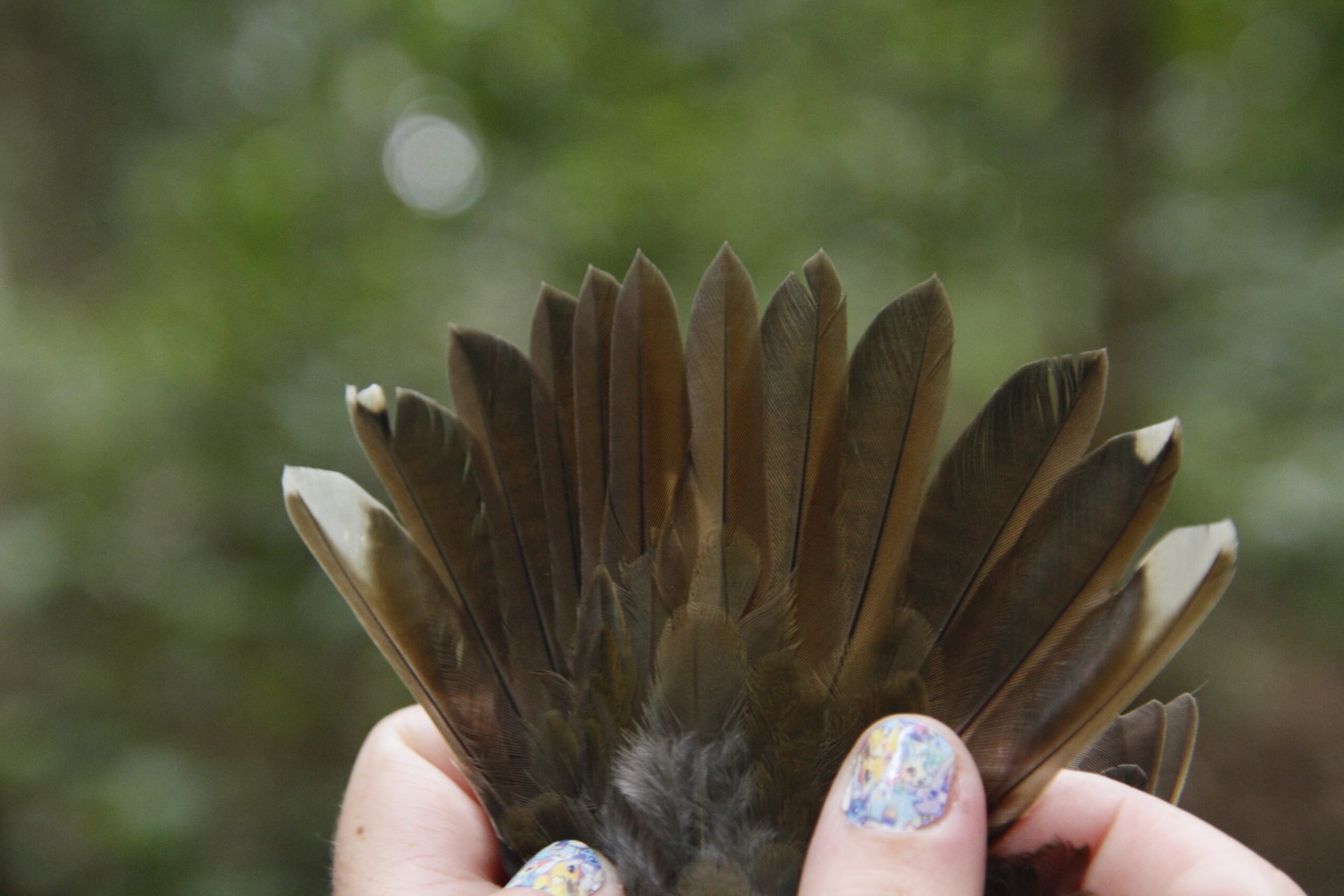
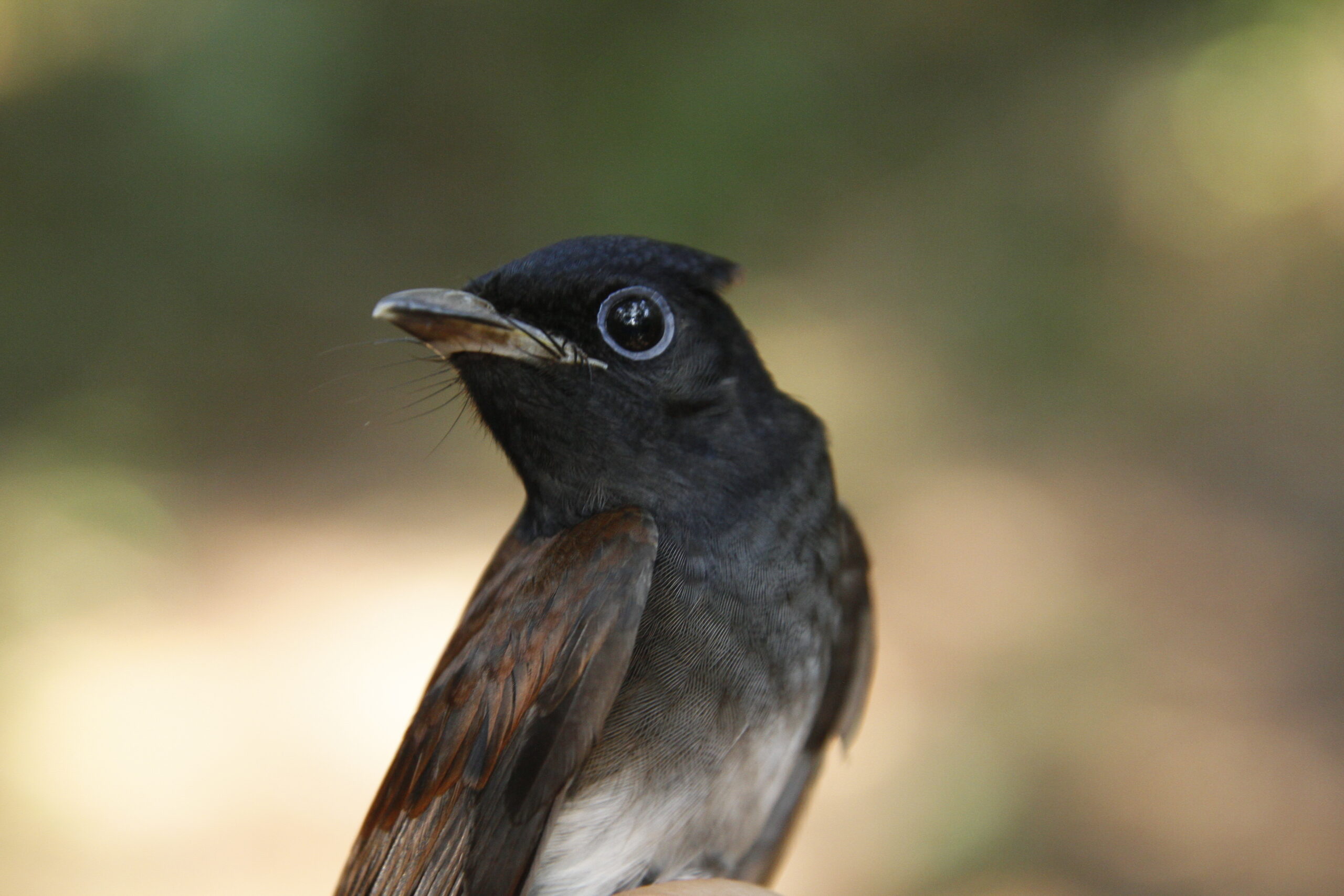
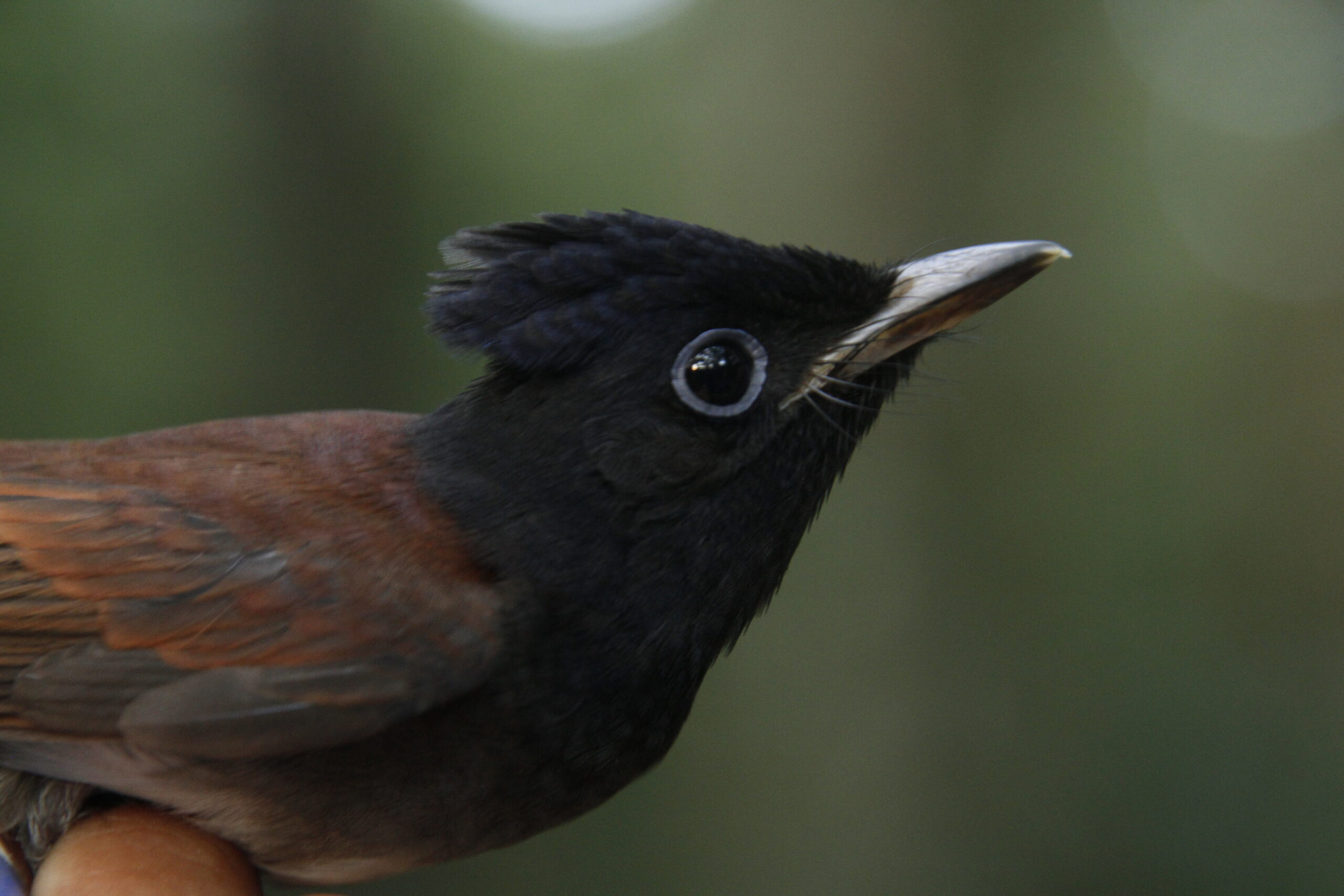
But the surprises didn’t end there! As we walked down the mountain to check our nets, we were greeted with not one but two Japanese Paradise Flycatchers! These can be distinguished from Amur Paradise Flycatchers by their lack of a metallic blue crest and dirty brown tail feathers. They also show less of a contrast between their black heads and grey chests than the Amurs. Both of these individuals appeared to be 1st calendar year birds, with all GCs moulted and the PCs juvenile.
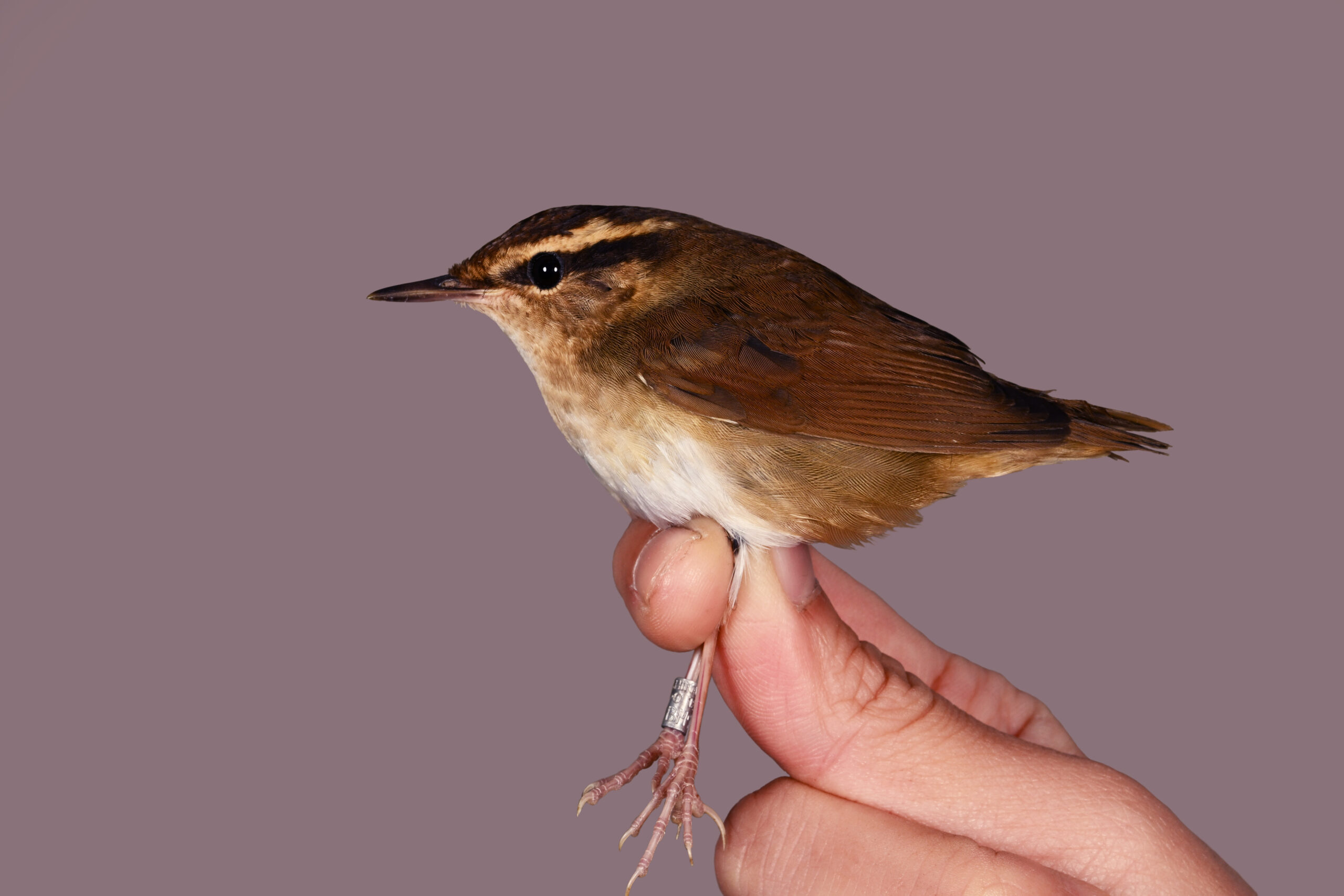
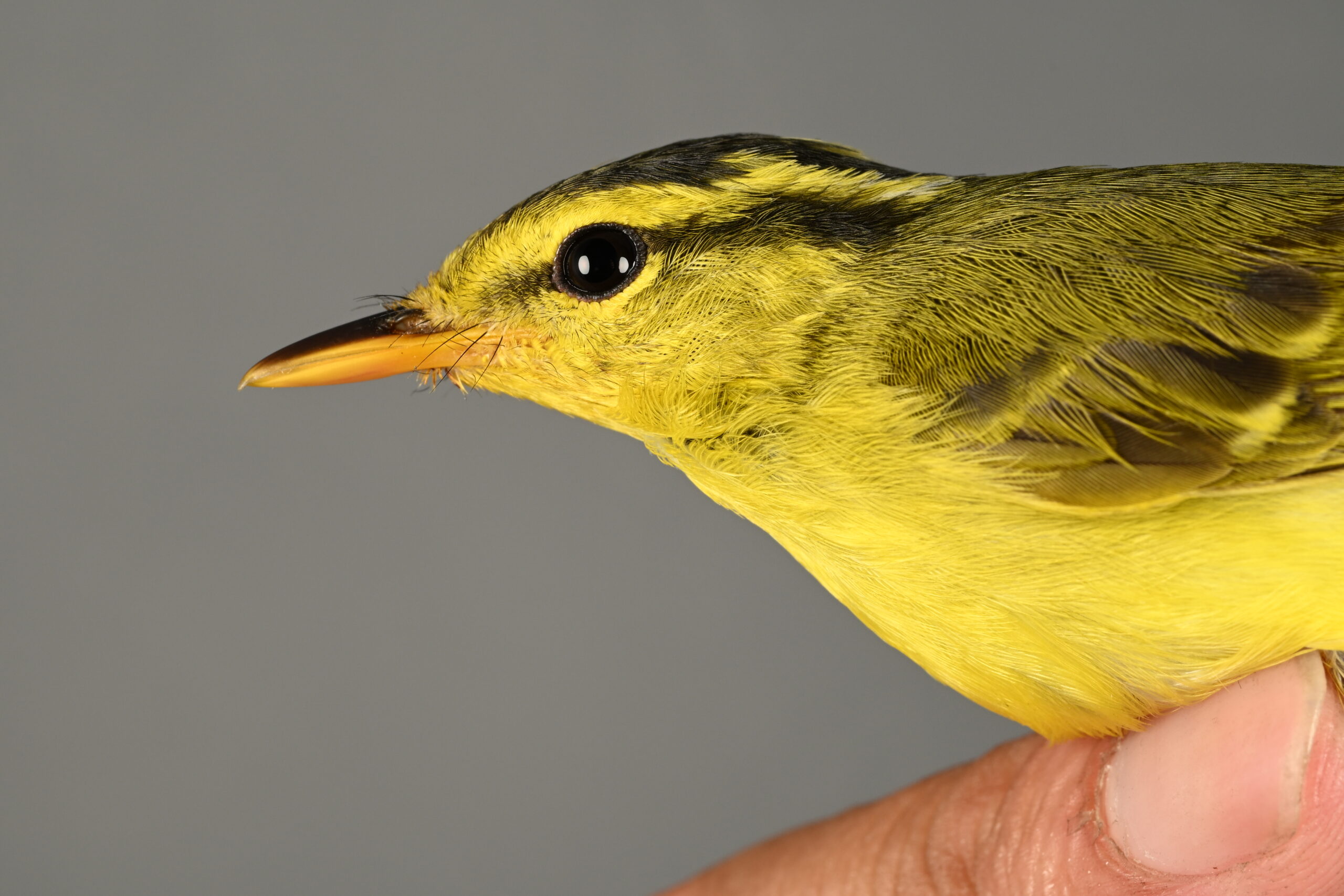
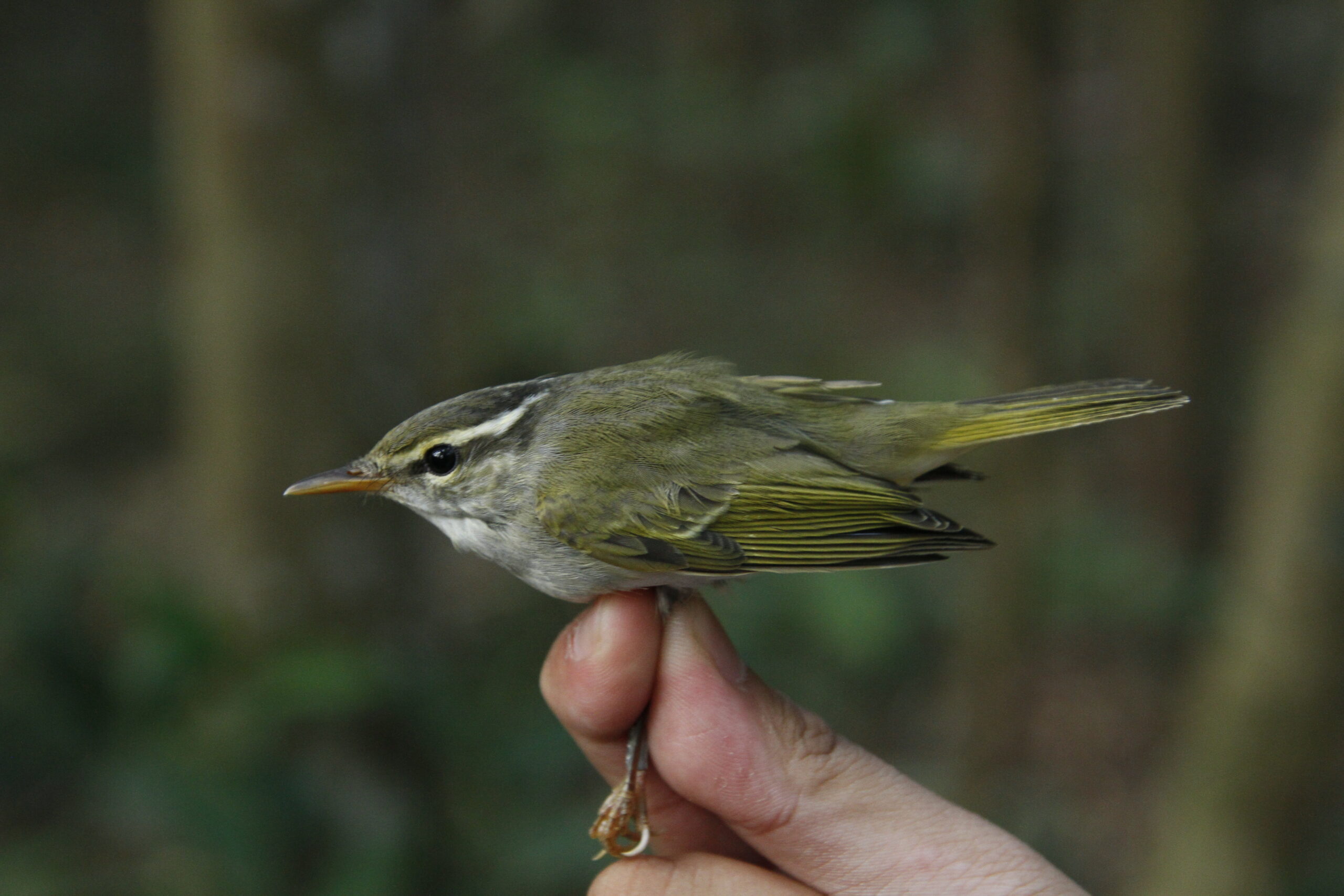
The day continued with the migrant warblers coming in as usual, including a couple of nice Eastern Crowned Warbler! These little warblers are pretty difficult to age, as juvenile usually retain their wing and tail feathers very nicely, meaning both adults and juveniles have a uniform set of very good quality, fresh feathers that can be difficult to distinguish between.
Therefore, our best indicators to age them is to look at the shape and density of the tail feathers (juveniles generally have browner, pointer tips to the feathers), and undertail coverts, which can be much fluffier in juveniles.
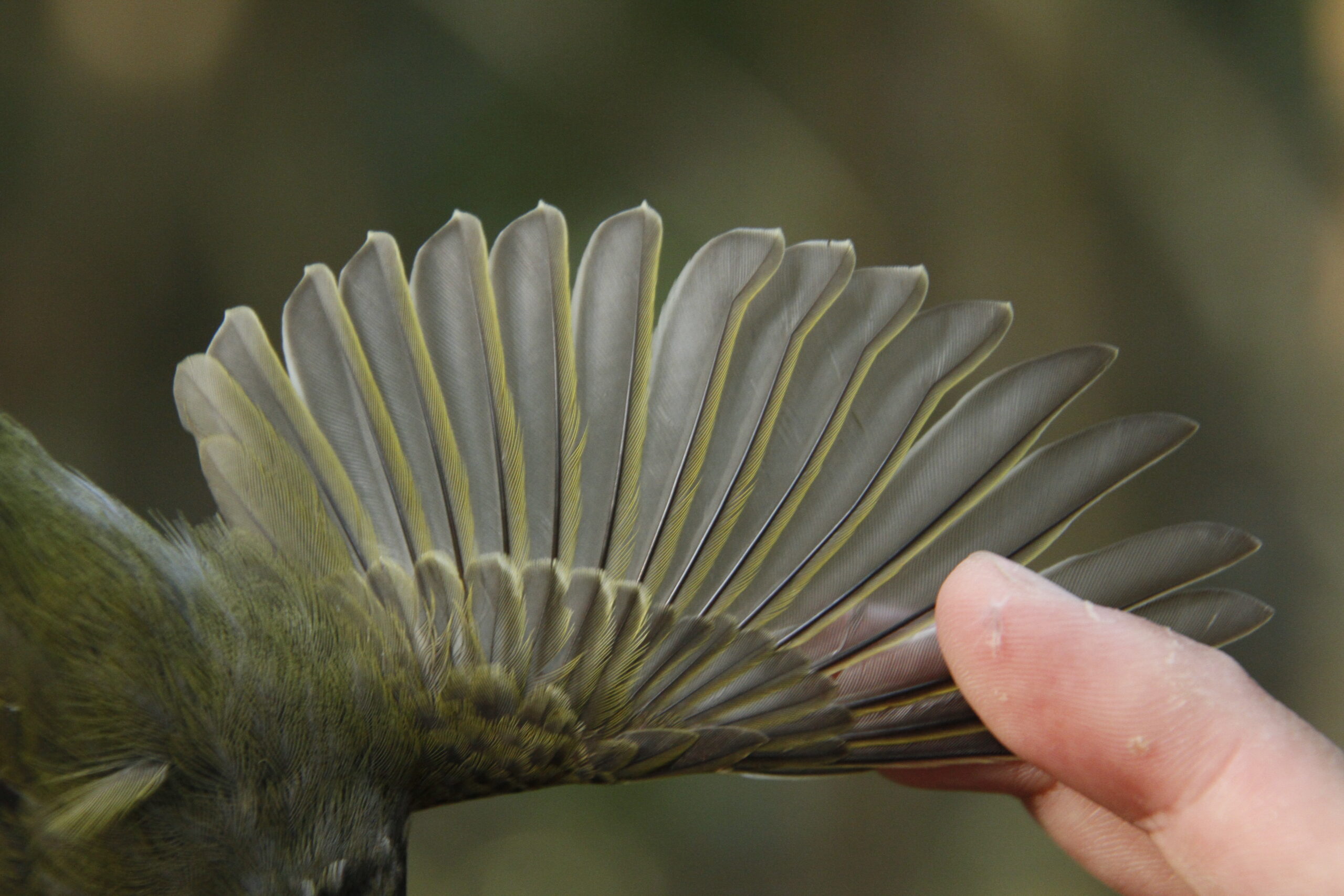
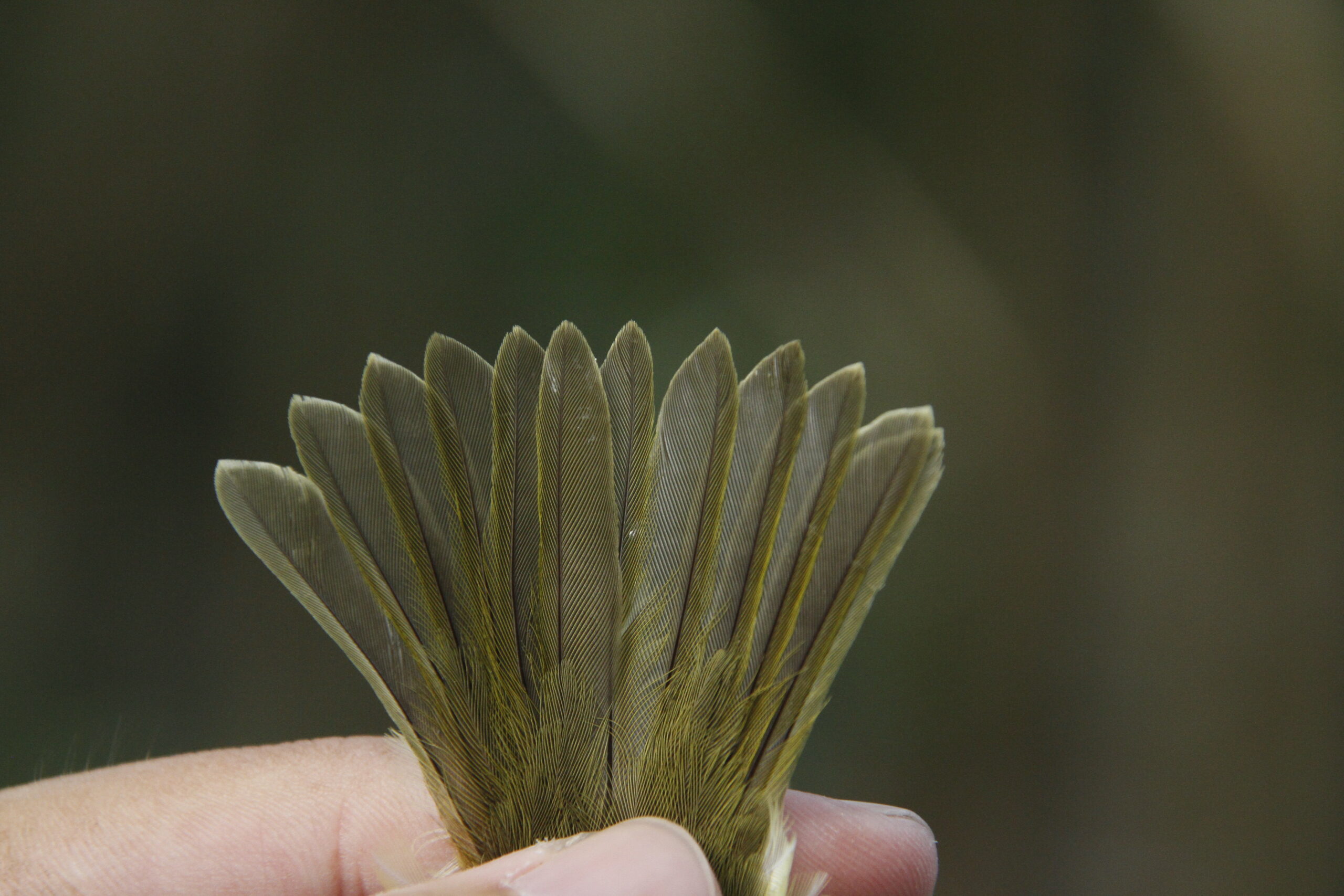
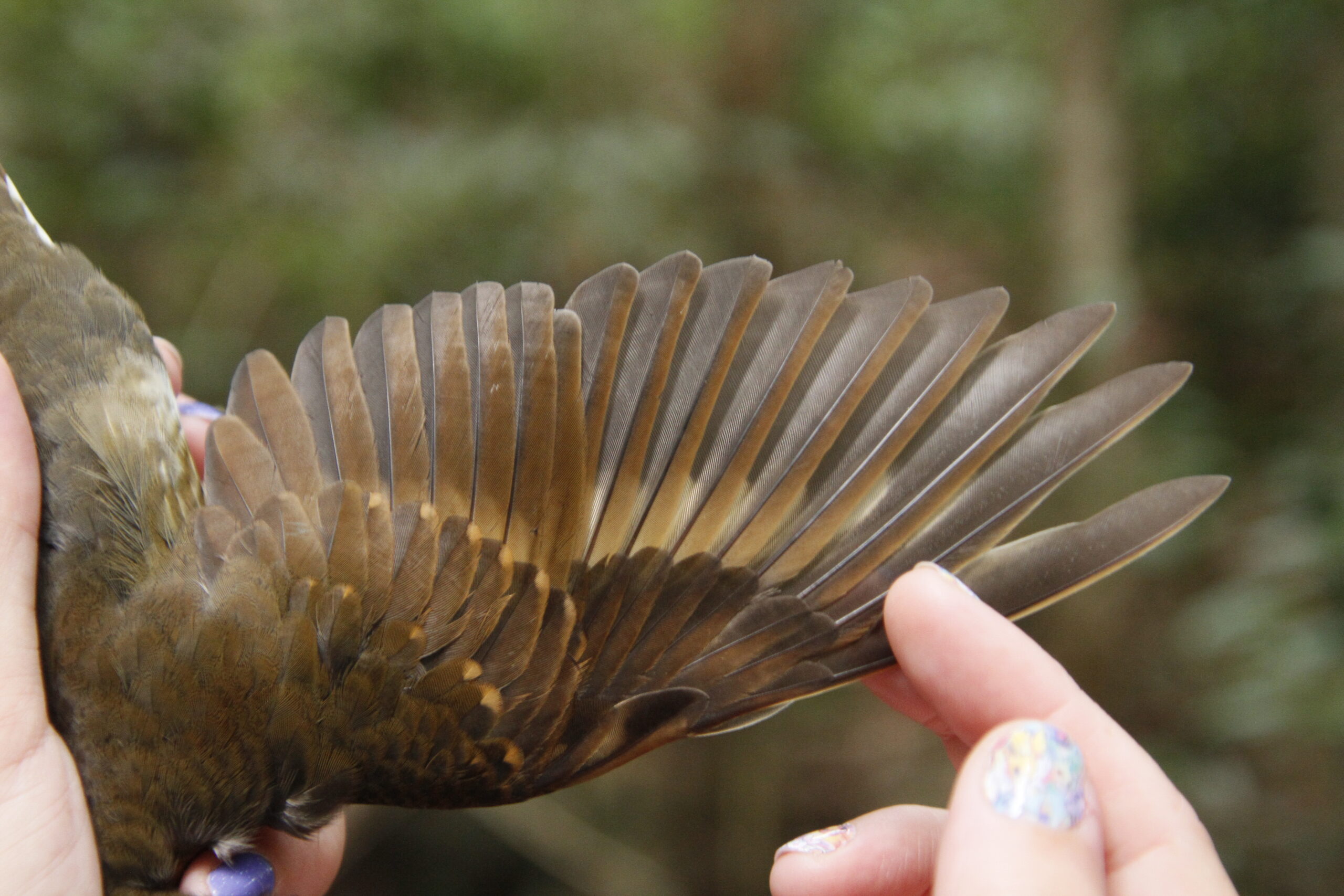
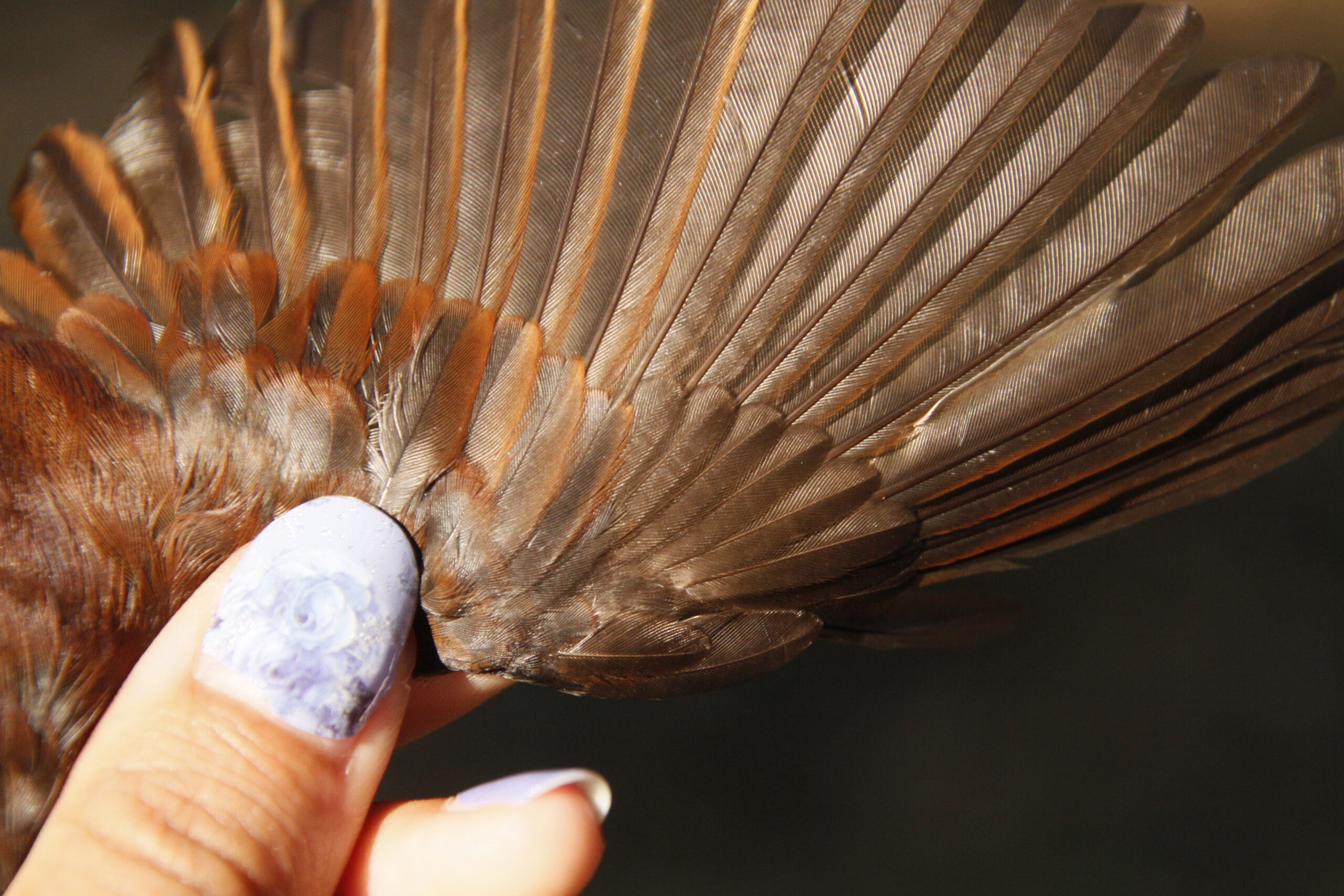
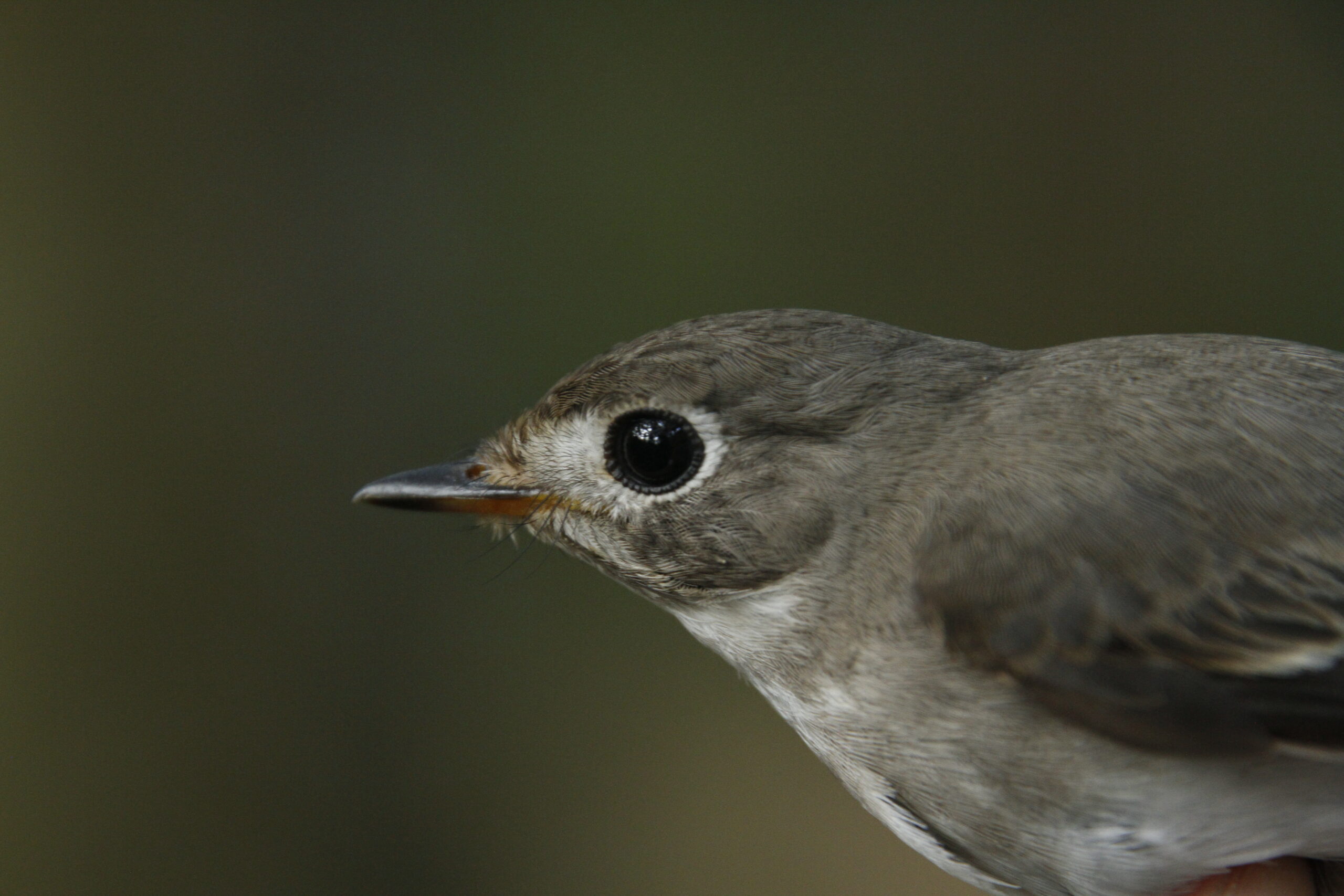
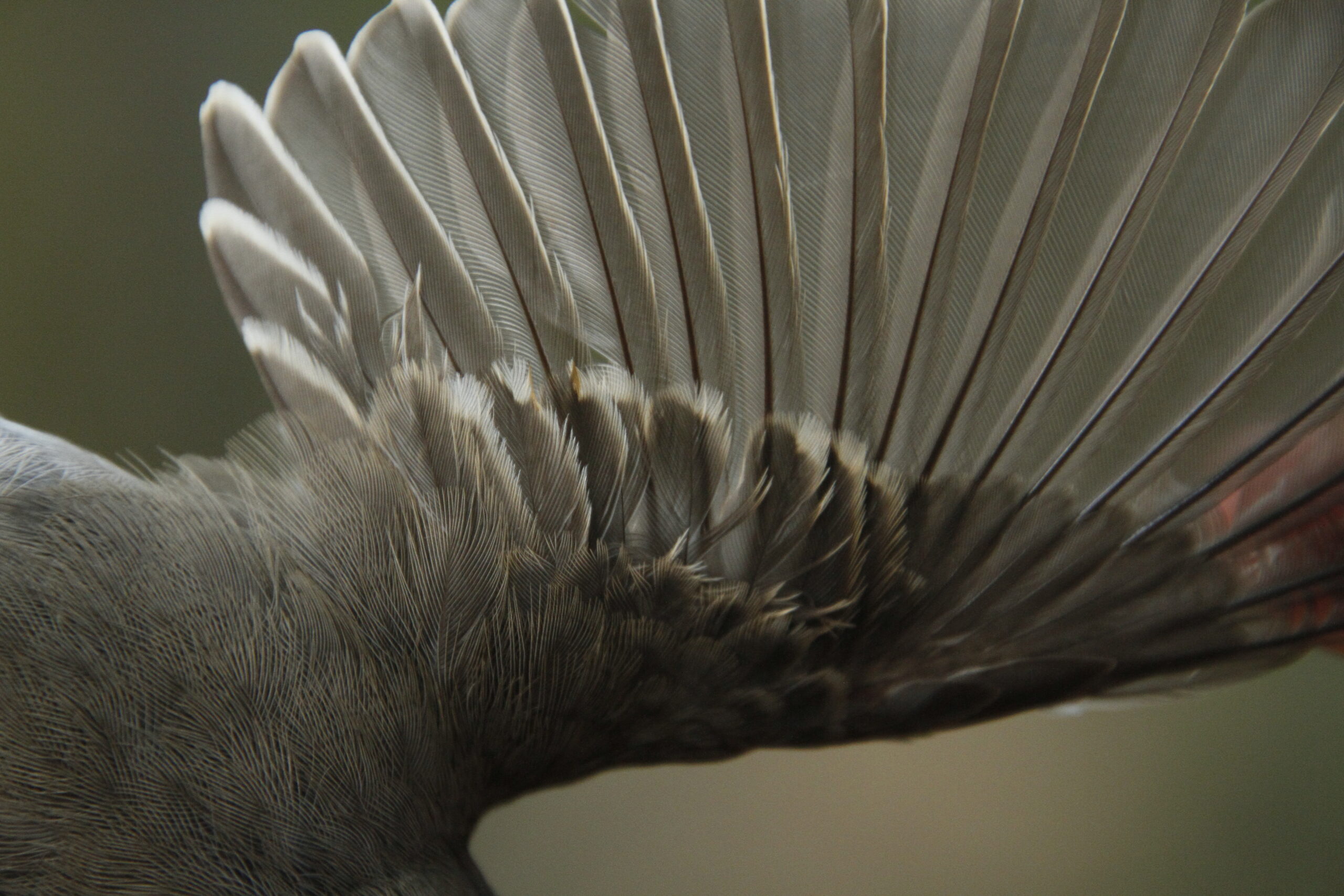
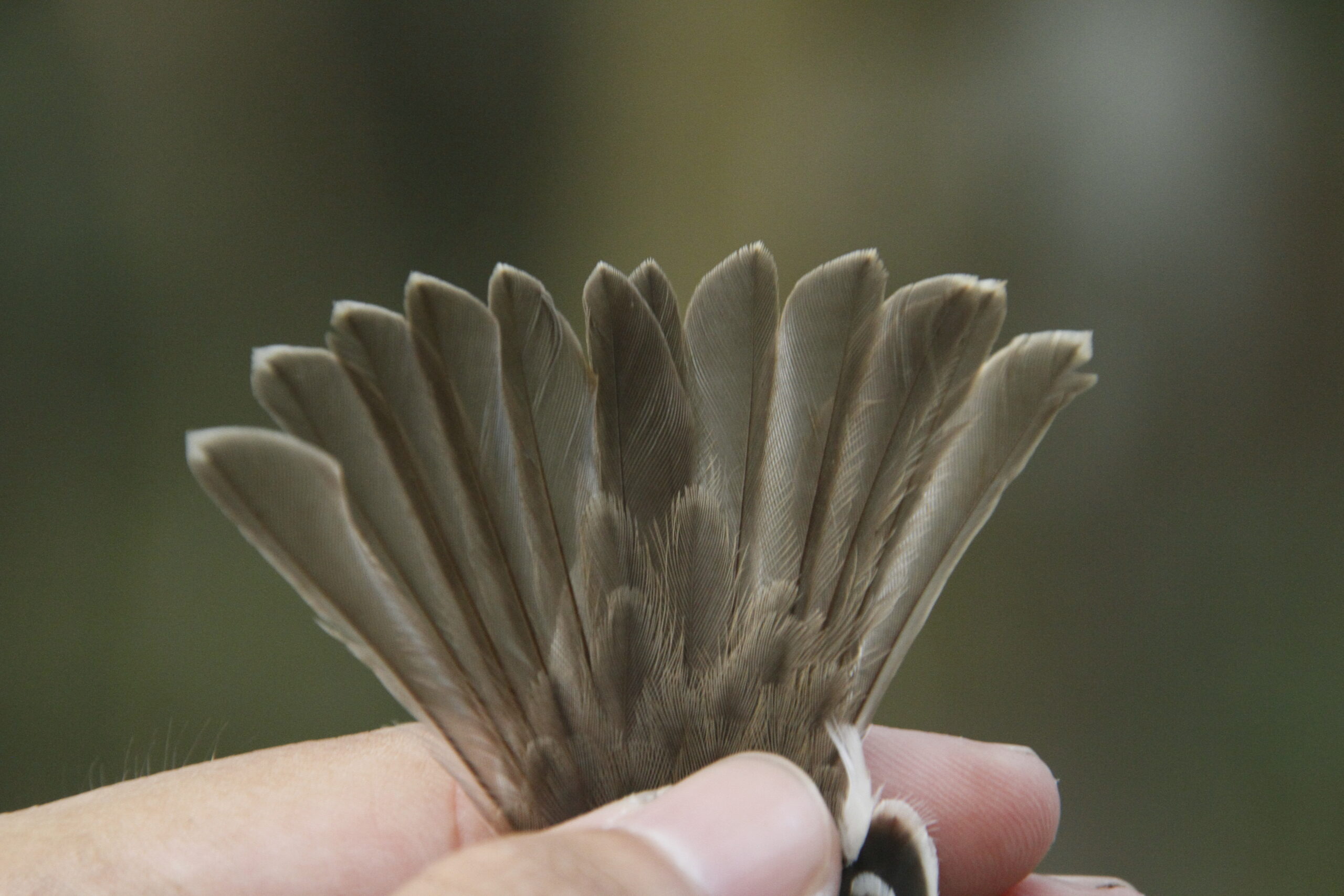
Along with the warblers, we ended up with 2 Asian Brown Flycatchers! These, as with all our other individuals this season, were 1st calendar year birds. Although the juveniles of this species show comparatively broader and less pointy tails to those of most species, it must be noted that adult tail feathers are generally completely rounded. Therefore, in the individual below, we can conclusively say that this is a fully uniform juvenile tail. Furthermore, in the wing we can see 8 juvenile GCs with a dull brown ground colour, worn edges and a pale spot to them, versus the 2 innermost GCs of post-juvenile quality: darker, more glossy and dense.
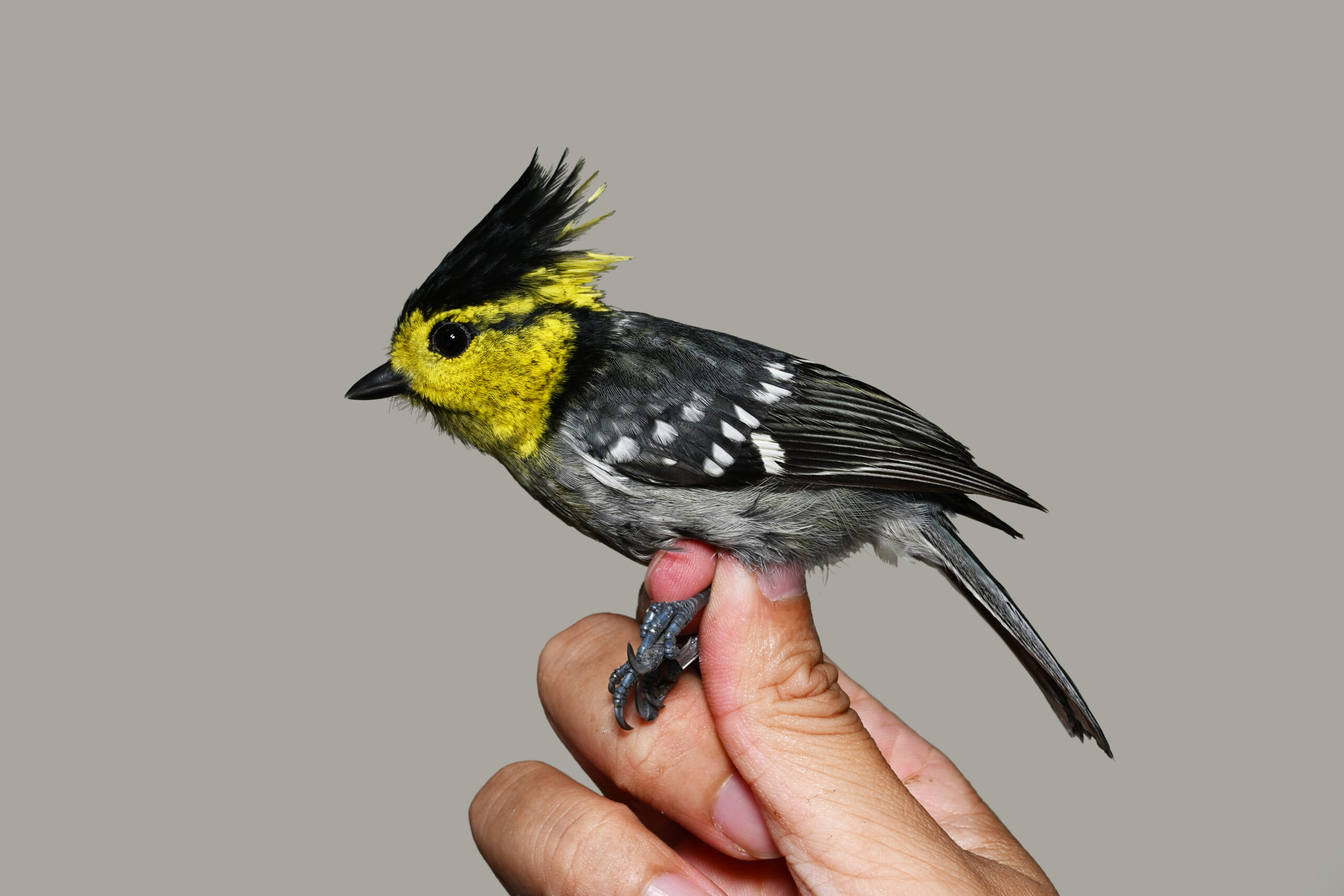
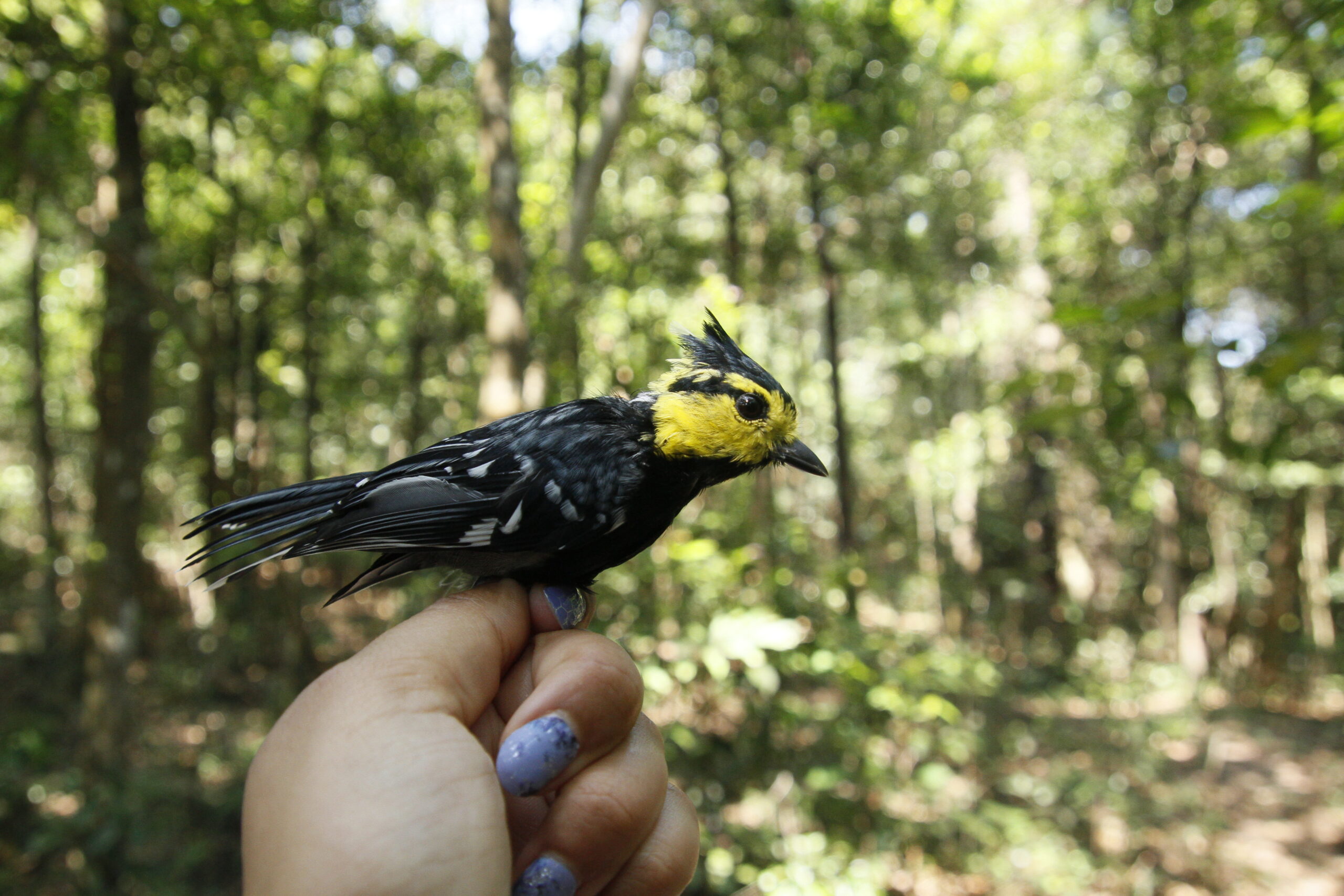
We ended the day with a 1st calendar year Yellow-cheeked Tit! These birds are wonderfully characteristic, and, like most Tit species, enjoy chewing on our ringers’ fingers. Lucky they’re cute…
Daily Totals
| Species | Original | Recapture |
| Arctic Warbler | 1 | 0 |
| Asian Brown Flycatcher | 2 | 0 |
| Chestnut Bulbul | 1 | 0 |
| Eastern Crowned Warbler | 2 | 0 |
| Huet’s Fulvetta | 8 | 3 |
| Japanese Paradise Flycatcher | 2 | 0 |
| Orange-headed Thrush | 1 | 0 |
| Pale-legged Leaf Warbler | 3 | 0 |
| Red-billed Leiothrix | 0 | 2 |
| Rufous-capped Babbler | 3 | 2 |
| Siberian Thrush | 1 | 0 |
| Streak-breasted Scimitar Babbler | 1 | 1 |
| Yellow-cheeked Tit | 1 | 0 |
*Please note that all wild birds, their nests, and eggs are highly protected (under Wild Animals Protection Ordinate, Cap. 170) in Hong Kong. It is an offence to willfully disturb, take, remove, or injure wild birds or their nests/eggs. The actions described here were undertaken by trained professionals holding the necessary licenses and permits issued by the AFCD.*