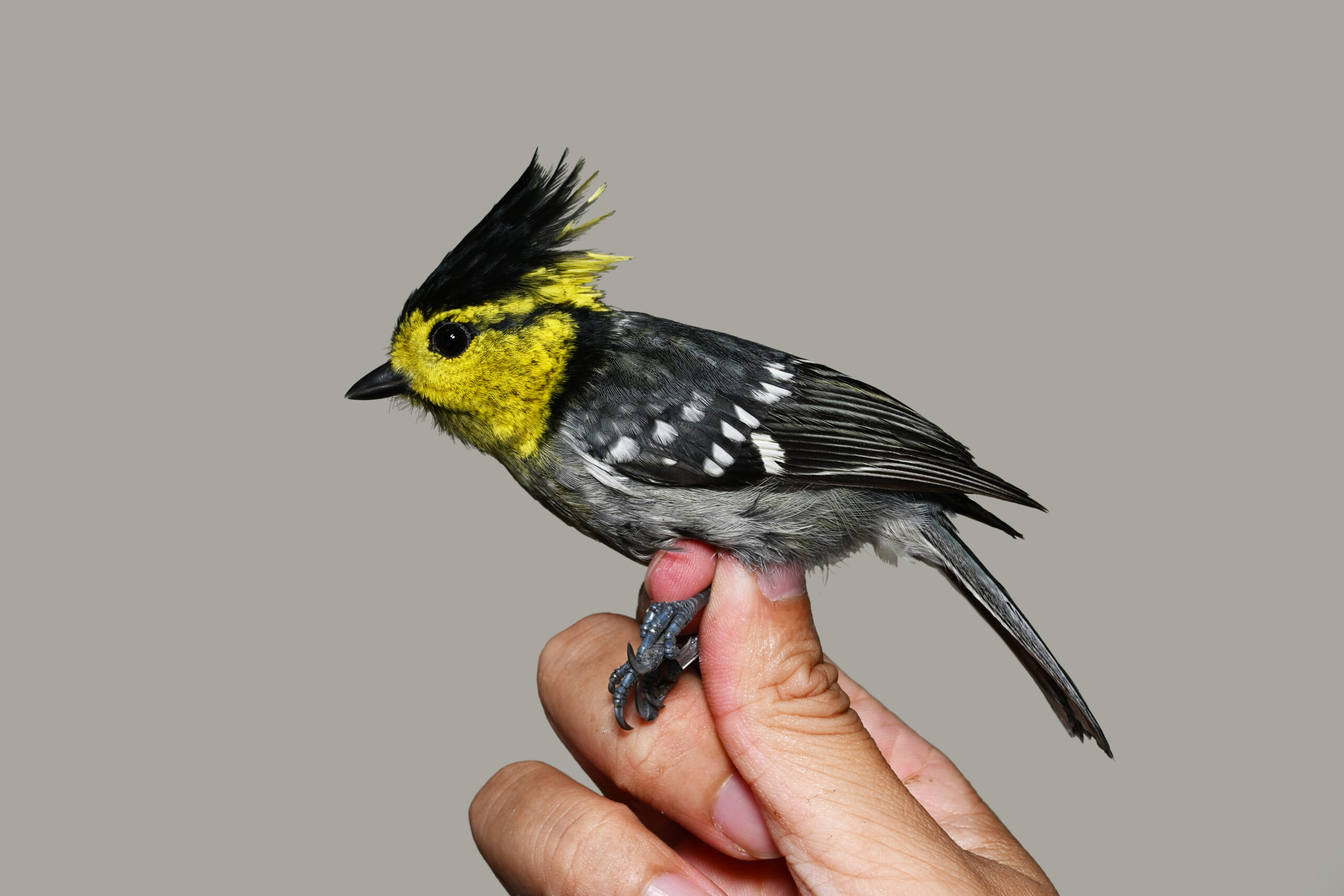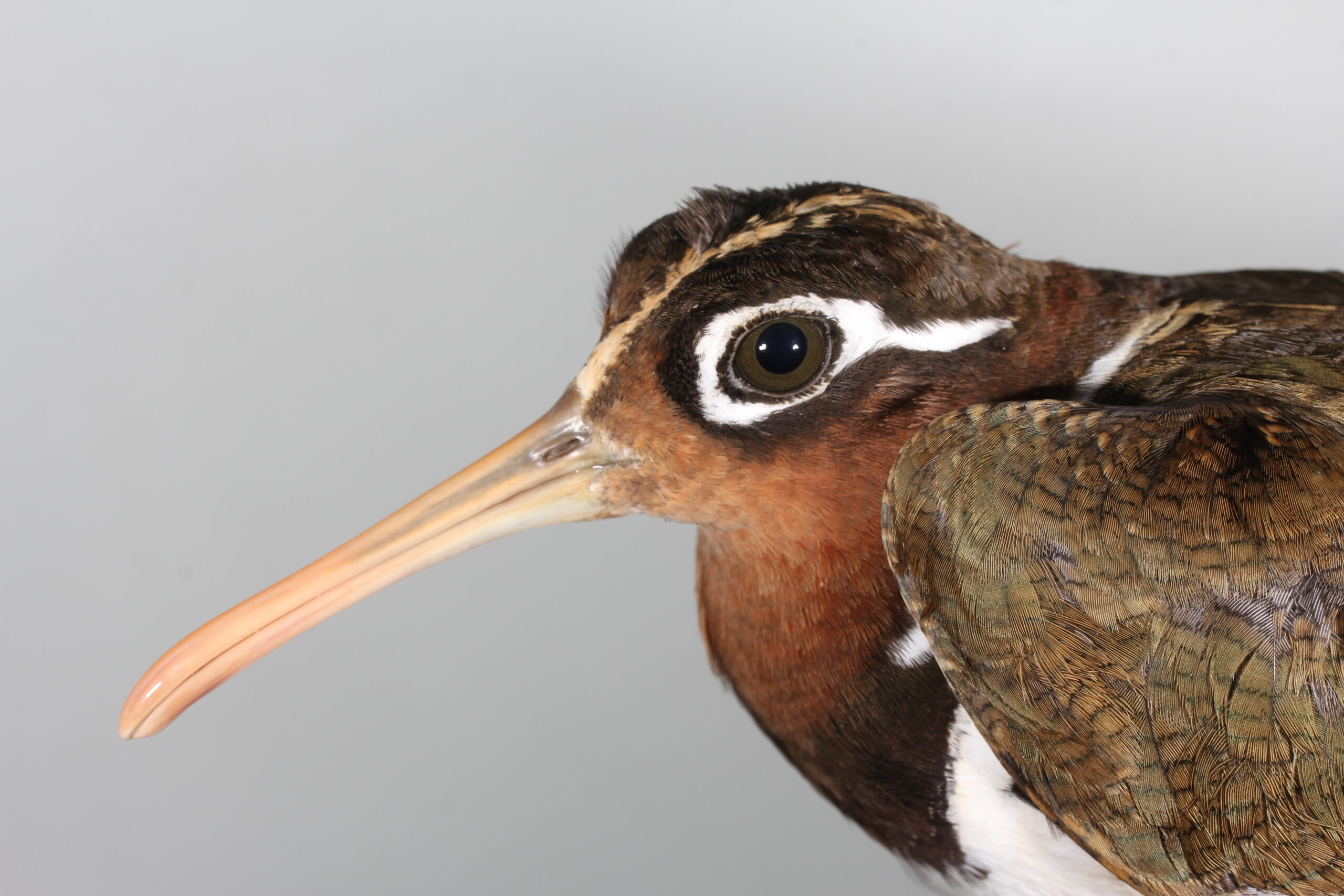



Today was our last Wetland Ringing session of the year, and dawned bright and cold.
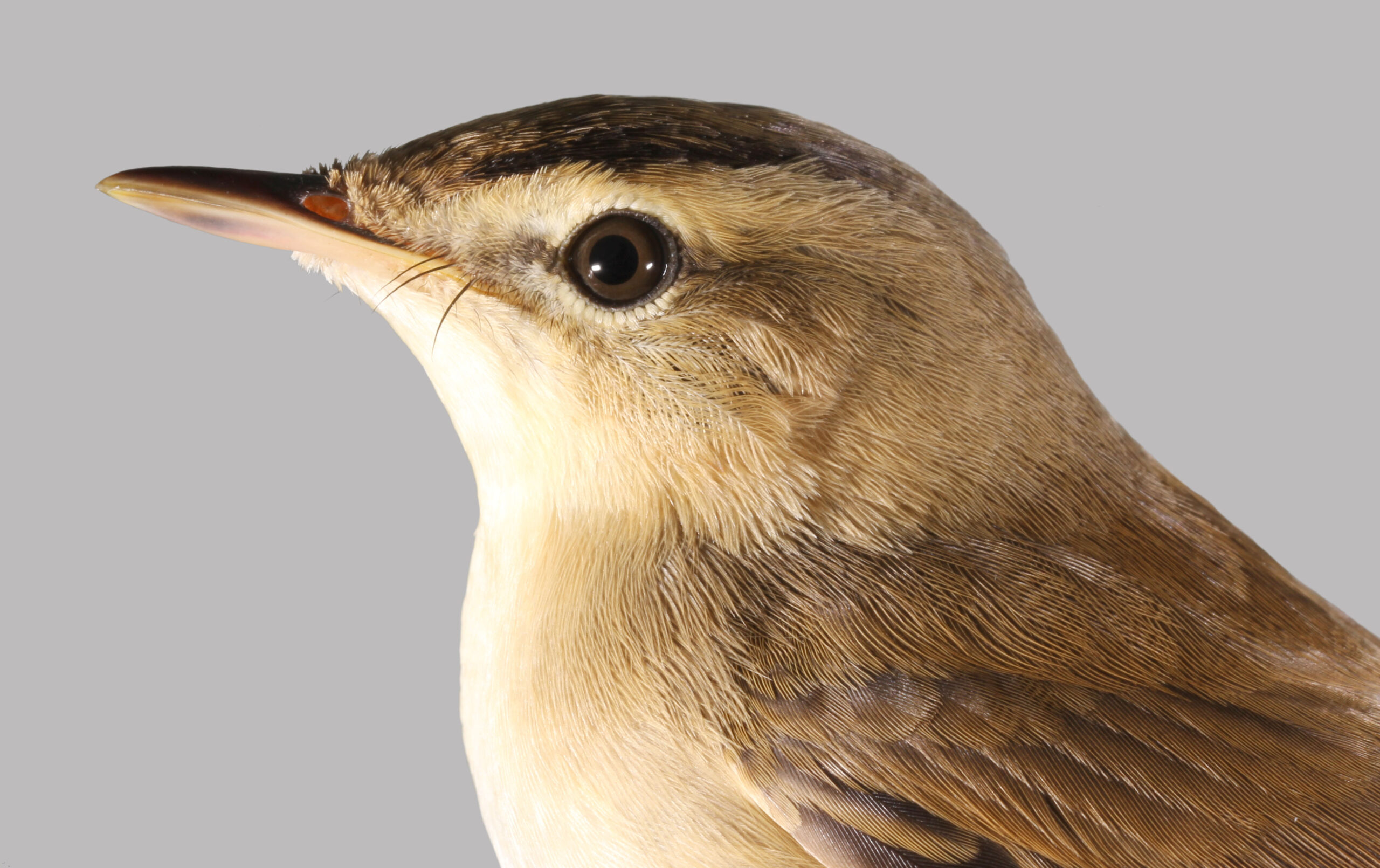
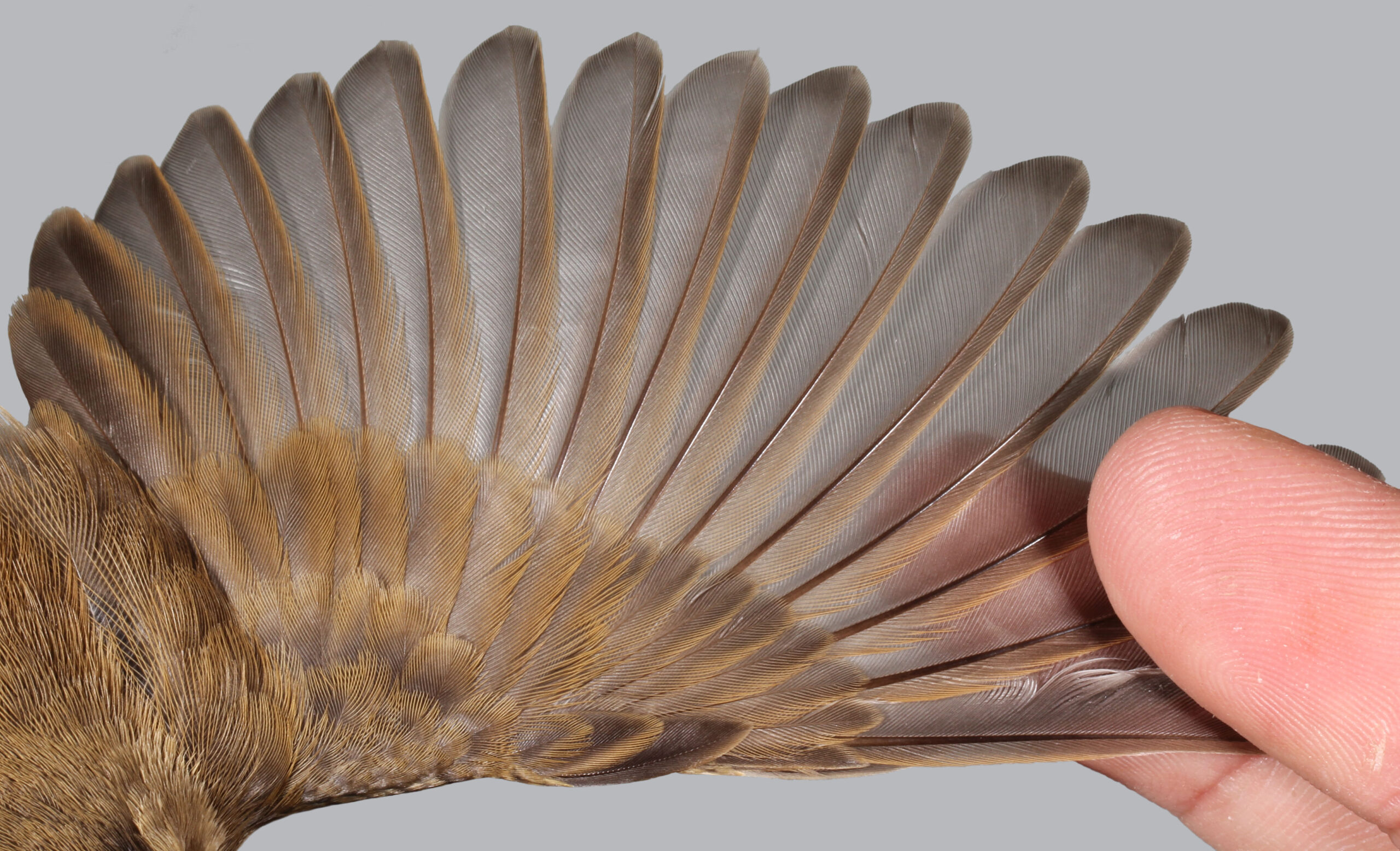
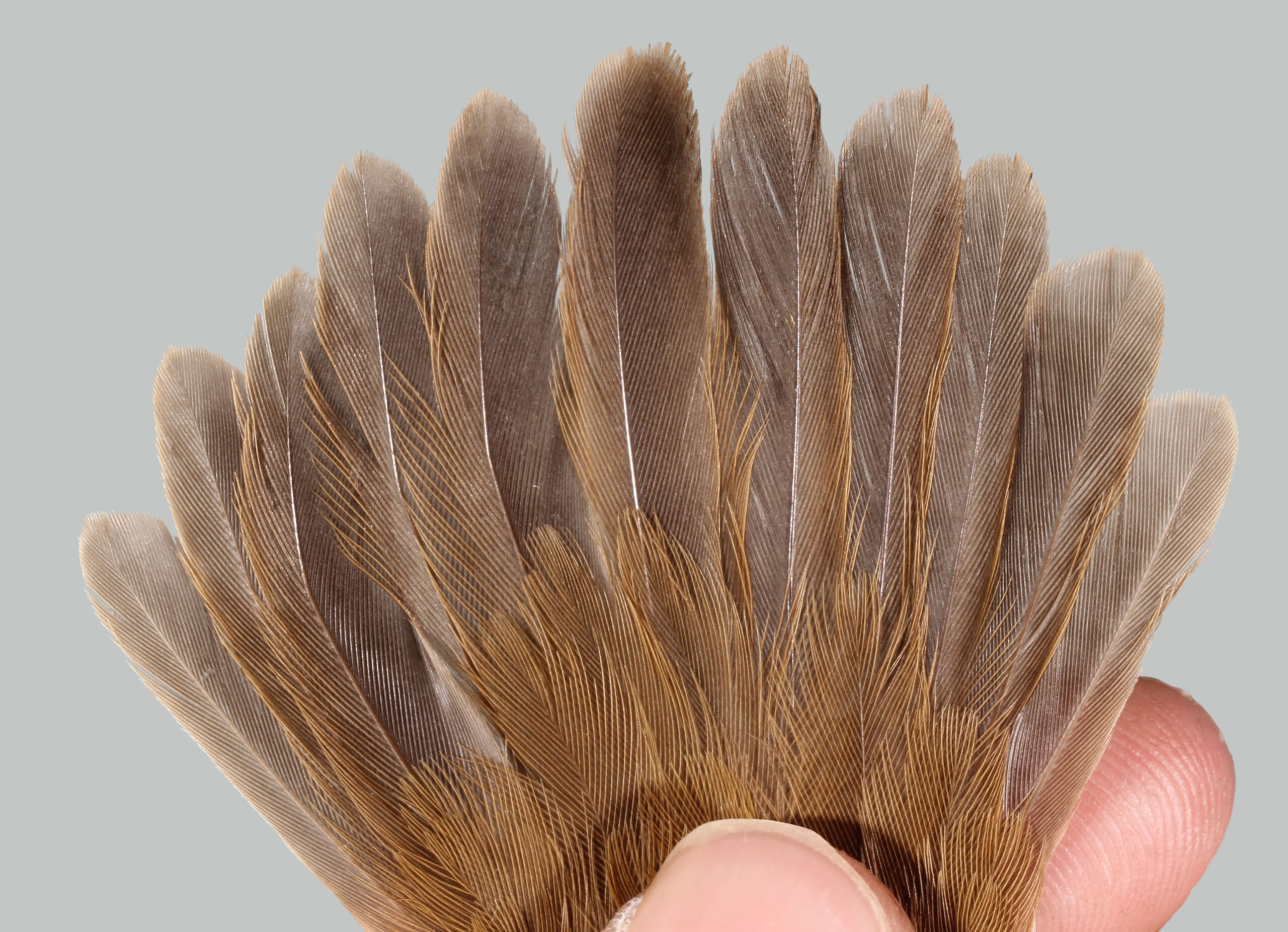
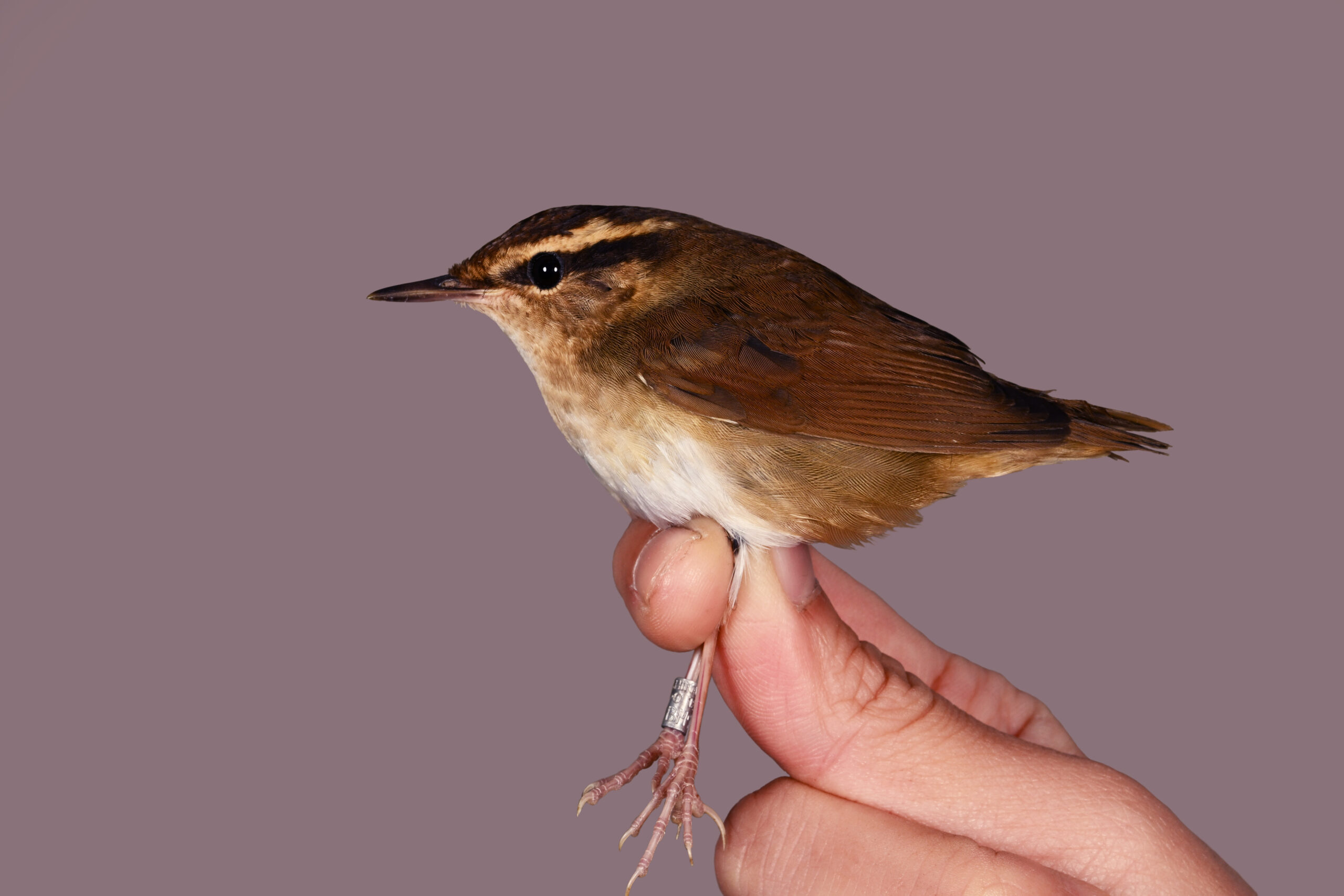
The winter migrants have officially arrived, with a beautiful Black-browed Reed Warbler starting off the day! We catch quite a few of these, but now, in November, they insist on taking a lot of energy and thought to properly age. Both adults and juveniles undertake a Summer Complete moult, leaving a fresh, nice, uniform and glossy plumage. This means that to age them we must use other characteristics, such as iris colour and skull pneumatisation- both characteristics that require some level of caution. However, some individuals, like the one above may show all adult-type characteristics. Since we do not know the earliest time for juveniles to look like this, we can only age it as a 1st calendar year or older.
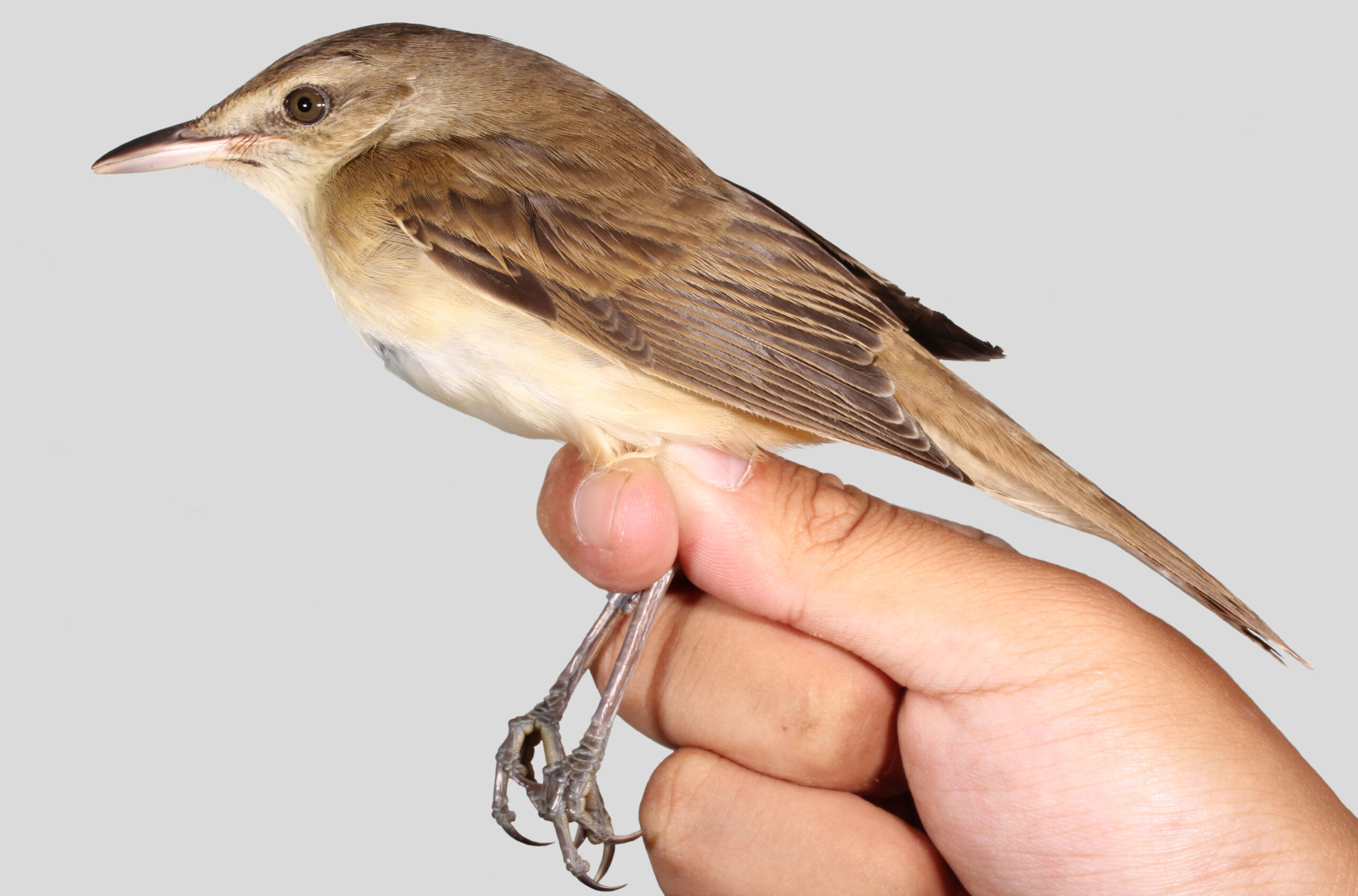
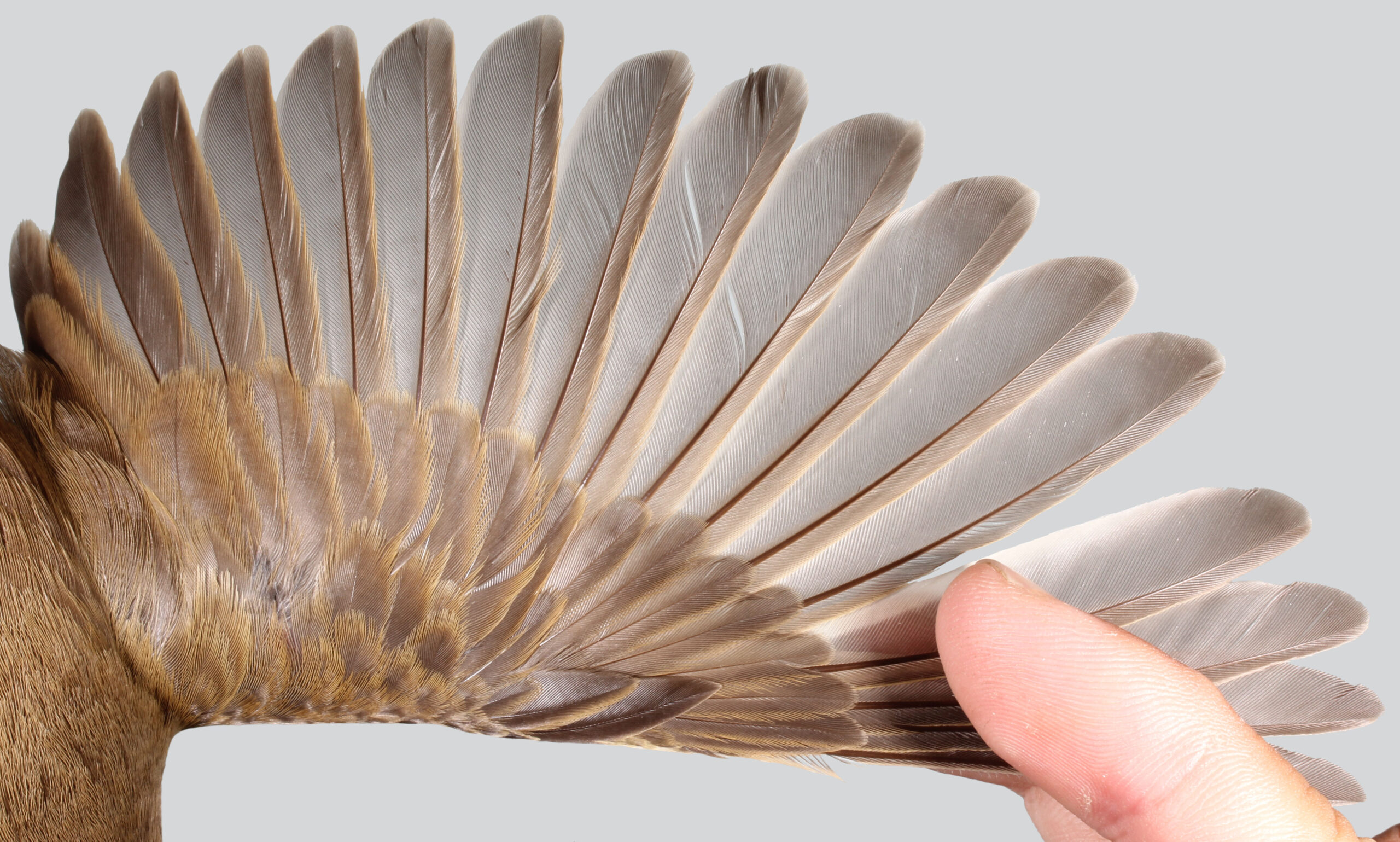
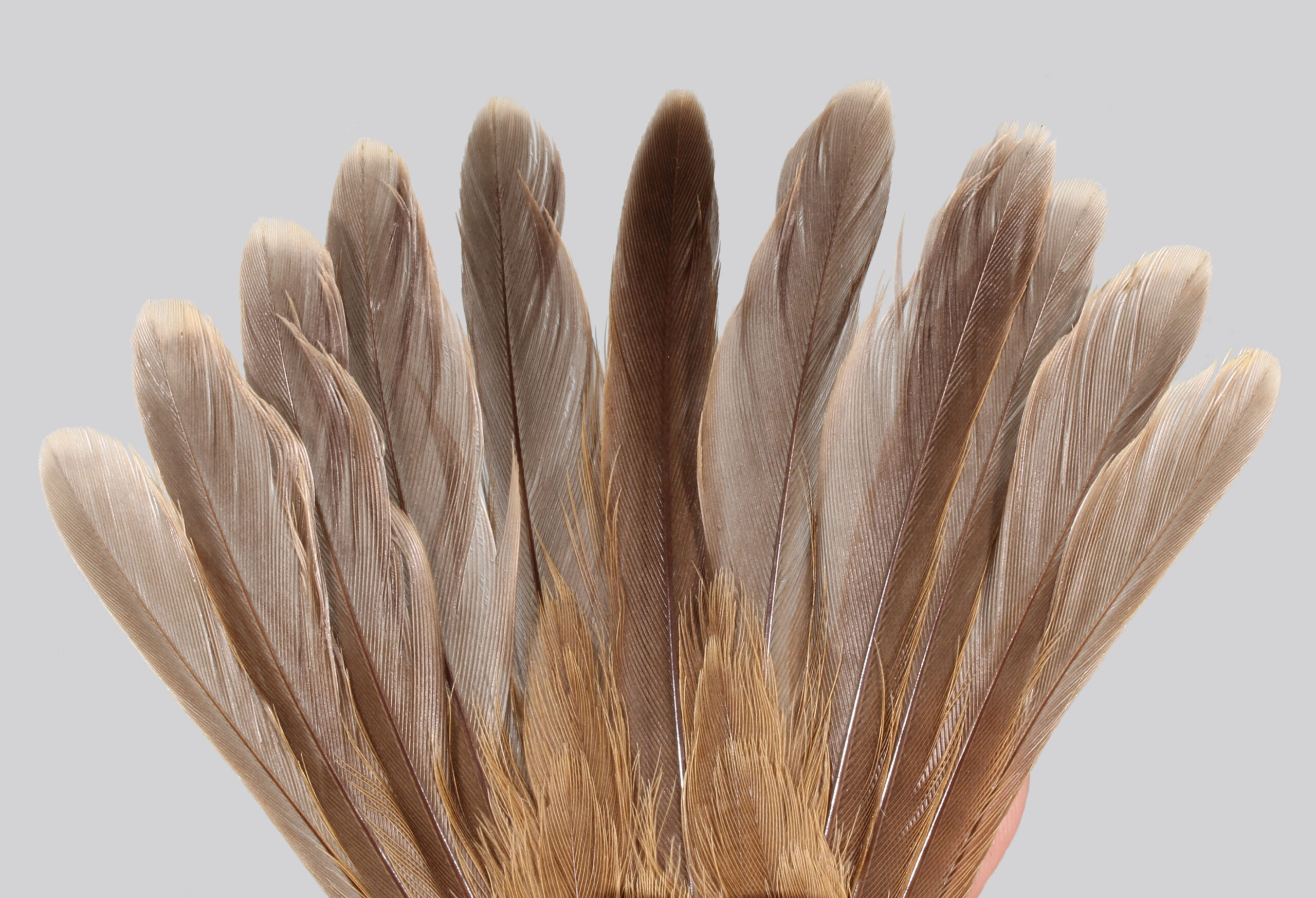
Next up, with a similarly head-pounding moult strategy (adults and juveniles Summer Complete), was an Oriental Reed Warbler. Though these are also in the Reed Warbler family, they are much larger and heavier than any of our other warblers in Hong Kong. These are also aged using skull development and iris colour (though the reliability of this has come under serious question), see below for the adult-type iris (left) and juvenile (right).
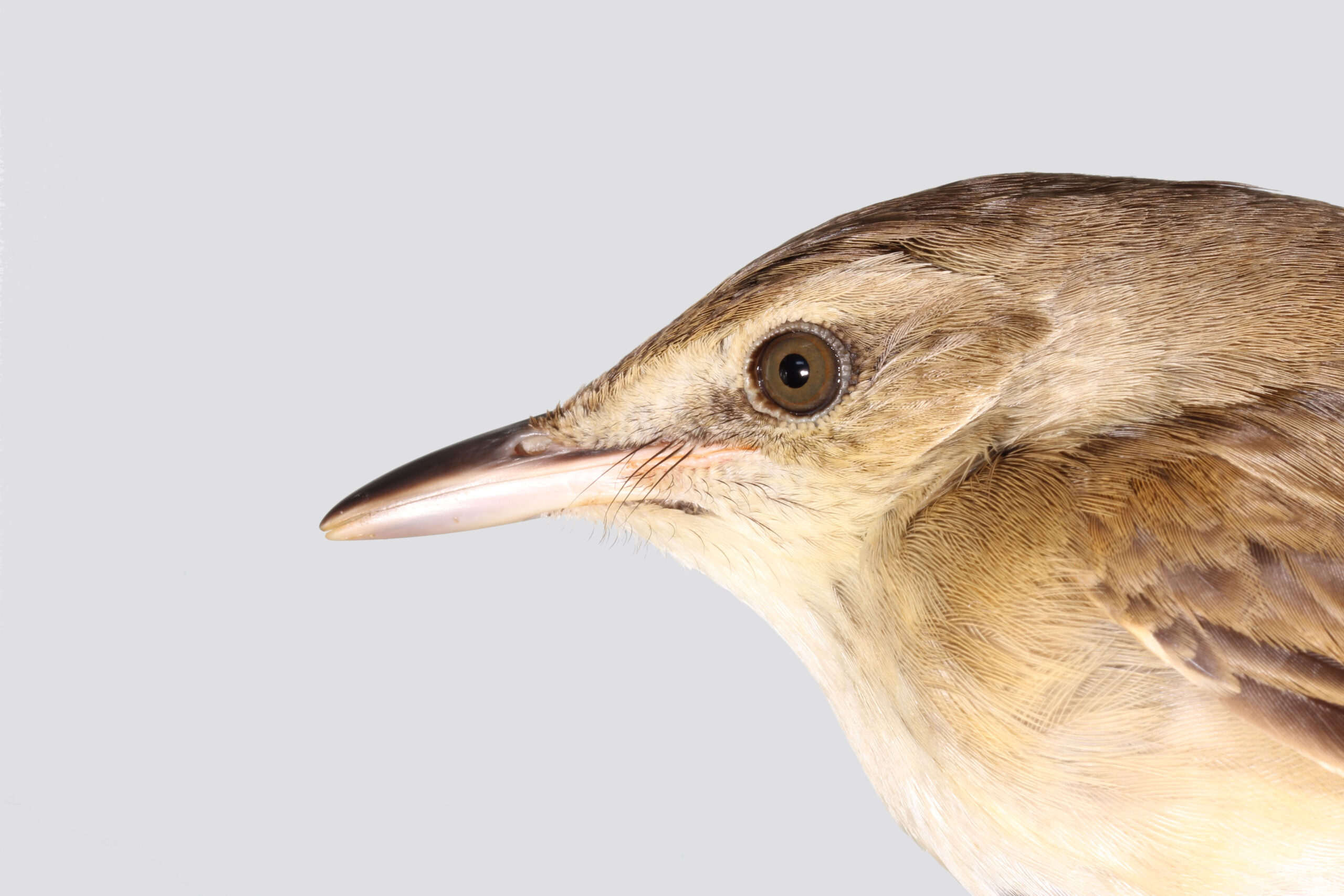
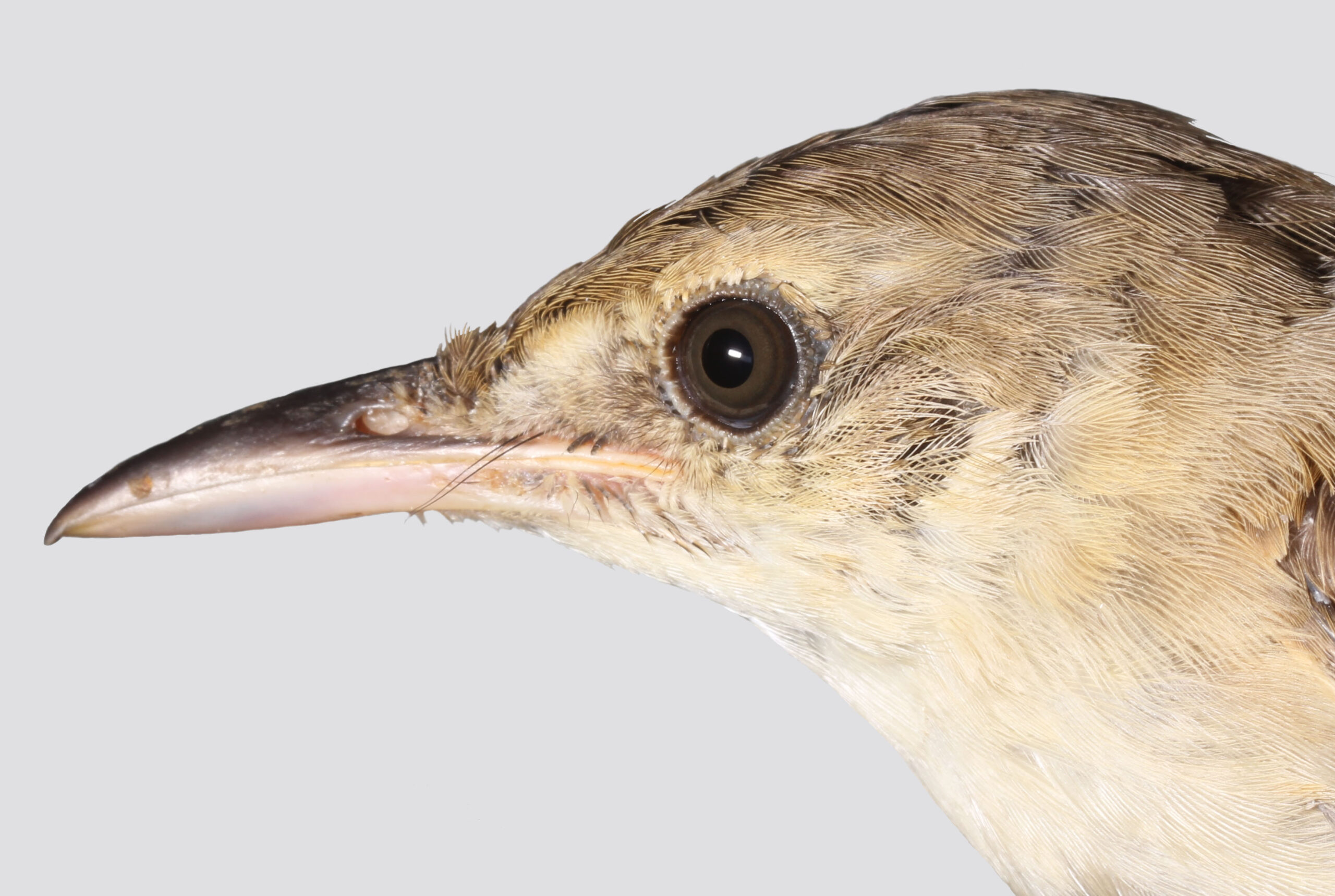
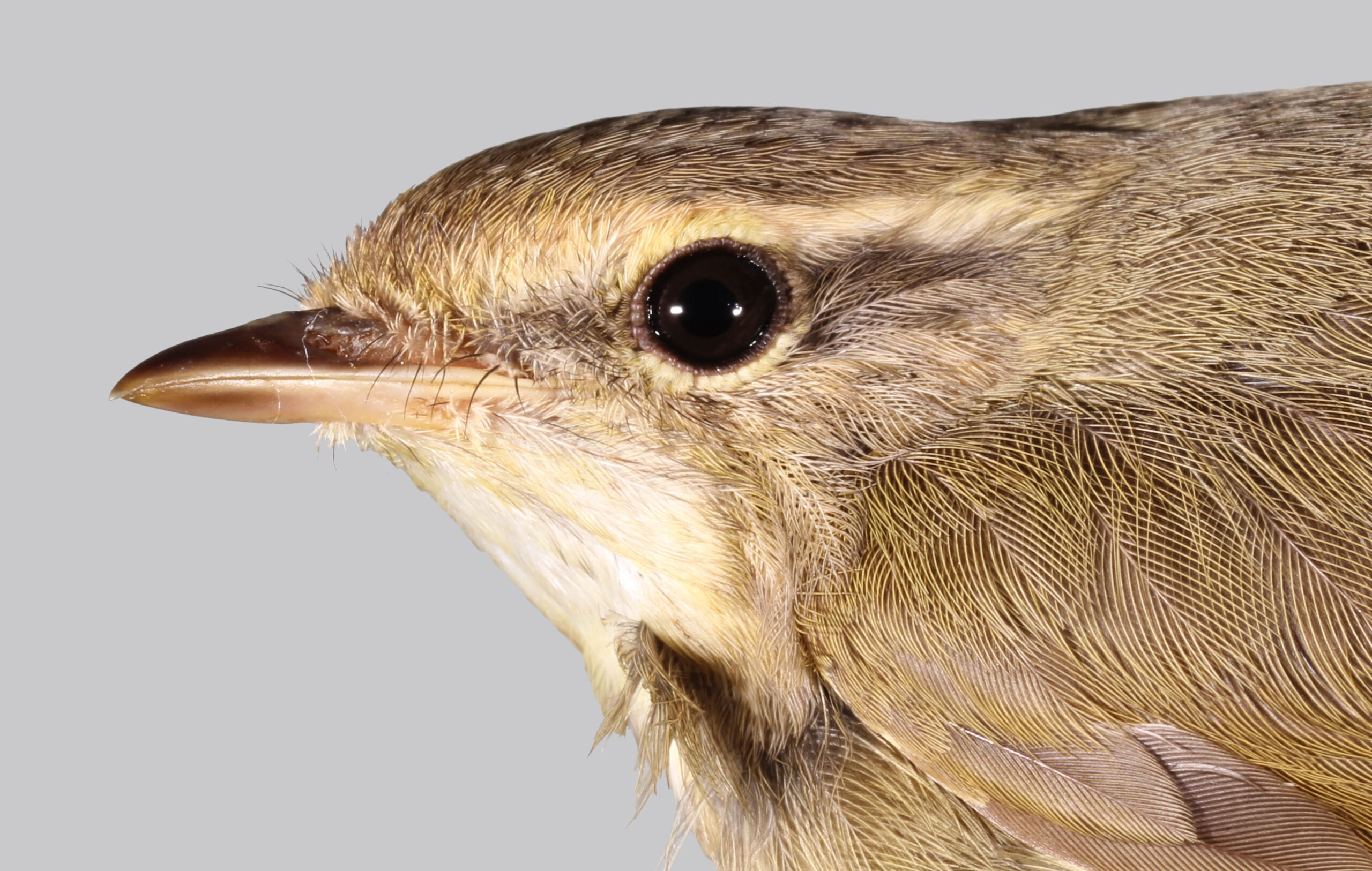
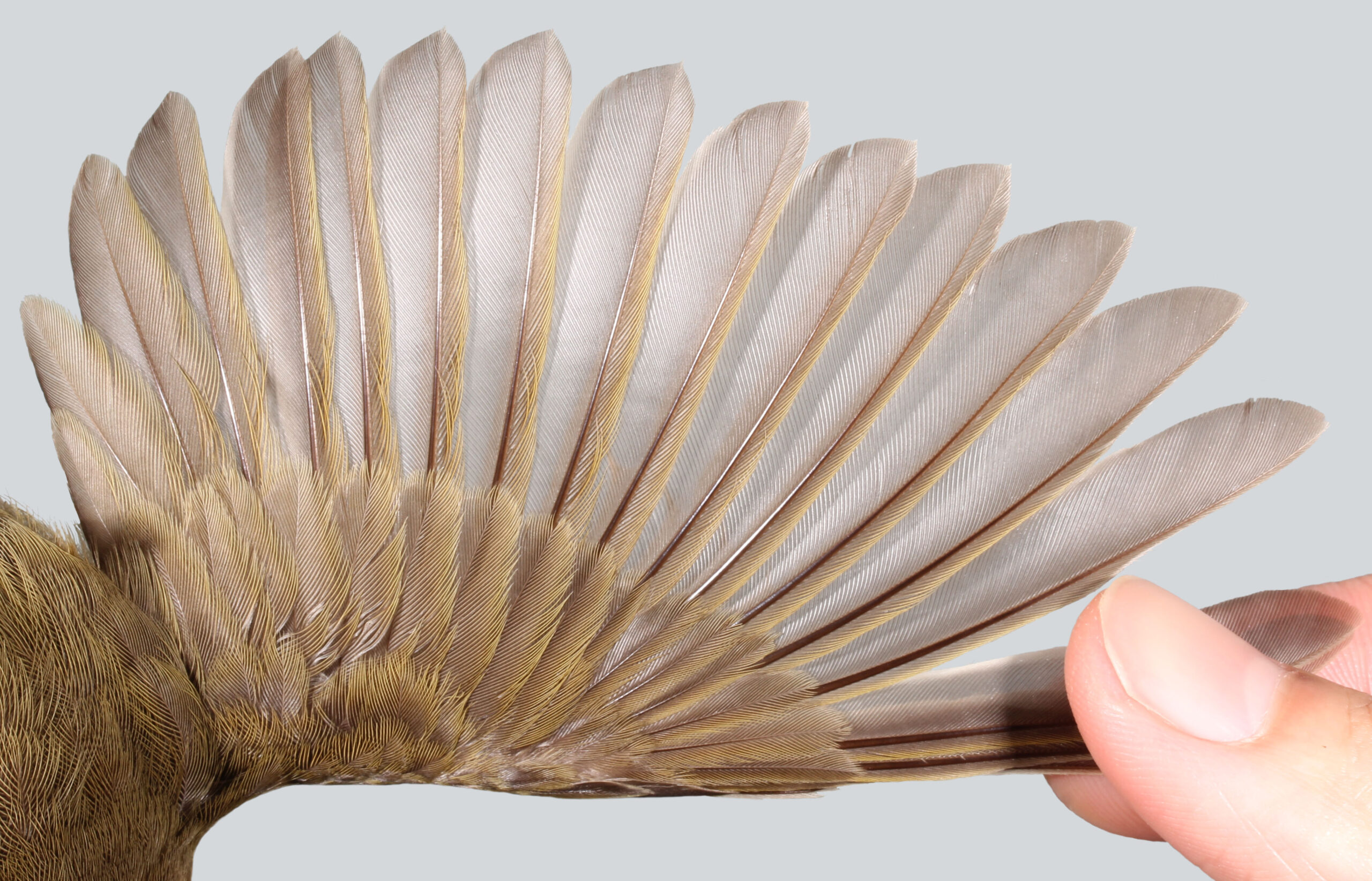
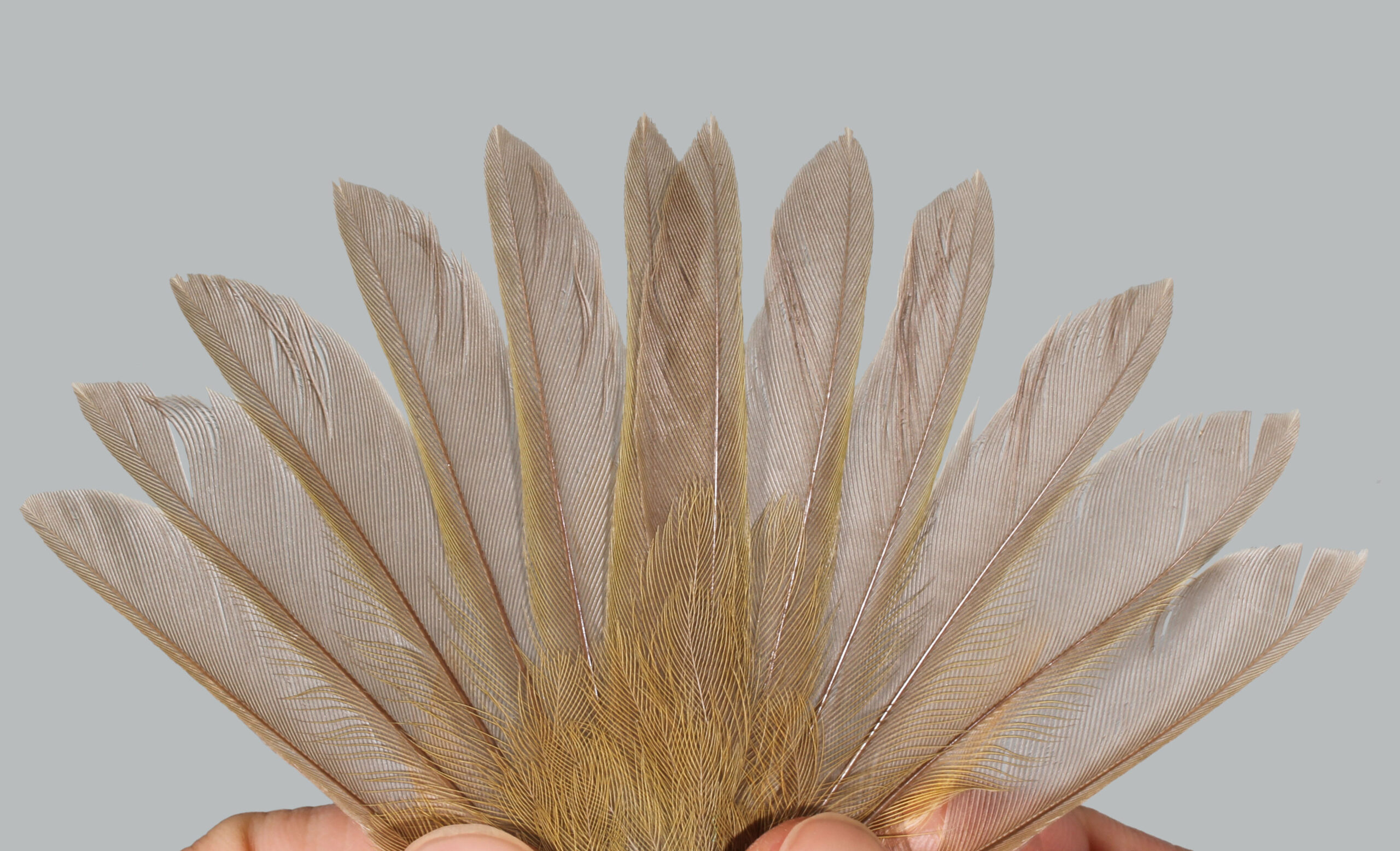
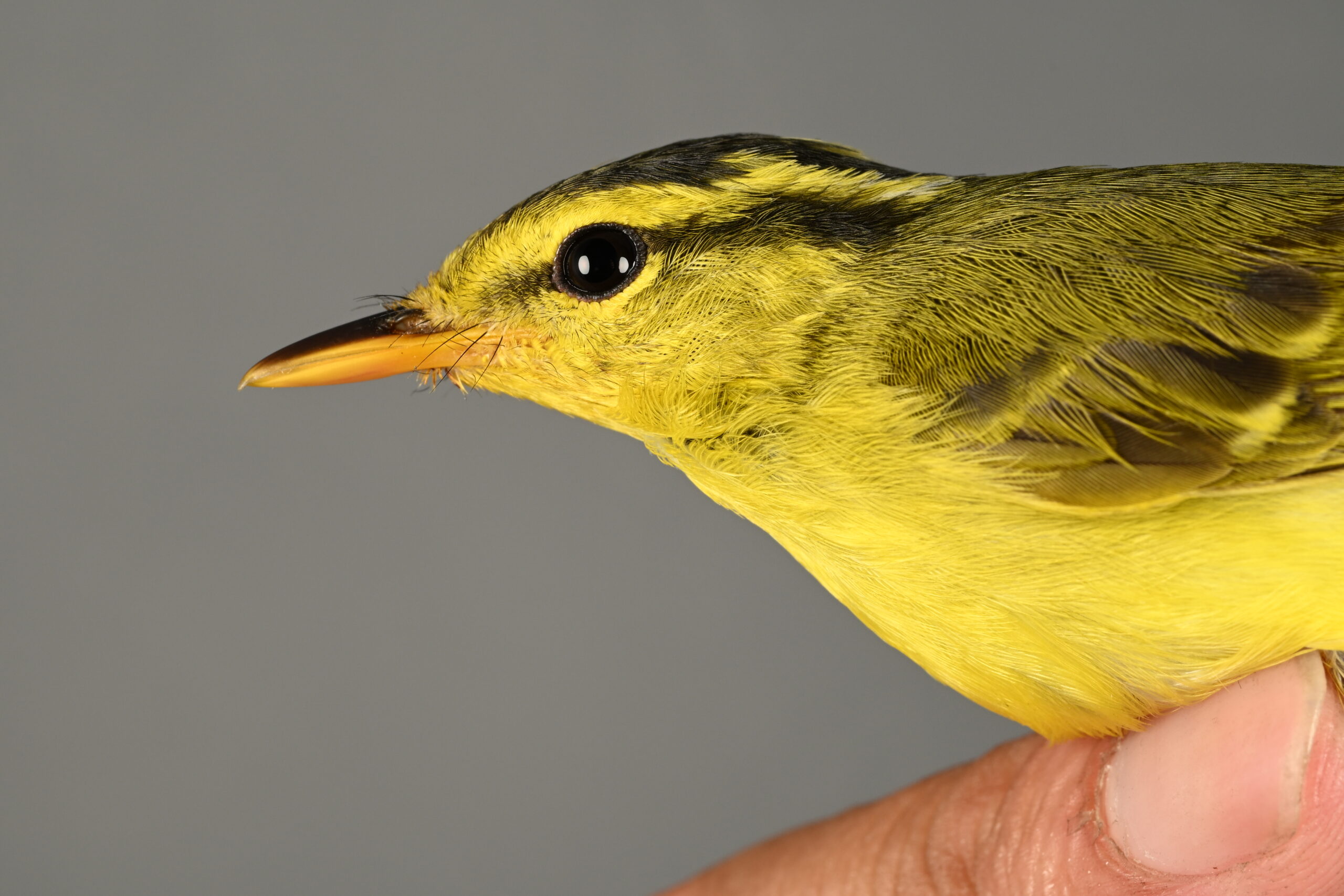
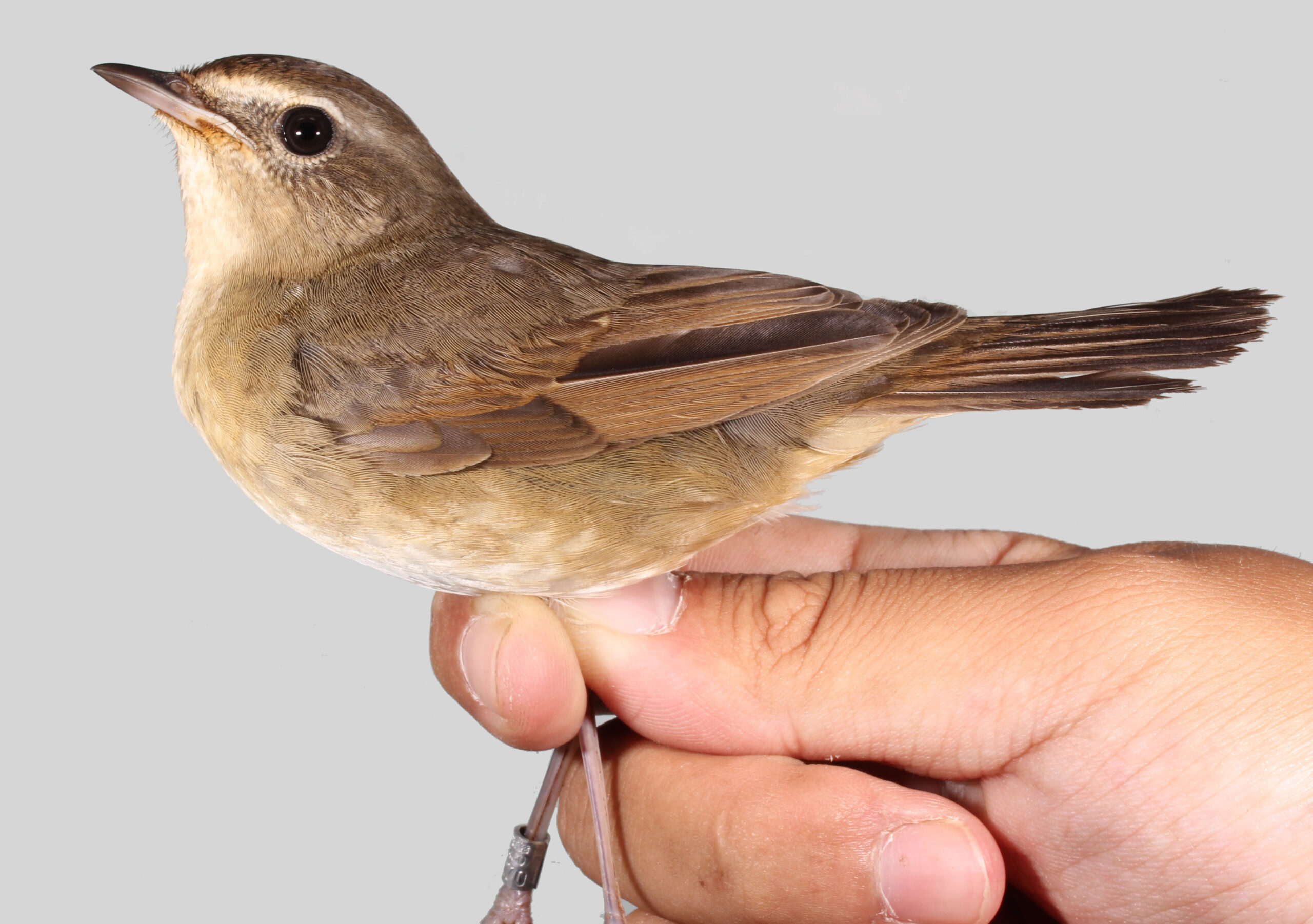
The day drew on, bringing a multitude of our familiar residents, as well as another migrant- one of our rarer species-, the Radde’s Warbler! These are similar to our more common winter visitor, the Dusky Warbler, however they are larger and longer winged, with their supercilium (eyebrow streak) being more buffish and diffused in front of the eye. They are aged in a pretty similar way to the Dusky- that is, by examining the tail shape (pointier= juvenile, more rounded and denser= adult), and the quality of the undertail coverts. Through this, we could determine that our individual (above) was a 1st calendar year bird.
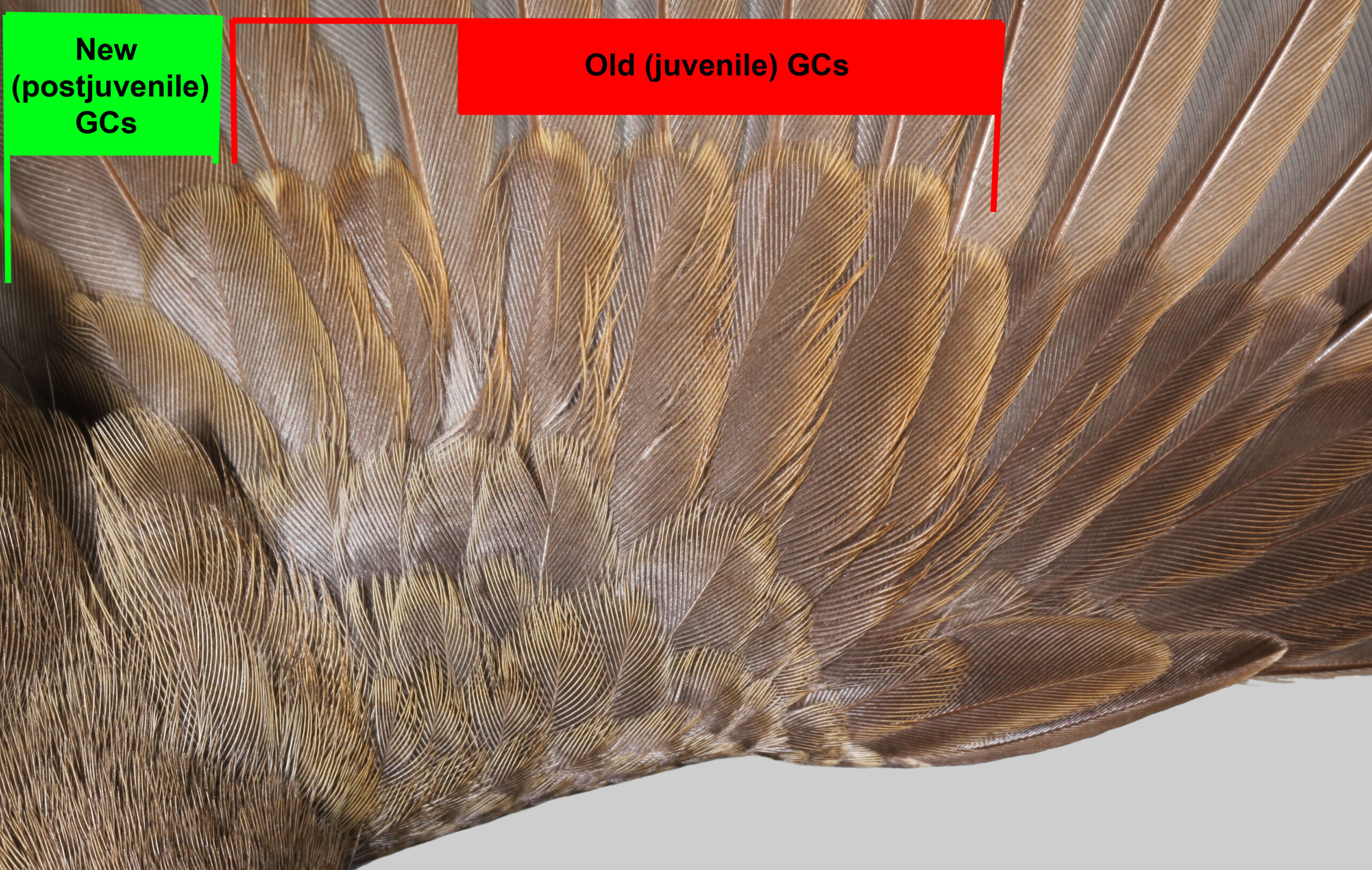
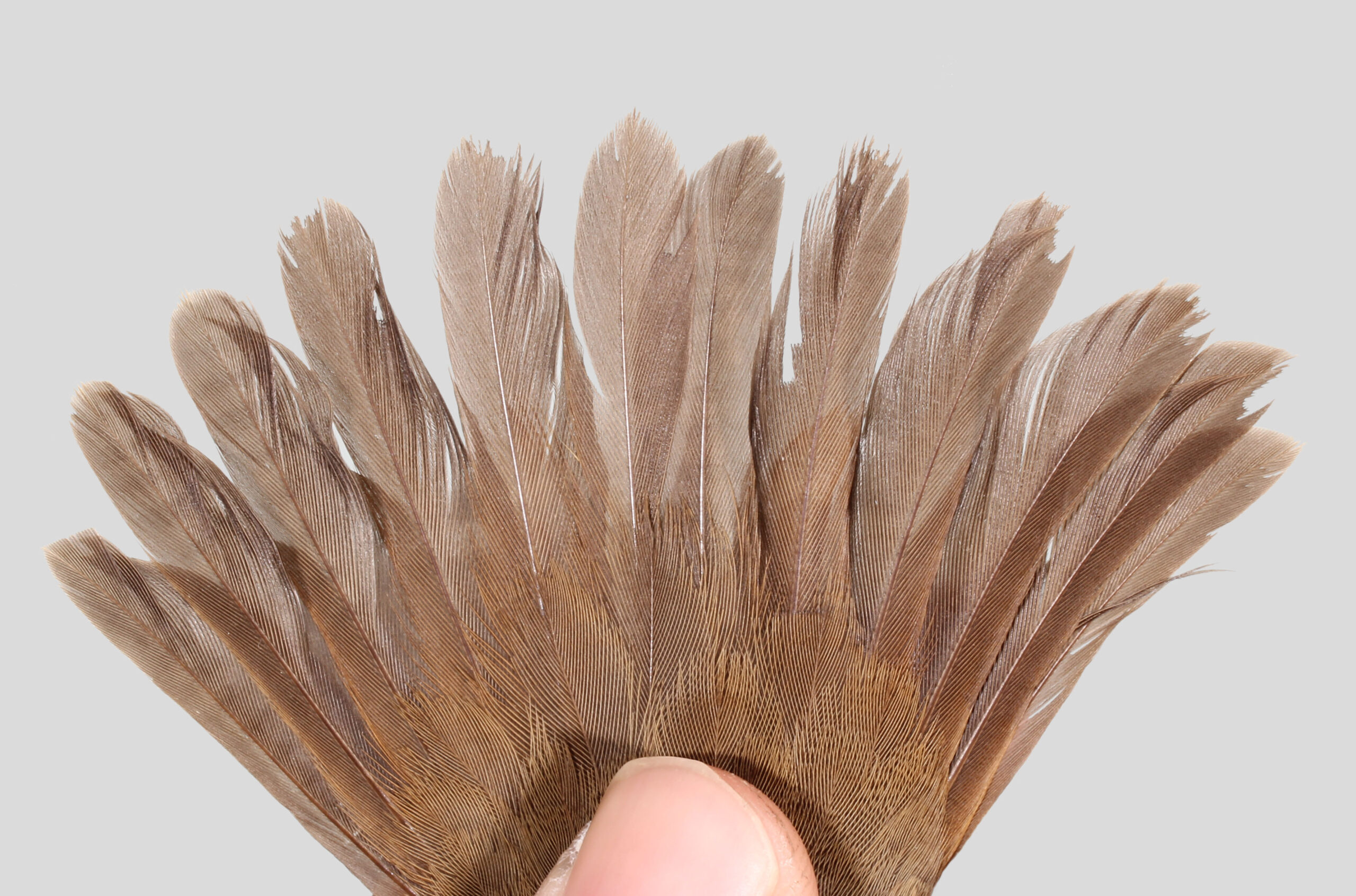
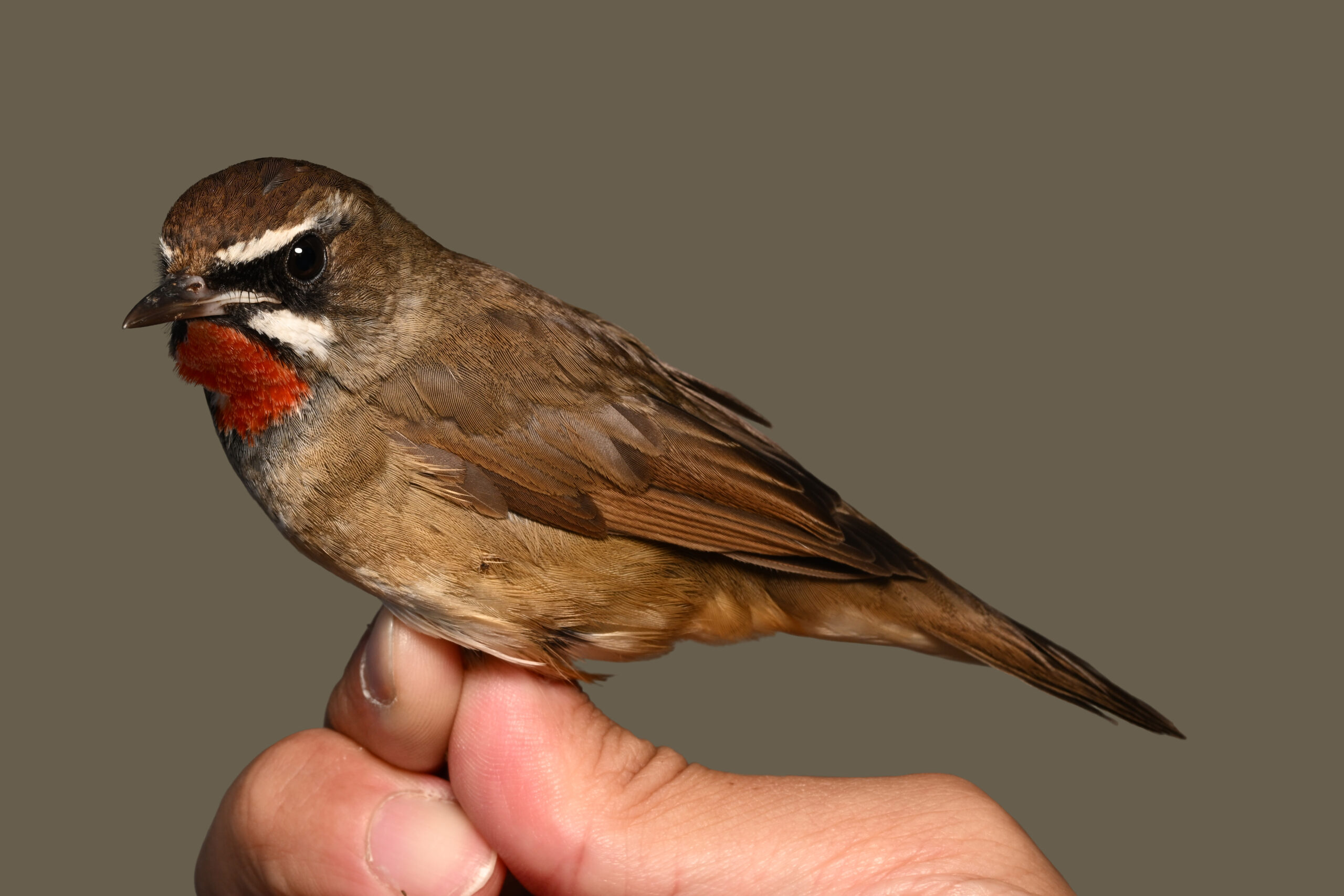
Finally, we were hit with a group of one of my favourite migrants- the Rubythroats! These unmistakeable gorgeous little birds can be heard calling their long and melancholy whistle among the reeds. If spotted, both adults and Young males exhibit a flash of distinct ruby red on their throats (hence the name).
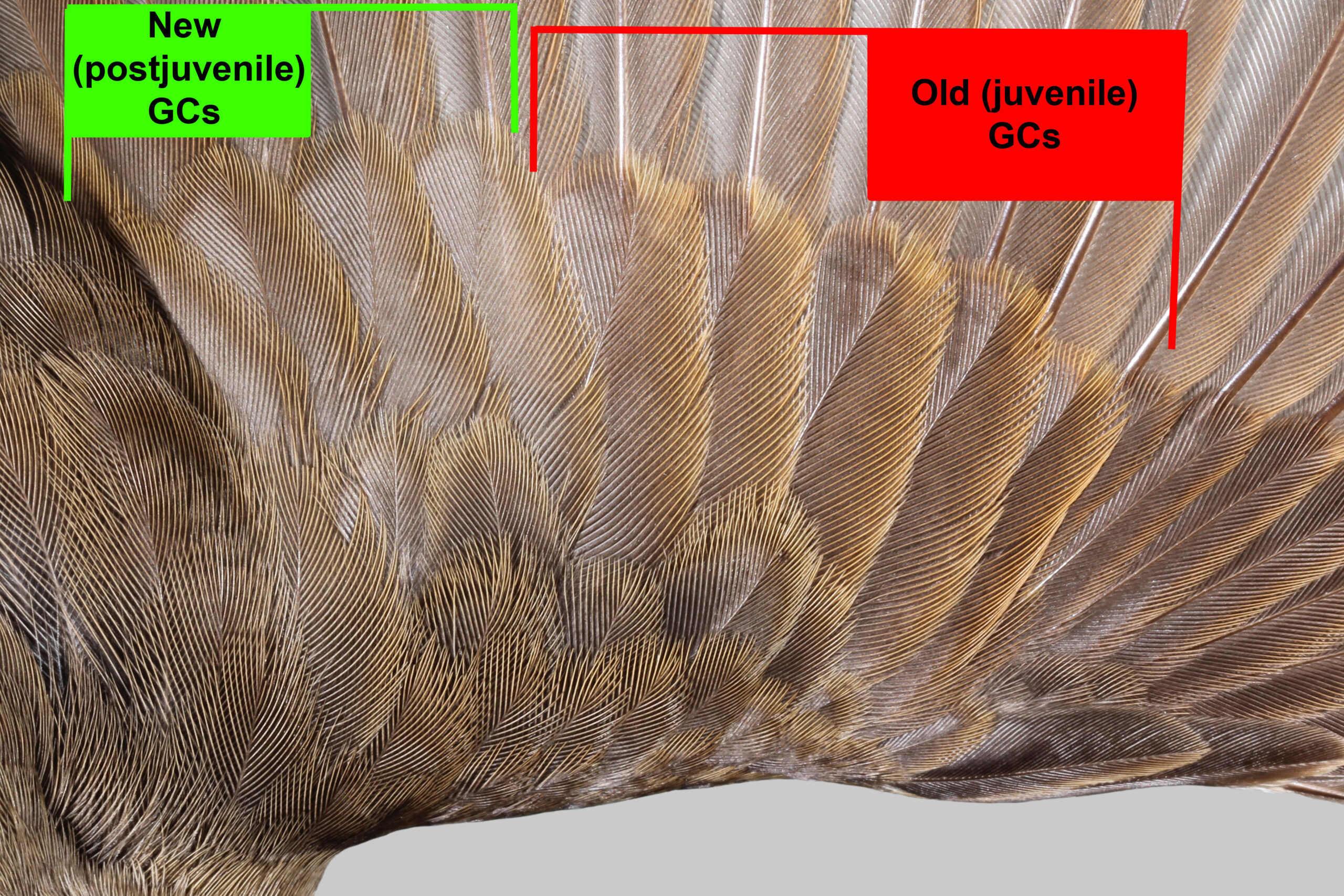
This species can be easy to age, both in hand and in the field if the Greater Coverts can be closely examined (I.e. good photos needed). They have the same moult strategy as Robins, Thrushes, Chats etc., in that the adults undertake a Summer Complete moult, while the juveniles carry out a summer partial. The limit between the juvenile and postjuvenile feathers is usually identified within the Greater Coverts, as can be seen in the individual above and below.
Once the have been determined to be 1st calendar year birds, all that is left is to see if the red is present in the throat or not. If not, as seen above, we can see that this is a young female. If yes, as below, then it is a young male.
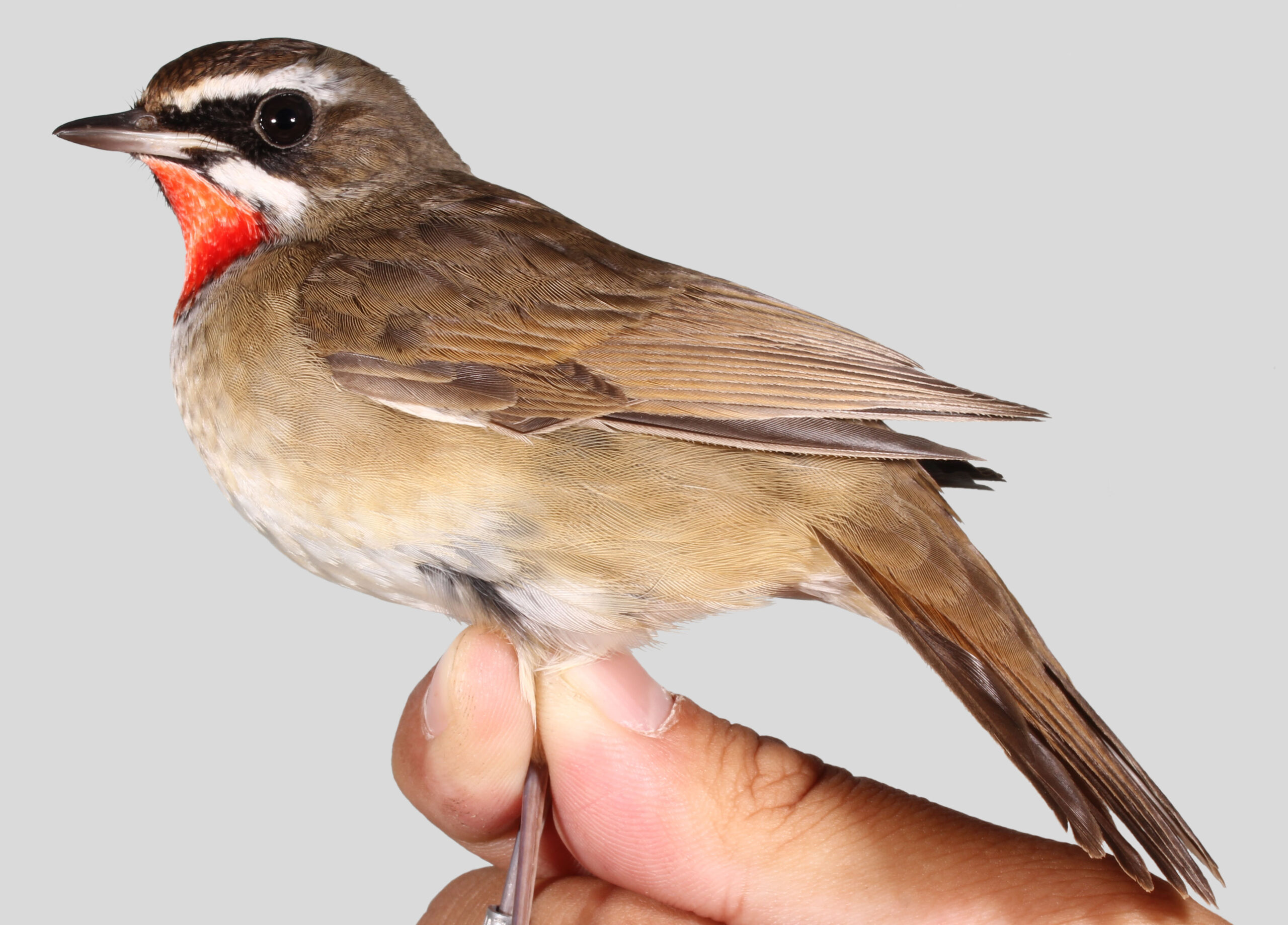
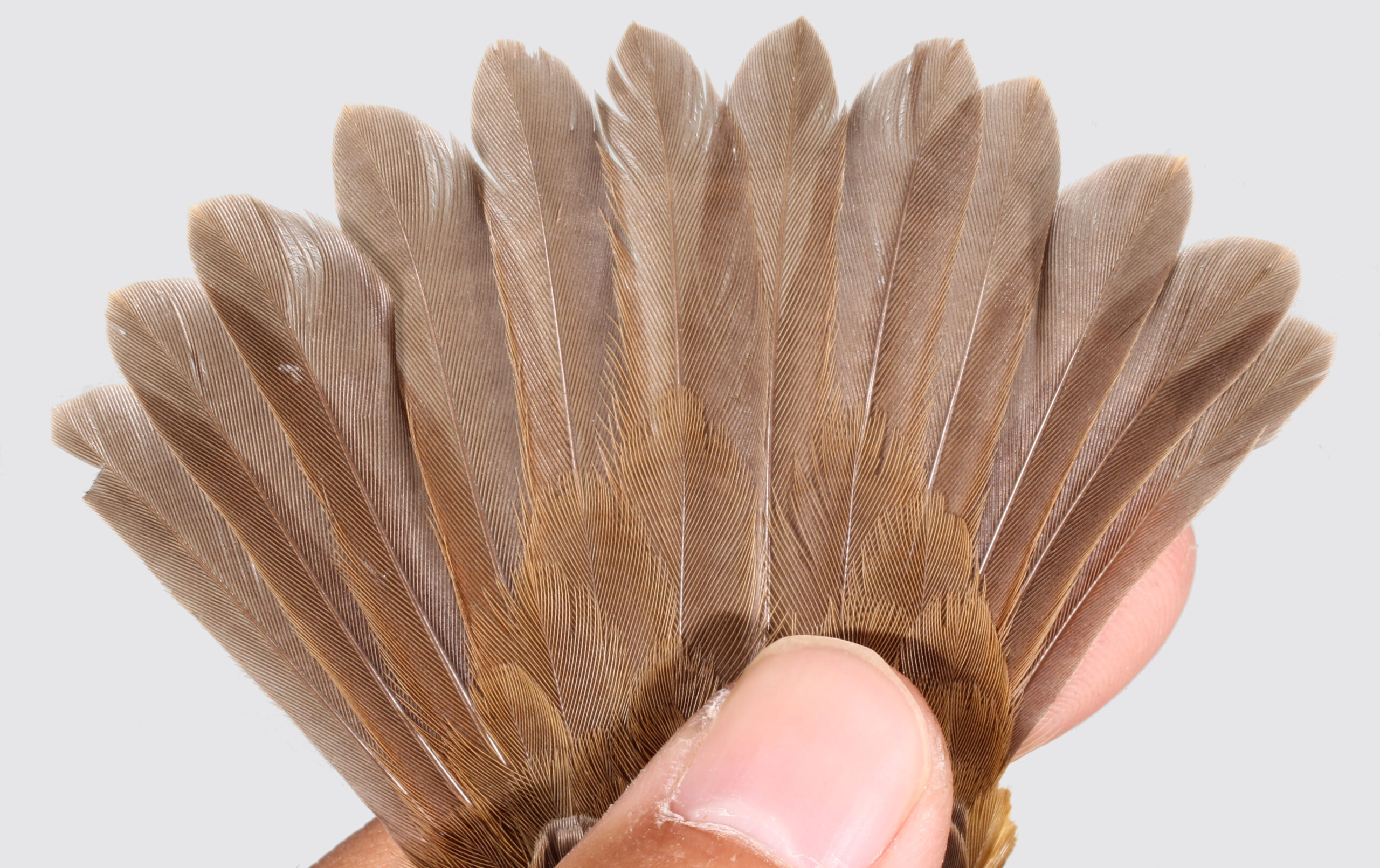
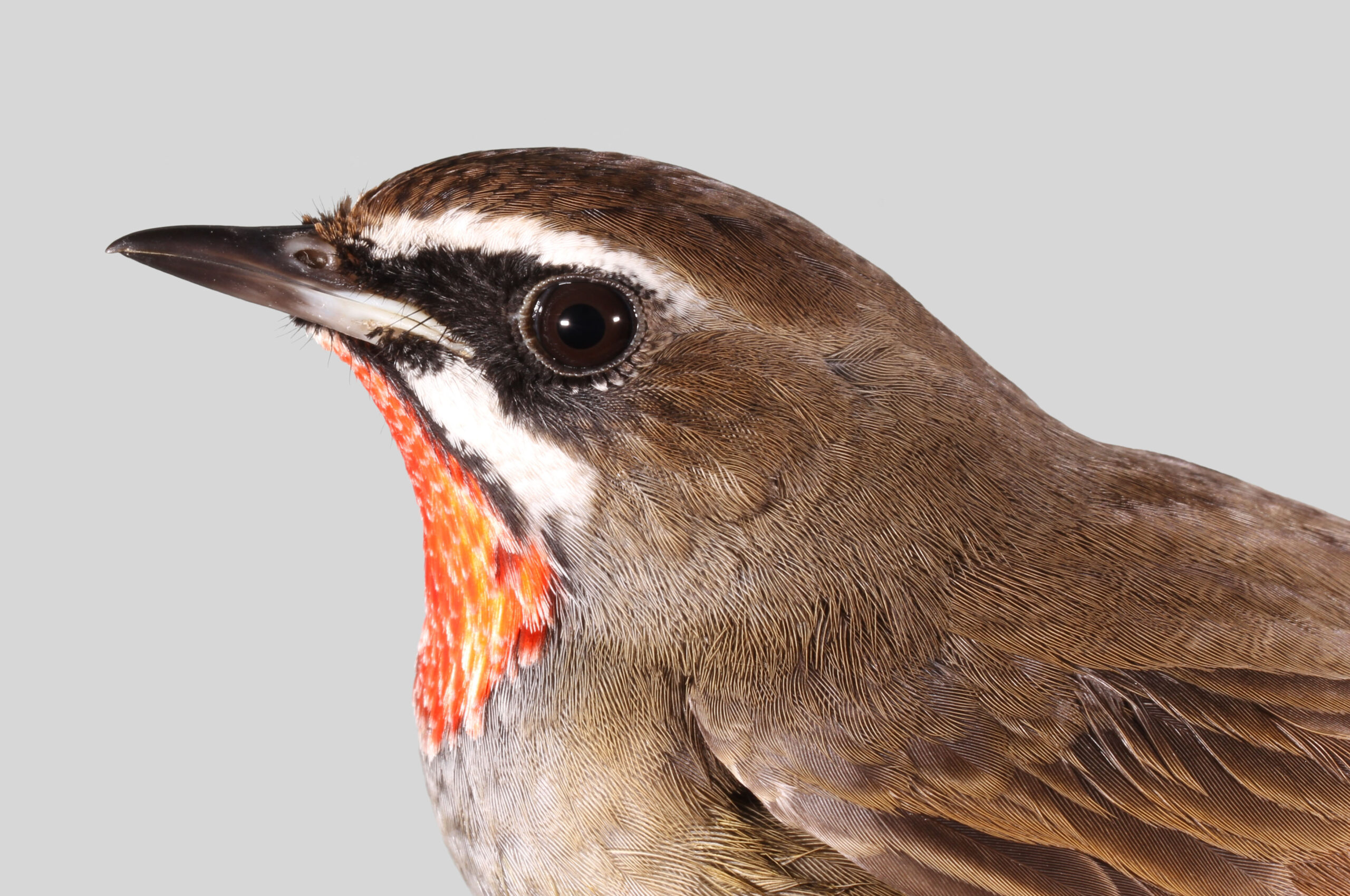
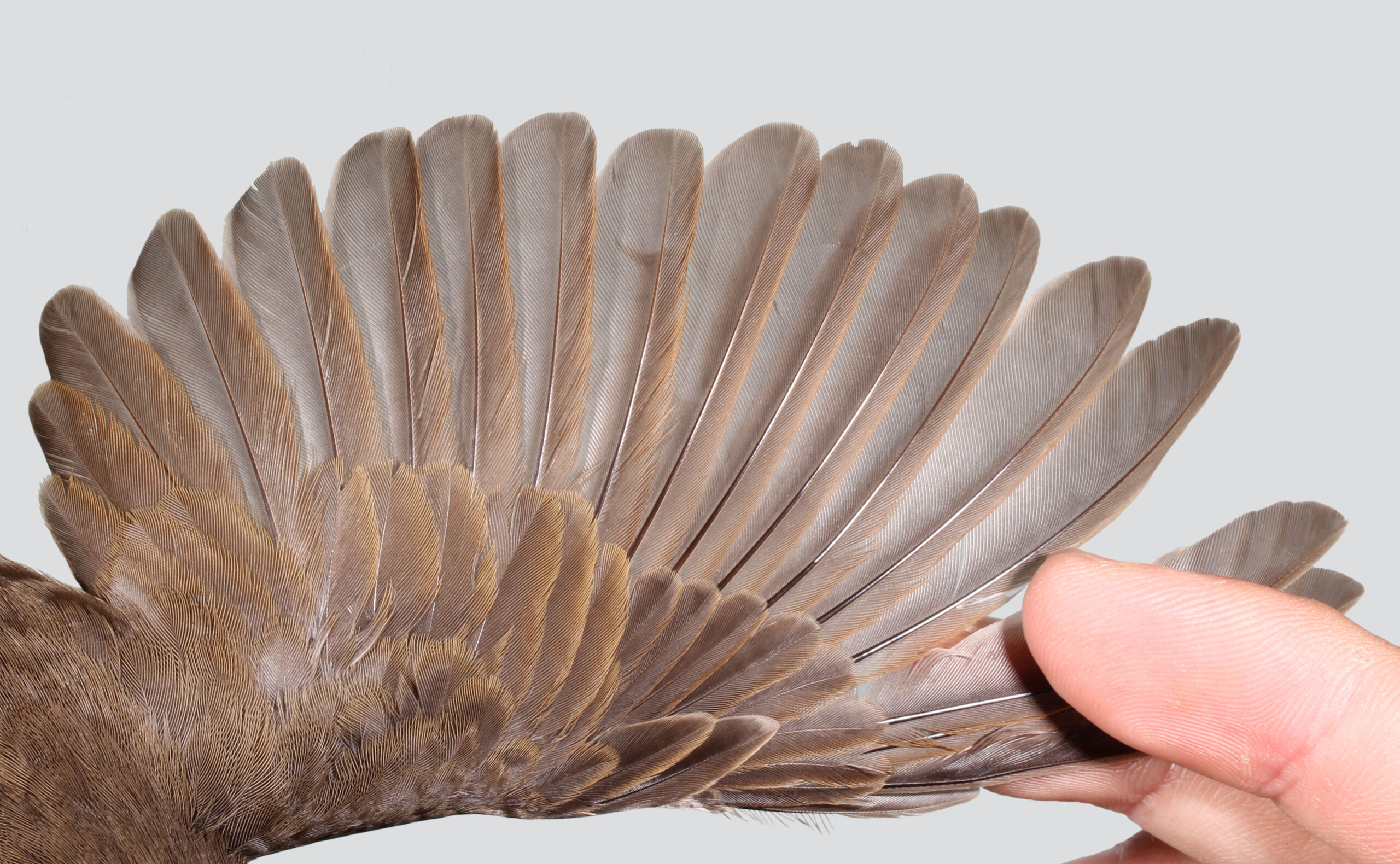
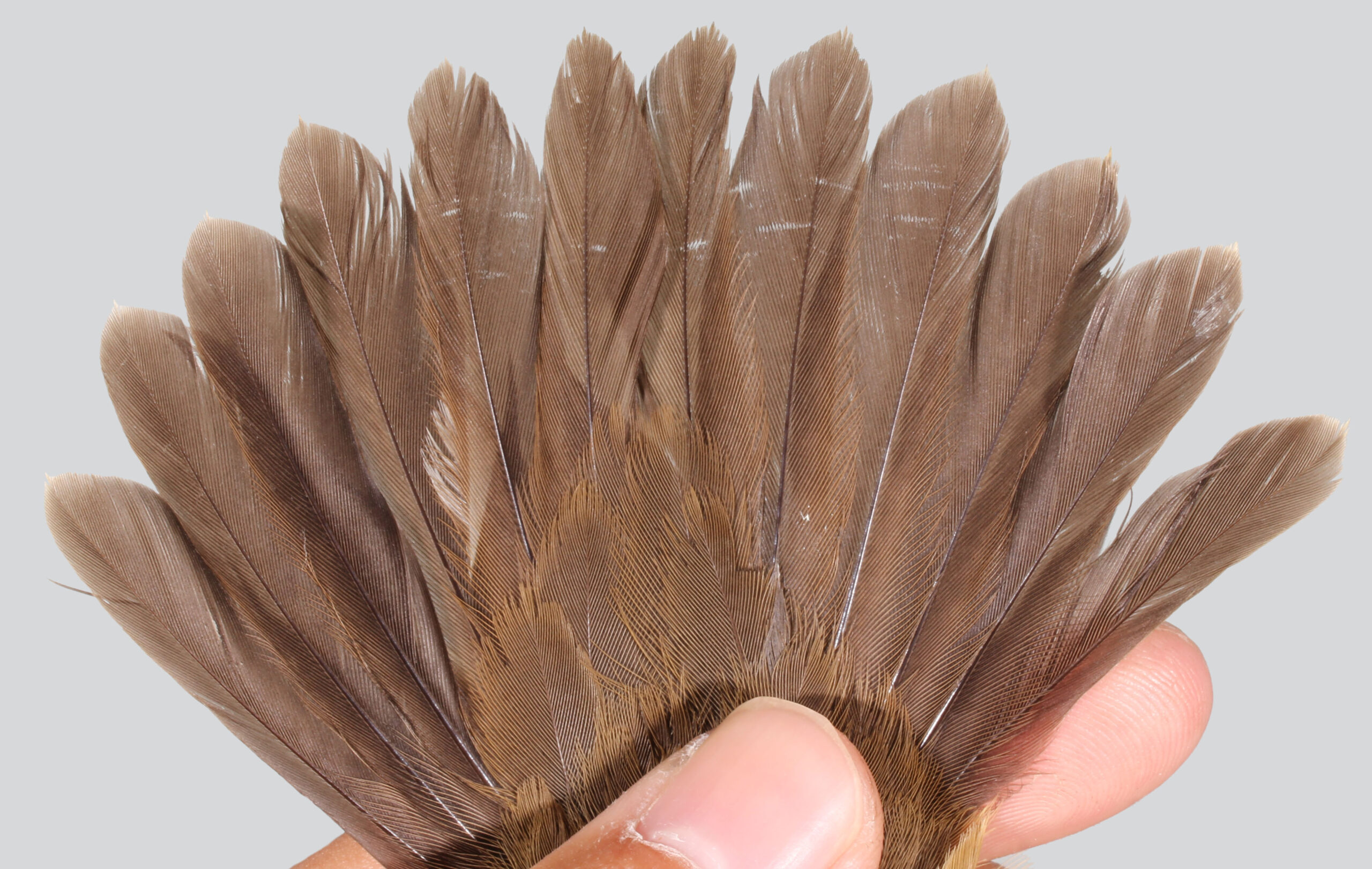
Finally, we had an individual that did not show any moult limits, but instead had an entirely nice and uniform plumage. This individual is an adult. Again, the extensive amount of red in the throat, and clear black and white contrast around the eye allowed us to ID this as a gorgeous adult male. What a wonderful day!
Daily Totals
| Species | Original | Recapture |
| Black-browed Reed Warbler | 2 | 0 |
| Chinese Penduline Tit | 18 | 0 |
| Cinereous Tit | 1 | 0 |
| Common Snipe | 1 | 0 |
| Daurian Redstart | 2 | 0 |
| Dusky Warbler | 11 | 3 |
| Oriental Reed Warbler | 1 | 0 |
| Plain Prinia | 2 | 3 |
| Radde’s Warbler | 1 | 0 |
| Red-whiskered Bulbul | 1 | 0 |
| Scaly-breasted Munia | 5 | 0 |
| Siberian Rubythroat | 4 | 1 |
| Swinhoe’s White-eye | 3 | 0 |
| Yellow-bellied Prinia | 1 | 3 |
| Yellow-browed Warbler | 3 | 0 |
| Chinese Bush Warbler | 1 | 0 |
*Please note that all wild birds, their nests, and eggs are highly protected (under Wild Animals Protection Ordinate, Cap. 170) in Hong Kong. It is an offence to wilfully disturb, take, remove, or injure wild birds or their nests/eggs. The actions described here were undertaken by trained professionals holding the necessary licenses and permits issued by the AFCD.*