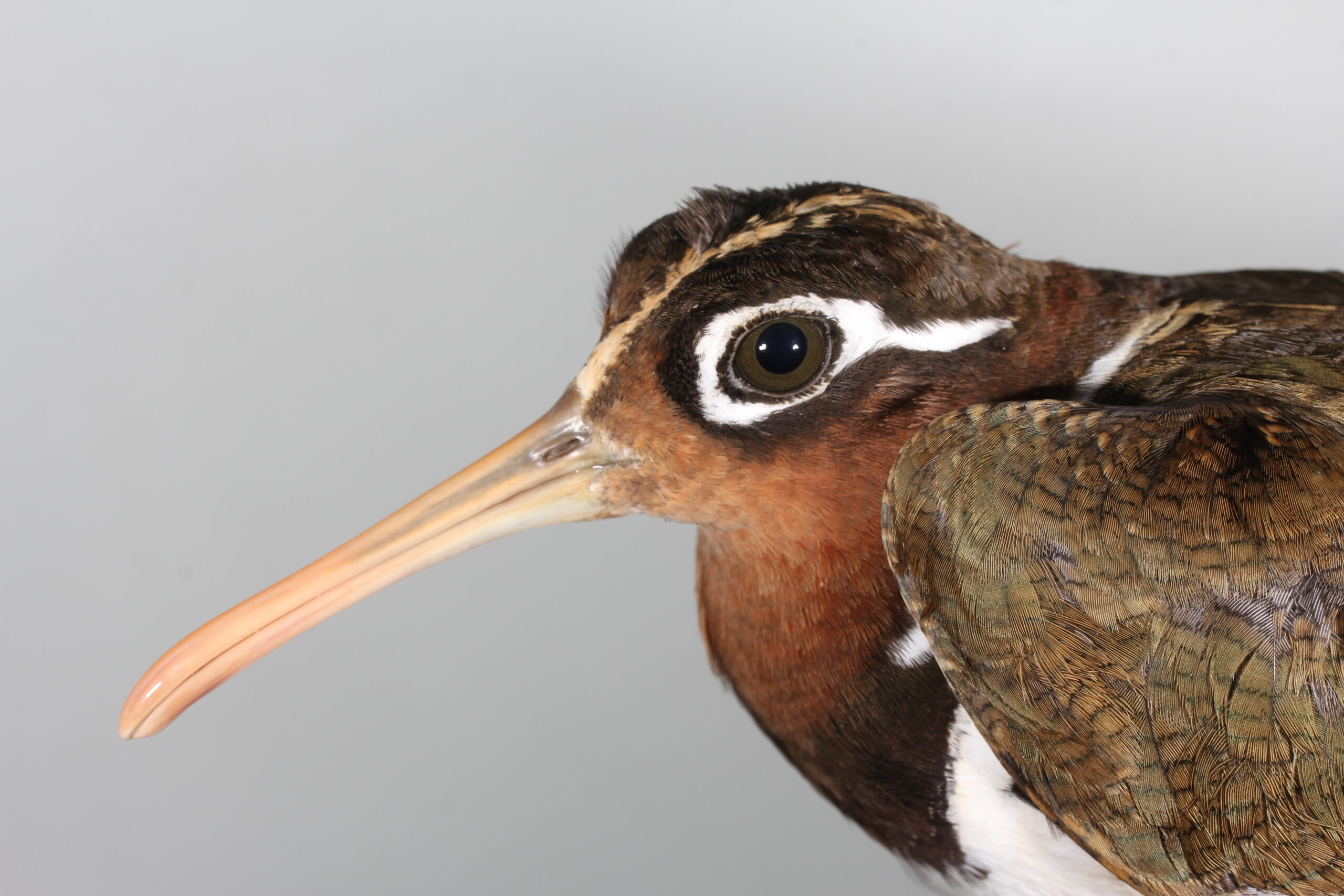



As Christmas draws nearer, it seems our birds are coming in larger waves, either passing through to their wintering grounds further south, or some to stay for the holidays!
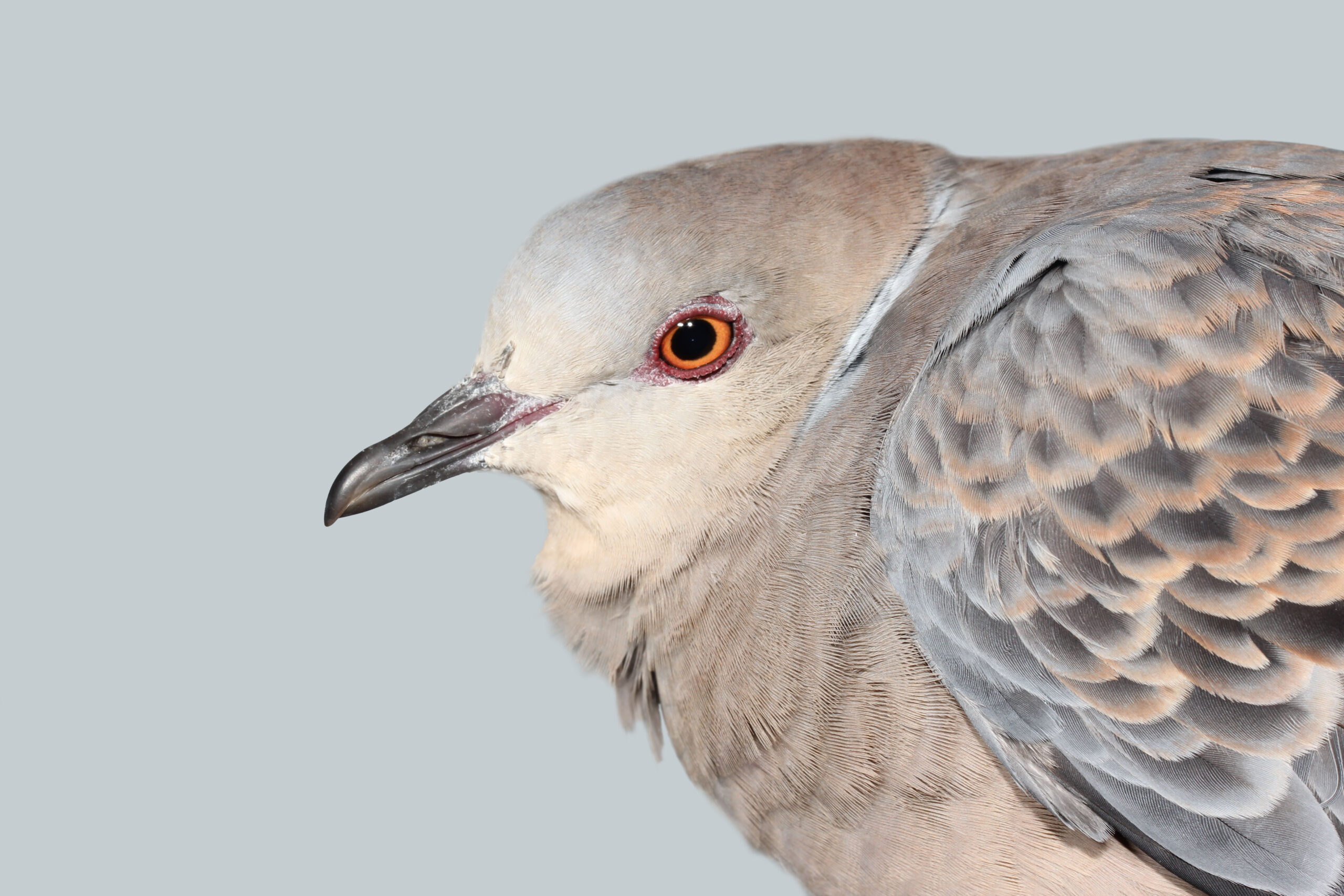
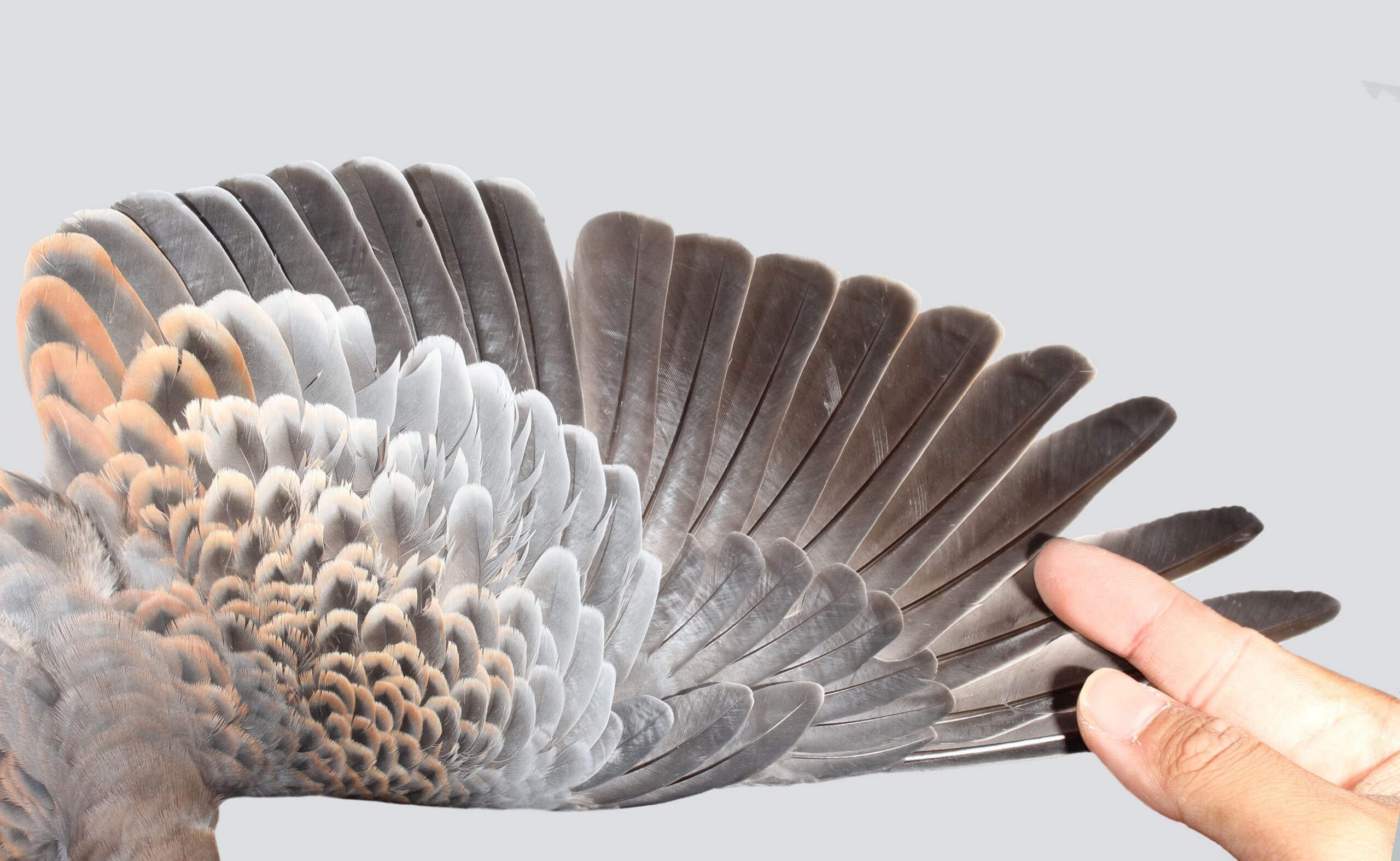
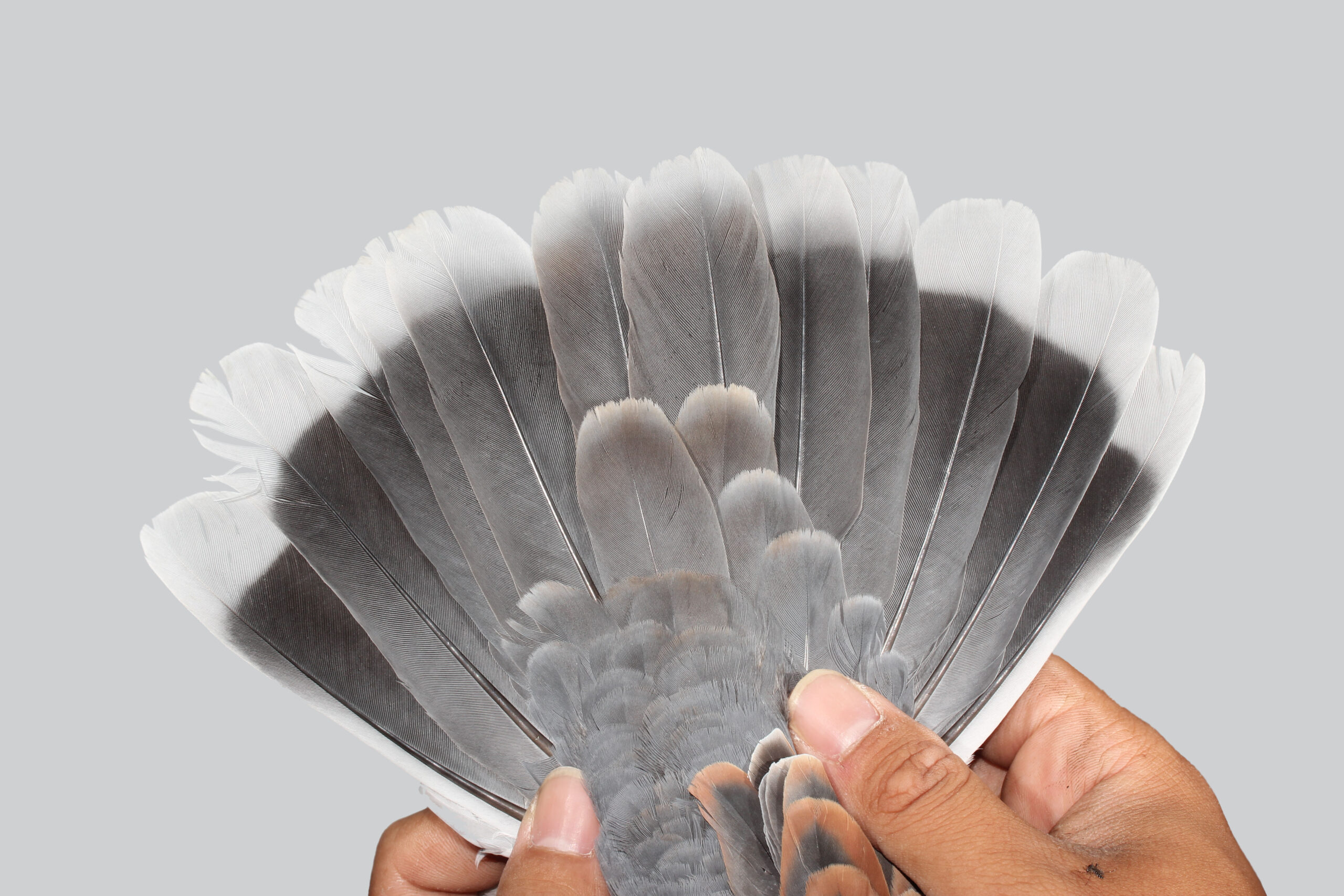
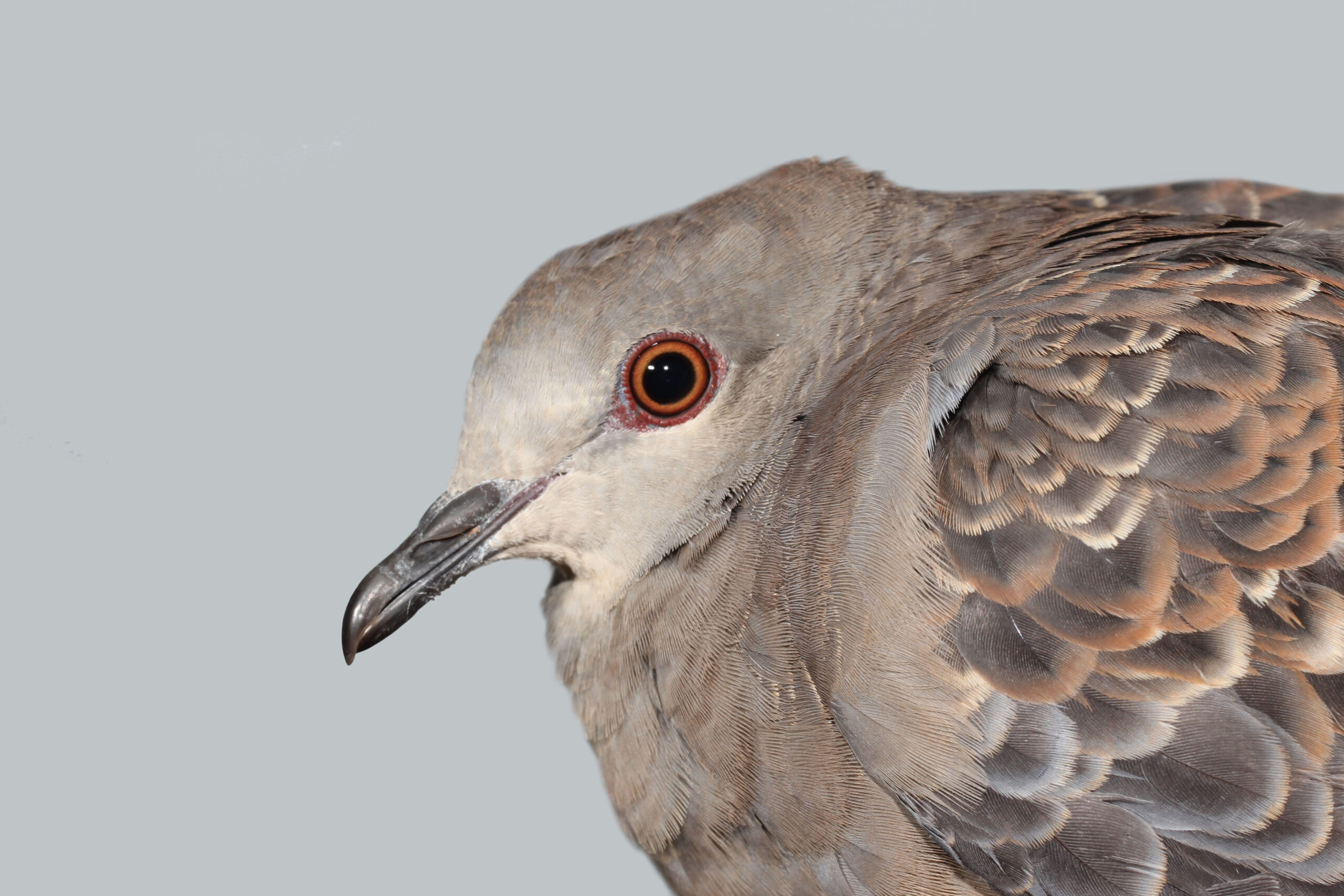
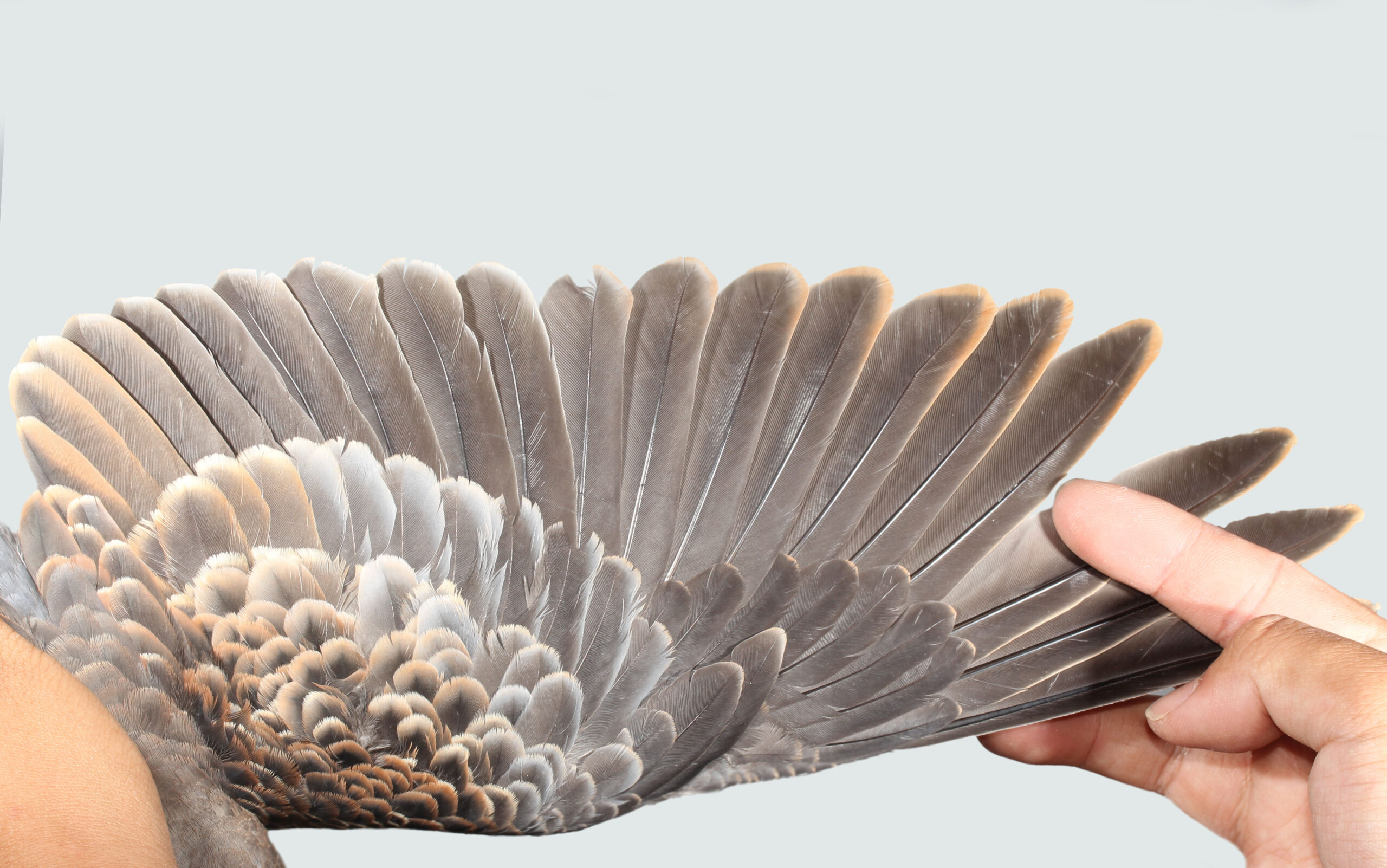
Two of our wonderful overwintering visitors are just those found in a certain Christmas song: Oriental Turtle Doves! These beautiful birds spend their Summers in Northern China before returning South for the winter. Today we were lucky enough to have a great comparison between a juvenile and adult wing. The upper individual shows dark, broad wing feathers, in comparison to the young individual. In the head & body feathers of our 1st calendar bird, we can see the pale fringes, and lack of the neck collar. Beautiful birds!
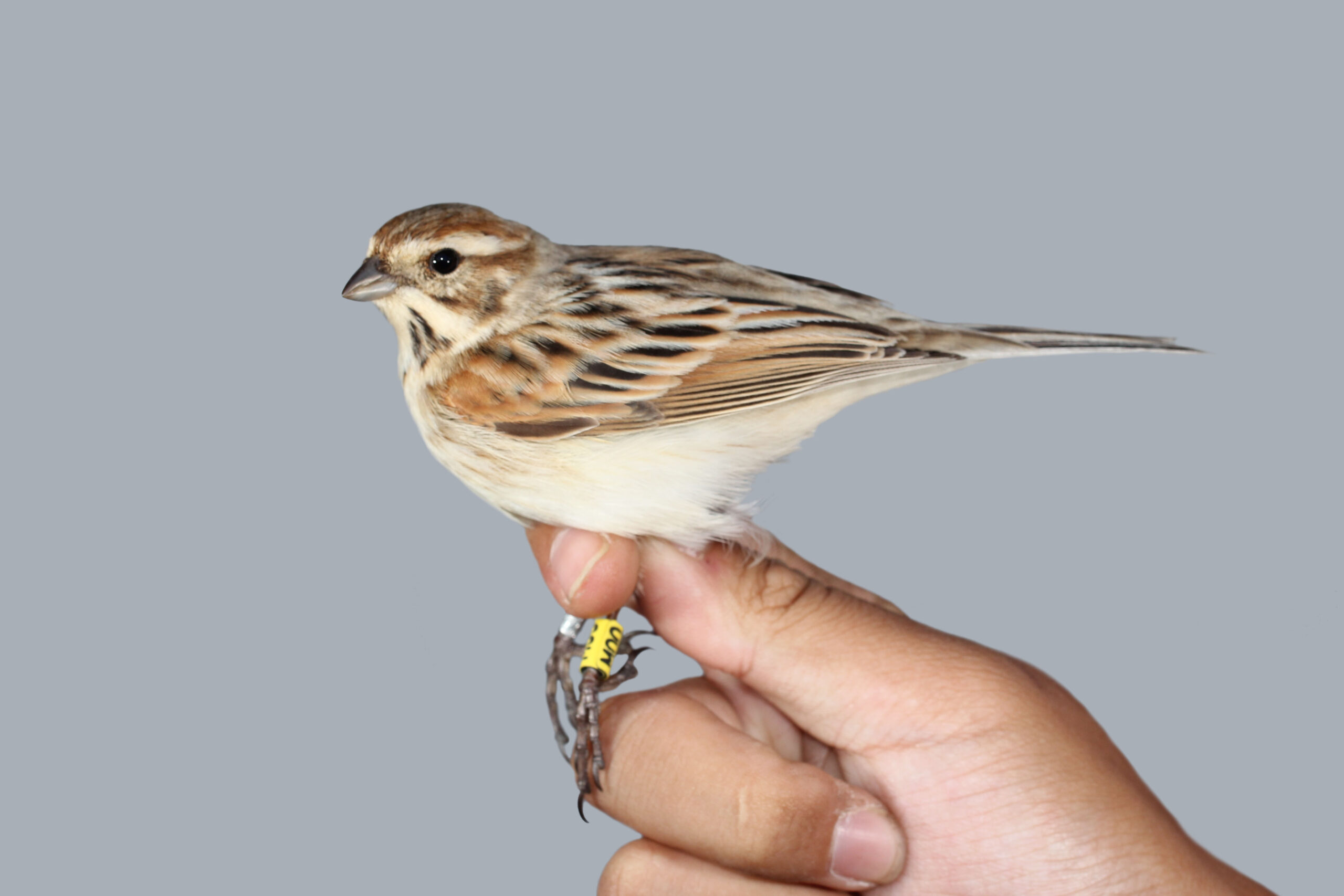
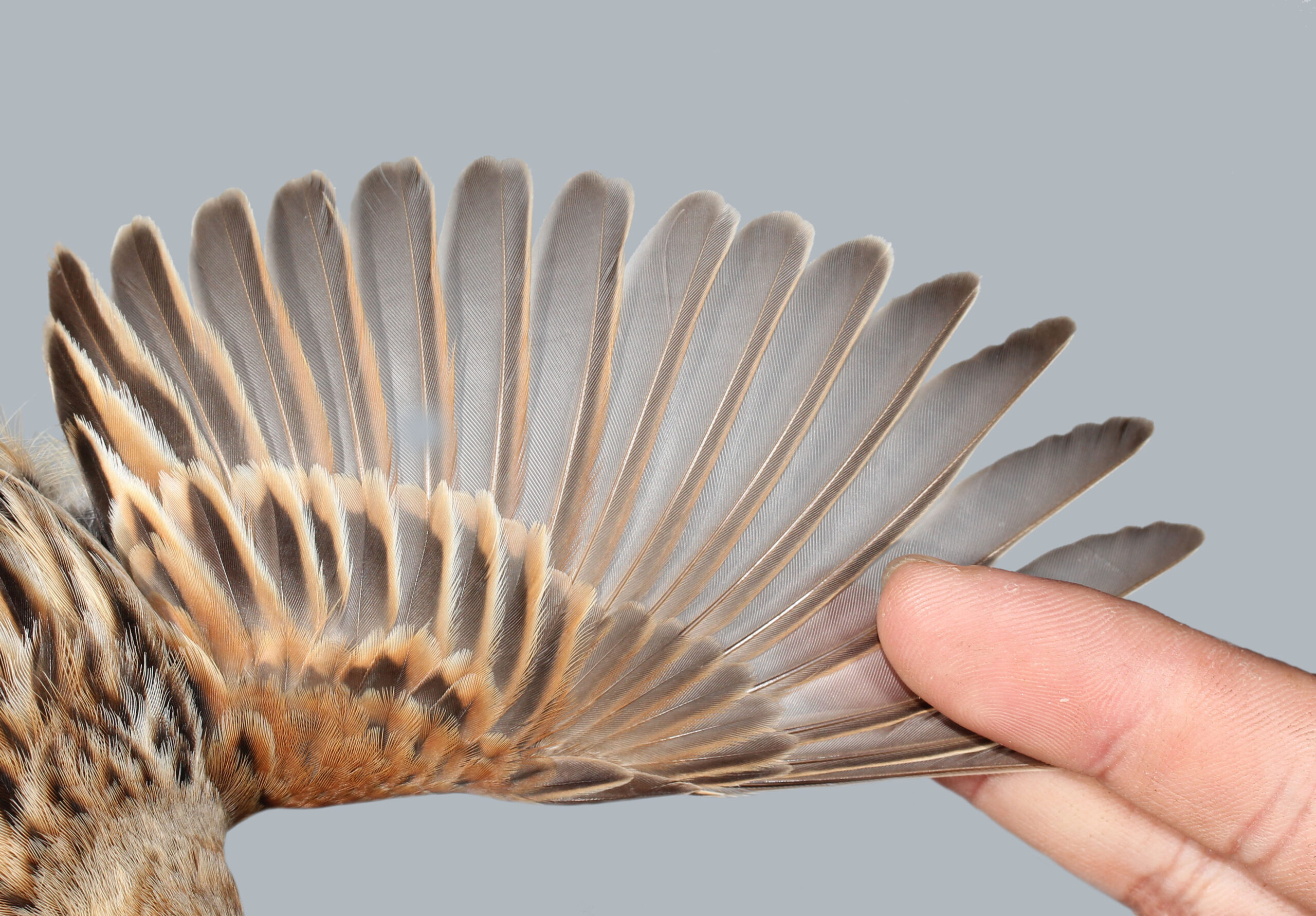
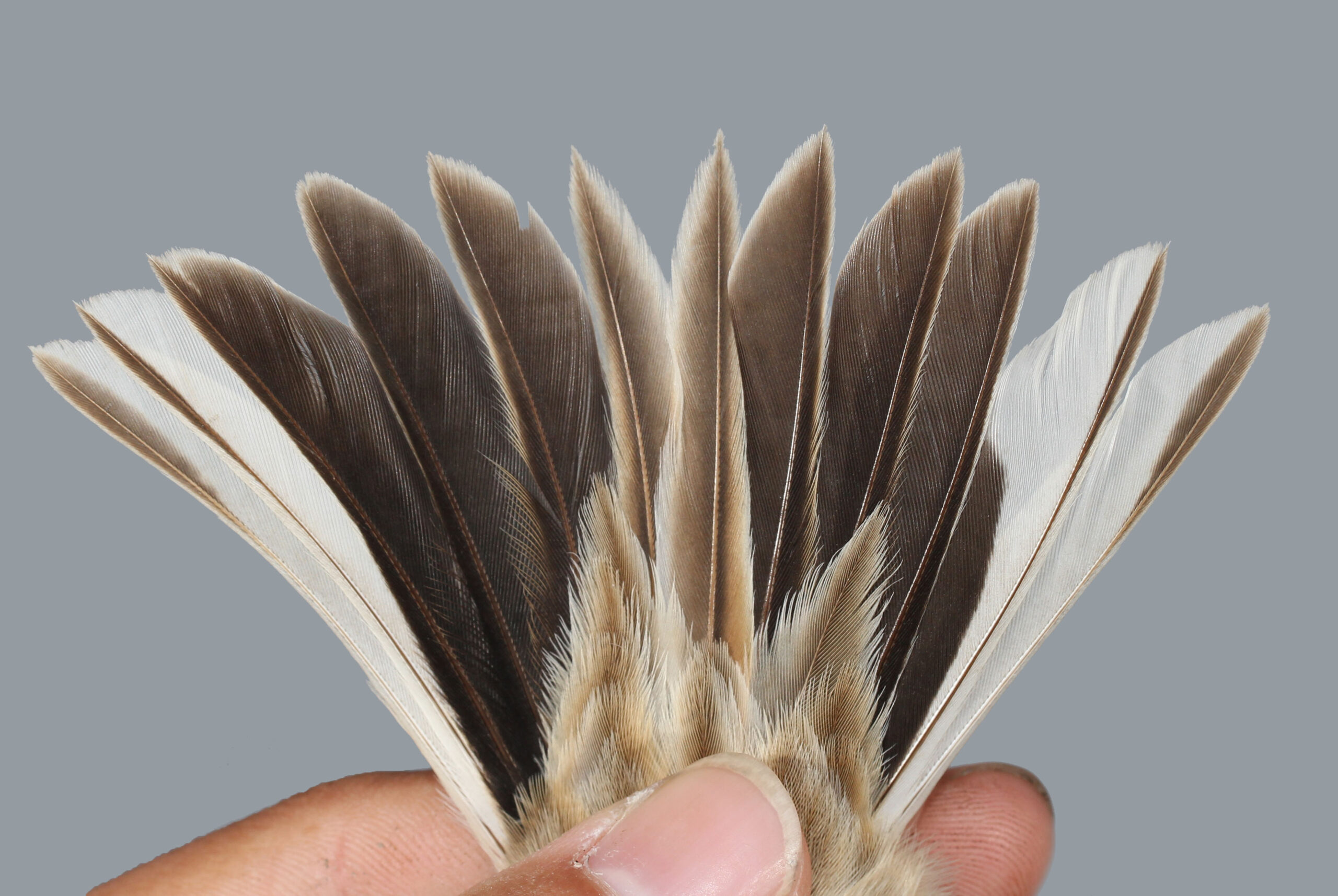
The busy day continued with another European- associated species, a Common Reed Bunting! These are similar to our more common Pallas’ Reed Bunting, however with a darker brown rump, more rusty-coloured shoulders and a thicker bill. As with all other Buntings, we are expecting to see all wing coverts moulted, except the Primary Coverts. However, due to the difficulalties with spotting moult limits between feather groups, we also use the shape of the tail and skull development to back up our thoughts. In the tail, we can see that R3 on the left side has a darker centre, is less worn than other feathers, and has a nice rounded shape to the tip (if we compare with the juvenile R3 on the right side). Therefore, we can determine that this feather is moulted and postjuvenile. Therefore, this must be a 1st calendar year bird.
Now we can attempt to sex the bird. Typically, male will not show their black heads until Spring, however the base of their crown feathers in Autumn should contain more black than females. Furthermore, males show a pure white collar, even in Autumn. This individual showed very little black in the crown and no white collar, and thus we can conclude that this is a 1st calendar year female!
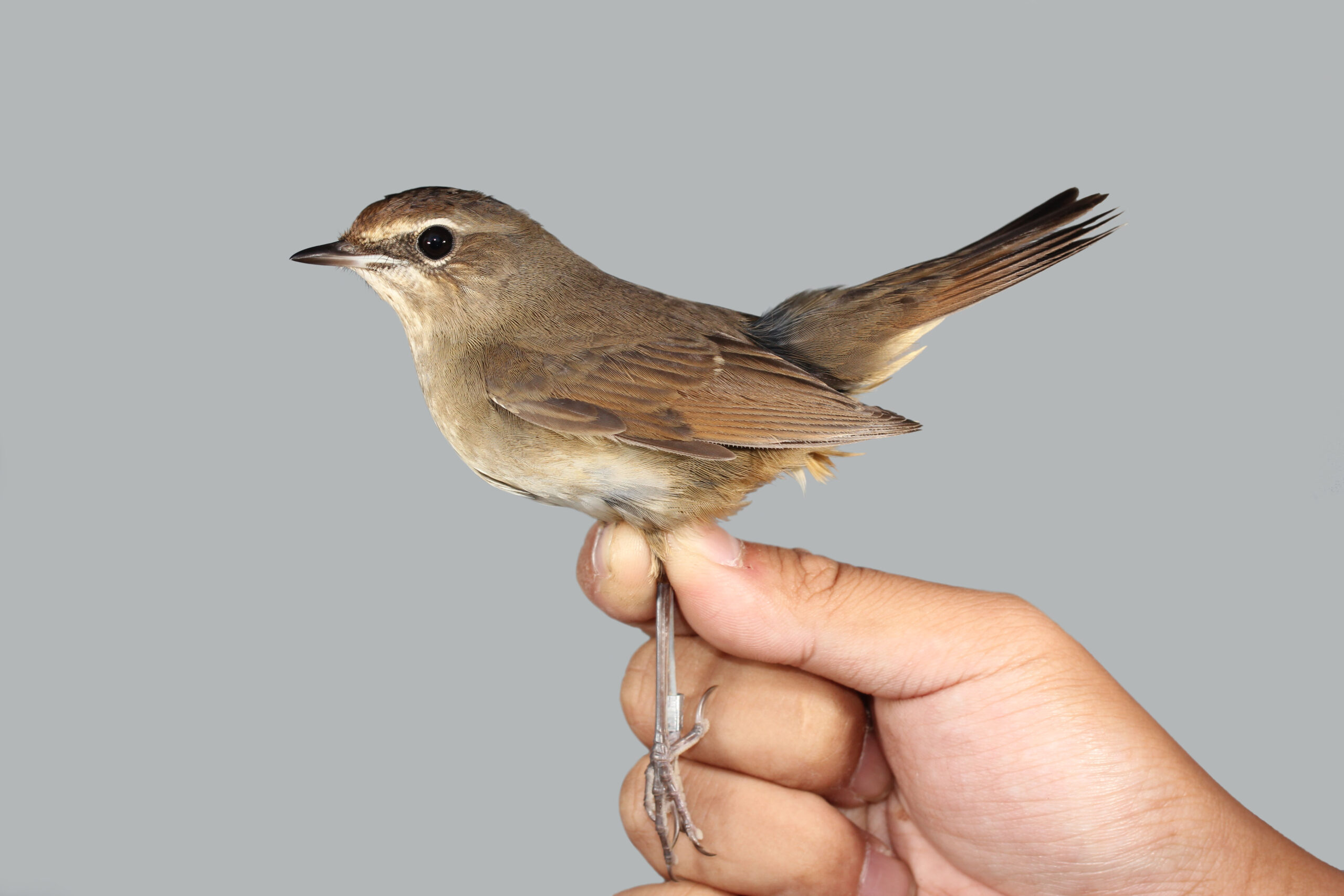
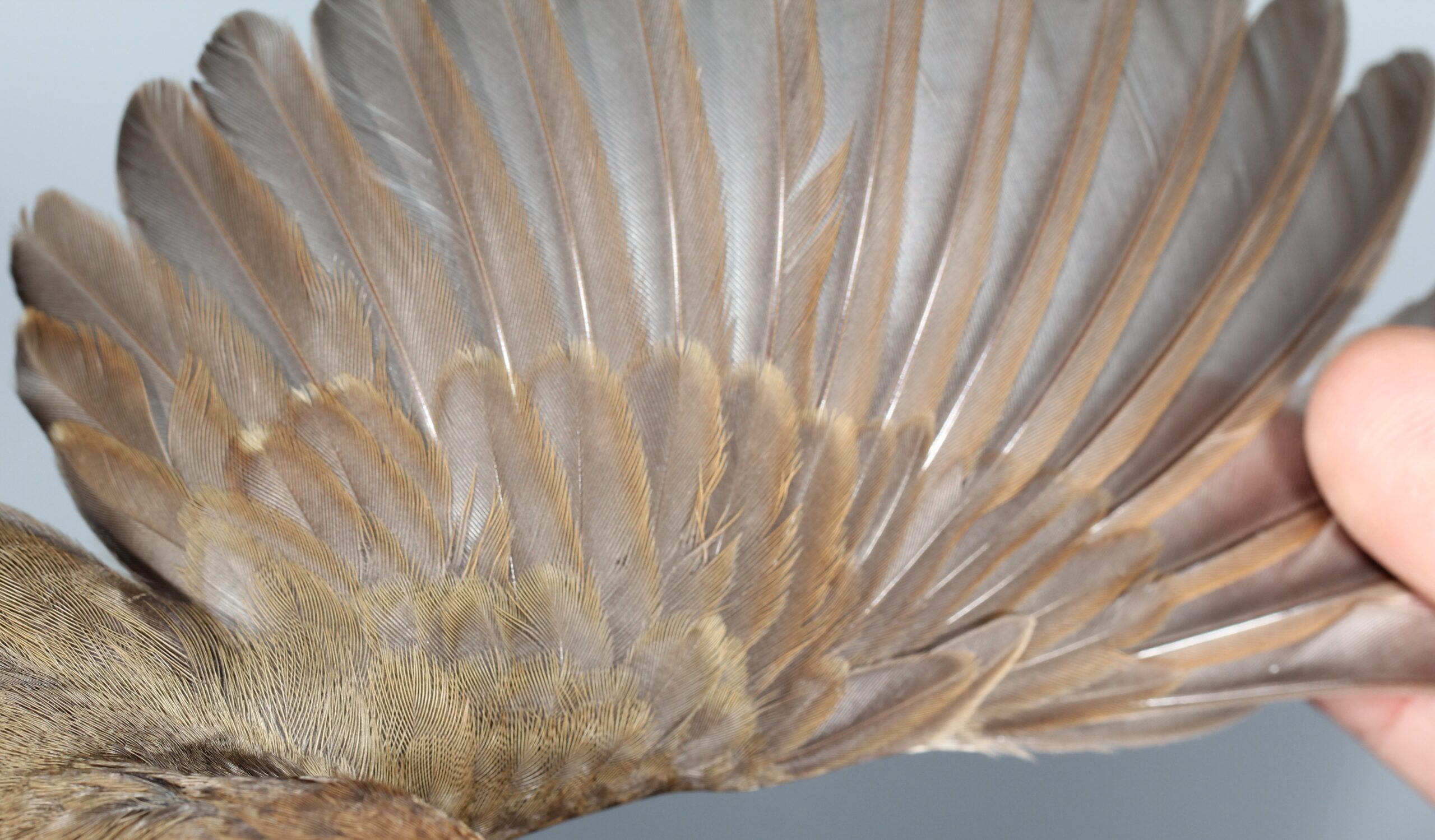
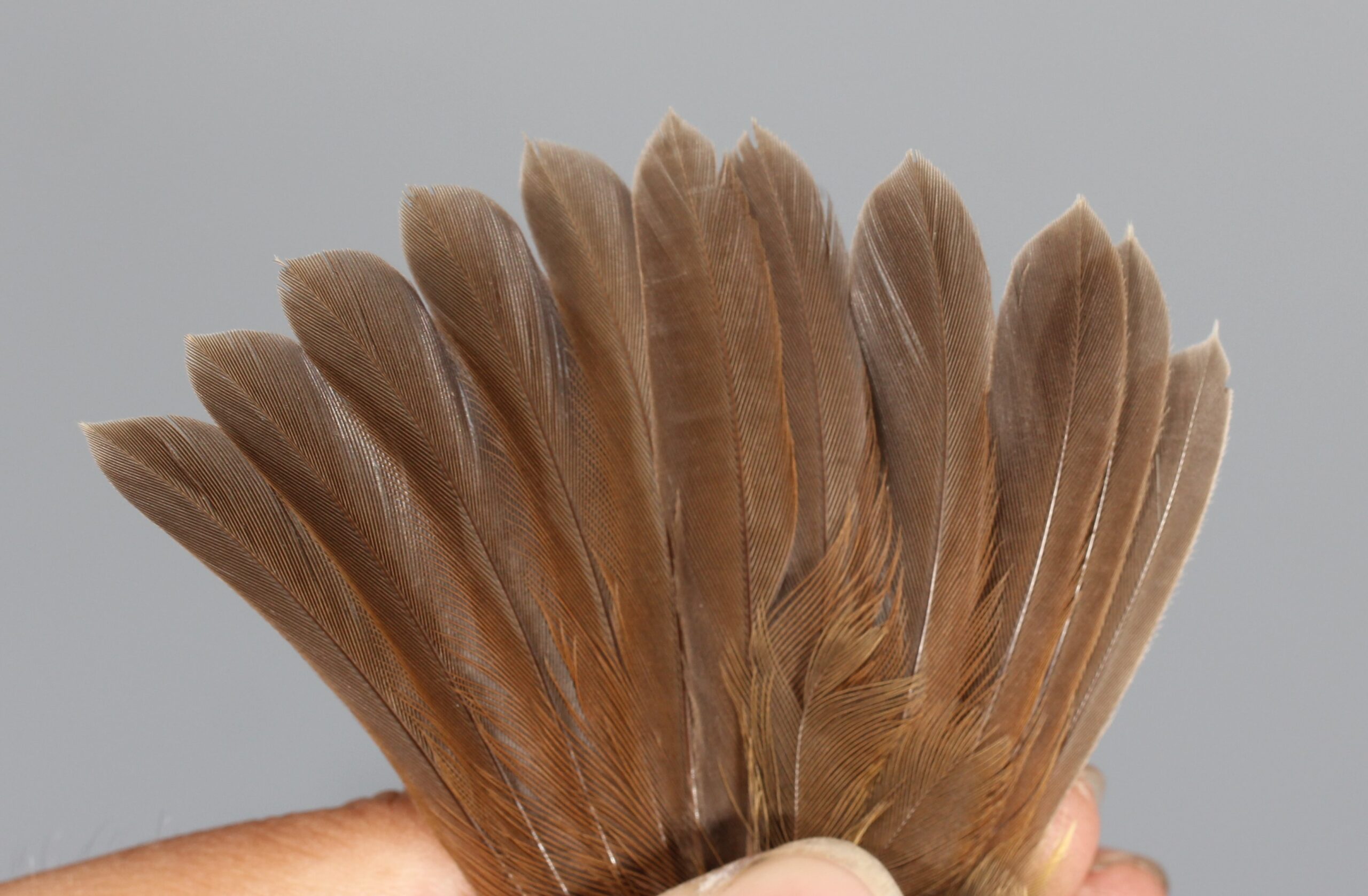
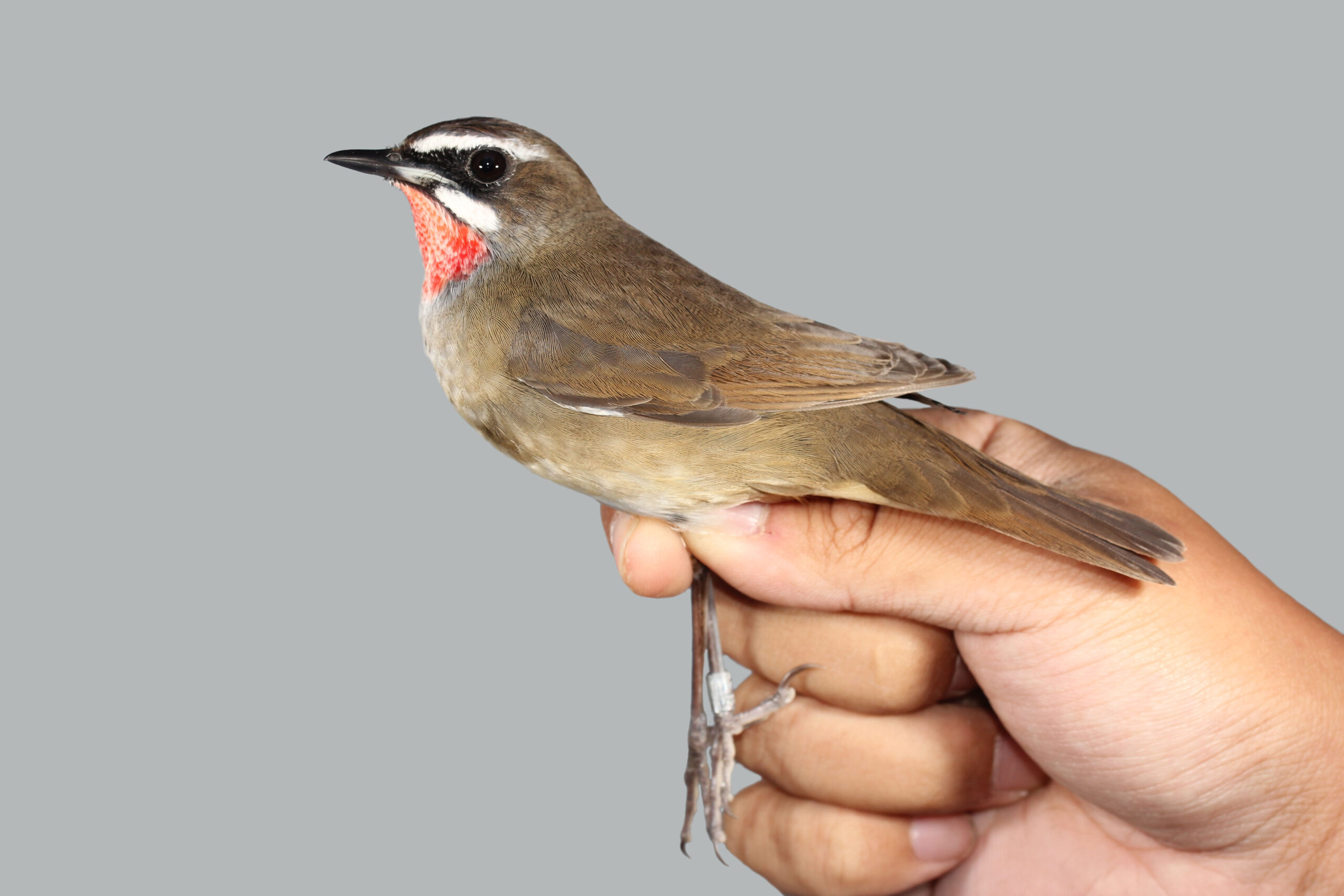
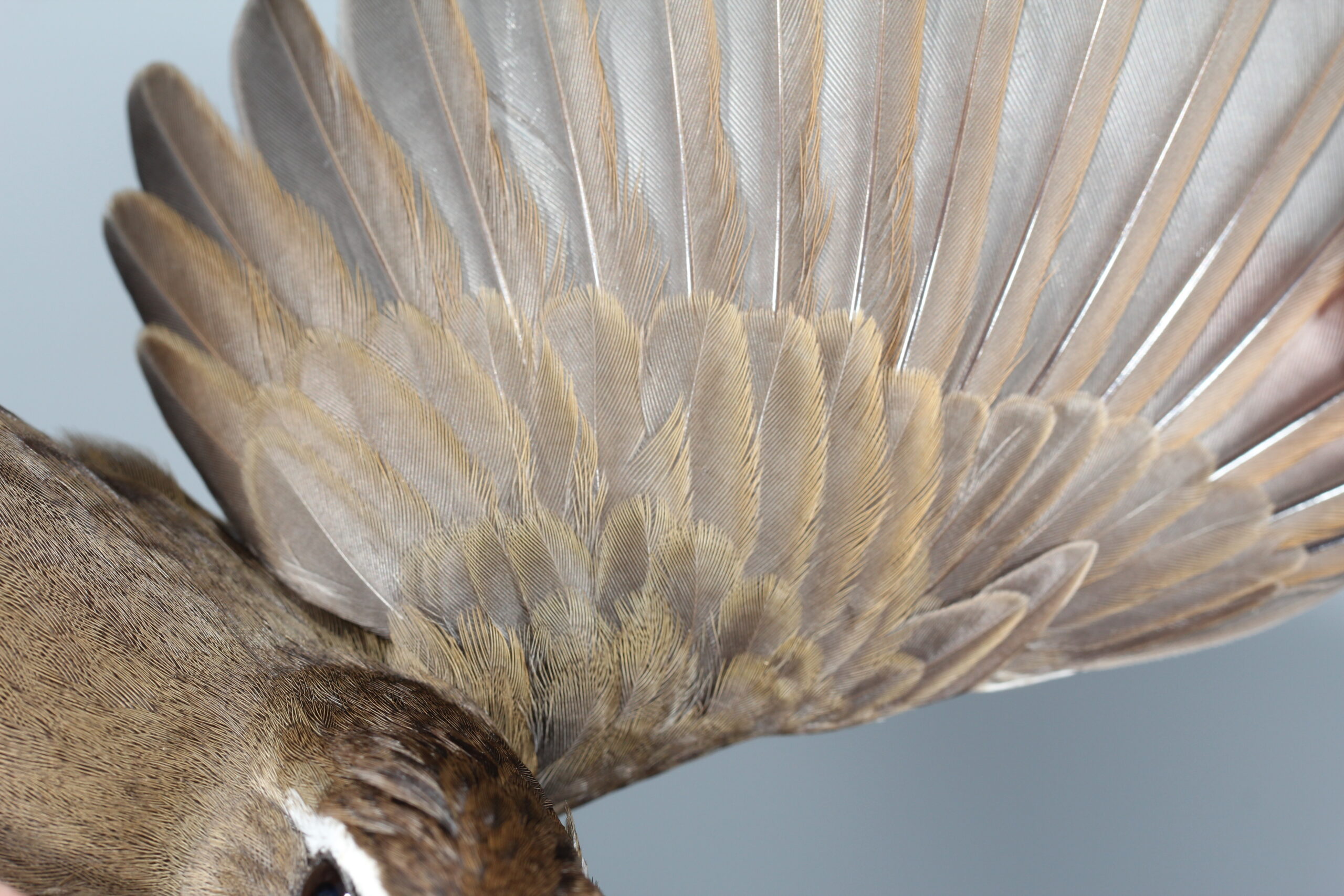
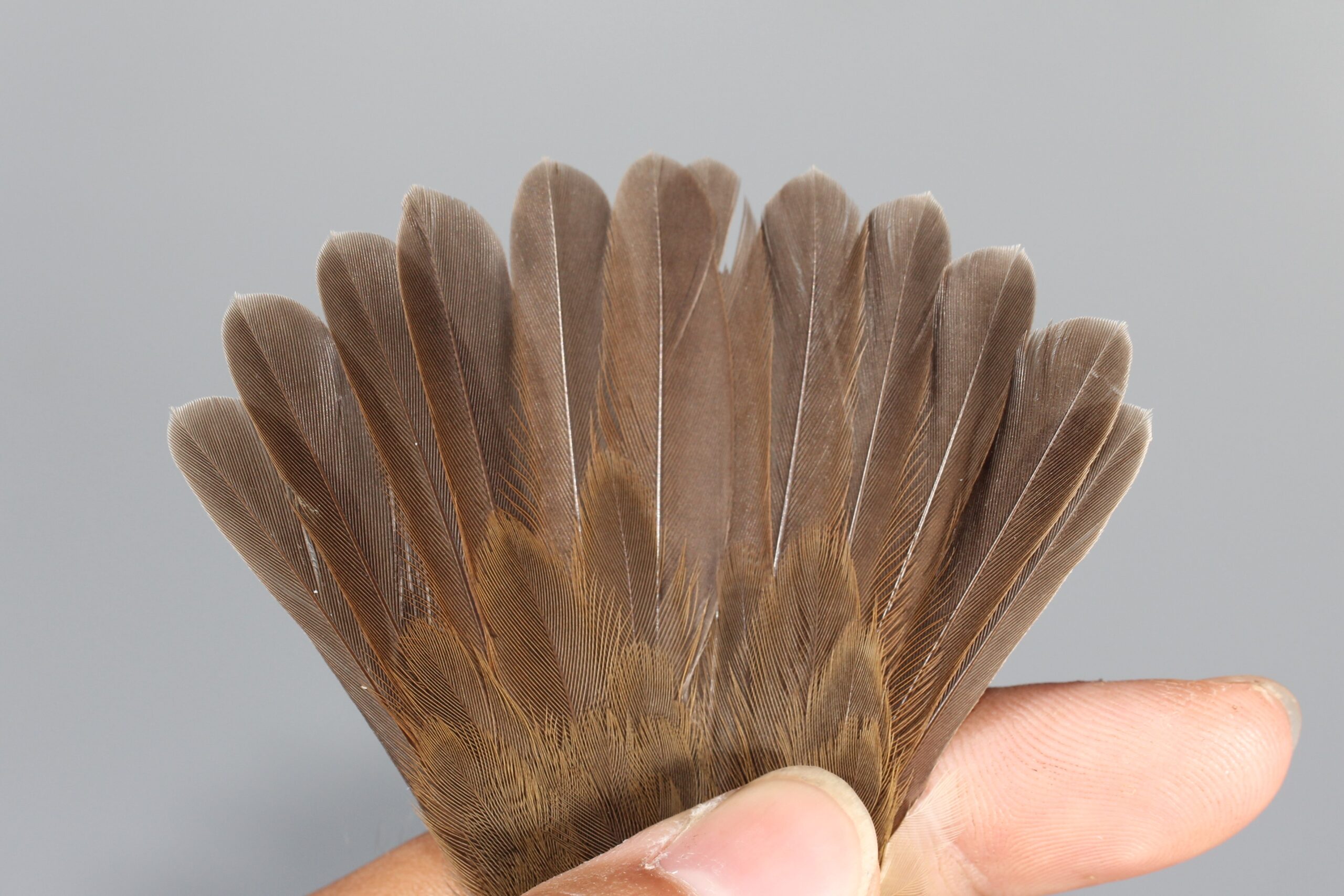
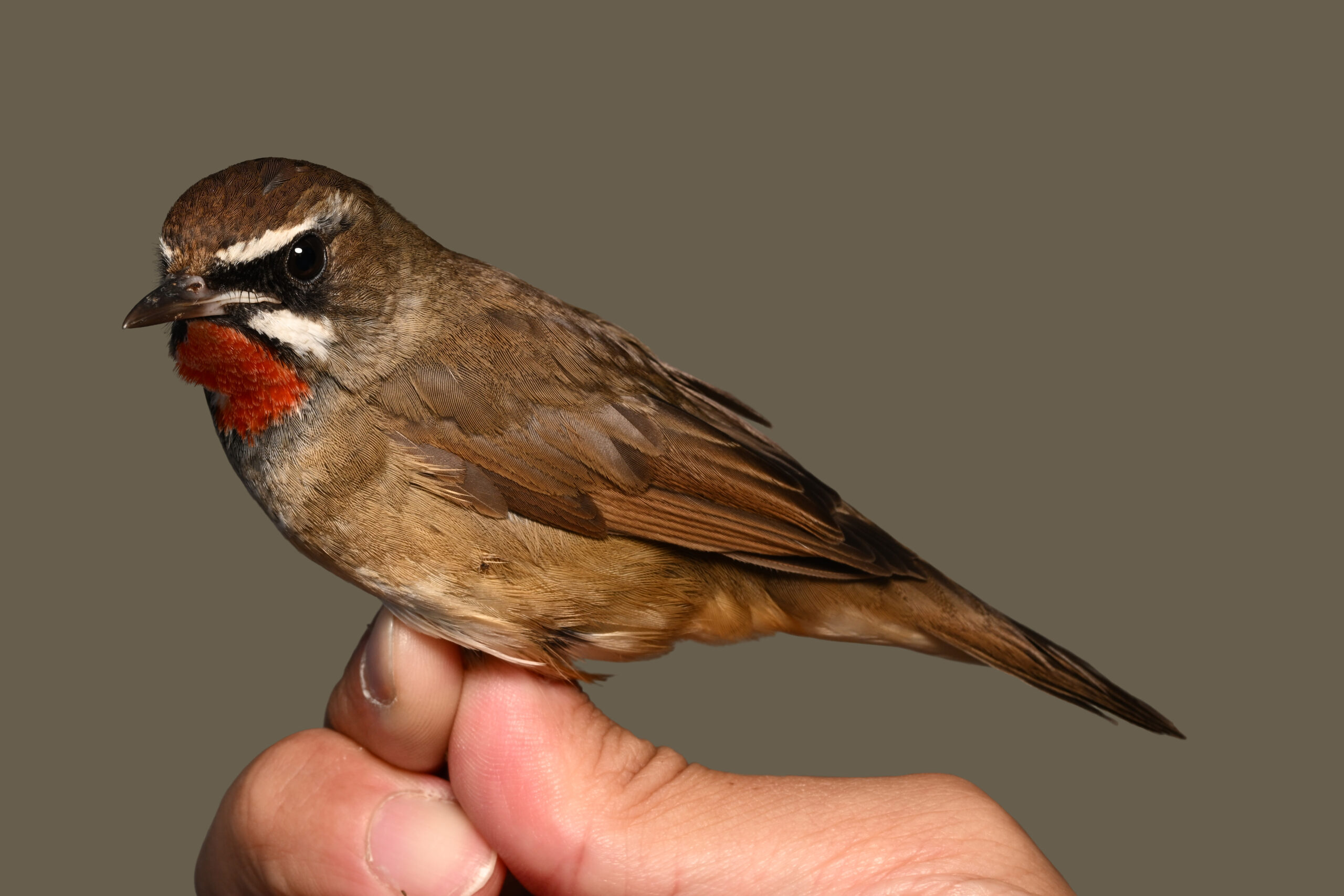
Next up were two of my personal favourites- Siberian Rubythroats! First up was an individual that looked barely like its species, with no trace of the characteristic ruby throat! BUT ageing first, as always (adults SC, juveniles Sp), and in the wing we can see that moult limit between the 8th and 9th GC. The outer 8 GCs are amore warmish brown, with pale tips just visible, and overall more worn than the innermost 2, which are more dark and olivey, with glossy centres. So yes, a 1st calendar year bird. Even a 1st calendar year male would show some red in the throat, so this must be a 1st calendar year female!
Our 2nd Rubythroat was a stark contrast, with a gorgeous shiny jewel on the throat, complete with a gorgeous steel-grey border, and a striking white-black-white facial patterning. From the uniform and fresh wing, this must be an adult, and, from the extent of the red, white & black, this must be an adult male Rubythroat!
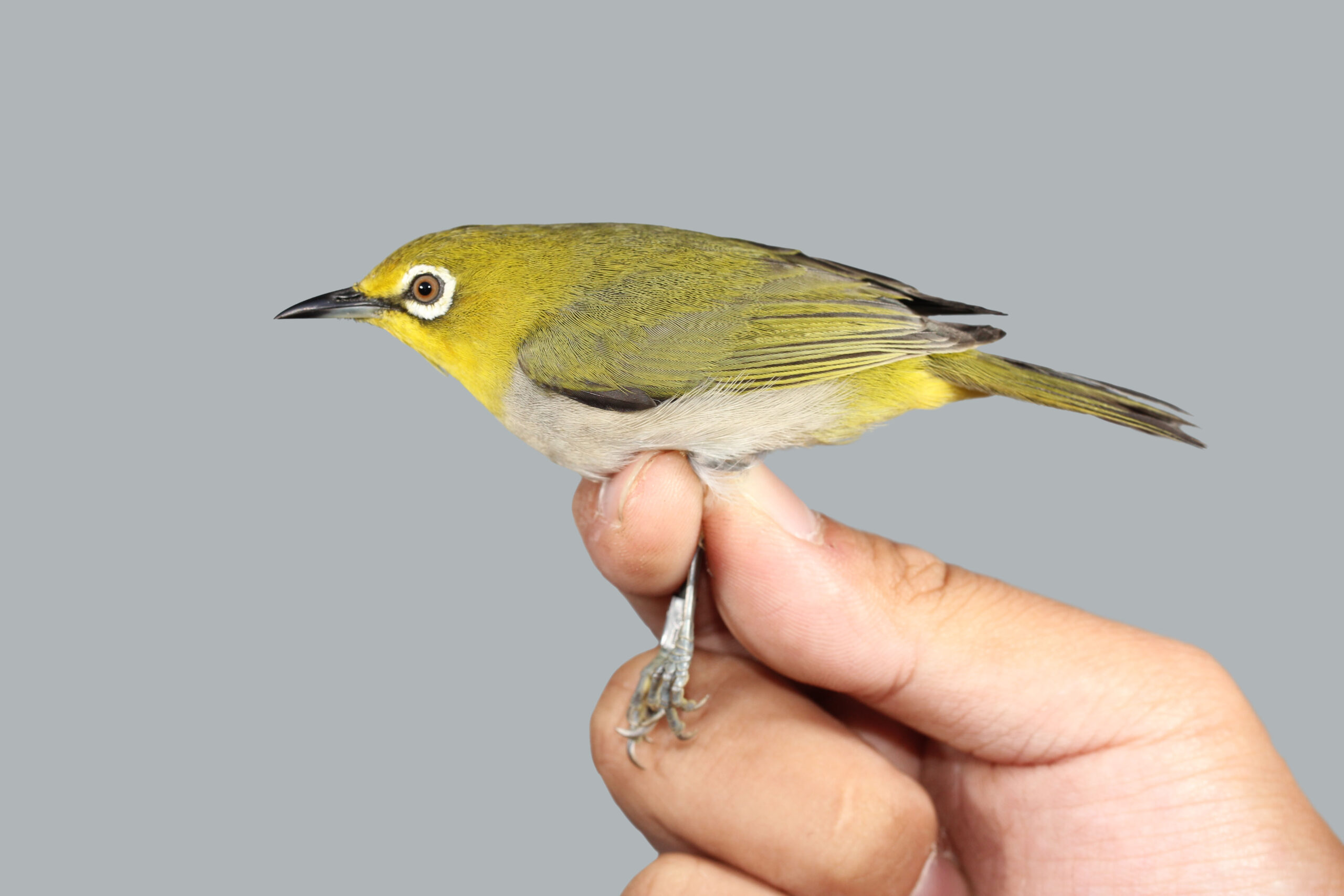
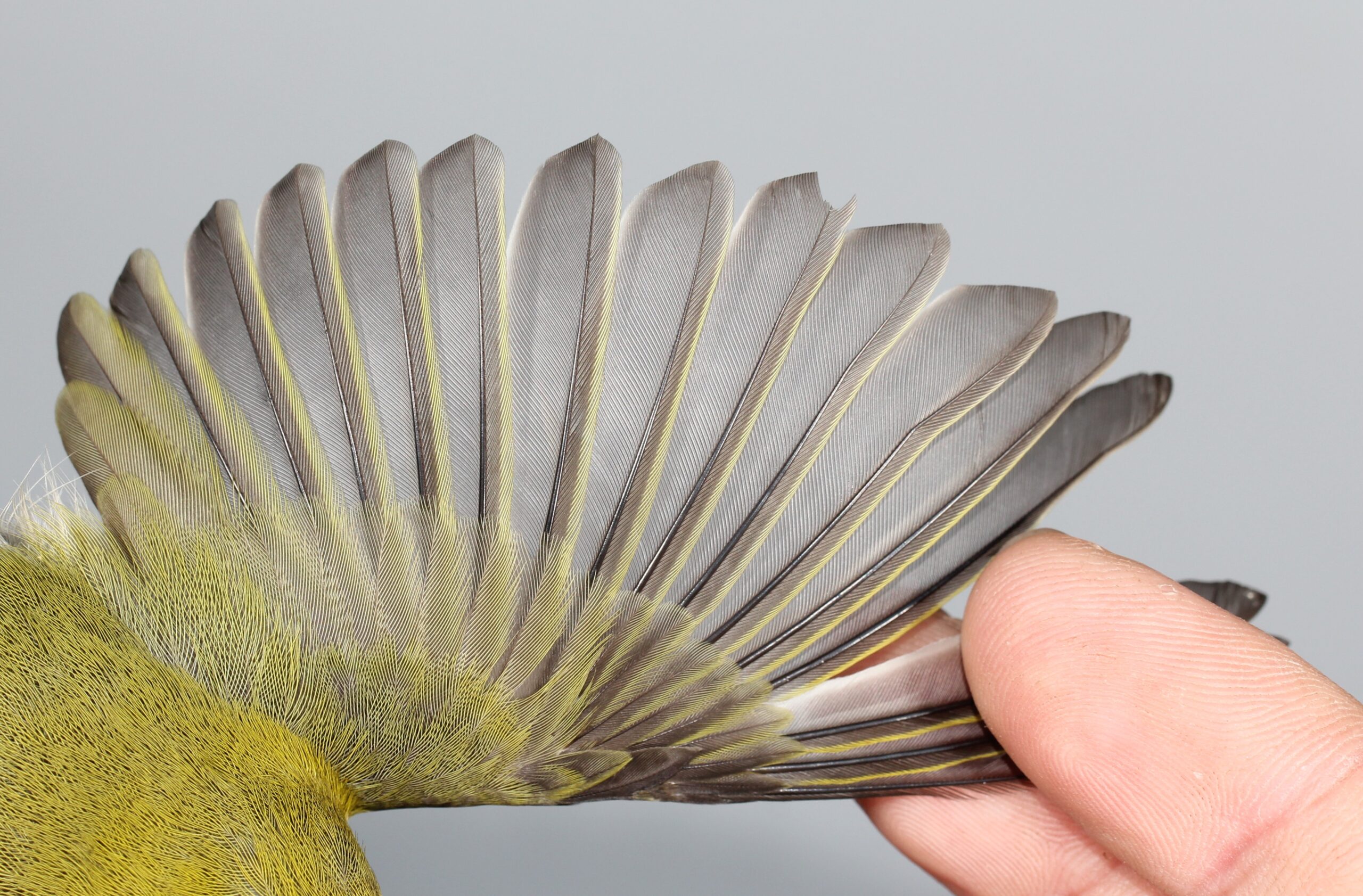
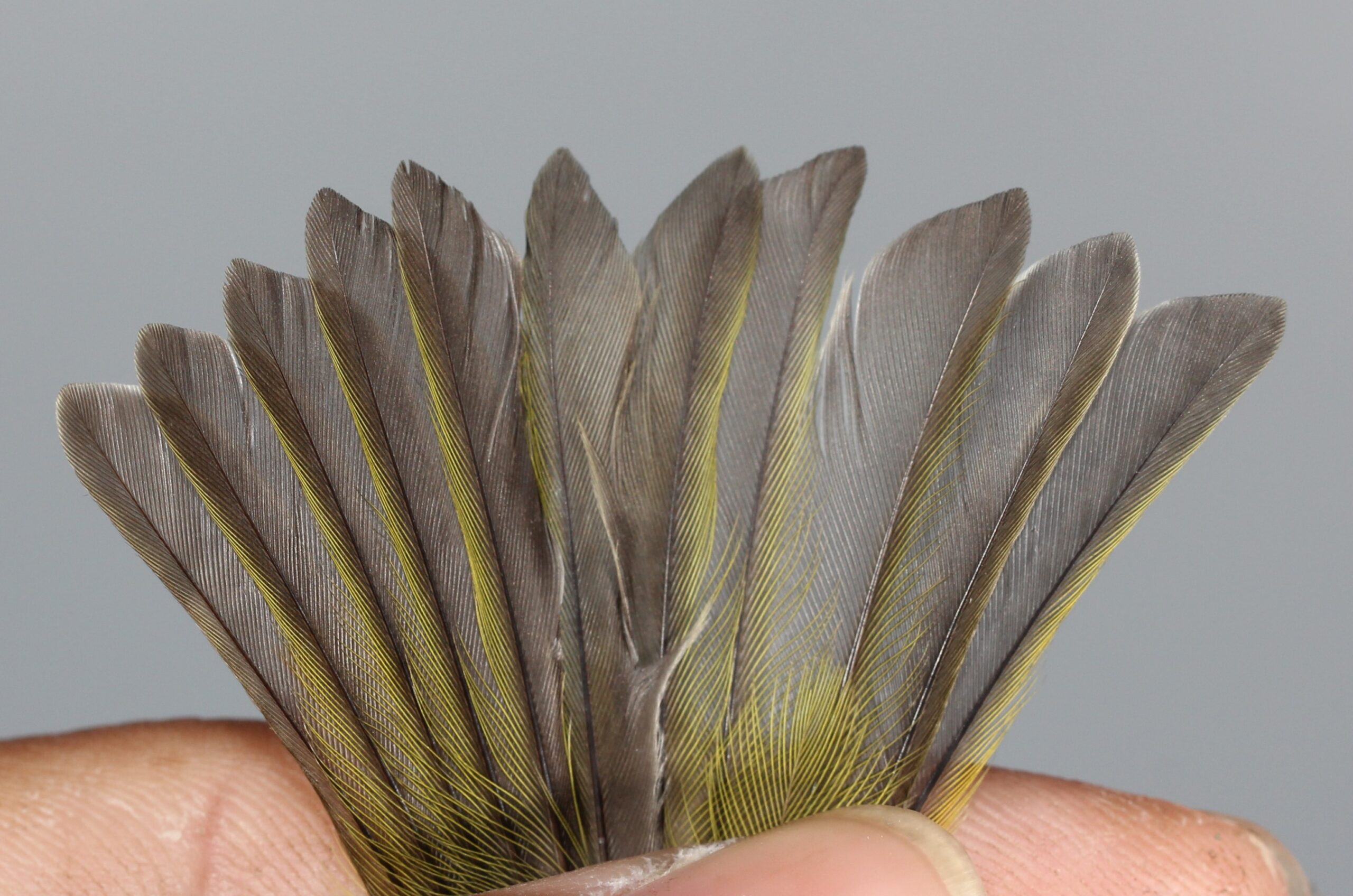
As the morning began to warm, and the birds slowed, we still had yet another little stunner in the nets! This is a Japanese White-eye, frequently seen in flocks among the trees, emitting their high-pitched chirps. These guys are well known to breed all year round in Hong Kong, with adults and juveniles both undertaking complete postbreeding or postkjuvenile moults, making ageing even more complicated. However, this was an interesting individual, as it showed an incomplete skull development- thus it must be a 1st calendar year bird. An intriguing individual!
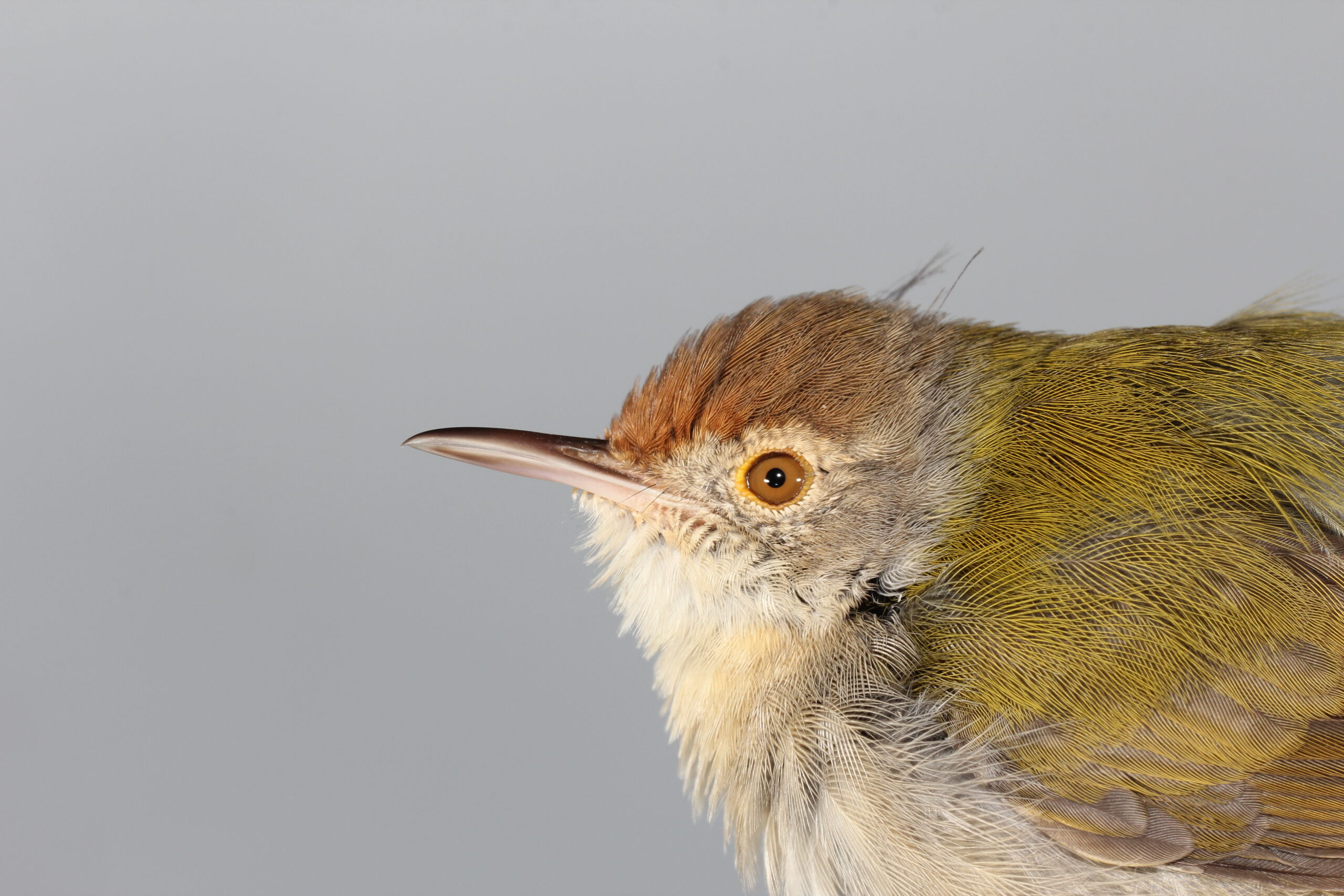
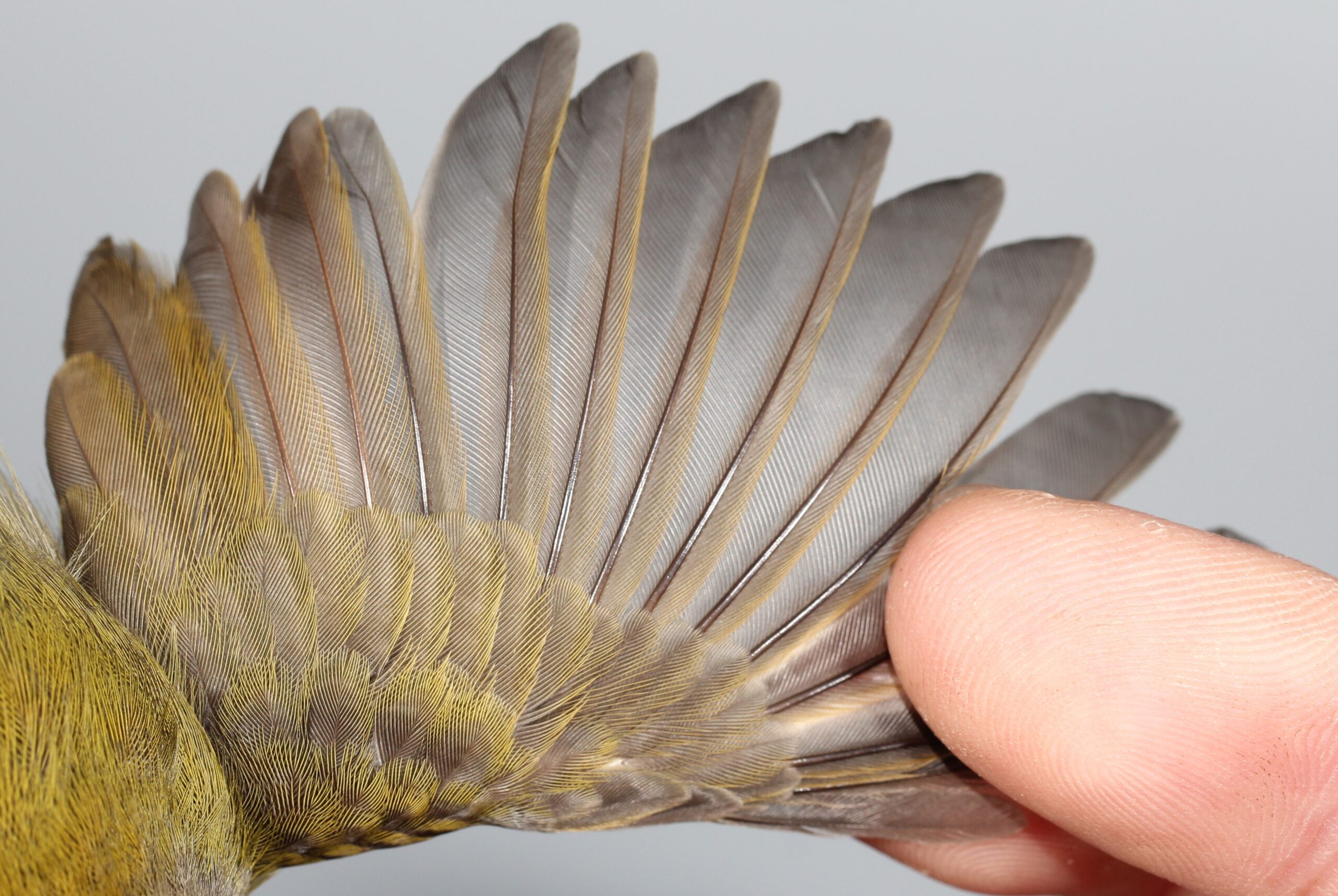
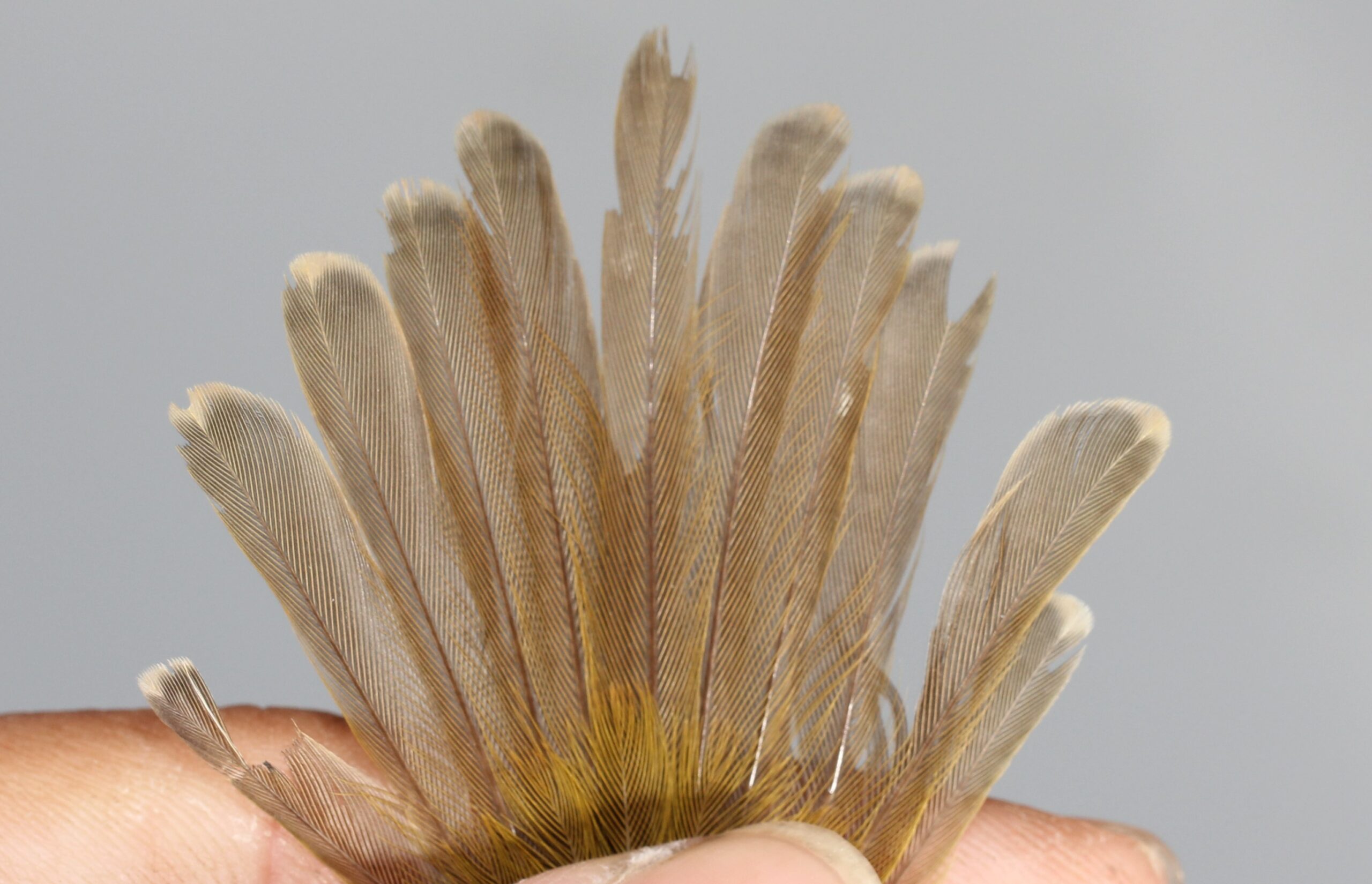
Our last bird of the day was one we don’t catch super often in our wetland site- a Common Tailorbird. In contrast to the White-eyes, this species is usually found alone, hopping in the shrubs or bushes close the ground. Another Summer Complete species for both adults and juveniles, we again used the skull development on this individual to determine that this was a 1st calendar year bird! A wonderful morning!
Daily Totals
| Species | Original | Recapture |
| Black-browed Reed Warbler | 5 | 0 |
| Chinese Penduline Tit | 2 | 0 |
| Common Reed Bunting | 1 | 0 |
| Common Tailorbird | 1 | 0 |
| Dusky Warbler | 18 | 3 |
| Oriental Turtle Dove | 2 | 0 |
| Plain Prinia | 1 | 2 |
| Red-whiskered Bulbul | 1 | 0 |
| Siberian Rubythroat | 2 | 0 |
| Swinhoe’s White-eye | 1 | 0 |
| Yellow-bellied Prinia | 1 | 1 |
| Grand Total | 35 | 6 |
*Please note that all wild birds, their nests, and eggs are highly protected (under Wild Animals Protection Ordinate, Cap. 170) in Hong Kong. It is an offence to wilfully disturb, take, remove, or injure wild birds or their nests/eggs. The actions described here were undertaken by trained professionals holding the necessary licenses and permits issued by the AFCD.*