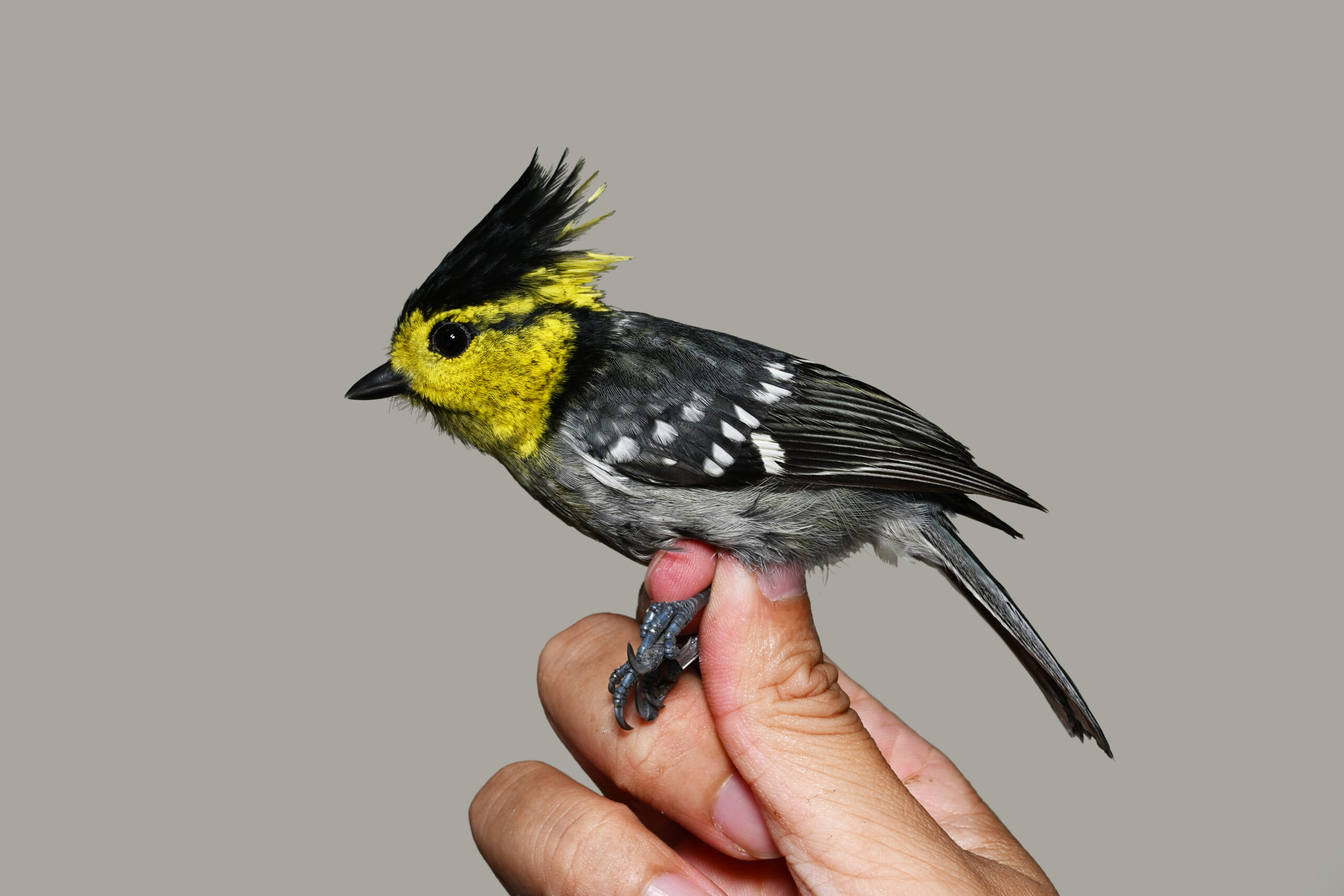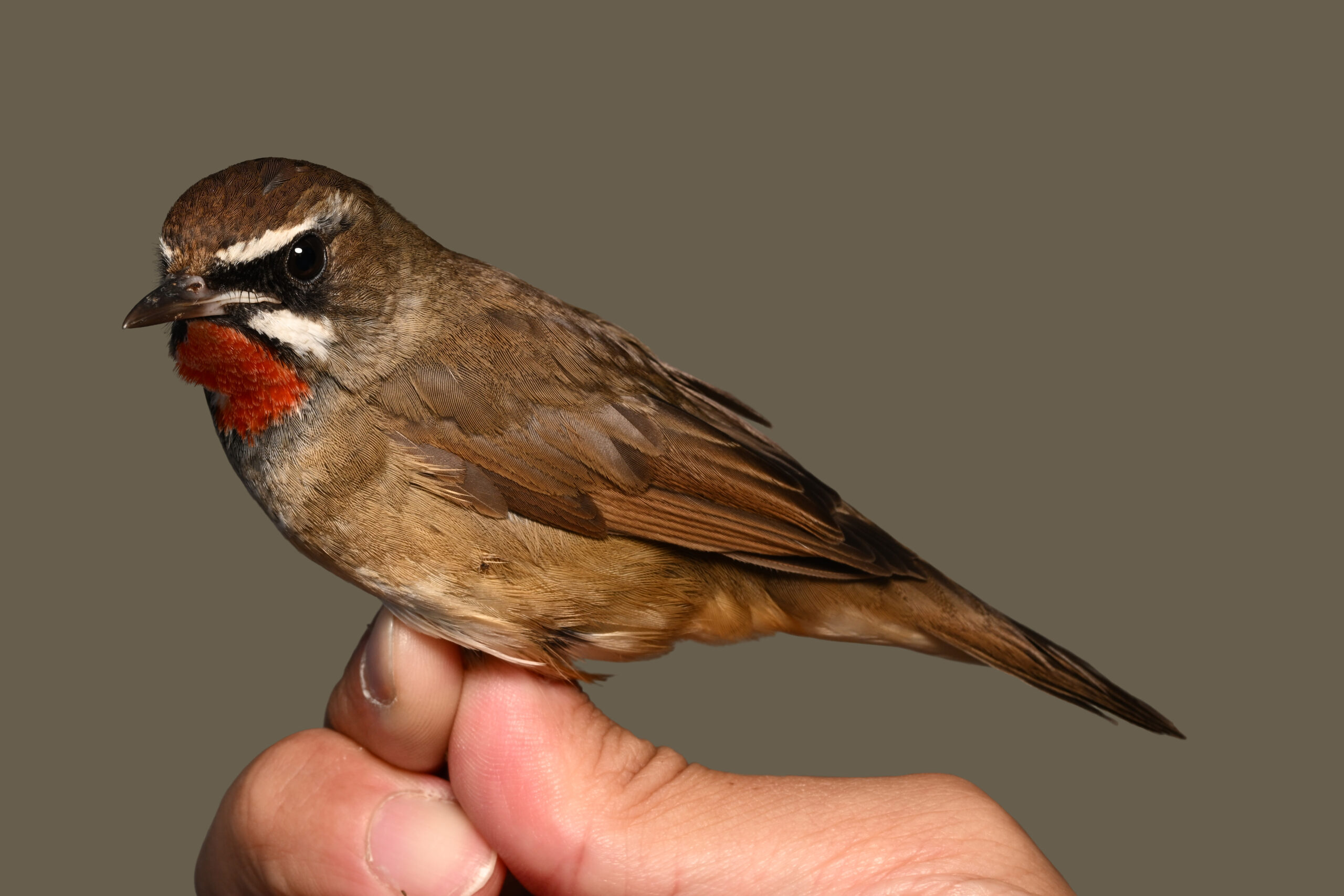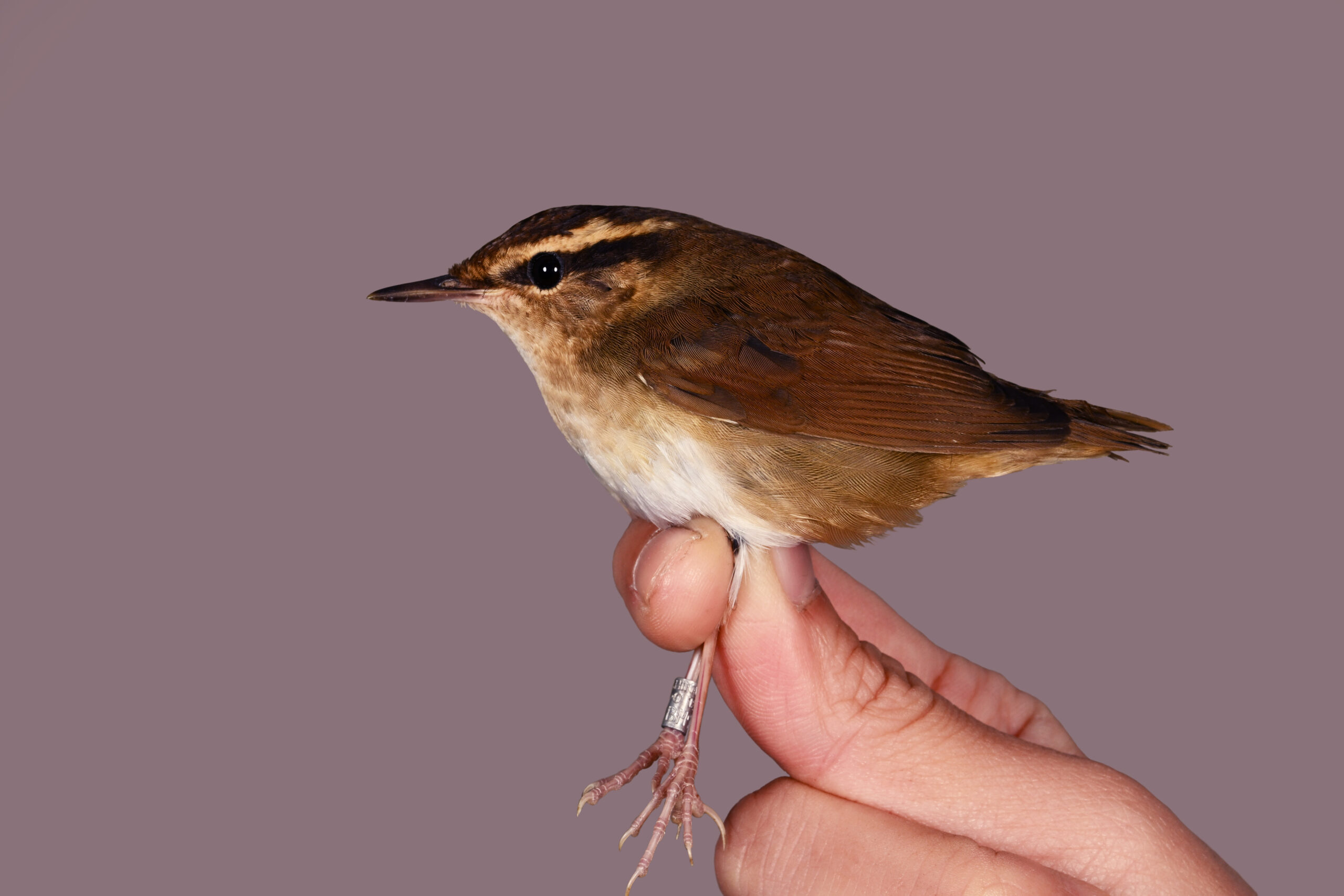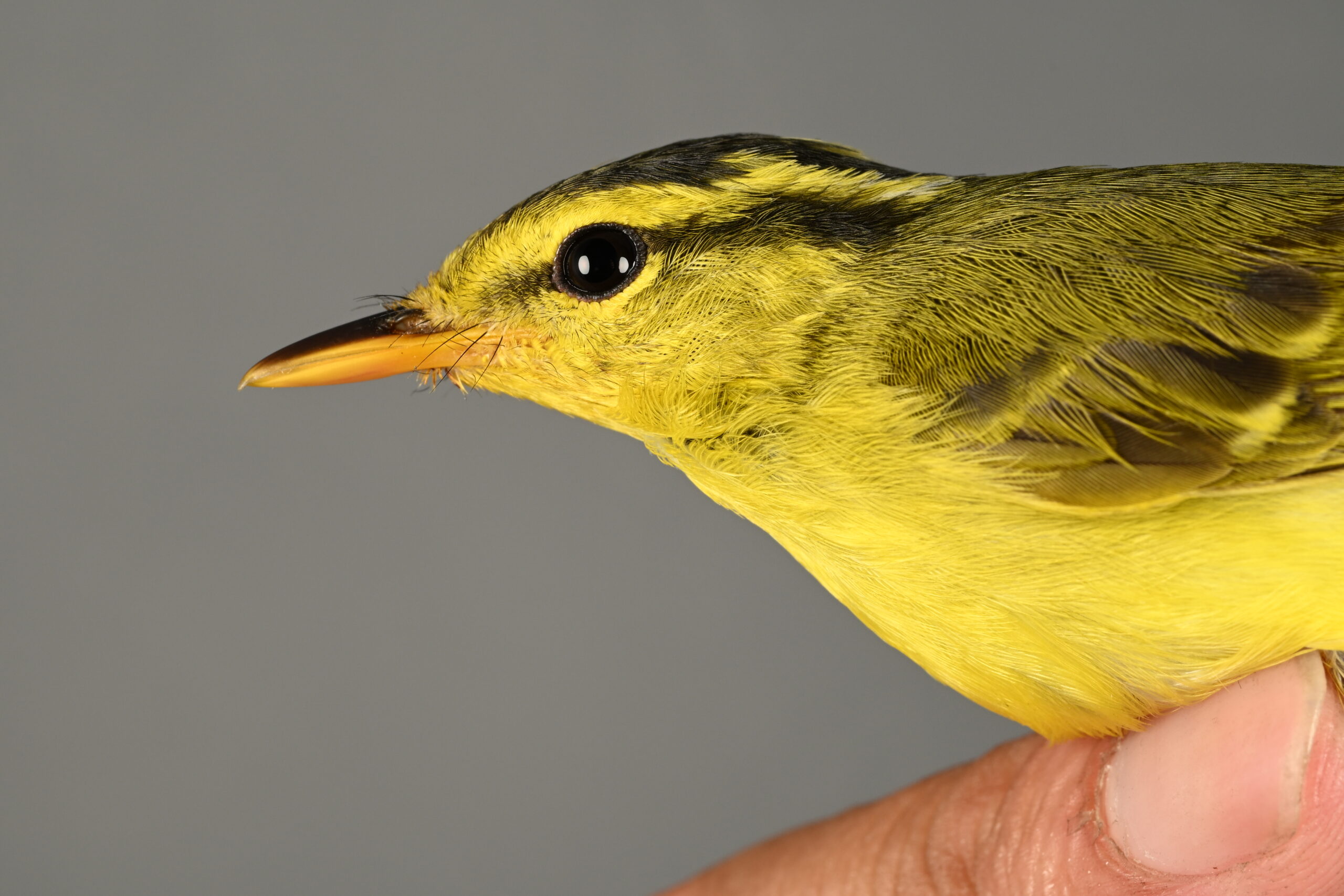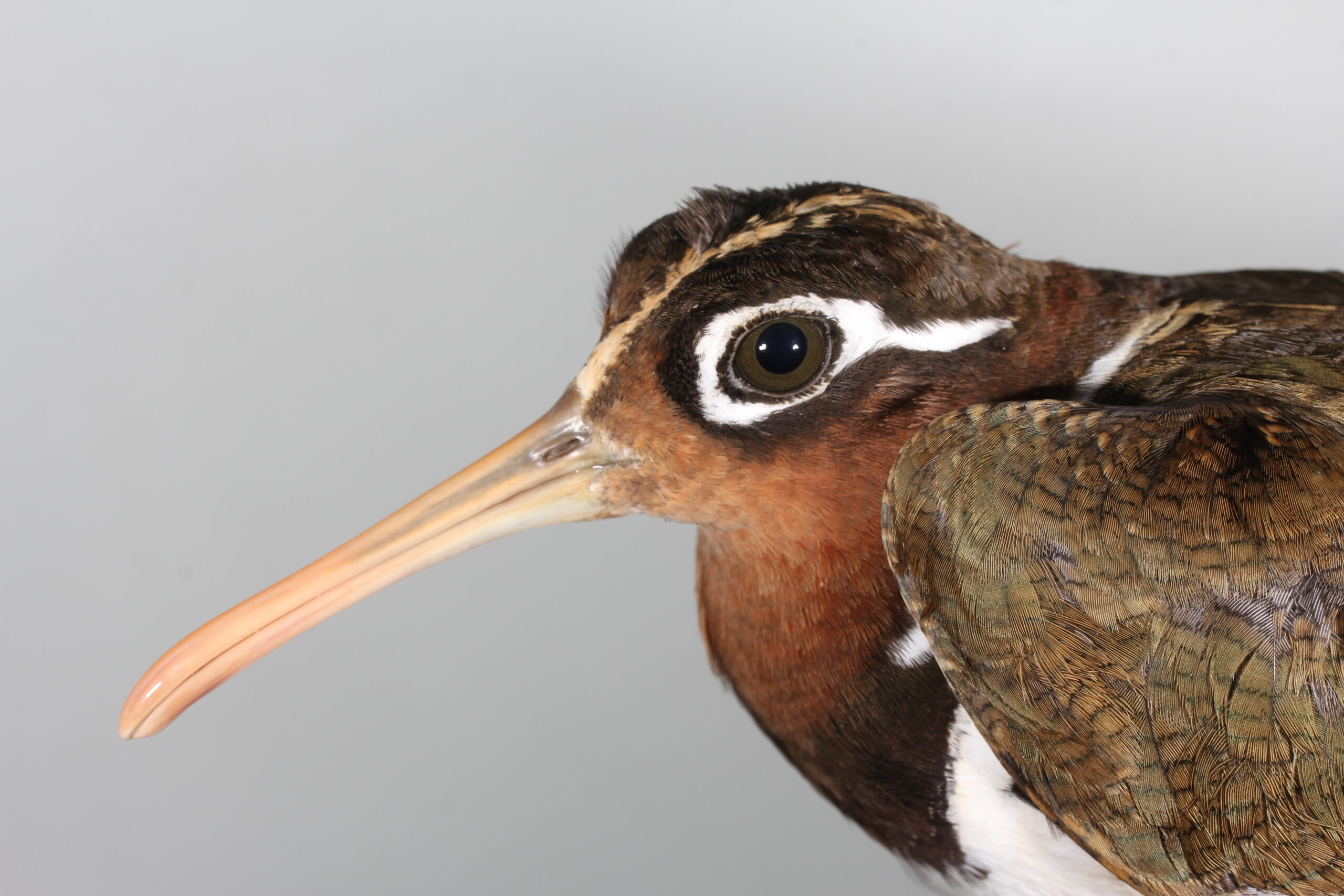



Annnd we’re back in the Paddyfields! Is the weather ever going to realise it’s Winter?!
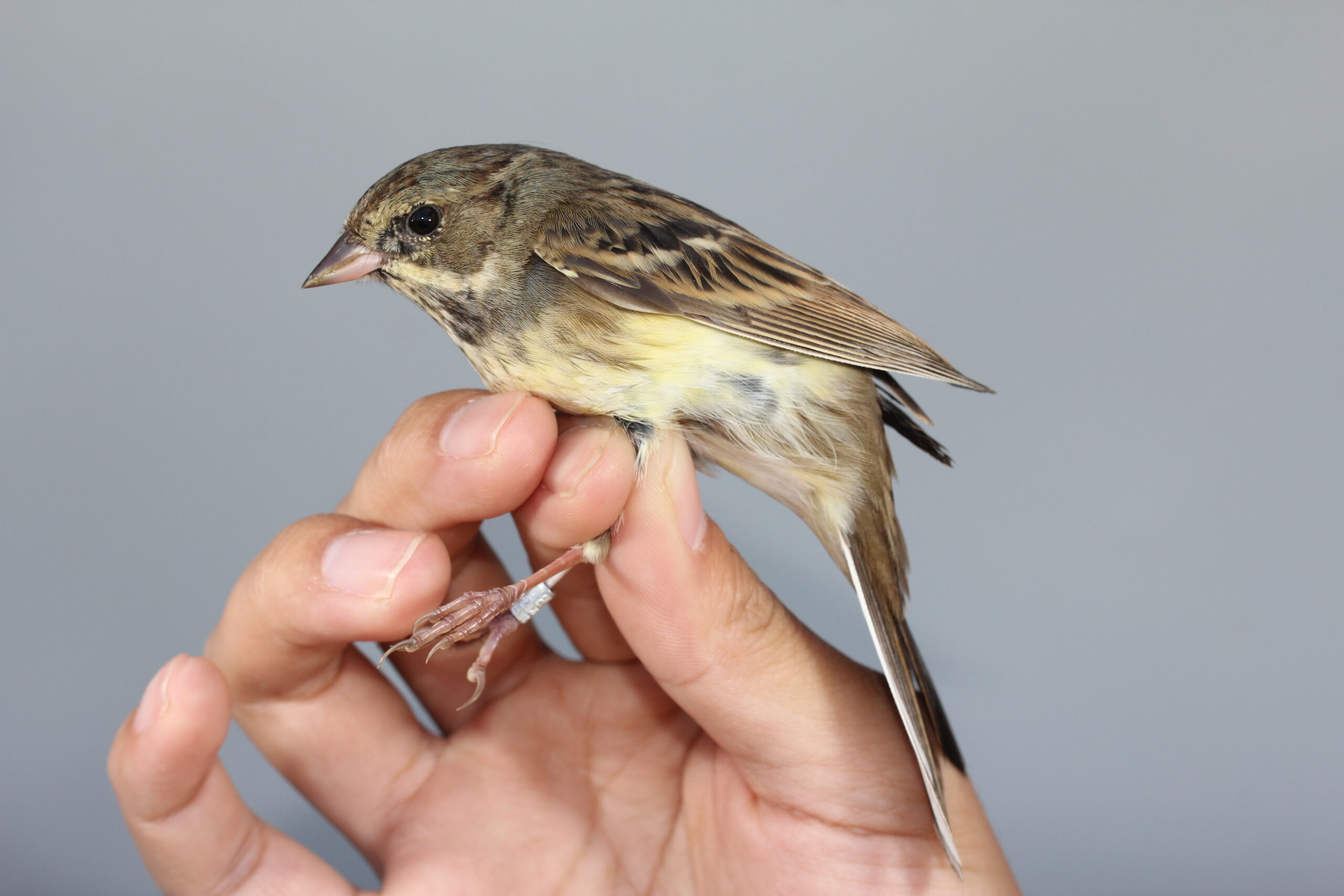
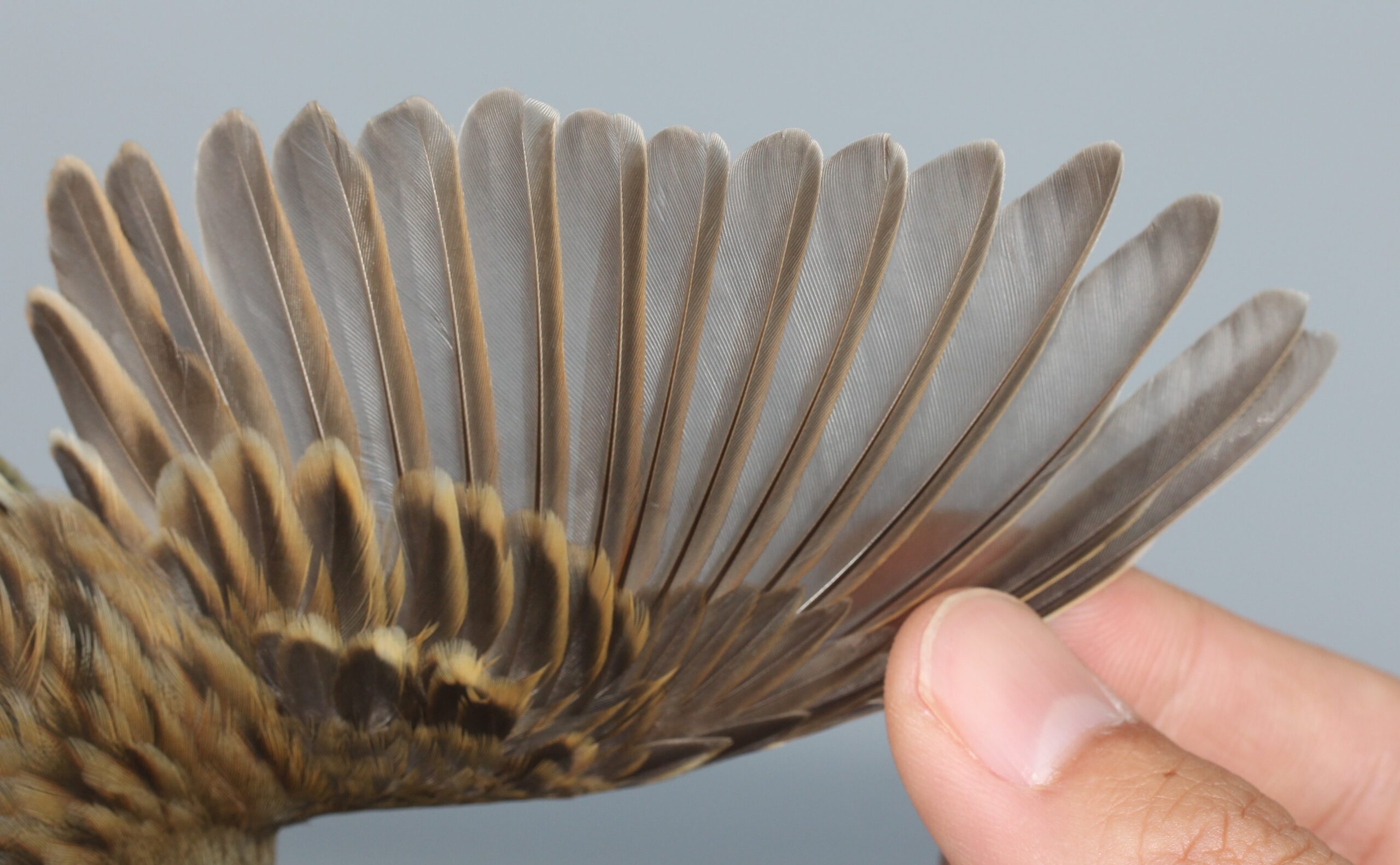
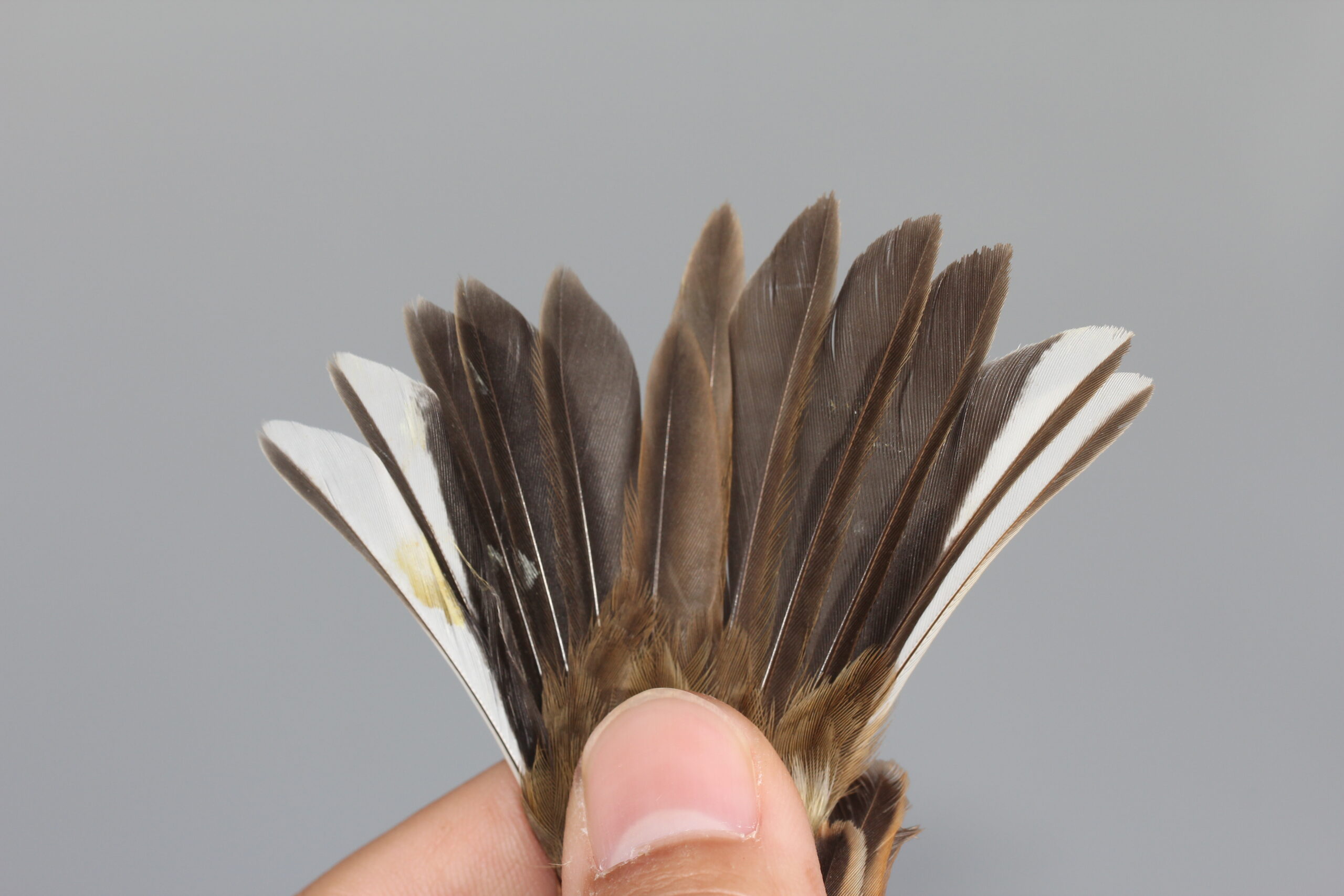
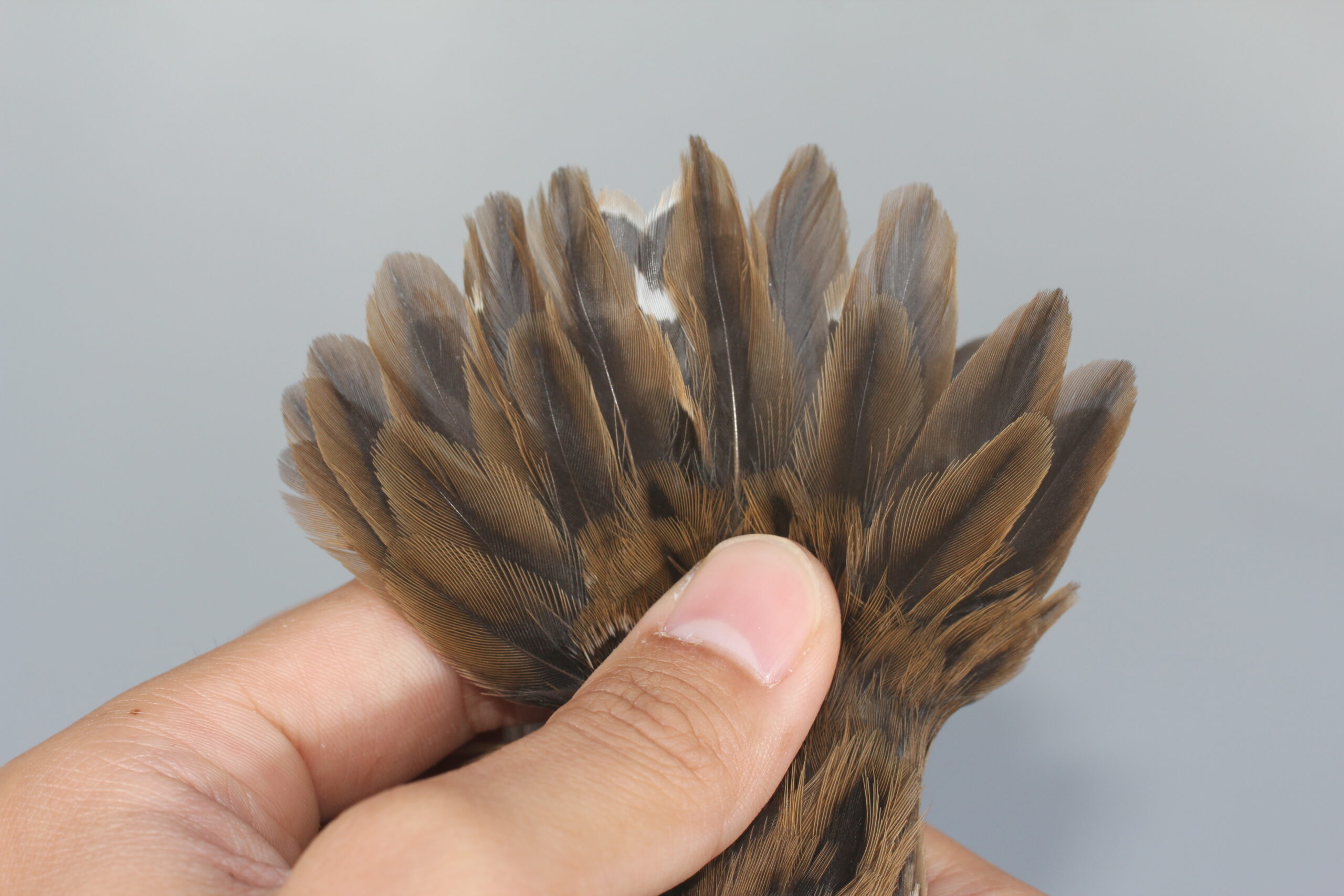
At least our Buntings never disappoint us, with two gorgeous Black-faced Buntings this time! Our first individual was a very interesting young male, who barely needed us to check the skull for his age. If we look the tail, we can see that the left side of the tail is growing. Comparing these growing feathers to the unmoulted feathers (right side), we can see the change in density and shape (much broader and less pointed) of the feathers. This shows us that the old feathers must be juvenile (if they were adult, there would not be a change in the shape and density between old and new feathers), and thus, this must be a 1st calendar year bird.
Regarding the sex of this bird, the level of grey in the head and neck, coupled with the yellow tint in the belly tells us that this is a young male.
Our 2nd individual was also a young bird, seen by the juvenile-type tail and incomplete skull development. In the head we see very little grey, and a strong eyebrow and malar stripe, a patterning usually associated with the females of this species. Therefore, this must be a 1st calendar year female!
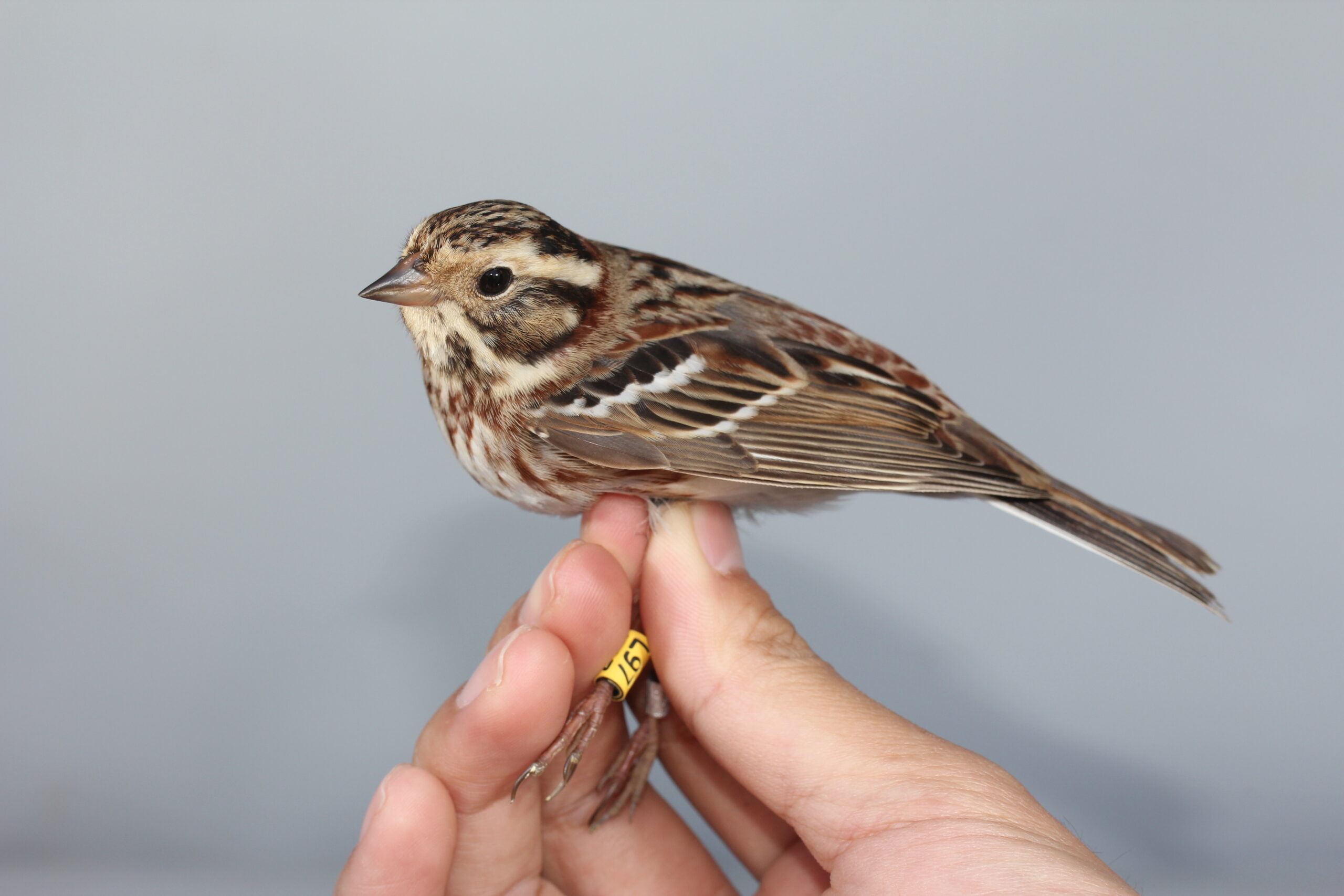
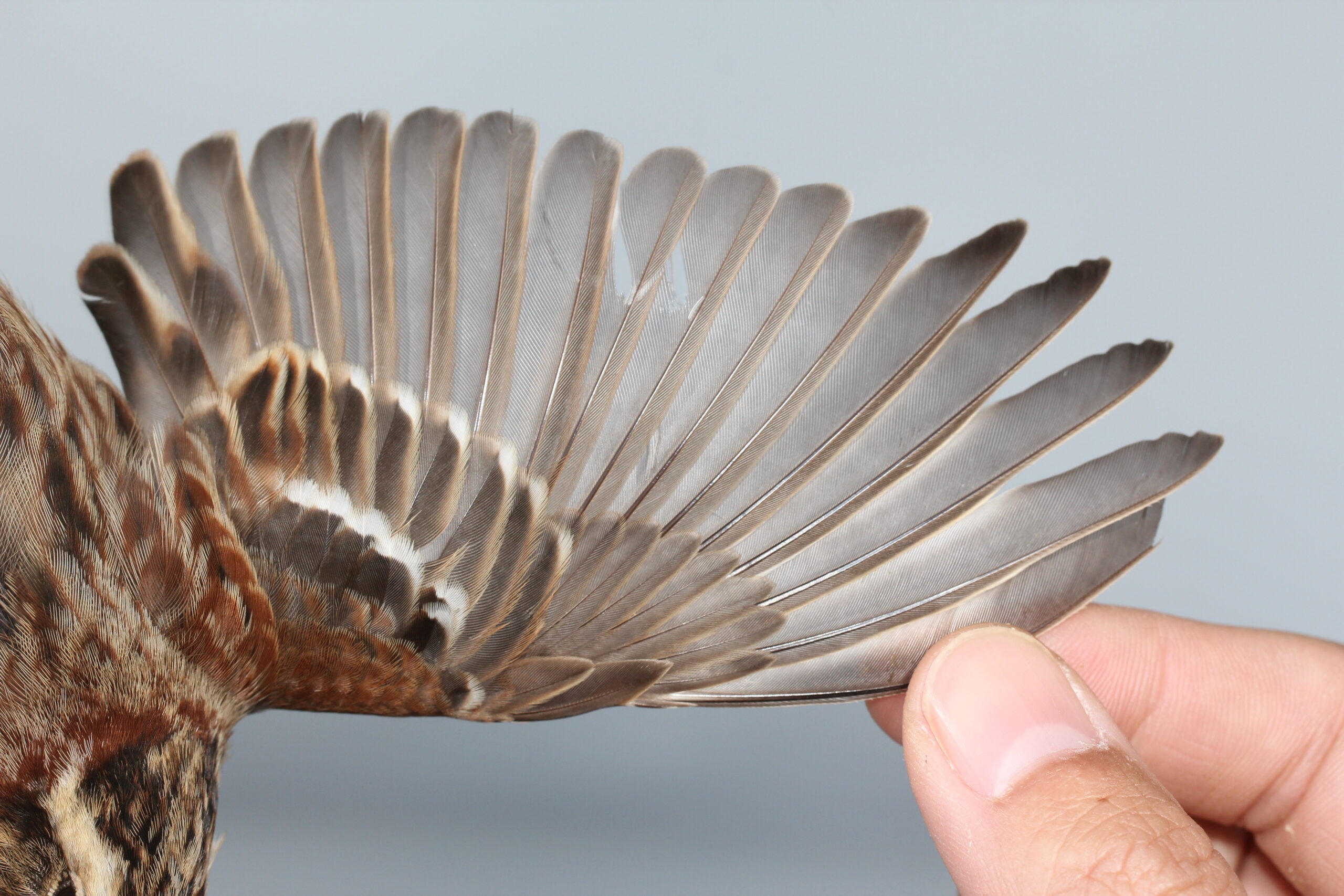
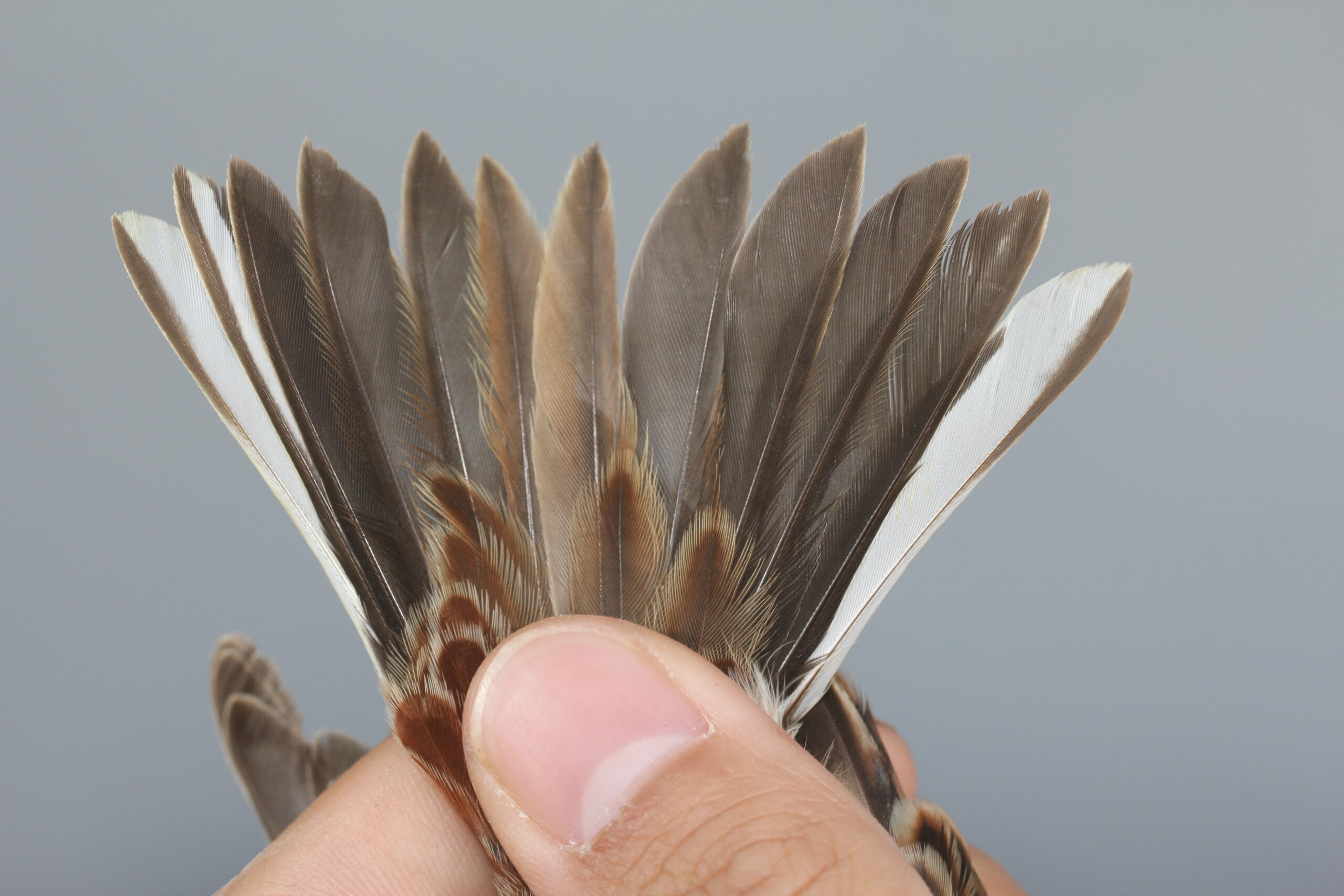
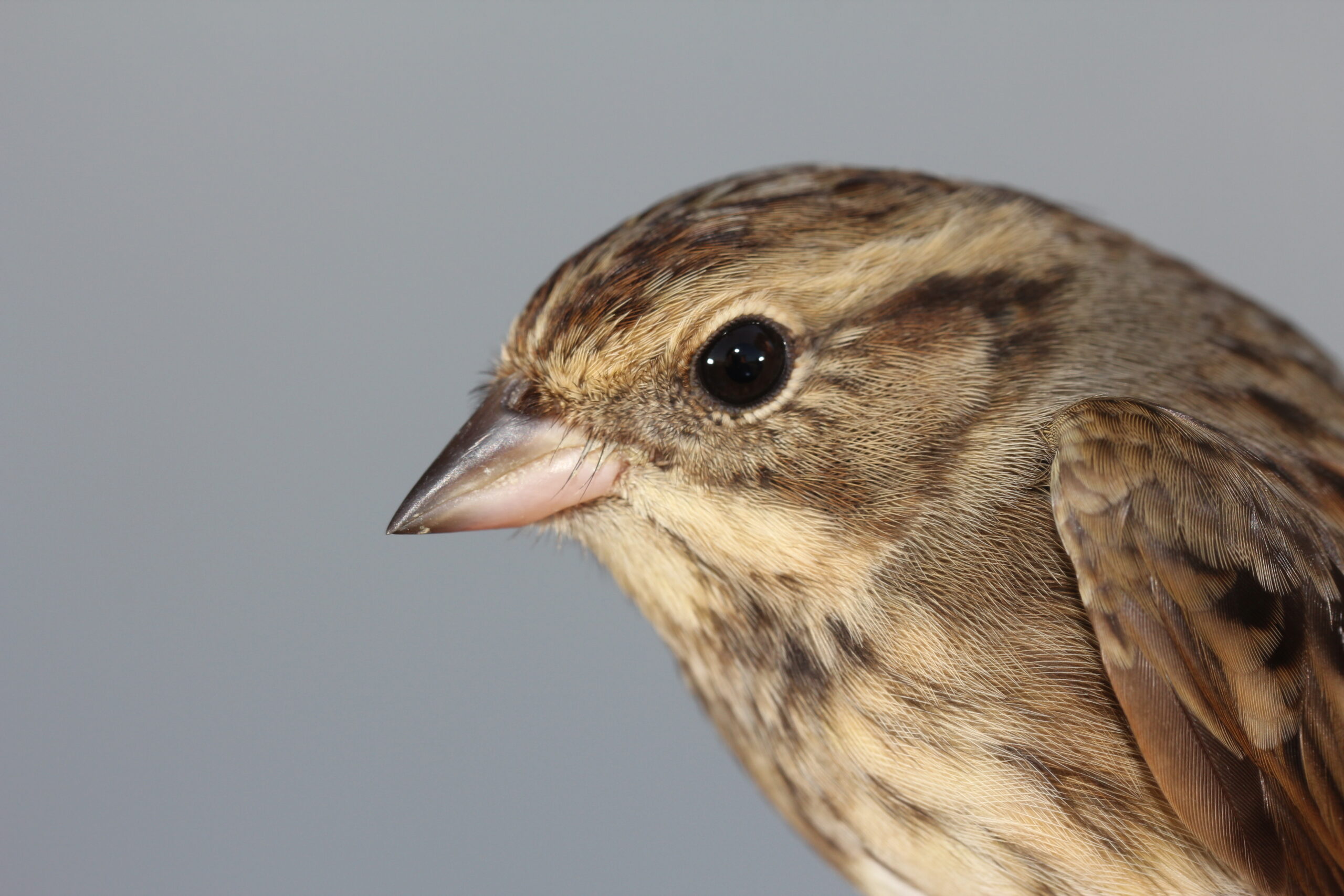
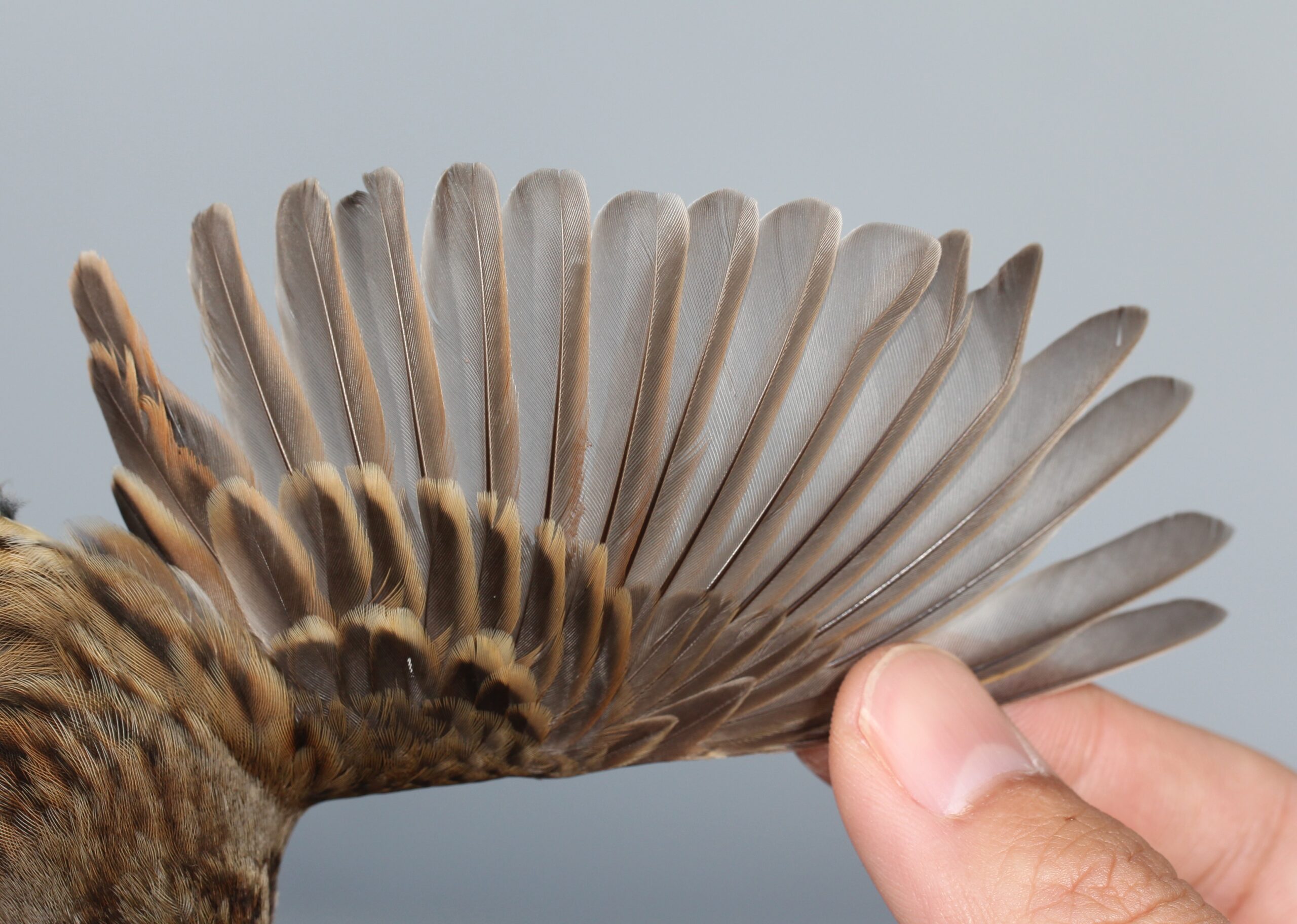
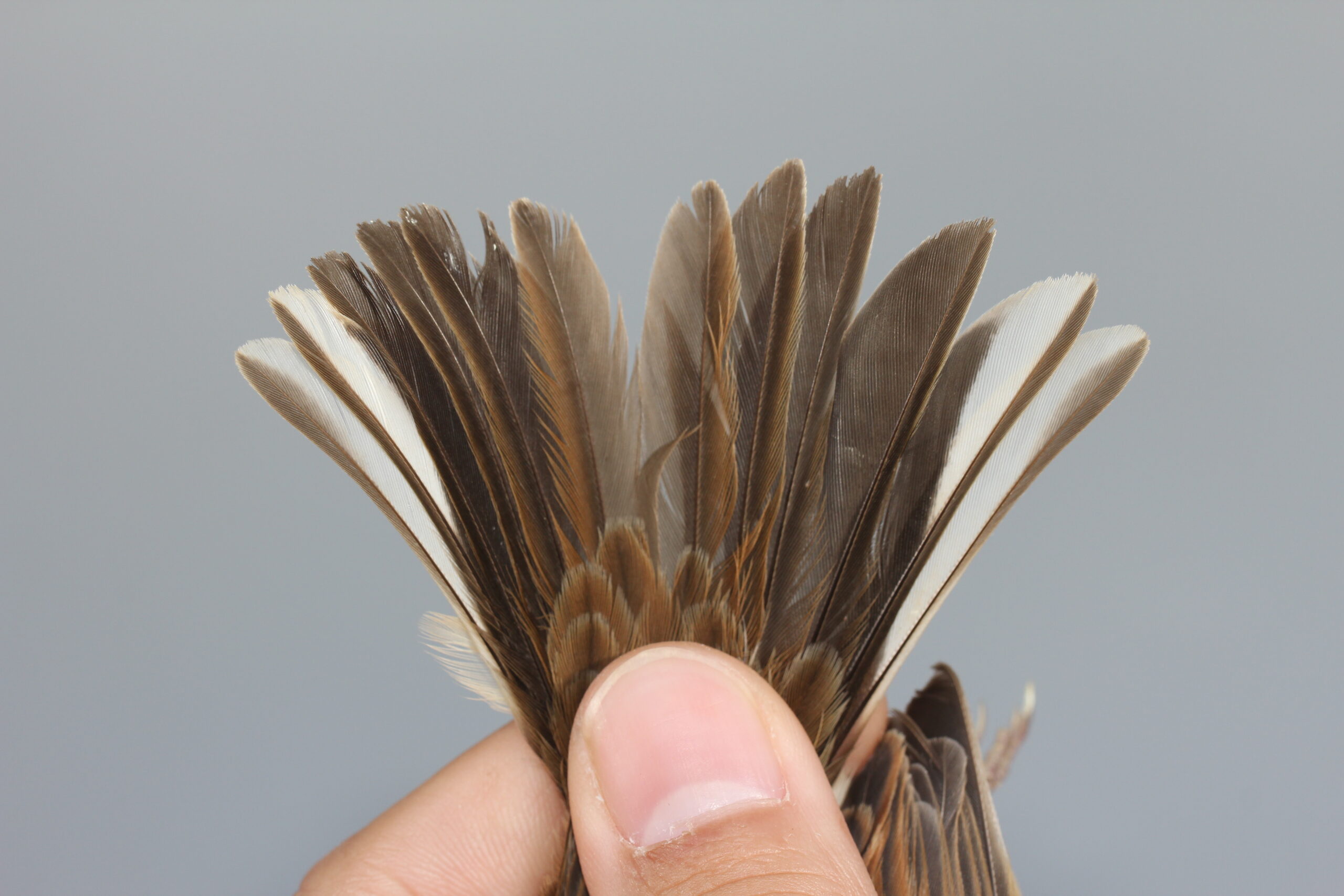
Next up was one of our less common Bunting species, but an absolutely stunning one- the Rustic Bunting! These guys spend the Summer all the way up in Siberia before coming South for the winter. We age them in just the same way as the other Buntings- GCs vs PCs, tail and skull. From this, we can see the juvenile-type tail and incomplete skull development, suggesting that this must be a 1st calendar year bird. The level of daark chestnut in the body, contrasting eyebrow and malar streak, and black in the crown and ear coverts all suggest that this must be a 1st calendar year male.
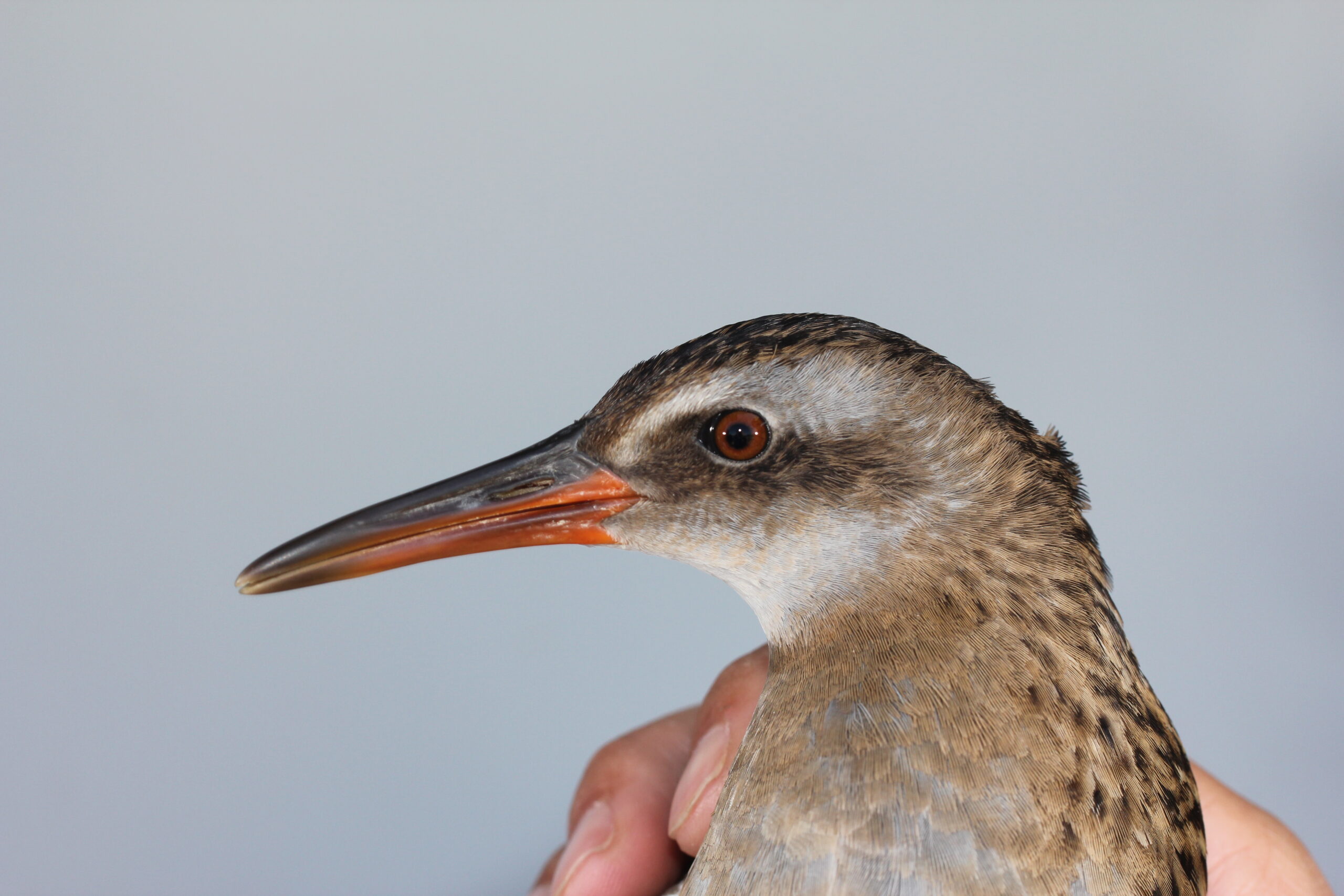
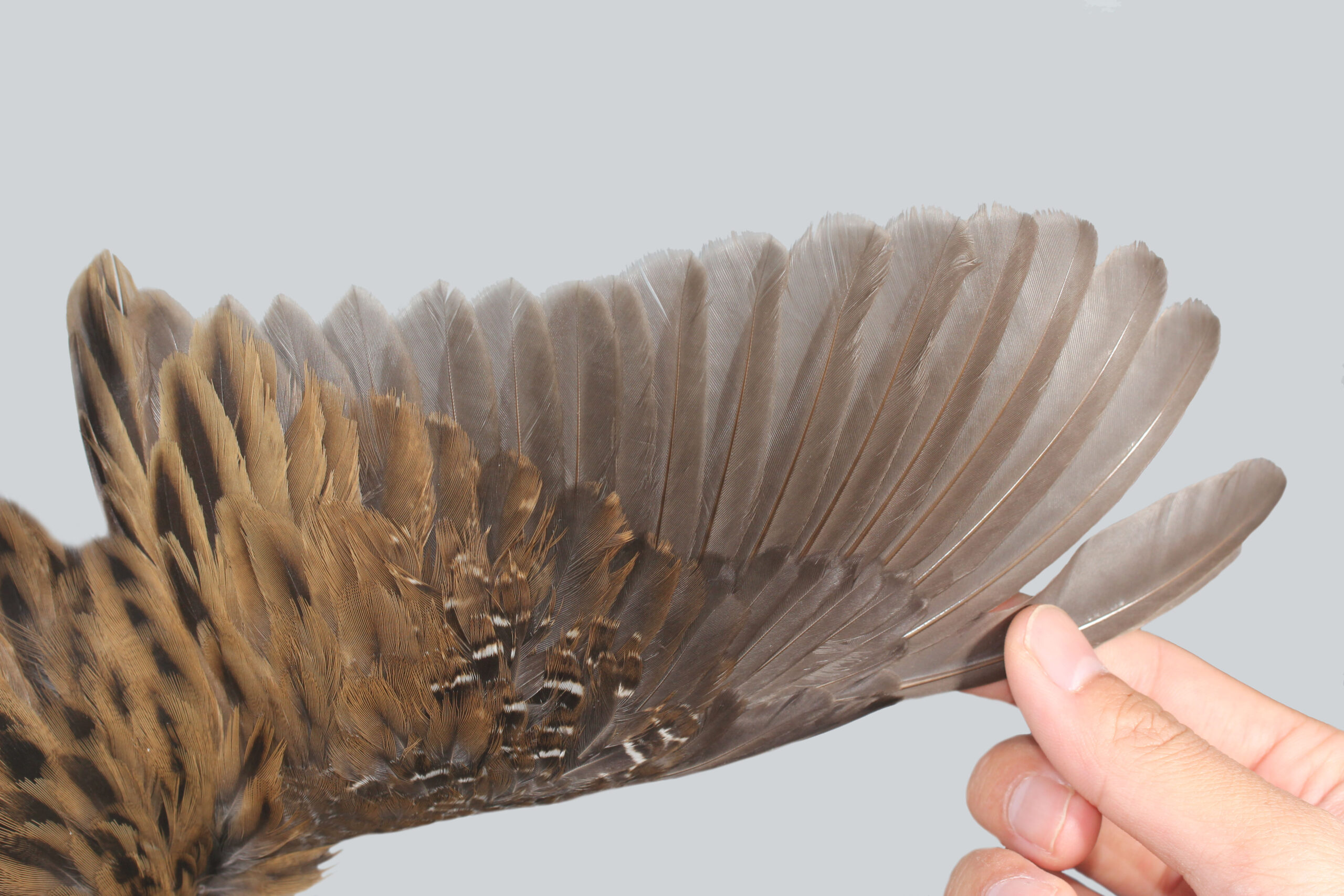
We ended the day with quite a surprise in the nets; our fourth ever Eastern Water Rail! This individual showed a uniformally adult wing and iris, so we can say this bird is a 2nd calendar year or older!
Daily Totals
| Species | Original | Recapture |
| Black-faced Bunting | 3 | 0 |
| Bluethroat | 1 | 2 |
| Chestnut-eared Bunting | 3 | 0 |
| Dusky Warbler | 1 | 1 |
| Eastern Water Rail | 1 | 0 |
| Little Bunting | 66 | 3 |
| Red-throated Pipit | 1 | 0 |
| Rustic Bunting | 3 | 0 |
| Scaly-breasted Munia | 13 | 0 |
| Spotted Dove | 1 | 0 |
| Stejneger’s Stonechat | 0 | 1 |
| White Wagtail | 0 | 1 |
| White-rumped Munia | 2 | 0 |
| Yellow-breasted Bunting | 5 | 0 |
| Zitting Cisticola | 2 | 0 |
| Grand Total | 102 | 8 |
*Please note that all wild birds, their nests, and eggs are highly protected (under Wild Animals Protection Ordinate, Cap. 170) in Hong Kong. It is an offence to wilfully disturb, take, remove, or injure wild birds or their nests/eggs. The actions described here were undertaken by trained professionals holding the necessary licenses and permits issued by the AFCD.*