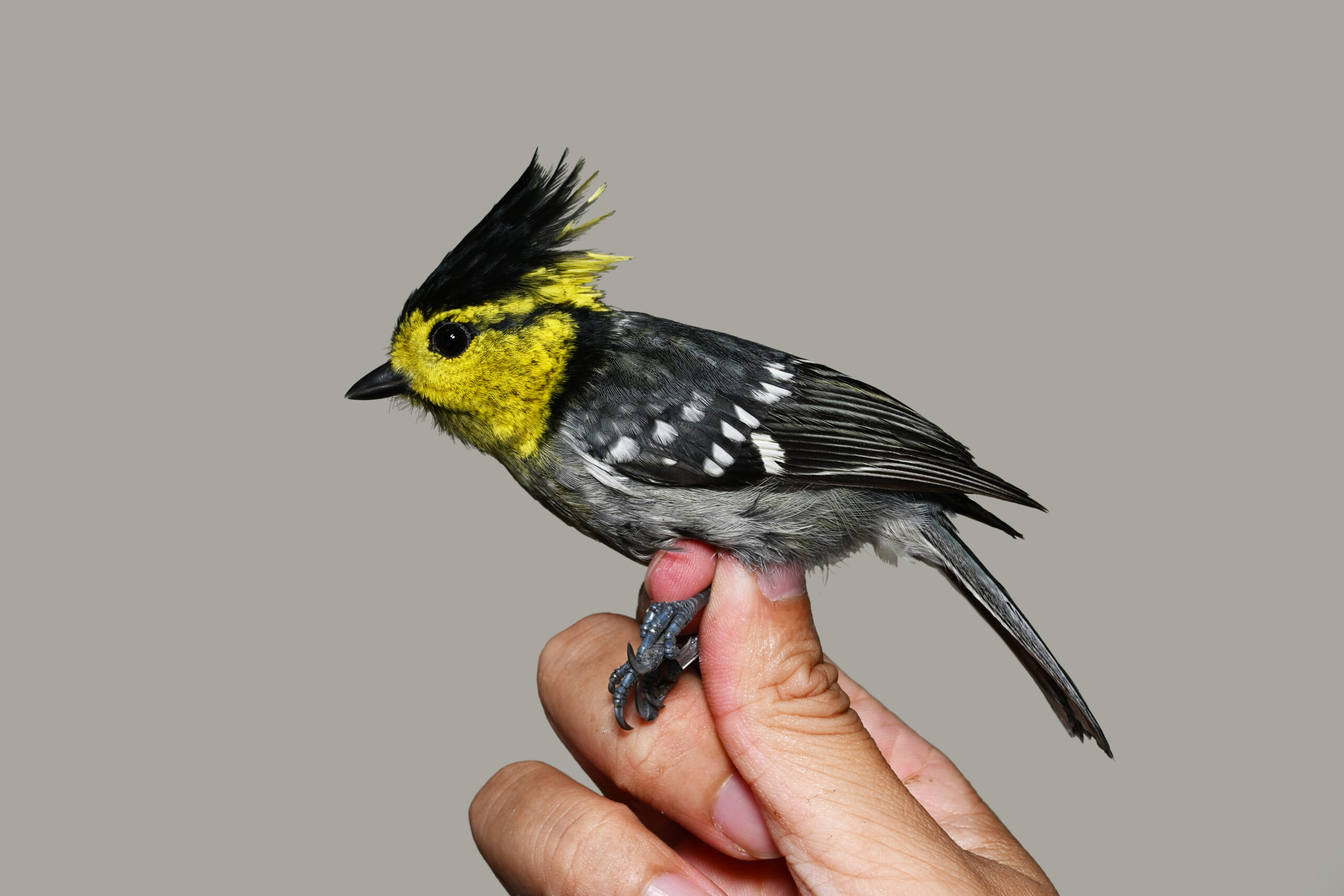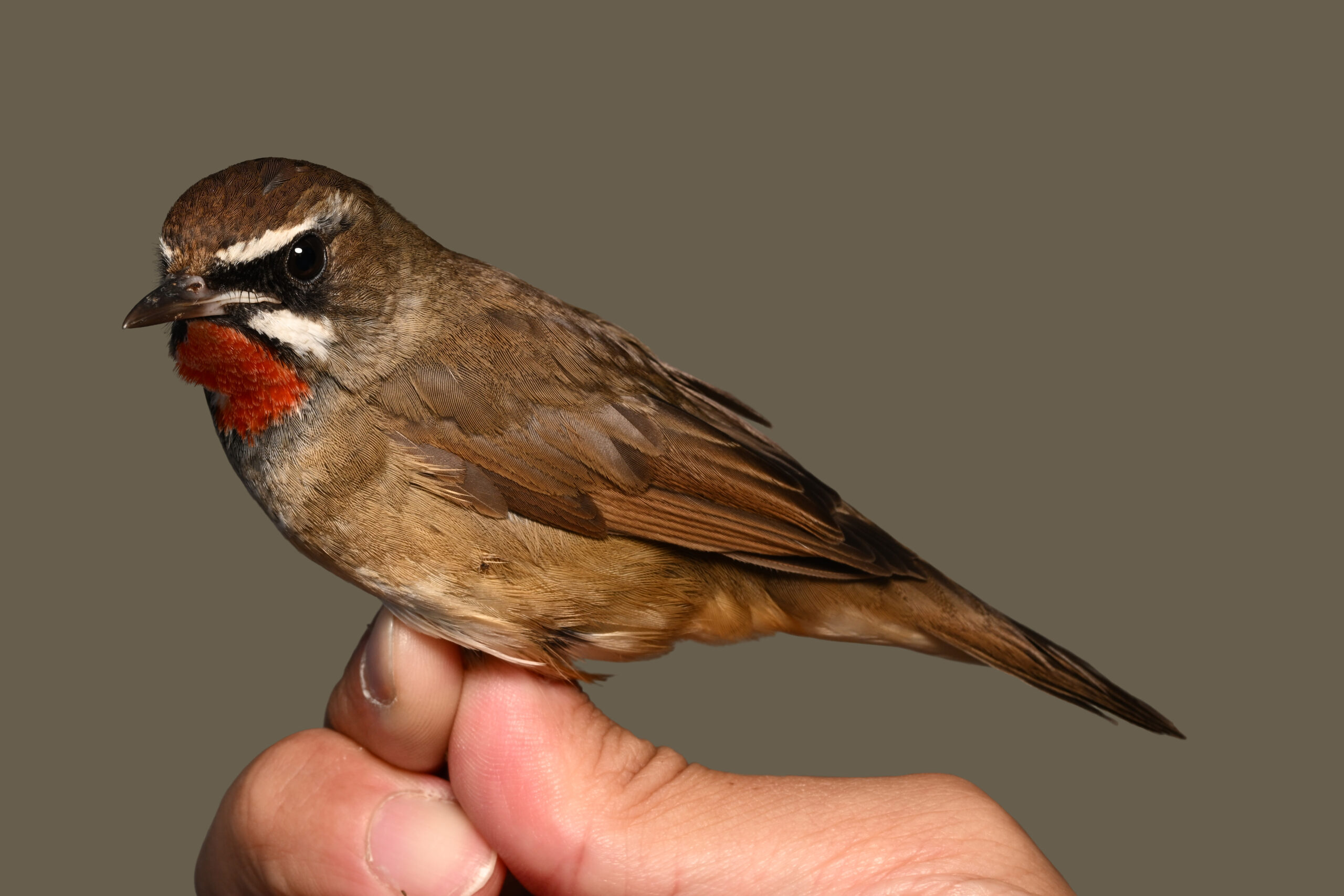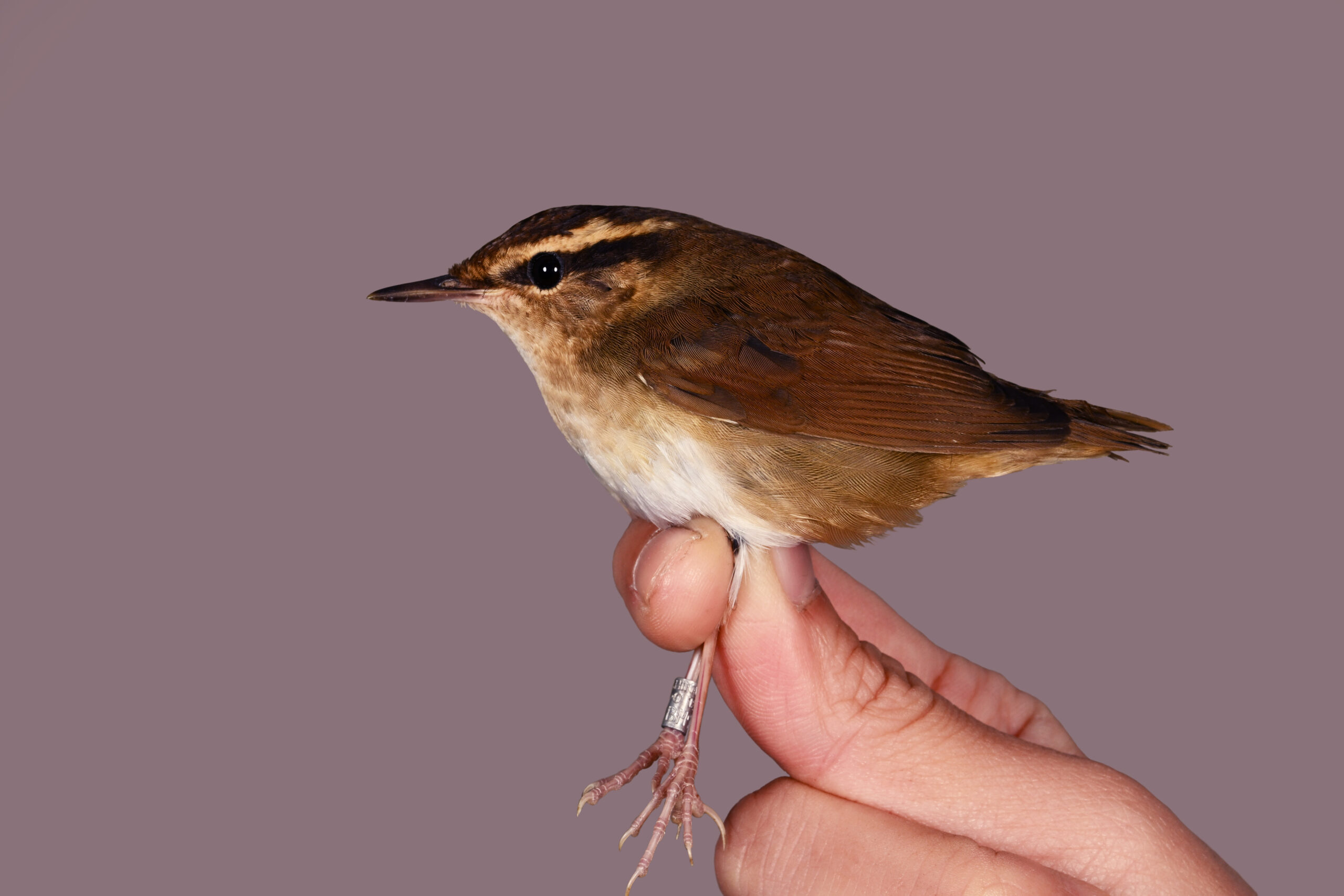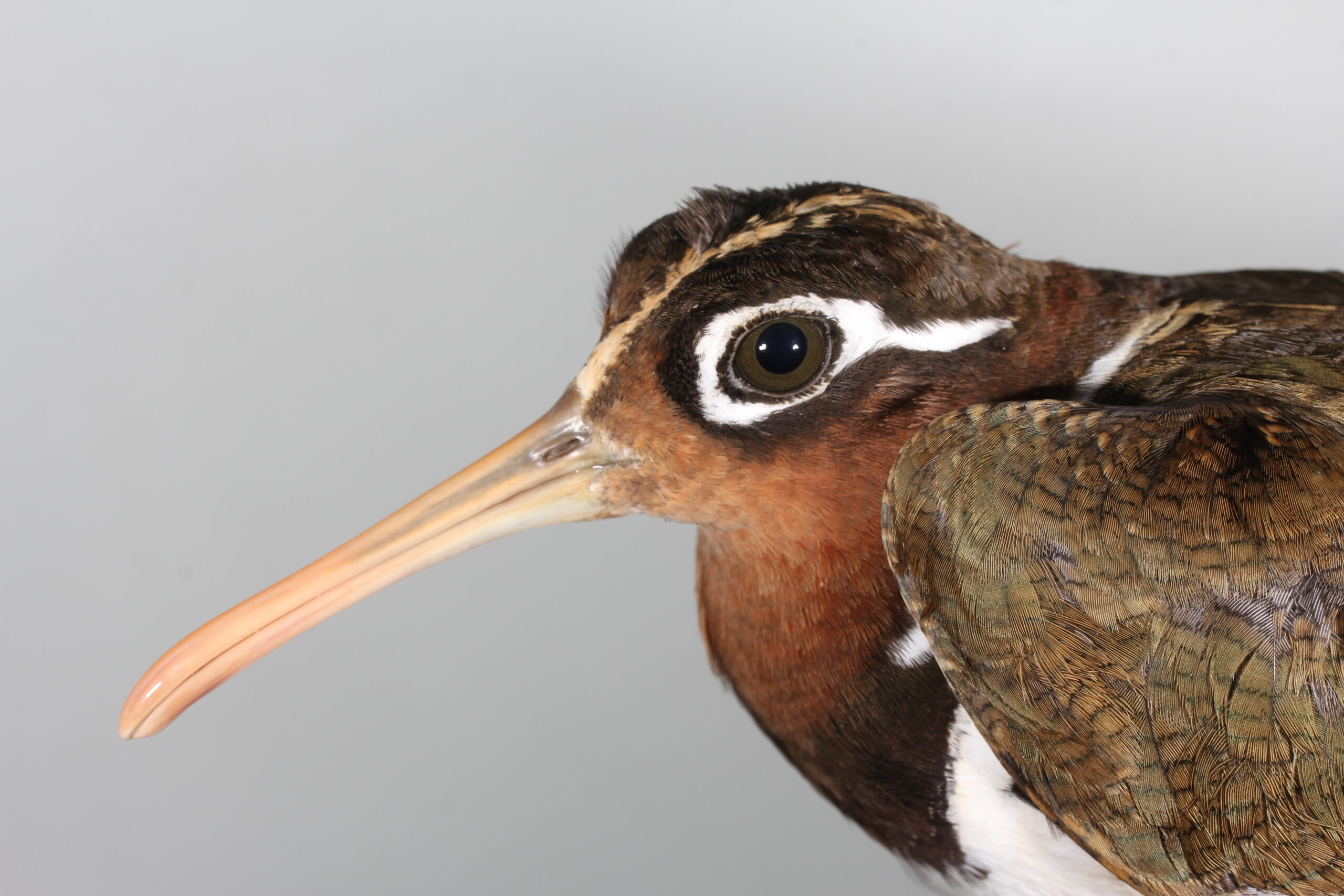



Today started off cold and wet. With just a few of us in the field today we set to work opening the nets, as the sun rose beneath the clouds, offering no escape from the chilly forest. But what incredible surprises this day had in store for us!
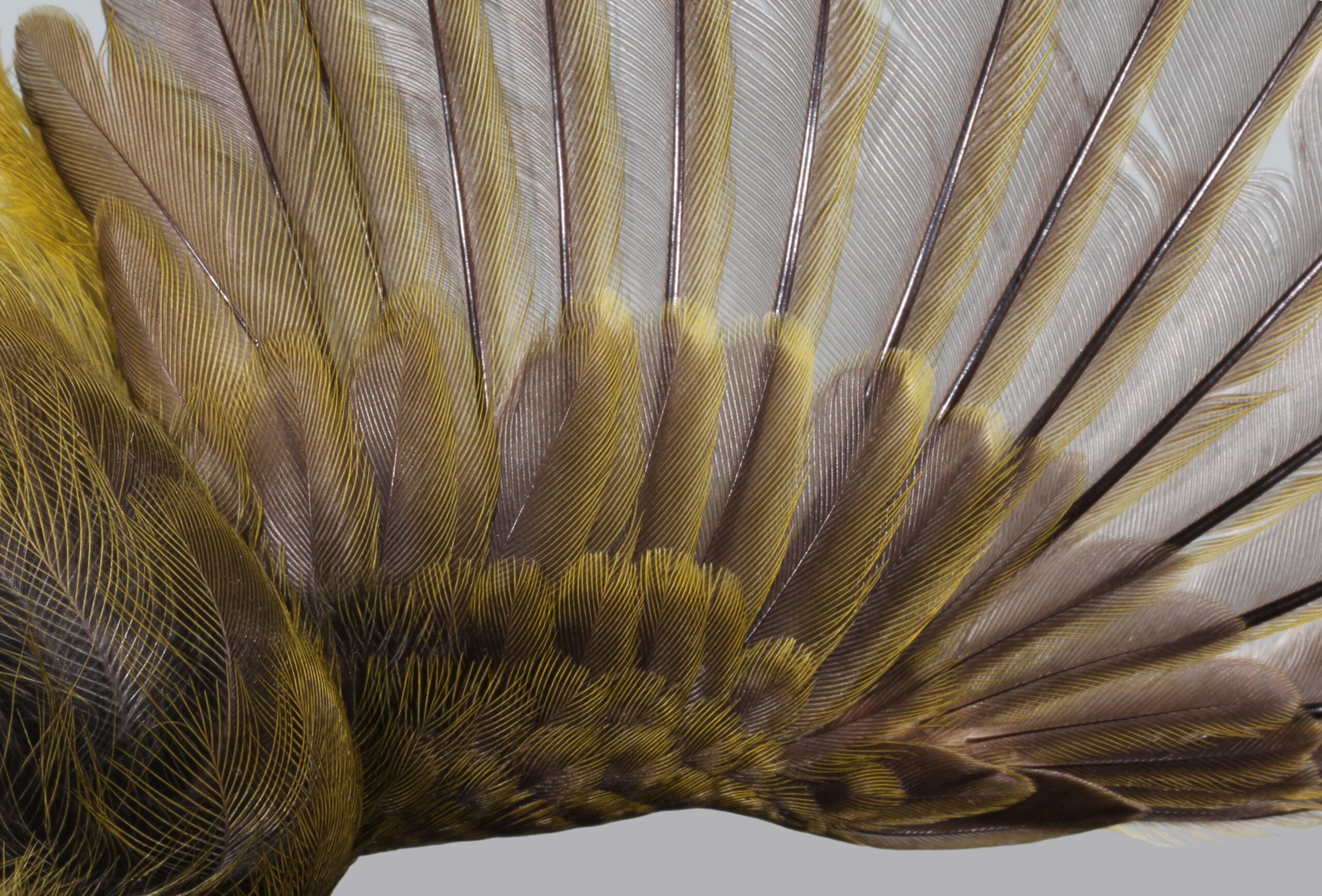
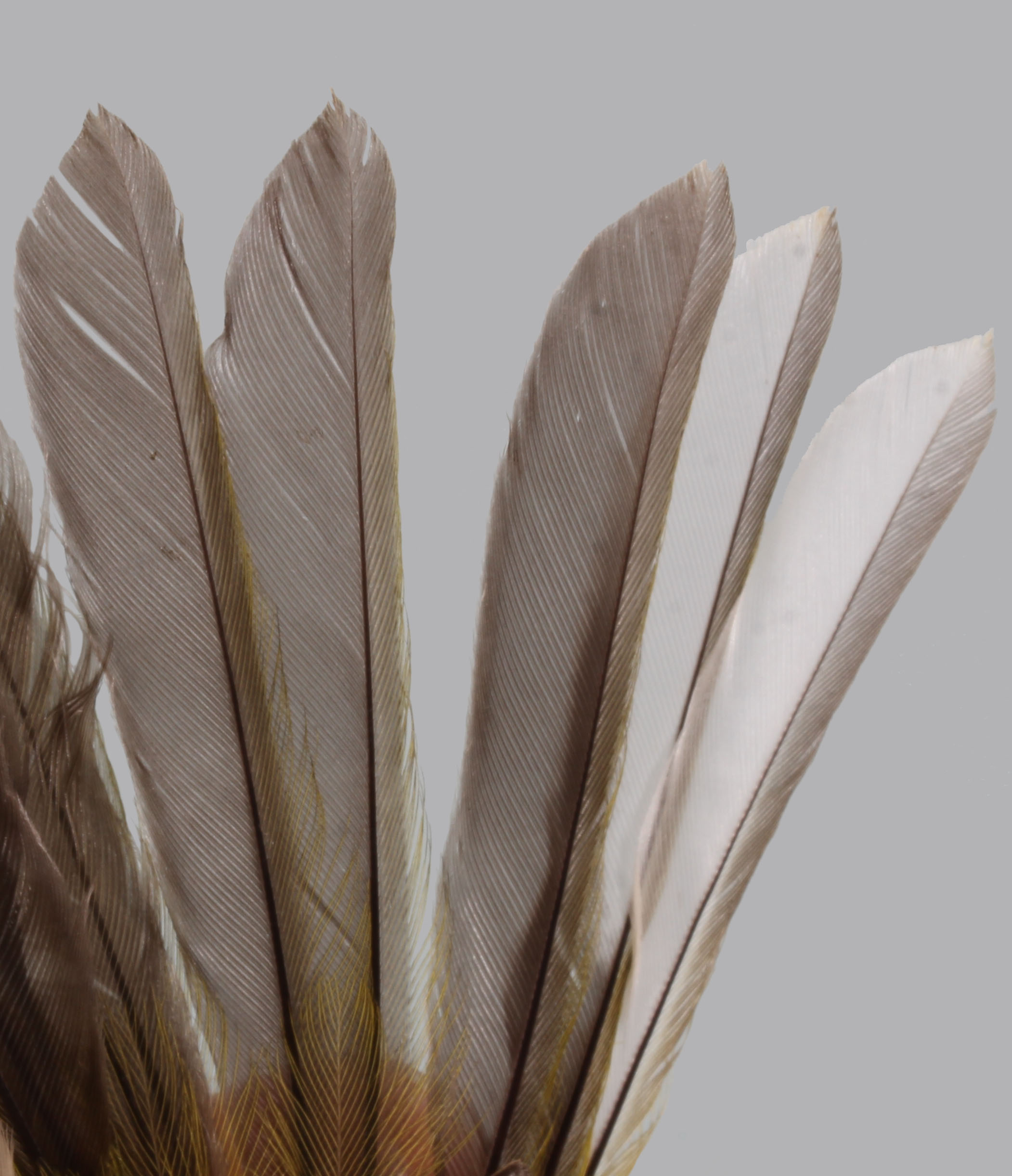
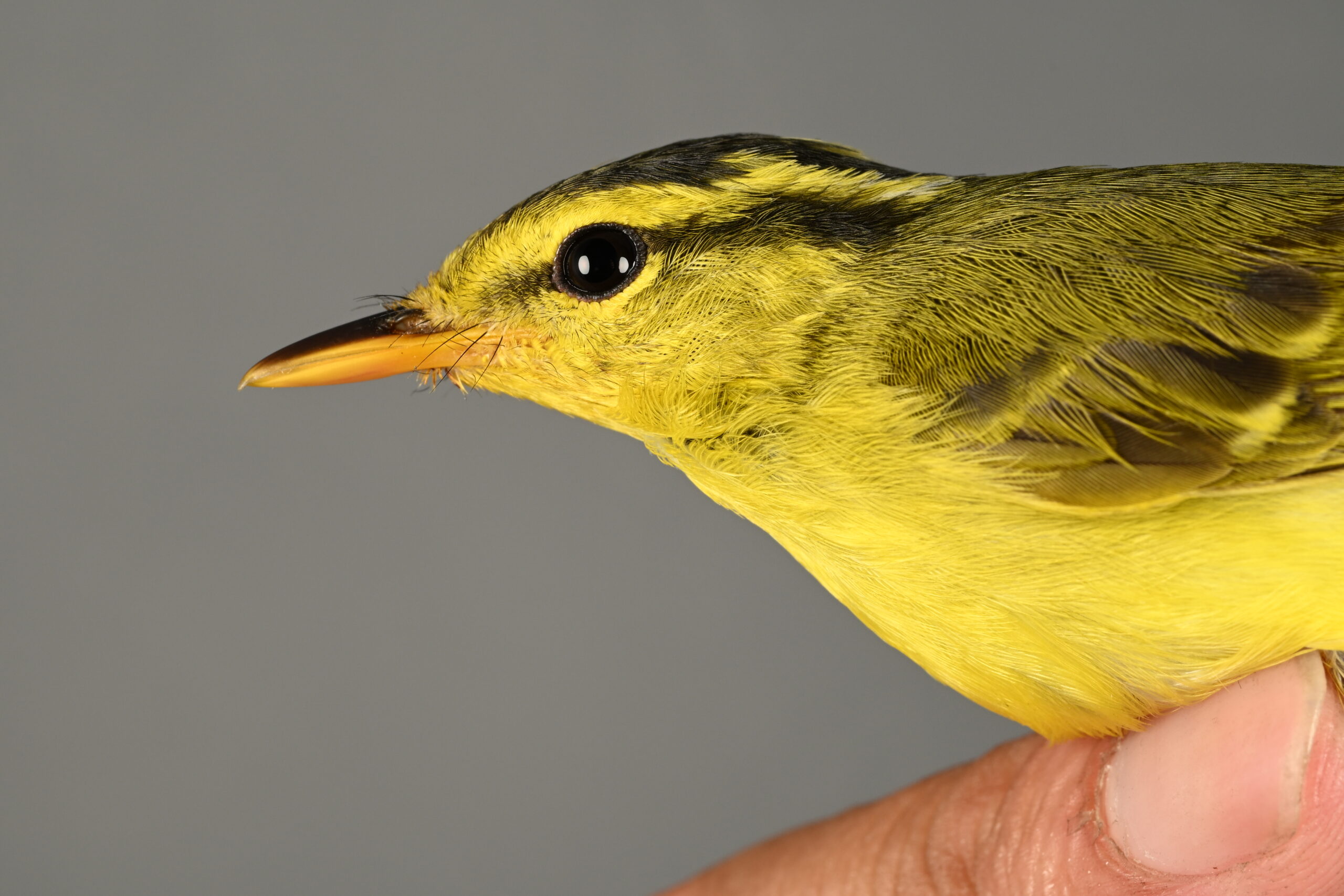
As we headed down the mountain in the first light, we were greeted by a little green warbler, with a grey crown and a yellow belly- a “Seicercus” warbler! The Seicercus warblers are those belonging to the genus Seicercus, but have now been separated into Seicercus and Phylloscopus.
Put simply, these are the little greeny-yellow warblers that are incredibly hard to spot darting around in thick bushes, and even harder to ID should you spot one (save for their little calls).
However, by looking at the amount of white in the outer tail feathers, the ‘weak’ amount of grey in the crown, and unbroken yellow eye ring, we could determine that this is a Bianchi’s Warbler (Featured Photo)!
This species is pretty rare for us to catch, and methods for ageing them needs some work, so we aged this bird as a 1st calendar year or older.
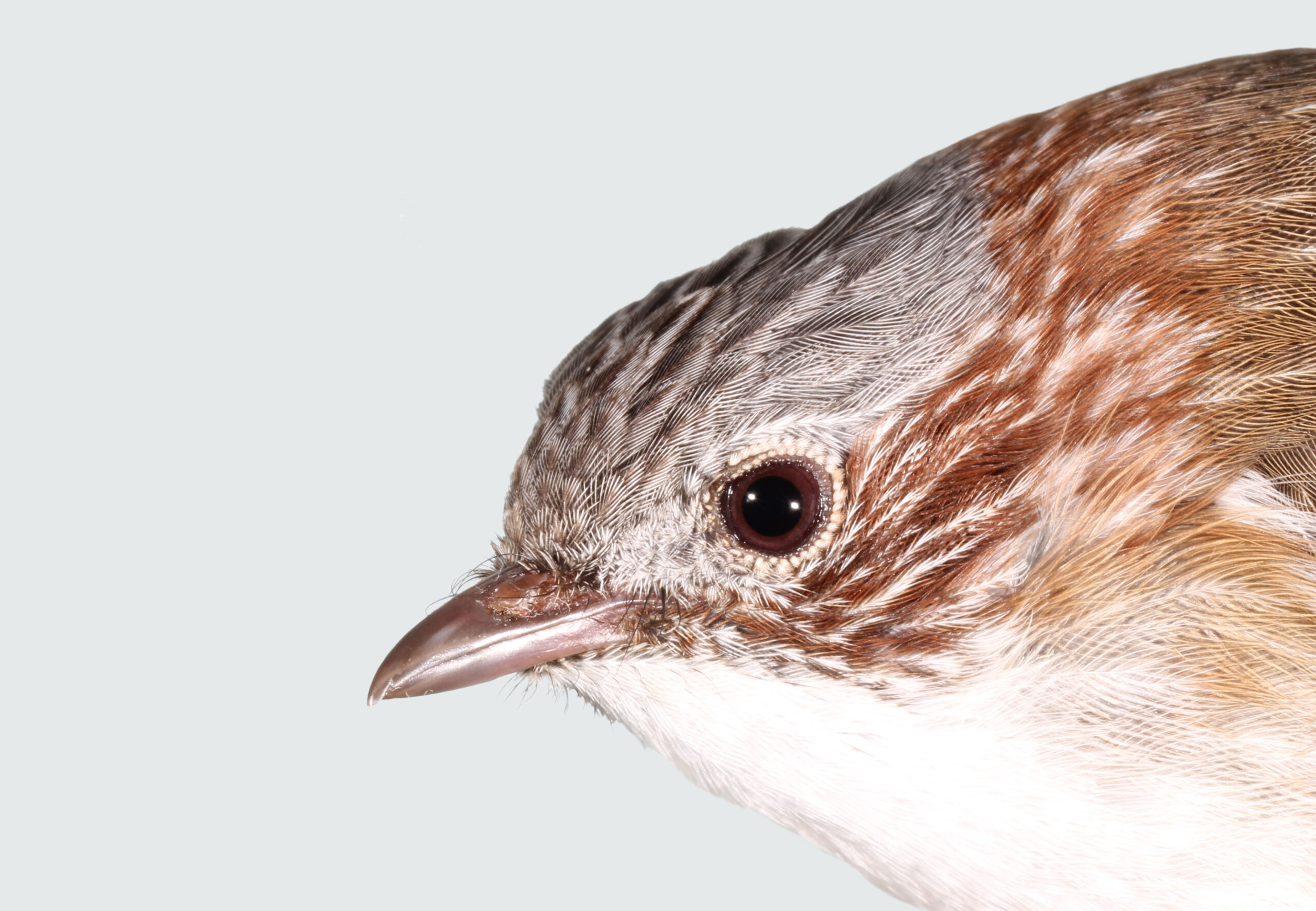
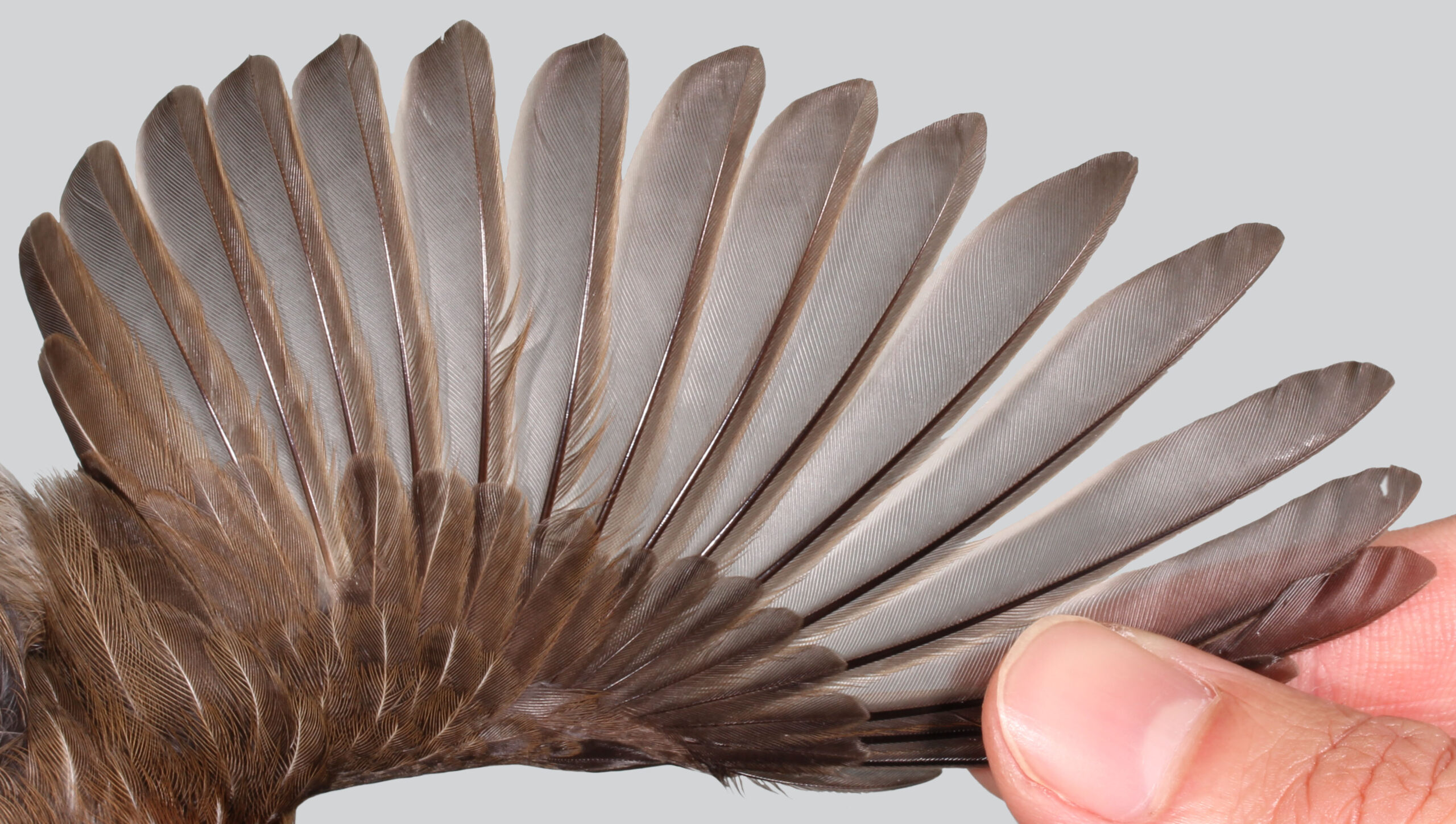
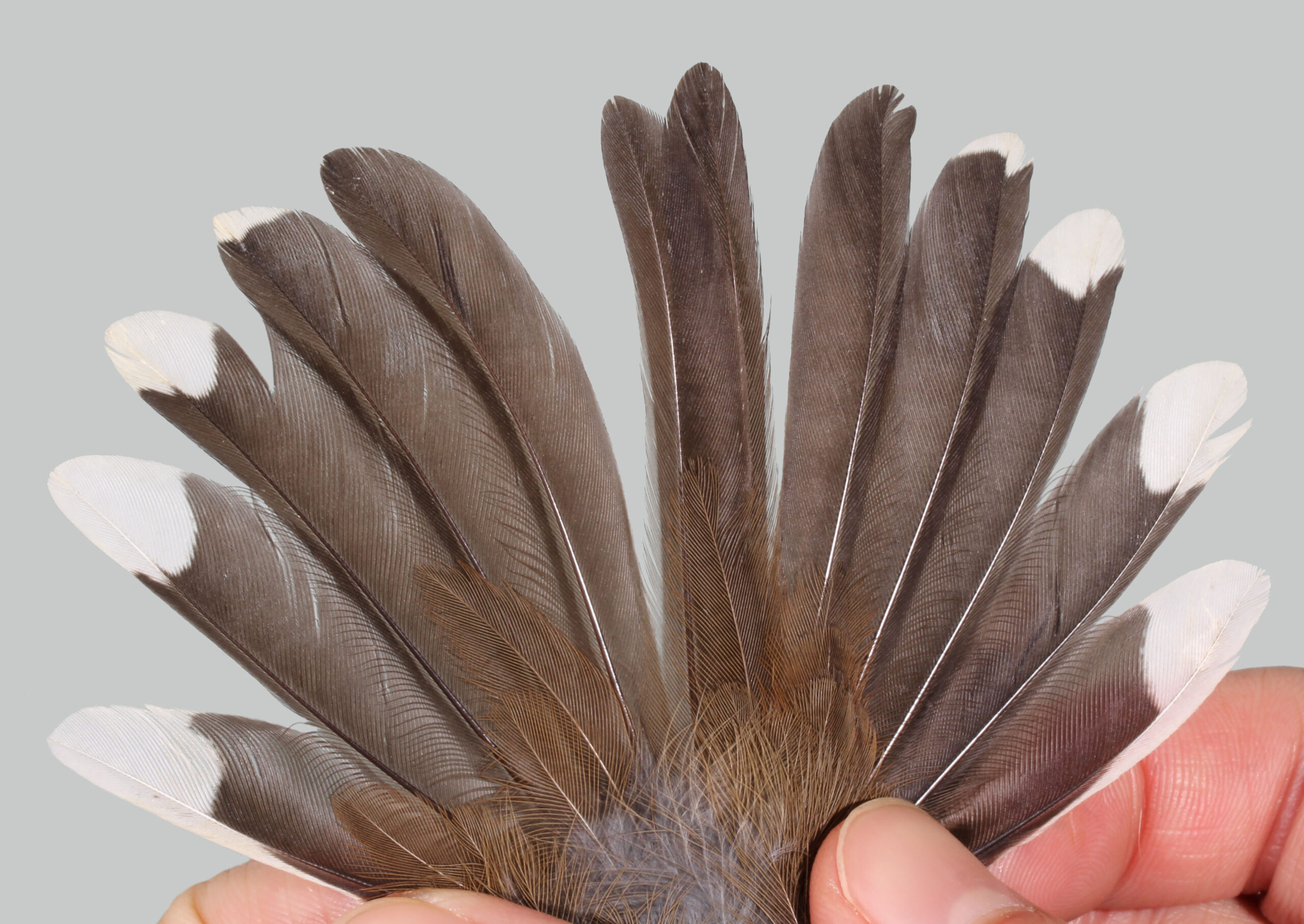
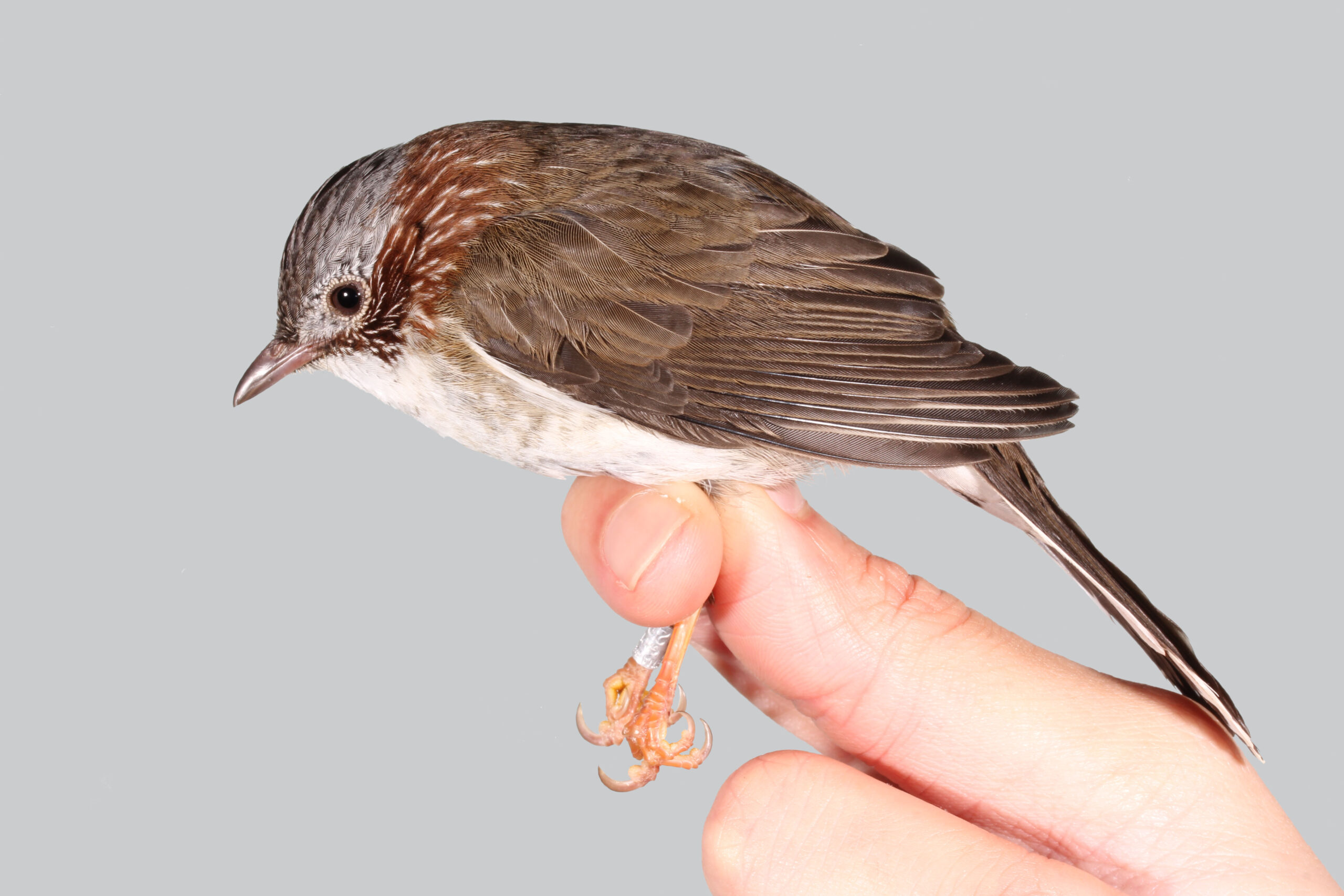
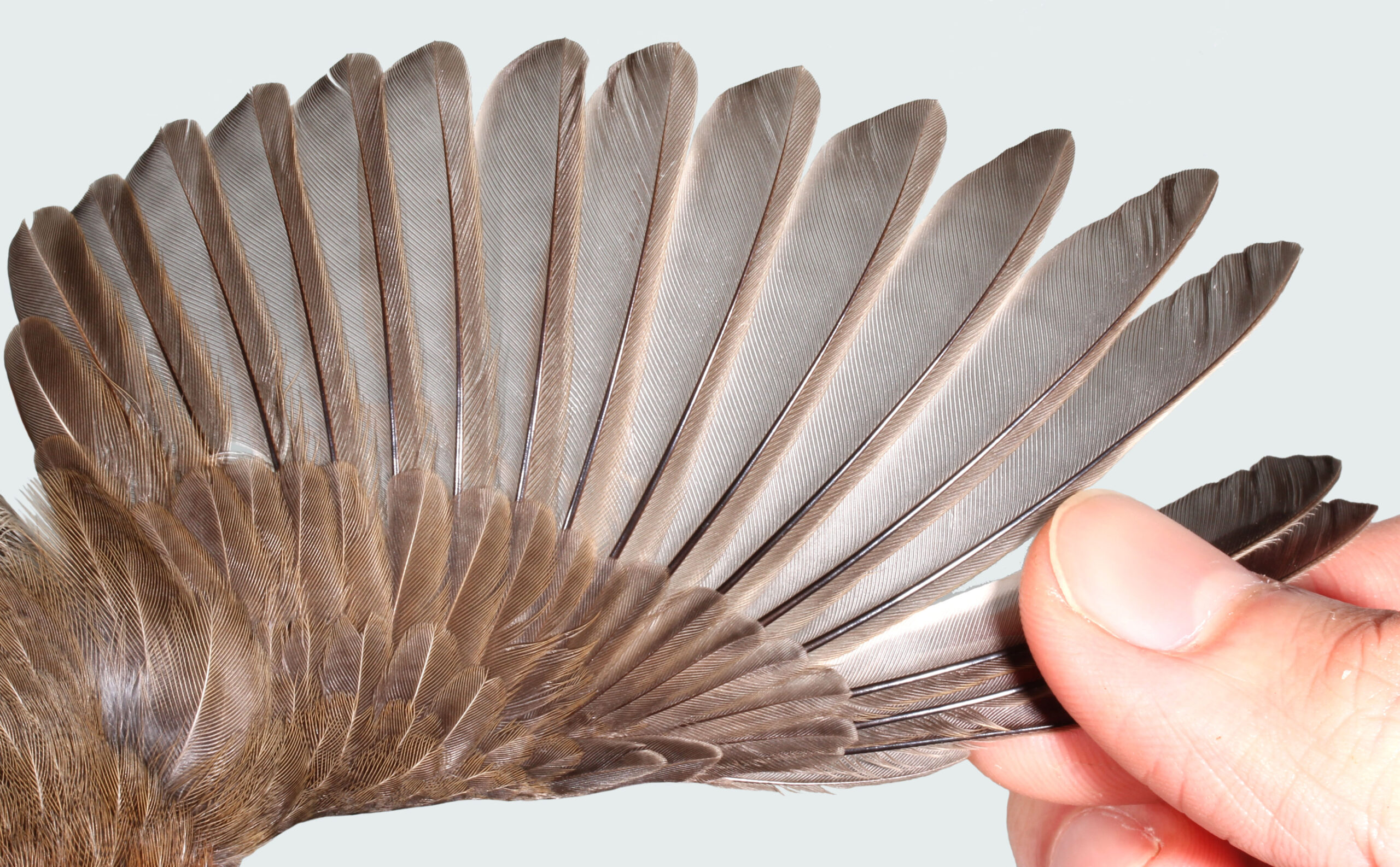
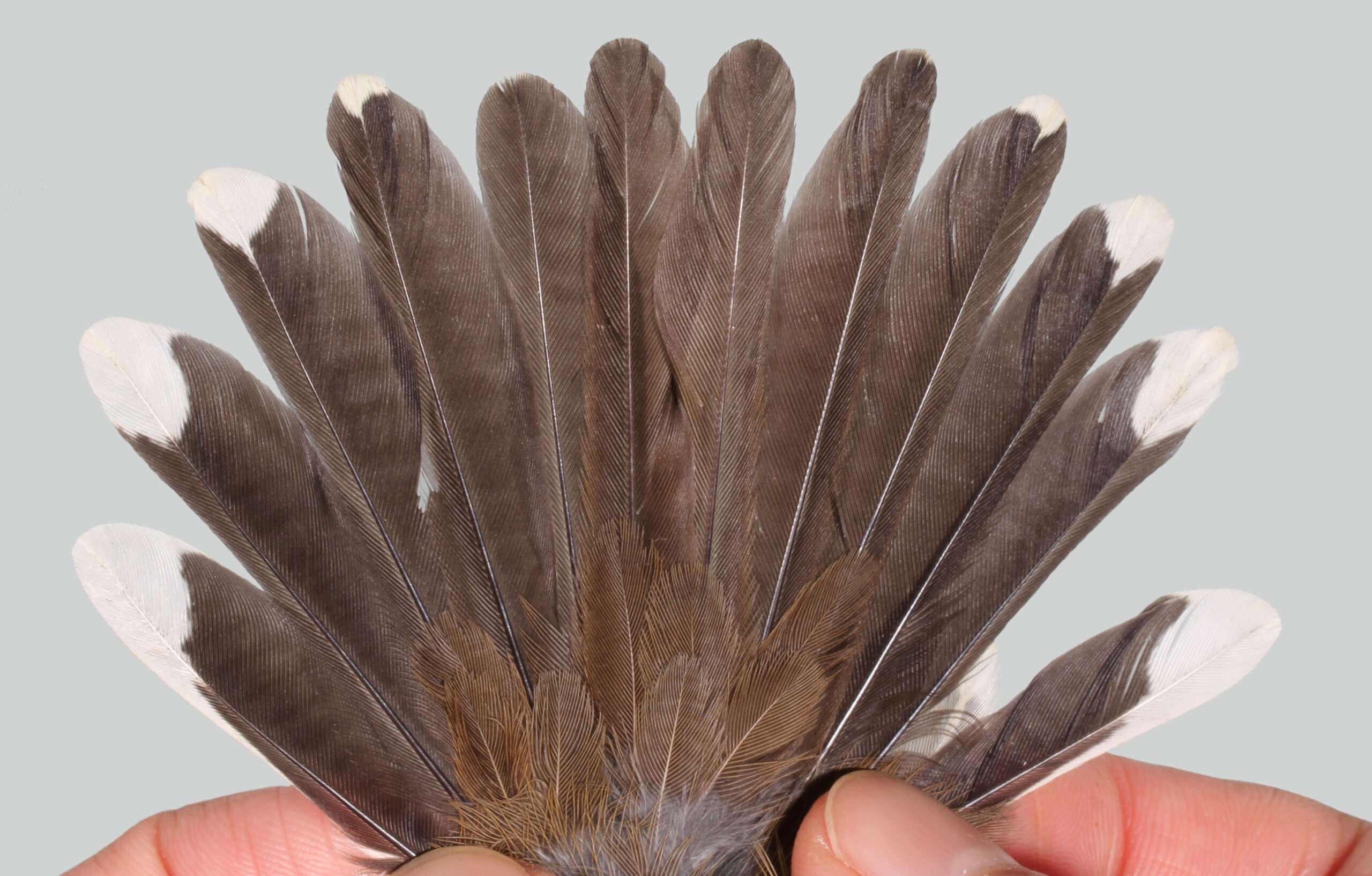
As we continued the morning, it seemed today was the day of the Indochinese Yuhinas, with a total of 26 individuals! This is another species with a lot of ageing information missing. With our individuals we found evidence of Summer Complete moults, which is likely undertaken by both adults and juveniles. This means that we would not be able to age the Yuhinas based on plumage. Instead, it seems in December there are some juveniles with incomplete skull developments (but most likely many with already completely developed skulls), and some showing juvenile-coloured irises.
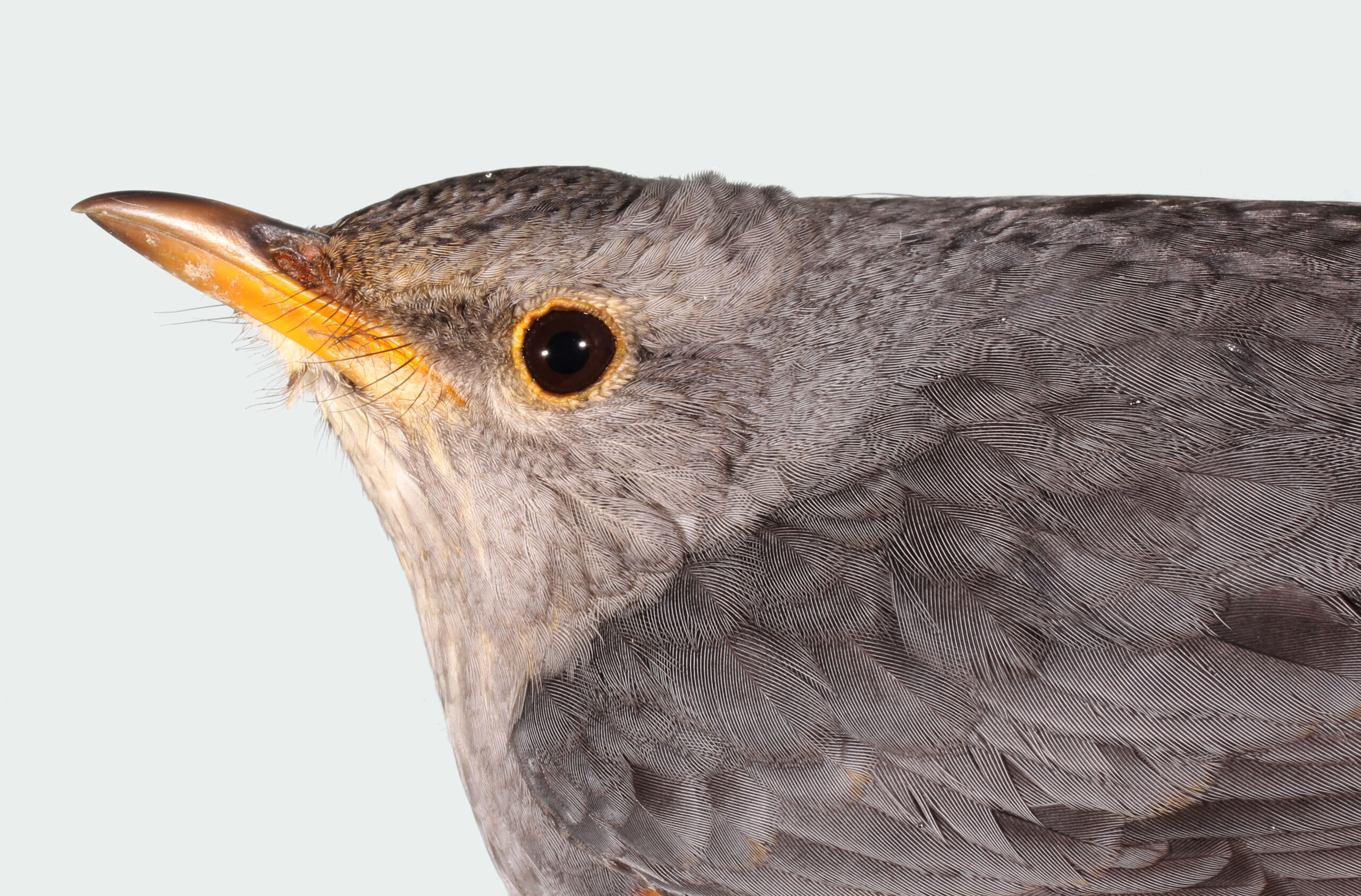
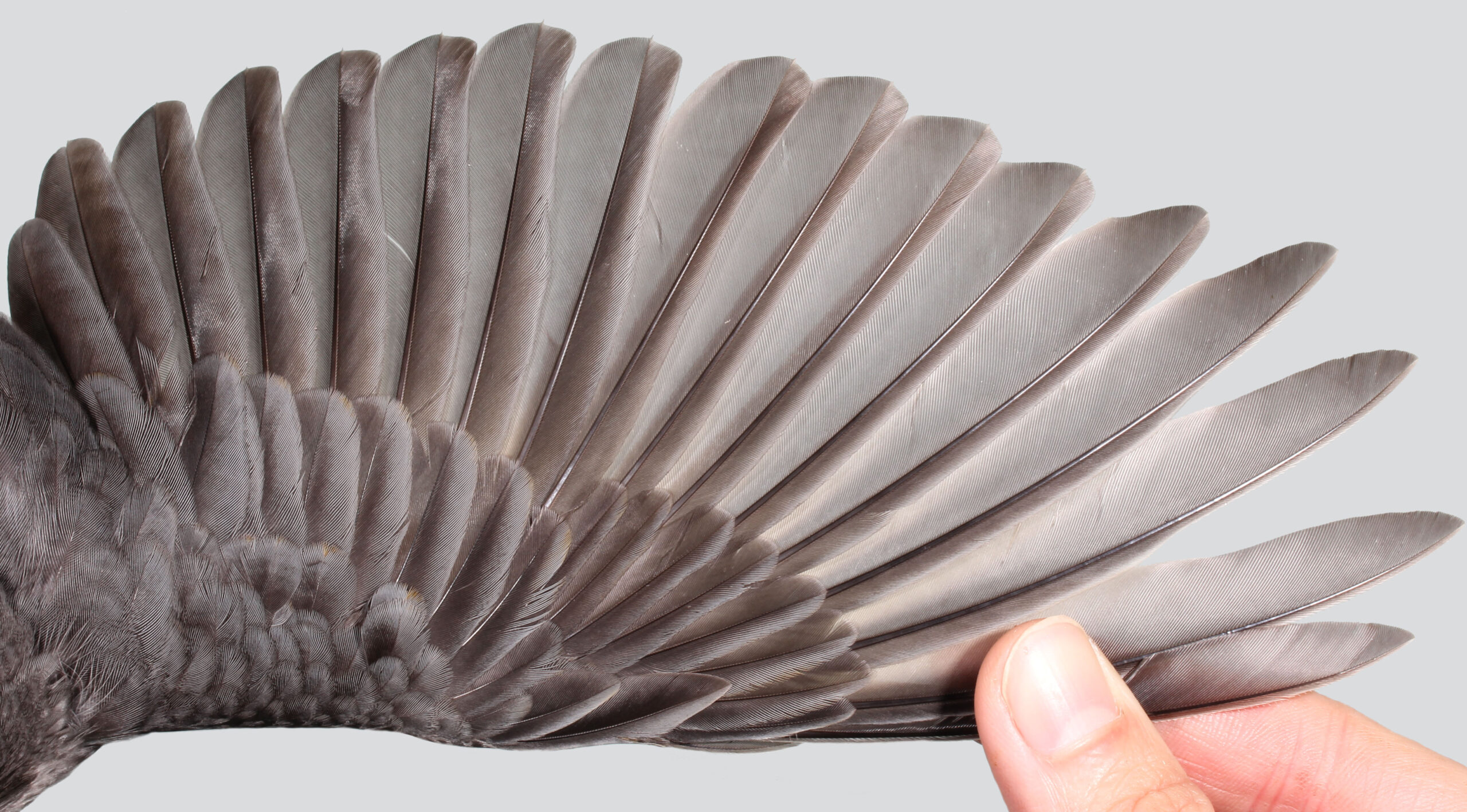
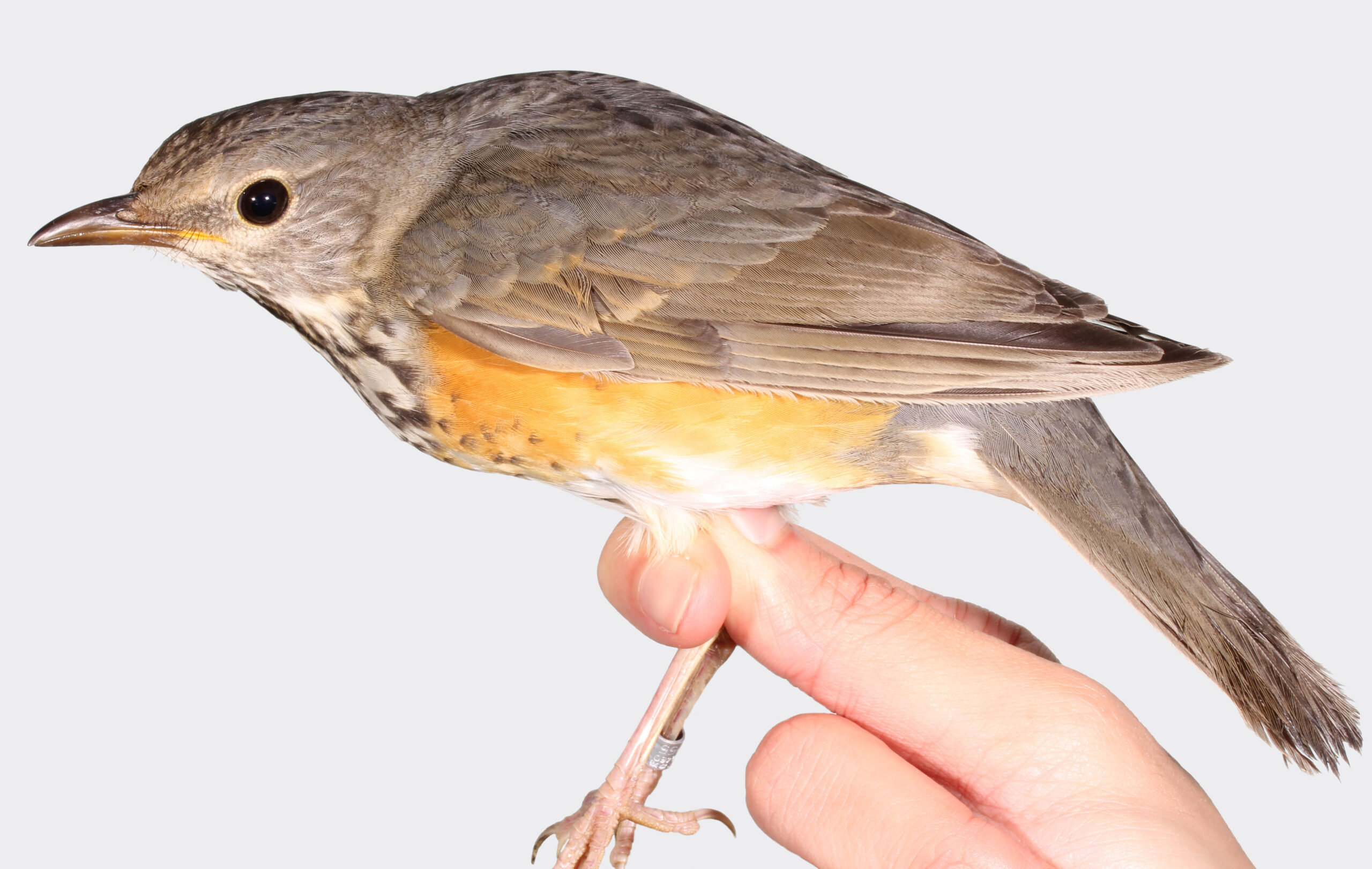
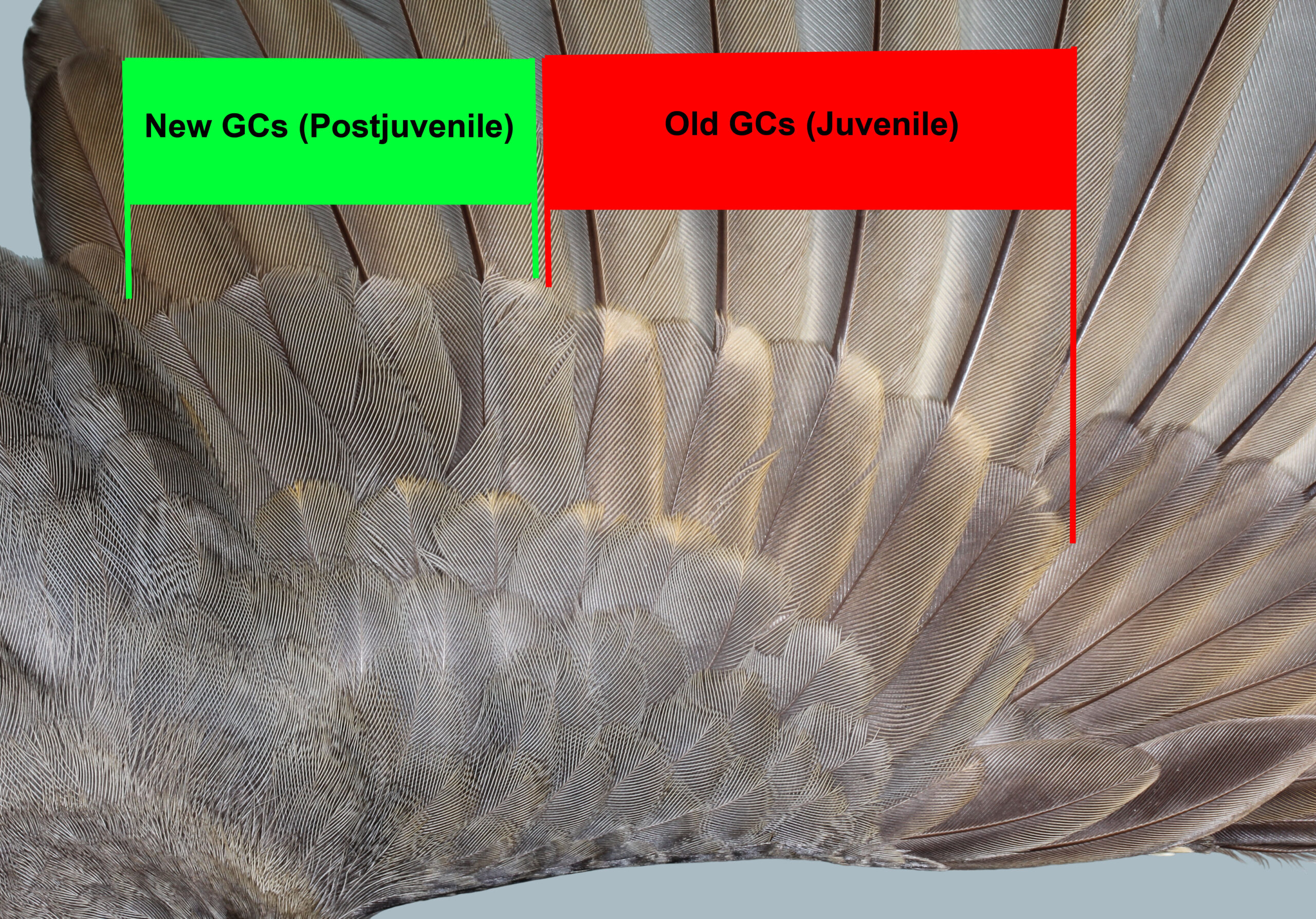
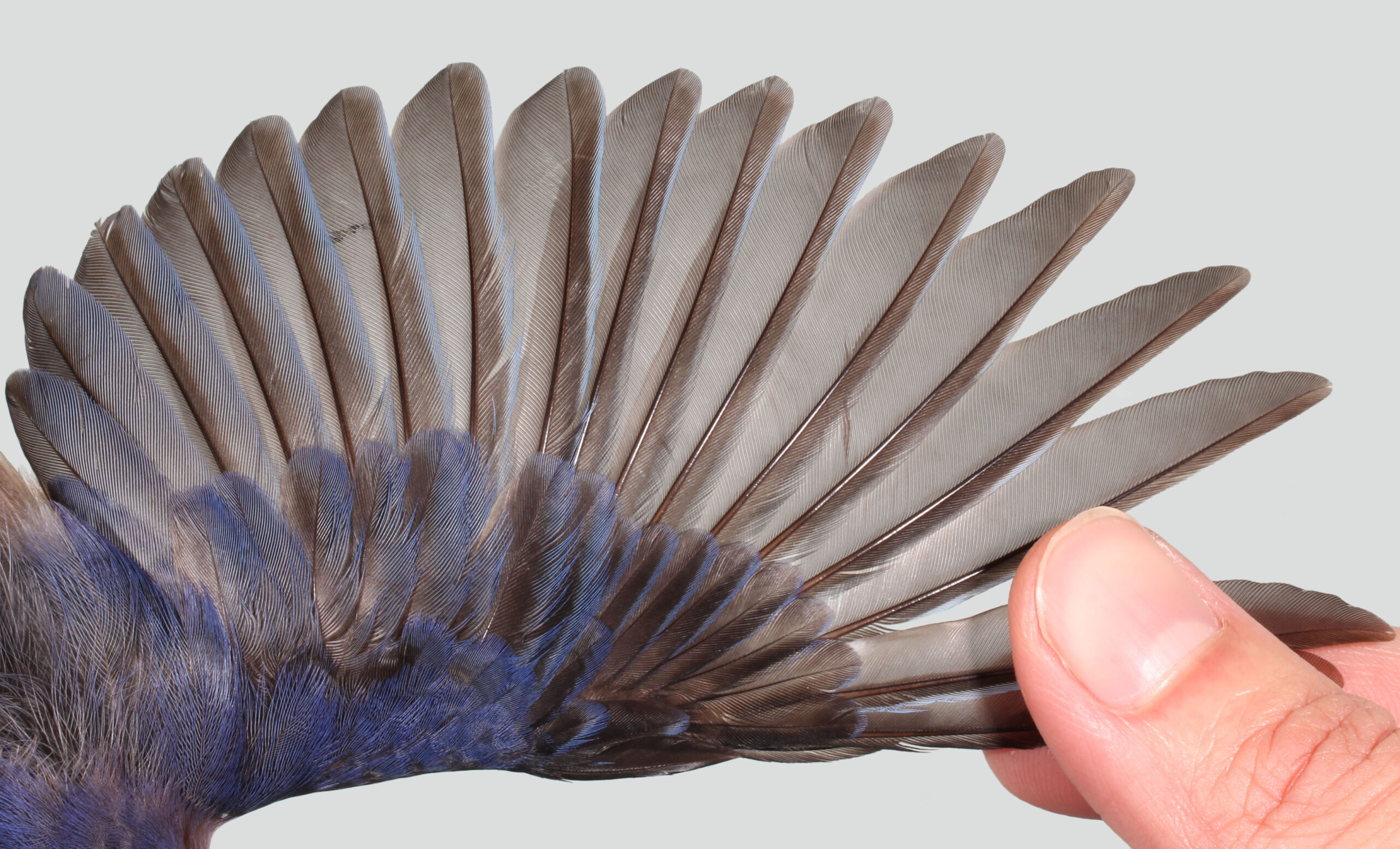
Following on from the Yuhinas, we also had a very nice catch of Grey-backed Thrushes! Thankfully this is a far easier species to age, with adults carrying out a Summer Complete moult, and the juveniles a Summer partial moult. Therefore, for a 1st calendar year bird, we should find a moult limit in the wing (for this species this is usually found within the Greater Coverts, as can be seen in the 2nd individual above).
Sexing this species is fairly simple, with females showing more dark blotching in the breast and orange flanks, and males have a more steely grey tone to the upperparts and wings.
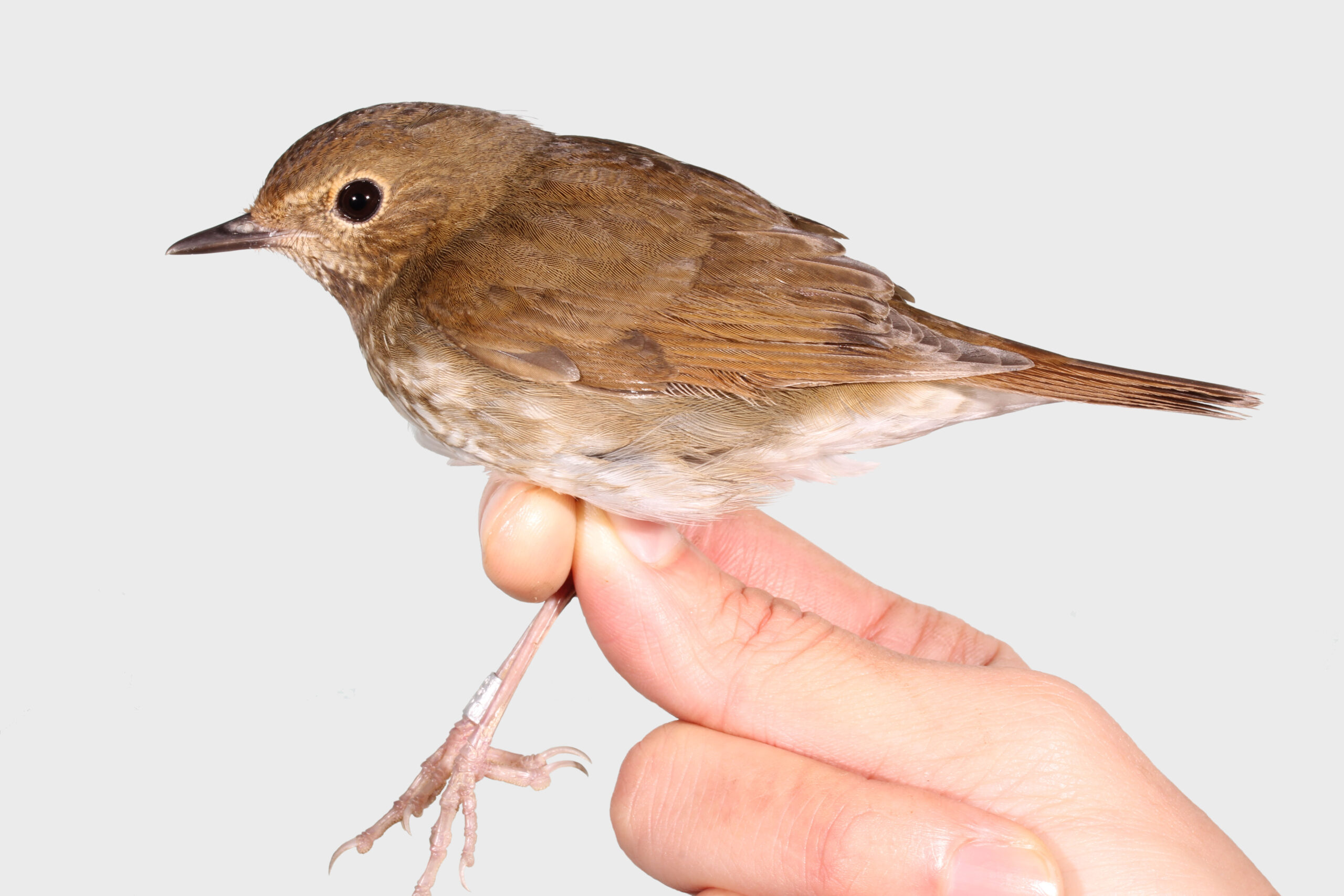
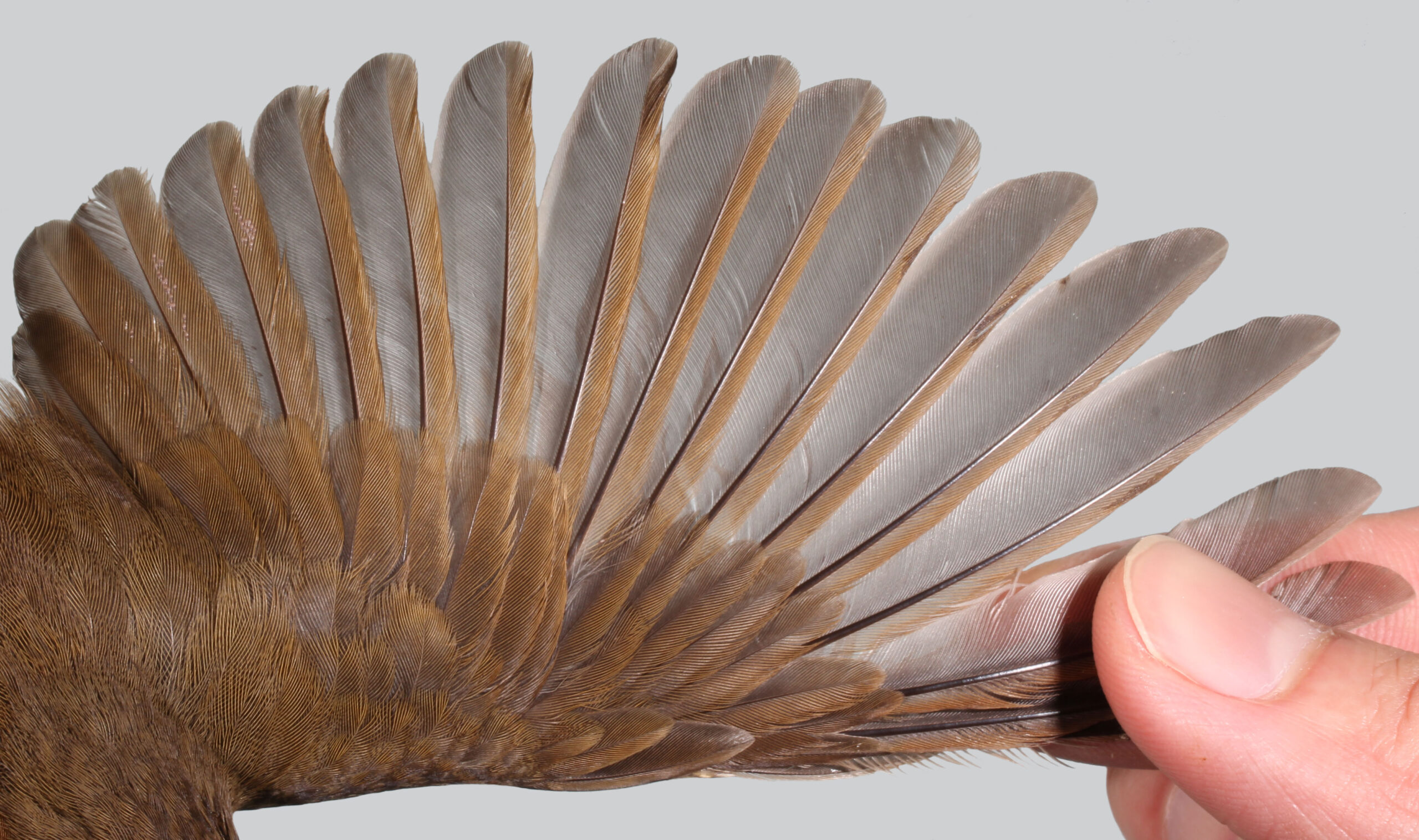
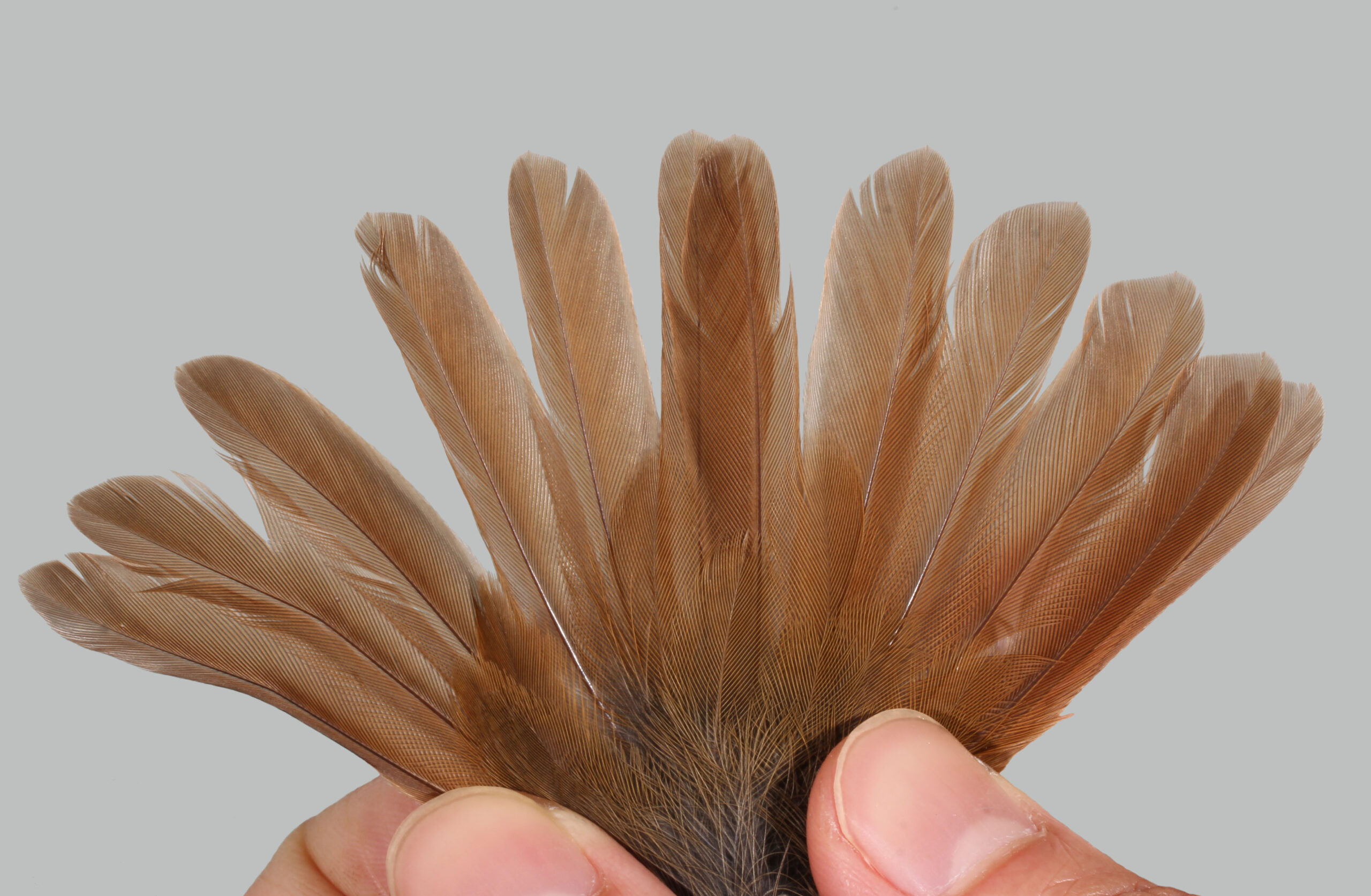
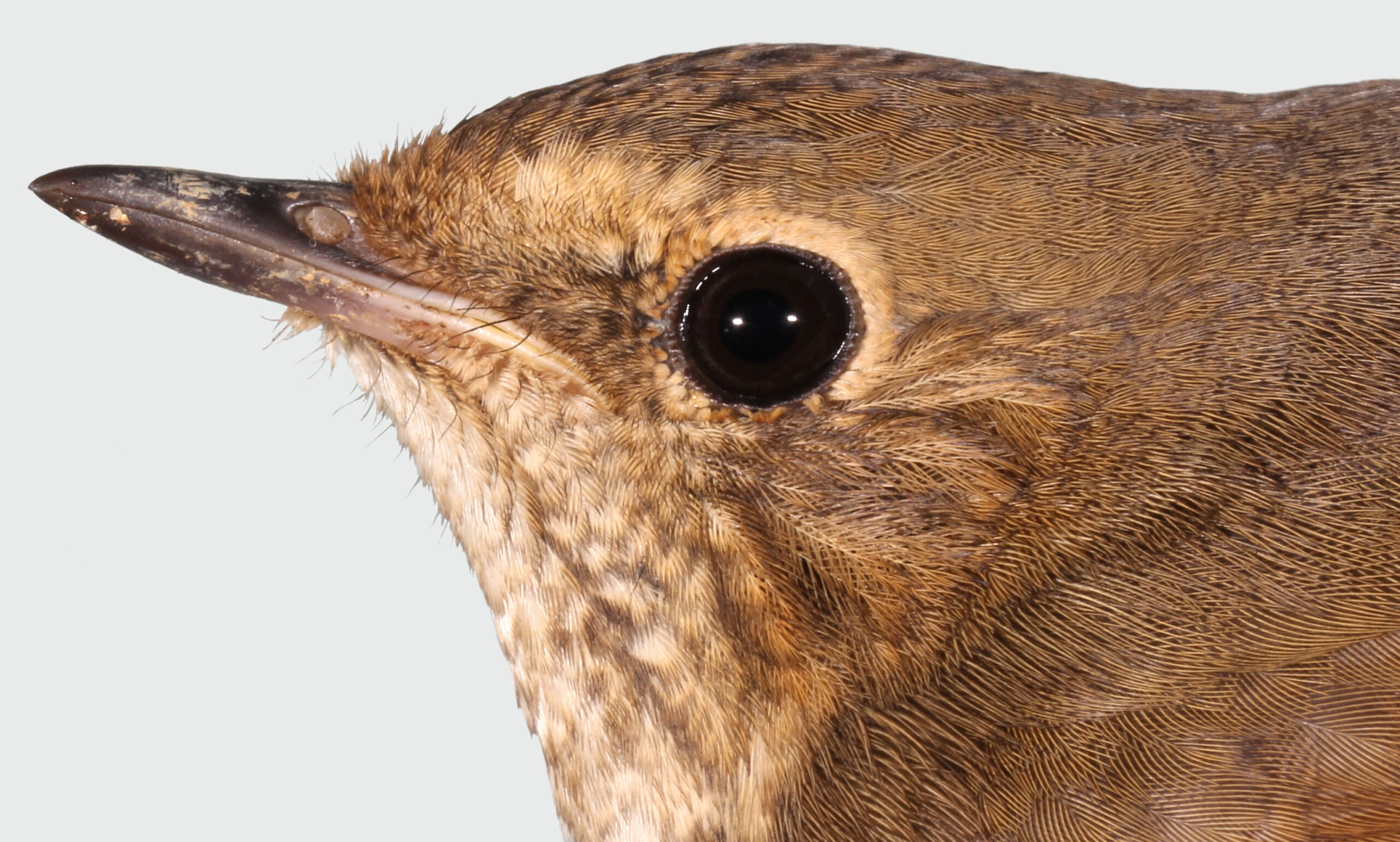
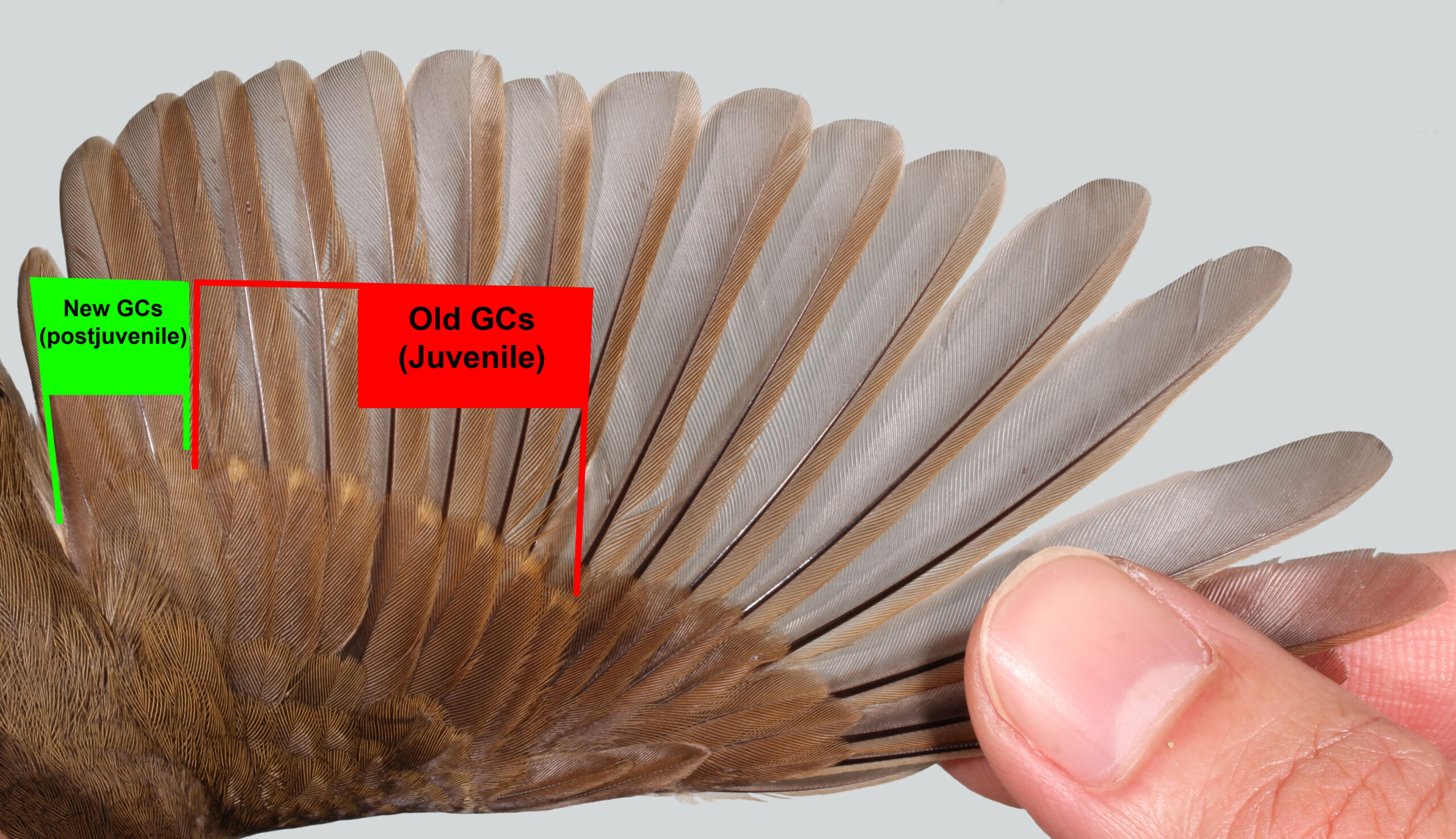
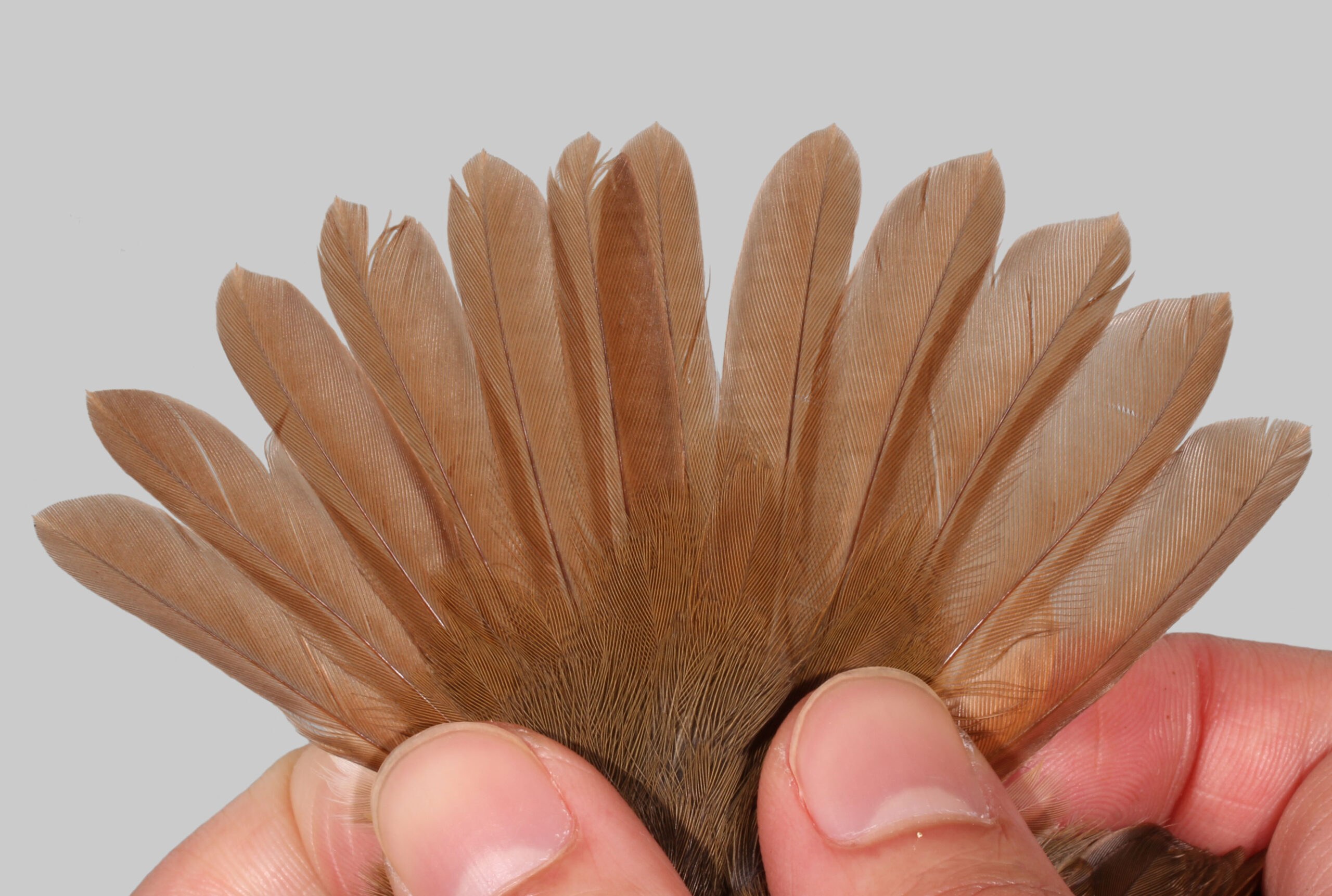
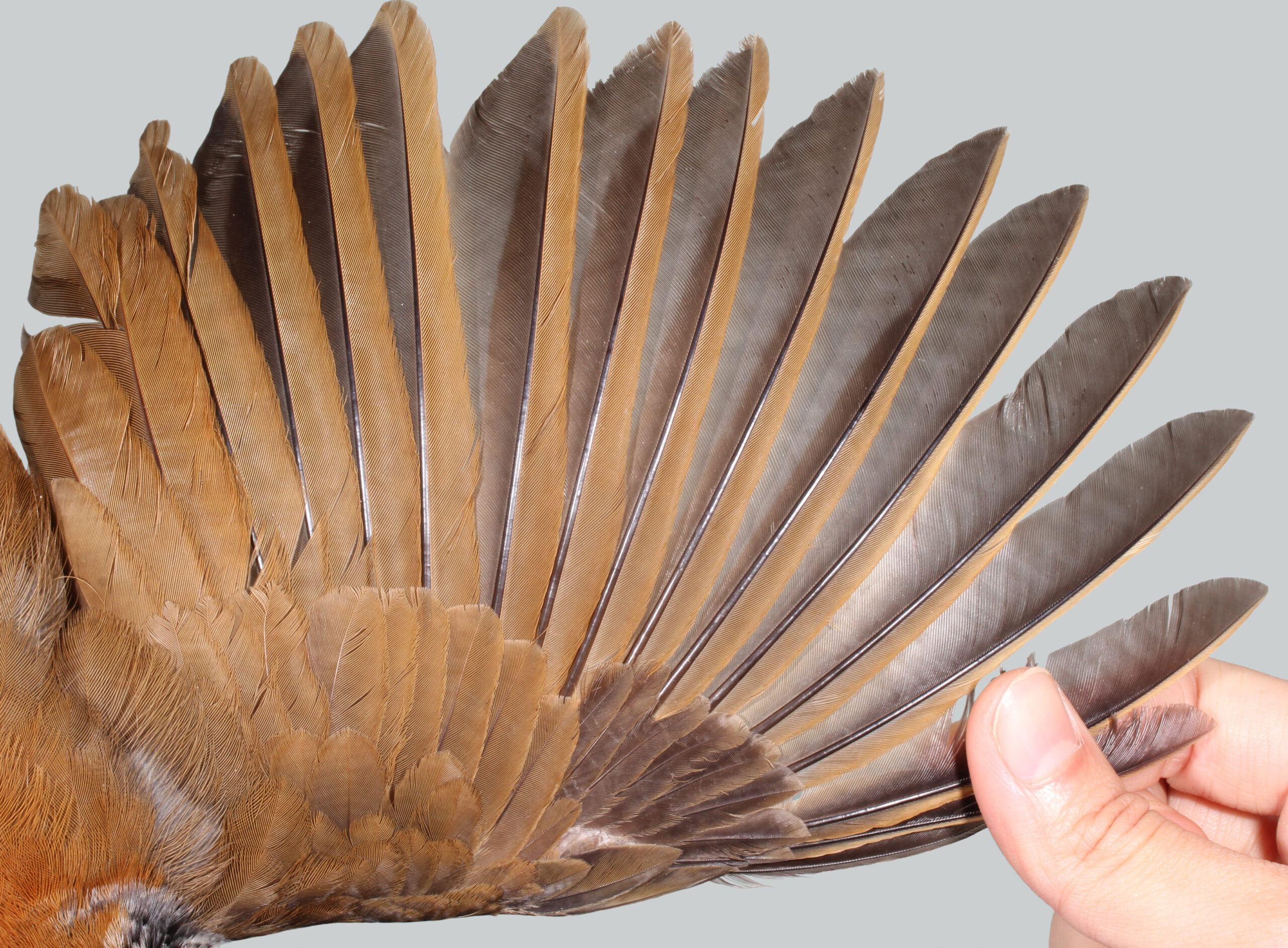
The afternoon wore on, with no signs of the birds letting up, and another easy-to-age species in the nets! This beautiful little brown bird is a Rufous-tailed Robin, another winter visitor to Hong Kong! In the individuals above, we can see the same moult pattern as in the Thrushes; our first individual was an adult, with a uniformly adult plumage, while our 2nd bird had a moult limit in the Greater Coverts- indicative of a juvenile! This species shows minimal differentiation between males and females, except potentially difference in size.
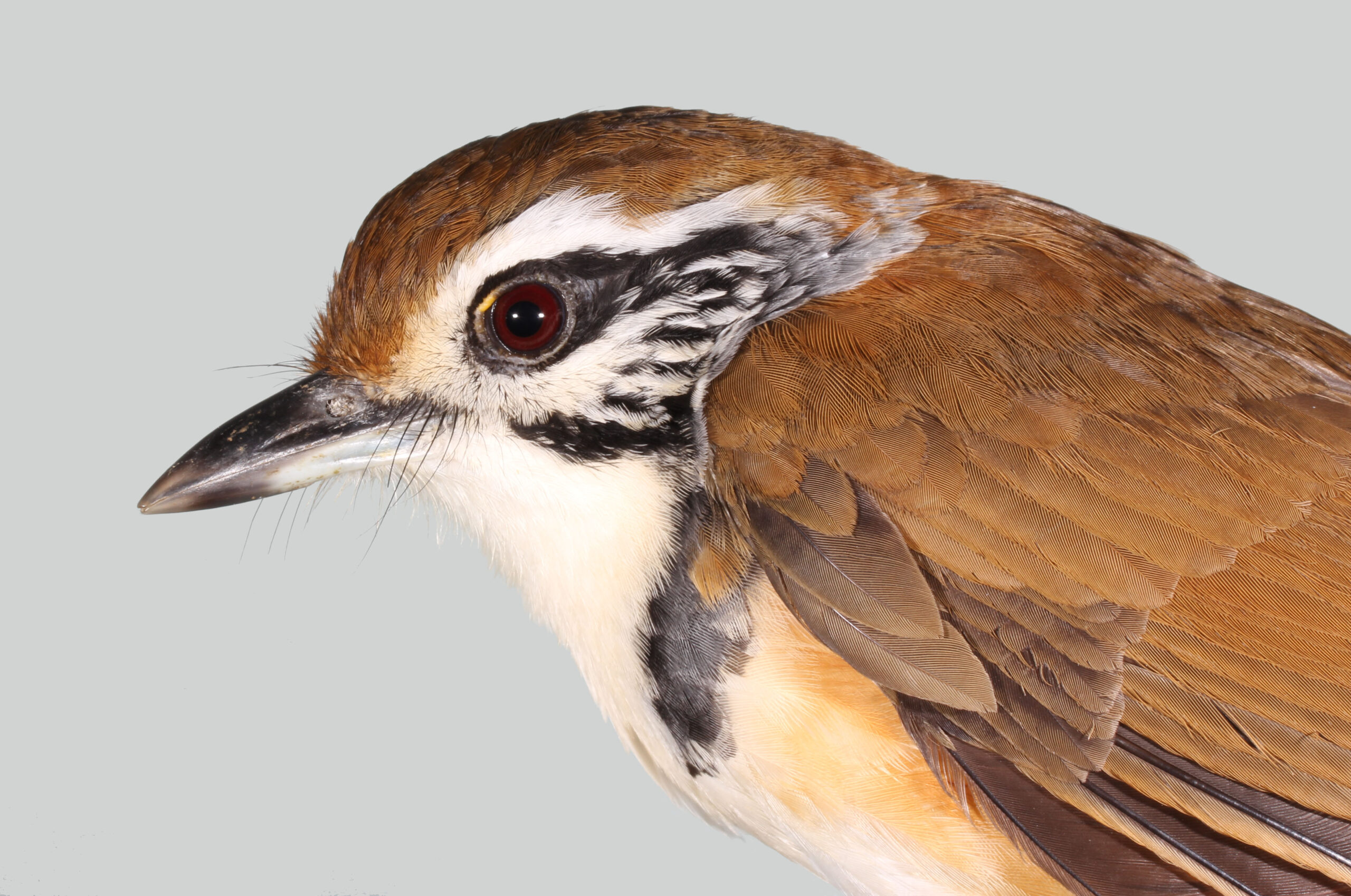
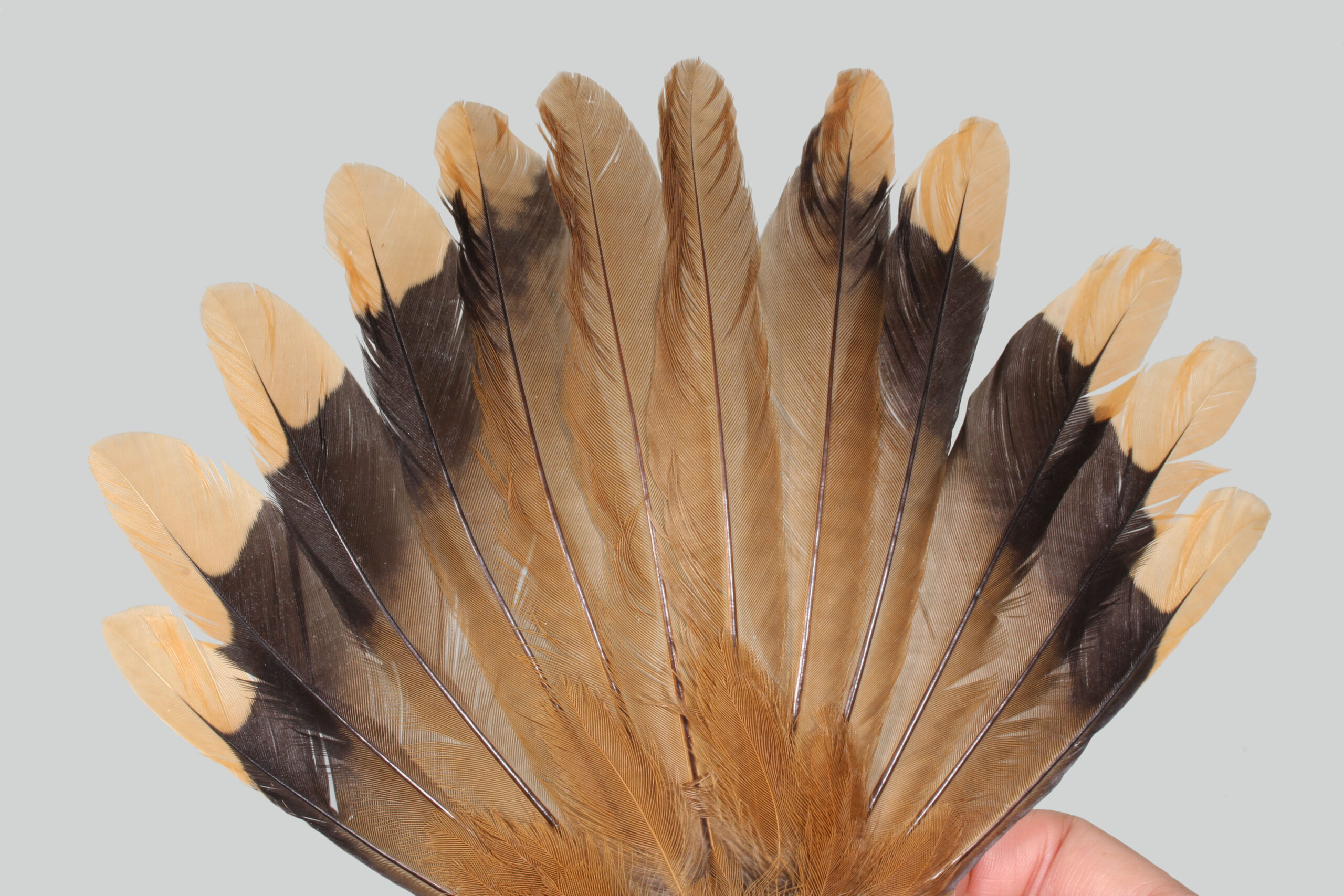
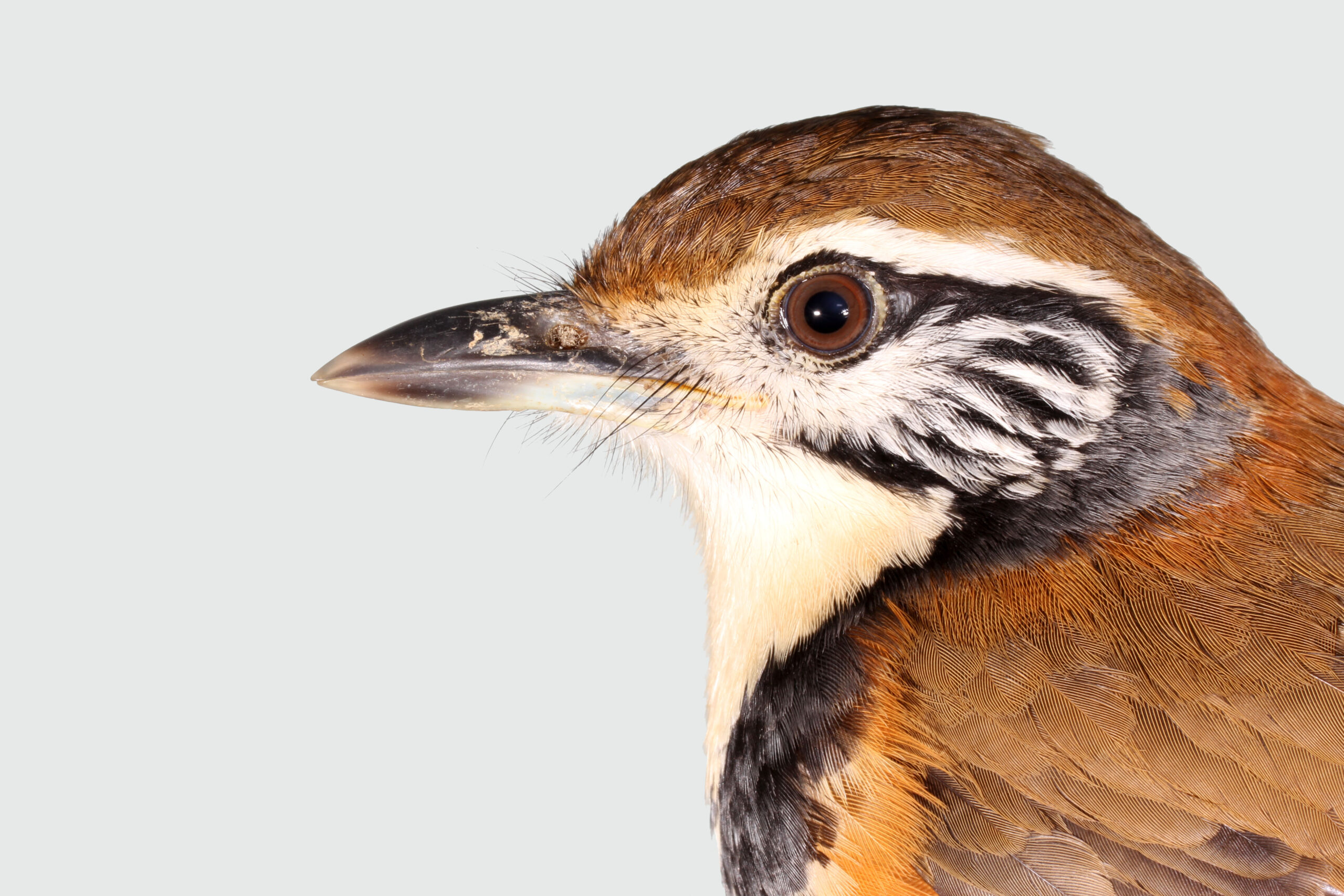
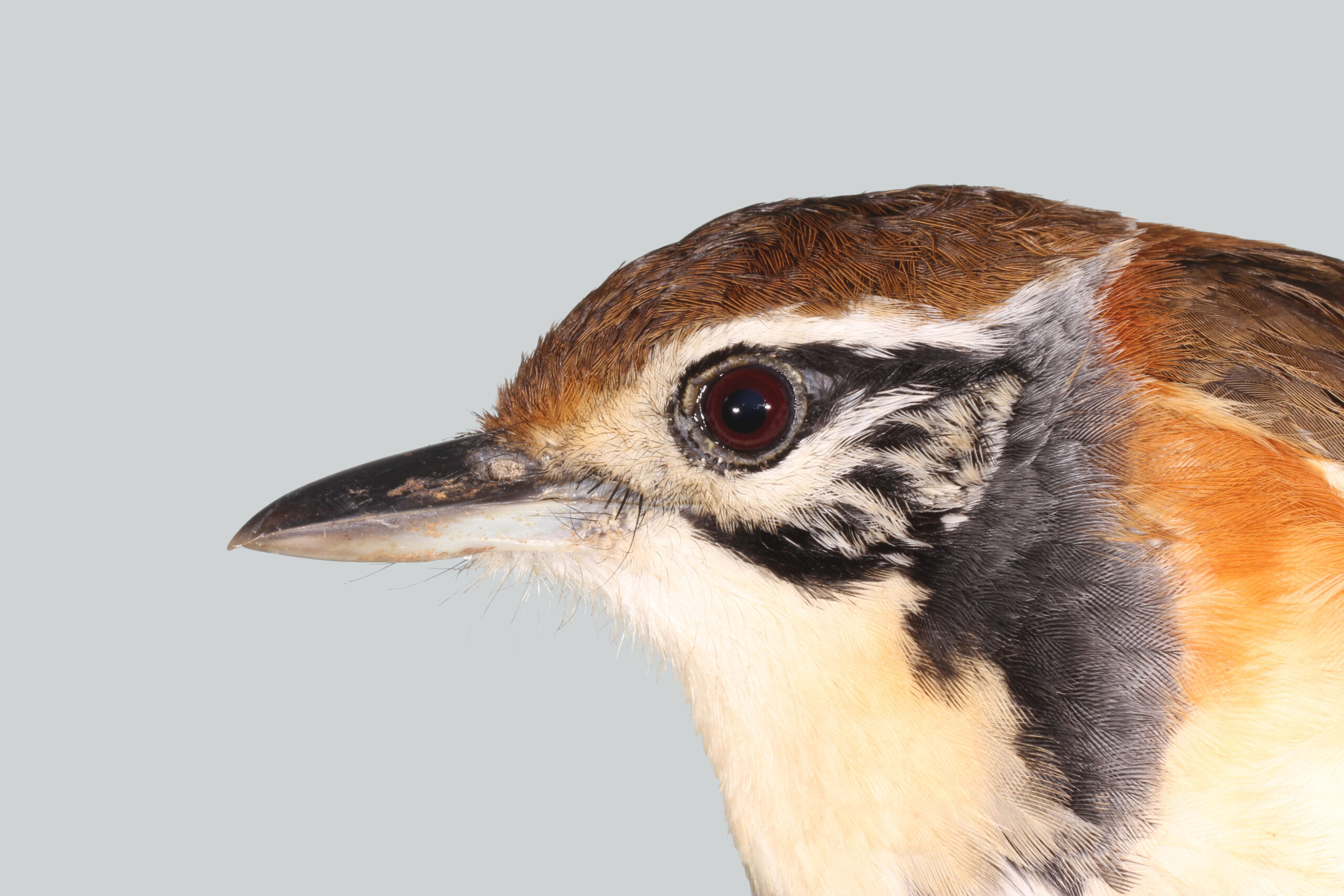
Next up we had our largest and one of the prettiest (in my opinion of course) species of the day- the Greater Necklaced Laughingthrush! Ususally captured just once or twice a year, today we were lucky enough to catch not just 1, nor 2, but 3 individuals! The adults and juveniles of this species also seem to both carry out Summer Complete moults. This means we must turn to other characteristics. In the individuals above, we can clearly see the difference in the juvenile-type iris (chestnut brown) and the adult-type (red). However, as aforementioned, with irises we must be careful not to mistake a 1st calendar year bird that may have already developed an adult-type iris from an actual adult bird (2nd calendar year or older).
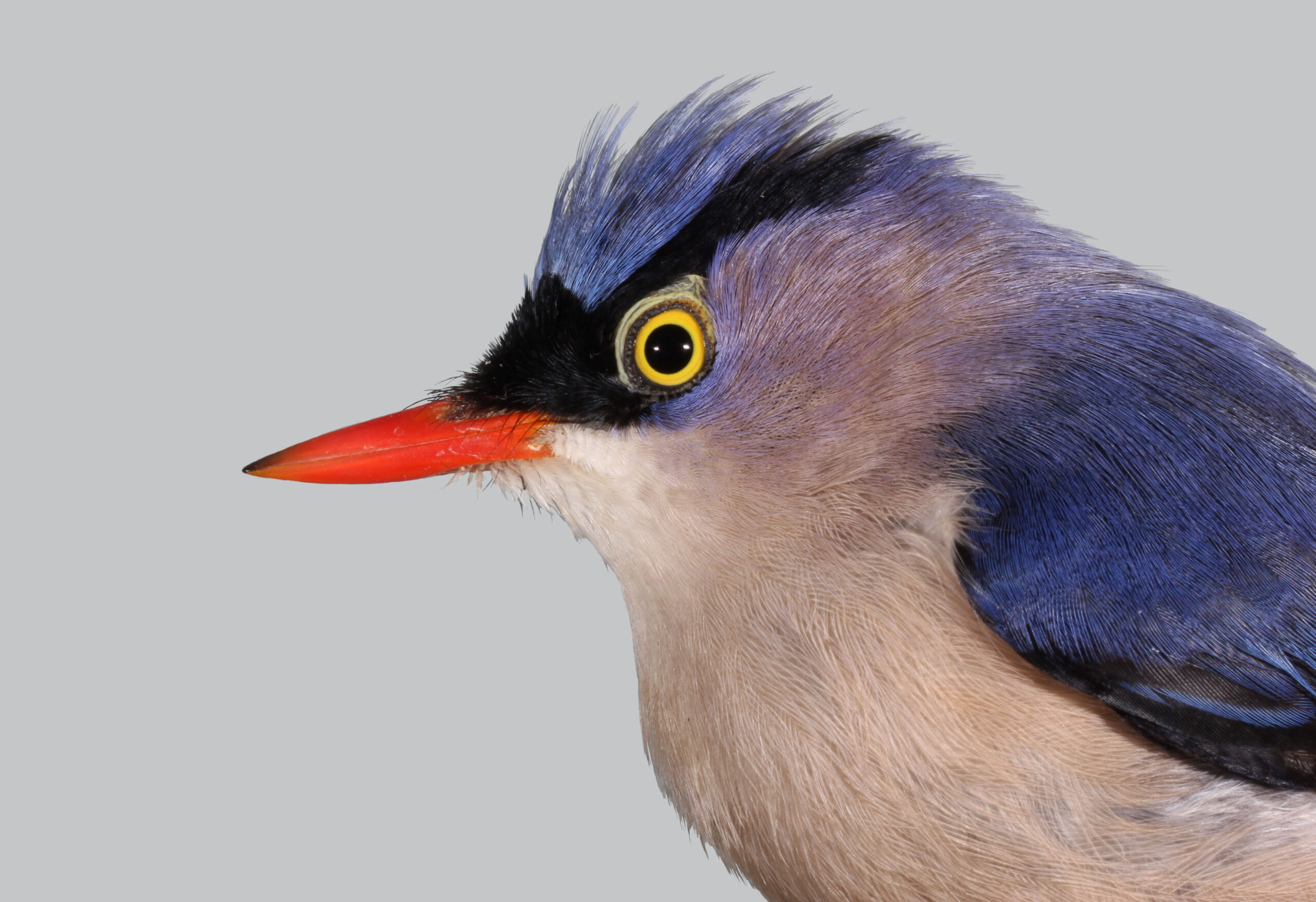
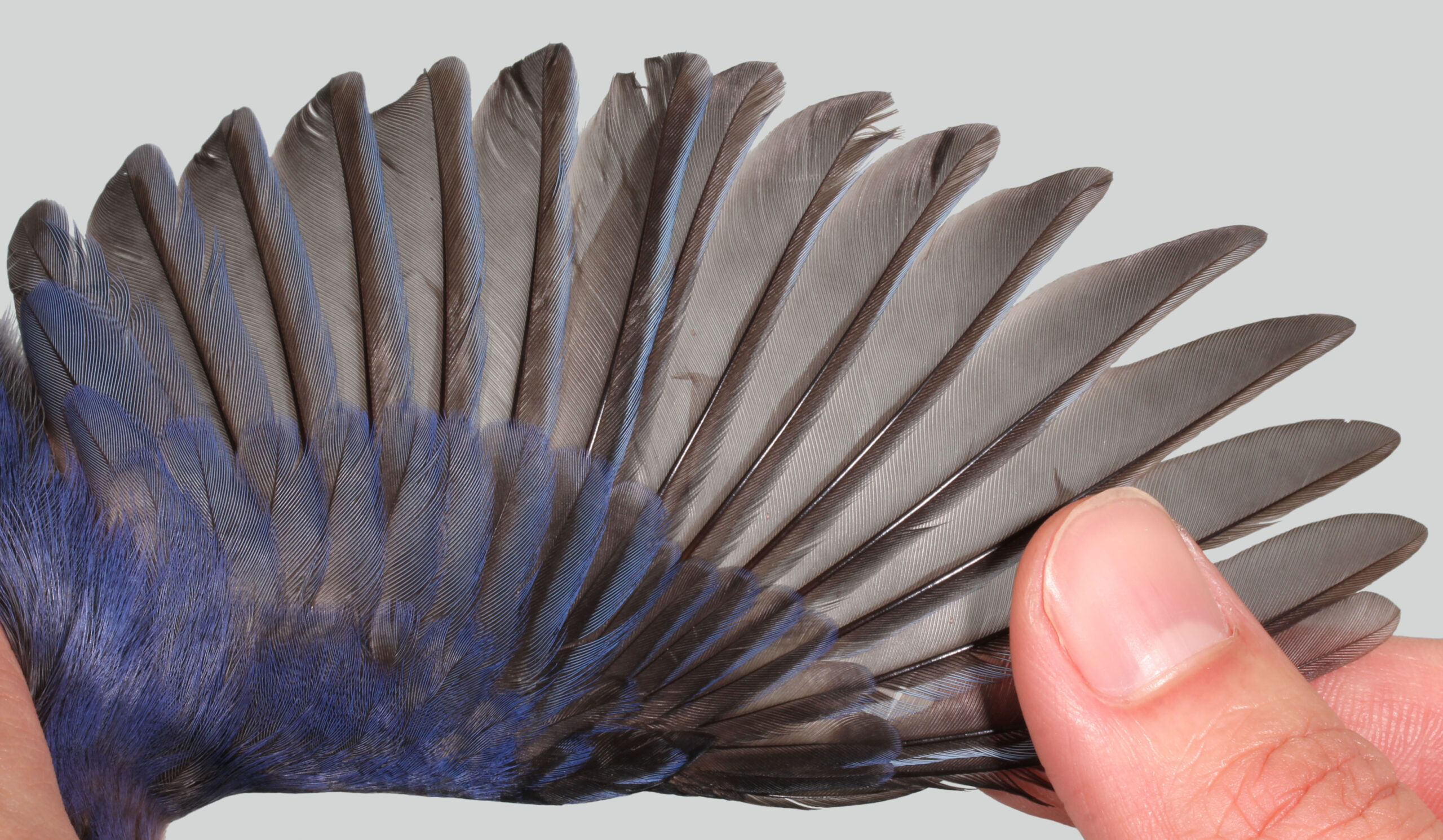
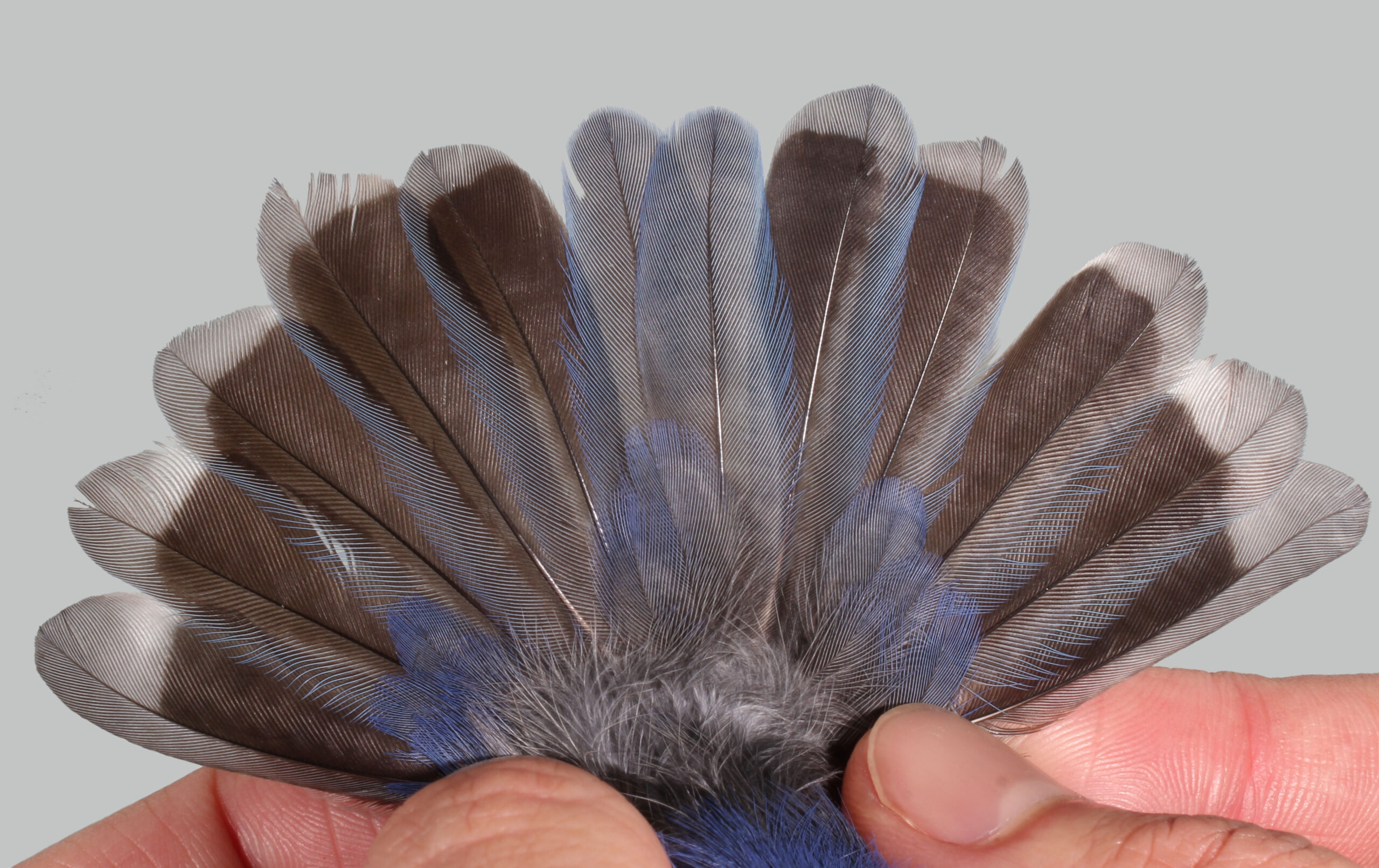
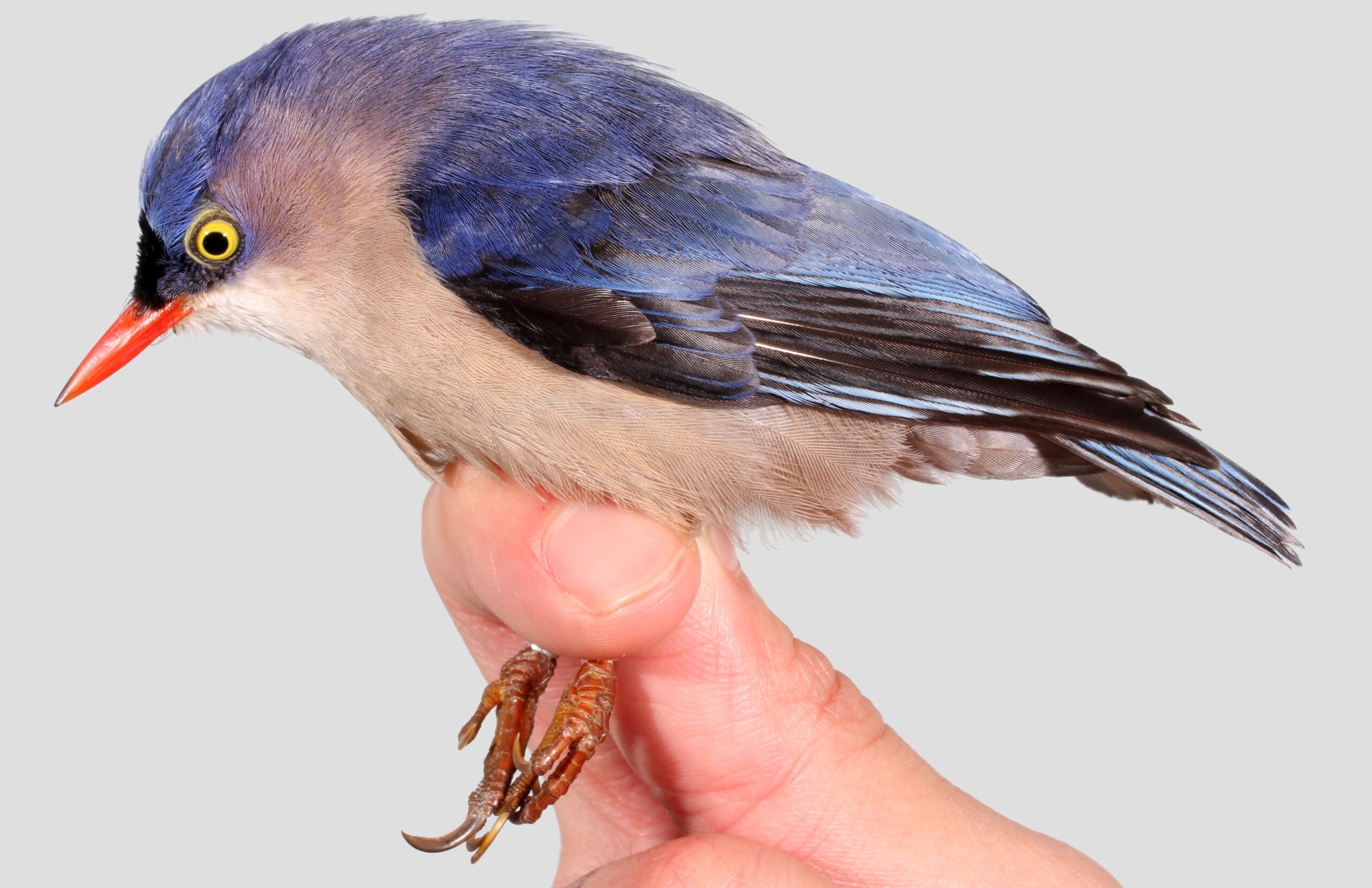
After a busy day, we finally made our way down to close up for the day. But the day wasn’t done with us! The last two birds ended up being a stunning pair of Velvet-fronted Nuthatches! These were truly dream birds for us, and very rarely caught. Unfortunately, not much is known on how to age this species, so we left both as 1st calendar year or older birds. However, due to the jet-black streak from the lore (in front of the eye) to the back of the head, as seen in the 1st individual, we can determine the males of this species from the females.
A truly incredible day!
Daily Totals
| Species | Original | Recapture |
| Bianchi’s Warbler | 1 | 0 |
| Chestnut Bulbul | 3 | 0 |
| Cinereous Tit | 0 | 2 |
| Greater Necklaced Laughingthrush | 3 | 0 |
| Grey-backed Thrush | 6 | 0 |
| Huet’s Fulvetta | 0 | 7 |
| Indochinese Yuhina | 26 | 0 |
| Pallas’s Leaf Warbler | 7 | 0 |
| Red-billed Leiothrix | 3 | 0 |
| Red-flanked Bluetail | 6 | 0 |
| Rufous-tailed Robin | 2 | 0 |
| Swinhoe’s White-eye | 1 | 2 |
| Velvet-fronted Nuthatch | 2 | 0 |
| Yellow-browed Warbler | 1 | 0 |
| Yellow-cheeked Tit | 1 | 1 |
*Please note that all wild birds, their nests, and eggs are highly protected (under Wild Animals Protection Ordinate, Cap. 170) in Hong Kong. It is an offence to wilfully disturb, take, remove, or injure wild birds or their nests/eggs. The actions described here were undertaken by trained professionals holding the necessary licenses and permits issued by the AFCD.*