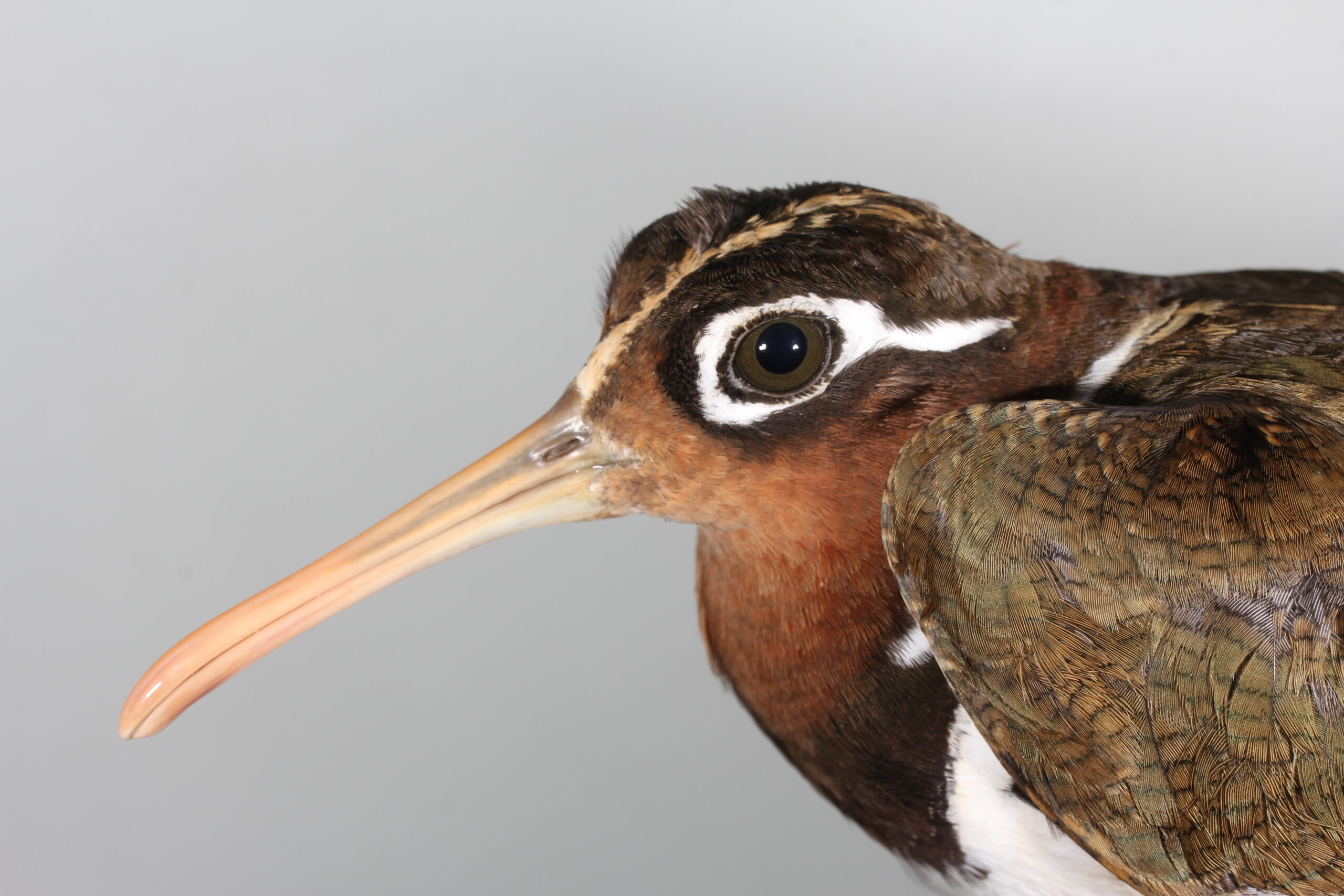



Welcome to our first blog post in 2023! Before we begin, it is necessary to do some ageing clarification.
In Autumn/Winter last year, we categorise birds usually into three groups: young birds (1st calendar year- i.e. born in Spring/Summer 2022), adult birds (2nd calendar year or older- i.e. born in Spring/Summer 2021 or earlier) and unknown age (1st calendar year or older- i.e. born in Spring/Summer 2022 or earlier).
However, now all these ages need to have a year added. This means that ‘young’ birds will now be in their 2nd calendar year. ‘Adult’ birds will be in their 3rd calendar year or older, and ‘unknown’ birds will be in their 2nd calendar year or older. This will continue until the young and adult birds form last year can no longer be differentiated (usually in Autumn after a Summer Complete moult- when they all will be classed as Adults), and 2023’s new generation is born.
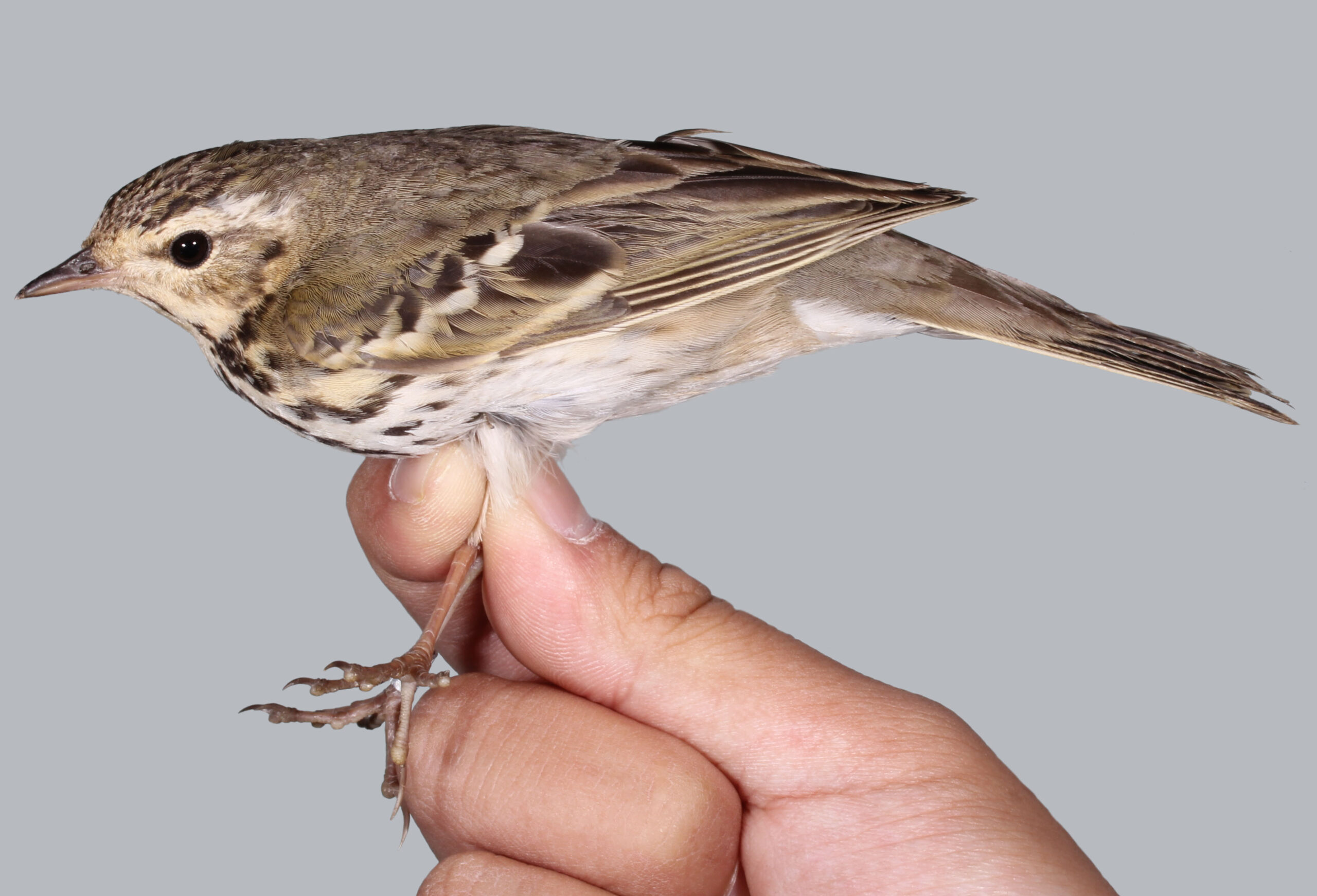
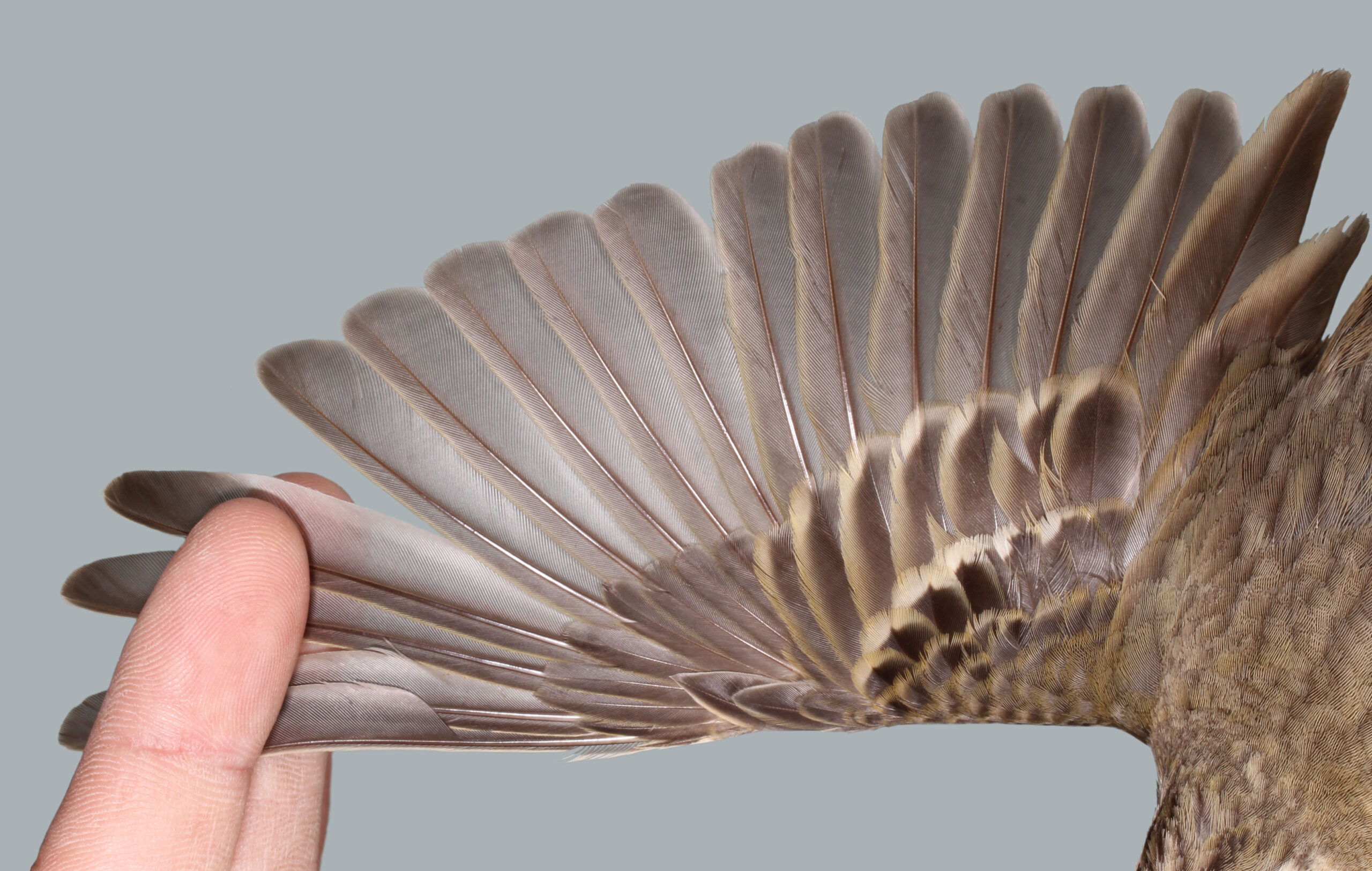
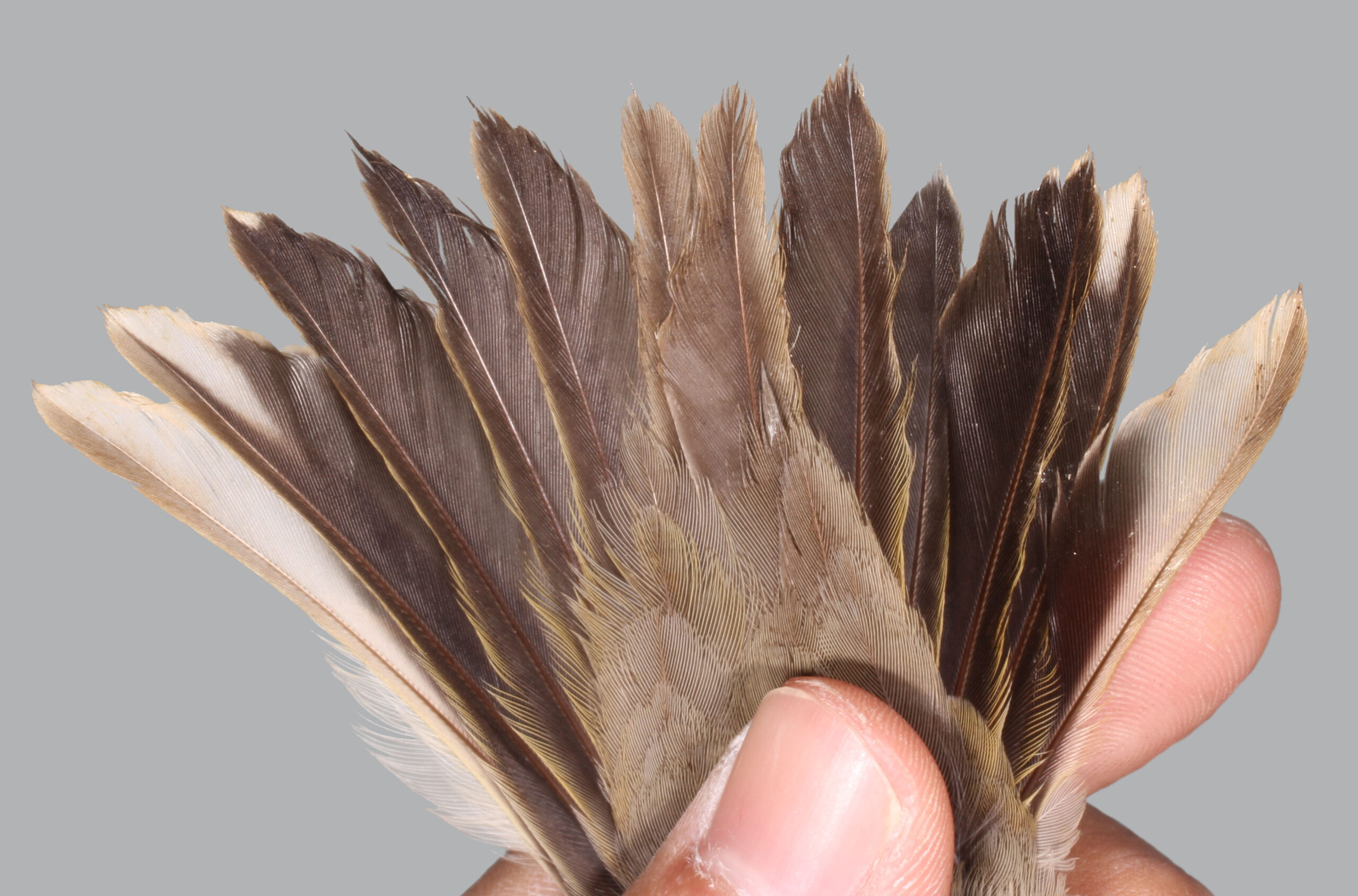
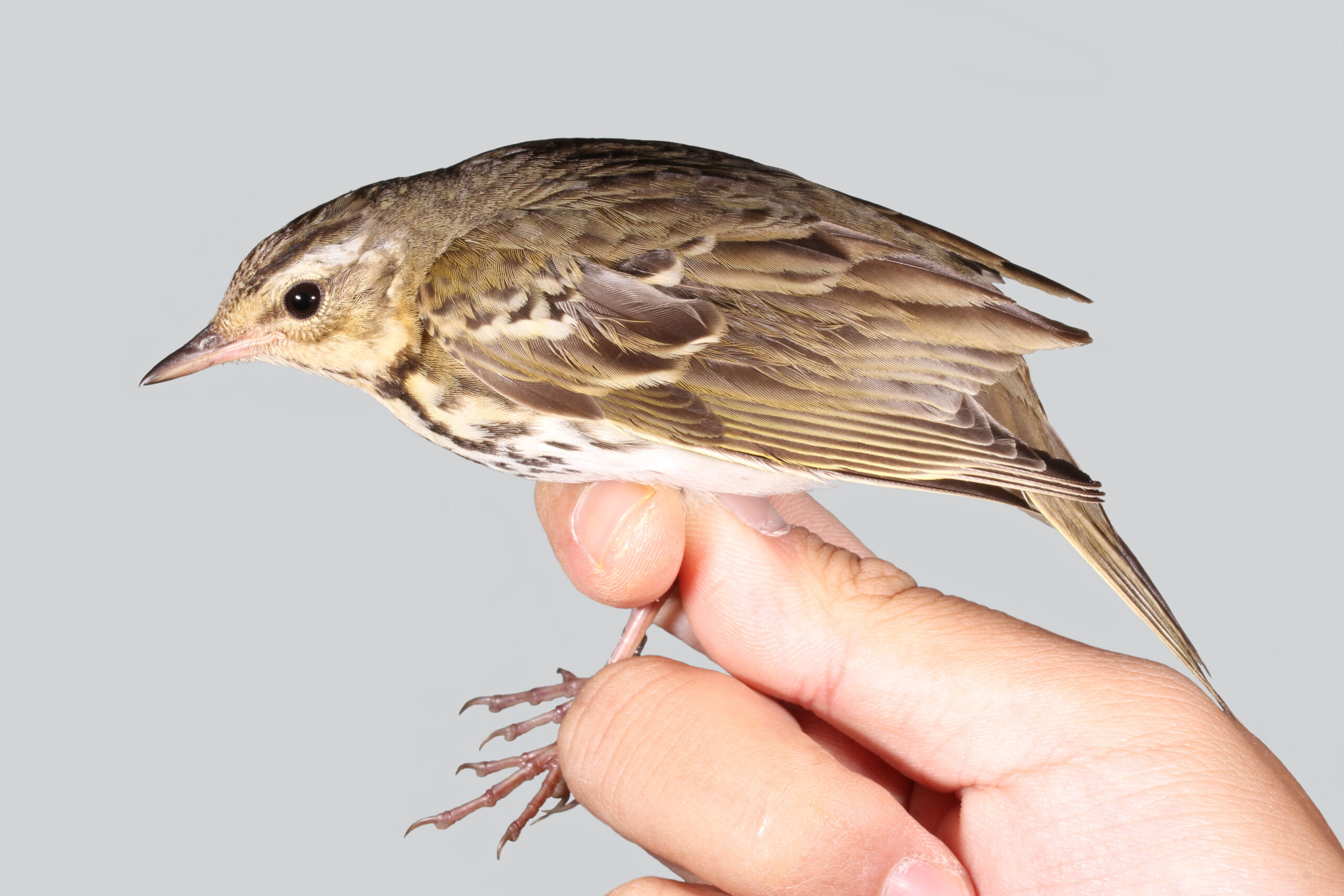
So, that being said, we began our ringing with a wonderful adult (3rd calendar year or older) Olive-backed Pipit! Pipits are notoriously difficult to age, especially at this time of year. This is because their moult pattern is as follows: Adults SC, Wp; Juveniles Sp, Wp. What this means is that, in theory, by this time of year, adults can have 1 moult limit between the post-breeding (from Summer moult) feathers and pre-breeding (from Winter moult) feathers. Typically these limits can be hard to spot, as both generations are “adult-type” and good quality feathers that vary only slightly in wear. Juveniles, on the other hand, can show 2 moult limits now- 3 generations- between the juvenile feathers (retained from Summer), postjuvenile feathers (moulted in Summer) and pre-breeding feathers (moulted in Winter). Again, the moult limit between the postjuvenile and pre-breeding feathers can be difficult to spot, but it is generally fairly easy to spot the retained juvenile feathers.
To put this into practice, in our adult Olive-backed Pipit above, we can see in the Median Coverts that there are four moulted feathers (outermost), as well as in the tail (fourth from the right). However, these feathers show the same shape and pattern as the older feathers- suggesting this is an adult.
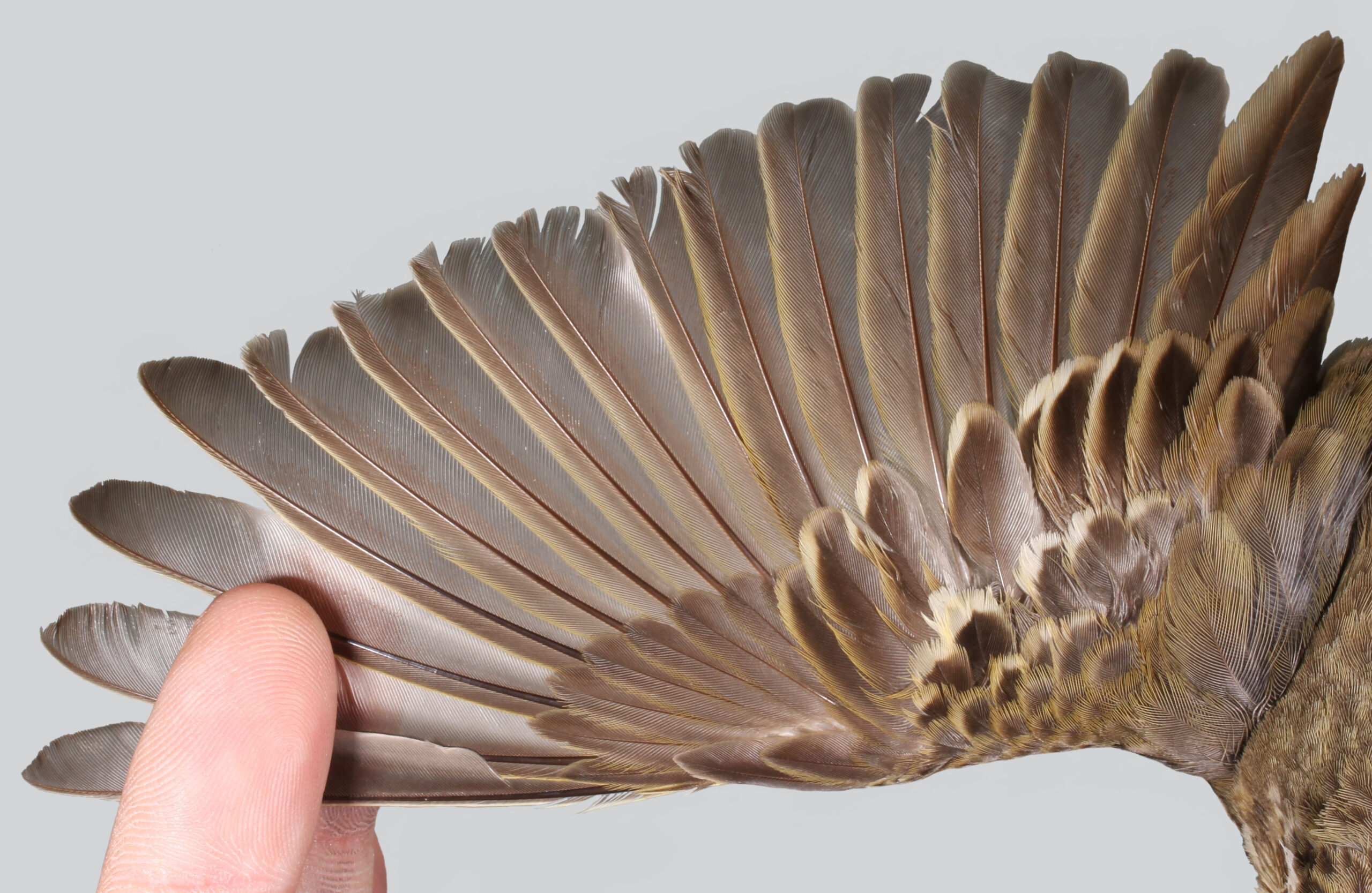
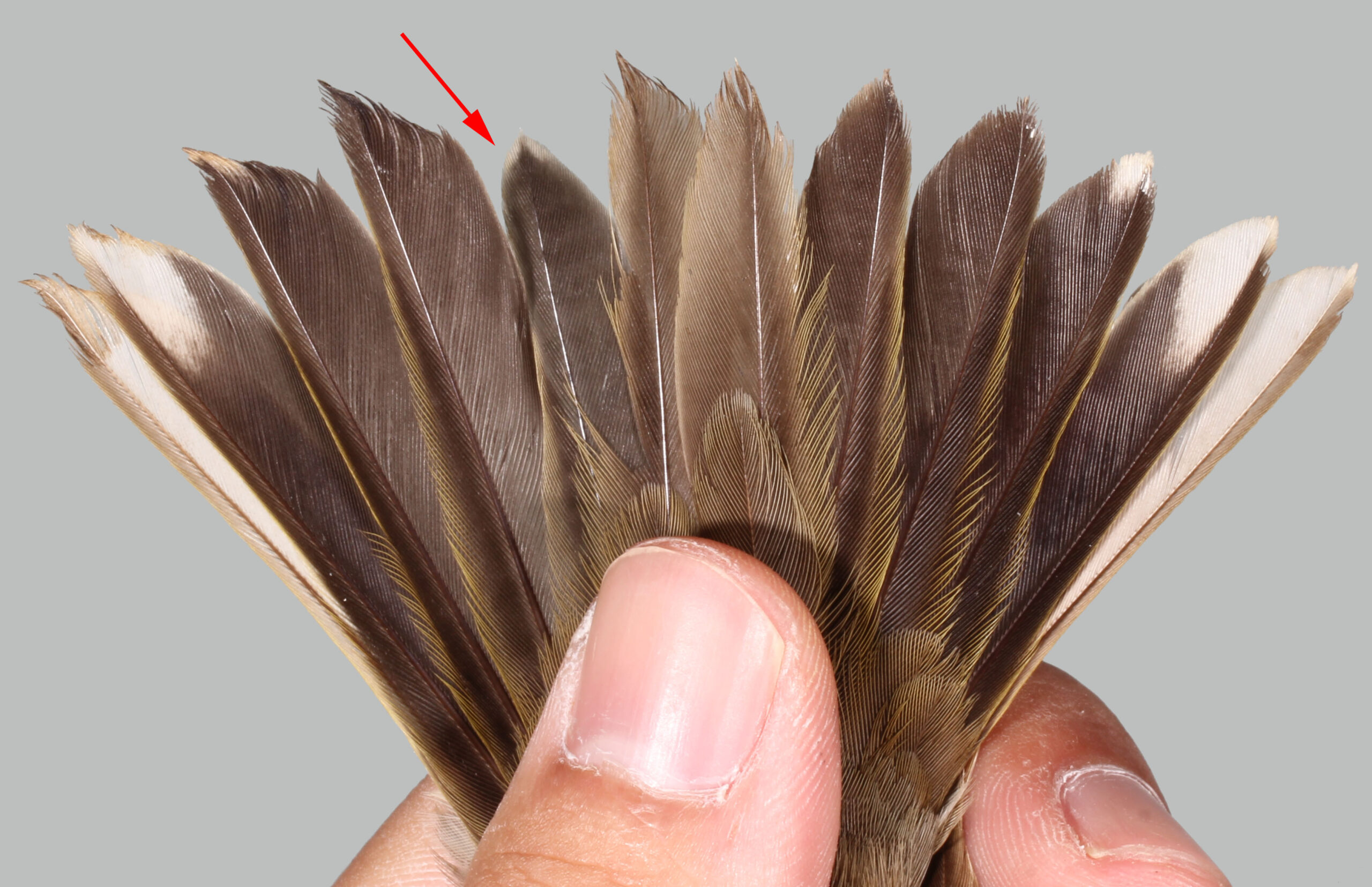
By contrast, the individual above is a young (2nd calendar year) bird. Not only does this bird show an overall browner and more worn appearance, but we can see clearly in the tail that the newly moulted feather (red arrow) shows a broader and more dense structure to the unmoulted feathers. Therefore, we can conclude that this feather is pre-breeding and the rest is juvenile.
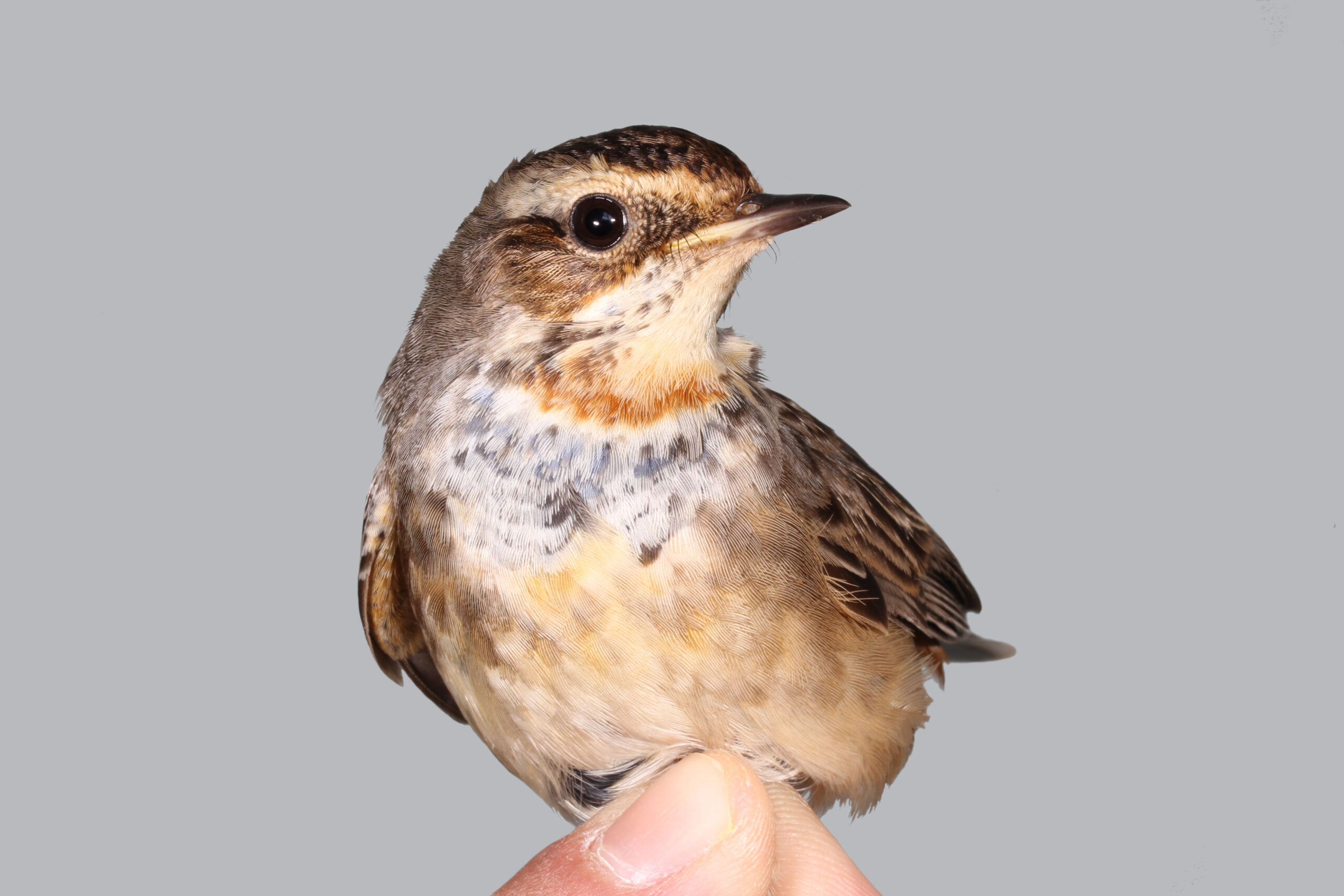
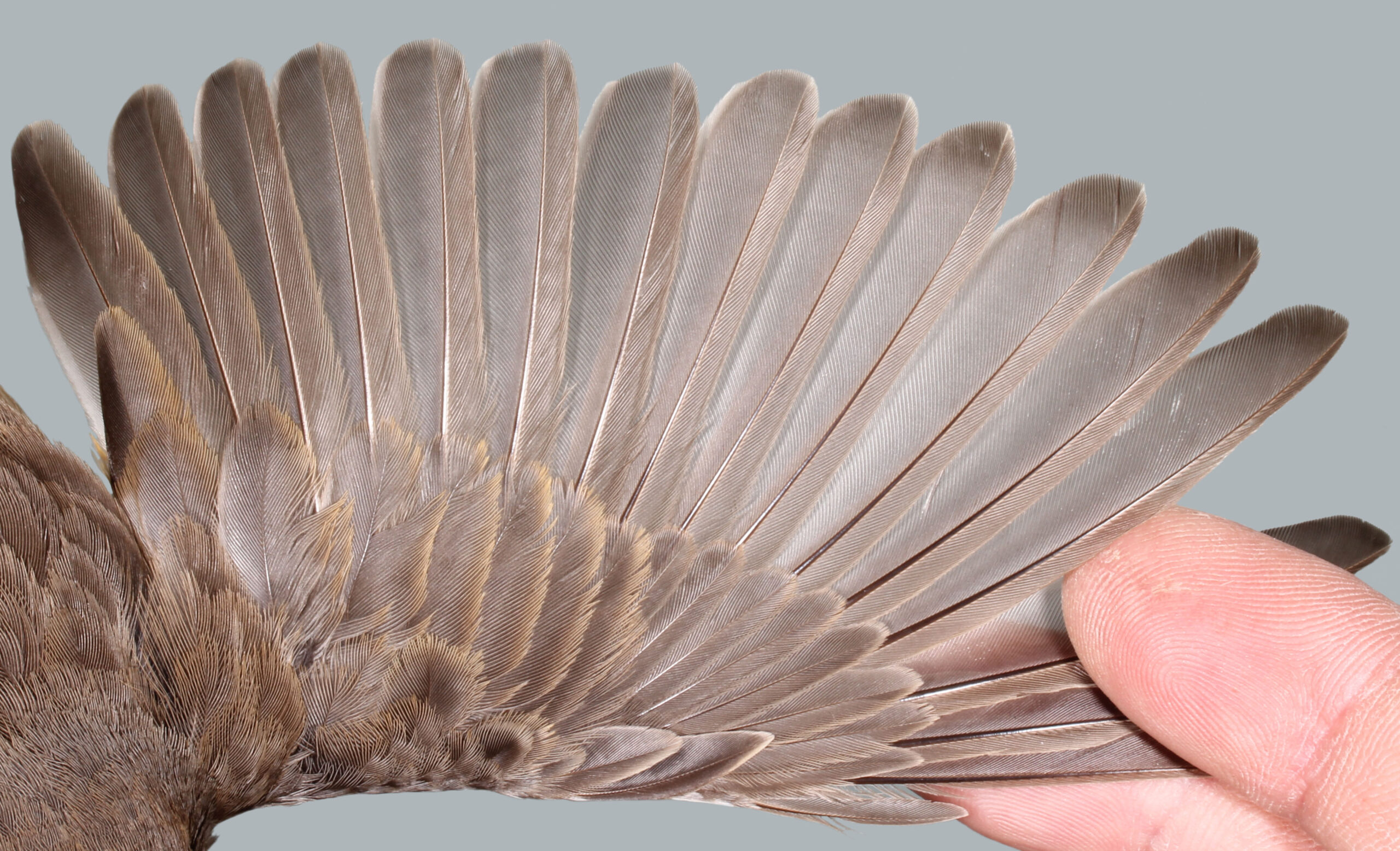
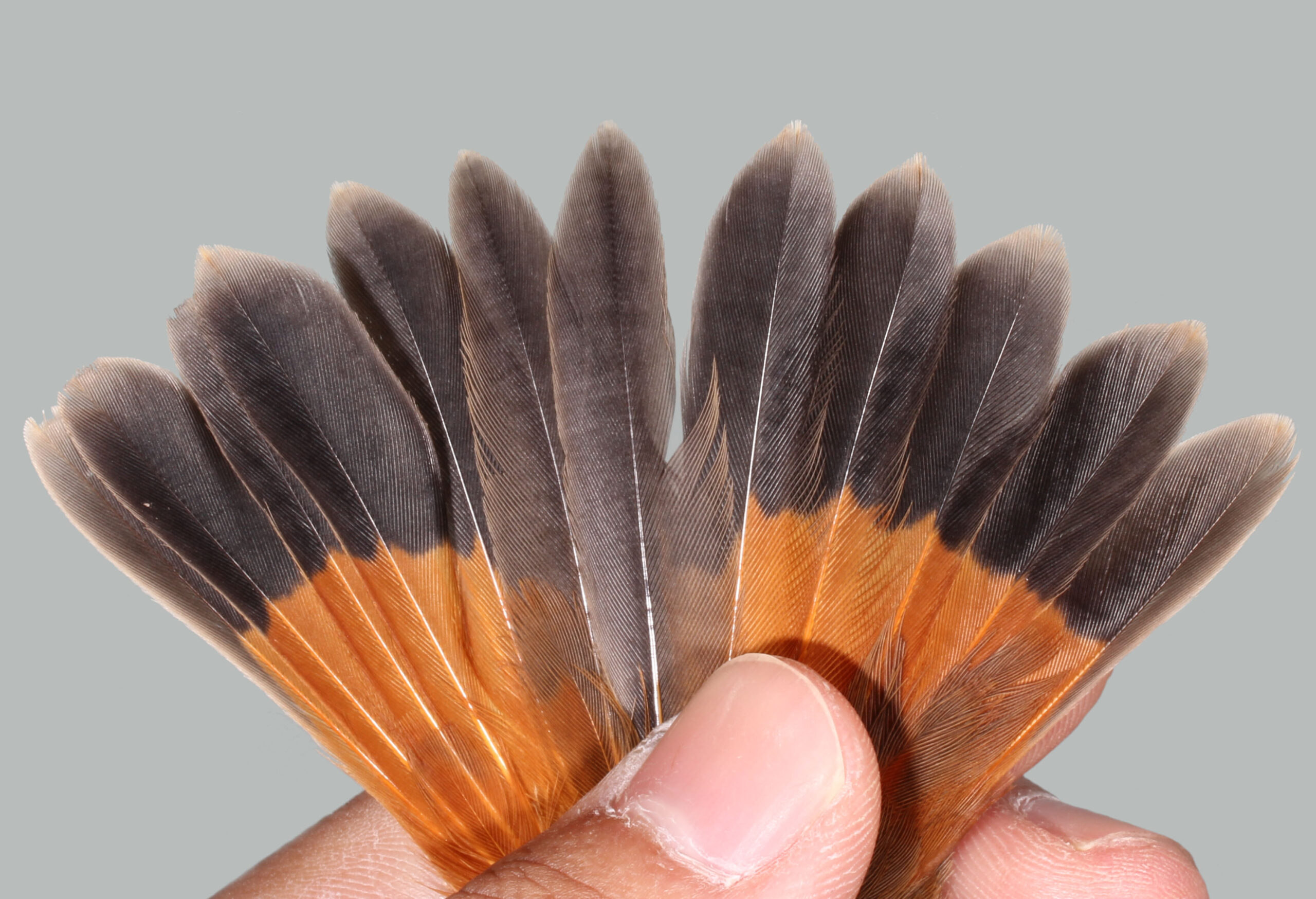
As the sun finally peeked above the horizon, providing a glimmer of warmth in the cool winter morning, we were greeted by a returning friend. This is an adult female Bluethroat, first ringed by us on the 7th December 2021, as a 1st calendar year bird! Now, two years on, she has an impressive amount of blue, rufous and black in her breast, but not enough to constitute an adult male.
This is why it is SO important to age a bird first. This bird shows a uniform, adult wing and tail, thus must be an adult. However, if this bird WERE a young bird, it would have to be a male (as young female Bluethroats do not show any colouration in the breast). This beautiful girl shares a nice lesson for us all!
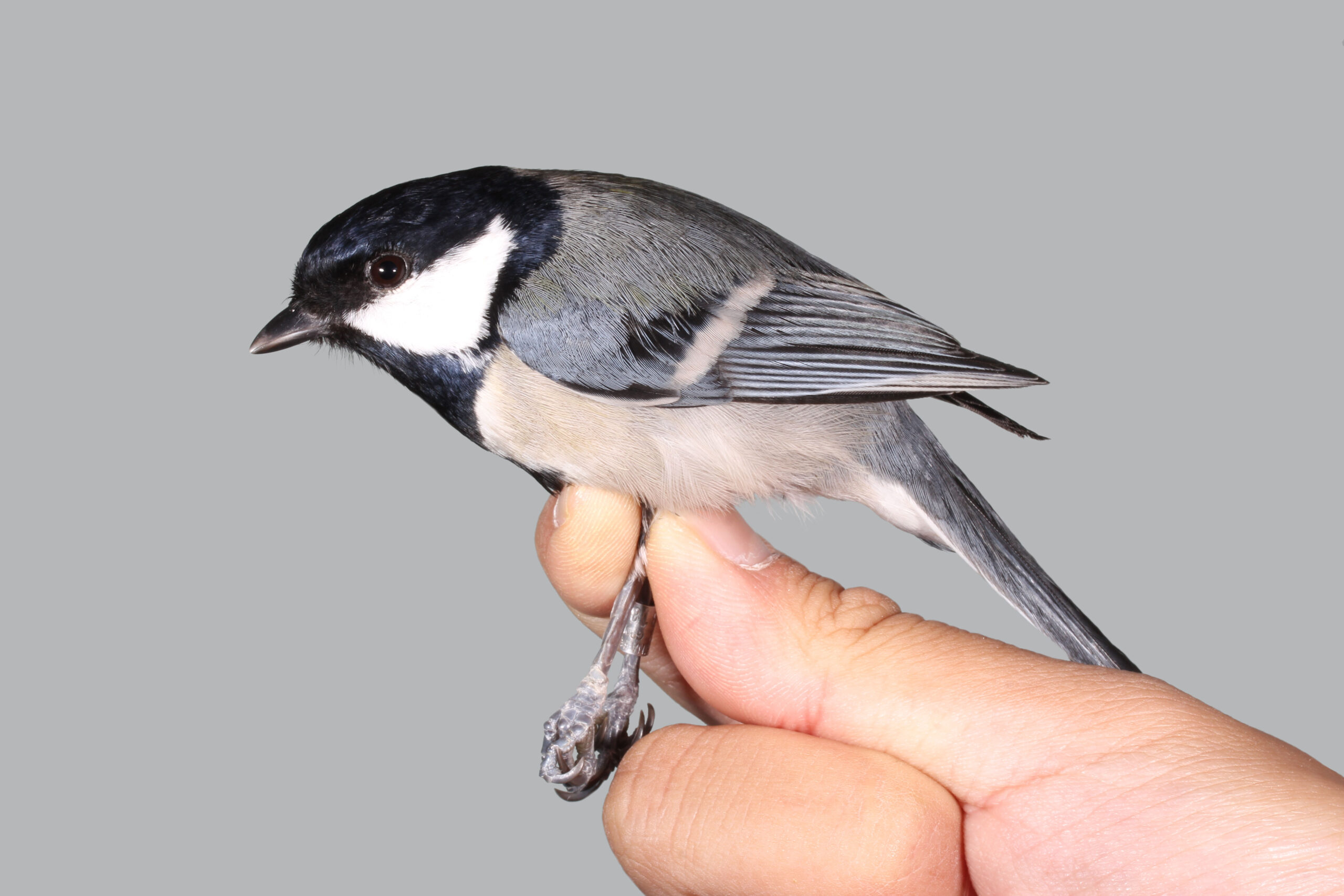
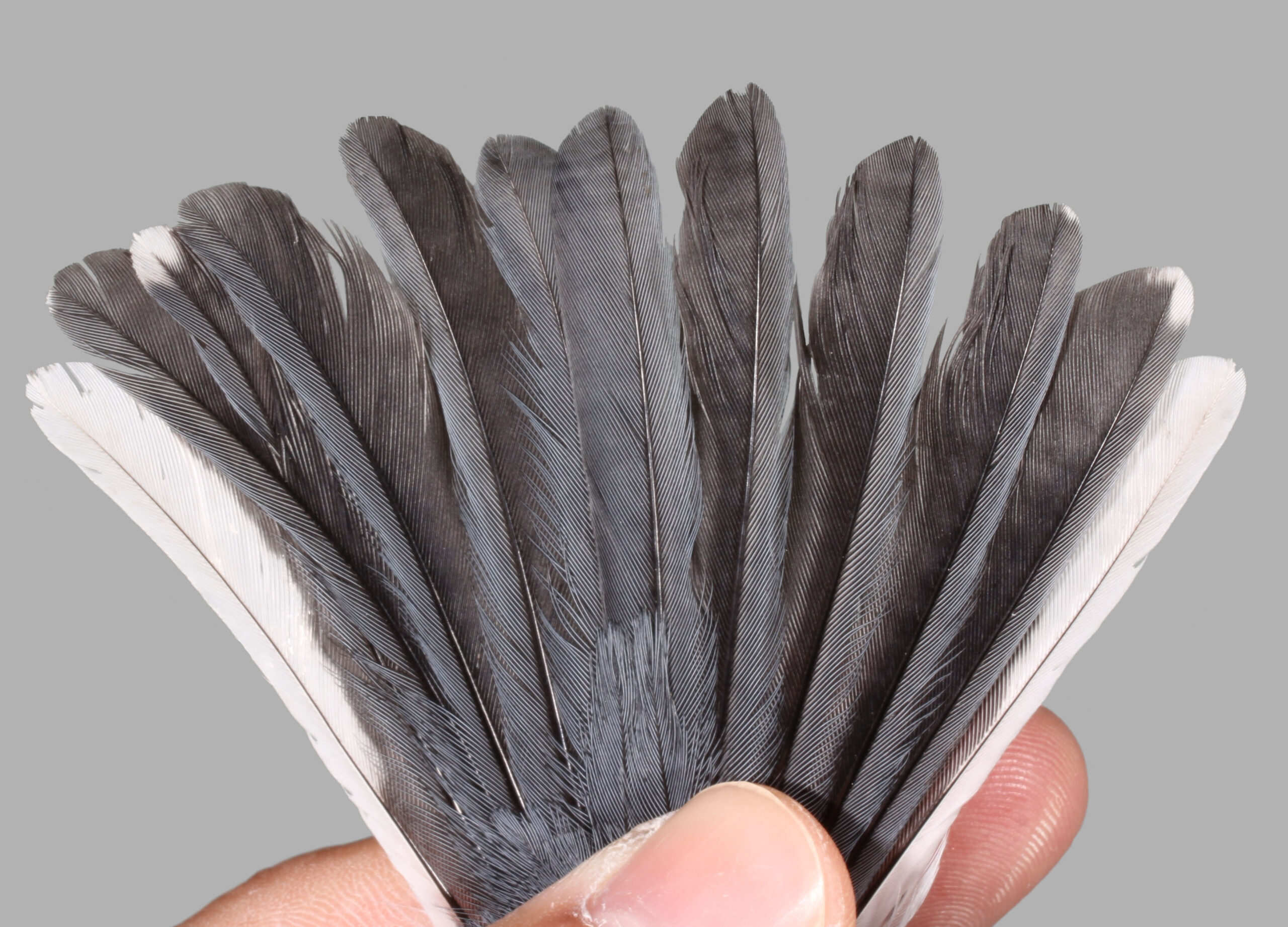
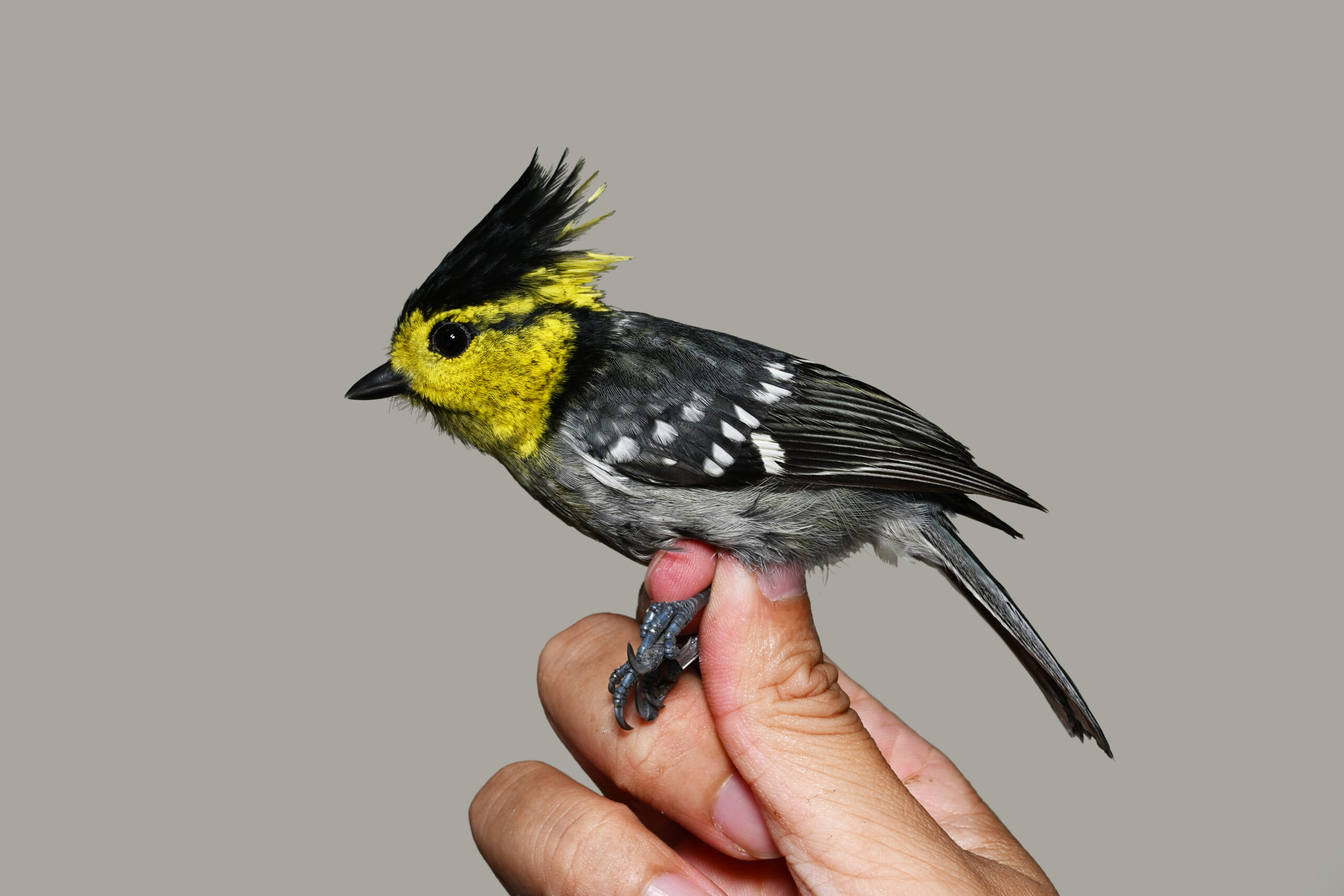
Next up was the trial for our fingers- the Tits! We had a total of Japanese Tits today, and, unlike our fluffy (adorable) Chinese Penduline Tits, these guys have an impressive skill at picking and tearing at the flesh around finger nails. Needless to say, patience and a high pain tolerance is needed to handle these creatures.
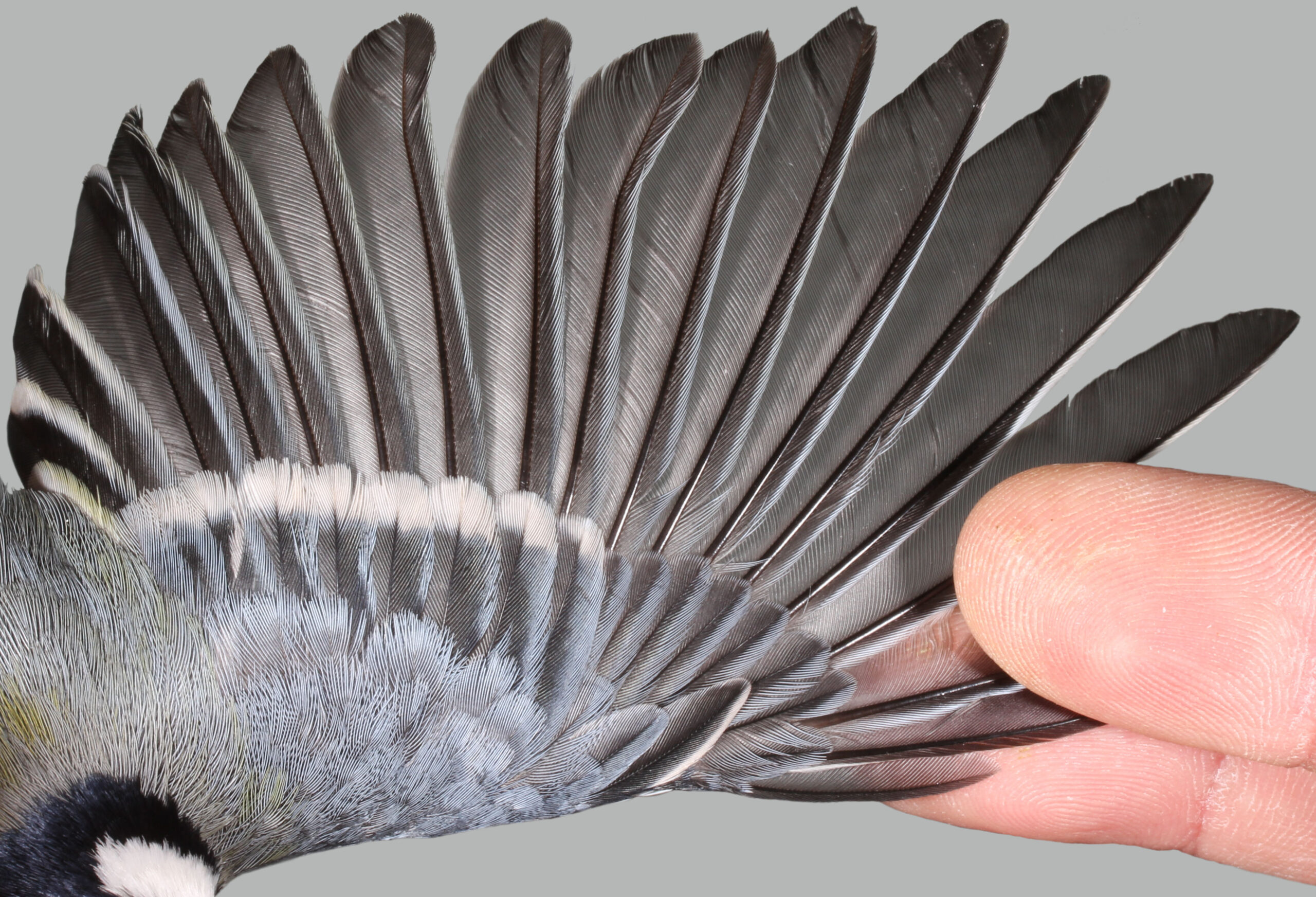
Nonetheless, it is, of course, worth it, to be able to study their beauty up close. They moult just like most other Tit species (Adults, SC; Juveniles, Sp), with juveniles usually moulting all of their GCs. Thus, we search for the moult limit between these postjuvenile GCs and juvenile PCs, which should be more brown and less blue.
In the individual above, we see no such limit, with the entire wing being dark black and every feather fringed with a sky-blue hue. Therefore, we can conclude this is an adult bird! Also note the very black and glossy crown and throat, determining this is a male!
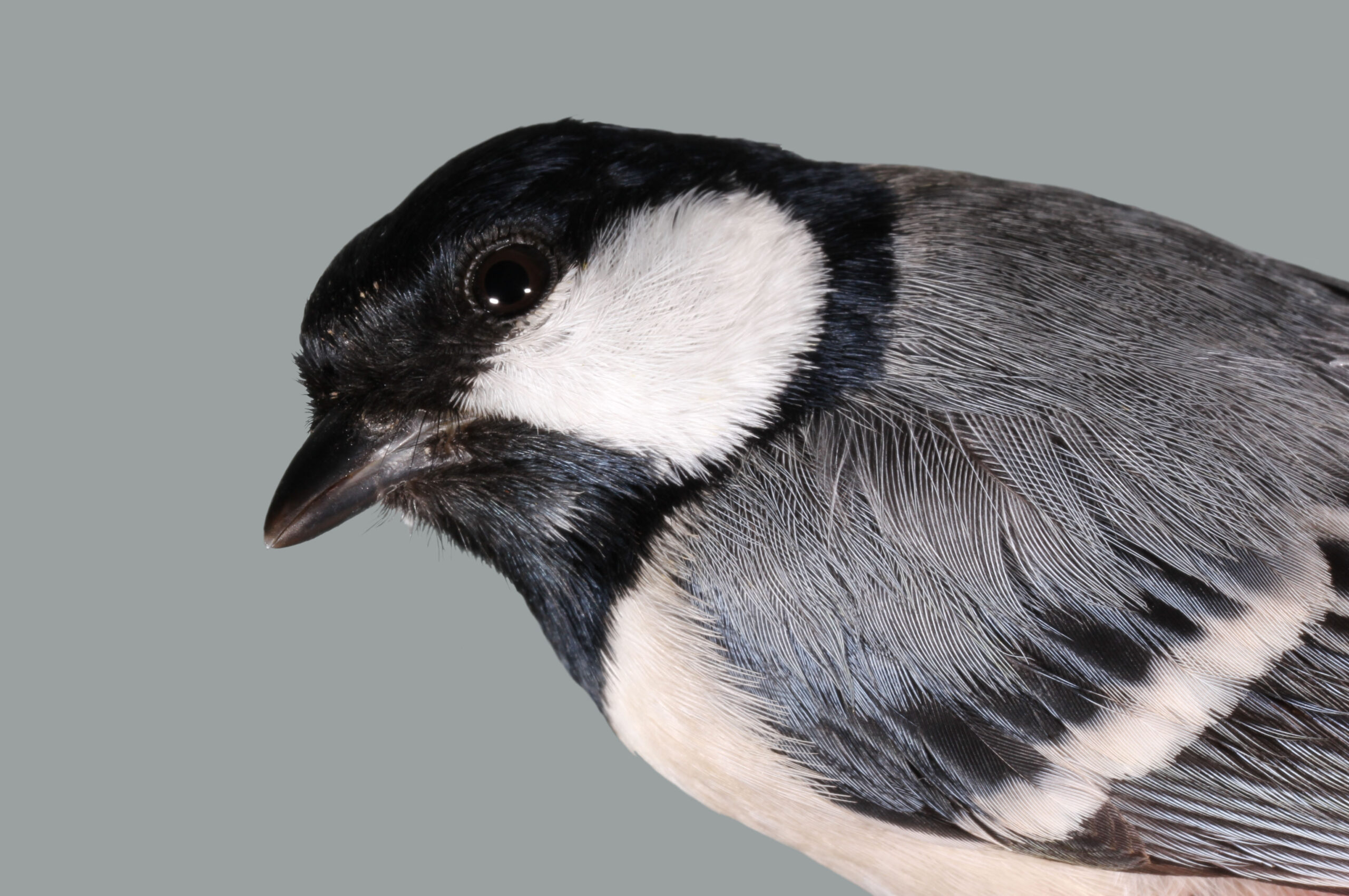
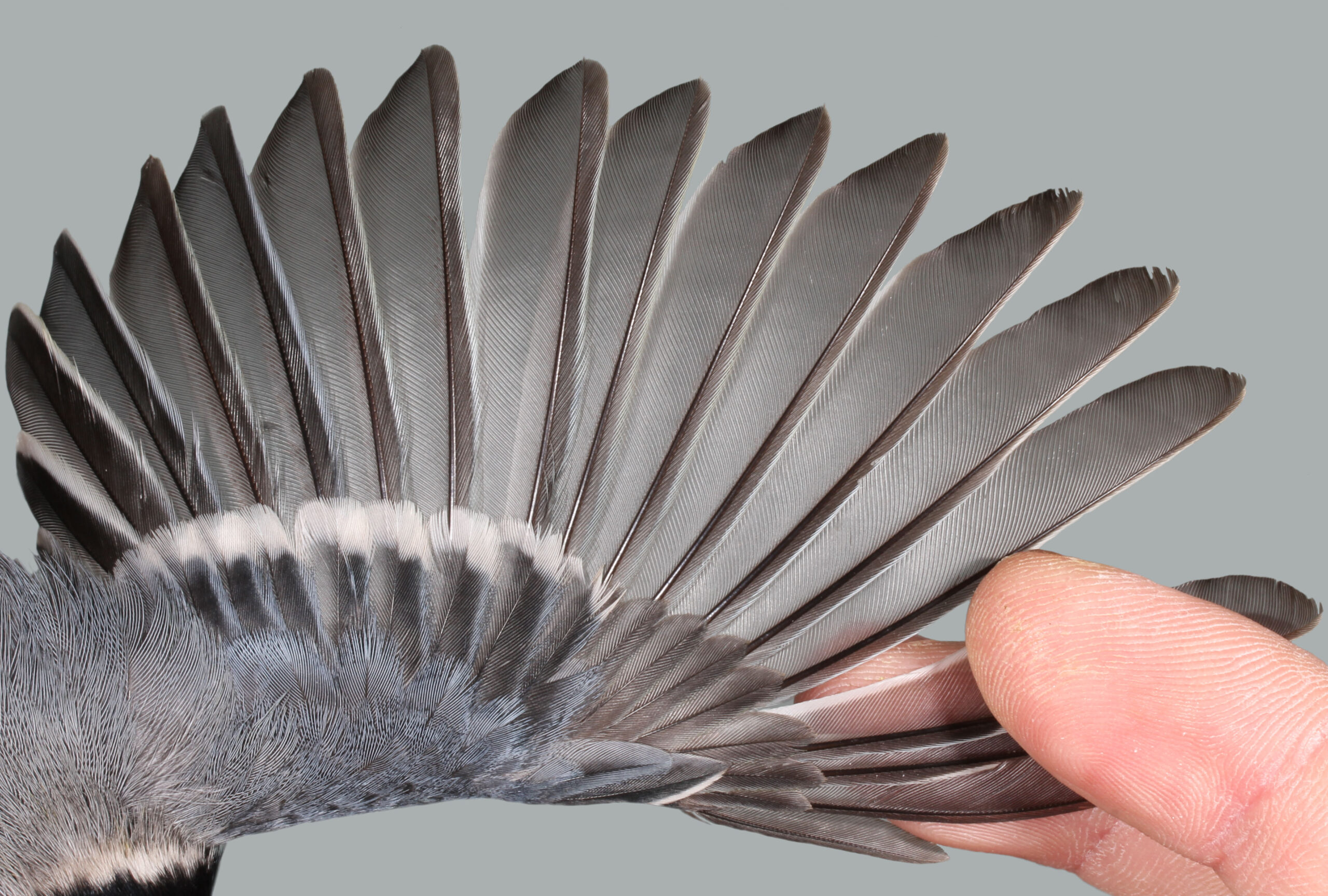
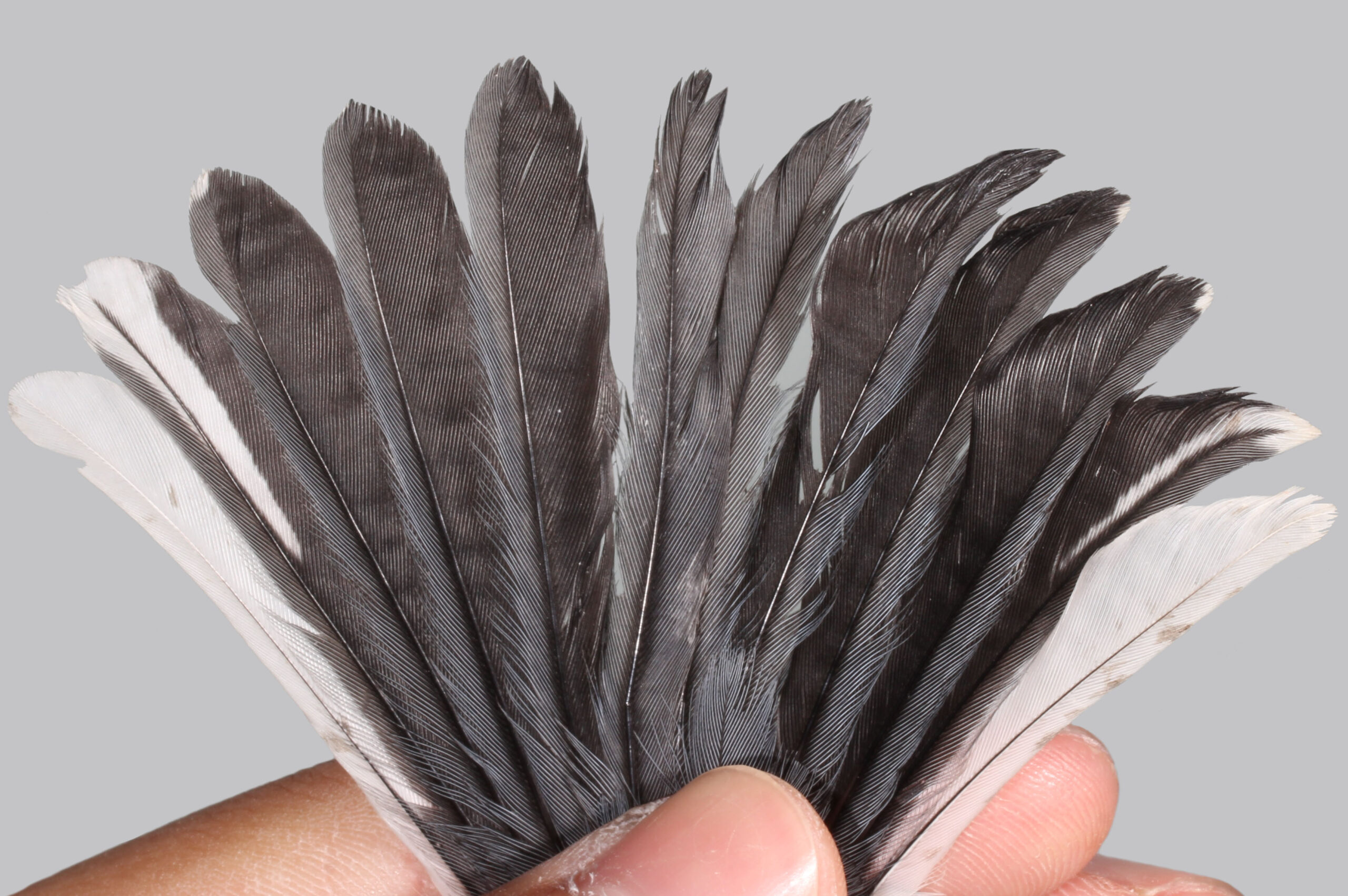
Though our 2nd individual is also a male, we can see in the wing the dull black PCs, with no hint of blue. Furthermore, we can see the fringes of the primaries and secondary (except the 2nd to innermost SS, which is moulted) are more white than blue, in comparison to the much darker and blue-fringed tertials. Therefore, we can conclude these, along with the PCs are juvenile, and this must be a 2nd calendar year bird.
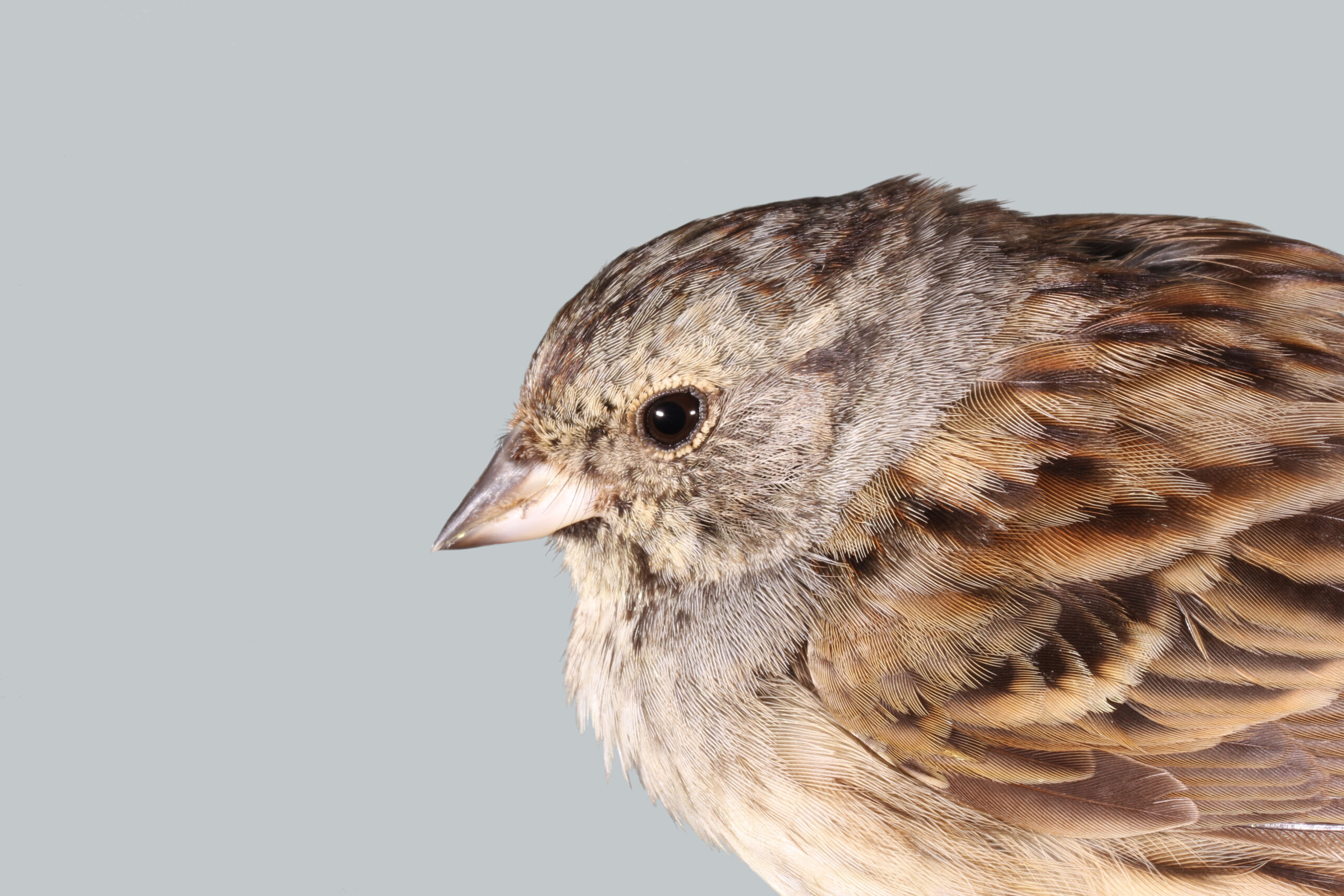
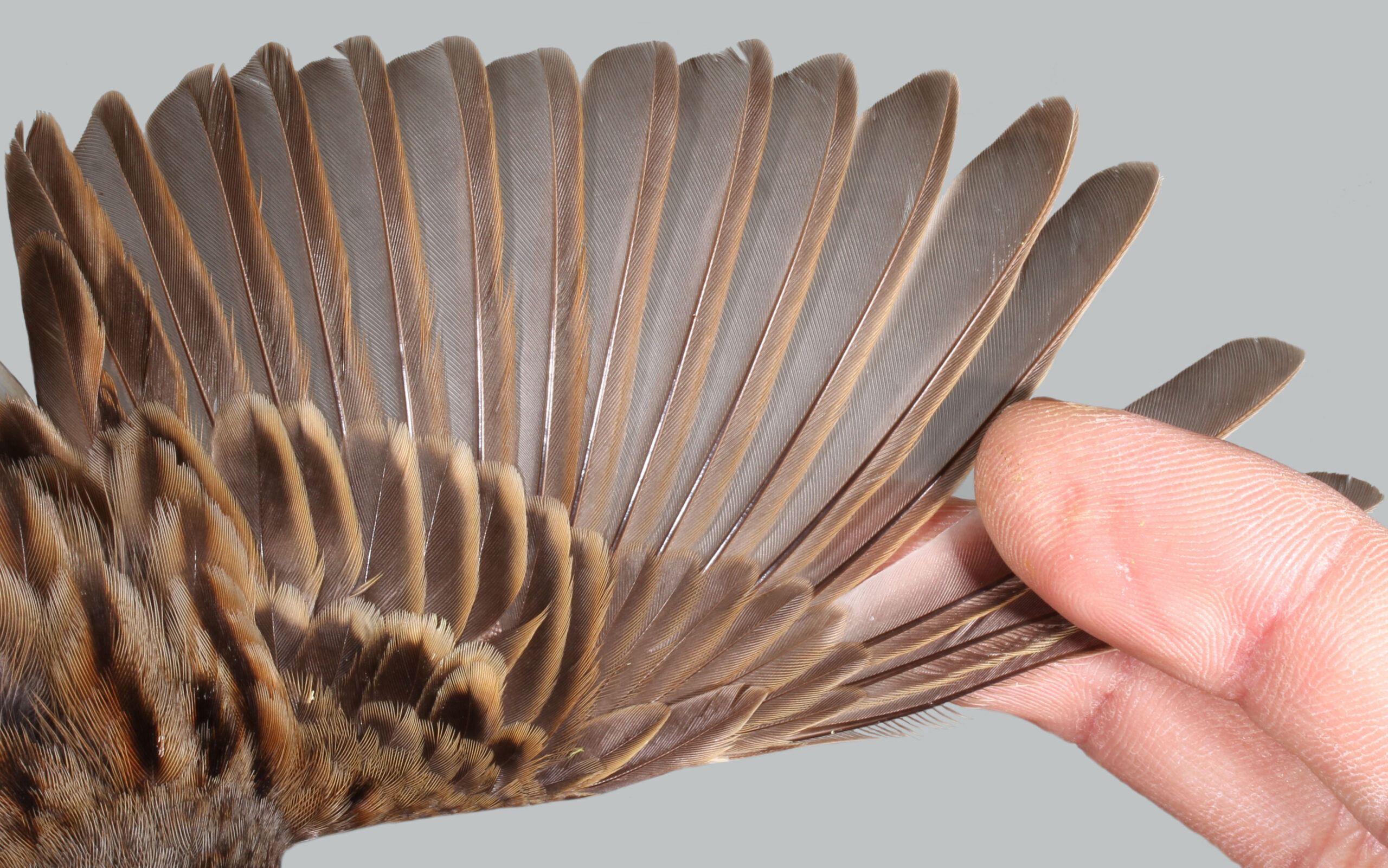
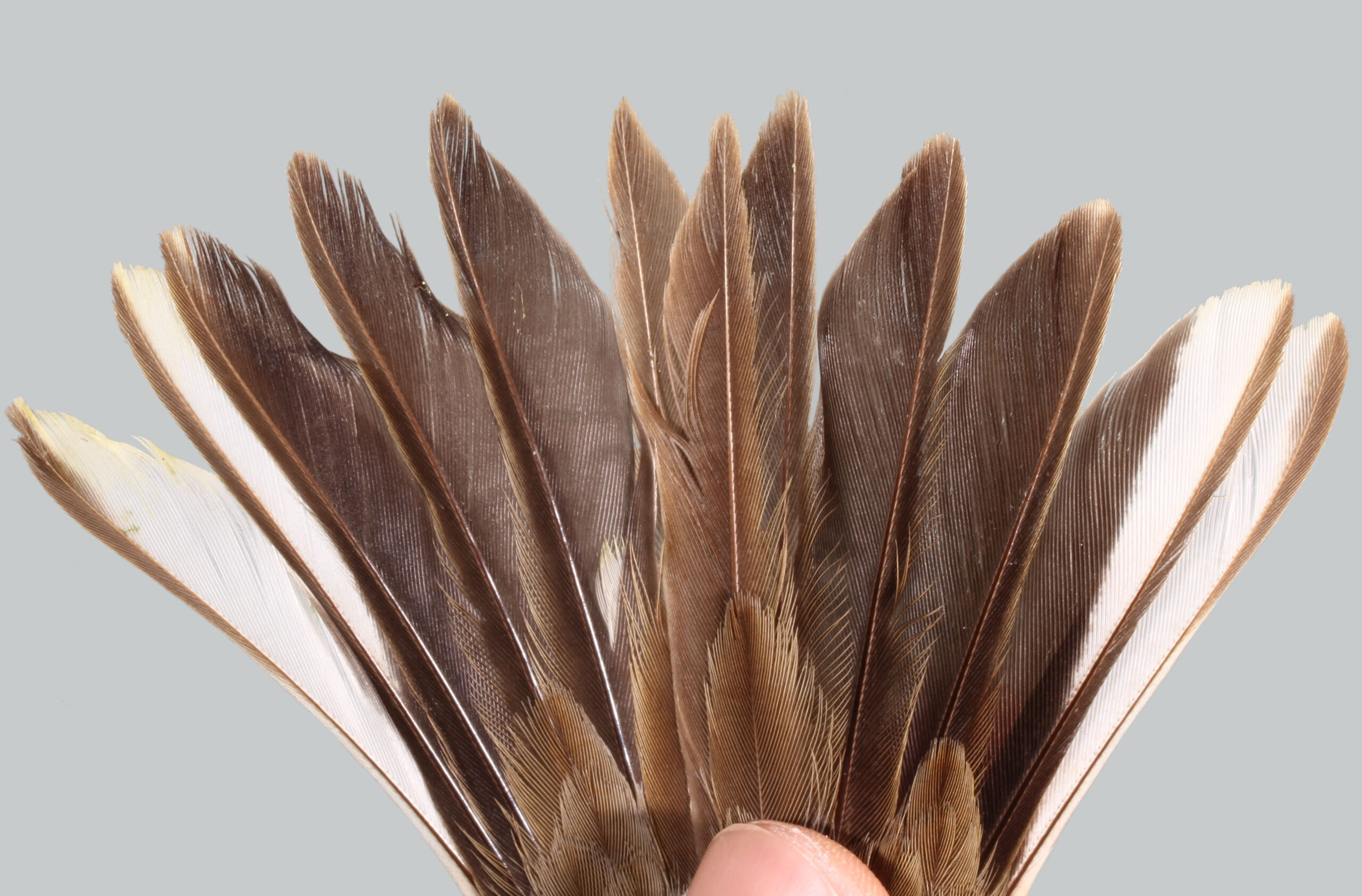
Finally, we had a nice surprise from one of our Winter visitors- a young male Black-faced Bunting! We have been through the ageing of these guys before (See 2022/11/30- Paddyfield Ringing: Notes on Ageing and Sexing of HK’s Buntings) and ageing in the new year is just the same (see the juvenile tail feathers & Primary Coverts). But interestingly, this individual also had an incomplete skull pneumatisation, suggesting that Black-faced Bunting juveniles take quite a long time to fully develop their skull.
A great first day back!
Daily Totals
| Species | Original | Recapture |
| Black-faced Bunting | 1 | 0 |
| Bluethroat | 0 | 1 |
| Chinese Bulbul | 4 | 1 |
| Chinese Penduline Tit | 1 | 0 |
| Cinereous Tit | 2 | 2 |
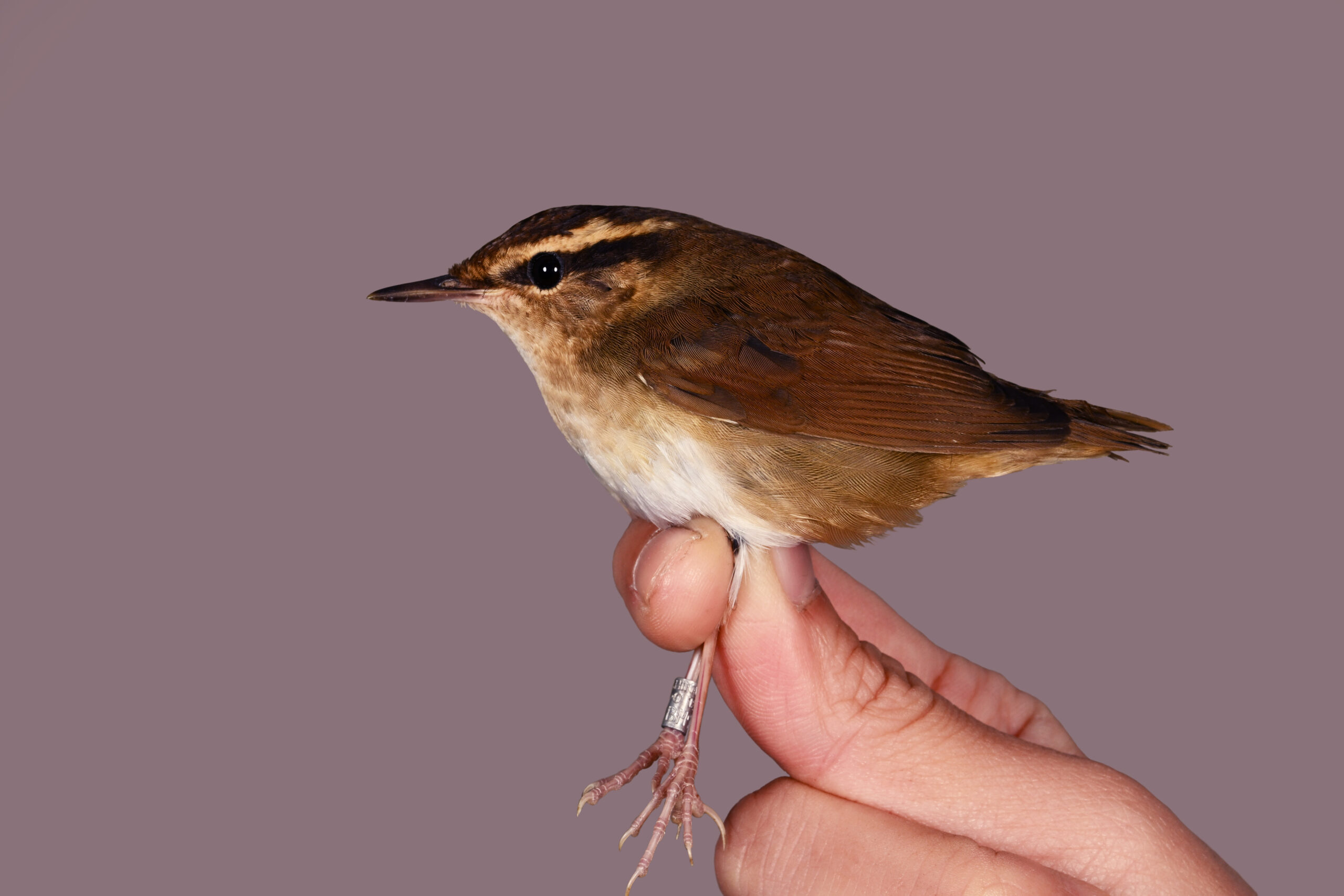
| Dusky Warbler | 1 | 3 |
| Grey-backed Thrush | 1 | 0 |
| Olive-backed Pipit | 2 | 0 |
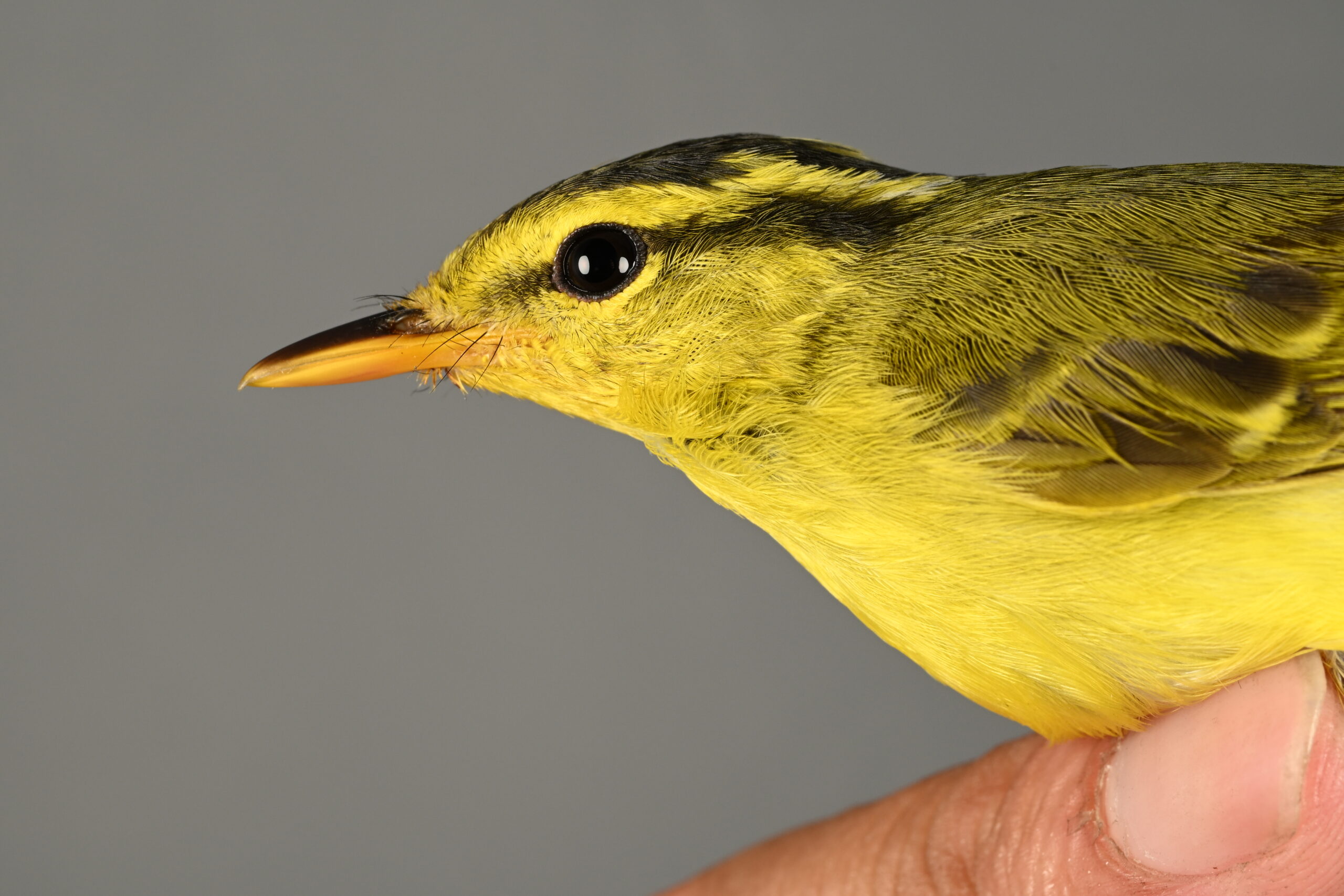
| Pallas’s Leaf Warbler | 2 | 0 |
| Plain Prinia | 1 | 1 |
| Red-whiskered Bulbul | 1 | 0 |
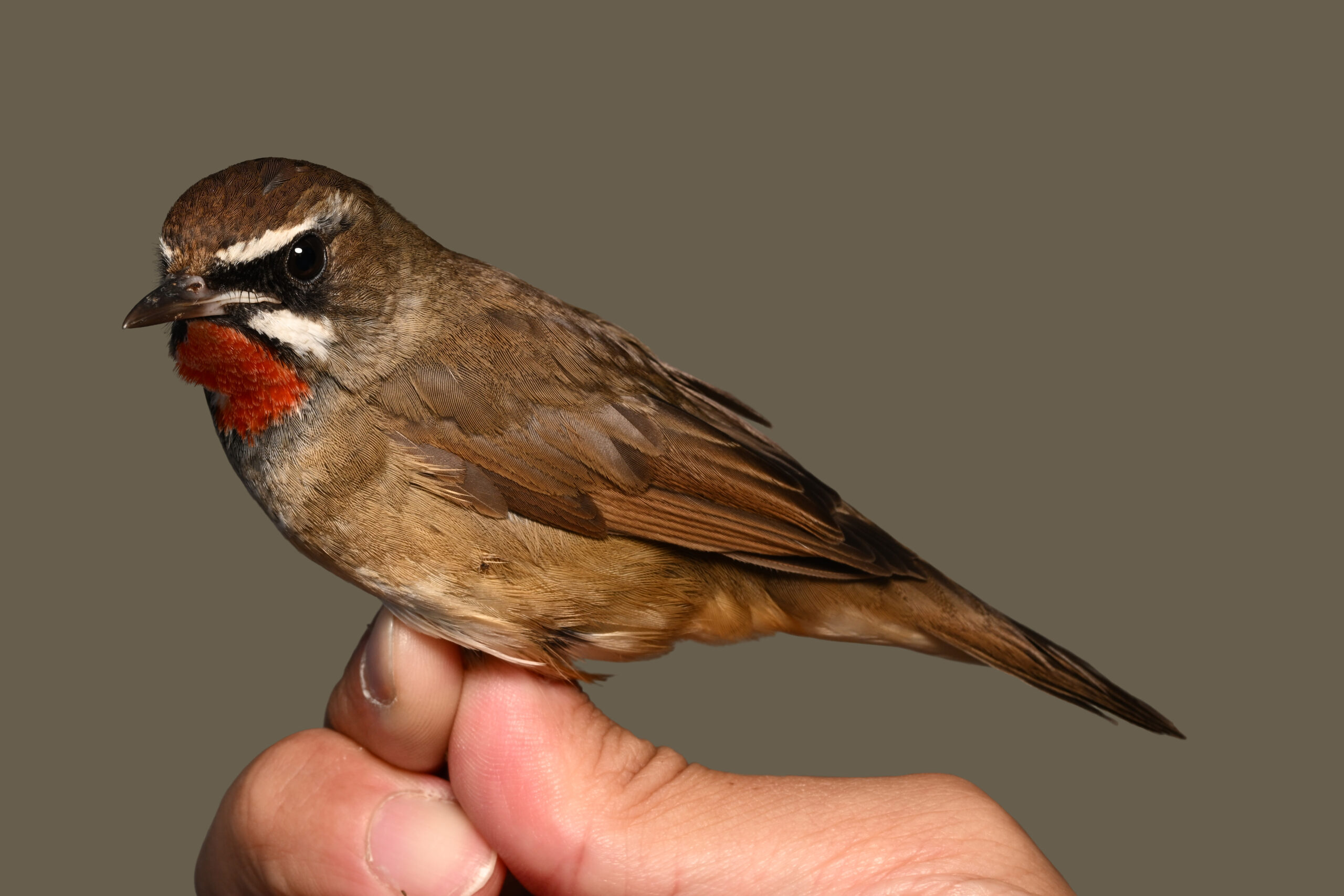
| Siberian Rubythroat | 1 | 0 |
| Swinhoe’s White-eye | 9 | 3 |
| Yellow-bellied Prinia | 0 | 2 |
| Yellow-browed Warbler | 0 | 0 |
*Please note that all wild birds, their nests, and eggs are highly protected (under Wild Animals Protection Ordinate, Cap. 170) in Hong Kong. It is an offence to wilfully disturb, take, remove, or injure wild birds or their nests/eggs. The actions described here were undertaken by trained professionals holding the necessary licenses and permits issued by the AFCD.*