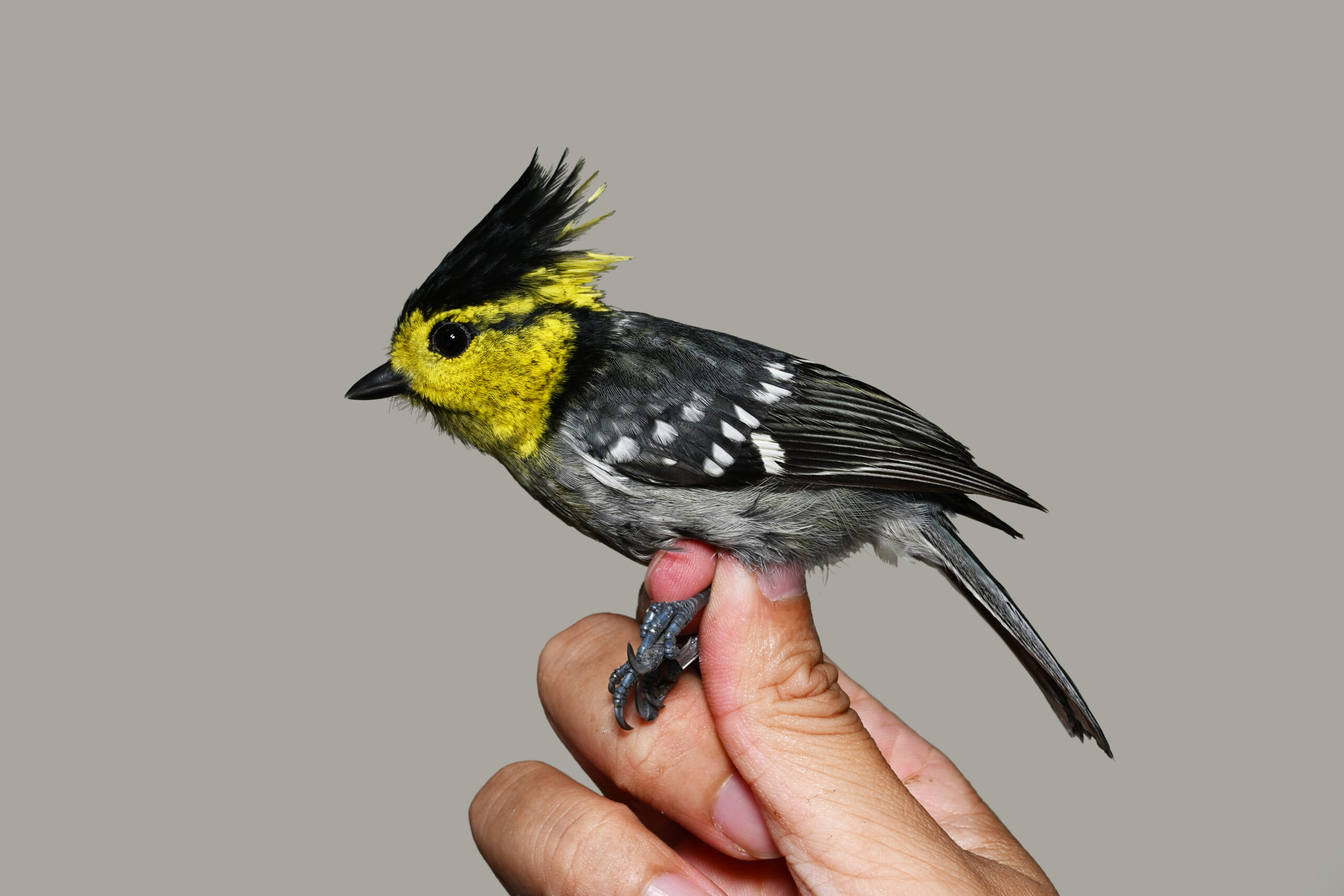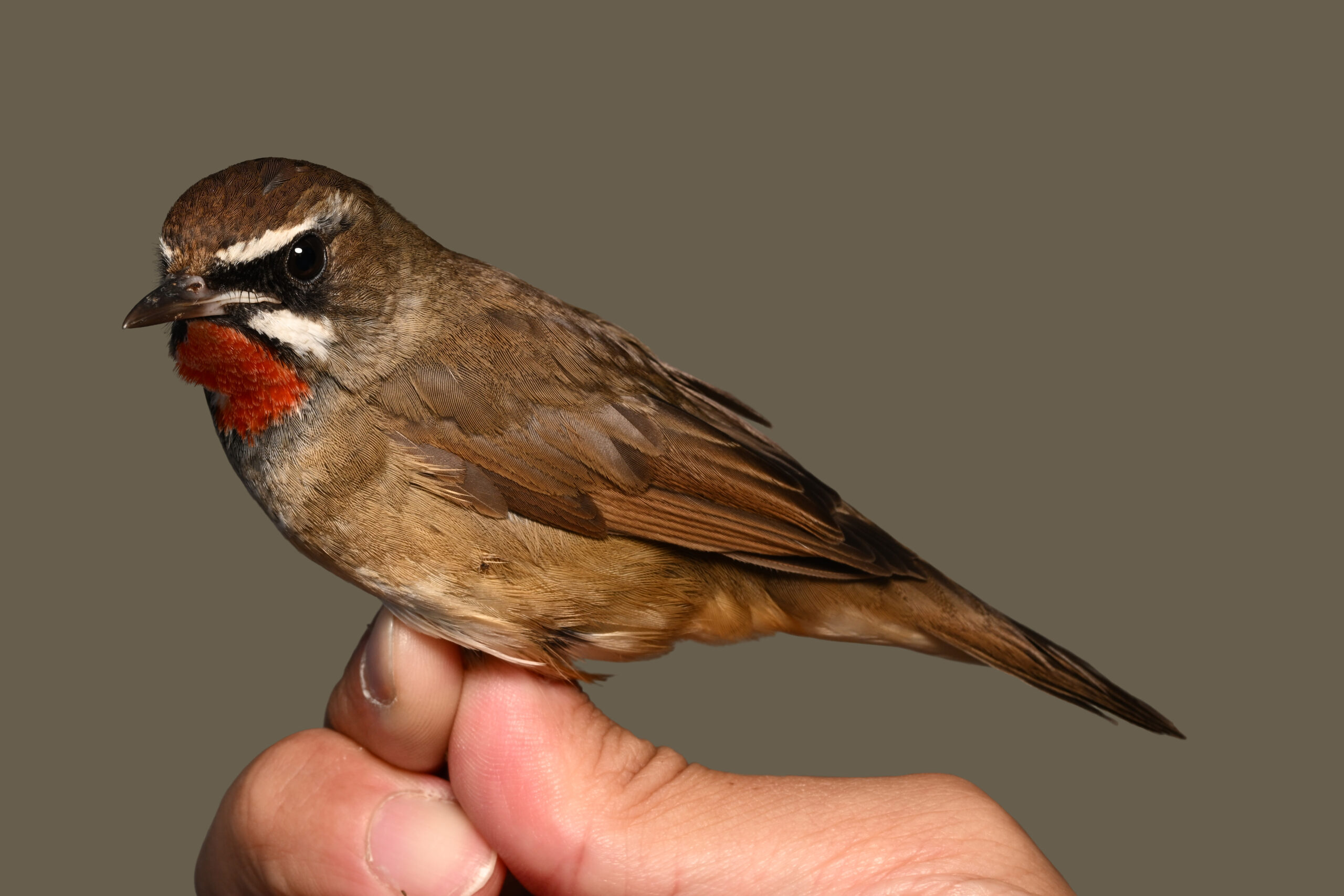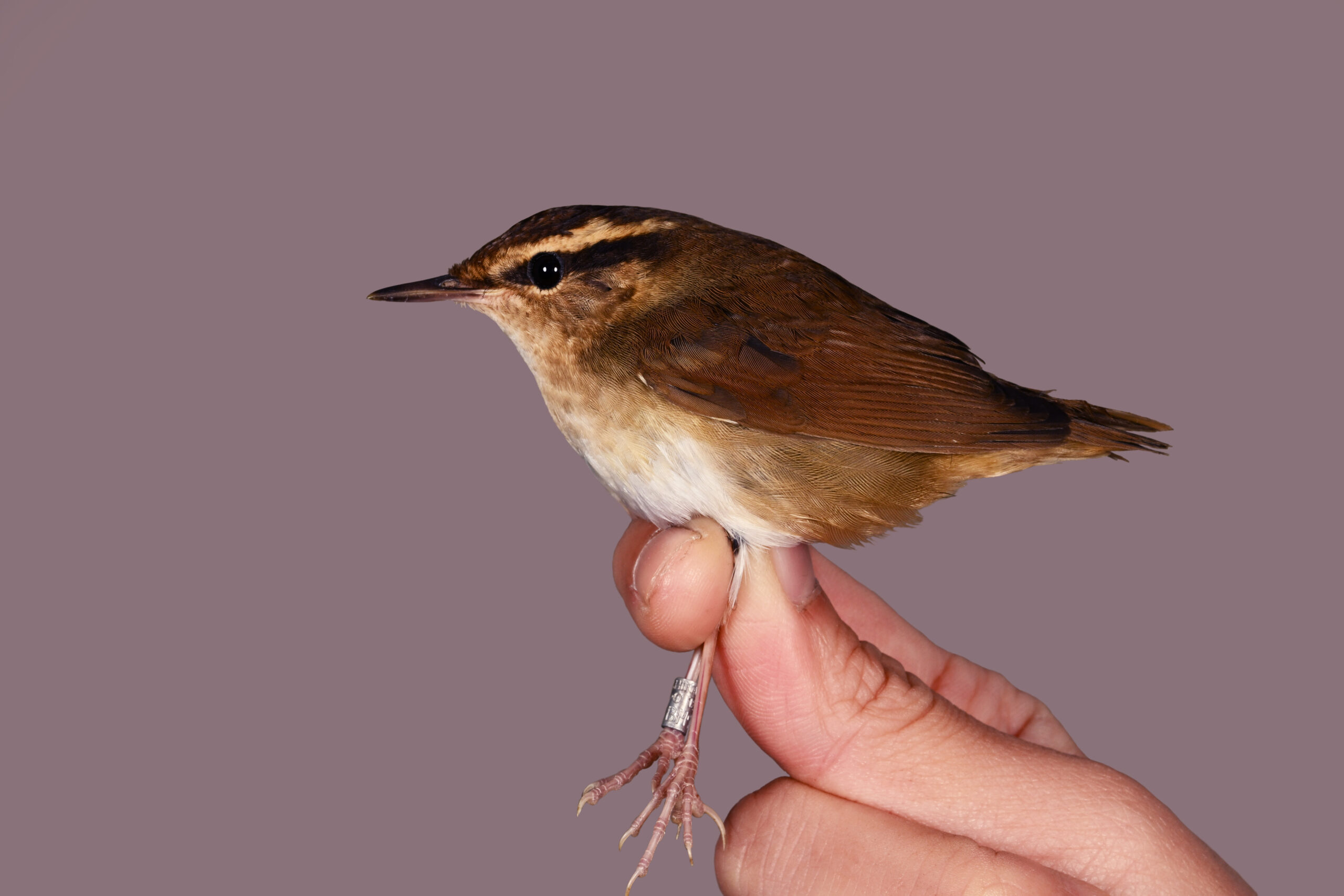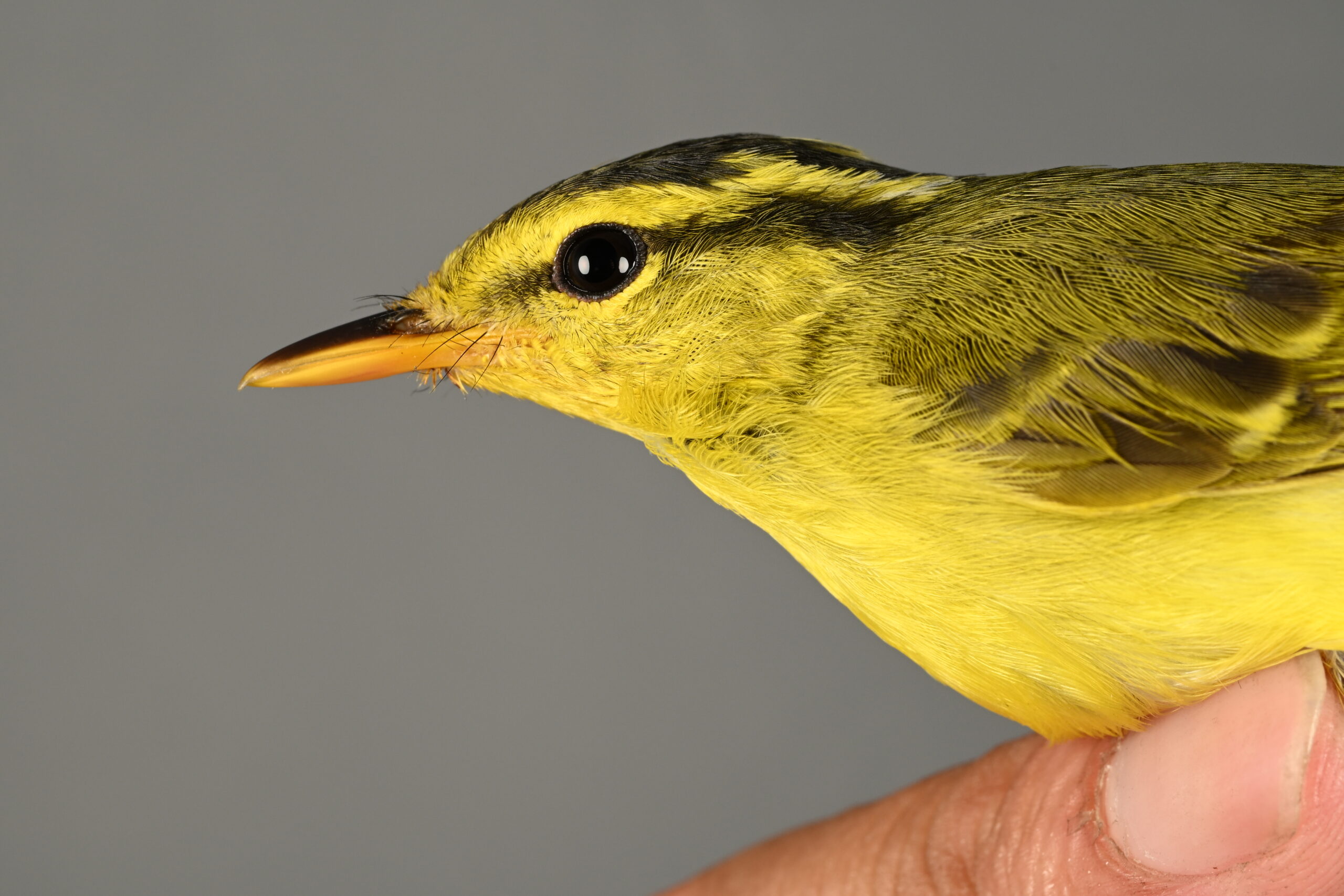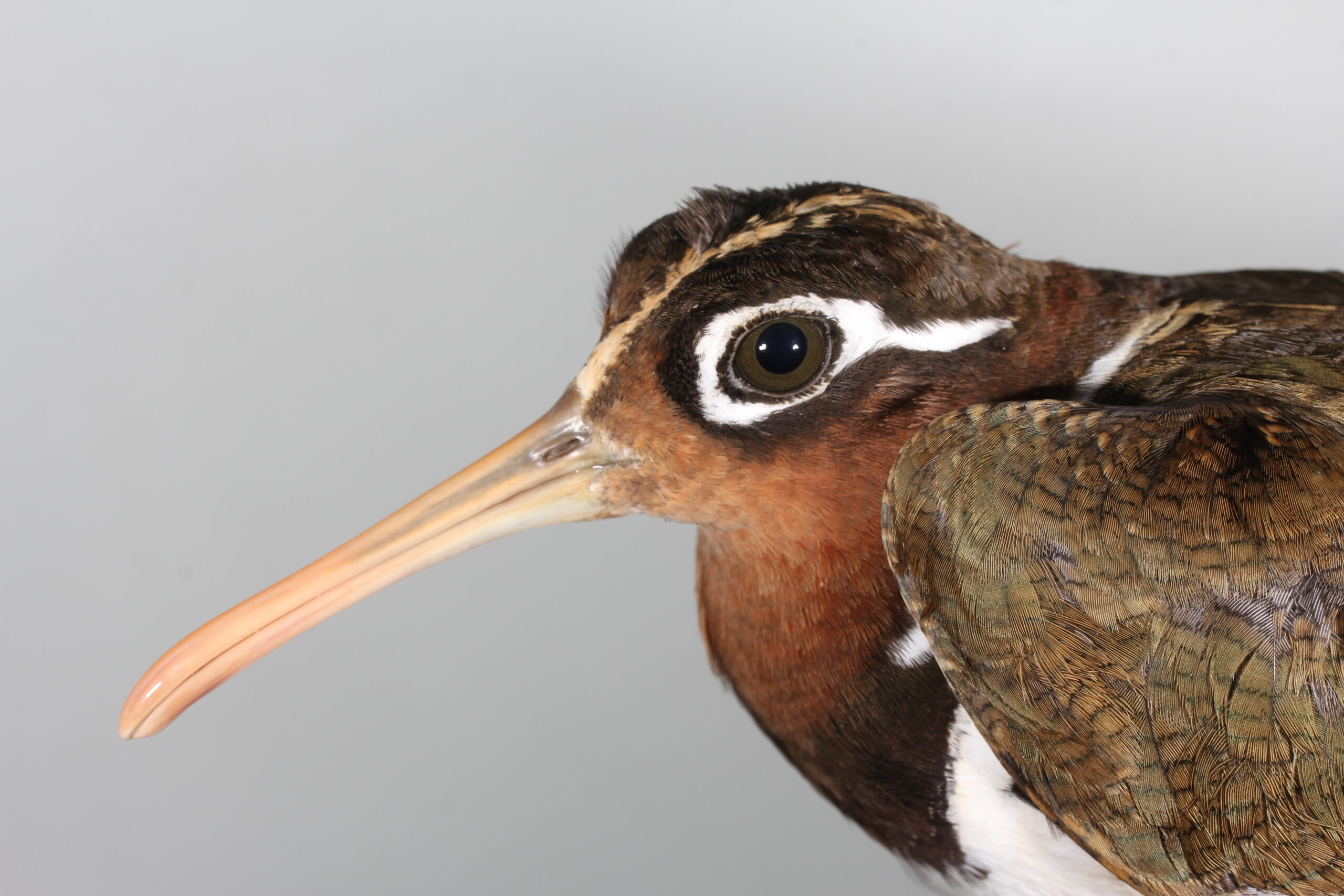



As the Autumn mornings continue to be warm, it is finally time to begin our Paddyfield ringing! For those who may have missed our previous Paddyfield ringing posts, this trapping areas is primarily for our wonderful migrants, including whole host of migrants. We need to wait for the area to be in prime condition for these migrants, and therefore the majority of our efforts here are in Autumn!
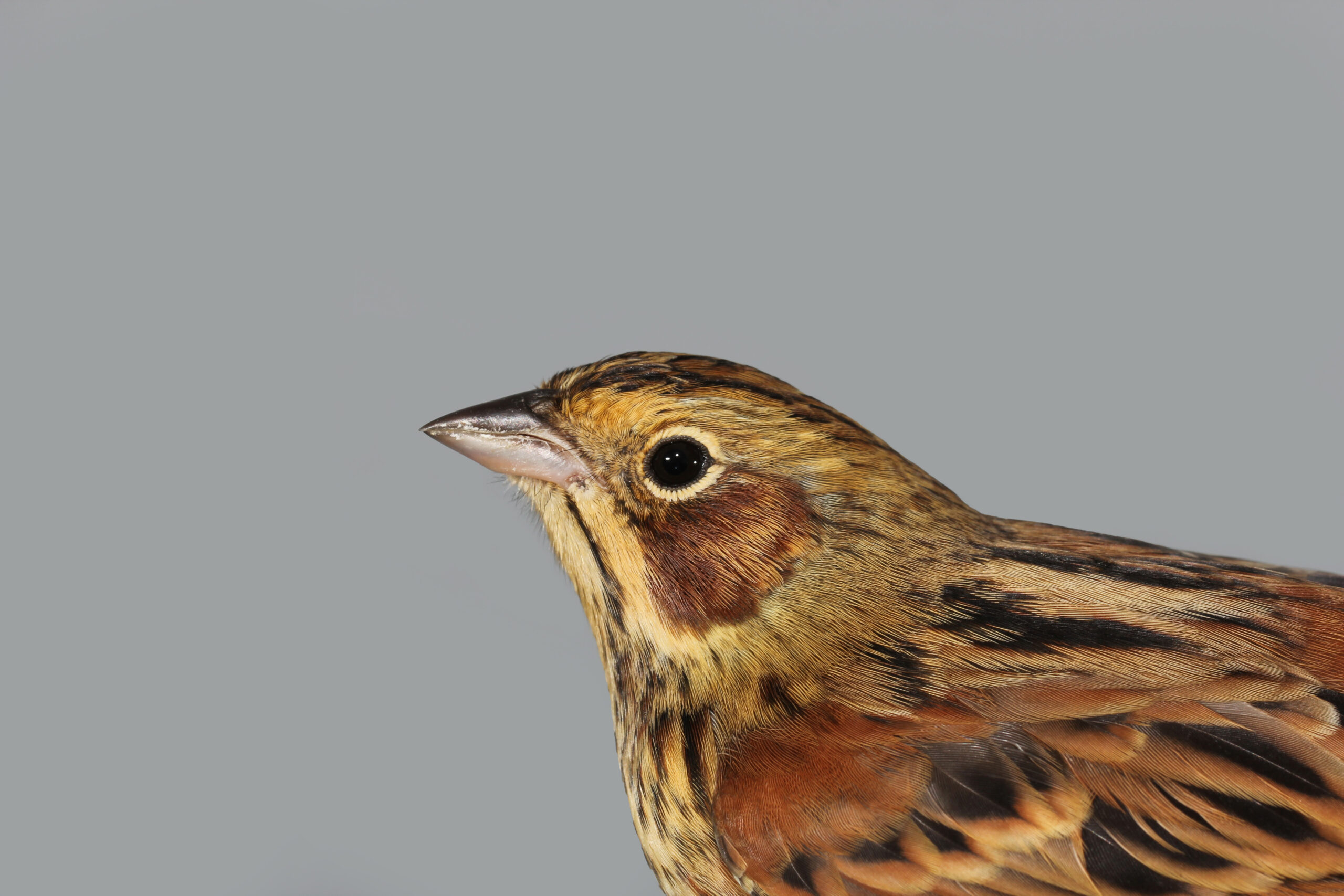
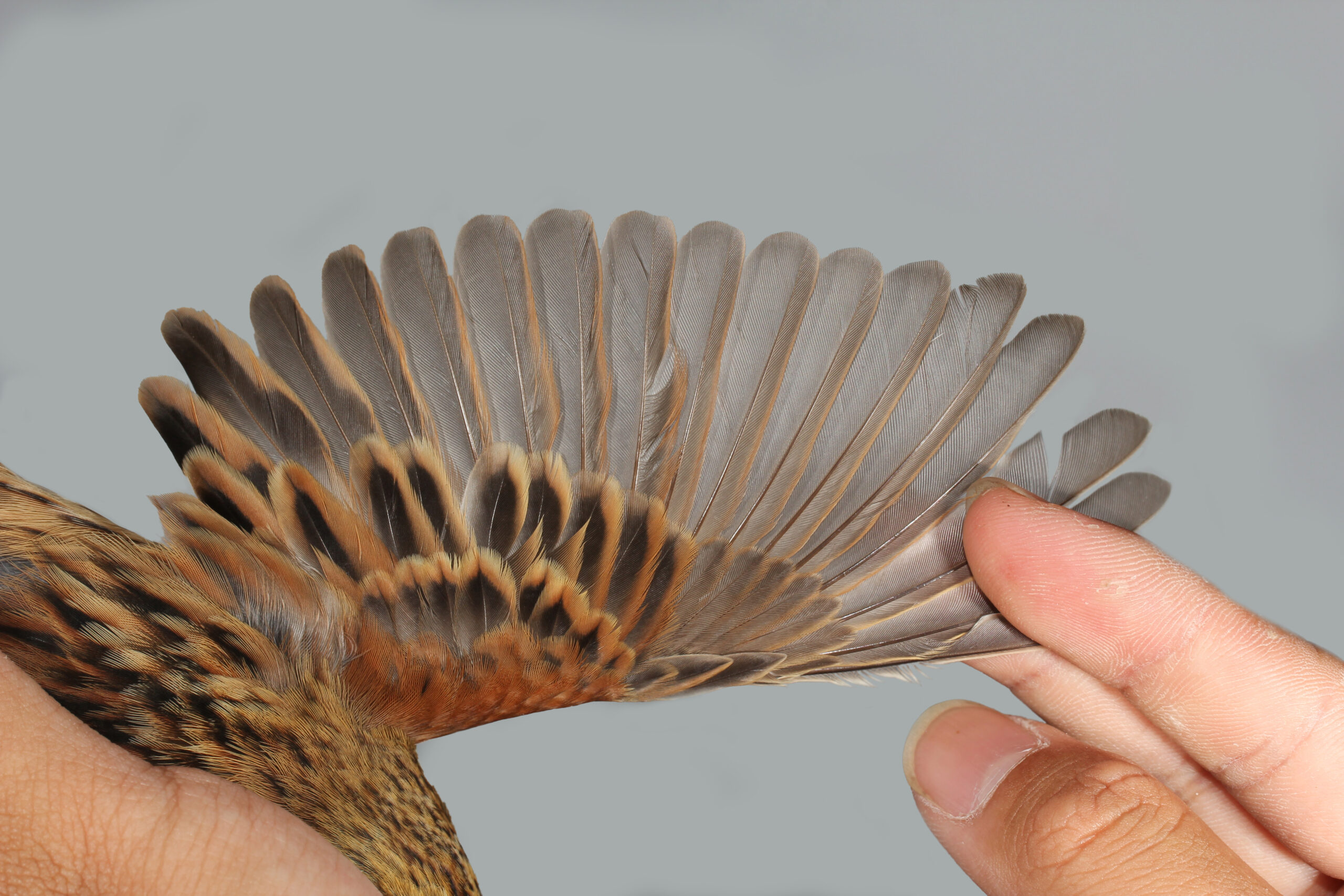
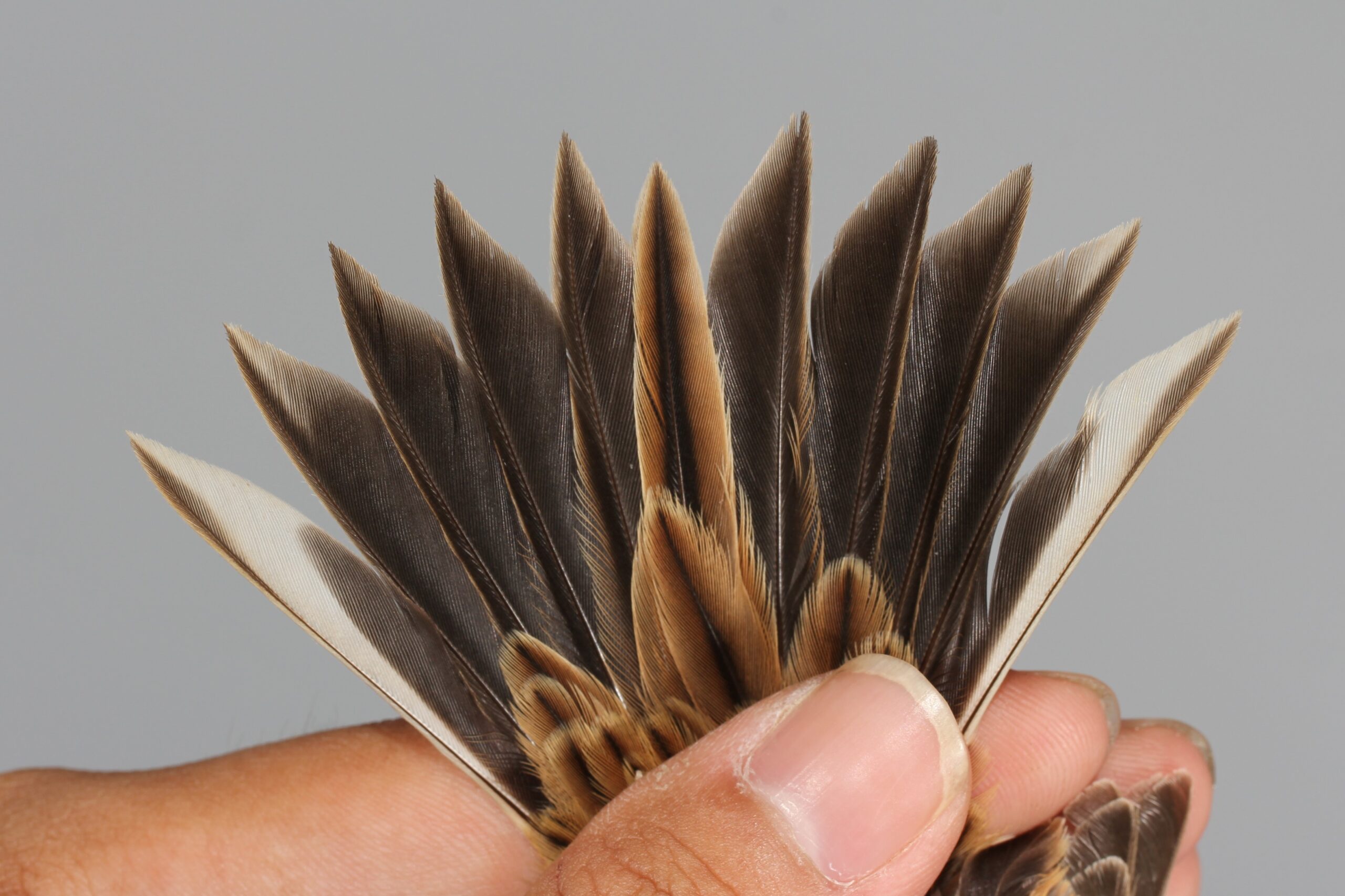
One first wonderful bird was a Chestnut-eared Bunting! This individual showed a very typical juvenile tail (narrow and pointed), and the same moult limit as seen in most of our Bunting species; juveniles usually moult all Lesser, Median and Greater Coverts (and sometimes some tertials). Therefore, the moult limit we look for is between the moulted GCs, and the unmoulted Primary Coverts, Primaries and Secondaries. However, distinguishing true moult limits between feather groups, instead of within one feather group, is notoriously hard. Thus, if the tail proves unhelpful, we can also use the skull pneumatisation to determine the age of the bird, as Buntings typically take a long time to fully develop their skulls.
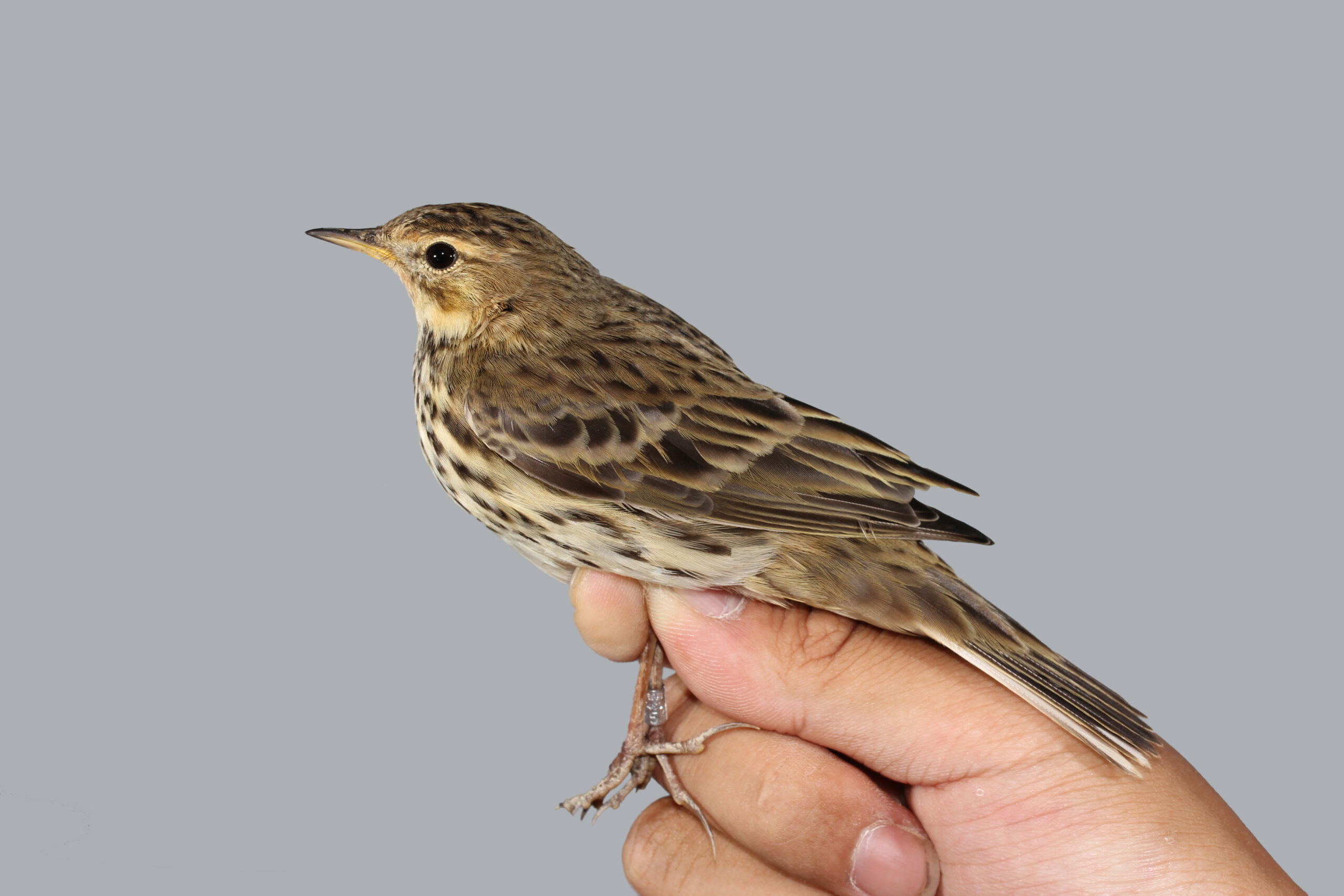
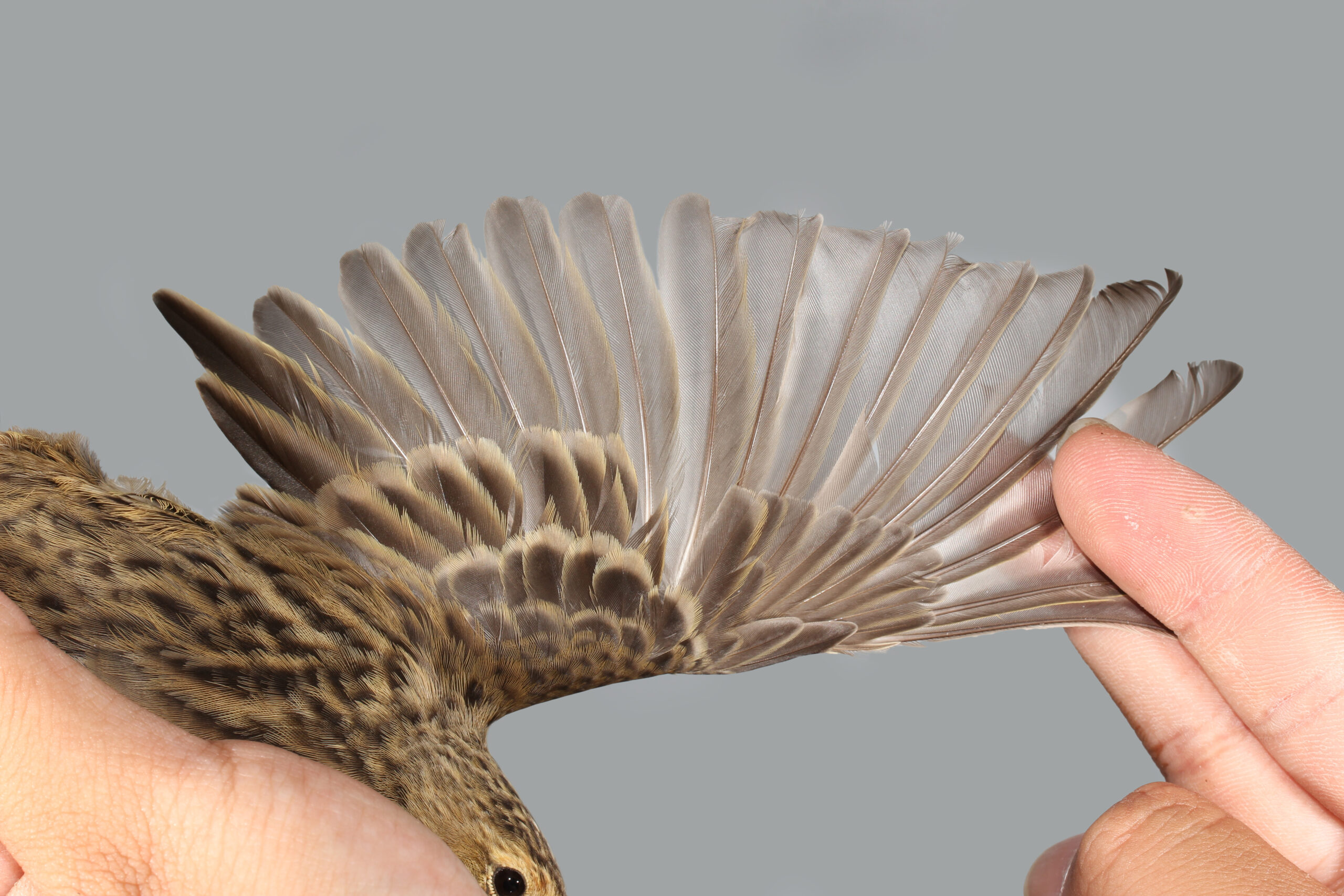
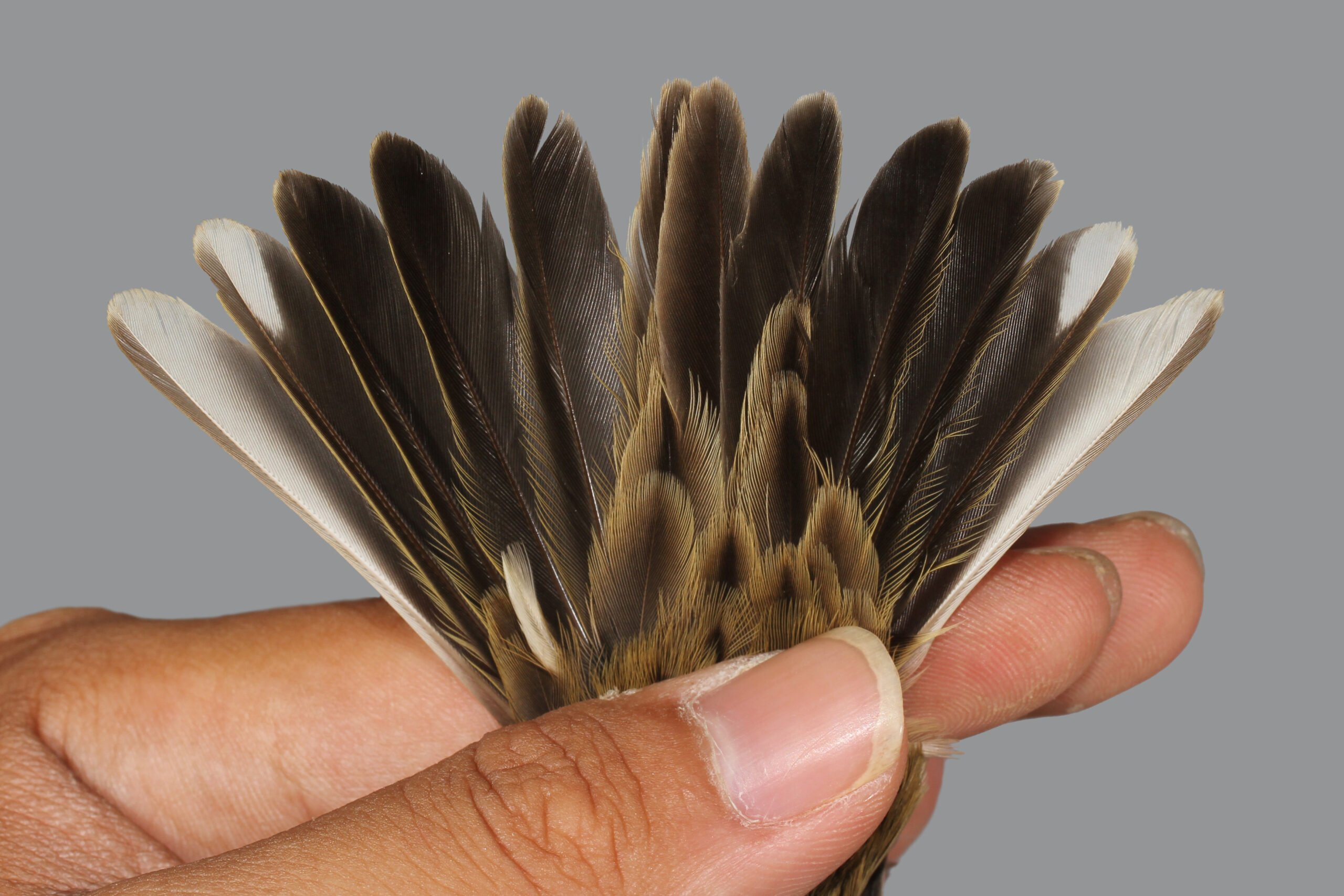
Next up was one of our most common Pipit species- the Red-throated Pipit! Adults of this species carry out Summer Complete moults, while juveniles carry out summer partial moults. However, the moult limits in juveniles are usually seen in the Lesser, Median, or sometimes inner Greater Coverts. Again, juvenile-type tails can be helpful, with more worn, narrow and pointed feathers.
In the individual above, the wing is nice and uniform, with no moult limits. The tail is also adult-type, with broad feathers and rounded tips.
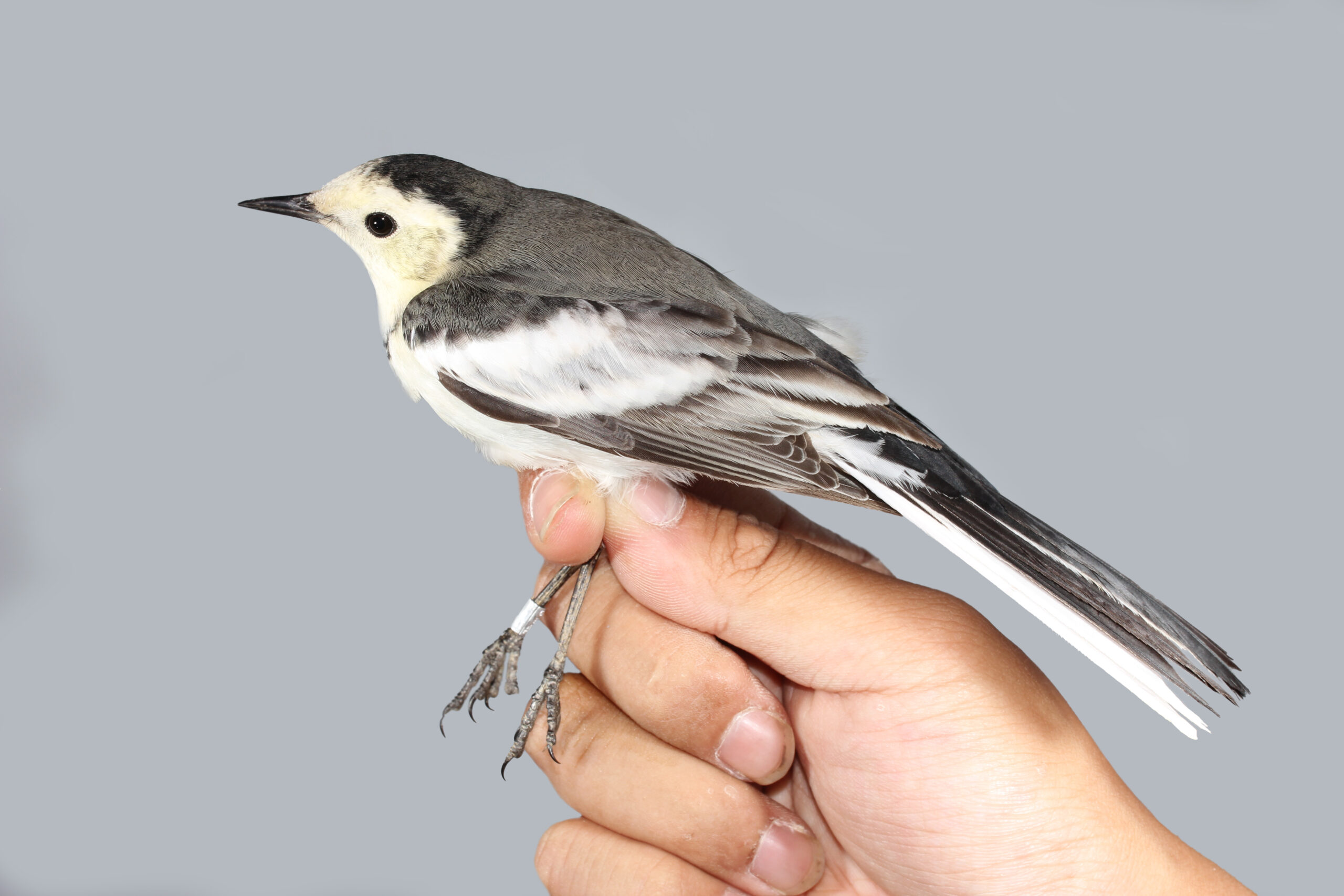
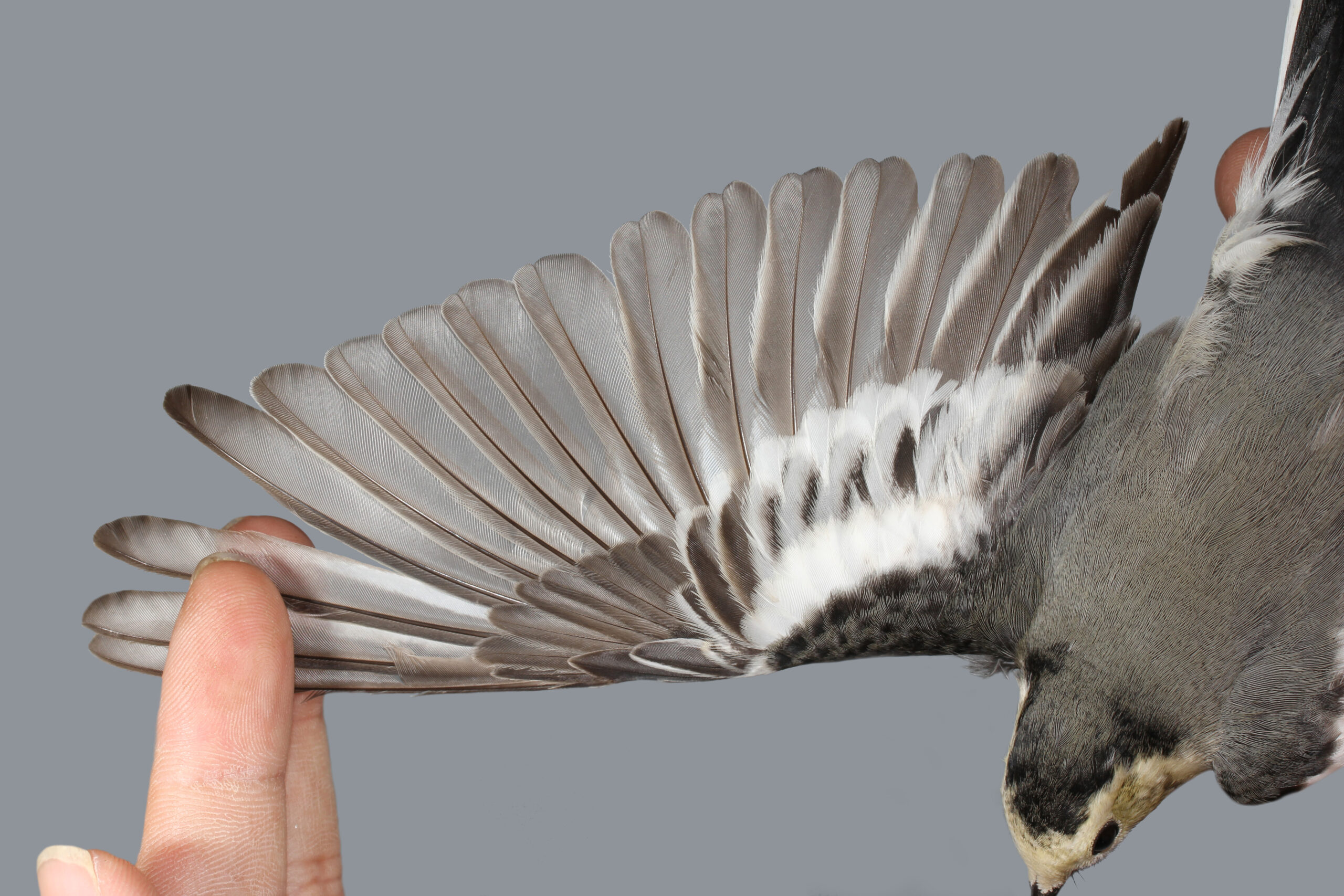
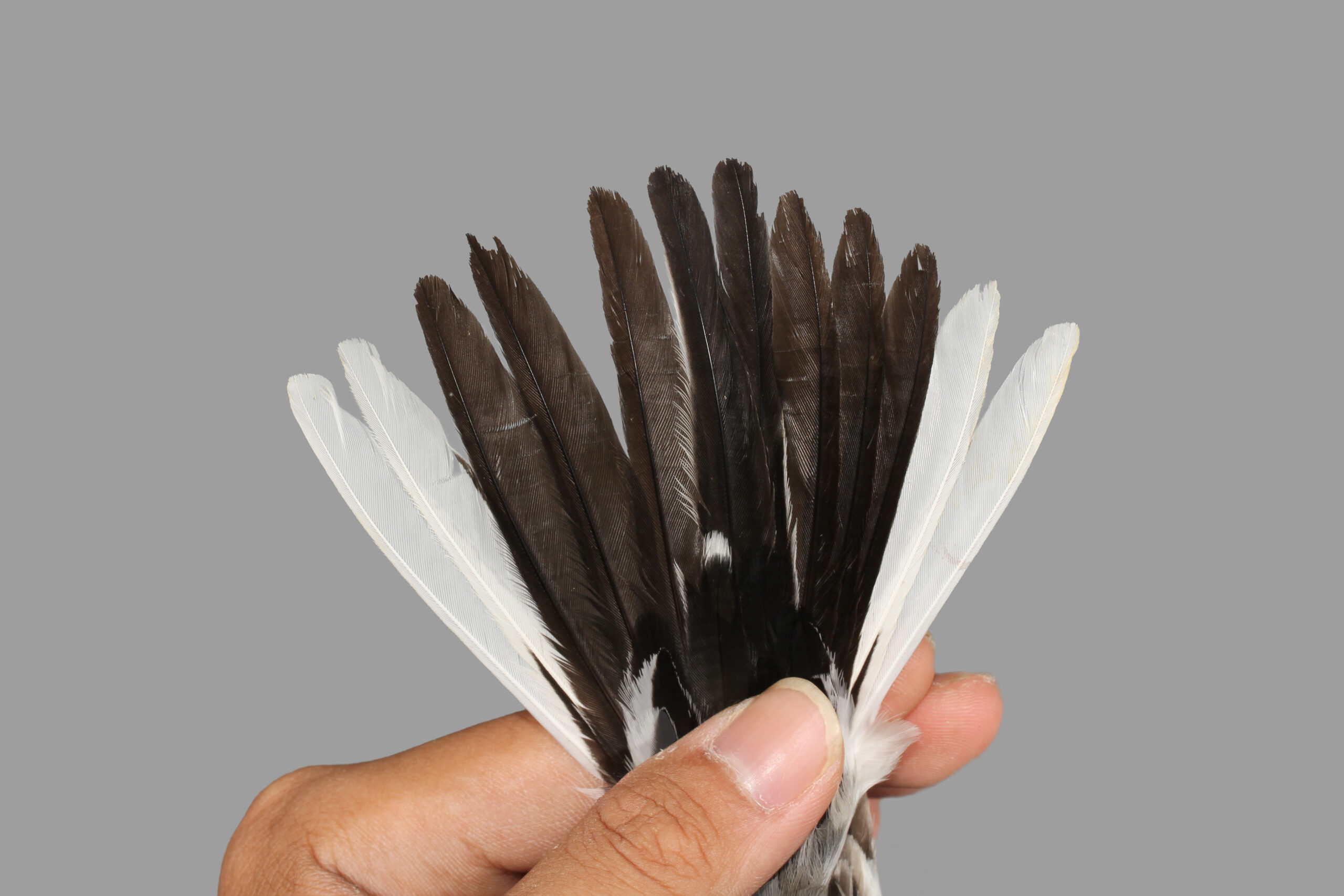
The busy morning continued with a flurry of our gorgeous resident wagtails! They moult similar to pipits, except the partial postjuvenile moult is far more extensive, with most Greater Coverts being moulted. In this individual, we can see that only the two outermost GCs are juvenile, and the rest are postjuvenile (moulted). it is important to note that tails are not super useful in the ageing of wagtails.
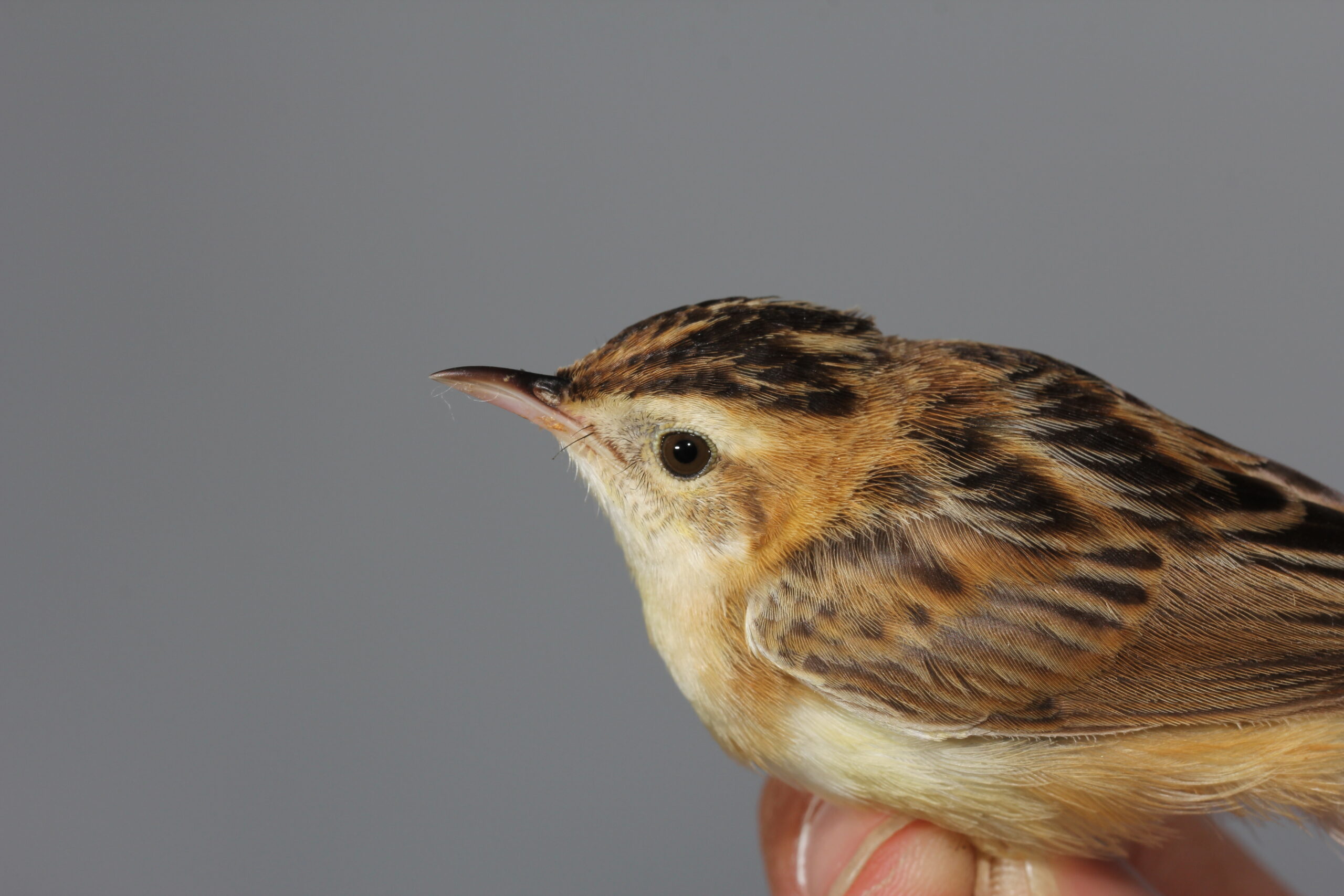
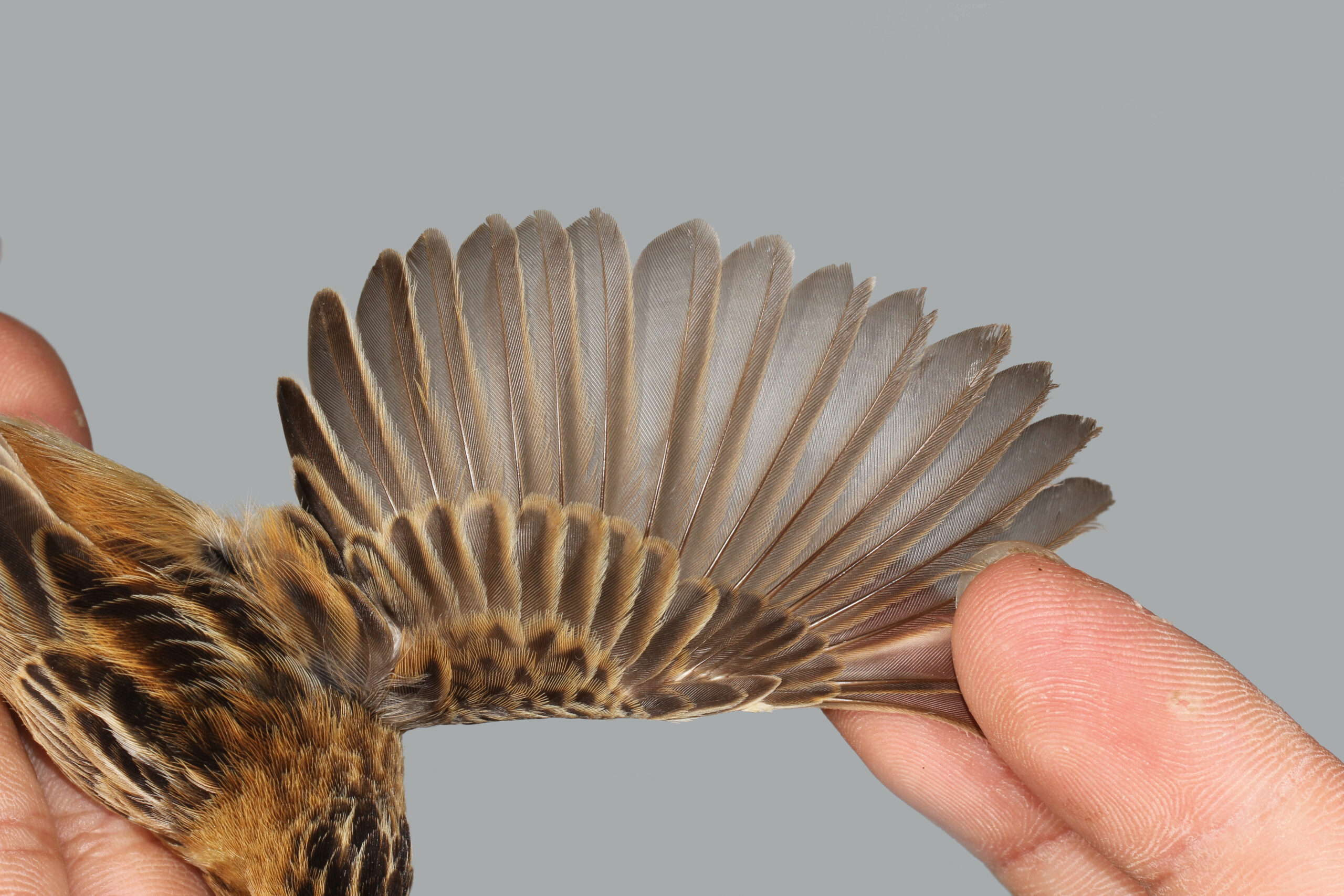
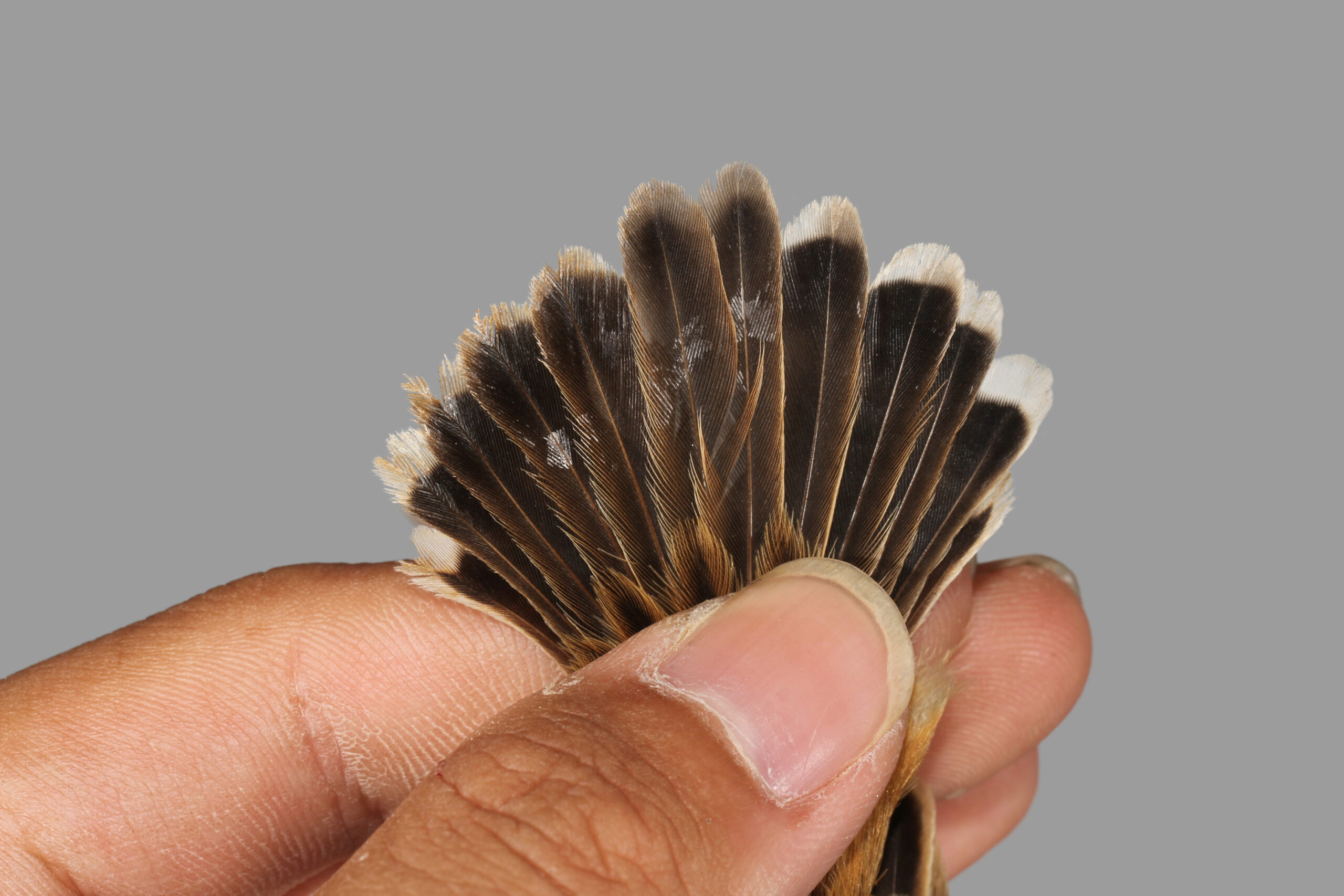
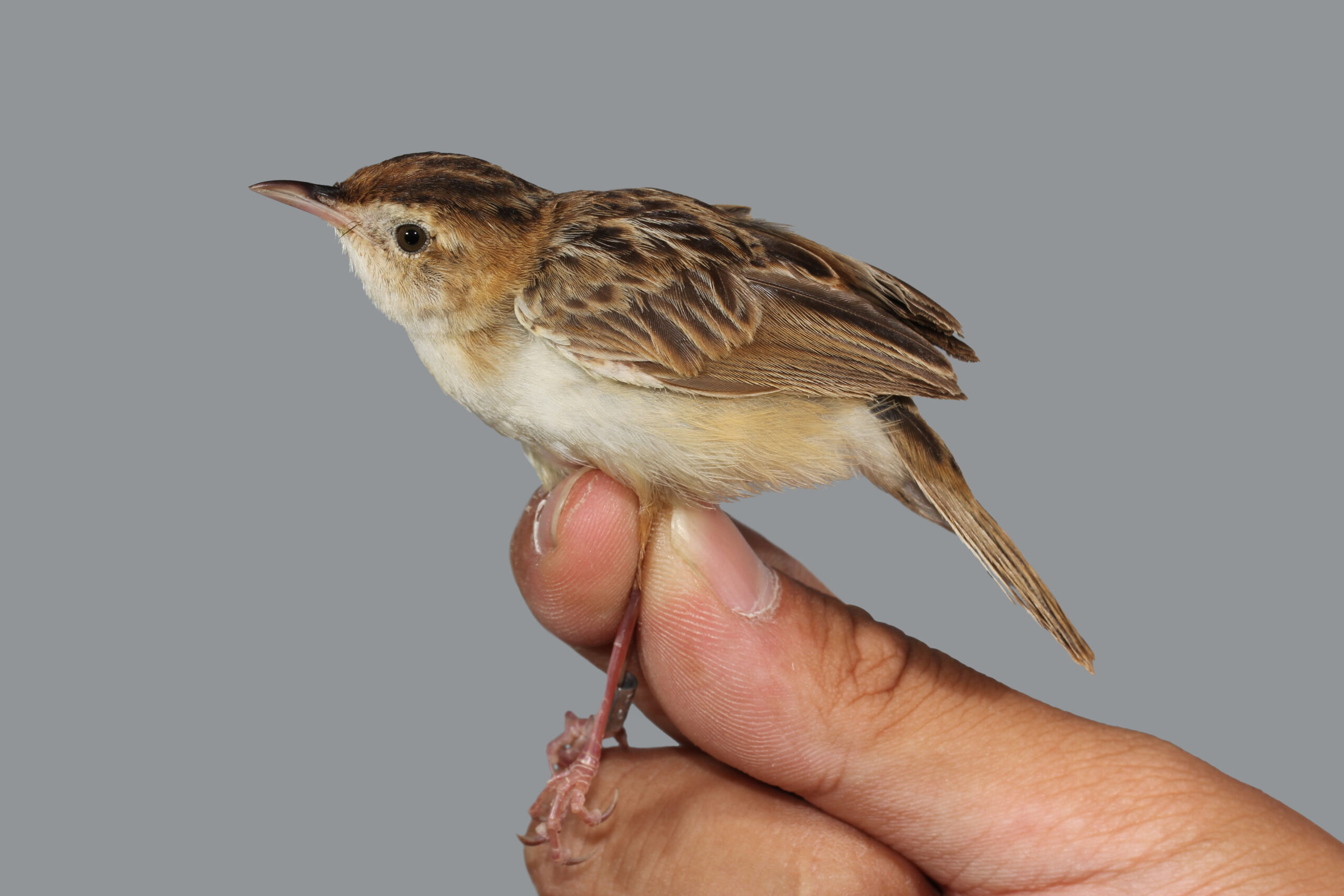
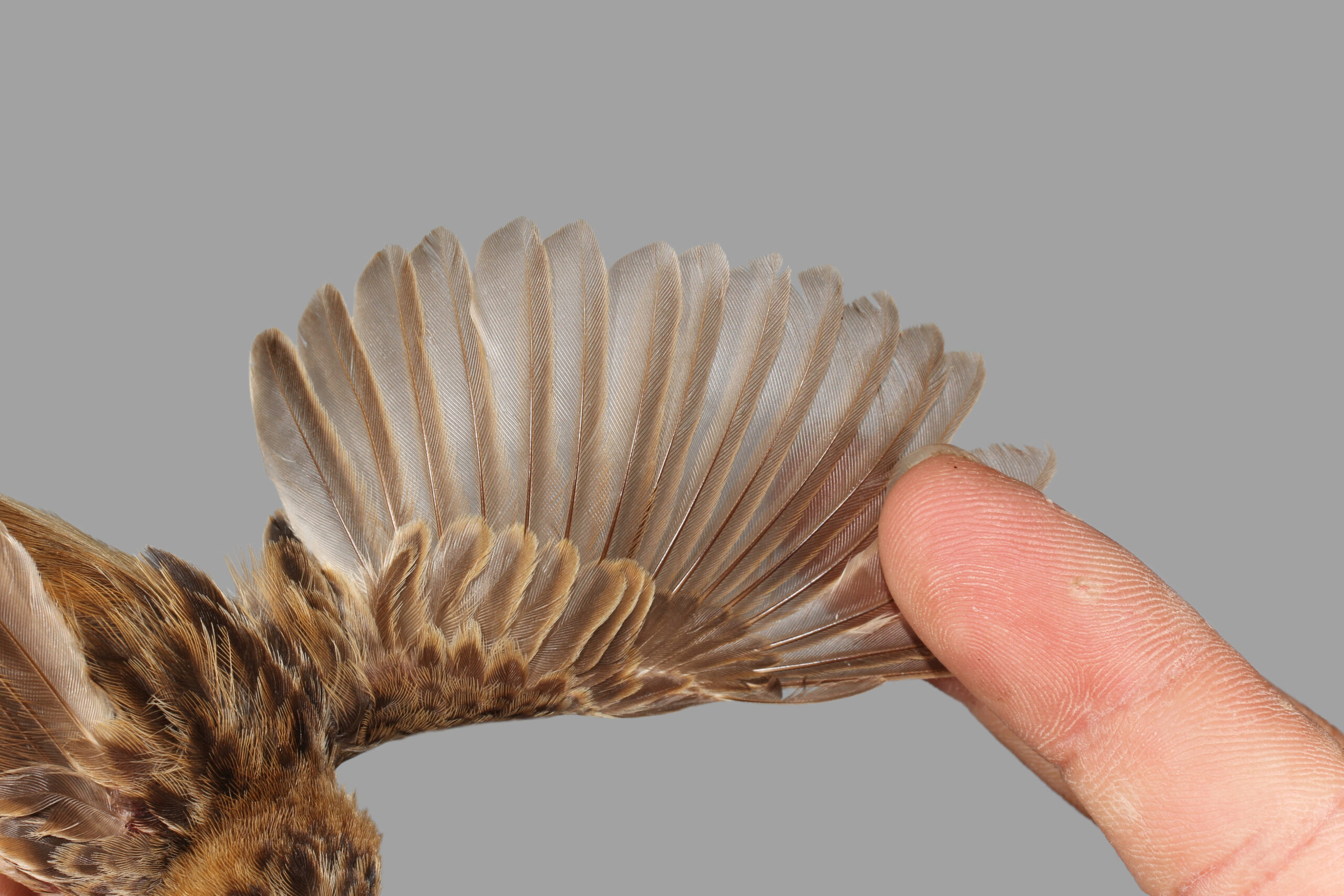
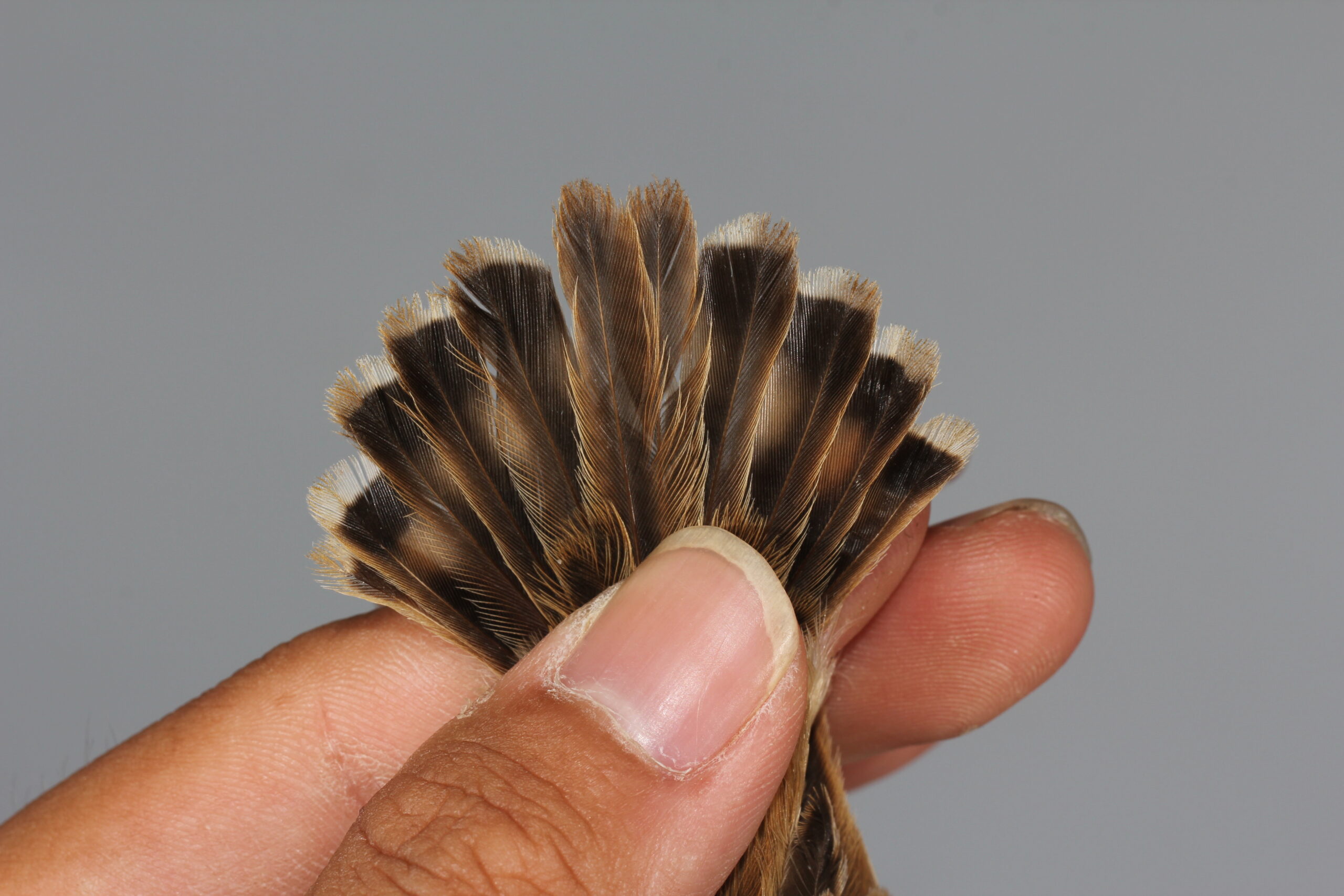
We ended our busy morning with some studies on another of our common visitors: the Zitting Cisticola! Although common, there is little research on this species in Hong Kong, with some individuals in Autumn looking nice and fresh (as seen in the top individual) and others rather worn (below). Though it could be easy to conclude that the 1st individual is a fresh adult after a Summer Complete moult, and the 2nd a worn juvenile, it may not be as simple as this. Some warbler species’ juveniles maintain a high quality to their feathers all the way into the winter, while it may be possible that the 2nd individual is an adult that has not yet begun their Summer Complete moult. Again, these studies and the photos take will help us to know more about these gorgeous birds and their lives!
Daily Totals
| Species | Original | Recapture |
| Black-browed Reed Warbler | 5 | 0 |
| Chestnut-eared Bunting | 8 | 0 |
| Common Snipe | 1 | 0 |
| Crested Myna | 1 | 0 |
| Dusky Warbler | 13 | 0 |
| Eurasian Tree Sparrow | 5 | 0 |
| Long-tailed Shrike | 1 | 0 |
| Oriental Reed Warbler | 5 | 0 |
| Plain Prinia | 4 | 0 |
| Red-throated Pipit | 5 | 0 |
| Scaly-breasted Munia | 15 | 0 |
| Stejneger’s Stonechat | 9 | 0 |
| Two-barred Warbler | 1 | 0 |
| White Wagtail | 3 | 0 |
| White-rumped Munia | 1 | 0 |
| Yellow-bellied Prinia | 1 | 0 |
| Yellow-breasted Bunting | 5 | 0 |
| Zitting Cisticola | 7 | 0 |
| Grand Total | 90 | 0 |
*Please note that all wild birds, their nests, and eggs are highly protected (under Wild Animals Protection Ordinate, Cap. 170) in Hong Kong. It is an offence to wilfully disturb, take, remove, or injure wild birds or their nests/eggs. The actions described here were undertaken by trained professionals holding the necessary licenses and permits issued by the AFCD.*