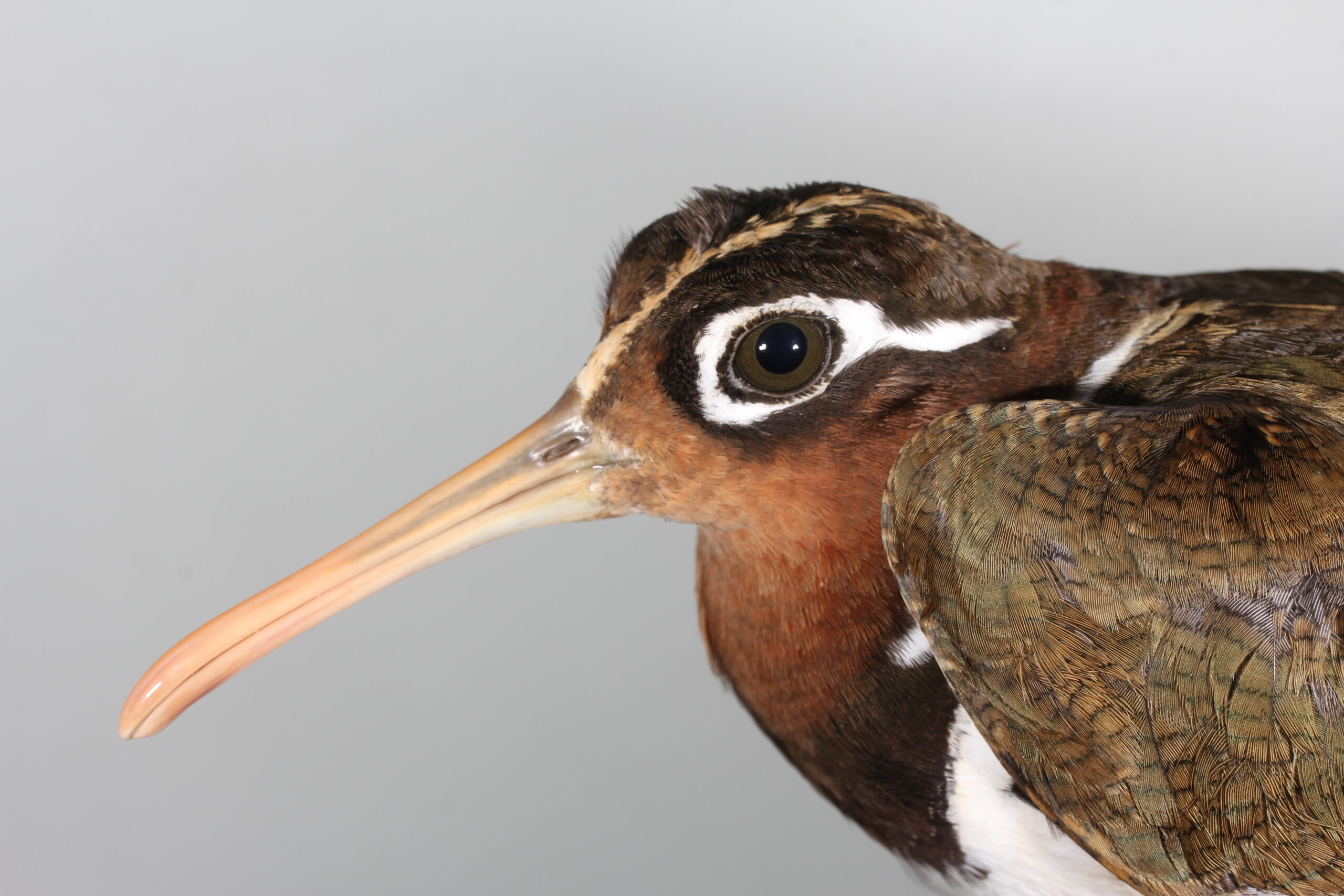



Back in the Paddyfields, we have less birds today, but the quality never fails us!
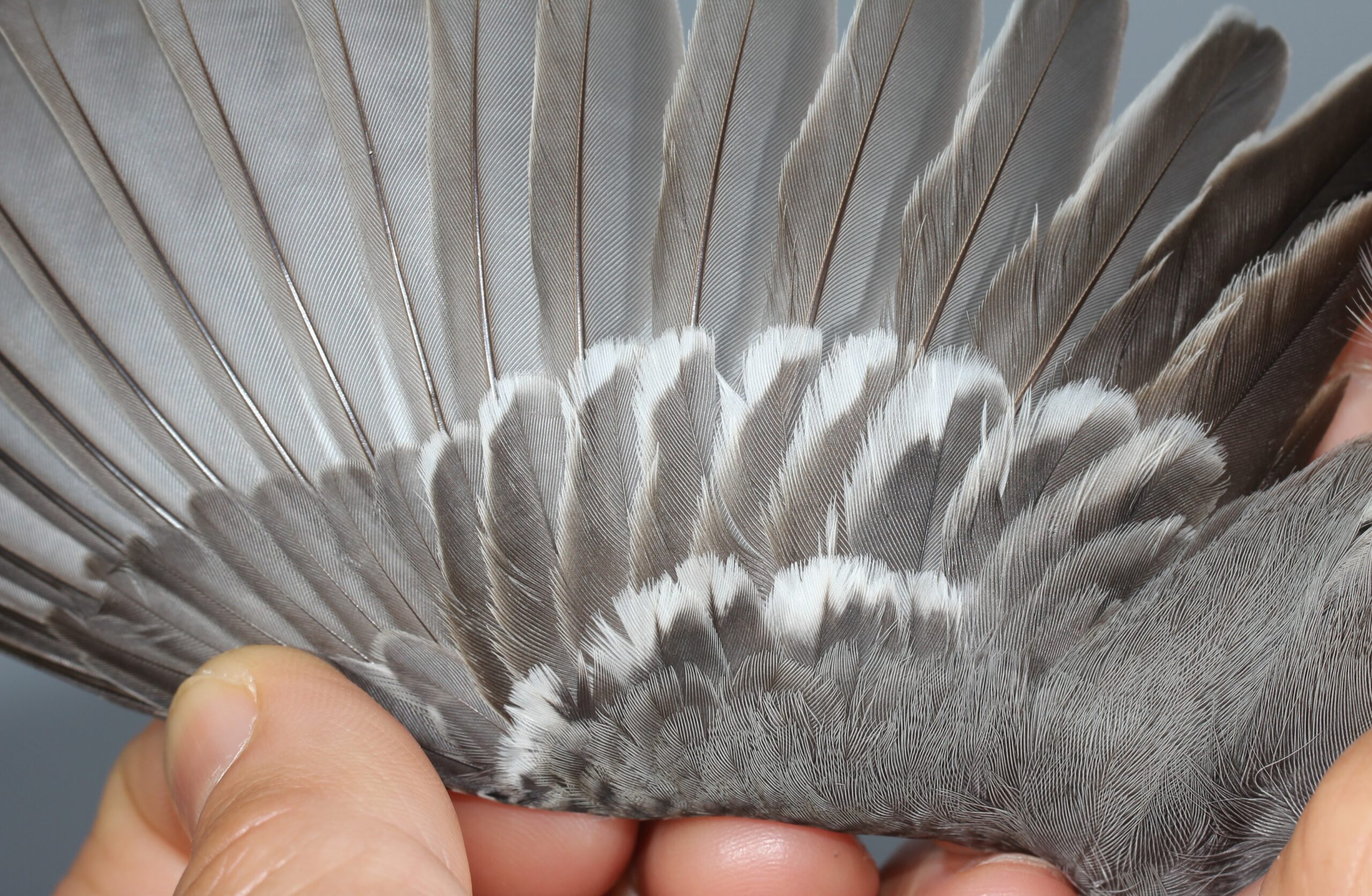
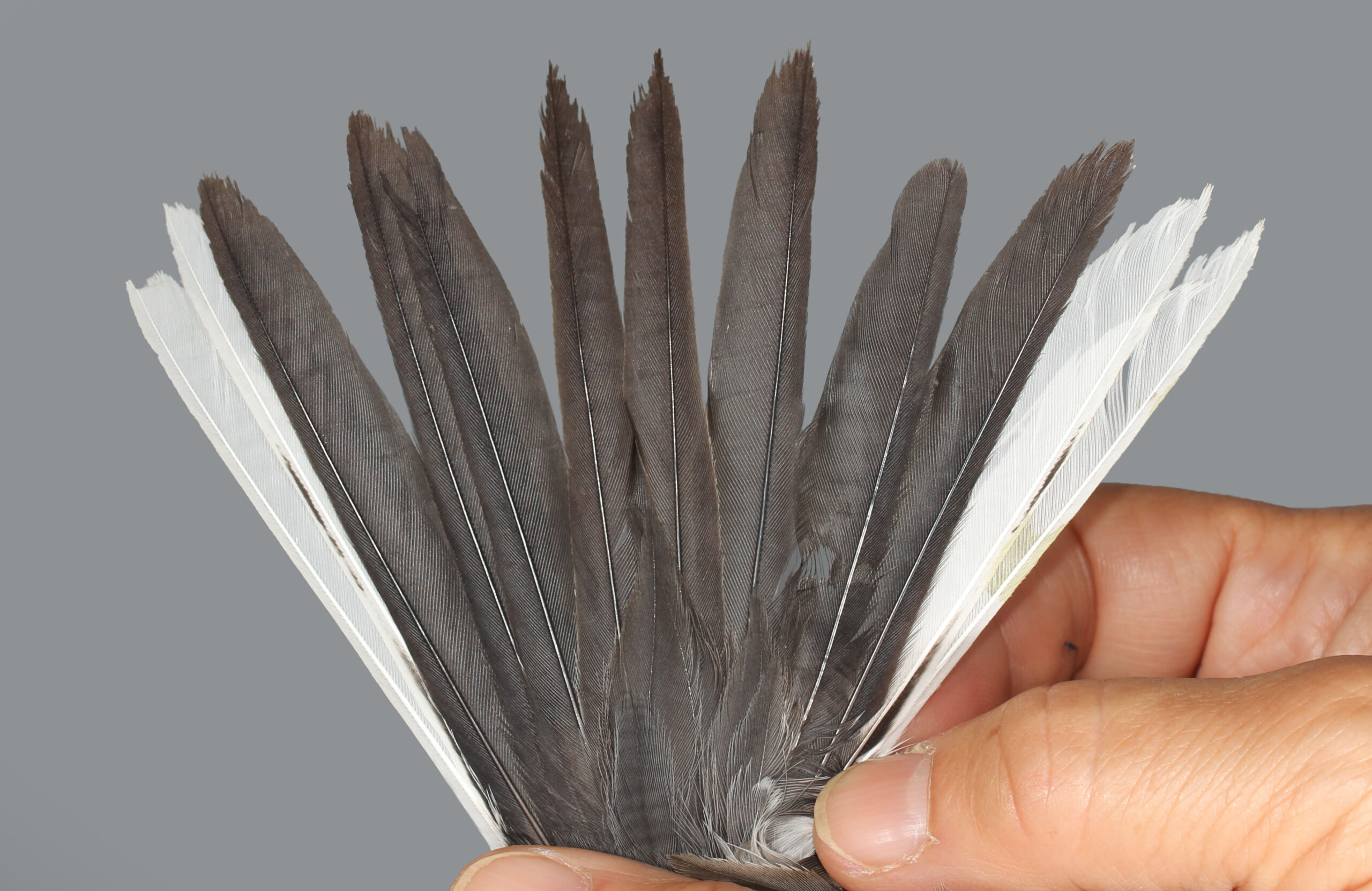
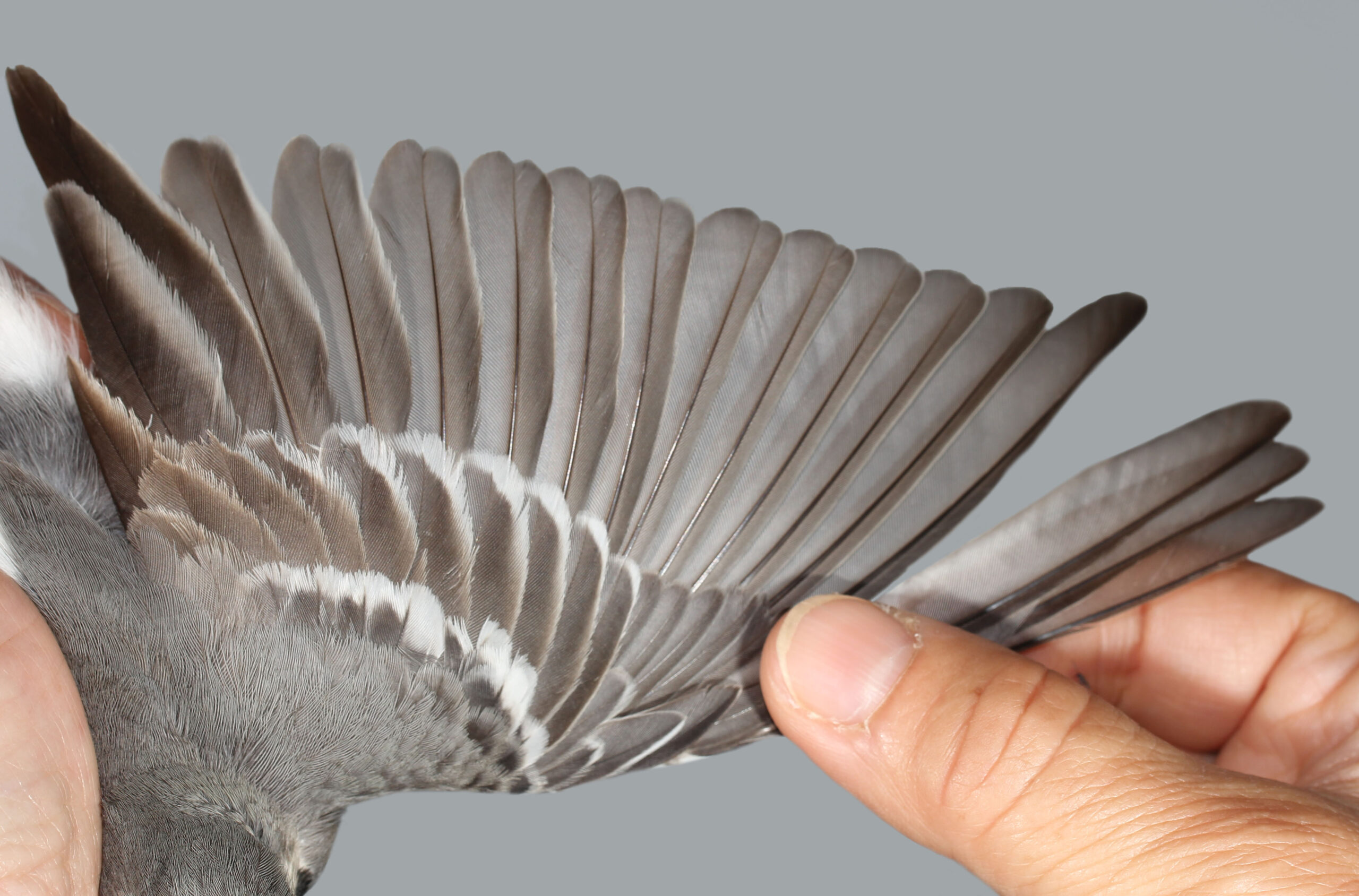
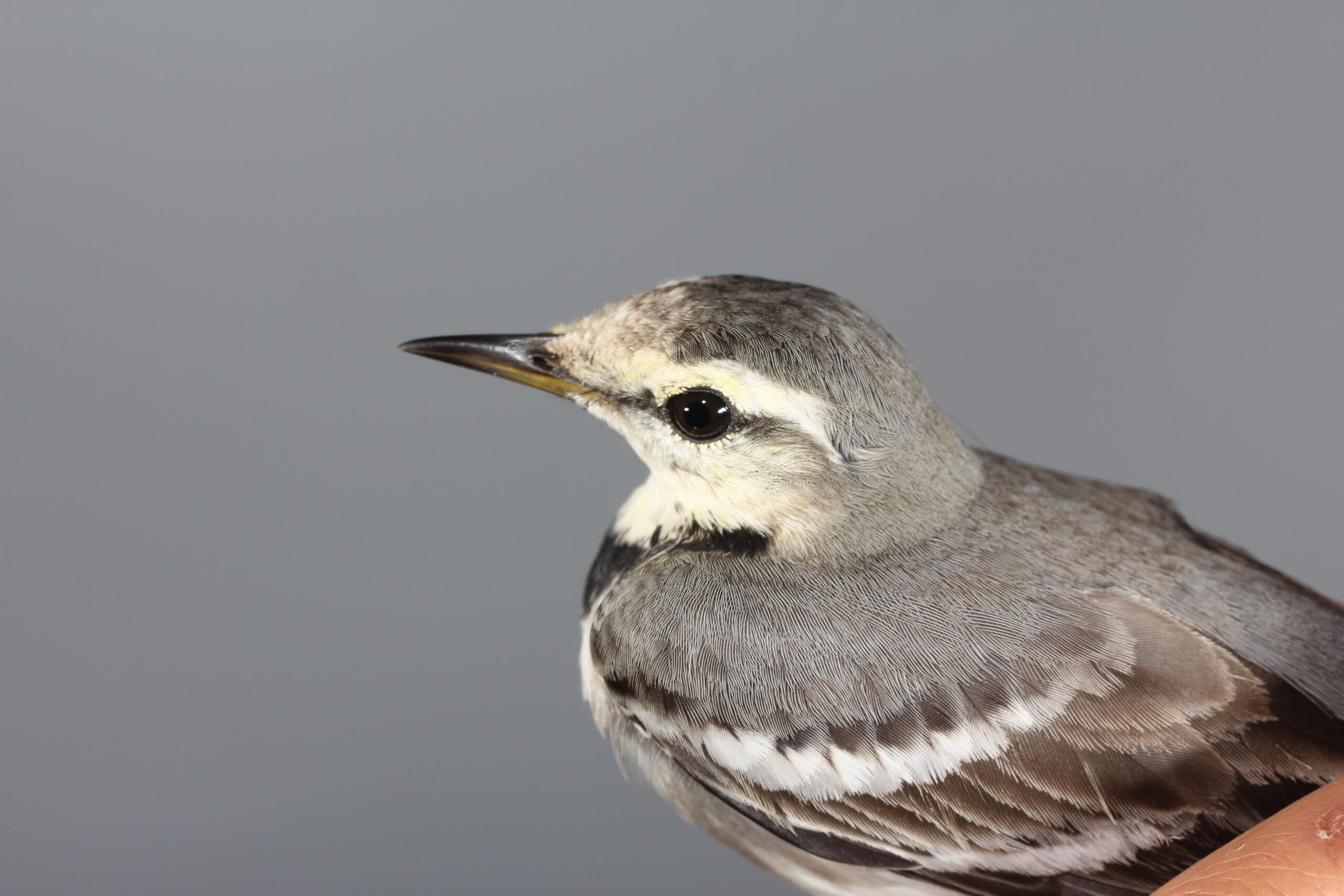
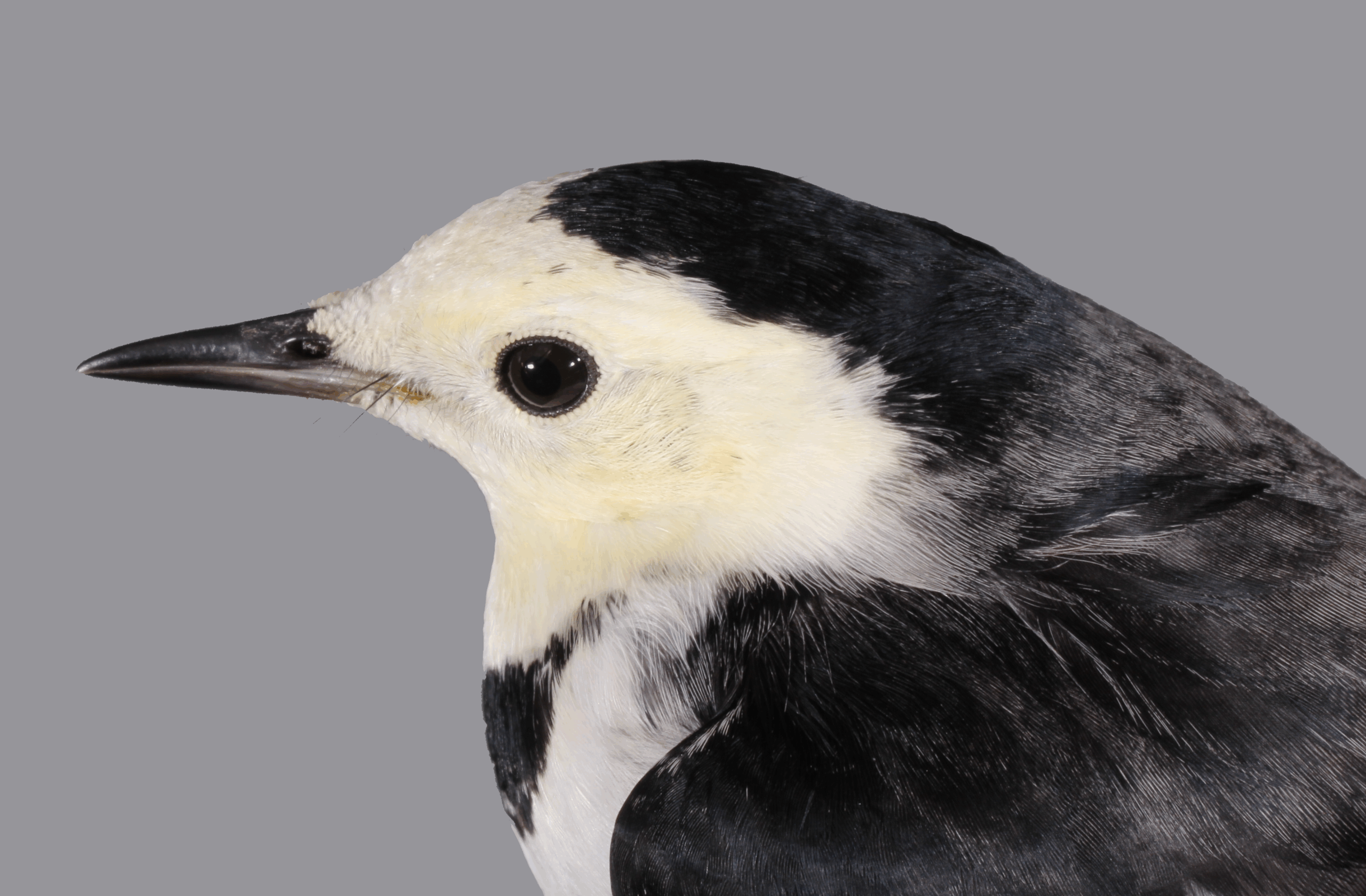
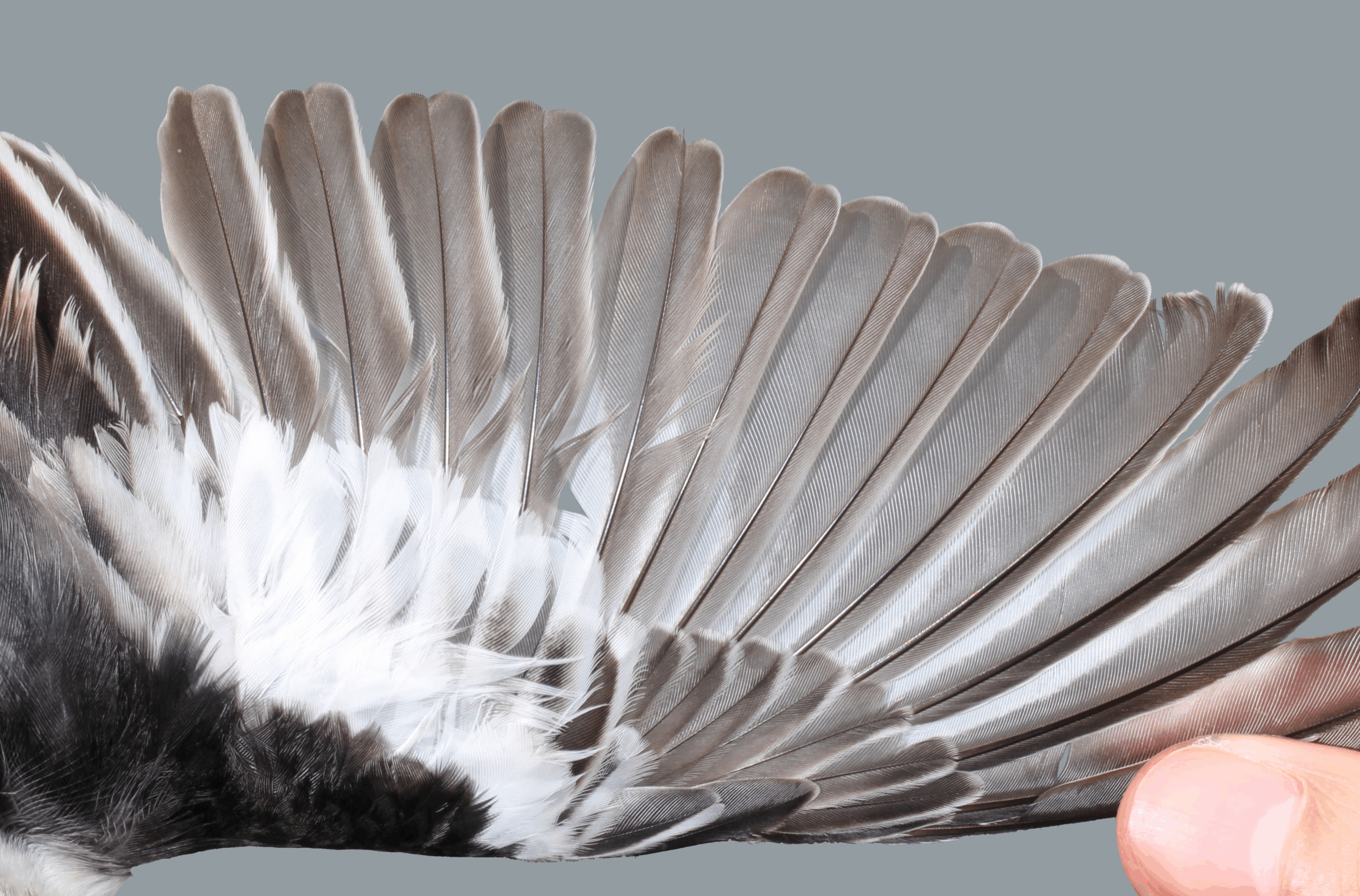
First up was wonderful surprise! Those this White Wagtail may look just like our resident White Wagtails, that strong, long eye strike tells us that this is actually a White Wagtail of the subspecies ocularis. See the difference between this subspecies (above) and our most common and resident White Wagtail subspecies leucopsis (below). Both of these subspecies adults carry out a Summer Complete moult, and Summer partial for juveniles. However, the moults of the juveniles seem to be a little different. Above we can see the two wings of the ocularis. In the top left photo, we can see the outermost 6 GCs are juvenile, with a more brown tint to the loose and worn feathers, compared to the moulted innermost 4 GCs. In the top right, we can see that all GCs are unmoulted (juvenile).
In comparison, in the 1st calendar year leucopsis below, we can see that all but the 1st outermost GC are moulted. Therefore, it is likely that this subspecies has a far more extensive moult than the migratory ocularis. This makes sense biologically, as our resident wagtails have no time constraints for moulting, while ocularis, which is a migratory species must moult fast before migrating, while reserving enough energy to complete their journey. A very cool lesson for us all!
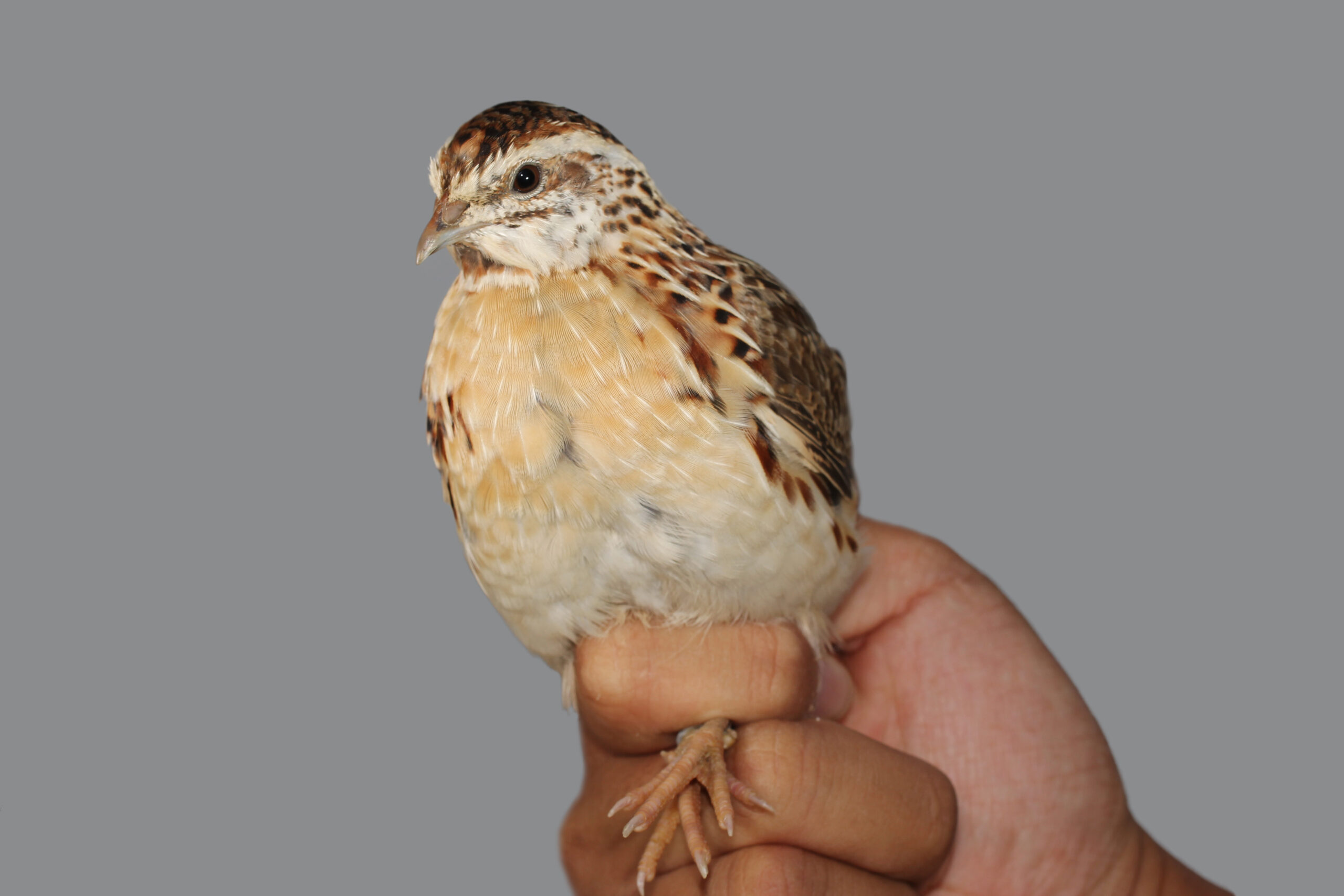
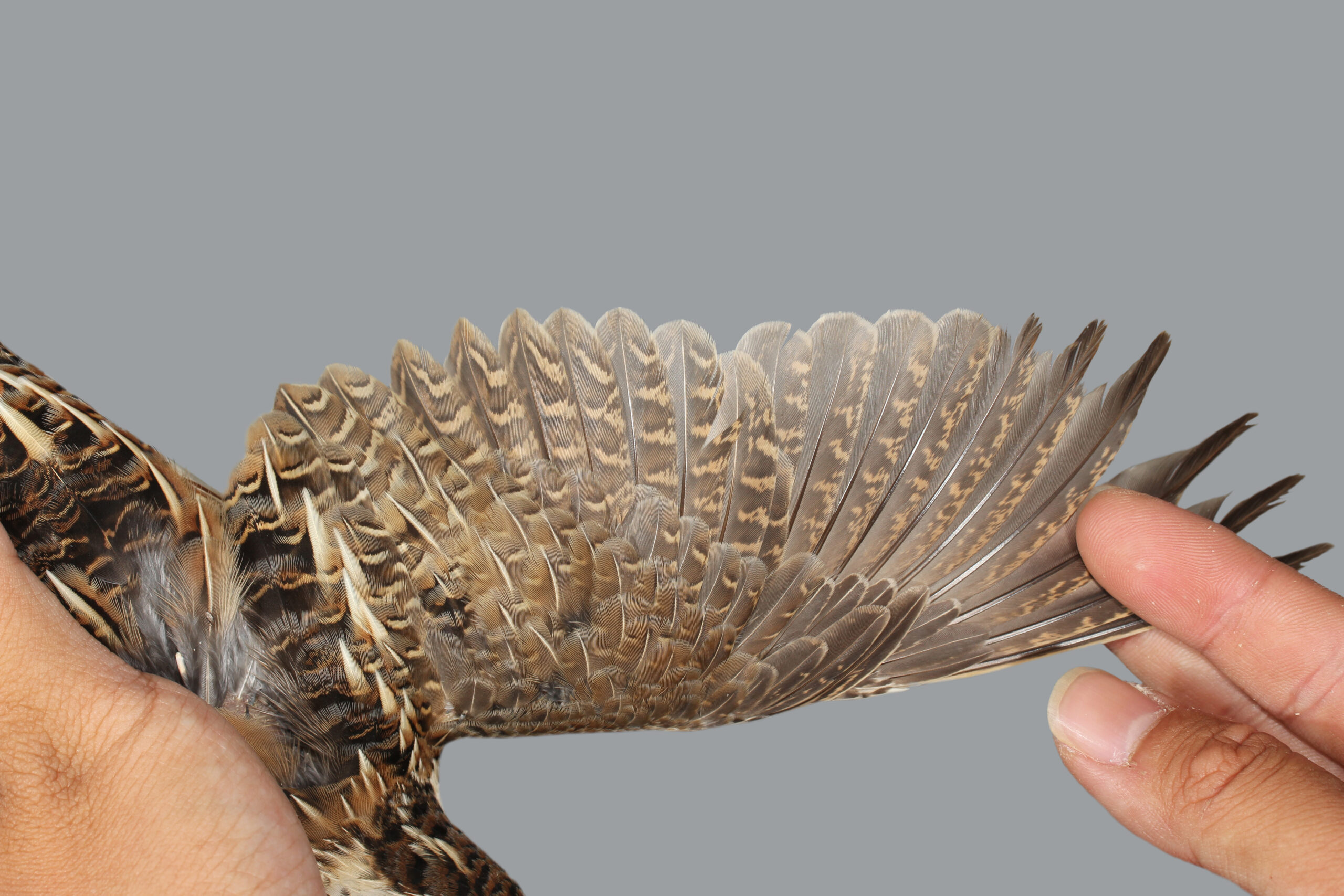
Next up today was another wonderful surprise; a Japanese Quail! This is the HKBWS team’s 6th Japanese Quail ever caught! Ageing of these guys is predominantly carried out by the patterning on the breast. Adults’ breasts are streaked with dark markings, which are clearly absent in our individual. Therefore, we can conclude that this is a 1st calendar year bird.
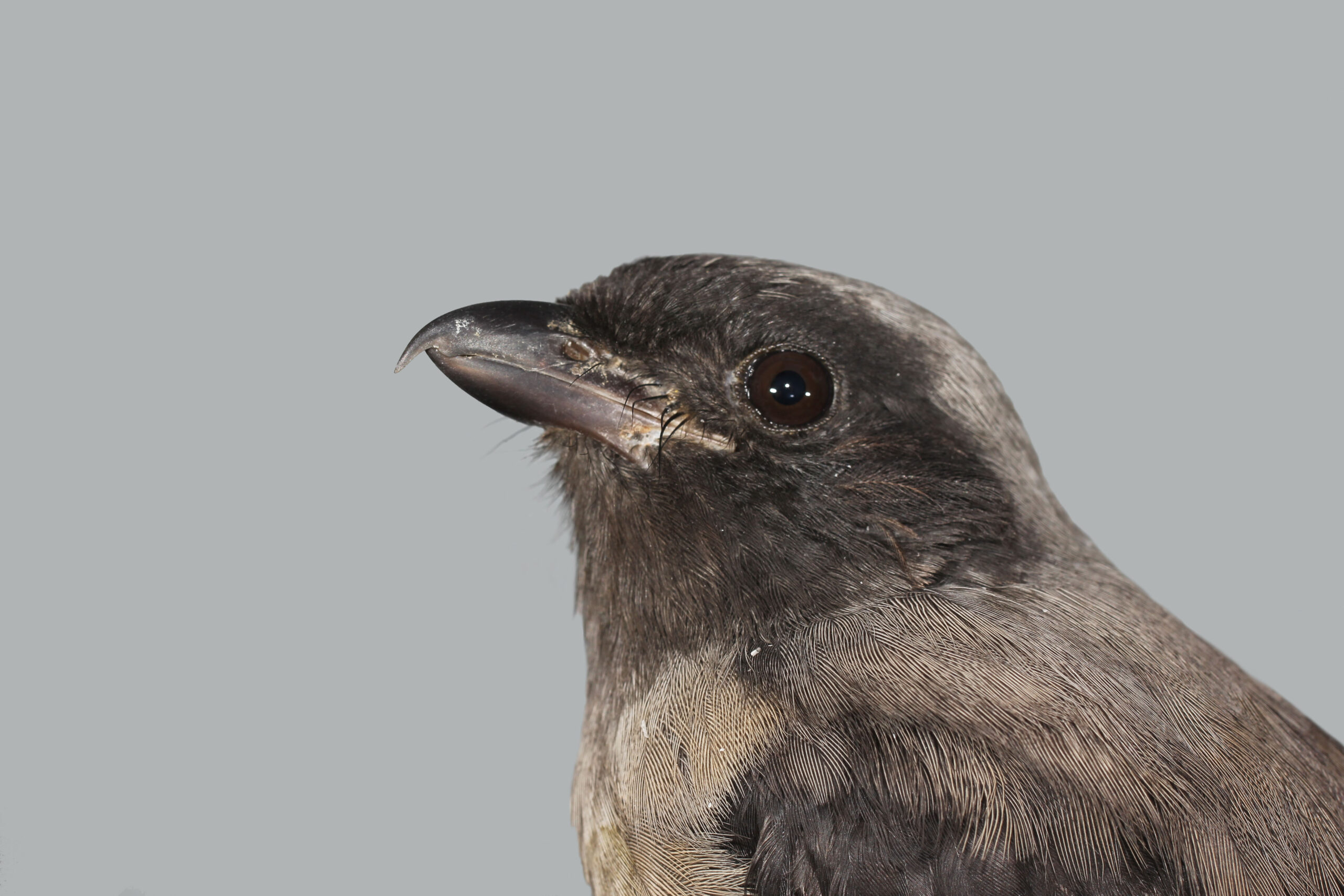
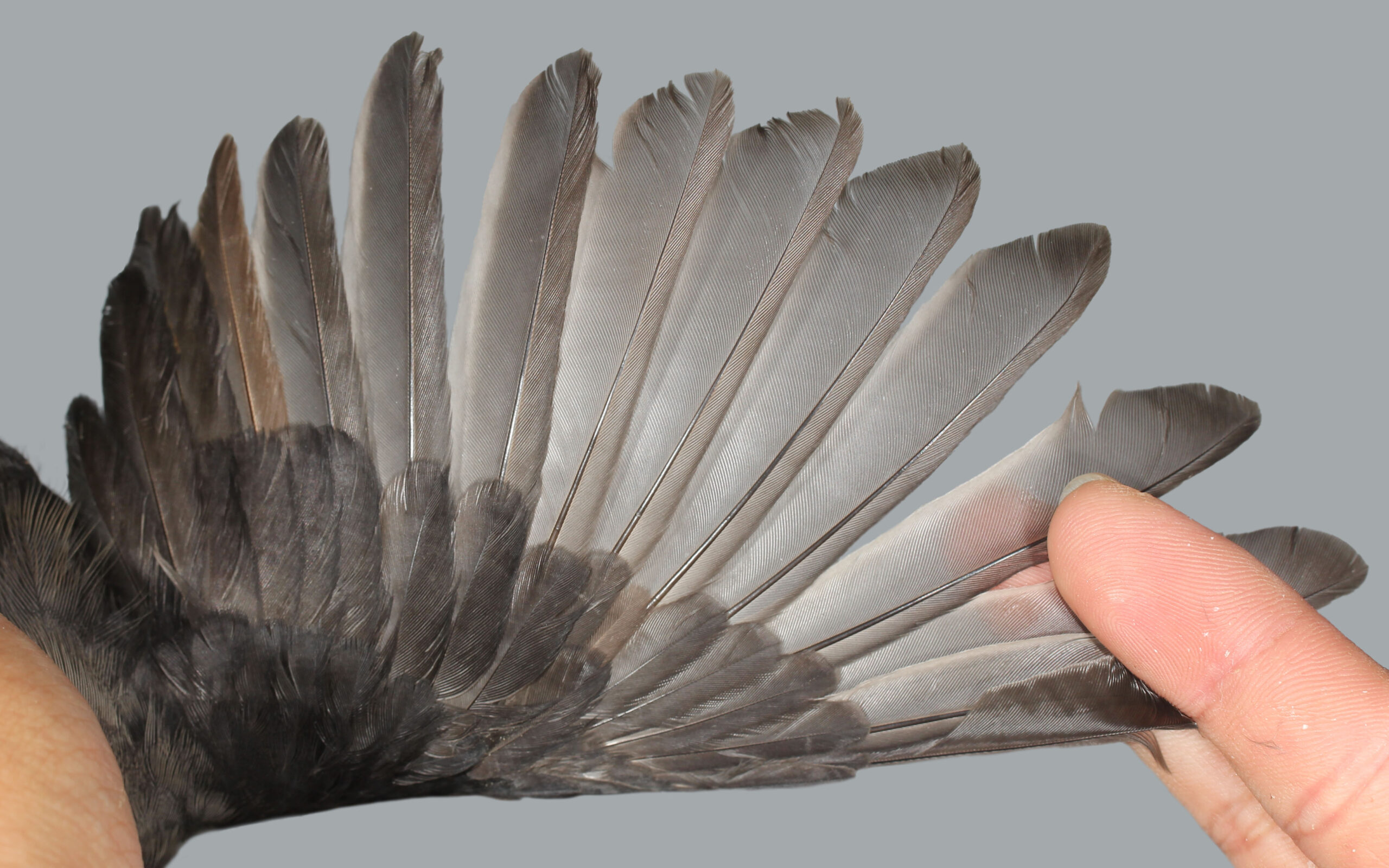
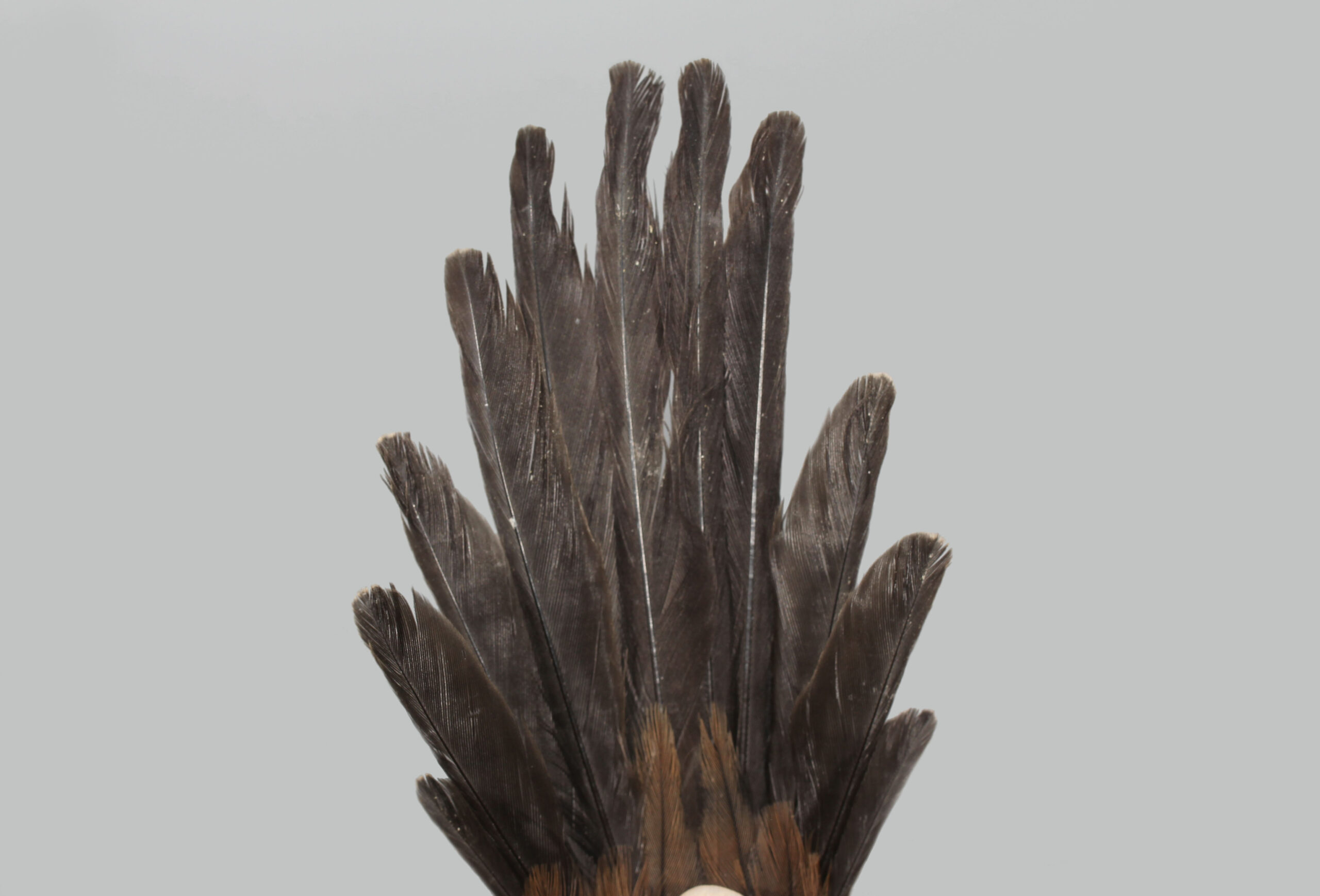
Next up was another gorgeous resident, a Long-tailed Shrike! This one was one of our melanistic individuals that reside around Northern Hong Kong! Our Long-tailed Shrikes here have quite a complex moult strategy, in which we have to pay attention to both the Summer and Winter moults. Adults moult Summer partial, Winter Complete and juveniles Summer partial Winter Complete.
However, it is important to note that juveniles Winter Complete moult is not always Complete. In fact, it is very common for them to retain a variable amount of wing feathers. Furthermore, the adult Summer partial moult is quite restricted, and usually does not extend past the head, body, Lesser & Median Coverts. Juveniles Summer partial moults are even more restricted.
So, with this information, if we take a look at the wing of our bird, we see one old PC (innermost) and one old secondary (innermost). Next is to age these old feathers. We can see that both are narrow and worn compared to the newer feathers. This difference in shape and density suggests that these feathers are juvenile, retained from the Summer of 2022, and “forgotten” in the Winter Complete moult. For this to be true this bird must be in its 2nd calendar year! A very cool bird!
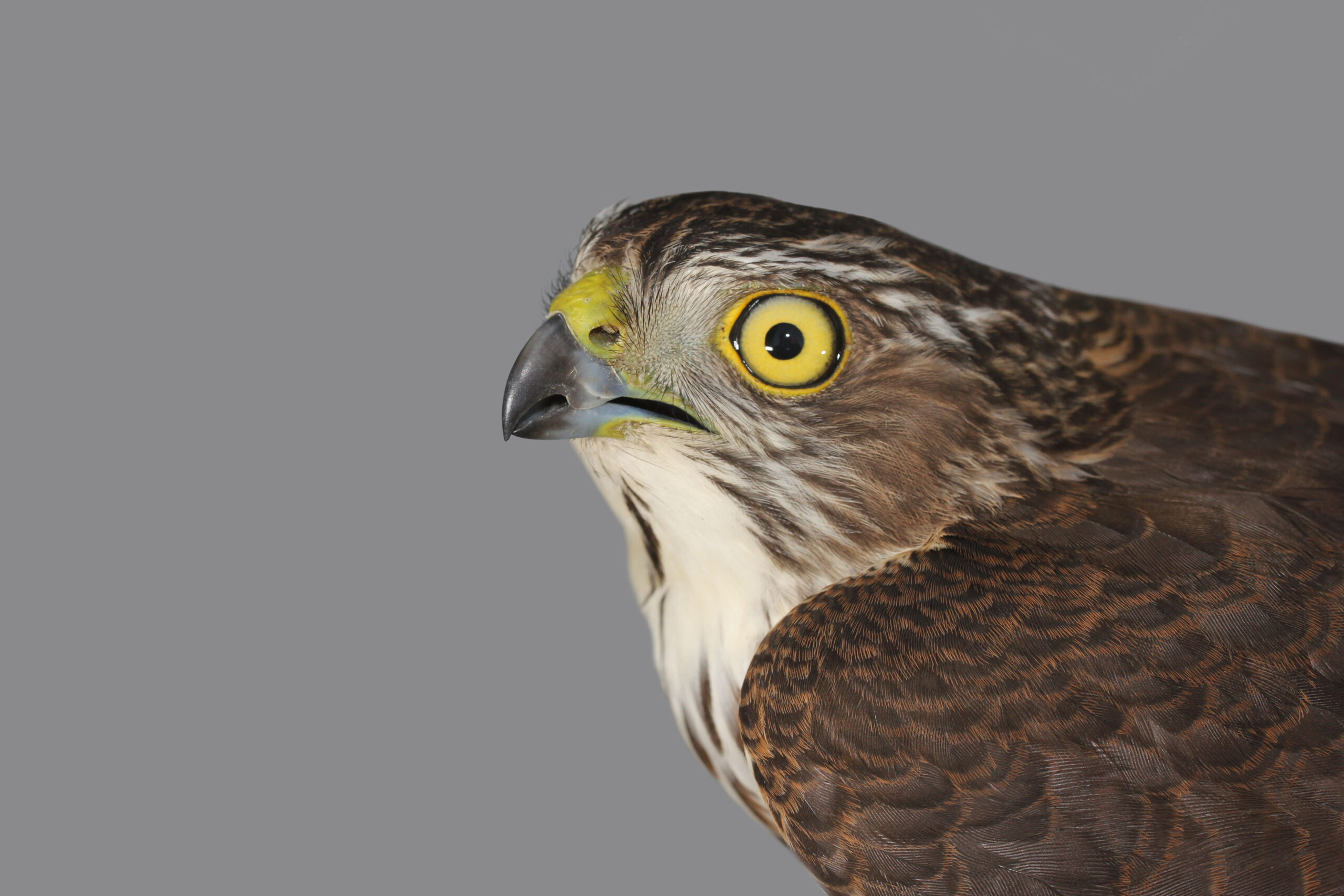
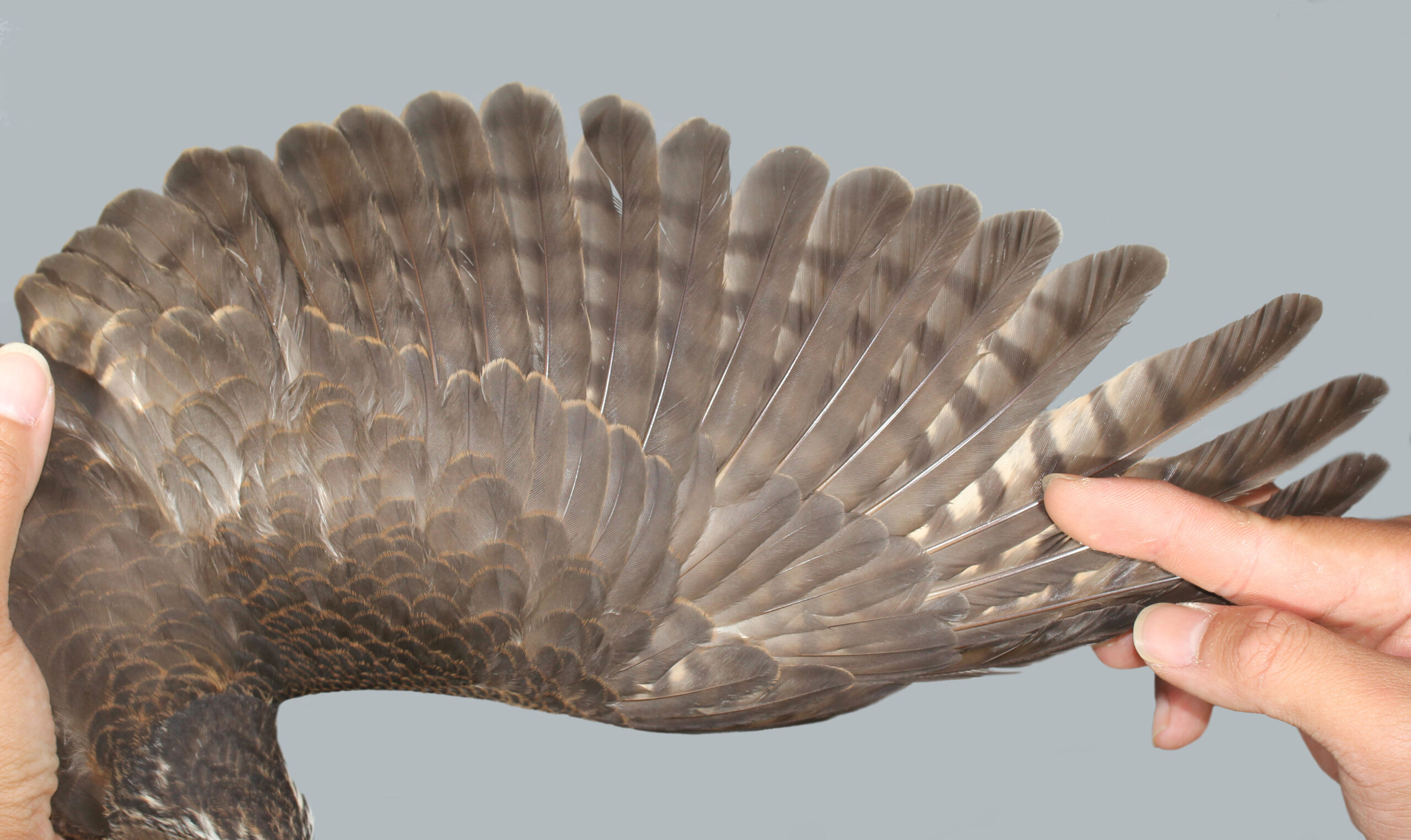
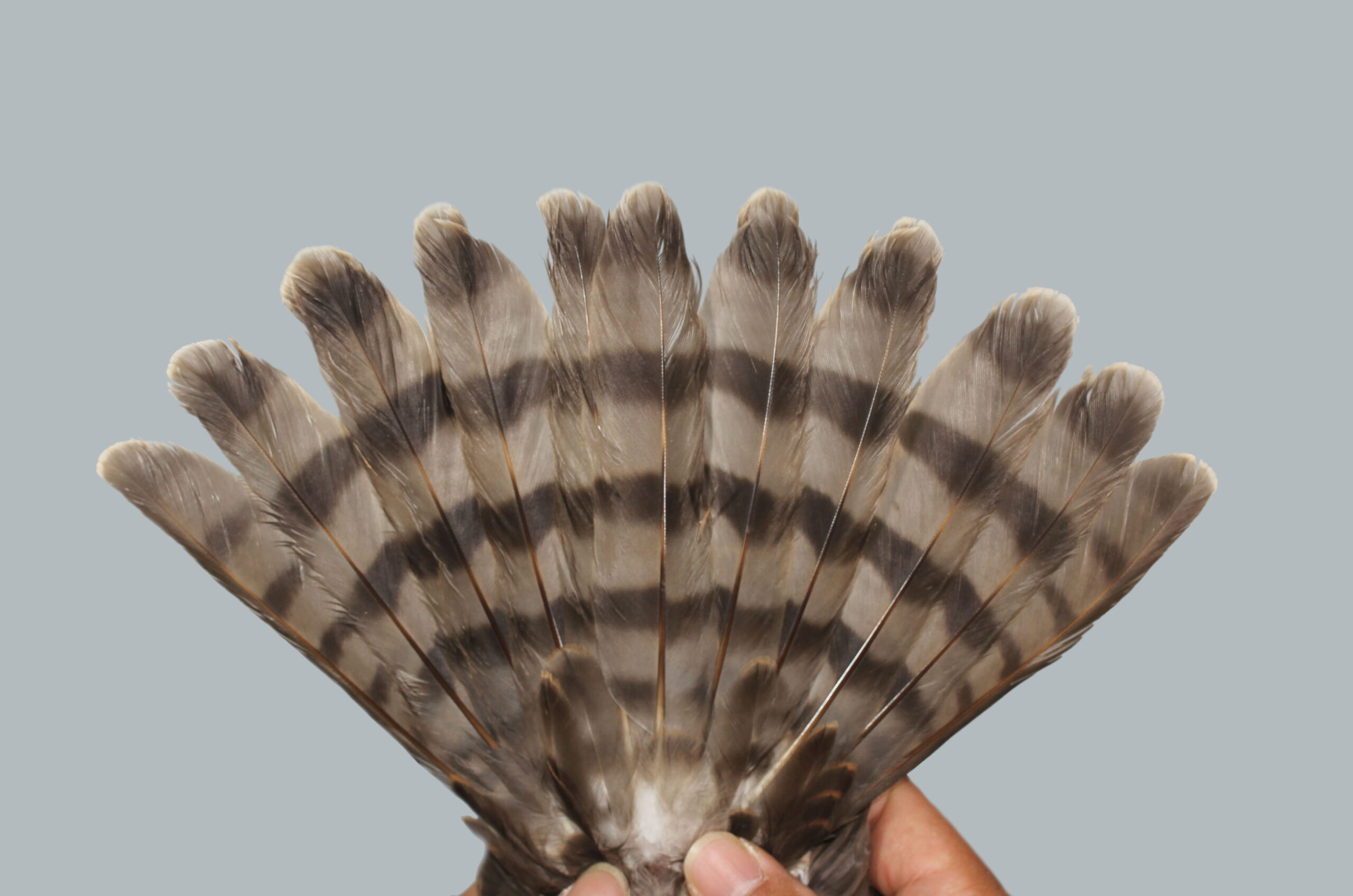
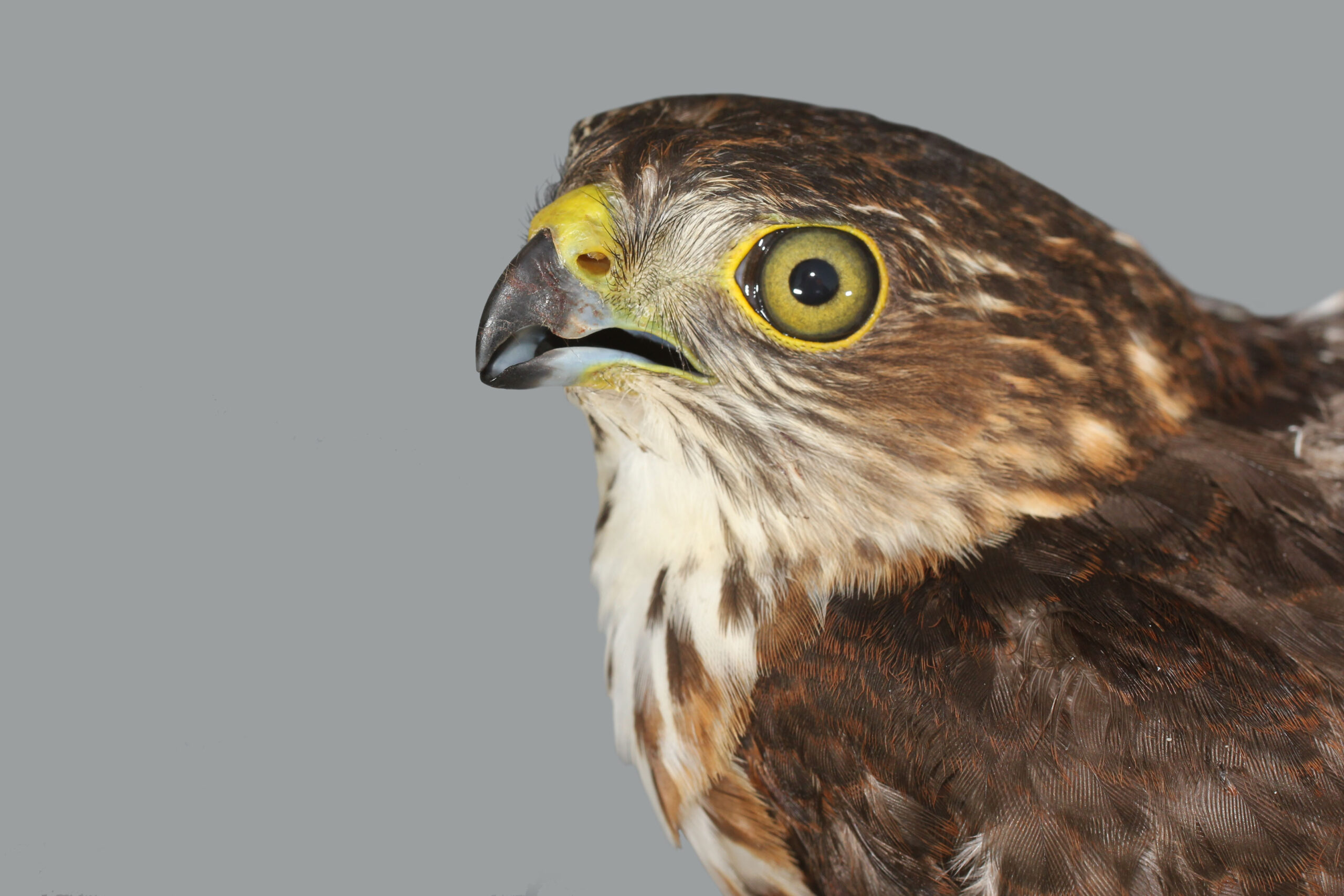
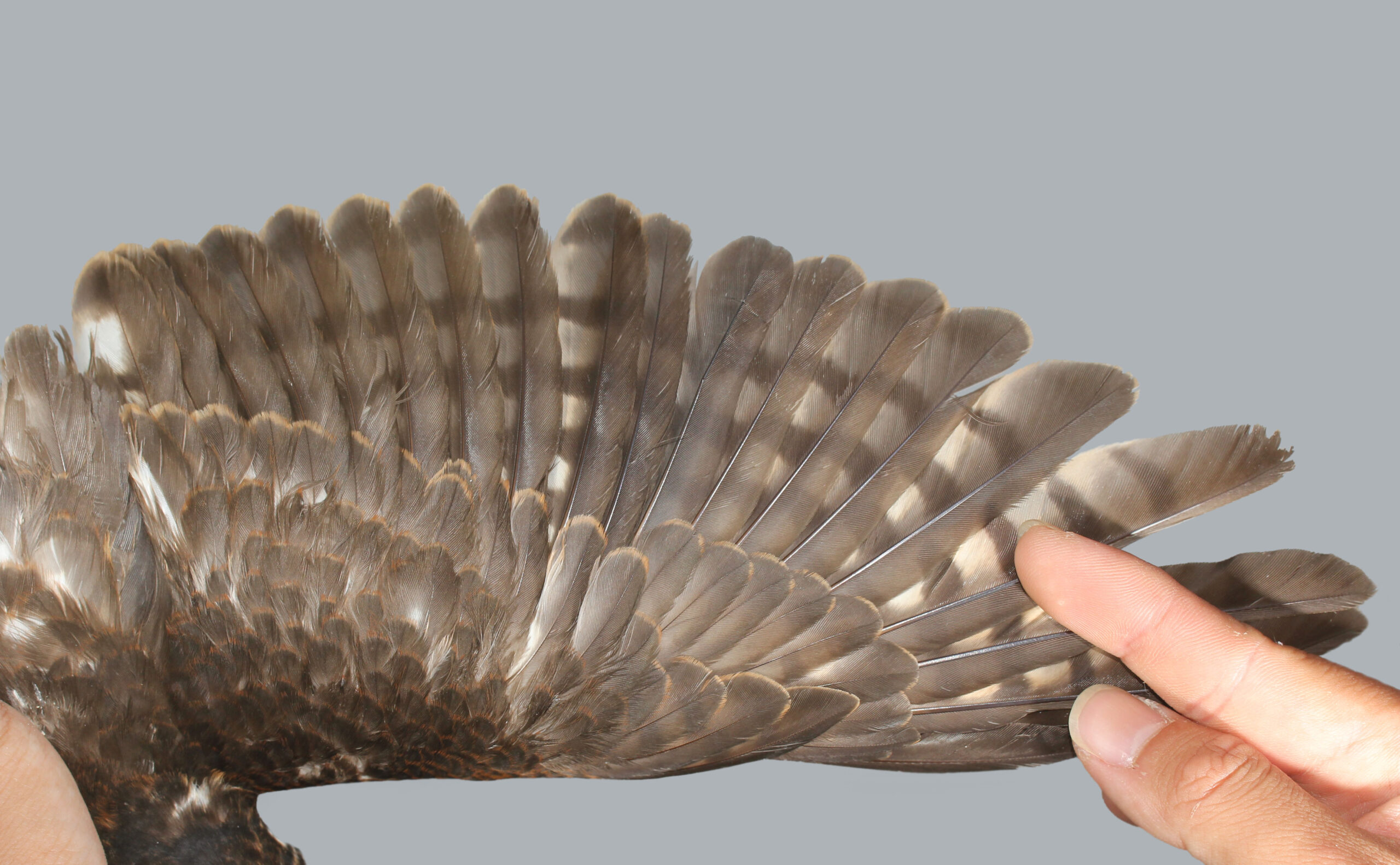
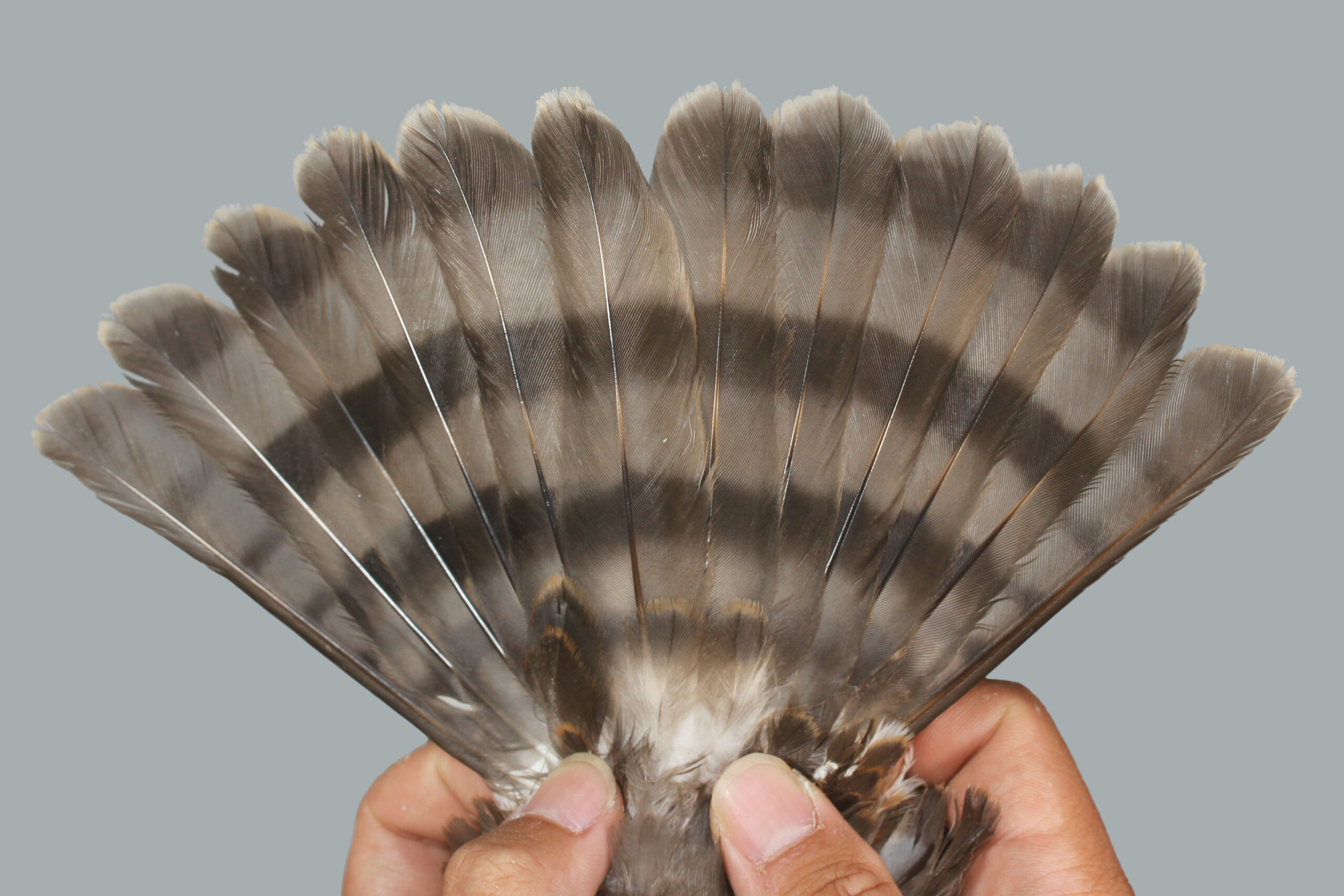
We ended the morning with two spectacular raptors; a Besra and a Japanese Sparrowhawk! These two incredibly similar species are differentiated predominantly by size, with the Japanese Sparrowhawk being appreciably smaller than Besras. These species are like the many other raptor species in which the females are significantly larger than the males. Both of our individuals were incredibly small, meaning both are males. For ageing, they both showed the typical juvenile plumage of having sandy fringes to their coverts, and uniform wings lacking coverts (except for P10 on the Japanese Sparrowhawk, which is moulted).
A wonderful day!
Daily Totals
| Species | Original | Recapture |
| Besra | 1 | 0 |
| Bluethroat | 1 | 0 |
| Chestnut-eared Bunting | 1 | 3 |
| Dusky Warbler | 1 | 1 |
| Japanese Quail | 1 | 0 |
| Japanese Sparrowhawk | 1 | 0 |
| Little Bunting | 22 | 0 |
| Long-tailed Shrike | 1 | 0 |
| Red-throated Pipit | 1 | 0 |
| Stejneger’s Stonechat | 0 | 2 |
| White Wagtail | 1 | 0 |
| White-rumped Munia | 2 | 0 |
| Yellow-breasted Bunting | 1 | 0 |
| Zitting Cisticola | 6 | 0 |
| Grand Total | 40 | 6 |
*Please note that all wild birds, their nests, and eggs are highly protected (under Wild Animals Protection Ordinate, Cap. 170) in Hong Kong. It is an offence to wilfully disturb, take, remove, or injure wild birds or their nests/eggs. The actions described here were undertaken by trained professionals holding the necessary licenses and permits issued by the AFCD.*