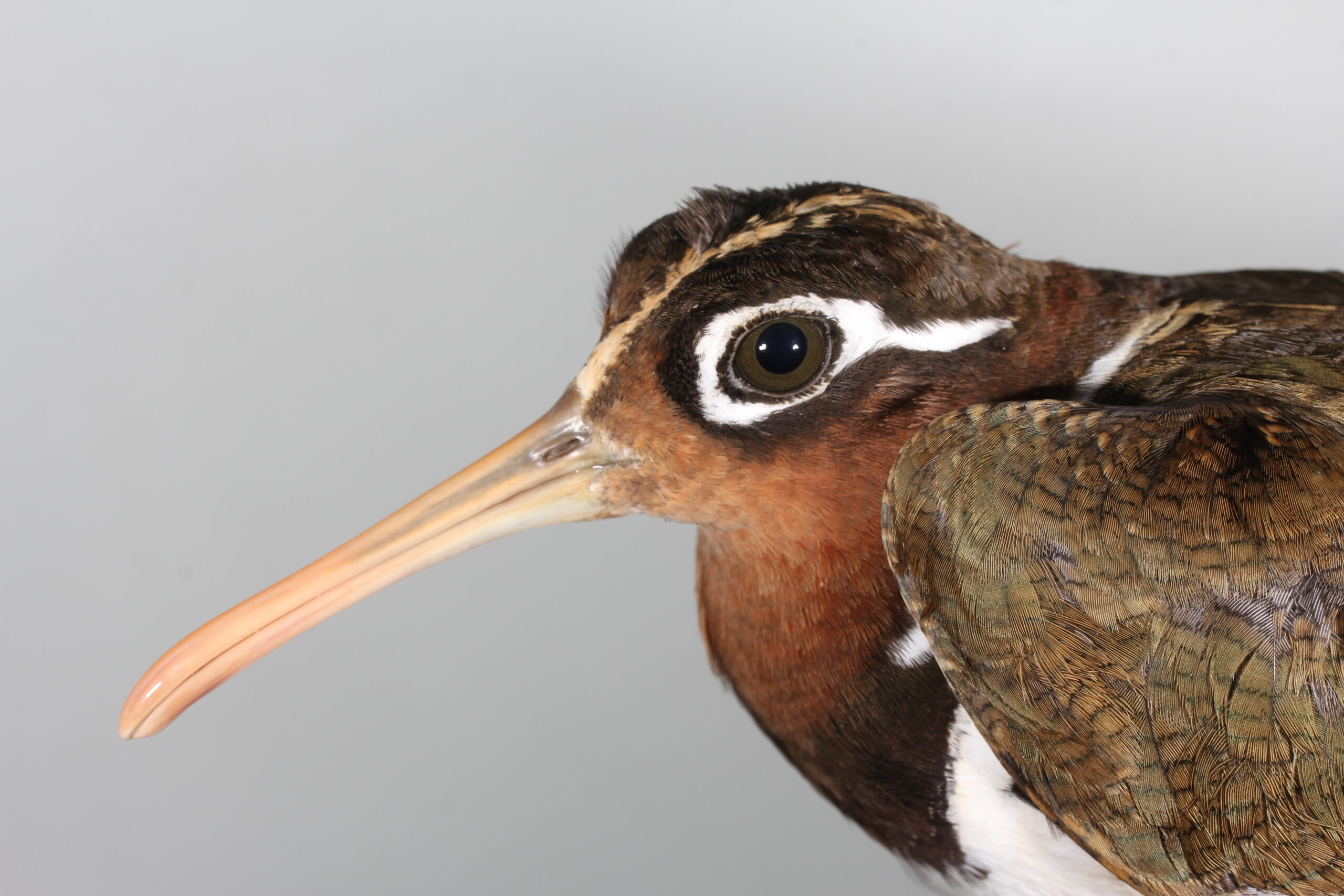



This week we bring you a very special ringing trip- to Lantau! Very little ringing has ever been conducted on the island, so this exciting project, funded by the Lantau Conservation Fund, is not only the first ringing in the area, but also part of a comprehensive study of the birds in the area. In these updates, we will be talking not only about the bird ringing, but also the transect and point counts, passive acoustics monitoring and infrared camera trapping that will be conducted alongside the ringing.
This week was our trial run to set up and nets and see who our visitors may be before the spring migration begins!
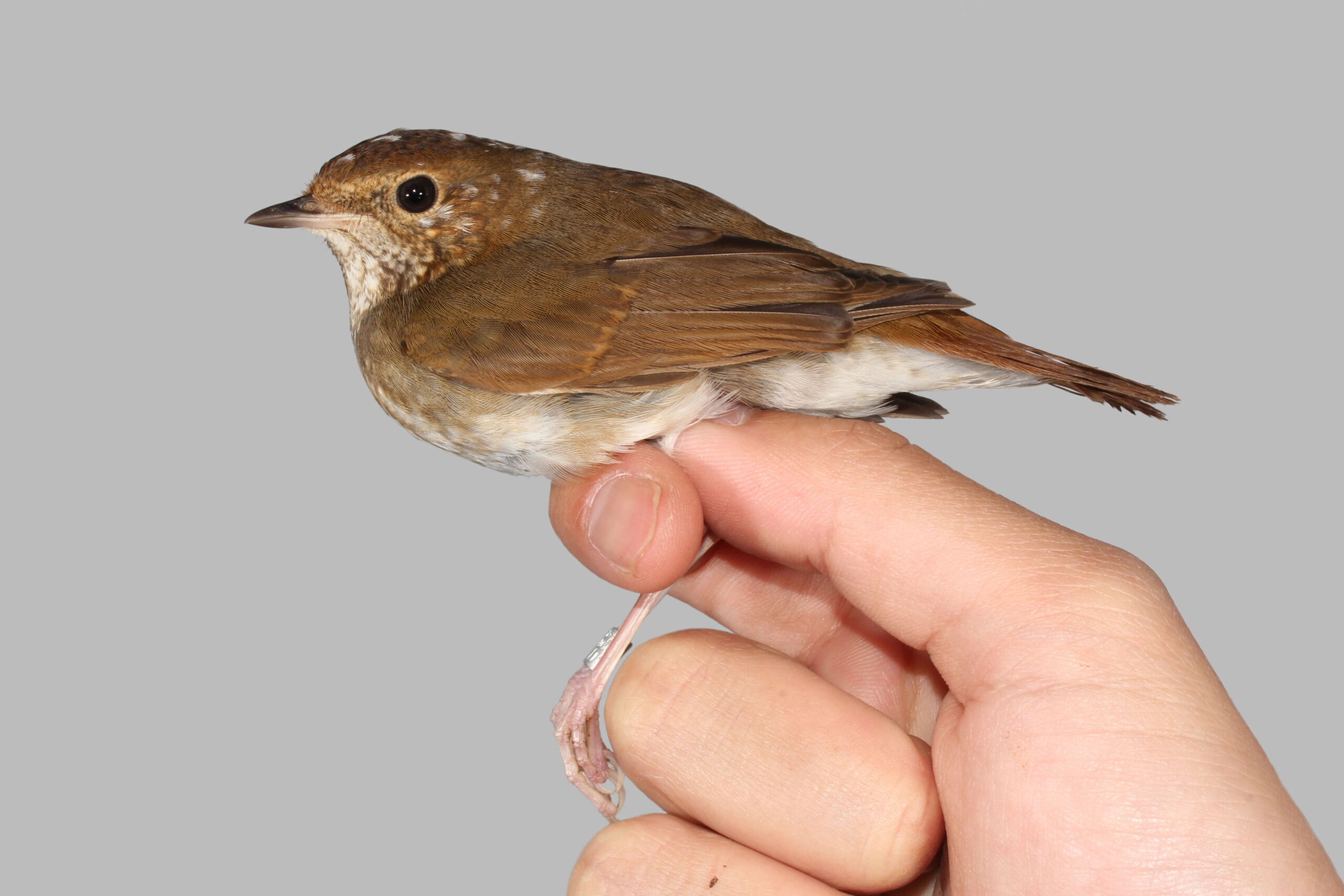
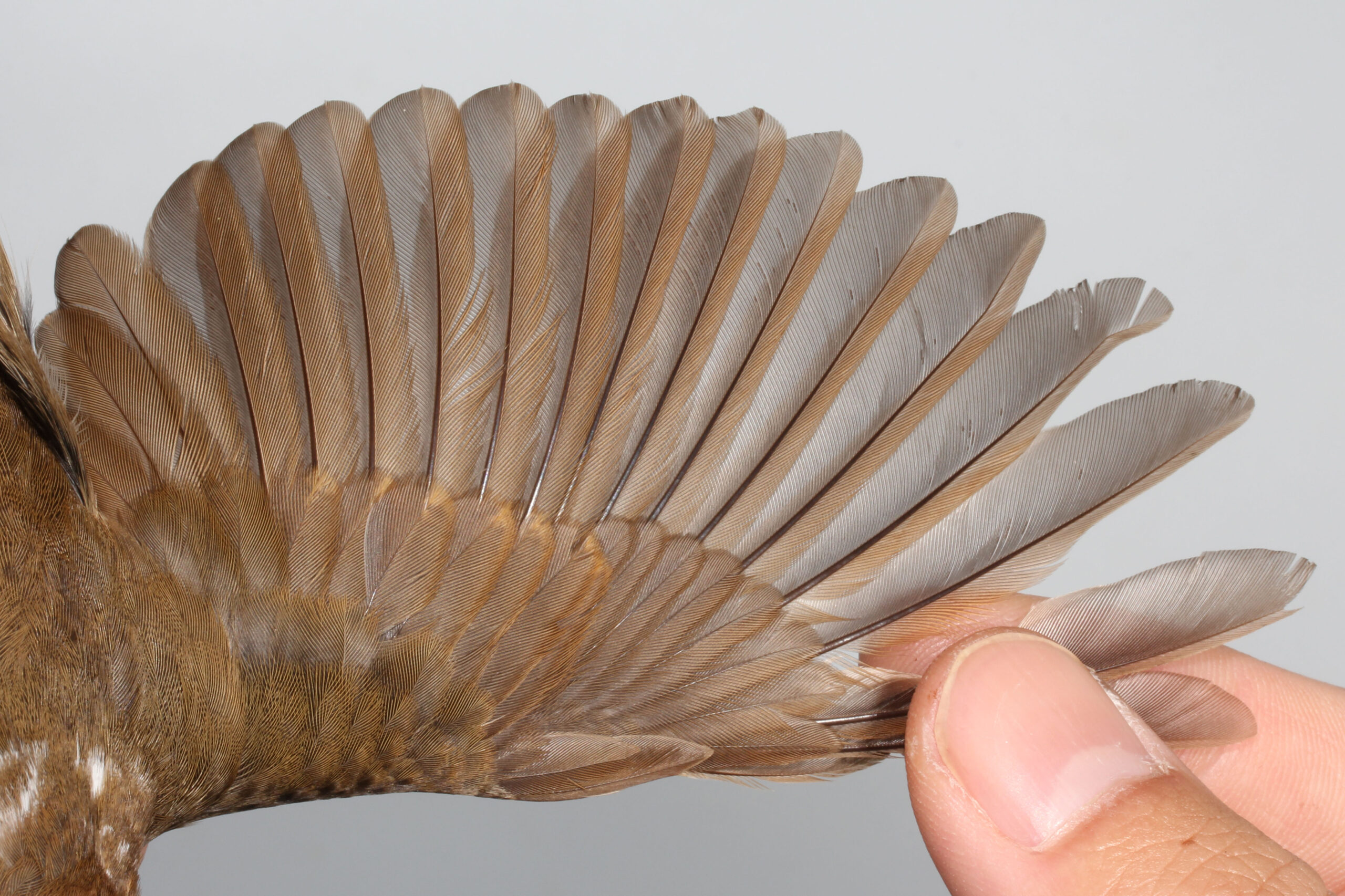
Our day began a little grey and drizzly, but thankfully we now have a proper base to shelter in, and my gosh, was it worth it! First up was a gorgeous Rufous-tailed Robin! These guys spend their winters in Hong Kong, before heading north for Summer. Like most Robins, they only have one moult a year, adults Summer Complete, juveniles summer partial.
In this individual, we can see 7 juvenile GCs (the outermost), differentiated from the moulted postjuvenile by the more worn and loose quality (we can also see these have pale tips, however this should only be used as a supporting factor, as this could be a natural pattern or ‘false moult limit’). Therefore, this must be a 2nd calendar year bird!
Interestingly, this bird also showed some feathers in the head that has no pigment at all, and thus were white. We have spoken a bit about this before in a Chestnut-eared Bunting, but this is the far less extreme form of albinism, known as leucism. Very cool!
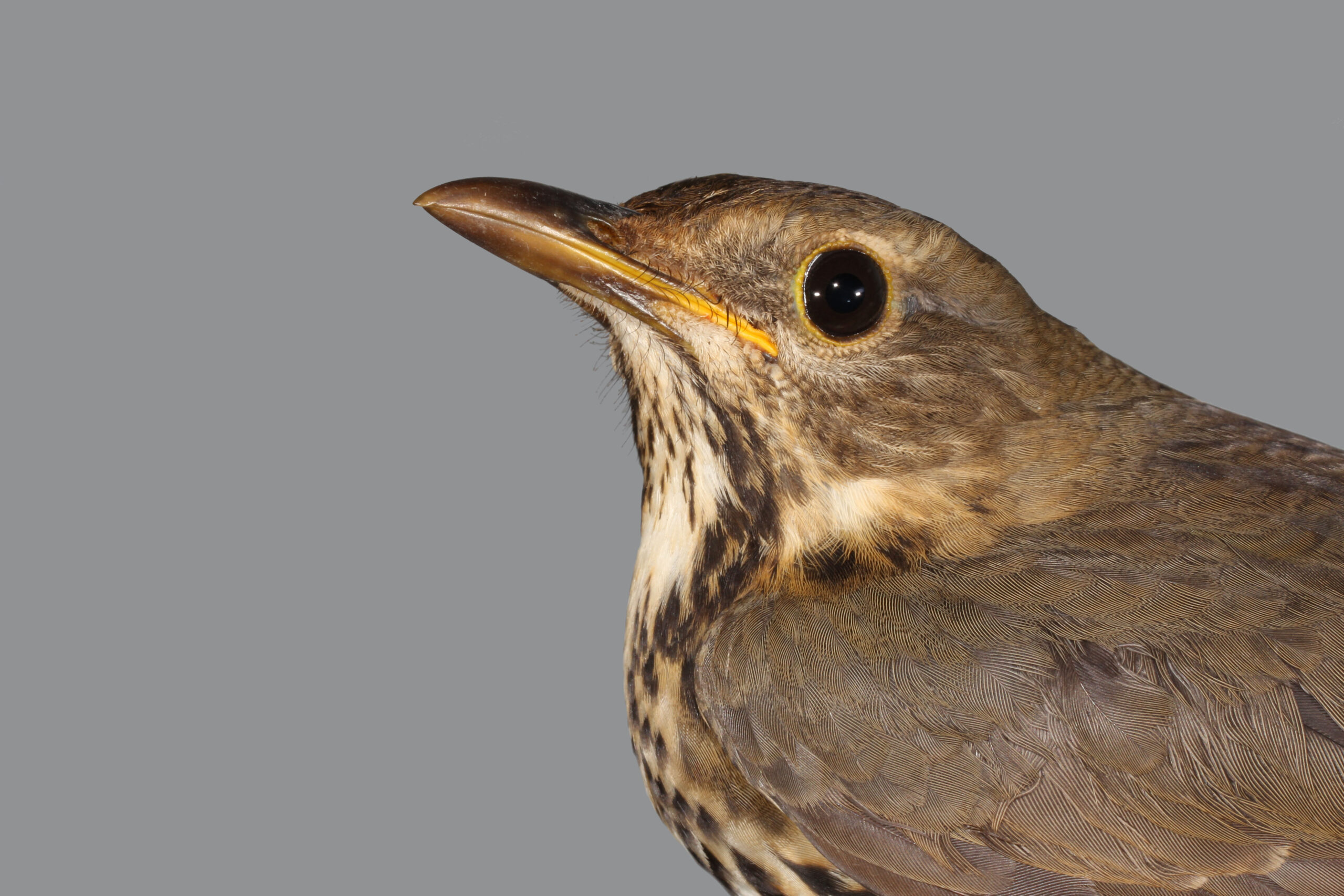
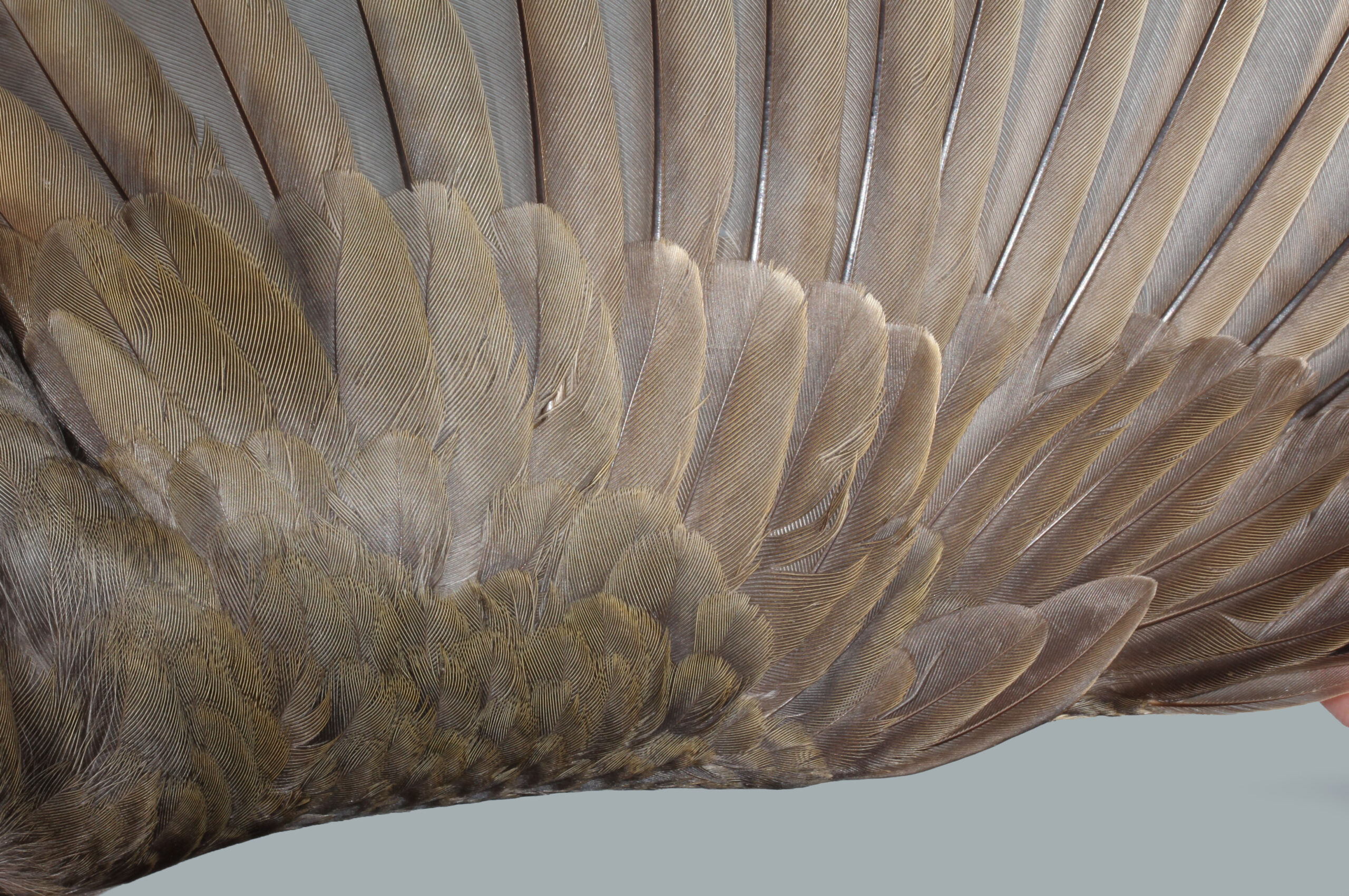
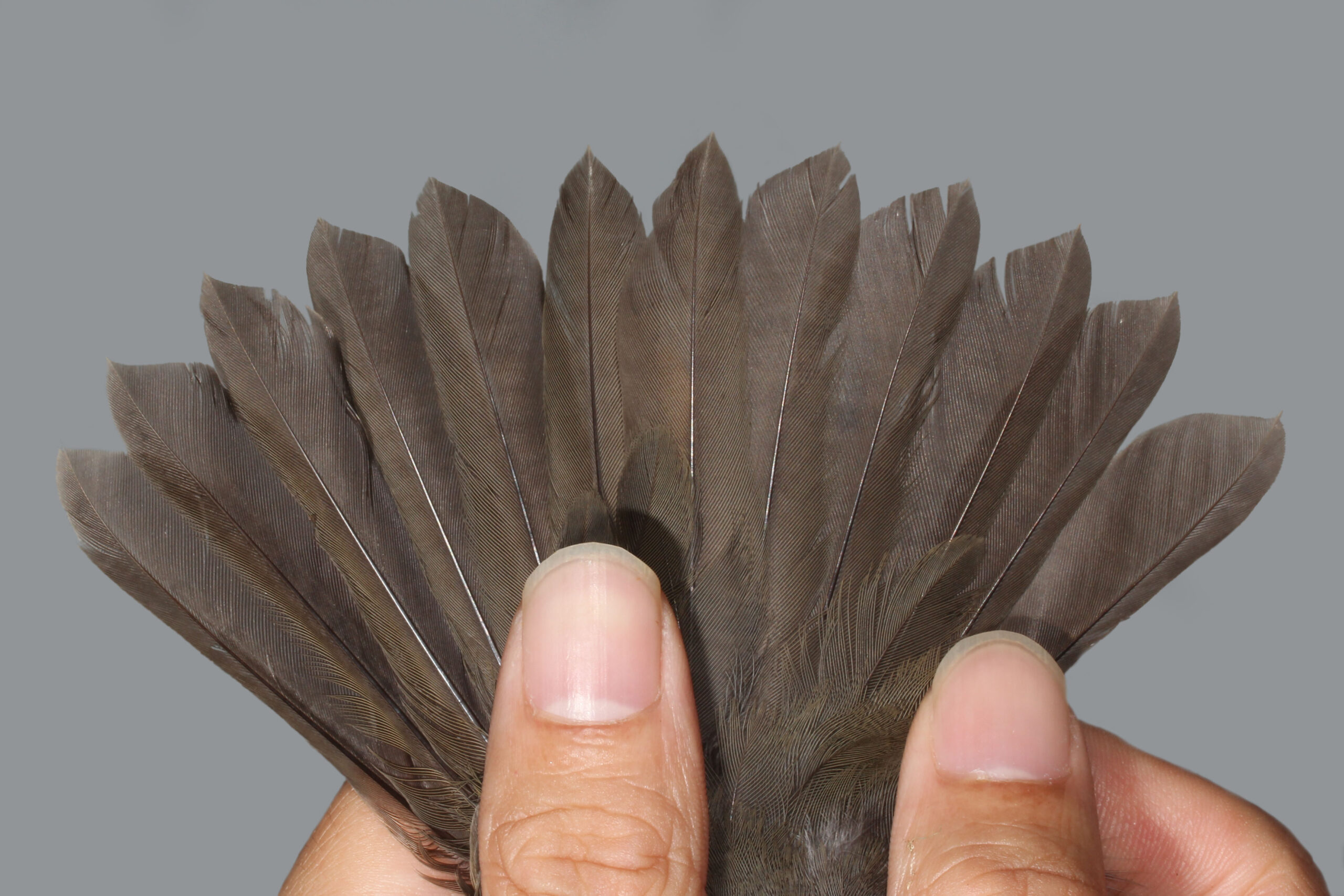
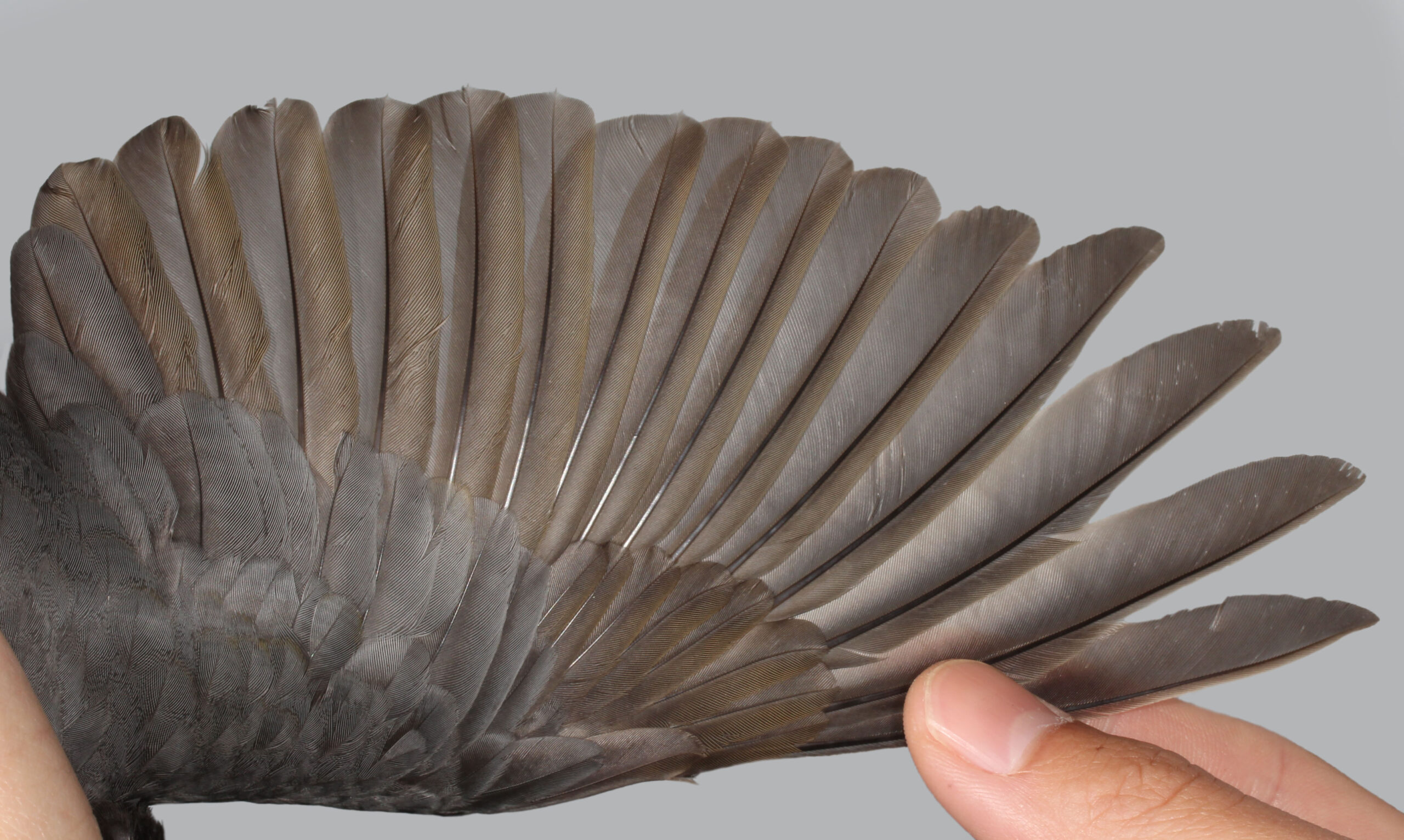
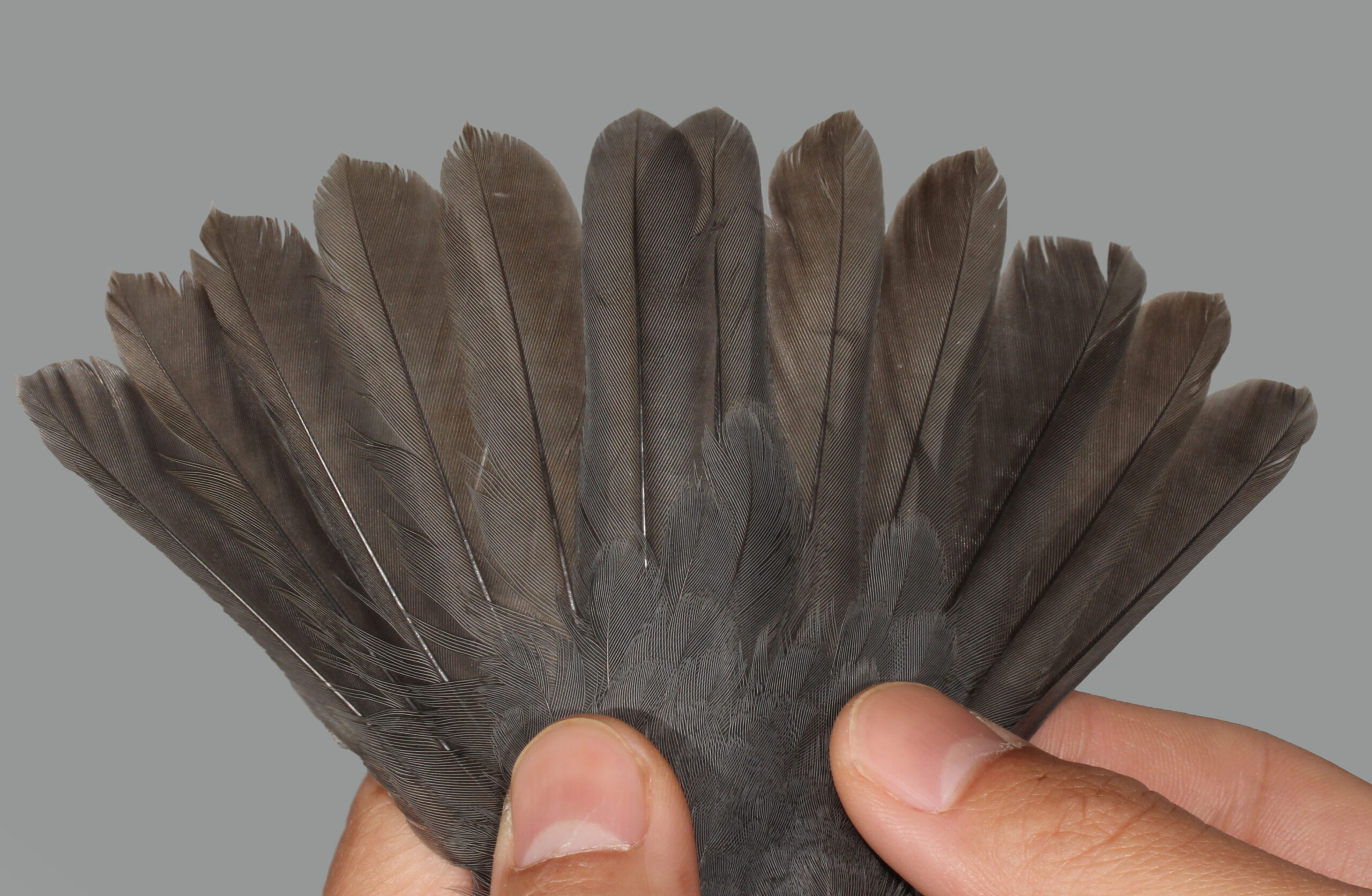
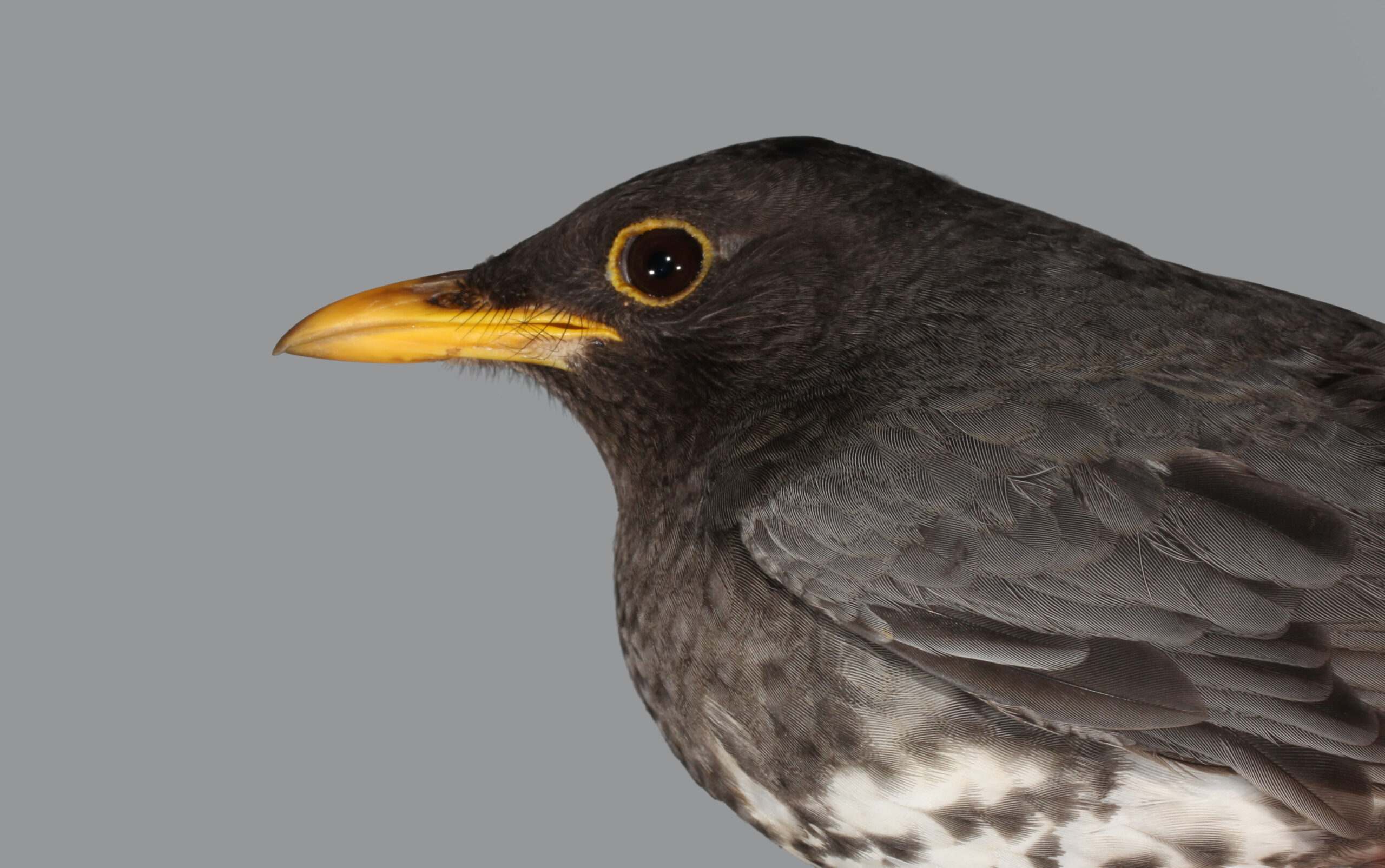
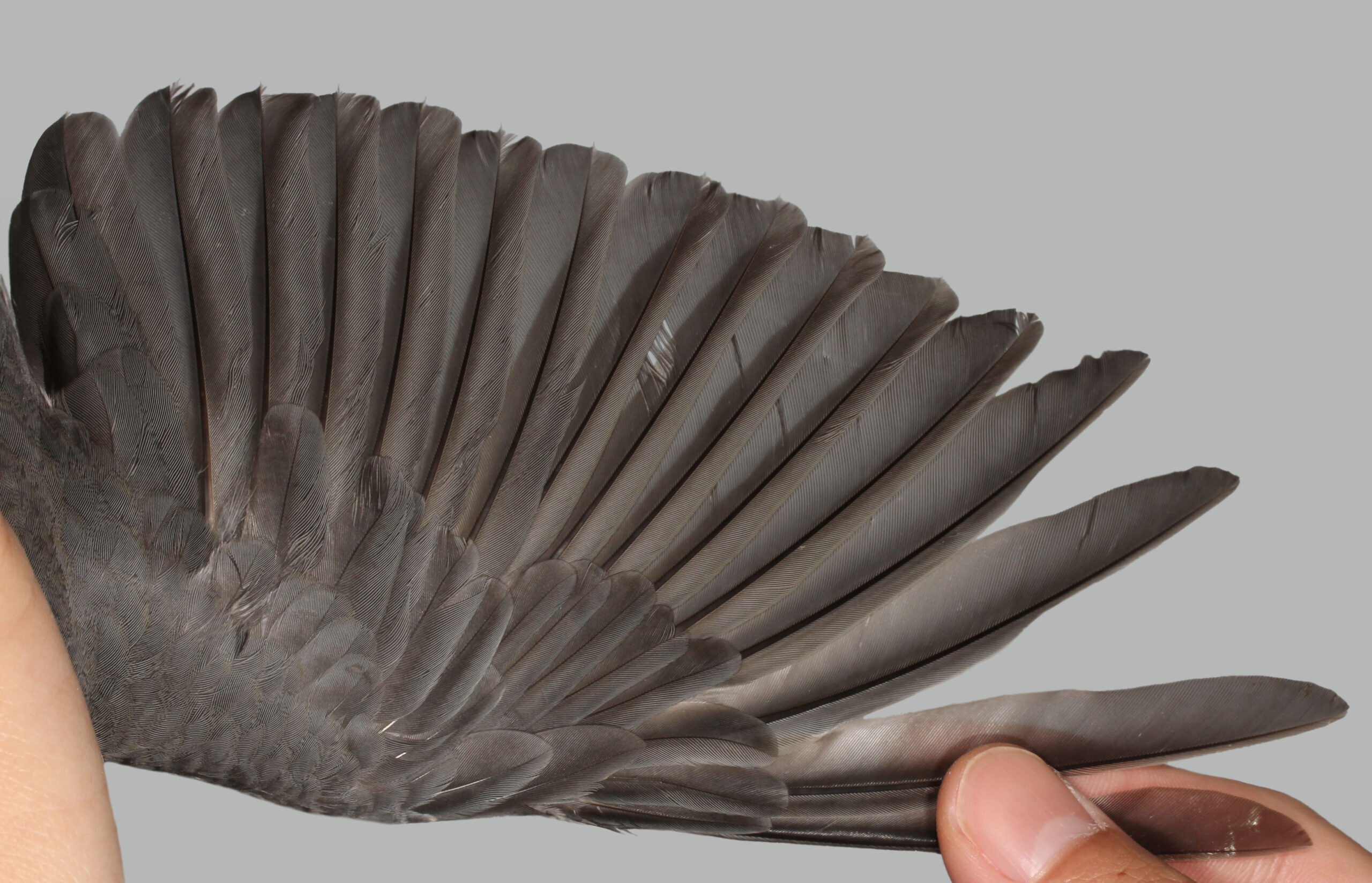
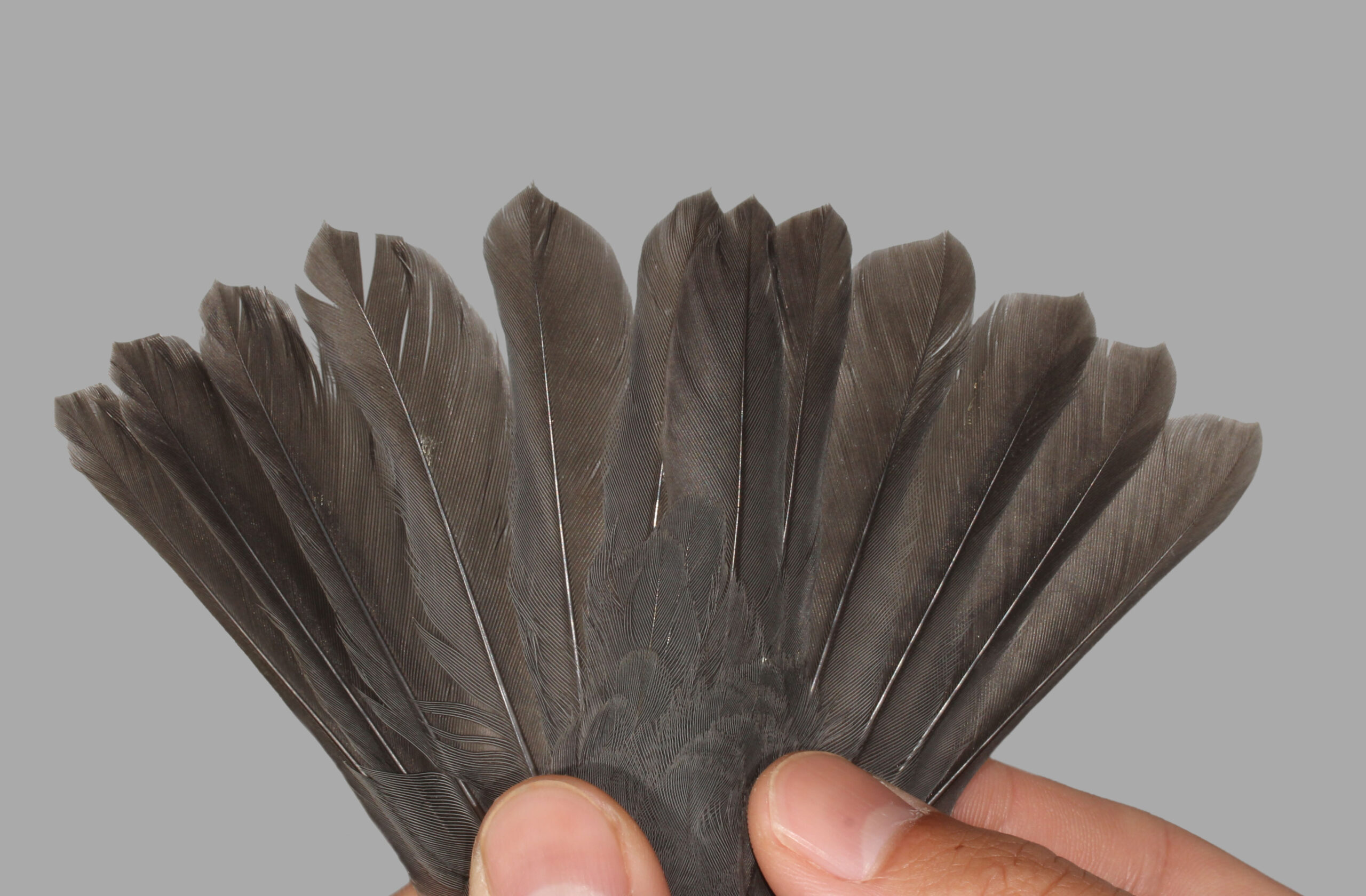
Next up was not just one, or two, but three Japanese Thrushes, another overwintering visitor! They moult just like the Robins, with adults completing a Summer moult, while the young moult Summer partial. We can see this partial moult in the top two individuals, with a very distinctive female lacking the black/grey tone of the males. However, it is most common to see moult limits in the GCs (for example between the fourth and fifth GCs in our 2nd calendar year female bird). However, in the 2nd individual, we can see that ALL the GCs are moulted, as well as the tertials. This is an exceptionally extensive moult for a Thrush, and could easily be mistaken for an adult bird. However, if we evaluate the condition of the PCs and other flight feathers, we can see they are brown and of a lesser quality, and thus, must be juvenile. The tail of this bird supports this as we can see one moulted (postjuvenile) feathers, that is clearly darker, denser and broader than the other feathers, showing the difference between the juvenile and postjuvenile feathers!
Finally, we caught a gorgeous adult male, with a wing that we can use in comparison to our 2nd calendar year male. We can see the adult wing is nice and dark, with no moult limits across the entirety of it. We can see the shape of the tail feathers are all broad and dark, again a nice comparison.
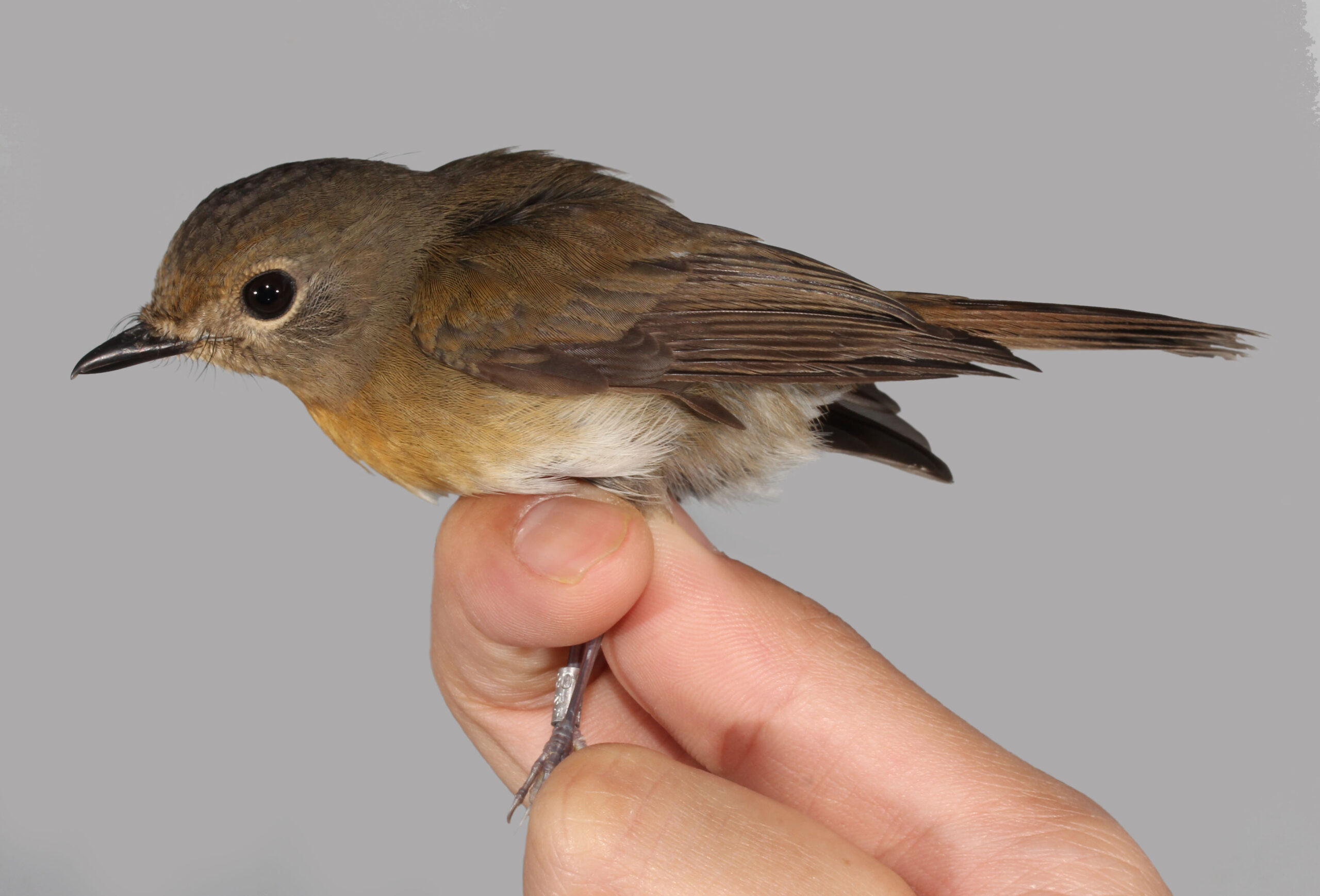
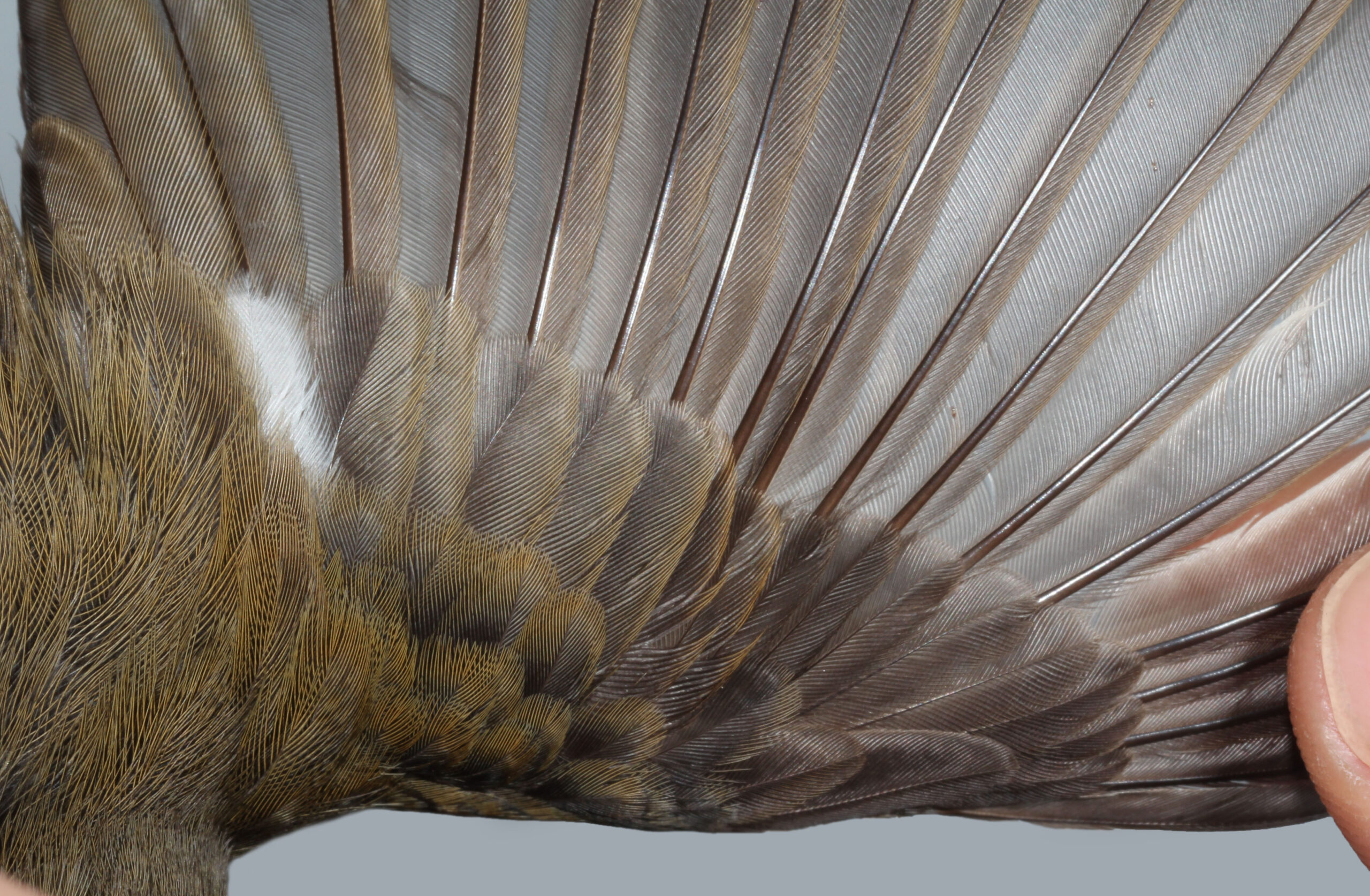
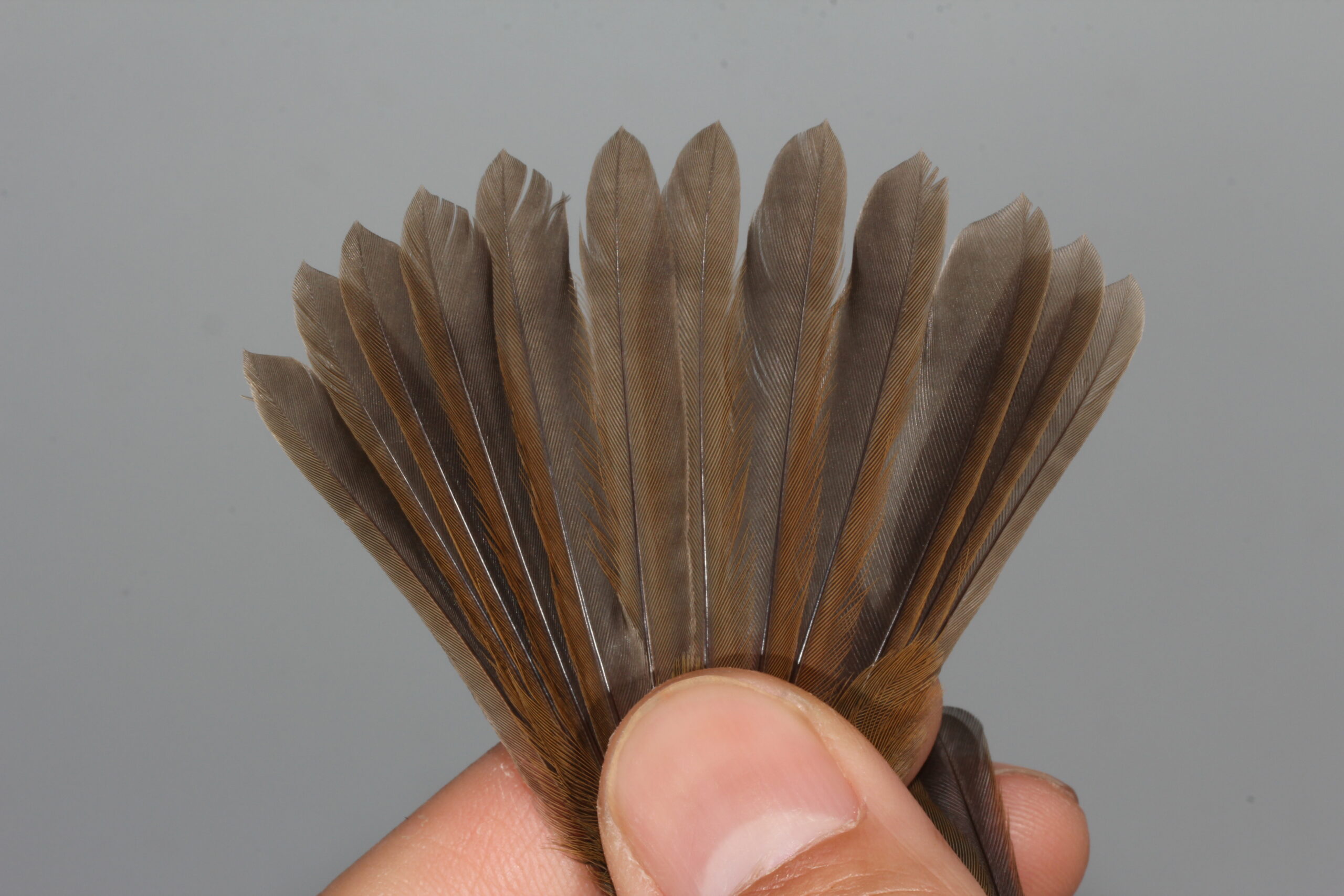
As the day began to clear up, we caught our 2nd bird with partial leucism! This is incredibly rare to see in one day, and was found in a very different species; a Hainan Blue Flycatcher! These guys moult like other flycatchers, which is the usual- adults Summer Complete, juveniles Summer partial- but with an added winter partial moult in both adults and juveniles. This means that in Spring, we can see moult limits in both adults and juveniles, and must determine the age of the old feathers. Because juvenile feathers stand out as being worse quality, these are generally more obvious to spot, than trying to compare two types of adult feathers.
For example, in our individual above we can see the first two GCs (outermost) are clearly more worn, loose and a different tone to the rest of the GCs. These juvenile GCs also match the juvenile PCs and flight feathers, and thus we can determine this is a 2nd calendar year bird. Also notice the white GC 8. Like in the Rufous-tailed Robin above, this is partial leucism! A very cool bird!
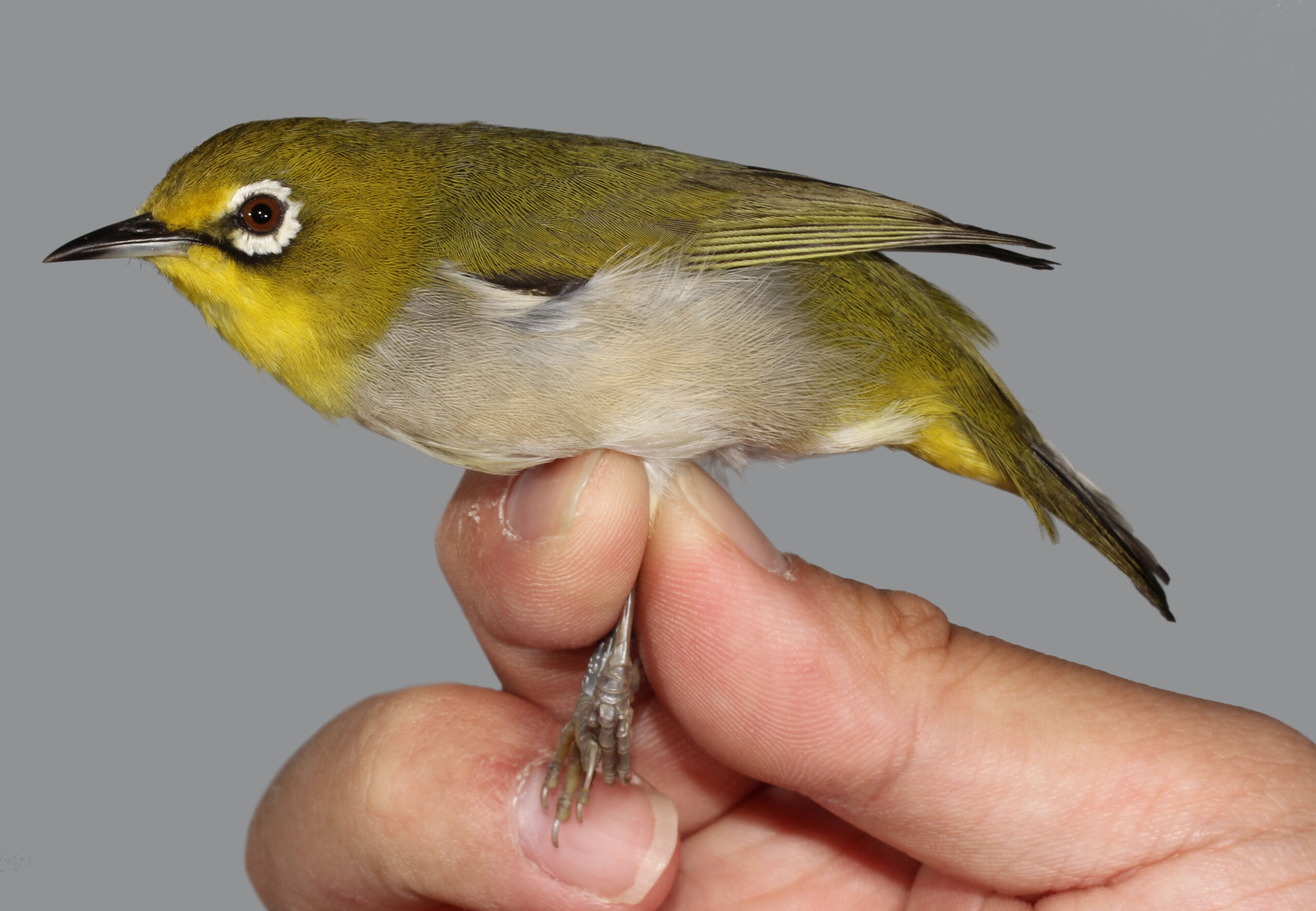
The day continued with one of our most adorable residents- a Japanese White-eye! These birds are known to breed all year round, and it’s most likely that adults and juveniles carry out Complete moults after which they are indistinguishable. Therefore this bird was aged as a 2nd calendar year or older!
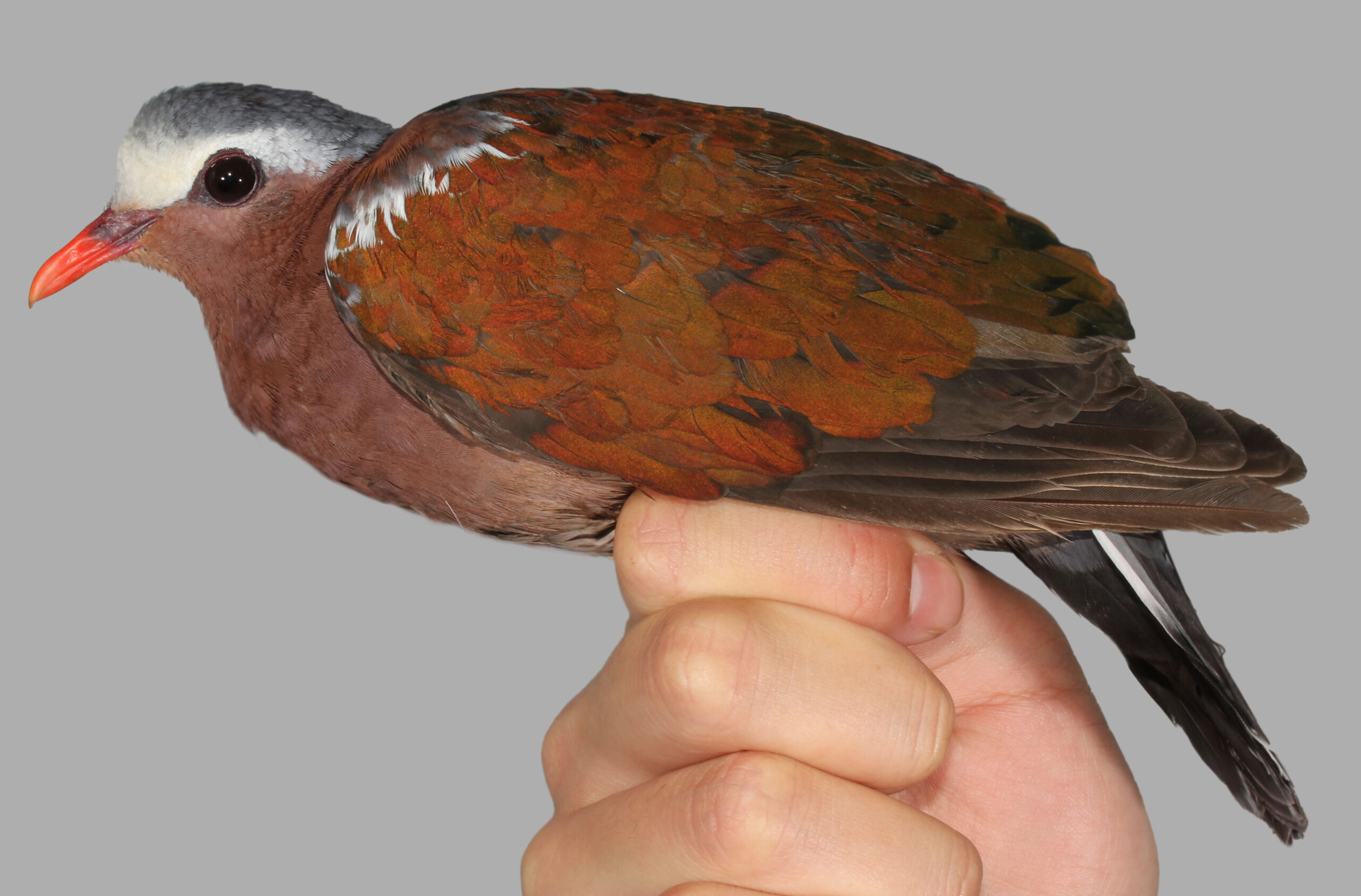
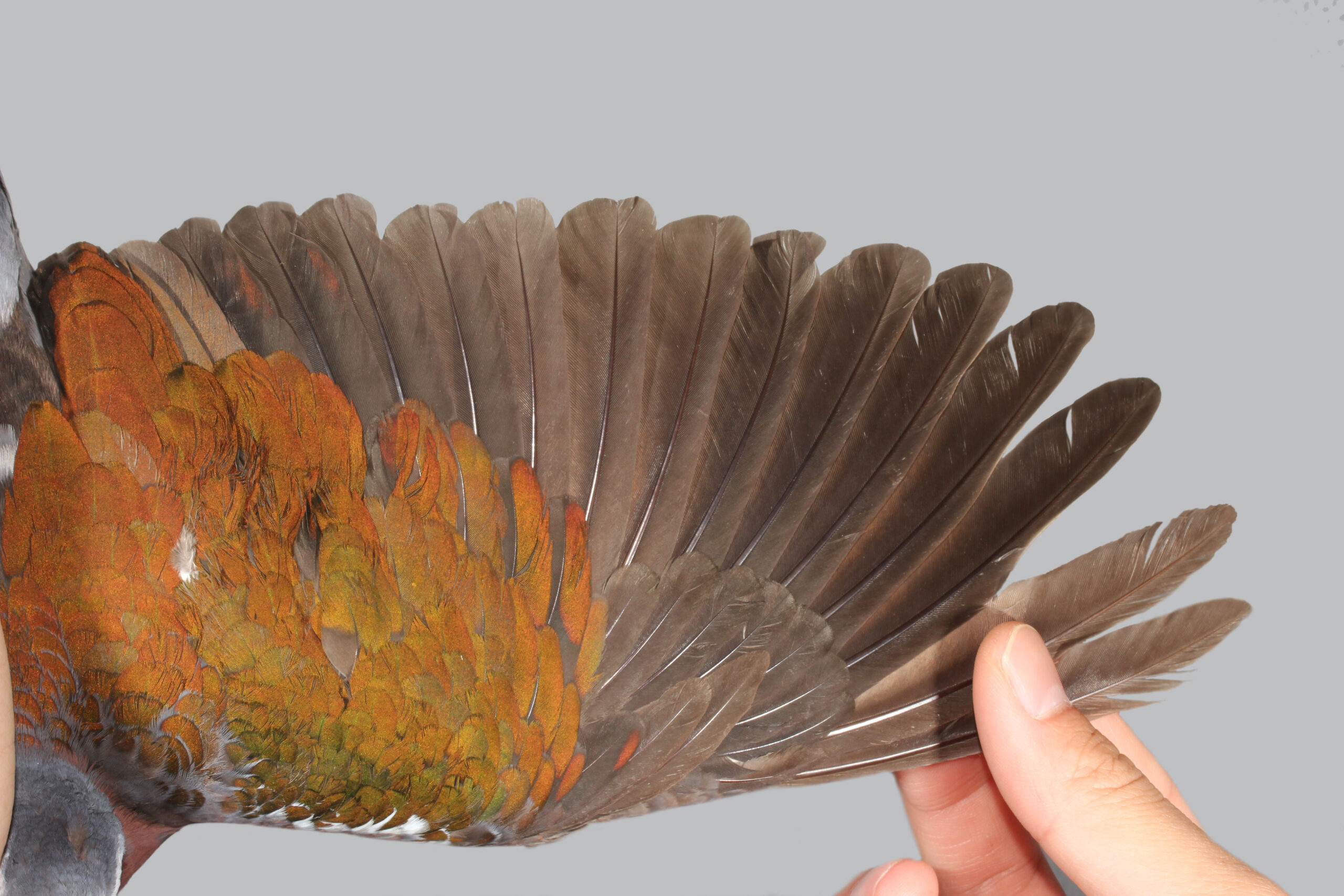
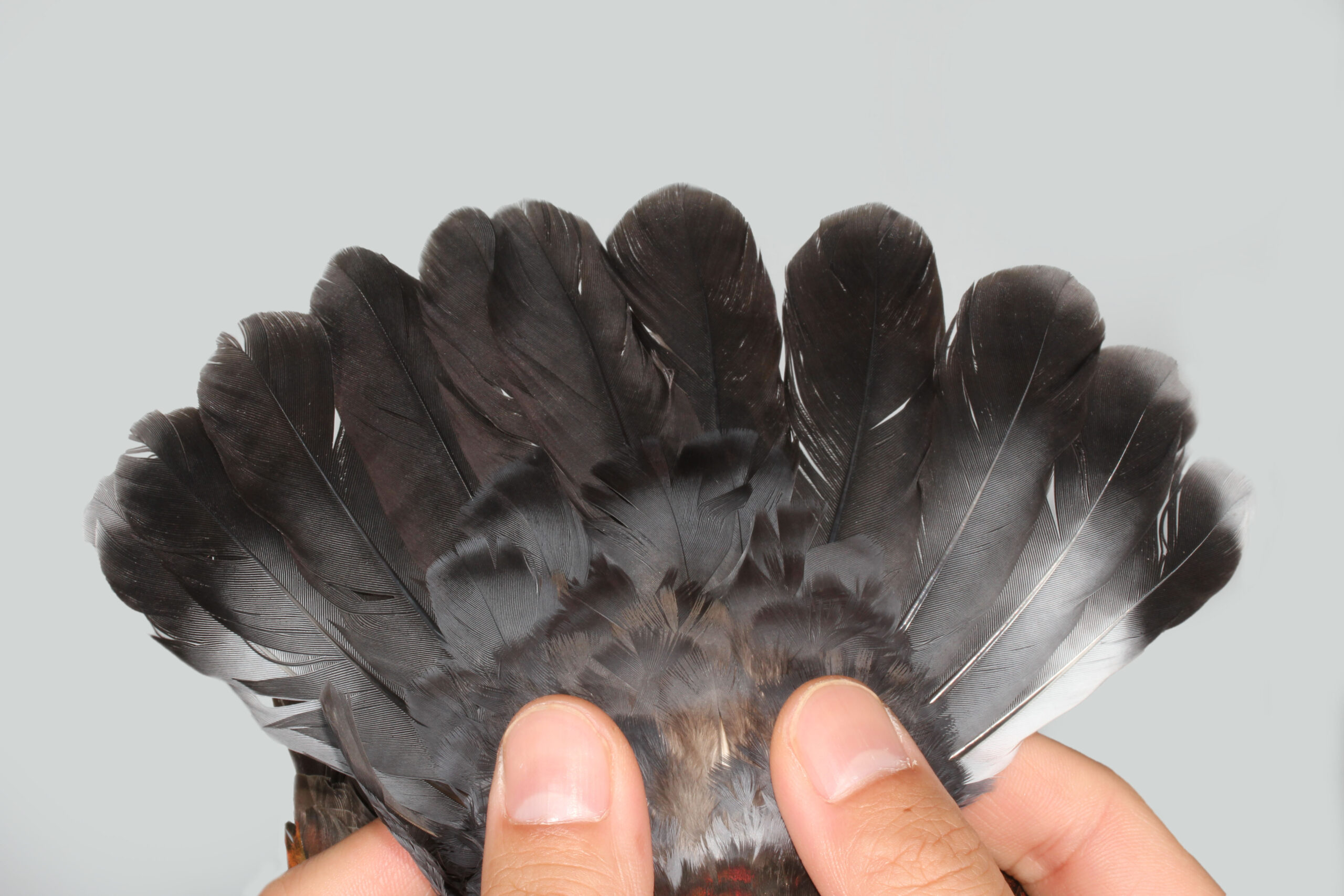
Incredibly, this day also produced 3 Emerald Doves! These are not common birds to catch at all, and not super much is known about their moulting strategies. However, this bird appeared to show unmoulted juvenile feathers in the wing, with the outermost 2 primaries and innermost 2 secondaries being unmoulted. Due to the change in shape and density, we concluded that these were juvenile feathers, and therefore this must be a 2nd calendar year bird. Furthermore, the extend of the grey and white in the crown and shoulder means that this must be a young male!
However, it is important to note that we can see in the photolab photos that the wing looks more like an autumn leaf orange than ’emerald’. This is because the iridescence in the flash messes with the colour we see. Below is how the bird looks in natural sunlight, and the reason behind the name “Emerald Dove”. A beautiful bird!

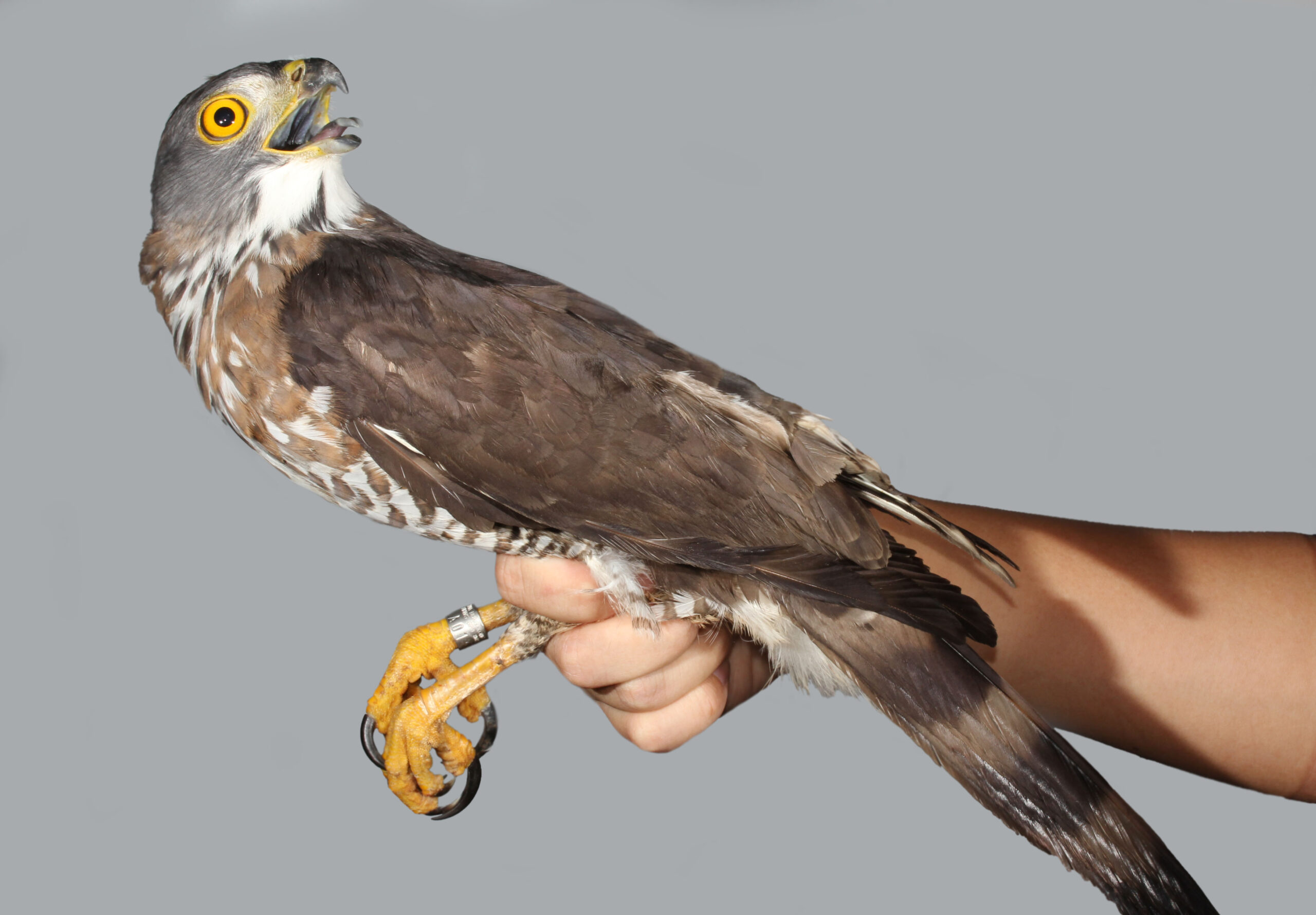
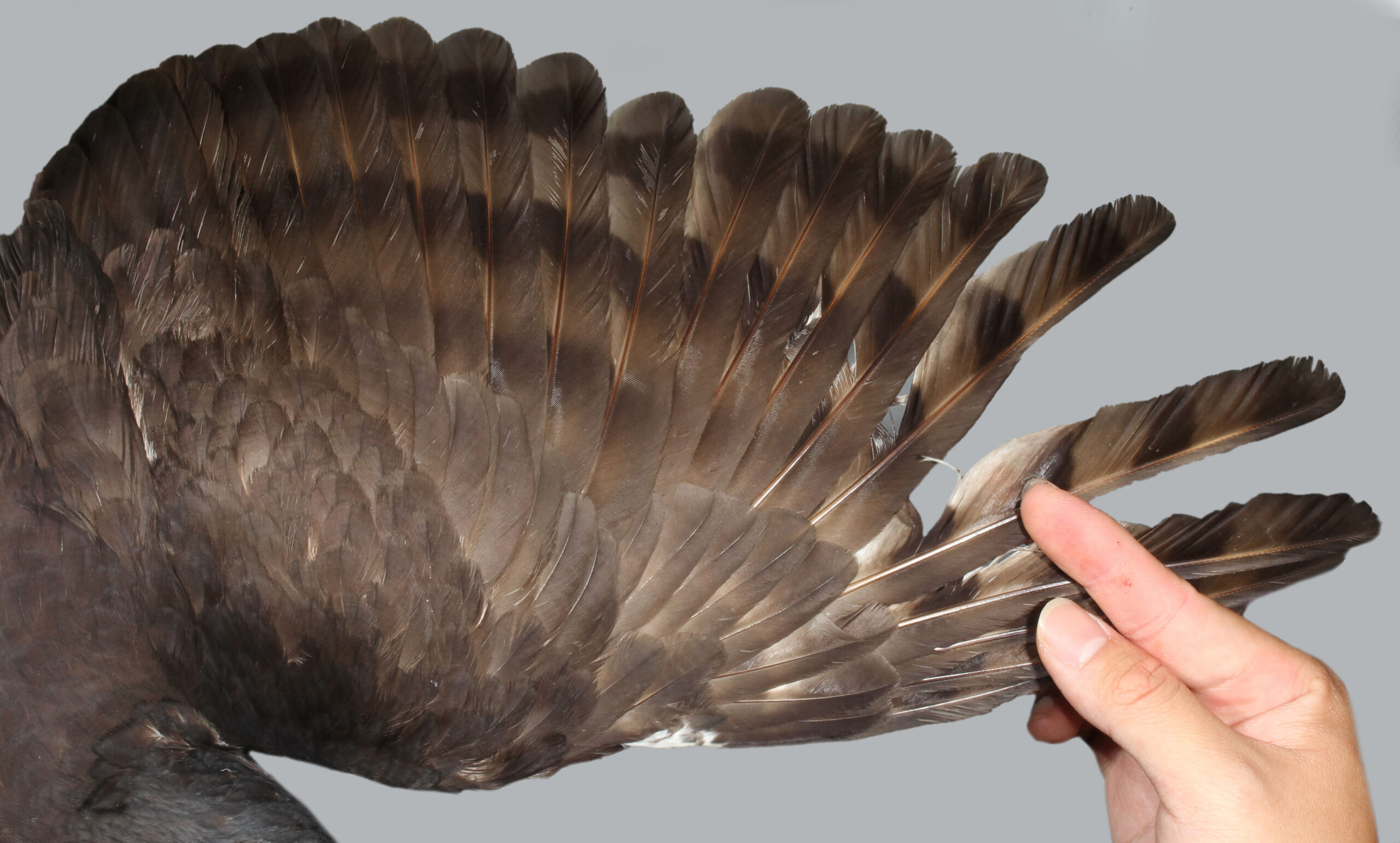
As midday approached, we had an absolute surprise in the nets of a Crested Goshawk! This is one of the larger raptors we can catch in our nets, but it’s pretty uncommon, as our nets are specifically designed for smaller birds, making it very easy for bigger birds to escape from them. This bird was also a little too big for the photolab, so apologies for the poor photos!
In these birds, we go against our usual rule, and look for the patterning on the wing and breast for ageing. In this bird, buffy fringes on the wing coverts indicate juvenile, which is not present in our bird. Furthermore, the patterning of the head and breast also show that this is an adult! Size is usually used for sexing, with female being bigger than males (as is the case for most raptors). However, our bird falls right in the middle, where there is an overlap between big males and small females. Thus, we left it as an unsexed adult bird!
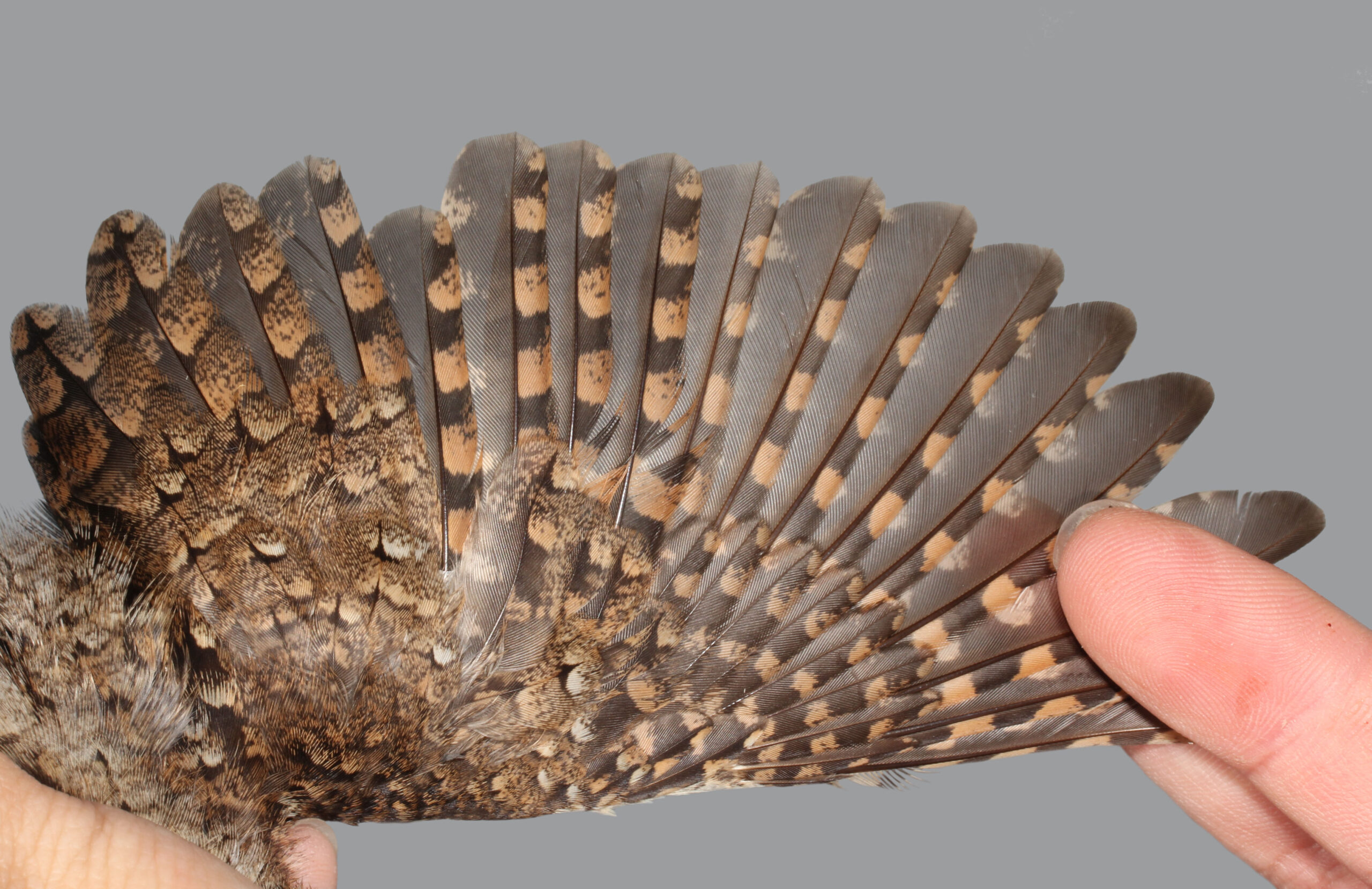
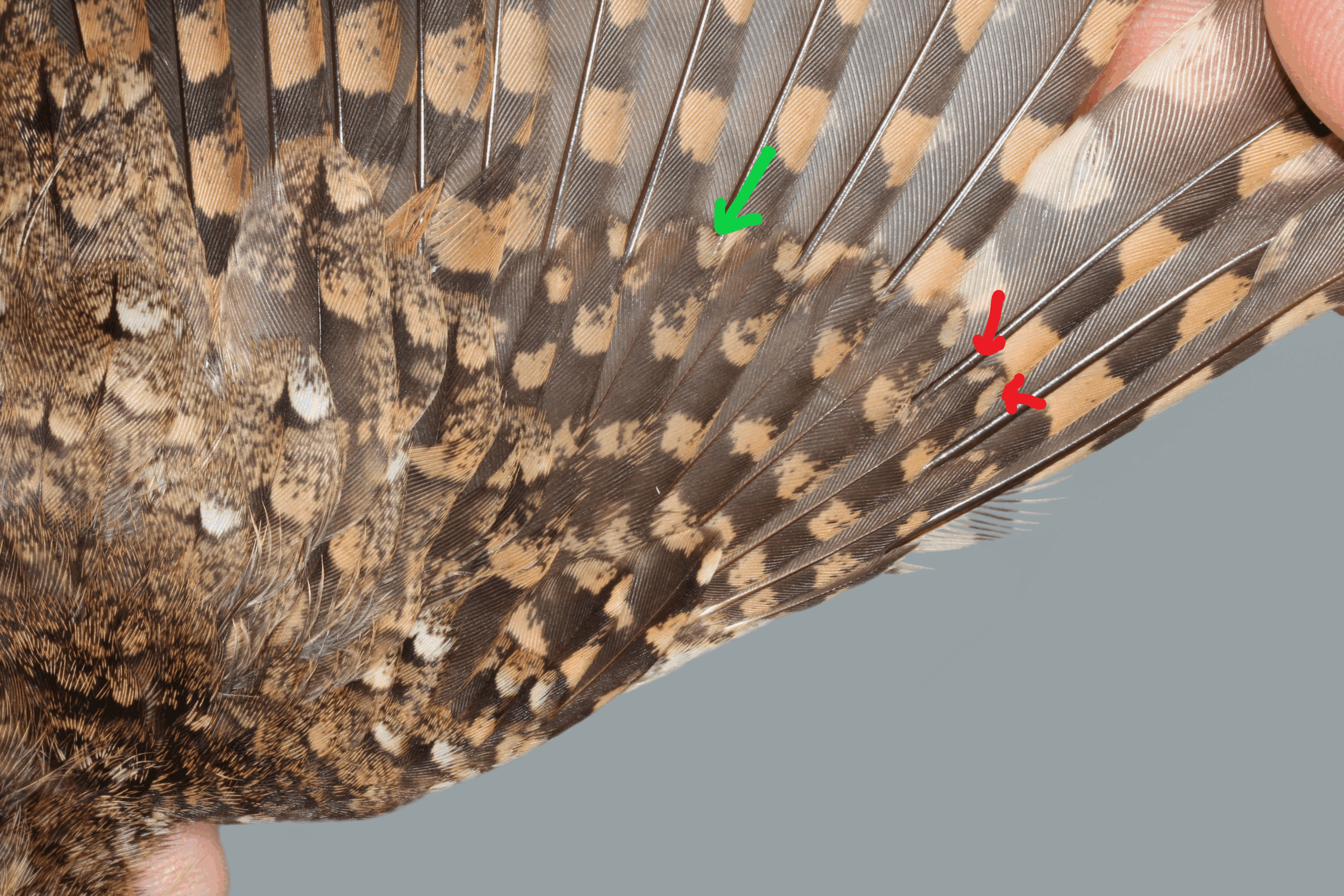
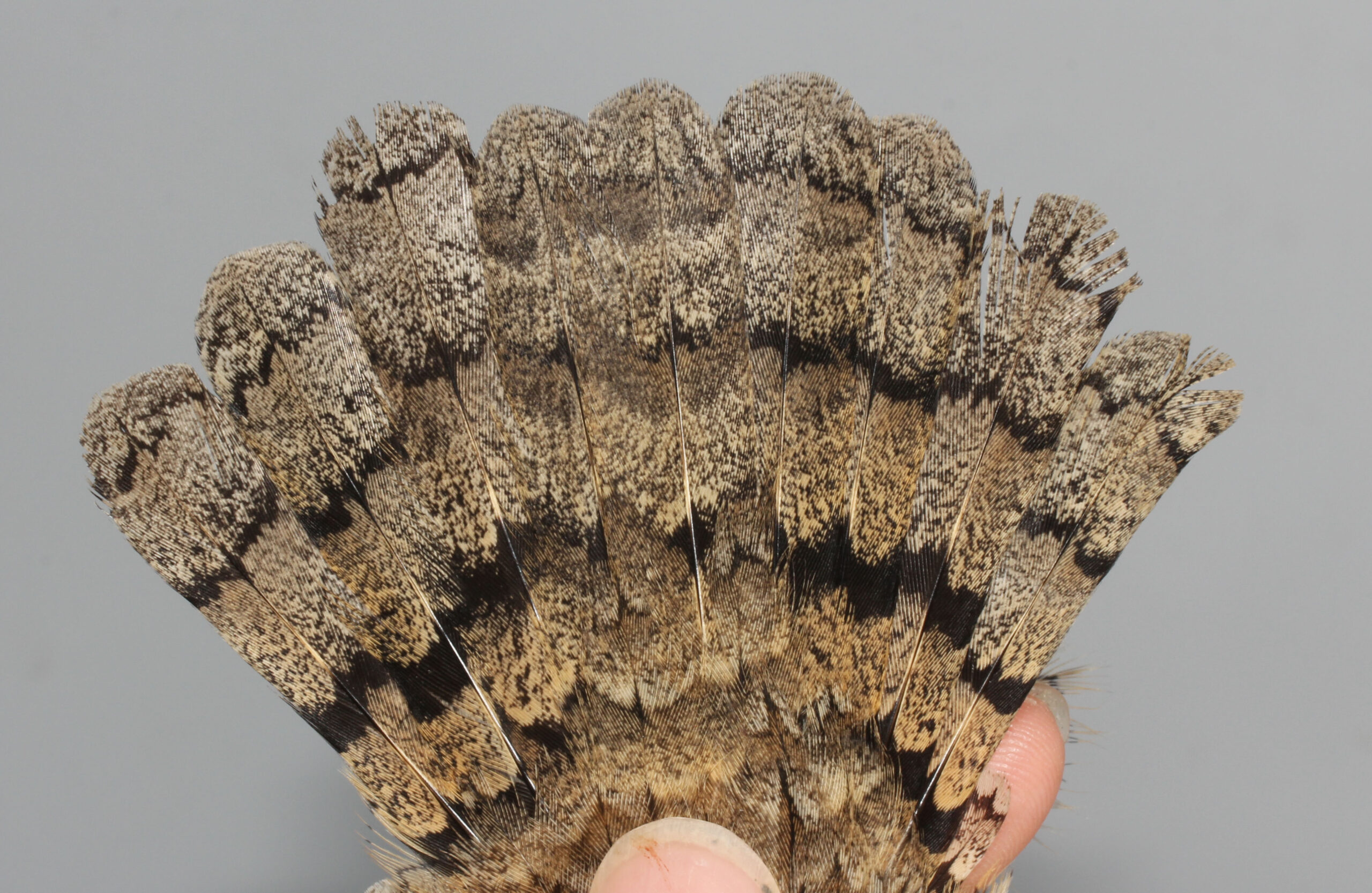
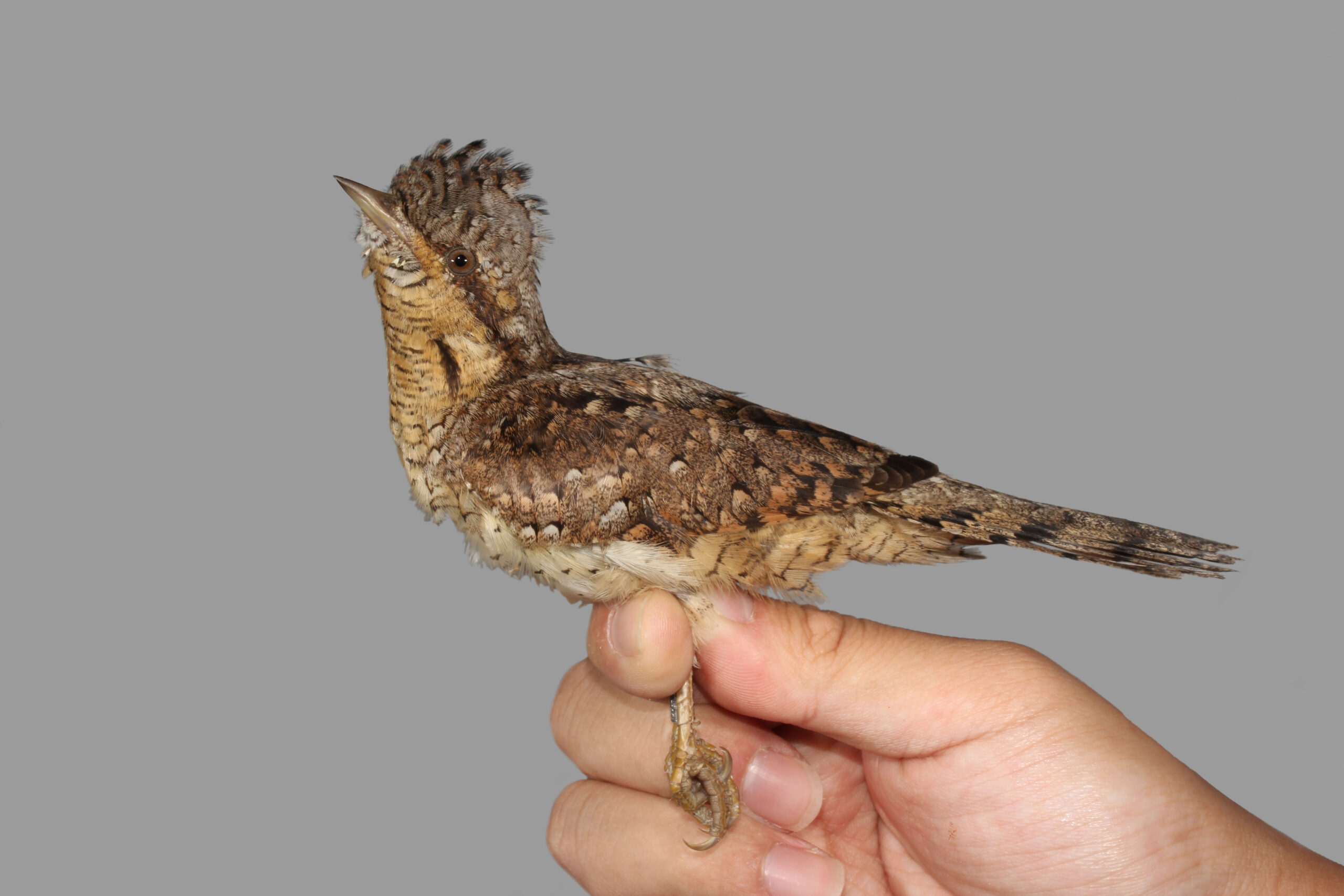
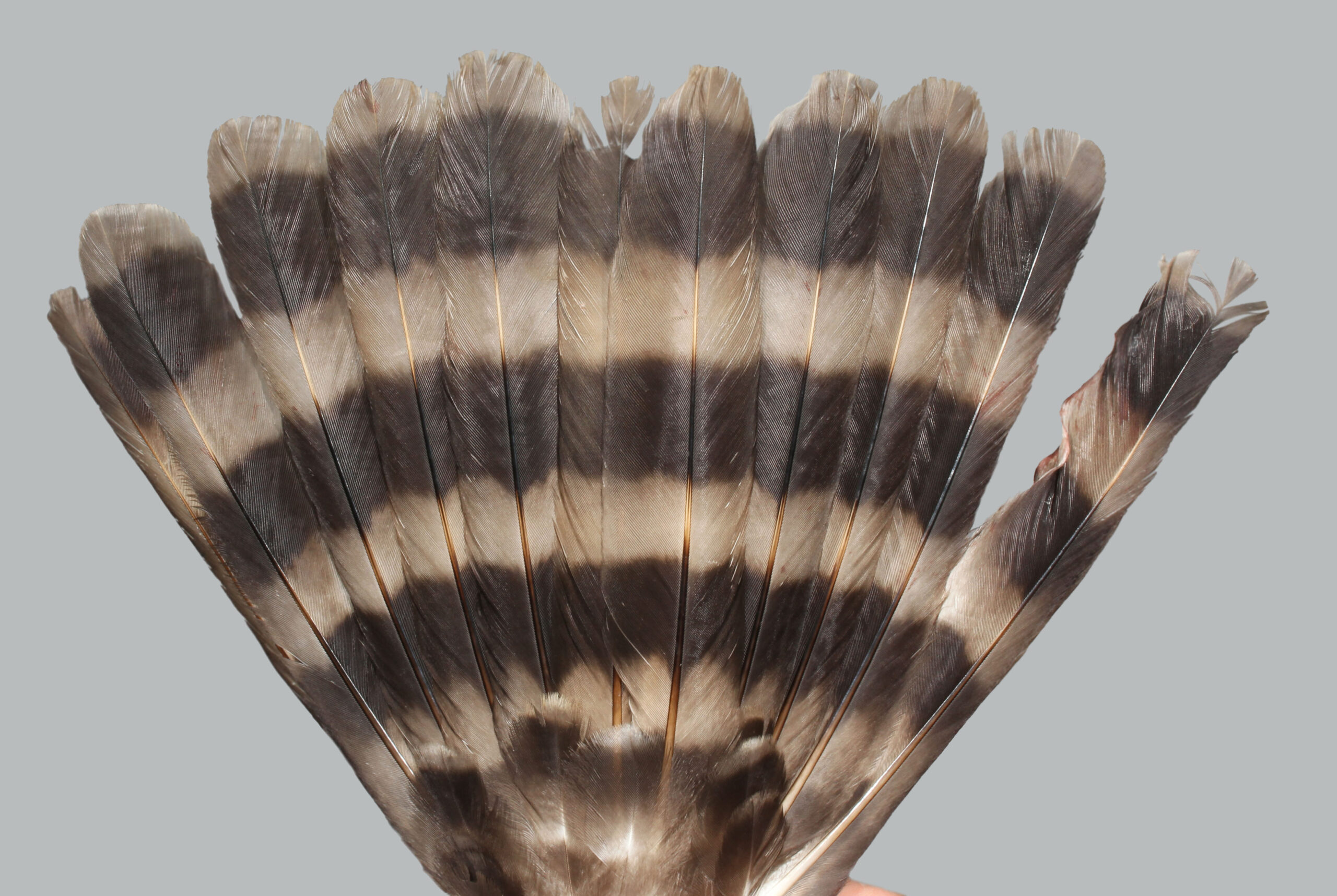
Just as we began to think of closing the nets, we had yet another surprise bird; a Eurasian Wryneck! These birds, named after their snake-like behaviour of twisting their necks back and forth in a defensive action, are super rare for the HKBWS team to catch! They also have a more complex moult strategy, and are aged primarily by the pattern of their PCs. As seen above, juvenile patterning consists of the spots on the PC tips on each side of every feather, while the adult-type is just one spot on one side of the tip of the feather. Since this bird shows this on some feathers (potentially worn off on the inner PCs, or a moult limit), this must be a 2nd calendar year bird.
What an awesome day! We will begin weekly ringing in this site at the start of the migration, so come back to keep up with that!
Daily Totals
| Species | Original | Recapture |
| Chinese Bulbul | 5 | 0 |
| Common Emerald Dove | 3 | 0 |
| Common Tailorbird | 1 | 0 |
| Crested Goshawk | 1 | 0 |
| Dusky Warbler | 2 | 0 |
| Eurasian Wryneck | 1 | 0 |
| Hainan Blue Flycatcher | 1 | 0 |
| Japanese Thrush | 3 | 0 |
| Manchurian Bush Warbler | 2 | 0 |
| Red-whiskered Bulbul | 3 | 0 |
| Rufous-tailed Robin | 1 | 0 |
| Siberian Rubythroat | 1 | 0 |
| Swinhoe’s White-eye | 1 | 0 |
| Grand Total | 25 | 0 |
*Birds are highly protected (under Wild Animals Protection Ordinate, Cap. 170) in Hong Kong. It is an offence to wilfully disturb, take, remove, or injure wild birds or their nests/eggs. The actions described here were undertaken by trained professionals holding the necessary licenses and permits issued by the AFCD.*